


Luke 2:21
“Jesus Presented at the Temple”Luke 2:21–40
Bible text: King James Version (1769 Blayney text) · Public domain
Bible text: King James Version with Strong's numbers · Public domain
Bible text: Berean Standard Bible · Public domain
Bible text: American Standard Version (1901) · Public domain
Bible text: World English Bible, Messianic edition · Public domain
Bible text: Geneva Bible (1599) · Public domain
Bible text: Young's Literal Translation · Public domain
- ΚαὶKaiAndG2532CONJConjunction
- ὅτεhotewhenG3753CONJConjunction
- ἐπλήσθησανeplēsthēsanwere fulfilledG4130V-API-3PVerb Aorist Passive Indicative 3rd Plural
- ἡμέραιhēmeraidaysG2250N-NPFNoun Nominative Plural Feminine
- ὀκτὼoktōeightG3638A-NUIAdjective
- τοῦtou[the]G3588T-GSNDefinite article Genitive Singular Neuter
- περιτεμεῖνperitemeinto circumciseG4059V-2AANVerb 2nd Aorist Active Infinitive
- τὸtotheG3588T-ASNDefinite article Accusative Singular Neuter
- παιδίονpaidionchildG3813N-ASNNoun Accusative Singular Neuter
- καὶkaithenG2532CONJConjunction
- ἐκλήθηeklēthēwas calledG2564V-API-3SVerb Aorist Passive Indicative 3rd Singular
- τὸtotheG3588T-NSNDefinite article Nominative Singular Neuter
- ὄνομαonomanameG3686N-NSNNoun Nominative Singular Neuter
- αὐτοῦautouof HimG846P-GSMPersonal pronoun Genitive Singular Masculine
- ἸησοῦςIēsousJesusG2424N-NSM-PNoun Nominative Singular Masculine Individual
- τὸtowhichG3588T-NSNDefinite article Nominative Singular Neuter
- κληθὲνklēthenHe had been calledG2564V-APP-NSNVerb Aorist Passive Participle Nominative Singular Neuter
- ὑπὸhupobyG5259PREPPreposition
- τοῦtoutheG3588T-GSMDefinite article Genitive Singular Masculine
- ἀγγέλουangelouangelG32N-GSMNoun Genitive Singular Masculine
- πρὸprobeforeG4253PREPPreposition
- τοῦtou[the]G3588T-GSNDefinite article Genitive Singular Neuter
- συλλημφθῆναιsullēmphthēnaiconceivingG4815V-APNVerb Aorist Passive Infinitive
- αὐτὸνautonHeG846P-ASMPersonal pronoun Accusative Singular Masculine
- ἐνeninG1722PREPPreposition
- τῇtēatheG3588T-DSFDefinite article Dative Singular Feminine
- κοιλίᾳkoiliawombG2836N-DSFNoun Dative Singular Feminine
English is a literal word-by-word gloss of the Greek, not the KJV's wording. Why?
This is the original text the KJV's translators worked from — each Greek word with its own literal English meaning in this verse, prepared by scholars at Tyndale House, Cambridge. The KJV translates whole sentences, not word by word, so its wording differs: one Greek word can become several English words, and the KJV may choose “charity” where the gloss reads “love”. Both are faithful — they answer different questions. For the KJV's own rendering, switch to the KJV text.
Words in [ ] are added by the English.
Details
See on the biblical-era maps
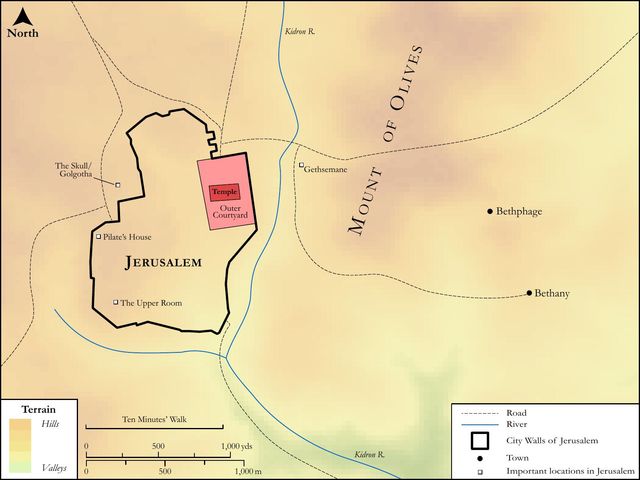
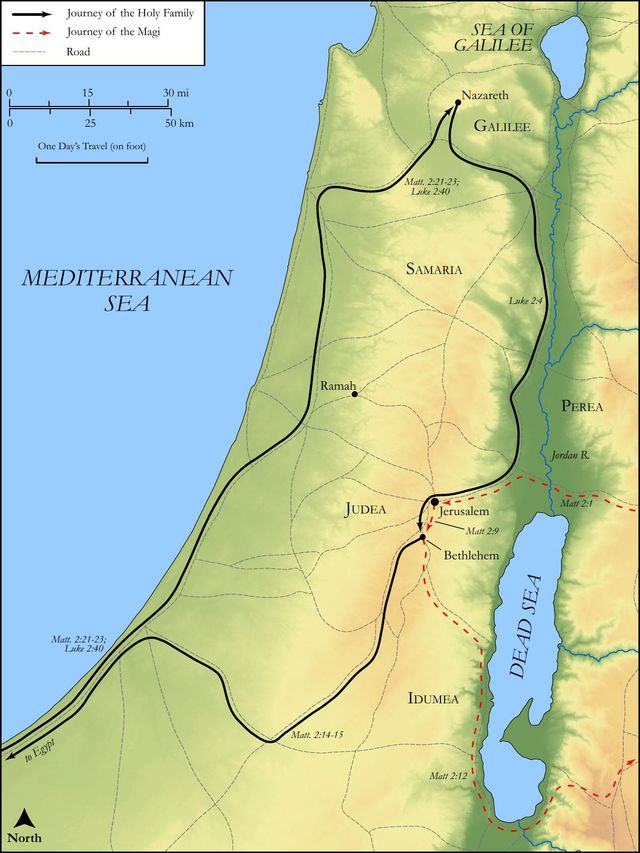
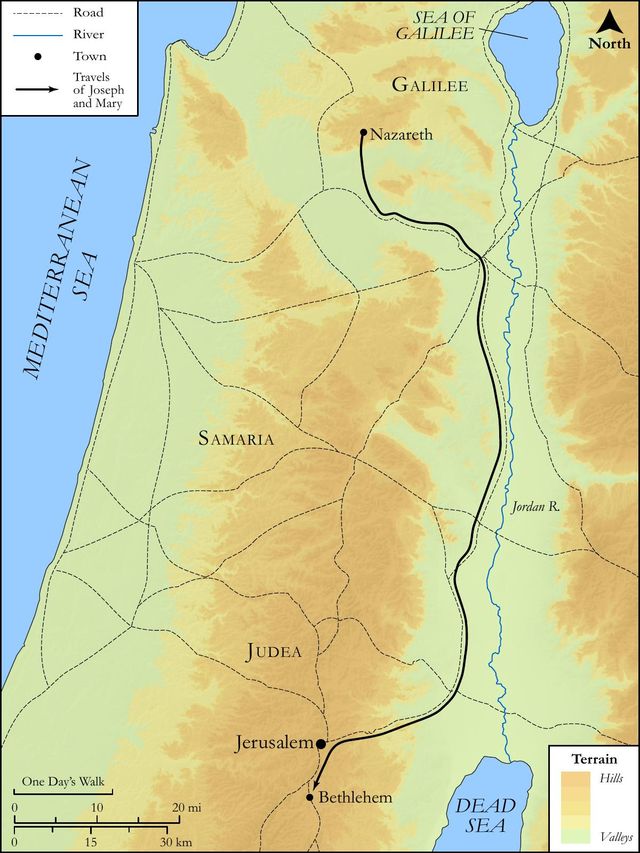
Study this verse
Public-domain commentary
Matthew Henry
From his Commentary on the Whole Bible. Henry wrote on whole passages, and this entry covers Luke 2:21–24. He set out his notes in a three-level outline, kept here as he numbered it.
Our Lord Jesus, being made of a woman, was made under the law, Galatians 4:4. He was not only, as the son of a daughter of Adam, made under the law of nature, but as the son of a daughter of Abraham was made under the law of Moses; he put his neck under that yoke, though it was a heavy yoke, and a shadow of good things to come. Though its institutions were beggarly elements, and rudiments of this world, as the apostle calls them, Christ submitted to it, that he might with the better grace cancel it, and set it aside for us.
Now here we have two instances of his being made under that law, and submitting to it.
I.He was circumcised on the very day that the law appointed (Luke 2:21):
When eight days were accomplished, that day seven-night that he was born, they circumcised him.
1.Though it was a painful operation (Surely a bloody husband thou has been, said Zipporah to Moses, because of the circumcision, Exodus 4:25), yet Christ would undergo it for us; nay, therefore he submitted to it, to give an instance of his early obedience, his obedience unto blood. Then he shed his blood by drops, which afterwards he poured out in purple streams.
2.Though it supposed him a stranger, that was by that ceremony to be admitted into covenant with God, whereas he had always been his beloved Son; nay, though it supposed him a sinner, that needed to have his filthiness taken away, whereas he had no impurity or superfluity of naughtiness to be cut off, yet he submitted to it; nay, therefore he submitted to it, because he would be made in the likeness, not only of flesh, but of sinful flesh, Romans 8:3.
3.Though thereby he made himself a debtor to the whole law (Galatians 5:3), yet he submitted to it; nay, therefore he submitted to it, because he would take upon him the form of a servant, though he was free-born. Christ was circumcised,
(1.)That he might own himself of the seed of Abraham, and of that nation of whom, as concerning the flesh, Christ came, and who was to take on him the seed of Abraham, Hebrews 2:16.
(2.)That he might own himself a surety for our sins, and an undertaker for our safety. Circumcision (saith Dr. Goodwin) was our bond, whereby we acknowledged ourselves debtors to the law; and Christ, by being circumcised, did as it were set his hand to it, being made sin for us. The ceremonial law consisted much in sacrifices; Christ hereby obliged himself to offer, not the blood of bulls or goats, but his own blood, which none that ever were circumcised before could oblige themselves to.
(3.)That he might justify, and put an honour upon, the dedication of the infant seed of the church to God, by that ordinance which is the instituted seal of the covenant, and of the righteousness which is by faith, as circumcision was (Romans 4:11), and baptism is. And certainly his being circumcised at eight days old doth make much more for the dedicating of the seed of the faithful by baptism in their infancy than his being baptized at thirty years old doth for the deferring of it till they are grown up. The change of the ceremony alters not the substance.
At his circumcision, according to the custom, he had his name given him; he was called Jesus or Joshua, for he was so named of the angel to his mother Mary before he was conceived in the womb (Luke 1:31), and to his supposed father Joseph after, Matthew 1:21. [1.] It was a common name among the Jews, as John was (Colossians 4:11), and in this he would be made like unto his brethren. [2.] It was the name of two eminent types of him in the Old Testament, Joshua, the successor of Moses, who was commander of Israel, and conqueror of Canaan; and Joshua, the high priest, who was therefore purposely crowned, that he might prefigure Christ as a priest upon his throne, Zechariah 6:11, Zechariah 6:13. [3.] It was very significant of his undertaking. Jesus signifies a Saviour. He would be denominated, not from the glories of his divine nature, but from his gracious designs as Mediator; he brings salvation.
II.He was presented in the temple.
This was done with an eye to the law, and at the time appointed by the law, when he was forty days old, when the days of her purification were accomplished, Luke 2:22. Many copies, and authentic ones, read autōn for autēs, the days of their purification, the purification both of the mother and of the child, for so it was intended to be by the law; and our Lord Jesus, though he had no impurity to be cleansed fRom. yet submitted to it, as he did to circumcision, because he was made sin for us; and that, as by the circumcision of Christ we might be circumcised, in the virtue of our union and communion with him, with a spiritual circumcision made without hands (Colossians 2:11), so in the purification of Christ we might be spiritually purified from the filthiness and corruption which we brought into the world with us. Now, according to the law,
1.The child Jesus, being a first-born son, was presented to the Lord, in one of the courts of the temple. The law is here recited (Luke 2:23): Every male that opens the womb shall be called holy to the Lord, because by a special writ of protection the first-born of the Egyptians were slain by the destroying angel; so that Christ, as first-born, was a priest by a title surer than that of Aaron's house. Christ was the first-born among many brethren, and was called holy to the Lord, so as never any other was; yet he was presented to the Lord as other first-born were, and no otherwise. Though he was newly come out of the bosom of the Father, yet he was presented to him by the hands of a priest, as if he had been a stranger, that needed one to introduce him. His being presented to the Lord now signified his presenting himself to the Lord as Mediator, when he was caused to draw near and approach unto him, Jeremiah 30:21. But, according to the law, he was redeemed, Numbers 18:15. The first-born of many shalt thou redeem, and five shekels was the value, Leviticus 27:6 : Numbers 18:16. But probably in case of poverty the priest was allowed to take less, or perhaps nothing; for no mention is made of it here. Christ was presented to the Lord, not to be brought back, for his ear was bored to God's door-post to serve him for ever; and though he is not left in the temple as Samuel was, to minister there, yet like him he is given to the Lord as long as he lives, and ministers to him in the true temple not made with hands.
2.The mother brought her offering, Luke 2:24. When she had presented that son of hers unto the Lord who was to be the great sacrifice, she might have been excused from offering any other; but so it is said in the law of the Lord, that law which was yet in force, and therefore so it must be done, she must offer a pair of turtle-doves, or two young pigeons; had she been of ability, she must have brought a lamb for a burnt-offering, and a dove for a sin-offering; but, being poor, and not able to reach the price of a lamb, she brings two doves, one for a burnt-offering and the other for a sin-offering (see Leviticus 12:6, Leviticus 12:8), to teach us in every address to God, and particularly in those upon special occasions, both to give thanks to God for his mercies to us and to acknowledge with sorrow and shame our sins against him; in both we must give glory to him, nor do we ever want matter for both. Christ was not conceived and born in sin, as others are, so that there was not that occasion in his case which there is in others; yet, because he was made under the law, he complied with it. Thus it became him to fulfil all righteousness. Much more doth it become the best of men to join in confessions of sin; for who can say, I have made my heart clean?
Historical interpretation
Five Centuries of Reception
13 surviving comments on this verse. Each one is dated, so this reads as a timeline rather than a list.
Select a marker to jump to its quote. Markers stagger vertically where authors wrote within a few decades of each other.
So, when he died, we died with him, and when he rose, we rose with him. Likewise, we were also circumcised along with him. After his circumcision, we were cleansed by a solemn purification. Hence we have no need at all for a circumcision of the flesh. You should know that he was circumcised for our sake. Listen to Paul’s clear proclamation. He says, “For in him the whole fullness of deity dwells bodily, and you have come to fullness of life in him, who is the head of all rule and authority. In him also you were circumcised with a circumcision made without hands, by putting off the body of flesh in the circumcision of Christ. And you were buried with him in baptism, in which you were also raised with him through faith in the working of God, who raised him from the dead.” Therefore his death, his resurrection and his circumcision took place for our sake.
Christians are seen to draw their courage not from incantations but from the name of Jesus and from the commemoration of what he has done. For by his name it has happened very often that demons are put to flight from people, especially whenever they, who invoke them, pronounce them with the right disposition and with all trust. So great indeed is the power of the name of Jesus that sometimes it is efficacious even when spoken by the wicked. The name of Jesus heals the afflicted in mind, puts to flight the spirits of darkness, and to the sick is an ever present remedy.
As we have died with Him at His death, and risen together with Him at His resurrection, so with Him have we been circumcised, and therefore need not now circumcision in the flesh.
But the name of Jesus, a glorious name and worthy of all honour, a name which is above every other, ought not first to be uttered by men, nor by them be brought into the world. Therefore significantly the Evangelist adds, which was called of the Angel, &c.
(De Sabbato et Circumcisione.) For circumcision expressed nothing else, but the stripping off of the old birth, seeing that part was circumcised which caused the birth of the body. And thus it was done at that time as a sign of the future baptism through Christ. Therefore as soon as that of which it was a sign came, the figure ceased. For since the whole of the old man Adam is taken away by baptism, there remains nothing which the cutting of a part prefigures.
Who is this Child, but He of whom it was said, Unto us a child is born, unto us a son is given? (Is. 9:6, Gal. 4:5.) For He was made under the law, that He might redeem them who were under the law.
(lib. i. Hær. 30.) Now the followers of Ebion and Cerinthus say e, "It is enough for a disciple if he be as his Master. But Christ circumcised Himself. Be thou therefore circumcised." But herein do they deceive themselves, destroying their own principles; for if Ebion should confess that Christ as God descended from heaven and was circumcised on the eighth day, it might then afford the ground of an argument for circumcision; but since he affirms Him to be mere man, surely as a boy he cannot be the cause of Himself being circumcised, as neither are infants the authors of their own circumcision. But we confess that it is God Himself who has descended from heaven, and that inclosed in a virgin's womb, He abode there the whole time necessary for her delivery, until He should perfectly form to Himself of the virgin's womb a human body; and that in this body He was not in appearance but truly circumcised on the eighth day, in order that the figures having come to this spiritual fulfilment, both by Himself and His disciples, might now be spread abroad no longer the figures but the reality.
(ubi sup.) Christ was circumcised for several reasons. First indeed to show the reality of His flesh, in opposition to Manichæus f and those who say that He came forth in appearance only. Secondly, that He might prove that His body was not of the same substance with the Deity, according to Apollinaris, and that it descended not from heaven, as Valentinian said. Thirdly, to add a confirmation to circumcision which He had of old instituted to wait His coming. Lastly, to leave no excuse to the Jews. For had He not been circumcised, they might have objected that they could not receive Christ uncircumcised.
It was the custom on the eighth day to perform the circumcision of the flesh. For on the eighth day Christ rose from the dead, and conveyed to us a spiritual circumcision, saying, Go and teach all nations, baptizing them. (Matt. 28:19.)
But according to the command of the law, on the same day He received the imposition of a name, as it follows, His name was called Jesus, which is interpreted Saviour. For He was brought forth for the salvation of the whole world, which by His circumcision He prefigured, as the Apostle says to the Colossians, "Ye are circumcised with a circumcision made without hands, in the stripping off of the body of the flesh, to wit, the circumcision of Christ." (Col. 2:11.)
VERY numerous indeed is the assembly, and earnest the hearer:----for we see the Church full:----but the teacher is but poor. He nevertheless Who giveth to man a mouth and tongue, will further supply us with good ideas. For He somewhere says Himself, "Open thy mouth wide, and I will fill it." Since therefore ye have all come together eagerly on the occasion of this joyous festival of our Lord, let us with cheerful torches brightly celebrate the feast, and apply ourselves to the consideration of what was divinely fulfilled, as it were, this day, gathering for ourselves from every quarter whatsoever may confirm us in faith and piety.
But recently we saw the Immanuel lying as a babe in the manger, and wrapped in human fashion in swaddling bands, but extolled as God in hymns by the host of the holy angels. For they proclaimed to the shepherds His birth, God the Father having granted to the inhabitants of heaven as a special privilege to be the first to preach Him. And to-day too we have seen Him obedient to the laws of Moses, or rather we have seen Him Who as God is the Legislator, subject to His own decrees. And the reason of this the most wise Paul teaches us, saying, "When we were babes we were enslaved under the elements of the world; but when the fulness of the time came, God sent forth His Son, born of a woman, born under the law, to redeem them that were under the law." Christ therefore ransomed from the curse of the law those who being subject to it, had been unable to keep its enactments. And in what way did He ransom them? By fulfilling it. And to put it in another way: in order that He might expiate the guilt of Adam's transgression, He showed Himself obedient and submissive in every respect to God the Father in our stead: for it is written, "That as through the disobedience of the One man, the many were made sinners, so also through the obedience of the One, the many shall be made just." He yielded therefore His neck to the law in company with us, because the plan of salvation so required: for it became Him to fulfil all righteousness. For having assumed the form of a slave, as being now enrolled by reason of His human nature among those subject to the yoke, He once even paid the half shekel to the collectors of the tribute, although by nature free, and as the Son not liable to pay the tax. |20 When therefore them seest Him keeping the law, be not offended, nor place the free-born among the slaves, but reflect rather upon the profoundness of the plan of salvation.
Upon the arrival, therefore, of the eighth day, on which it was customary for the circumcision in the flesh to be performed according to the enactment of the law, He receives His Name, even Jesus, which by interpretation signifies, the Salvation of the people. For so had God the Father willed that His Son should be named, when born in the flesh of a woman. For then especially was He made the salvation of the people, and not of one only, but of many, or rather of every nation, and of the whole world. He received His name, therefore, on the same occasion on which He was circumcised.
But come, and let us again search and see, what is the riddle, and to what mysteries the occurrence directs us. The blessed Paul has said, "Circumcision is nothing, and uncircumcision is nothing." To this it is probable that some may object, Did the God of all then command by the all-wise Moses a thing of no account to be observed, with a punishment decreed against those that transgressed it? Yes, I say: for as far as regards the nature of the thing, of that, I mean, which is done in the flesh, it is absolutely nothing, but it is pregnant with the graceful type of a mystery, or rather contains the hidden manifestation of the truth. For on the eighth day Christ arose from the dead, and gave us the spiritual circumcision. For He commanded the holy Apostles: "Having gone, make ye disciples of all nations, baptizing them into the Name of the Father, and of the Son, and of the Holy Ghost." And we affirm that the spiritual circumcision takes place chiefly in the season of holy baptism, when also Christ makes us partakers of the Holy Ghost. And of this again, that Jesus of old, who was captain after Moses, was a type. For he first of all led the children of Israel across the Jordan: and then having halted them, immediately circumcised them with knives of stone. So when we have crossed the Jordan, Christ circumcises us with the power of the Holy Ghost, not purifying the flesh, but rather cutting off the defilement that is in our souls.
On the eighth day, therefore, Christ is circumcised, and receives, as I said, His Name: for then, even then, were we saved by Him and through Him, "in Whom, it saith, ye were circumcised with a circumcision not made with hands in the putting off of the fleshly body, with Christ's circumcision, having been buried together with Him in baptism, wherein also ye were raised with Him." His death, therefore, was for our sakes. as were also His resurrection and His circumcision. For He died, that we who have died together with Him in His dying unto sin, may no longer live unto sin: for which reason it is said, "If we have died together with Him, we shall also live together with Him." And He is said to have died unto sin, not because He had sinned, "for He did no sin, neither was guile found in His mouth," but because of our sin. Like as therefore we died together with Him when He died, so shall we also rise together with Him.
Again, when the Son was present among us, though by nature God and the Lord of all, He does not on that account despise our measure, but along with us is subject to the same law, although as God He was Himself the legislator. Like the Jews, He is circumcised when eight days old, to prove His descent from their stock, that they may not deny Him. For Christ was expected of the seed of David, and offered them the proof of His relationship. But if even when He was circumcised they said, "As for This man, we know not whence He is;" there |22 would have been a show of reason in their denial, had He not been circumcised in the flesh, and kept the law.
But after His circumcision, the rite was done away by the introduction of that which had been signified by it, even baptism: for which reason we are no longer circumcised. For circumcision seems to me to have effected three several ends: in the first place, it separated the posterity of Abraham by a sort of sign and seal, and distinguished them from all other nations. In the second, it prefigured in itself the grace and efficacy of Divine baptism; for as in old time he that was circumcised, was reckoned among the people of God by that seal, so also he that is baptized, having formed in himself Christ the seal, is enrolled into God's adopted family. And, thirdly, it is the symbol of the faithful when established in grace, who cut away and mortify the tumultuous risings of carnal pleasures and passions by the sharp surgery of faith, and by ascetic labours; not cutting the body, but purifying the heart, and being circumcised in the spirit, and not in the letter: whose praise, as the divine Paul testifies, needs not the sentence of any human tribunal, but depends upon the decree from above.
Circumcision was also a type and figure of many things. For it was a seal (as stated) of the righteousness of the faith of Abraham and his seed, an indication for chastening those who belong to this seed and faith, from all filthiness of flesh and spirit, a prophecy of the Savior who would be born from this seed, who would both in the present purify us from all pollution of deadly action through baptism and in the future liberate us from all corruption of death itself through resurrection forever, and it especially - pleased the Grace and Law-giver to administer the gift of remission, which would release from the sin of Adam's transgression at that time. For he who now says, "Unless one is born of water and the Spirit, he cannot enter the kingdom of God" (John 3), also then said, "The soul that has not had the flesh of his foreskin circumcised will be cut off from his people, for he has broken my covenant" (Genesis 17). Surely not the covenant of circumcision, which not an infant, who could not yet discern this, but elders, who knew how to observe it, could and should have kept unbroken; rather, the covenant which God made with the first man, which every man who has lived even one day on earth is found to have transgressed, and therefore, it is evident that everyone is in need of some remedy for salvation. For those who became faithful from foreign nations either before the time of circumcision or even after the giving of circumcision, such as the example of Job's patience and his friends and children, they saved themselves and theirs from original sin, either by sacrifices of victims or certainly by faith alone, because "the just shall live by faith" (Rom. I), and "without faith it is impossible to please God" (Heb. XI). But these remedies are needed by those who are propagated by the lineage of sin, conceived in iniquities, and born in pleasures. However, our Redeemer, who came into the world without sin to take away the sins of the world, not only provided remedies for us by his baptism, that is, consecrating the waters of which he underwent the washing for cleansing our crimes, but also by the circumcision which he received, he did not purify his own sins (since he had none), but taught that the old nature in us should be renewed, and now visibly it should be purged from vice through him, and on the last day signifying that it will be completely restored from the pest of varied mortality and death. Hence, it is fitting that Jesus is said to have been circumcised on the eighth day, which we hardly read about anyone being done in the Old Testament, although it was often commanded to all, except only Isaac, who is reported to have received circumcision on the eighth day as the first son of promise. Well, I say, Jesus is circumcised on the eighth day. Because evidently, this refers to both the renewals we mentioned, that is, both the present and future, both of spirit and flesh, which were prefigured in his resurrection and are to be accomplished in ours someday. Indeed, concerning our first resurrection, which is meanwhile celebrated by a reformation of life and faith, the Apostle says: "For as many of us who were baptized into Christ Jesus were baptized into his death, so that as Christ was raised from the dead by the glory of the Father, we too might walk in newness of life" (Rom. VI). Regarding the second, which is hoped for at the end, he says: "For if we believe that Jesus died and rose again, so too God will bring with him those who sleep through Jesus" (I Thess. IV). It is clear almost universally that the number eight corresponds to the glory of resurrection. For the Lord also rose on the eighth day, that is, after the seventh of the Sabbath, and we ourselves will rise after the six ages of this world and the seventh Sabbath of souls, which now in the meantime is carried out in another life, almost as in the eighth time, then truly circumcised, that is, stripped of all the vices and corruptions of carnal desire, in which lust mostly reigns, truly the foreskin is cut off. For, as the Lord says: "The children of this age marry and are given in marriage. But those who are accounted worthy to attain that age and the resurrection from the dead neither marry nor are given in marriage; nor can they die anymore, for they are equal to angels and are children of God, being children of the resurrection" (Luke XX).
(Hom. ubi sup.) Every one of us, even he who is supposed to live as a private person, exercises the office of shepherd, if, keeping together a multitude of good actions and pure thoughts, he strive to rule them with due moderation, to feed them with the food of the Scriptures, and to preserve them against the snares of the devil.
(ubi sup.) Having related our Lord's nativity, the Evangelist adds, And after that eight days were accomplished for the circumcision of the child.
He was circumcised also that He might enjoin upon us by His example the virtue of obedience, and might take compassion on them who being placed under the law, were unable to bear the burdens of the law, to the end that He who came in the likeness of sinful flesh might not reject the remedy with which sinful flesh was wont to be healed. For circumcision brought in the law the same assistance of a saving cure to the wound of original sin which Baptism does in the time of the grace of revelation, except that as yet the circumcised could not enter the gates of the heavenly kingdom, but comforted after death with a blessed rest in Abraham's bosom, they waited with a joyful hope for their entrance into eternal peace.
Now in His resurrection was prefigured the resurrection of each of us both in the flesh and the Spirit, for Christ has taught us by being circumcised that our nature must both now in itself be purged from the stain of vice, and at the last day be restored from the plague of death. And as the Lord rose on the eighth day, i. e. the day after the seventh, (which is the Sabbath,) so we also after six ages of the world and after the seventh, which is the rest of souls, and is now carrying on in another life, shall rise as on the eighth day.
That upon the day of His circumcision He also received the imposition of the name was likewise done in imitation of the old observances. For Abraham, who received the first sacrament (Gen. 17:5.) of circumcision, was on the day of his circumcision thought worthy to be blessed by the increase of his name.
Of this name the elect also in their spiritual circumcision rejoice to be partakers, that as from Christ they are called Christians, so also from the Saviour they may be called saved, which title was given them of God not only before they were conceived through faith in the womb of the Church, but even before the world began.
And when eight days were completed for the circumcision of the child, his name was called Jesus, the name given by the angel before he was conceived in the womb. The rite and religion of circumcision took its beginning from the blessed patriarch Abraham. Since he, still being in uncircumcision, believed perfectly in God, it was accounted to him as righteousness, and he received the sign of circumcision, a seal of the righteousness of faith while in uncircumcision. From him also arose the custom that on the day of circumcision, a name would be given to infants. For he himself, when he received the covenant of circumcision from God, on that very day, along with his wife, merited an augmentation of his name: he who was originally called Abram, which means 'exalted father,' would henceforth, on account of the merit of his faith, be called Abraham, which means 'father of many nations;' likewise, Sarai would be called Sarah.
His name was called Jesus, said he, which was named by the angel before he was conceived in the womb. Jesus means Savior, a name in which the faithful and elect rejoice to participate in each of their circumcisions, as has been sufficiently said, so that as Christians are named from Christ, so also are those who are saved named from the Savior; now indeed saved in hope through faith, but then in reality through the vision of the glory which is in Christ Jesus our Lord, a name which was given to them by God not only before they were conceived in the womb of the Church through faith, but also before the secular times. The sacred name's etymology and the numerical value it carries are redolent of the mysteries of our perpetual salvation. For it is written with six letters in Greek Ἰησοῦς, namely ι, η, σ, ο, υ, ς, whose numbers are 10, 8, 200, 70, 400, and 200, which together make 888. This number, which signifies the figure of resurrection, has been sufficiently discussed above. For what eight simply placed means, the same also multiplied by ten or a hundred signifies. Or certainly, the perfection of numbers believed to indicate firmness. We can also say that the name of the Savior contains the number eight completed, because he provided the example of resurrection to mortals by rising on the eighth day. It also contains the number tenfold, because the Decalogue of the law, as it should be fulfilled, is instituted and helped by the figures of his resurrection. Just as he, rising from the dead, dies no more, death no longer has dominion over him, so we also must consider ourselves dead to sin but alive to God in Christ Jesus (Rom. VI). It also contains the number a hundred times, because showing the glory of his resurrection, which follows us in the future, portends retribution. The number one hundred, which after so many on the left side of the course of numbers first seeks the right, aptly fits the depiction of the joys of that age when the last enemy, death, will be destroyed (1 Cor. XV), when we who are alive, who are left, will be caught up together with those who have risen, in the clouds to meet the Lord in the air, and so we will always be with the Lord (1 Thess. IV). Hence beautifully, in the type of all the elect, the first son of promise, born and circumcised to a hundred-year-old father, was called, according to the Lord's prediction, Isaac, which means laughter or joy, prefiguring in all respects the right hand felicity of that time of which the Lord said: I will see you again, and your heart will rejoice, and no one will take your joy from you (John XVI). But because the discussion is about circumcision, it is pleasing to inquire why Moses himself, who presents the law of circumcision both as given by God to the fathers and repeatedly impressed upon himself, did not wish anyone to be circumcised during the entire time of his leadership, except only one, his own son, whom his mother circumcised with a sharp stone to prevent him from being struck by the Lord, and left all who were born in the wilderness to be circumcised by Joshua; evidently, a divinely commanded custom, observed for four hundred and six years and handed down by ancestral succession, he discontinued for forty continuous years. I would not believe this was done in vain, but rather with great mystery. About this, preserving the understanding of the elders, I will briefly say what I think. Moses preaches circumcision, but Joshua fulfills it, because the law was given through Moses, but grace and truth through Jesus Christ (John 1). And the letter that commands is of no benefit unless the grace that helps is present. With Moses preaching, the foreskin grows, because, as the Apostle says, by the works of the law no flesh will be justified in His sight. For through the law comes the knowledge of sin (Rom. 3). And elsewhere: For until the law, sin was in the world. But sin is not imputed when there is no law (Rom. 5). And again: The law came in so that the offense would increase. For I would not have known coveting if the law had not said, “You shall not covet.” But sin, taking opportunity through the commandment, produced in me coveting of every kind (Rom. 7). But Joshua, having led the people into the promised land, cuts off with stone knives the foreskin that had grown while Moses was alive. Because where sin abounded, grace abounded much more (Rom. 5). For anyone who reads understands why Joshua uses stone knives for circumcision, because the rock was Christ (1 Cor. 10), and upon this rock, He says, I will build My church (Matt. 16). For what was impossible for the law, in that it was weak through the flesh, God, sending His own Son in the likeness of sinful flesh and as an offering for sin, condemned sin in the flesh, so that the requirement of the law might be fulfilled in us, who do not walk according to the flesh but according to the Spirit (Rom. 8). But this grace of Christ not only justifies the faithful of the New Testament but also all those who were made perfect under the law, not by works of the law, but by the same grace of Christ who was to come in the flesh, they were saved through faith. And these people circumcised by Joshua represent those who with the severity of the law forced themselves to learn to implore the grace of Christ, as if avoiding the impending sword of the Lord, they avoided circumcision by the stone, with Peter attesting who, speaking of the yoke of the law, says: Which neither our fathers nor we were able to bear, but we believe that through the grace of the Lord Jesus Christ we shall be saved, even as they (Acts 15). And the Psalmist, who, as though enclosed in the custodial prison of the law and finding no way of escape except in the grace of Christ, exclaims: When my heart was overwhelmed, You led me to the rock that is higher than I. You have been a refuge for me, a tower of strength against the enemy (Psalm 61). Surely no one who hears of circumcision preaching would think that only one part of the body is commanded to be continent, as if it were sufficient to exist safe from fornication, temperate in lawful marriage, or glorious in virginity, without adding other virtues, but rather that the chastisement of all our senses, both of the heart and the body, is commanded. For even Moses, receiving the most pure words of God, complained that he was uncircumcised in lips, and Stephen, saying to the disbelieving Jews, “You stiff-necked people, uncircumcised in heart and ears; you always resist the Holy Spirit” (Acts VII). Therefore, he is cleansed by true circumcision, who stops his ears from hearing about bloodshed (Isaiah XXXIII), and shuts his eyes so as not to see evil, who guards his ways so as not to sin with his tongue (Psalm XXXVIII), and keeps himself vigilant so that his heart is not weighed down with dissipation and drunkenness (Luke XXI), who, as long as breath is in him and the Spirit of God is in his nostrils (Job XXVII), does not speak iniquity with his lips (Ibid.), who washes his hands in innocence (Psalm XXVI), and refrains his feet from every evil way (Psalm CXVIII), who disciplines his body and brings it into subjection in all things (I Cor. IX), and with all diligence keeps his heart because from it flow the issues of life (Prov. IV). He, after circumcision, is brought to Jerusalem and presented to the Lord, who, according to the one who says: “Turn from evil and do good” (I Pet. III), after ceasing from sins, begins to abound in good works. Who can say: “My eyes are ever toward the Lord, and I will go about your altar, O Lord, that I may hear the voice of your praise” (Psalm XXVI). Who says: “We are the aroma of Christ to God” (II Cor. II), and “I have lifted my hands to your commandments, and have turned my feet to your testimonies” (Psalm CXVIII). Who, whether he eats, or drinks, or does anything else, does everything to the glory of God (I Cor. X), and says: “How sweet are your words to my taste” (Psalm CXVIII); and finally: “My heart and my flesh exult in the living God” (Psalm LXXXIII). But even his good action, which is hidden, no less needs circumcision, so that when I fast, pray, give alms, I seek glory from within. For if I stand on the street corners, disfiguring my face, sounding a trumpet before me to be seen and praised by men (Matt. VI), I appear circumcised outwardly, but remaining impure in heart, I incur the penalties of feigned holiness. As an example indeed, the Shechemites, who appeared to imitate the circumcision of the patriarchs, but not for the covenant of the Lord, but for the sake of lust, did not gain any reward. Rather, on the third day when the pain of their wounds was most severe, they perished among the ruins of their city. Such people, having forgotten the prophetic warning: “Circumcise yourselves to the Lord, and remove the foreskins of your hearts” (Jer. IV), when the time of resurrection comes, having been stripped of the virtues in which they trusted, will be cast into eternal death. Therefore, the Apostle also diligently commends the hidden circumcision in the heart, whose praise is not from men, but from God (Rom. II).
He therefore received in the flesh the circumcision decreed by the law, although he appeared in the flesh absolutely without any blemish of pollution. He who came in the likeness of sinful flesh—not in sinful flesh—did not turn away from the remedy by which sinful flesh was ordinarily made clean. Similarly, not because of necessity but for the sake of example, he also submitted to the water of baptism, by which he wanted the people of the new law of grace to be washed from the stain of sins.…The reason “the child who was born to us, the son who was given to us,” received the name Jesus (that is, “Savior”) does not need explanation in order to be understood by us, but we need eager and vigilant zeal so that we too may be saved by sharing in his name. Indeed, we read how the angel interprets the name of Jesus: “He will save his people from their sins.” And without a doubt we believe and hope that the one who saves us from sins is not failing to save us also from the corruptions which happen because of sins, and from death itself, as the psalmist testifies when he says, “Who forgives all your iniquity, who heals all your diseases.” Indeed, with the pardoning of all of our iniquities, all our diseases will be completely healed when, with the appearance of the glory of the resurrection, our last enemy, death, will be destroyed.… We read that circumcision was done with knives made of rock, and the rock was Christ. And by Christ’s faith, hope and love the hearts of the good are purified not only in baptism but furthermore in every devout action. This daily circumcision of ours (that is, the continual cleansing of our heart) does not cease from always celebrating the sacrament of the eighth day.
Continue studying Luke 2:21 across the web’s major study libraries — every link below opens this exact verse, chapter, or book on the destination site.
Read & Compare
 BibleGatewayThis verse in more than 200 translations and 70 languages.
 Bible.comThe YouVersion reader — hundreds of translations, reading plans, and highlights.
 ESV.orgCrossway's official English Standard Version reader.
 NET BibleThe NET translation with 60,000+ translators' notes on every rendering decision.
 STEP BibleTyndale House's free study tool — original text, vocabulary, and scholarly resources.
 BibliaLogos Bible Software's free web reader.
 USCCBThe New American Bible (Revised Edition) with the U.S. bishops' study notes.
Commentaries
 BibleHub CommentariesDozens of classic commentaries on this verse, gathered on one page.
 StudyLightMore than 100 commentary sets — the largest collection on the web.
 BibleRefPlain-English commentary on what this verse means, verse by verse.
 Enduring WordDavid Guzik's free commentary on this chapter, widely used by Bible teachers.
 Bible Study ToolsVerse commentary alongside Greek and Hebrew study aids.
Original Language & Research
- BibleHub InterlinearThe verse word by word — original language, transliteration, and English.
- BibleHub LexiconEvery word's original-language definition and Strong's entry.
 Blue Letter BibleDeep-study tools — Strong's numbers, concordance, and word studies.
 CNTR CollationThe earliest Greek manuscripts of this verse, collated letter by letter.
Sermons, Hymns & Audio


TrulyRandomVerse is not affiliated with these sites and doesn’t control their content. They’re linked because they’re genuinely useful.
Written with AI assistance. Always check it against Scripture.
This verse
On the eighth day the child is circumcised as the law commands and given the name JESUS, “the LORD saves”, which the angel had chosen before he was conceived.
“And when eight days were accomplished for the circumcising of the child,”
The day the law fixed in Leviticus 12:3. The eighth day was also thought of as a day of new beginnings, and it gave a newborn time to recover from the birth.
“his name was called JESUS,”
He was named at his circumcision, as was the custom. The name means “the LORD saves”.
“which was so named of the angel before he was conceived in the womb.”
Gabriel gave the name to Mary, and an angel confirmed it to Joseph. Mary and Joseph gave the name God had chosen.
Passage studyLuke 2:21–40
Mine Eyes Have Seen Thy Salvation
Summary
Eight days after his birth the child is circumcised and given the name the angel had chosen, JESUS. When Mary’s forty days of purification are over, Joseph and Mary bring him to the temple in Jerusalem to present him to the Lord as the law of the firstborn requires, and they offer the two birds the law allows to families who cannot afford a lamb. The Holy Spirit brings Simeon into the temple at that hour, a just and devout man who has been promised that he will see the Lord’s Christ before he dies. He takes the child in his arms and blesses God, because he can now depart in peace: he has seen God’s salvation, a light for the Gentiles and the glory of Israel. Then he tells Mary that her son will be the fall and rising again of many, a sign spoken against, and that a sword will pierce her own soul. Anna, a widow and prophetess who has worshipped in the temple for decades, gives thanks too and speaks of him to all who are waiting for redemption. The family goes home to Nazareth, and the child grows strong, full of wisdom, with the grace of God upon him. In these twenty verses the Son of God keeps the law from his first days, and those who have waited longest for God’s promise are the first to recognise it in a poor family’s baby.
Why Jesus was circumcised and named on the eighth day
Luke moves from the birth in Bethlehem and the visit of the shepherds (Luke 2:1–20) to the child’s first week. The law commanded that a baby boy be circumcised on the eighth day (Leviticus 12:3), and circumcision was the sign of the covenant God made with Abraham and his descendants (Genesis 17:9–14). The word Luke uses for the days being “accomplished”, plḗthō, means to fill or to fulfil, and it describes a set time running its full course. On the very day the law appointed, Joseph and Mary did what every faithful family in Israel did, and God’s plan moved forward on time.
Circumcision was also the usual occasion for giving a boy his name, often with family and neighbours present. The verb kaléō means to call or to name, and the passive “his name was called” fits what Luke says next, that the name came from God. Gabriel had told Mary to call her son JESUS before he was conceived (Luke 1:31), and an angel told Joseph the same and gave the reason: “thou shalt call his name JESUS: for he shall save his people from their sins” (Matthew 1:21). Mary and Joseph gave their son the name God had already given him.
Iēsoûs is the Greek form of the Hebrew name Yeshua, or Joshua, which means “the LORD is salvation” or “the LORD saves”. In Israel a name often carried meaning and could speak of a person’s character or calling, and this name tells the child’s whole mission. God settled who he would be and what he would do before he was conceived, so the plan of salvation was already in place on the day he was born.
Why was the sinless Jesus circumcised?
Jesus had no sin, and still he received the sign of the covenant, because he came as a true son of Abraham and a true member of Israel. Paul writes, “when the fulness of the time was come, God sent forth his Son, made of a woman, made under the law, to redeem them that were under the law, that we might receive the adoption of sons” (Galatians 4:4–5). The one who gave the law placed himself under it, and from his eighth day he began the obedience that marked his whole life. At his baptism he told John that it became them “to fulfil all righteousness” (Matthew 3:15), and he said that he came to fulfil the law and the prophets (Matthew 5:17).
His circumcision is an early picture of the humility Paul describes, when the Son who was in the form of God took the form of a servant and became obedient unto death (Philippians 2:5–8). He stood with sinful people as one of them, and in the end God “made him to be sin for us, who knew no sin” (2 Corinthians 5:21). By the obedience of this one man many are made righteous (Romans 5:19), and he is the Lamb of God who takes away the sin of the world (John 1:29). Those who belong to him receive “the circumcision made without hands”, the putting off of sin through union with him (Colossians 2:11–12).
Why Jesus was brought to the temple
Two laws brought the family to Jerusalem about forty days after the birth. The first concerned the mother. Under Leviticus 12:1–4, a woman who gave birth to a son was ceremonially unclean for forty days, and at the end of that time she brought offerings to the priest so that she could be declared clean and take part again in the worship of God’s house (Leviticus 12:6–8). The word for purification, katharismós, means a washing or cleansing, here the ritual cleansing the law required. The second law concerned the child, because a firstborn son belonged to the Lord. The temple stood in Jerusalem, and that is where these things were to be done.
To “present” him, parístēmi, is to stand someone beside another, or to offer him. The parents set their son before God and gave him to God. “The Lord” here, kýrios, the one supreme in authority, is the LORD, the God of Israel, who had claimed every firstborn as his own ever since the Passover, when he spared the firstborn of Israel (Exodus 13:2, 13:12). The law also required a firstborn son to be redeemed with five shekels paid to the priests (Numbers 18:15–16). Luke is silent about the payment and dwells on the giving of the child to God.
With this child the offering means more than it did for any other family. The baby set before the Lord is the Son who would one day offer himself “without spot to God” through the eternal Spirit (Hebrews 9:14), and who became our high priest, “touched with the feeling of our infirmities” (Hebrews 4:14–16). Paul uses the same picture of presenting when he asks believers to present their bodies “a living sacrifice, holy, acceptable unto God” (Romans 12:1).
Why did Mary need to be purified?
Mary conceived by the Holy Spirit and her son was sinless, yet she kept the law of purification like any other mother. The uncleanness of Leviticus 12 was a ritual state that came on every woman after childbirth, whatever the circumstances of the birth, and it was no mark of personal sin. It belonged to the order God gave to keep his people and his house holy, and Mary, a faithful daughter of Israel, humbly kept it. Her obedience, like her son’s circumcision, shows a family living fully within the life of God’s people.
Every firstborn son holy to the Lord
Luke stops to quote the law: “Every male that openeth the womb shall be called holy to the Lord.” The word “written”, gráphō, means to engrave or to write, and it marks this as God’s recorded command. The law Luke sums up is Exodus 13:2, where God says, “Sanctify unto me all the firstborn,” and Numbers 3:13, where he says that all the firstborn are his because he hallowed them on the day he smote the firstborn of Egypt.
The verb dianoígō means to open fully, and “openeth the womb” is the Bible’s way of speaking of a mother’s first child. The word hágios, holy, means set apart for God and belonging to him, so a firstborn son was called holy because God had a claim on him. Firstborn animals were sacrificed and firstborn sons were redeemed, and both acknowledged that the first and best belonged to God. Behind it all stands the Exodus, when God called the whole nation “my son, even my firstborn” (Exodus 4:22).
Jesus fulfils this law as no other firstborn could. He is “the firstborn of every creature” (Colossians 1:15) and “the firstborn from the dead” (Colossians 1:18), and he is the high priest who is “holy, harmless, undefiled” (Hebrews 7:26). Through him those who believe belong to “the church of the firstborn, which are written in heaven” (Hebrews 12:23).
The offering of the poor
The sacrifice, thysía, was an offering brought to God. The law, nómos, comes from a word meaning to parcel out, and it means a fixed rule, here the law God gave through Moses. A mother normally brought a lamb for a burnt offering and a young pigeon or a turtledove for a sin offering (Leviticus 12:6). Then the law adds, “And if she be not able to bring a lamb, then she shall bring two turtles, or two young pigeons; the one for the burnt offering, and the other for a sin offering” (Leviticus 12:8). Luke quotes this allowance: a pair of turtledoves or two young pigeons. The word for pair, zeûgos, is related to the yoke that joins two animals, and the birds are the turtledove, trygṓn, and the pigeon, peristerá. So Joseph and Mary were among the poor, too poor to bring a lamb.
God made this provision so that the poorest family could come before him with what it had, and their offering was received as fully as a lamb. The Son of God came into a household of modest means. Mary had sung that God “hath put down the mighty from their seats, and exalted them of low degree. He hath filled the hungry with good things” (Luke 1:52–53), and her own son was born among the lowly, the one who “took upon him the form of a servant” (Philippians 2:7). The family who were too poor for a lamb carried in their arms the Lamb of God, whose one sacrifice would accomplish what the blood of animals could only point to (Hebrews 10:1–18).
Simeon, the man waiting for the consolation of Israel
Luke’s “And, behold” brings a new and important person into the story. Simeon lived in Jerusalem, and Luke describes him in four ways. He was just, díkaios, living by God’s righteous standards, and devout, eulabḗs, a word for careful reverence that comes from the idea of taking hold of things well. He was waiting for the consolation of Israel, and the Holy Ghost was upon him.
The consolation, paráklēsis, is comfort, encouragement and solace. “The consolation of Israel” was the comfort God had promised to send his people through the Messiah. Isaiah opens his message of hope with the words, “Comfort ye, comfort ye my people, saith your God” (Isaiah 40:1–2), and he looks to the day when “the LORD hath comforted his people, he hath redeemed Jerusalem” (Isaiah 52:9). In Simeon’s day Israel lived under Rome, and many devout people longed for God to deliver the nation and restore David’s kingdom. Simeon was one of the faithful who kept trusting God’s promise through those hard years.
Jesus later called the Holy Spirit “another Comforter” (John 14:16), using a word from the same family. The comfort Simeon waited for reaches further than any political rescue, for it brings reconciliation with God through the death of his Son (Romans 5:10–11) and the cleansing of the conscience by a better sacrifice (Hebrews 9:11–14).
The Holy Spirit resting on Simeon belongs to the way Luke tells this whole history. The Spirit came upon Mary at the conception (Luke 1:35), and in Acts he comes with power on the disciples at Pentecost (Acts 1:8, Acts 2:1–4). On Simeon he gave the insight to recognise God’s Christ and the words to speak about him.
The promise that Simeon would see the Lord’s Christ
The verb for “revealed”, chrēmatízō, is used of a divine message or oracle. Simeon had a direct word from God, given by the Holy Ghost (hágios, holy, with pneûma, Spirit), and it was certain. To “see death” is a common Bible expression for dying, and God had promised that Simeon would live until he had seen the Lord’s Christ with his own eyes. Simeon is usually pictured as an old man, and both this promise and his words about departing fit that, though Luke leaves his age unstated. The same Spirit later spoke to the church at Antioch (Acts 13:2), for he makes God’s will known to his servants.
Christós means anointed. It is the Greek for the Hebrew Messiah, the one God sets apart as king and deliverer. “The Lord’s Christ” is the Anointed who belongs to the Lord and is sent by him, the title of the second psalm, where the rulers take counsel “against the LORD, and against his anointed” (Psalm 2:2). The prophets had spoken of him as “a covenant of the people” and “a light of the Gentiles” (Isaiah 42:6), as the child born whose government and peace would ever increase (Isaiah 9:6–7), and as the coming of the LORD’s glory, which “all flesh shall see” (Isaiah 40:5). Simeon was given to see it while the child was still a baby. God sent his Son “when the fulness of the time was come” (Galatians 4:4), and the Word was made flesh and dwelt among us (John 1:14).
Led by the Spirit into the temple
Simeon “came by the Spirit into the temple”. The word pneûma means breath or wind, and here it is the Holy Spirit, who moved Simeon to go to the temple at the very time the parents came in. The temple, hierón, is the whole sacred area with its courts, where people gathered, as distinct from the inner sanctuary. God brought the waiting man and the promised child to the same place at the same hour. Jesus himself would later be “led by the Spirit into the wilderness” (Luke 4:1).
Luke calls Joseph and Mary “the parents” (goneis), the ordinary word for a child’s father and mother. He has already told of the virgin birth, and the word speaks of the family and legal role they had in raising him. They had come “to do for him after the custom of the law” (katá to ethisménon tou nómou), and the law (nómos) in view is the purification of the mother (Leviticus 12:2–4) and the dedication of the firstborn.
Simeon takes the child in his arms
Simeon “took him up in his arms”. The verb, déchomai, means to receive or welcome, and it shows a man gladly receiving what he had waited for. The word for arms, ankálē, is the bent arm, curved to hold something close. Holding the child, Simeon “blessed God”. The verb eulogéō is made from the words for good and for word, and it means to speak well of someone, so spoken toward God it is praise and thanksgiving. Simeon’s first response was to praise God for keeping his promise, and his song follows, joining Mary’s song (Luke 1:46–55) and Zacharias’s (Luke 1:68–79) as Luke’s songs of the Saviour’s coming.
Simeon holds the promised seed of Abraham (Galatians 3:16), in whom all the families of the earth would be blessed (Genesis 12:3). Many of his own people would later reject him (John 1:11), while Simeon, taught by the Spirit, knew him as a baby. His praise looks ahead to the day when every knee shall bow and every tongue confess that Jesus Christ is Lord (Philippians 2:9–11).
Simeon’s song, the Nunc Dimittis
Simeon’s words in verses 29 to 32 are known as the Nunc Dimittis, from their opening words in Latin, “Now you dismiss”. They move from Simeon’s own peace to God’s salvation for the whole world.
“Lord, now lettest thou thy servant depart in peace”
Simeon addresses God as despótēs, an absolute master who owns and rules, and calls himself God’s doûlos, a bondservant. The verb for “depart”, from apolýō, means to release or dismiss. Simeon speaks as a servant whose Master now releases him, because the task he was kept for is complete: he has seen the Lord’s Christ, and the promise of verse 26 is kept. “According to thy word” says that God has done exactly as he said, for “he is faithful that promised” (Hebrews 10:23).
Peace, eirḗnē, carries the full sense of the Hebrew shalom: well-being, wholeness and harmony with God. Simeon can face death calmly, with his life’s hope fulfilled, because he has seen God’s salvation. God keeps in perfect peace the one whose mind is stayed on him (Isaiah 26:3), and the peace Simeon knew is the peace Jesus gives, “not as the world giveth” (John 14:27), the peace of God which passes all understanding (Philippians 4:7). Being justified by faith, “we have peace with God through our Lord Jesus Christ” (Romans 5:1), and Christ came to deliver “them who through fear of death were all their lifetime subject to bondage” (Hebrews 2:14–15).
“For mine eyes have seen thy salvation”
The word “For” gives the reason Simeon can depart. The eye, ophthalmós, stands for sight and also for perception, and eídō, to see, can carry the sense of knowing. Simeon saw a baby with his eyes and knew by the Spirit who the baby was. What he saw he calls God’s salvation, sōtḗrion, a form of the word that points to the means of salvation, something concrete and present. God’s saving work had come as a person, and Simeon was holding him.
This is “thy salvation”, God’s own work. Jesus is “the author of eternal salvation unto all them that obey him” (Hebrews 5:9), and “there is none other name under heaven given among men, whereby we must be saved” (Acts 4:12). God sent his Son “that the world through him might be saved” (John 3:17), and those who trust him receive “the end of your faith, even the salvation of your souls” (1 Peter 1:9).
“Before the face of all people”
God “prepared” this salvation. The verb hetoimázō means to make ready or provide, and it speaks of a plan God purposed long before and has now brought to readiness. “Before the face” (kata prosōpon) uses prósōpon, the face or front of a thing, and means openly and in full view. God’s salvation is set out in public. “All people” joins pâs, all, to laós, a people, in the plural: all the peoples. The word laós often means Israel, but joined to “all” it reaches every nation, as the next verse makes plain. This is the salvation the risen Lord sent his disciples to carry to all nations (Matthew 28:19–20) and to the uttermost part of the earth (Acts 1:8), because “God so loved the world” (John 3:16).
“A light to lighten the Gentiles, and the glory of thy people Israel”
Simeon names the two who share this salvation. To the Gentiles, éthnos, the nations outside Israel, the child is light. The word phōs covers light in every sense, and here it is God’s truth and salvation shining on those who sat in darkness. Behind “to lighten” stands apokálypsis, revelation or uncovering, so this light reveals God to the nations. Simeon is echoing Isaiah, where God says to his Servant, “I will also give thee for a light to the Gentiles, that thou mayest be my salvation unto the end of the earth” (Isaiah 49:6), and calls him “a light of the Gentiles” (Isaiah 42:6). Isaiah had also said, “The people that walked in darkness have seen a great light” (Isaiah 9:2).
Luke shows this promise coming true. The risen Jesus sends repentance and remission of sins to be preached “among all nations, beginning at Jerusalem” (Luke 24:47), Peter is sent to the Gentile Cornelius (Acts 10), and Paul and Barnabas quote Isaiah 49:6 itself when they turn to the Gentiles (Acts 13:47). Paul writes that in Christ Jew and Gentile are made one new man, with the middle wall between them broken down (Ephesians 2:11–22). John calls the Word the true Light that lights every man (John 1:4–9), and Jesus says, “I am the light of the world” (John 8:12).
To Israel the child is glory, dóxa, honour and splendour that can be seen. He is Israel’s Messiah, the fulfilment of the promises God made to Abraham and to David. Paul says of Israel that from them “as concerning the flesh Christ came, who is over all, God blessed for ever” (Romans 9:4–5), and he sets out God’s faithfulness to Israel at length in Romans 9–11. Jesus is the King of Israel (John 1:49), the true temple (John 2:19–21), and the fulfilment of the law and the prophets (Matthew 5:17). He brings salvation to the world through Israel, and the light that reaches the nations brings honour to the people it came from.
A sign spoken against, and a sword for Mary
Why did Joseph and Mary marvel?
Joseph and Mary “marvelled”, thaumázō, a word for deep wonder and astonishment, at what Simeon spoke (laléō, to speak or utter words). They had already heard from angels (Luke 1:26–38, Matthew 1:18–25), they knew the child was conceived by the Holy Ghost (Luke 1:35), and they had heard the shepherds’ report (Luke 2:15–20). Their wonder came from hearing a stranger in the temple, moved by the Spirit, confirm all of it and add more, that their son would be a light to the Gentiles as well as Israel’s glory. God makes his purposes known step by step, and even those closest to his work were filled with fresh wonder as he showed them more.
The fall and rising again of many
Simeon blessed the parents, and then he spoke to Mary alone. “This child is set”, keîmai, a verb meaning to lie or be laid, and here it means placed there by God for a purpose. He is set “for the fall and rising again of many in Israel”. The fall, ptōsis, is a crash or downfall, and the rising again, anástasis, is a standing up again, the same word the New Testament uses for resurrection. How people respond to Jesus decides which it will be. Those who reject him stumble and fall, and those who trust him are raised to new life.
Isaiah spoke of the LORD as “a stone of stumbling and for a rock of offence to both the houses of Israel” (Isaiah 8:14), and Paul and Peter apply this to Christ (Romans 9:33, 1 Peter 2:7–8). Christ crucified is “unto the Jews a stumblingblock” (1 Corinthians 1:23). Jesus said of himself, “I came not to send peace, but a sword” (Matthew 10:34), because his coming divides those who receive him from those who refuse him.
He is also “a sign which shall be spoken against”. A sign, sēmeîon, is a mark that points beyond itself, here to God’s presence and work. The verb antilégō means to speak against, dispute or contradict. Jesus was contradicted all his life. He was charged with blasphemy for forgiving sins (Mark 2:7), his own “received him not” (John 1:11), the council plotted his death (John 11:47–53), and he lamented over Jerusalem, which refused to be gathered (Luke 13:34). Others rose. The dying thief turned to him and heard, “To day shalt thou be with me in paradise” (Luke 23:42–43). The cross, where he was most spoken against, is where God commended his love toward us (Romans 5:8).
What is the sword that will pierce Mary’s soul?
The sword, rhomphaía, is a large, broad blade, and here it pictures grief that cuts deep. It will pierce Mary’s soul, psychḗ, her innermost self. The word “also” ties her sorrow to her son’s, so the opposition that falls on him will wound her too. Mary would watch him rejected, and she stood by his cross (John 19:25–27). Some ask whether the sword means Mary was sinful or needed it for her own salvation. It is the grief of the mother of the Saviour, who called herself “the handmaid of the Lord” (Luke 1:38), and it shows what her calling would cost her.
The end of the verse gives the purpose of the child’s appointment for the fall and rising of many: “that the thoughts of many hearts may be revealed”. The verb apokalýptō means to uncover or bring into the open. Faced with Jesus, every heart shows what it is. “Light is come into the world, and men loved darkness rather than light, because their deeds were evil” (John 3:19–21). The word of God is “a discerner of the thoughts and intents of the heart” (Hebrews 4:12), and the Spirit reproves the world of sin, of righteousness and of judgment (John 16:8). Jesus’ teaching in the Sermon on the Mount laid the heart bare (Matthew 5–7), and his miracles drew faith from some while driving the council to plot against him (John 11:47–48).
Anna the prophetess
Beside Simeon, Luke sets a second witness. The law required two or three witnesses to establish a matter (Deuteronomy 19:15), and in the temple that day a man and a woman, both devout and both moved by God, testified to the child.
Anna was a prophētis, a prophetess, a woman who spoke messages from God. Scripture names few of them, among them Miriam (Exodus 15:20) and Huldah (2 Kings 22:14), and at Pentecost Peter announces that in the last days “your sons and your daughters shall prophesy” (Acts 2:17–18). Her word about the child carries a prophet’s authority.
She was the daughter of Phanuel, a name meaning “face of God”, of the tribe of Aser, that is, Asher. Asher was one of the northern tribes, which were largely scattered after the Assyrian conquest in 722 BC. A daughter of Asher worshipping in Jerusalem shows that faithful people from the scattered tribes still shared Israel’s life and hope. The prophets foresaw God gathering the outcasts of Israel and making the tribes one nation again (Isaiah 11:11–12, Ezekiel 37:21–22), and the Messiah came for all twelve tribes.
She was “of a great age”, literally advanced in many days, with polýs, many, and hēméra, day. She had “lived”, záō, with her husband seven years from her virginity, that is, from her marriage as a young woman. Then he died, and she spent the long years after as a widow.
A widow who served God night and day
The word for widow, chḗra, comes from a word for lack, and in Israel widows were often poor and vulnerable. Anna was about eighty-four. She “served”, latreúō, the word for sacred service and worship offered to God, “with fastings and prayers night and day”. Fasting is nēsteía, and her prayers, déēsis, were petitions brought to God out of need and longing. “Night and day” (nýx and hēméra) means that her worship went on continually. Daniel sought God in the same way, “by prayer and supplications, with fasting” (Daniel 9:3), and Paul describes the true widow as one who “trusteth in God, and continueth in supplications and prayers night and day” (1 Timothy 5:5). Anna lived out the desire of the psalm, “that I may dwell in the house of the LORD all the days of my life” (Psalm 27:4), and God, the rewarder of those who diligently seek him (Hebrews 11:6), let her see the one she had prayed for.
Did Anna live in the temple?
Anna “departed not from the temple”. Luke is describing her constant presence at the temple’s services and prayers, the way we might say a scholar lives in the library. The words speak of devotion, and they leave open where she slept.
Anna gives thanks and speaks of him
Anna came up “in that instant”. The verb ephístēmi means to stand by, to come up and be present, and “instant” is hṓra, the hour. She arrived at the very moment, as Simeon had. She “gave thanks likewise”, anthomologéomai, to confess in turn or to answer with praise, so her thanks answered Simeon’s and joined it, and both were directed to the Lord (kýrios).
Then she “spake of him”, laléō, “to all them that looked for redemption in Jerusalem”. Those who “looked for” it, prosdéchomai, were awaiting it with confident patience, as Simeon had waited. Redemption, lýtrōsis, is a ransoming, freedom bought with a price, and Hierousalḗm is the holy city where they waited. Many hoped for Israel’s freedom from Rome, and in Jesus they would find a redemption from sin far greater than that. Isaiah had called on Jerusalem to lift up her voice with good tidings and say, “Behold your God!” (Isaiah 40:9), and Micah foresaw the LORD reigning over his people in mount Zion for ever (Micah 4:7).
The Son of man came “to give his life a ransom for many” (Mark 10:45). We are justified freely “through the redemption that is in Christ Jesus” (Romans 3:24–25), Christ has redeemed us from the curse of the law (Galatians 3:13–14), and he “gave himself for us, that he might redeem us from all iniquity” (Titus 2:13–14). Anna went straight from thanksgiving to telling others, and those waiting for redemption heard that it had come.
Home to Nazareth, and the child who grew
When they had “performed all things according to the law of the Lord”, the family went home. The verb teléō means to finish, complete or discharge a debt, and it tells us that Joseph and Mary did everything the law (nómos) required, as God’s own command. Their careful obedience fits the child’s calling, for he was born under the law to fulfil it, and he is “the end of the law for righteousness to every one that believeth” (Romans 10:4).
Then “they returned into Galilee, to their own city Nazareth”. The child had been born in Bethlehem because of the census (Luke 2:1–7), and Nazareth, Nazaréth, was their home. Matthew tells of the wise men, Herod’s cruelty and the flight into Egypt before the family settled in Nazareth (Matthew 2:1–23, 2:13–23). Luke passes over those events and takes us straight home.
Nazareth was a small village in Galilee, a northern region far from Jerusalem and often looked down on. Nathanael asked, “Can there any good thing come out of Nazareth?” (John 1:46). There the Son of God grew up, and he was known all his life as Jesus of Nazareth (Mark 1:24, Acts 2:22). The LORD looks on the heart, while man looks on the outward appearance (1 Samuel 16:7), and he chose a humble town for his Son’s upbringing, in a home where his law was kept and taught to the children as he had commanded Israel (Deuteronomy 6:4–9).
The child who grew strong, filled with wisdom
One verse covers the years from infancy to the visit to the temple at twelve (Luke 2:41–52). The word paidíon is a little child, and “grew” is ordinary bodily growth. He “waxed strong”, krataióō, was strengthened or grew in vigour, and this strength was “in spirit”, in his inner life. He was “filled with wisdom”, in Greek plēroúmenon sophías, full of insight into God’s truth, and at twelve the teachers in the temple were astonished at his understanding and answers (Luke 2:46–47). Isaiah had said that the Spirit of the LORD would rest on the Messiah, “the spirit of wisdom and understanding” (Isaiah 11:2).
Grace, cháris, means favour and kindness, and here it is God’s favour resting on the child and his blessing at work in him. The Word made flesh was “full of grace and truth” (John 1:14), and the one on whom God’s favour rested would declare the Father to us (John 1:18).
How could the Son of God grow in spirit and wisdom?
Jesus is fully God, and he is also fully human, and as a man he grew the way children grow, in body, mind and spirit. The strengthening of his spirit was the growth of his human inner life, readied by the Holy Spirit for the work the Father gave him. He was without sin throughout, so he grew from a child’s strength and understanding to a man’s, ready to fulfil his Father’s will. That is why we have a high priest who “was in all points tempted like as we are, yet without sin” (Hebrews 4:15). Luke tells us very little of these years, because what matters for his account is who this child is, and this one verse tells us that.
Waiting for God’s promise with Simeon and Anna
Simeon and Anna waited most of their lives, and God kept his word to them at the hour he had chosen. Their faithfulness was quiet and steady. Simeon kept looking for the consolation of Israel, and Anna kept praying and fasting in God’s house. We wait now with more than they had, because the salvation they longed to see has come, and all the promises of God are yea and amen in Christ (2 Corinthians 1:20). Anna came near to God in the temple, and we may draw near with boldness by the blood of Jesus (Hebrews 10:19–22). Jesus taught his disciples to pray and to fast before their Father in secret (Matthew 6:5–18), and with thanksgiving we may make our requests known to God (Philippians 4:6).
Simeon’s song is a believer’s way of facing death. Having seen God’s salvation, he was ready to go in peace, and everyone who knows Christ may say the same. The word to Mary is honest too. The child who brought Simeon peace would cost his mother grief, and following him brings sorrow as well as joy. Every heart shows itself before him, falling or rising.
The quiet end of the passage is a comfort as well. After the songs and prophecies, the Son of God went home to an ordinary town and grew up in his parents’ care, and the grace of God was upon him there. We are told to grow in grace and in the knowledge of our Lord and Saviour Jesus Christ (2 Peter 3:18), and when we lack wisdom we may ask God, who gives to all men liberally (James 1:5). Mercy and truth kept close bring favour and good understanding in the sight of God and man (Proverbs 3:3–4). And like Mary and Joseph, believing parents may bring their children to the Lord from their first days and give them back to him.
Luke 2:21 This verse
“And when eight days were accomplished for the circumcising of the child,”
The day the law fixed in Leviticus 12:3. The eighth day was also thought of as a day of new beginnings, and it gave a newborn time to recover from the birth.
“his name was called JESUS,”
He was named at his circumcision, as was the custom. The name means “the LORD saves”.
“which was so named of the angel before he was conceived in the womb.”
Gabriel gave the name to Mary, and an angel confirmed it to Joseph. Mary and Joseph gave the name God had chosen.
Luke 2:22
“And when the days of her purification according to the law of Moses were accomplished,”
Forty days after the birth of a son. The time set by the law had run its course, as in verse 21.
“they brought him to Jerusalem,”
The temple was there, the place for these rites.
“to present him to the Lord;”
The parents give their firstborn to God, who claimed Israel’s firstborn when he spared them at the Passover.
Luke 2:23
“(As it is written in the law of the Lord,”
Luke grounds the family’s act in Scripture, the law given through Moses.
“Every male that openeth the womb”
The firstborn son, the first child his mother bore.
“shall be called holy to the Lord;)”
Set apart as God’s own. “Shall be called” is God’s own decree, and the firstborn son was redeemed in acknowledgment that he belonged to God.
Luke 2:24
“And to offer a sacrifice”
The visit included an act of worship, the offering for Mary’s purification.
“according to that which is said in the law of the Lord,”
Luke names “the law of the Lord” again and again in this passage (verses 23, 24 and 39), because this family did what God said.
“A pair of turtledoves, or two young pigeons.”
Two (dýo) birds, one for a burnt offering and one for a sin offering, in place of a lamb.
Luke 2:25
“And, behold, there was a man in Jerusalem, whose name was Simeon;”
“Behold” calls attention to a new and important person, who lived in the city of the temple.
“and the same man was just and devout,”
Right with God in his life and reverent in his worship.
“waiting for the consolation of Israel:”
Watching for the comfort God had promised, the coming of the Messiah.
“and the Holy Ghost was upon him.”
The Spirit’s presence prepared him to know the child when he saw him.
Luke 2:26
“And it was revealed unto him by the Holy Ghost,”
A direct word from God, received by Simeon.
“that he should not see death,”
To “see death” is to die.
“before he had seen the Lord’s Christ.”
Two kinds of seeing frame the promise: he would see the Christ first, and only then see death.
Luke 2:27
“And he came by the Spirit into the temple:”
The Spirit led him there at the very hour the child arrived.
“and when the parents brought in the child Jesus,”
Carried into the temple courts like any other firstborn.
“to do for him after the custom of the law,”
The dedication of the firstborn, alongside Mary’s purification.
Luke 2:28
“Then took he him up in his arms,”
The waiting man receives the long-awaited child, and the promise of verse 26 is kept in his arms.
“and blessed God,”
Simeon praises God before he says a word about the child.
“and said,”
His song follows, spoken under the Spirit’s guidance.
Luke 2:29
“Lord,”
Simeon calls God his sovereign Master, who rules over life and death.
“now lettest thou thy servant depart in peace,”
“Now” marks the moment the promise is kept. Simeon is content.
“according to thy word:”
The word is the promise of verse 26, and God has kept it.
Luke 2:30
“For mine eyes have seen”
“For” gives the reason he can go in peace. Seeing here is also knowing.
“thy salvation,”
God’s salvation, present in the child Simeon is holding.
Luke 2:31
“Which thou hast prepared”
God planned this salvation and made it ready.
“before the face of all people;”
In full public view, for all the peoples of the earth.
Luke 2:32
“A light to lighten the Gentiles,”
A light that reveals God to the nations outside Israel.
“and the glory of thy people Israel.”
Israel’s honour is that the Saviour of the world is her son.
Luke 2:33
“And Joseph and his mother”
Both parents heard Simeon, and both were moved.
“marvelled”
Wonder and awe at what they heard.
“at those things which were spoken of him.”
Simeon’s words in verses 29–32, above all that the child would be a light to the Gentiles.
Luke 2:34
“And Simeon blessed them,”
He blessed the parents.
“and said unto Mary his mother,”
What follows concerns her most of all.
“Behold, this child is set for the fall and rising again of many in Israel;”
Appointed by God. Whether a person falls or rises depends on how he receives this child.
“and for a sign which shall be spoken against;”
A sign that points to God, and one that people would oppose and contradict.
Luke 2:35
“(Yea, a sword shall pierce through thy own soul also,)”
A grief that would reach Mary’s inmost self, fulfilled at the cross.
“that the thoughts of many hearts may be revealed.”
This completes verse 34: the child’s coming brings hidden thoughts into the open.
Luke 2:36
“And there was one Anna, a prophetess,”
A second witness beside Simeon, a woman who spoke from God.
“the daughter of Phanuel, of the tribe of Aser:”
Luke gives her father and tribe, as he would for any real woman he could name.
“she was of a great age,”
Literally “advanced in many days”.
“and had lived with an husband seven years from her virginity;”
Married young and widowed after seven years, she remained a widow the rest of her long life.
Luke 2:37
“And she was a widow of about fourscore and four years,”
About eighty-four years old.
“which departed not from the temple,”
The temple was the centre of her life.
“but served God with fastings and prayers night and day.”
Her worship was sacred service offered to God, and it went on continually.
Luke 2:38
“And she coming in that instant”
At the same hour as Simeon’s song, in God’s timing.
“gave thanks likewise unto the Lord,”
Her thanks answered Simeon’s and joined it.
“and spake of him to all them that looked for redemption in Jerusalem.”
She told those who were waiting for God to redeem his people that their redemption had come.
Luke 2:39
“And when they had performed all things according to the law of the Lord,”
Everything the law required was done.
“they returned into Galilee,”
North again, away from Jerusalem and the temple.
“to their own city Nazareth.”
Their home before the census took them to Bethlehem.
Luke 2:40
“And the child grew,”
Real growth of body, as every child grows.
“and waxed strong in spirit,”
Strength in his inner life, given by God.
“filled with wisdom:”
Full of insight into God’s truth.
“and the grace of God was upon him.”
God’s favour rested on him through all his growing years.
Last revised