


Luke 4:1
- ἸησοῦςIēsousJesusG2424N-NSM-PNoun Nominative Singular Masculine Individual
- δὲdethenG1161CONJConjunction
- πλήρηςplērēsfullG4134A-NSMAdjective Nominative Singular Masculine
- πνεύματοςpneumatosof [the] SpiritG4151N-GSNNoun Genitive Singular Neuter
- ἁγίουhagiouHolyG40A-GSNAdjective Genitive Singular Neuter
- ὑπέστρεψενhupestrepsenreturnedG5290V-AAI-3SVerb Aorist Active Indicative 3rd Singular
- ἀπὸapofromG575PREPPreposition
- τοῦtoutheG3588T-GSMDefinite article Genitive Singular Masculine
- ἸορδάνουIordanouJordanG2446N-GSM-LNoun Genitive Singular Masculine Location
- καὶkaiandG2532CONJConjunction
- ἤγετοēgetowas ledG71V-IPI-3SVerb Imperfect Passive Indicative 3rd Singular
- ἐνenbyG1722PREPPreposition
- τῷtōtheG3588T-DSNDefinite article Dative Singular Neuter
- πνεύματιpneumatiSpiritG4151N-DSNNoun Dative Singular Neuter
- ἐνenintoG1722PREPPreposition
- τῇtēatheG3588T-DSFDefinite article Dative Singular Feminine
- ἐρήμῳerēmōwildernessG2048A-DSFAdjective Dative Singular Feminine
English is a literal word-by-word gloss of the Greek, not the KJV's wording. Why?
This is the original text the KJV's translators worked from — each Greek word with its own literal English meaning in this verse, prepared by scholars at Tyndale House, Cambridge. The KJV translates whole sentences, not word by word, so its wording differs: one Greek word can become several English words, and the KJV may choose “charity” where the gloss reads “love”. Both are faithful — they answer different questions. For the KJV's own rendering, switch to the KJV text.
Details
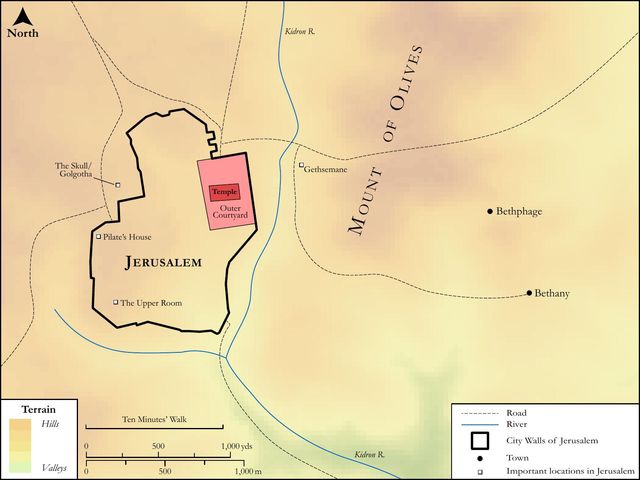
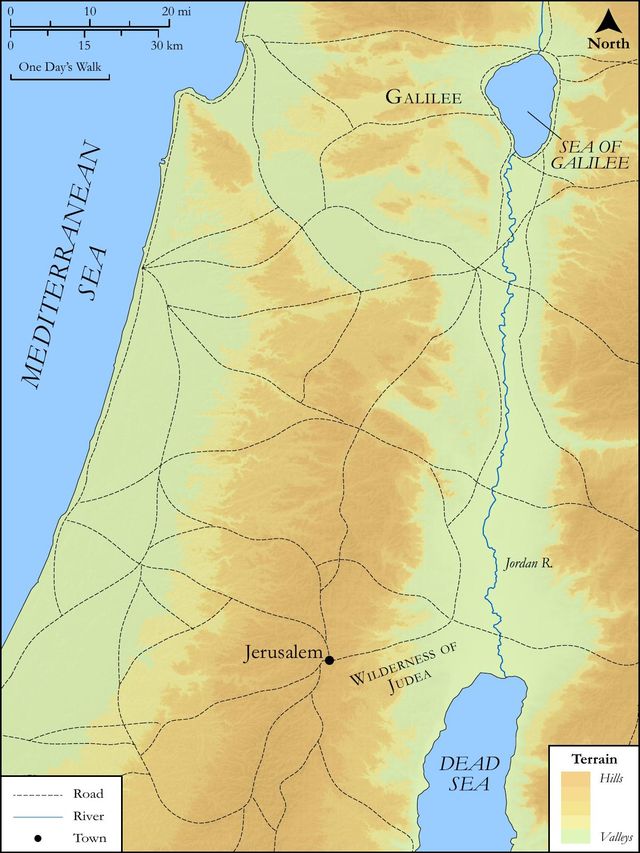
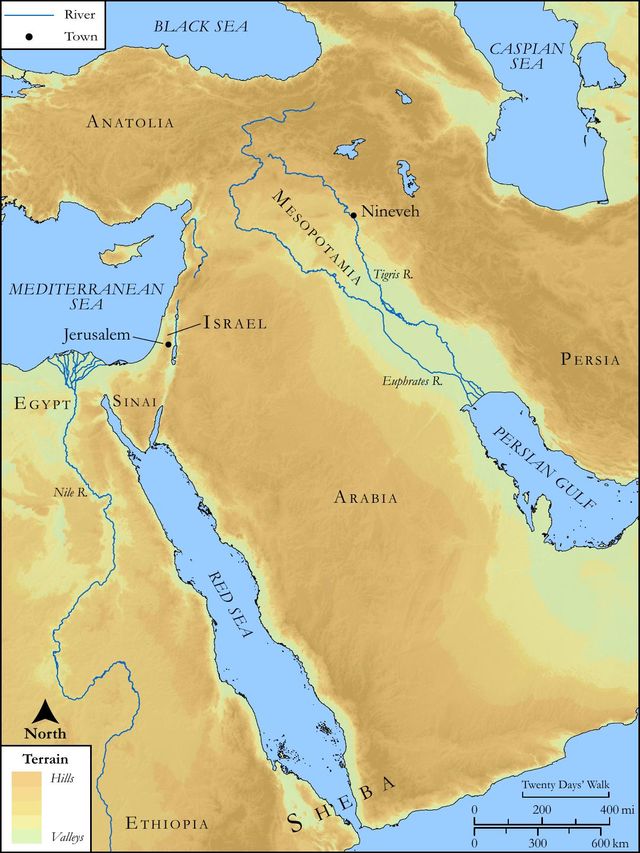
See on the biblical-era map
Study this verse
Public-domain commentary
Matthew Henry
From his Commentary on the Whole Bible. Henry comments on passages, not single verses — this entry covers Luke 4:1–13. His four-level outline is real structure in the source text, so it is rendered as structure.
The last words of the foregoing chapter, that Jesus was the Son of Adam, bespeak him to be the seed of the woman; being so, we have here, according to the promise, breaking the serpent's head, baffling and foiling the devil in all his temptations, who by one temptation had baffled and foiled our first parents. Thus, in the beginning of the war, he made reprisals upon him, and conquered the conqueror.
In this story of Christ's temptation, observe,
I.How he was prepared and fitted for it.
He that designed him the trial furnished him accordingly; for though we know not what exercises may be before us, nor what encounters we may be reserved for, Christ did, and was provided accordingly; and God doth for us, and we hope will provide accordingly.
1.He was full of the Holy Ghost, who had descended on him like a dove. He had now greater measures of the gifts, graces, and comforts, of the Holy Ghost than ever before. Note, Those are well armed against the strongest temptations that are full of the Holy Ghost.
2.He was newly returned from Jordan, where he was baptized, and owned by a voice from heaven to be the beloved Son of God; and thus he was prepared for this combat. Note, When we have had the most comfortable communion with God, and the clearest discoveries of his favour to us, we may expect that Satan will set upon us (the richest ship is the pirate's prize), and that God will suffer him to do so, that the power of his grace may be manifested and magnified.
3.He was led by the Spirit into the wilderness, by the good Spirit, who led him as a champion into the field, to fight the enemy that he was sure to conquer. His being led into the wilderness,
(1.)Gave some advantage to the tempter; for there he had him alone, no friend with him, by whose prayers and advice he might be assisted in the hour of temptation. Woe to him that is alone! He might give Satan advantage, who knew his own strength; we may not, who know our own weakness.
(2.)He gained some advantage to himself, during his forty days' fasting in the wilderness. We may suppose that he was wholly taken up in proper meditation, and in consideration of his own undertaking, and the work he had before him; that he spent all his time in immediate, intimate, converse with his Father, as Moses in the mount, without any diversion, distraction, or interruption. Of all the days of Christ's life in the flesh, these seem to come nearest to the angelic perfection and the heavenly life, and this prepared him for Satan's assaults, and hereby he was fortified against them.
4.He continued fasting (Luk 4:2): In those days he did eat nothing. This fast was altogether miraculous, like those of Moses and Elijah, and shows him to be, like them, a prophet sent of God. It is probable that it was in the wilderness of Horeb, the same wilderness in which Moses and Elijah fasted. As by retiring into the wilderness he showed himself perfectly indifferent to the world, so by his fasting he showed himself perfectly indifferent to the body; and Satan cannot easily take hold of those who are thus loosened fRom. and dead to, the world and the flesh. The more we keep under the body, and bring it into subjection, the less advantage Satan has against us.
II.How he was assaulted by one temptation after another, and how he defeated the design of the tempter in every assault, and became more than a conqueror. During the forty days, he was tempted of the devil (Luk 4:2), not by an inward suggestion, for the prince of this world had nothing in Christ by which to inject any such, but by outward solicitations, perhaps in the likeness of a serpent, as he tempted our first parents. But at the end of the forty days he came nearer to him, and did as it were close with him, when he perceived that he was hungry, Luk 4:2. Probably, our Lord Jesus then began to look about among the trees, to see if he could find any thing that was eatable, whence the devil took occasion to make the following proposal to him.
1.He tempted him to distrust his Father's care of him, and to set up for himself, and shift for provision for himself in such a way as his Father had not appointed for him (Luk 4:3): If thou be the Son of God, as the voice from heaven declared, command this stone to be made bread. (1.) "I counsel thee to do it; for God, if he be thy Father, has forgotten thee, and it will be long enough ere he sends either ravens or angels to feed thee." If we begin to think of being our own carvers, and of living by our own forecast, without depending upon divine providence, of getting wealth by our might and the power of our hands, we must look upon it as a temptation of Satan's, and reject it accordingly; it is Satan's counsel to think of an independence upon God. (2.) "I challenge thee to do it, if thou canst; if thou dost not do it, I will say thou art not the Son of God; for John Baptist said lately, God is able of stones to raise up children to Abraham, which is the greater; thou therefore hast not the power of the Son of God, if thou dost not of stones make bread for thyself, when thou needest it, which is the less." Thus was God himself tempted in the wilderness: Can he furnish a table? Can he give bread? Psa 78:19, Psa 78:20.
Now, [1.] Christ yielded not to the temptation; he would not turn that stone into bread; no, though he was hungry; First, Because he would not do what Satan bade him do, for that would have looked as if there had been indeed a compact between him and the prince of the devils. Note, We must not do any thing that looks like giving place to the devil. Miracles were wrought for the confirming of faith, and the devil had no faith to be confirmed, and therefore he would not do it for him. He did his signs in the presence of his disciples (Joh 20:30), and particularly the beginning of his miracles, turning water into wine, which he did, that his disciples might believe on him (Joh 2:11); but here in the wilderness he had no disciples with him. Secondly, He wrought miracles for the ratification of his doctrine, and therefore till he began to preach he would not begin to work miracles. Thirdly, He would not work miracles for himself and his own supply, lest he should seem impatient of hunger, whereas he came not to please himself, but to suffer grief, and that grief among others; and because he would show that he pleased not himself, he would rather turn water into wine, for the credit and convenience of his friends, than stones into bread, for his own necessary supply. Fourthly, He would reserve the proof of his being the Son of God for hereafter, and would rather be upbraided by Satan with being weak, and not able to do it, than be persuaded by Satan to do that which it was fit for him to do; thus he was upbraided by his enemies as if he could not save himself, and come down from the cross, when he could have come down, but would not, because it was not fit that he should. Fifthly, He would not do any thing that looked like distrust of his Father, or acting separately from him, or any thing disagreeable to his present state. Being in all things made like unto his brethren, he would, like the other children of God, live in a dependence upon the divine Providence and promise, and trust him either to send him a supply into the wilderness or to lead him to a city of habitation where there was a supply, as he used to do (Psa 107:5-7), and in the mean time would support him, though he was hungry, as he had done these forty days past.
[2.]He returned a scripture-answer to it (Luk 4:4): It is written. This is the first word recorded as spoken by Christ after his instalment in his prophetical office; and it is a quotation out of the Old Testament, to show that he came to assert and maintain the authority of the scripture as uncontrollable, even by Satan himself. And though he had the Spirit without measure, and had a doctrine of his own to preach and a religion to found, yet it agreed with Moses and the prophets, whose writings he therefore lays down as a rule to himself, and recommends to us as a reply to Satan and his temptations. The word of God is our sword, and faith in that word is our shield; we should therefore be mighty in the scriptures, and go in that might, go forth, and go on, in our spiritual warfare, know what is written, for it is for our learning, for our use. The text of scripture he makes use of is quoted from Deu 8:3 : "Man shall not live by bread alone. I need not turn the stone into bread, for God can send manna for my nourishment, as he did for Israel; man can live by every word of God, by whatever God will appoint that he shall live by." How had Christ lived, lived comfortably, these last forty days? Not by bread, but by the word of God, by meditation upon that word, and communion with it, and with God in and by it; and in like manner he could live yet, though now he began to be hungry. God has many ways of providing for his people, without the ordinary means of subsistence; and therefore he is not at any time to be distrusted, but at all times to be depended upon, in the way of duty. If meat be wanting, God can take away the appetite, or give such degrees of patience as will enable a man even to laugh at destruction and famine (Job 5:22), or make pulse and water more nourishing than all the portion of the king's meat (Dan 1:12, Dan 1:13), and enable his people to rejoice in the Lord, when the fig-tree doth not blossom, Hab 3:17. She was an active believer who said that she had made many a meal's meat of the promises when she wanted bread.
2.He tempted him to accept from him the kingdom, which, as the Son of God, he expected to receive from his Father, and to do him homage for, Luk 4:5-7. This evangelist puts this temptation second, which Matthew had put last, and which, it should seem, was really the last; but Luke was full of it, as the blackest and most violent, and therefore hastened to it. In the devil's tempting of our first parents, he presented to them the forbidden fruit, first as good for food, and then as pleasant to the eyes; and they were overpowered by both these charms. Satan here first tempted Christ to turn the stones into bread, which would be good for food, and then showed him the kingdoms of the world and the glory of them, which were pleasant to the eyes; but in both these he overpowered Satan, and perhaps with an eye to that, Luke changes the order. Now observe,
(1.)How Satan managed this temptation, to prevail with Christ to become a tributary to him, and to receive his kingdom by delegation from him.
[1.]He gave him a prospect of all the kingdoms of the world in a moment of time, an airy representation of them, such as he thought most likely to strike the fancy, and seem a real prospect. To succeed the better, he took him up for this purpose into a high mountain; and, because we next after the temptation find Christ on the other side Jordan, some think it probable that it was to the top of Pisgah that the devil took him, whence Moses has a sight of Canaan. That it was but a phantasm that the devil here presented our Saviour with, as the prince of the power of the air, is confirmed by that circumstance which Luke here takes notice of, that it was done in a moment of time; whereas, if a man take a prospect of but one country, he must do it successively, must turn himself round, and take a view first of one part and then of another. Thus the devil thought to impose upon our Saviour with a fallacy - a deceptio visus; and, by making him believe that he could show him all the kingdoms of the world, would draw him into an opinion that he could give him all those kingdoms.
[2.]He boldly alleged that these kingdoms were all delivered to him that he had power to dispose of them and all their glory, and to give them to whomsoever he would, Luk 4:6. Some think that herein he pretended to be an angel of light, and that, as one of the angels that was set over the kingdoms, he had out-bought, or out-fought, all the rest, and so was entrusted with the disposal of them all, and, in God's name, would give them to him, knowing they were designed for him; but clogged with this condition, that he should fall down and worship him, which a good angel would have been so far from demanding that he would not have admitted it, no, not upon showing much greater things than these, as appears, Rev 19:10; Rev 22:9. But I rather take it that he claimed this power as Satan, and as delivered to him not by the Lord, but by the kings and people of these kingdoms, who gave their power and honour to the devil, Eph 2:2. Hence he is called the god of this world, and the prince of this world. It was promised to the Son of God that he should have the heathen for his inheritance, Psa 2:8. "Why," saith the devil, "the heathen are mine, are my subjects and votaries; but, however, they shall be thine, I will give them thee, upon condition that thou worship me for them, and say that they are the rewards which I have given thee, as others have done before thee (Hos 2:12), and consent to have and hold them by, fRom. and under, me."
[3.]He demanded of him homage and adoration: If thou wilt worship me, all shall be thine, Luk 4:7. First, He would have him worship him himself. Perhaps he does not mean so as never to worship God, but let him worship him in conjunction with God; for the devil knows, if he can but once come in a partner, he shall soon be sole proprietor. Secondly, He would indent with him, that when, according to the promise made to him, he had got possession of the kingdoms of this world, he should make no alteration of religions in them, but permit and suffer the nations, as they had done hitherto, to sacrifice to devils (Co1 10:20); that he should still keep up demon-worship in the world, and then let him take all the power and glory of the kingdoms if he pleased. Let who will take the wealth and grandeur of this earth, Satan has all he would have if he can but have men's hearts, and affections, and adorations, can but work in the children of disobedience; for then he effectually devours them.
(2.)How our Lord Jesus triumphed over this temptation. He gave it a peremptory repulse, rejected it with abhorrence (Luk 4:8): "Get thee behind me, Satan, I cannot bear the mention of it. What! worship the enemy of God whom I came to serve? and of man whom I came to save? No, I will never do it." Such a temptation as this was not to be reasoned with, but immediately refused; it was presently knocked on the head with one word, It is written, Thou shalt worship the Lord thy God; and not only so, but him only, him and no other. And therefore Christ will not worship Satan, nor, when he has the kingdoms of the world delivered to him by his Father, as he expects shortly to have, will he suffer any remains of the worship of the devil to continue in them. No, it shall be perfectly rooted out and abolished, wherever his gospel comes. He will make no composition with him. Polytheism and idolatry must go down, as Christ's kingdom gets up. Men must be turned from the power of Satan unto God, from the worship of devils to the worship of the only living and true God. This is the great divine law that Christ will re-establish among men, and by his holy religion reduce men to the obedience of, That God only is to be served and worshipped; and therefore whoever set up any creature as the object of religious worship, though it were a saint or an angel, or the virgin Mary herself, they directly thwart Christ's design, and relapse into heathenism.
3.He tempted him to be his own murderer, in a presumptuous confidence of his Father's protection, such as he had no warrant for. Observe,
(1.)What he designed in this temptation: If thou be the Son of God, cast thyself down, Luk 4:9.
[1.]He would have him seek for a new proof of his being the Son of God, as if that which his Father had given him by the voice from heaven, and the descent of the Spirit upon him, were not sufficient, which would have been a dishonour to God, as if he had not chosen the most proper way of giving him the assurance of it; and it would have argued a distrust of the Spirit's dwelling in him, which was the great and most convincing proof to himself of his being the Son of God, Heb 1:8, Heb 1:9.
[2.]He would have him seek a new method of proclaiming and publishing this to the world. The devil, in effect, suggests that it was in an obscure corner that he was attested to be the Son of God, among a company of ordinary people, who attended John's baptism, that his honours were proclaimed; but if he would now declare from the pinnacle of the temple, among all the great people who attend the temple-service, that he was the Son of God, and then, for proof of it, throw himself down unhurt, he would presently be received by every body as a messenger sent from heaven. Thus Satan would have him seek honours of his devising (in contempt of those which God had put on him), and manifest himself in the temple at Jerusalem; whereas God designed he should be more manifest among John's penitents, to whom his doctrine would be more welcome than to the priests.
[3.]It is probable he had some hopes that, though he could not throw him down, to do him the least mischief, yet, if he would but throw himself down, the fall might be his death, and then he should have got him finely out of the way.
(2.)How he backed and enforced this temptation. He suggested, It is written, Luk 4:10. Christ had quoted scripture against him; and he thought he would be quits with him, and would show that he could quote scripture as well as he. It has been usual with heretics and seducers to pervert scripture, and to press the sacred writings into the service of the worst of wickednesses. He shall give his angels charge over thee, if thou be his Son, and in their hands they shall bear thee up. And now that he was upon the pinnacle of the temple he might especially expect this ministration of angels; for, if he was the Son of God, the temple was the proper place for him to be in (Luk 2:46); and, if any place under the sun had a guard of angels constantly, it must needs be that, Psa 68:17. It is true, God has promised the protection of angels, to encourage us to trust him, not to tempt him; as far as the promise of God's presence with us, so far the promise of the angels' ministration goes, but no further: "They shall keep thee when thou goest on the ground, where thy way lies, but not if thou wilt presume to fly in the air."
(3.)How he was baffled and defeated in the temptation, Luk 4:12. Christ quoted Deu 6:16, where it is said, Thou shalt not tempt the Lord thy God, by desiring a sign for the proof of divine revelation, when he has already given that which is sufficient; for so Israel did, when they tempted God in the wilderness, saying, He gave us water out of the rock; but can he give flesh also? This Christ would be guilty of if he should say, "He did indeed prove me to be the Son of God, by sending the Spirit upon me, which is the greater; but can he also give his angels a charge concerning me, which is the less?"
III.What was the result and issue of this combat, Luk 4:13.
Our victorious Redeemer kept his ground, and came off a conqueror, not for himself only, but for us also.
1.The devil emptied his quiver: He ended all the temptation. Christ gave him opportunity to say and do all he could against him; he let him try all his force, and yet defeated him. Did Christ suffer, being tempted, till all the temptation was ended? And must not we expect also to pass all our trials, to go through the hour of temptation assigned us?
2.He then quitted the field: He departed from him. He saw it was to no purpose to attack him; he had nothing in him for his fiery darts to fasten upon; he had no blind side, no weak or unguarded part in his wall, and therefore Satan gave up the cause. Note, If we resist the devil, he will flee from us.
3.Yet he continued his malice against him, and departed with a resolution to attack him again; he departed but for a season, achri kairou - till a season, or till the season when he was again to be let loose upon him, not as a tempter, to draw him to sin, and so to strike at his head, which was what he now aimed at and was wholly defeated in; but as a persecutor, to bring him to suffer by Judas and the other wicked instruments whom he employed, and so to bruise his heel, which it was told him (Gen 3:15) he should have to do, and would do, though it would be the breaking of his own head. He departed now till that season came which Christ calls the power of darkness (Luk 22:53), and when the prince of this world would again come, Joh 14:30.
Historical interpretation
Eleven Centuries of Reception
18 surviving comments on this verse. Each one is dated, so this reads as a timeline rather than a list.
Select a marker to jump to its quote. Markers stagger vertically where authors wrote within a few decades of each other.
By and by the Lord Himself consecrated His own baptism (and, in His own, that of all) by fasts; having (the power) to make "loaves out of stones," say, to make Jordan flow with wine perchance, if He had been such a "glutton and toper.
When therefore you read that Jesus was full of the Holy Spirit, and it is written in the Acts concerning the Apostles, that they were filled with the Holy Spirit, you must not suppose that the Apostles were equal to the Saviour. For as if you should say, These vessels are full of wine or oil, you would not thereby affirm them to be equally full, so Jesus and Paul were full of the Holy Spirit, but Paul's vessel was far less than that of Jesus, and yet each was filled according to its own measure. Having then received baptism, the Saviour, being full of the Holy Spirit, which came upon Him from heaven in the form of a dove, was led by the Spirit, because, as many as are led by the Spirit, they are the sons of God, (Rom. 8:14.) but He was above all, especially the Son of God.
Why didn’t Satan tempt him before his thirtieth year? He tempted Jesus because a definite sign of Christ’s divinity had not yet been given from heaven. He appeared modest like others, and he had not received any obvious homage in the presence of his people. Satan refrained from tempting him until the beginning of this event. When he heard, “Now, behold the Lamb of God is coming,” and “This is he who takes away the sins of the world,” Satan was astonished. Yet he waited until Jesus was baptized to see if he would be baptized as if he needed to be baptized.Then he saw the splendor of the light that appeared on the water, the voice that came from heaven. Then Satan knew that he who fulfills every need had gone down into the water and that he had not come to baptism as if he needed to be baptized. Satan reflected and said to himself, “As long as I have not tested him by combat through temptation I will not be able to identify him.” But it was not fitting that the Benefactor should resist the will of him who had come to tempt him. For, not knowing how to tempt him, Satan did not dare approach him.
For not by word provoking the enemy, but by His actions rousing him, He seeks the wilderness. For the devil delights in the wilderness, he is not wont to go into the cities, the harmony of the citizens troubles him.
Or, the Lord remained for forty days untempted, for the devil knew that He fasted, yet hungered not, and dared not therefore approach Him. Hence it follows: And he eat nothing in those days. He fasted indeed, to show that He who would gird Himself for struggles against temptation must be temperate and sober.
(ex Const. Mon.) But we must not however so use the flesh, that through want of food our strength should waste away, nor that by excess of mortification our understandings wax dull and heavy. Our Lord therefore, once performed this work, but during this whole succeeding time He governed His body with due order, and so in like manner did Moses and Elias.
(ubi sup.) But because not to suffer hunger is above the nature of man, our Lord took upon Himself the feeling of hunger, and submitted Himself as it pleased Him to human nature, both to do and to suffer those things which were His own. Hence it follows: And those days being ended, he was a hungered. Not forced to that necessity which overpowers nature, but as if provoking the devil to the conflict. For the devil, knowing that wherever hunger is there is weakness, sets about to tempt Him, and as the deviser or inventer of temptations, Christ permitting him tries to persuade Him to satisfy His appetite with the stones. As it follows; But the devil said unto him, If thou art the Son of God, command these stones that they be made bread.
(ubi sup.) He tried to persuade Christ to satisfy His appetite with stones, i. e. to shift his desire from the natural food to that which was beyond nature or unnatural.
(ubi sup.) But Christ while He vanquishes temptation, banishes not hunger from our nature, as though that were the cause of evils, (which is rather the preservative of life, but confining nature within its proper bounds, shows of what kind its nourishment is, as follows; And Jesus answered him, saying, It is written, Man shall not live by bread alone.
(Orat. 40.) He fasted in truth forty days, eating nothing. (For He was God.) But we regulate our fasting according to our strength, although the zeal of some persuades them to fast beyond what they are able.
(Poem. Mor. x. 624.) For the body nourishes not our immaterial nature.
He fasted in truth forty days, eating nothing. (For He was God.) But we regulate our fasting according to our strength, although the zeal of some persuades them to fast beyond what they are able.
For the body nourishes not our immaterial nature.
(in Eccles. Hom. 5.) Virtue then is not sustained by bread, nor by flesh does the soul keep itself in health and vigour, but by other banquets than these is the heavenly life fostered, and increased. The nourishment of the good man is chastity, his bread, wisdom, his herbs, justice, his drink, freedom from passion, his delight, (εὐφροσύνη quasi ex εὐφρόνειν) to be rightly wise.
It is fitting that it be recorded that the first Adam was cast out of Paradise into the desert, that you may observe how the second Adam returned from the desert to Paradise.… Adam brought death through the tree. Christ brought life through the cross. Adam, naked of spiritual things, covered himself with the foliage of a tree. Christ, naked of worldly things, did not desire the trappings of the body. Adam lived in the desert. Christ lived in the desert, for he knew where he could find the lost. With their error canceled, he could recall them to Paradise.…So Jesus, full of the Holy Spirit, is led into the desert for a purpose, in order to challenge the devil. If he had not fought, he would not have conquered him for me.
He was led therefore into the wilderness, to the intent that He might provoke the devil, for if the one had not contended, the other it seems had not conquered. In a mystery, it was to deliver that Adam from exile who was cast out of Paradise into the wilderness. By way of example, it was to show us that the devil envies us, whenever we strive after better things; and that then we must use caution, lest the weakness of our minds should lose us the grace of the mystery. Hence it follows: And he was tempted of the devil.
There are three things which united together conduce to the salvation of man; The Sacrament, The Wilderness, Fasting. No one who has not rightly contended receives a crown, but no one is admitted to the contest of virtue, except first being washed from the stains of all his sins, he is consecrated with the gift of heavenly grace.
But mark the mystical number of days. For you remember that for forty days the waters of the deep were poured forth, and by sanctifying a fast of that number of days, He brings before us the returning mercies of a calmer sky. By a fast of so many days also, Moses earned for himself the understanding of the law. Our fathers being for so many years settled in the wilderness, obtained the food of Angels.
There are three especial weapons which we are taught the devil is wont to arm himself with, that he may wound the soul of man. One is of the appetite, another of boasting, the third ambition. He began with that wherewith he had already conquered, namely, Adam. Let us then beware of the appetite, let us beware of luxury, for it is a weapon of the devil. But what mean his words, If thou art the Son of God, unless he had known that the Son would come, but supposed Him not to have come from the weakness of His body. He first endeavours to find Him out, then to tempt Him. He professes to trust Him as God, then tries to deceive Him as man.
You see then what kind of arms He uses to defend man against the assaults of spiritual wickedness, and the allurements of the appetite. He does not exert His power as God, (for how had that profited me,) but as man He summons to Himself a common aid, that while intent upon the food of divine reading He may neglect the hunger of the body, and gain the nourishment of the word. For he who seeks after the word cannot feel the want of earthly bread; for divine things doubtless make up for the loss of human. At the same time by saying, Man lives not by bread alone, He shows that man was tempted, that is, our flesh which He assumed, not His own divinity.
(Hom. 13. in Matt.) But very wisely, He exceeded not their number of days, lest indeed He should be thought to have come in appearance only, and not to have really received the flesh, or lest the flesh should seem to be something beyond human nature.
“He was led, therefore,” it says, “in the Spirit in the wilderness forty days, being tempted of the devil.” What is the meaning of the word led? It signifies not so much that he was led there as that he dwelt and continued there.…He dwelt therefore in the wilderness in the Spirit, that is, spiritually. He fasted, granting no food whatsoever to the necessities of the body. I imagine someone may immediately object to this: And what harm, then, did it do Jesus to dwell in cities constantly? And in what way could it benefit him to choose to inhabit the wilderness? He did not lack one good thing. And why, too, did he fast also? Why was it necessary for him to labor? He does not know what it means to have a depraved desire. For we adopt the practice of fasting as a very useful expedient, by which we kill pleasure and attack the law of sin that is in our bodies and completely destroy those emotions which lead on to fleshly lust. But why did Christ need to fast? The Father slays the sin in the flesh by his body. He kills the motions of the flesh in us. He has abolished sin in miserable beings—in us. What kind of fasting could he need in anything that concerns himself? He is holy, undefiled by nature, wholly pure and without blemish. He cannot experience even the shadow of a change.
God said in times past, My Spirit shall not always abide in men, for that they are flesh. (Gen. 6:3. Vulg.) But now that we have been enriched with the gift of regeneration by water and the Spirit, we are become partakers of the Divine nature by participation of the Holy Spirit. But the first-born among many brethren first received the Spirit, who Himself also is the giver of the Spirit, that we through Him might also receive the grace of the Holy Spirit.
Behold, He is among the wrestlers, who as God awards the prizes. He is among the crowned, who crowns the heads of the saints.
It is often doubted by some by what spirit Jesus was led into the desert. This question is properly understood if we believe he was led into the desert by the Holy Spirit, so that his own Spirit would lead him there, where the evil spirit would then find him to tempt him.
Therefore it is not unworthy of our Redeemer that he willed to be tempted, he who had come to be killed. For it was just that he should overcome our temptations by his temptations, just as he had come to conquer our death by his death.
But we should know that temptation occurs in three ways: by suggestion, by delight, and by consent. And when we are tempted, we frequently fall into delight or even into consent, because having been propagated from the sin of the flesh, we bear within ourselves that from which we endure struggles. But God, who was incarnate in the womb of a Virgin and came into the world without sin, tolerated no contradiction within himself. Therefore he could be tempted through suggestion, but the delight of sin did not bite his mind. And so all that diabolical temptation was external, not internal.
(3. Mor. sup. Job 2.) Our enemy was however unable to shake the purpose of the Mediator between God and men. For He condescended to be tempted outwardly, yet so that His soul inwardly, resting in its divinity, remained unshaken.
That there might be no doubt by what Spirit He was led, while the other Evangelists say, into the wilderness, Luke has purposely added, And he was led by the Spirit into the wilderness for forty days. That no unclean spirit should be thought to have prevailed against Him, who being full of the Holy Spirit did whatever He wished.
Now Jesus, full of the Holy Spirit, returned from the Jordan and was led by the Spirit into the desert for forty days. This, immediately after the baptism of the Lord, Matthew and Mark designate. One of them, after describing His baptism, immediately subjoined: Then Jesus was led up by the Spirit into the desert to be tempted by the devil (Matthew IV). The other wrote thus: And immediately the Spirit drove him into the desert, and he was there for forty days and forty nights, and was tempted by Satan (Mark I). Indeed, lest anyone should doubt by which spirit he was led or driven into the desert, Luke prudently wrote first that Jesus, full of the Holy Spirit, returned from the Jordan, and then added, and was led by the Spirit into the desert, so that nothing might be thought to have prevailed against Him from an unclean spirit, who, full of the Holy Spirit, walked as He willed and did what He willed. For even later, where it is clearly stated that He was taken up or set up on high by the devil, it reflects not on His weakness, but on the enemy's arrogance who thinks to impose necessity on the Savior's will. Therefore, Jesus is not driven into the desert by the power of any evil spirit, but by the will of His own good Spirit, He enters the place of combat, certain of victory, to defeat the adversary. Here He also rightly shows us the order of virtuous living, so that after receiving in baptism the remission of sins and the grace of the Holy Spirit, we may gird ourselves more tightly against new snares of the ancient enemy, withdraw our mind from the world, and, like the manna in the desert, learn to hunger only for the joys of eternal life.
Christ is tempted after His baptism, showing us that after we are baptized, temptations await us. Hence it is said, But Jesus being full of the Holy Spirit, &c.
As if He said, Not by bread alone is human nature sustained, but the word of God is sufficient to support the whole nature of man. Such was the food of the Israelites when they gathered manna during the space of forty years, and when they delighted in the taking of quails. (Exod. 16:15, Numb. 11:32) By the Divine counsel Elias had the crows to entertain him; (1 Kings 17:6) Elisha fed his companions on the herbs of the field. (2 Kings 4:44.)
(Severus.) But if we order our lives according to our own will, how was He led about unwillingly? Those words then, He was led by the Spirit, have some meaning of this kind: He led of His own accord that kind of life, that He might present an opportunity to the tempter.
Continue studying Luke 4:1 across the web’s major study libraries — every link below opens this exact verse, chapter, or book on the destination site.
Read & Compare
 BibleGatewayThis verse in more than 200 translations and 70 languages.
 Bible.comThe YouVersion reader — hundreds of translations, reading plans, and highlights.
 ESV.orgCrossway's official English Standard Version reader.
 NET BibleThe NET translation with 60,000+ translators' notes on every rendering decision.
 STEP BibleTyndale House's free study tool — original text, vocabulary, and scholarly resources.
 BibliaLogos Bible Software's free web reader.
 USCCBThe New American Bible (Revised Edition) with the U.S. bishops' study notes.
Commentaries
 BibleHub CommentariesDozens of classic commentaries on this verse, gathered on one page.
 StudyLightMore than 100 commentary sets — the largest collection on the web.
 BibleRefPlain-English commentary on what this verse means, verse by verse.
 Enduring WordDavid Guzik's free commentary on this chapter, widely used by Bible teachers.
 Bible Study ToolsVerse commentary alongside Greek and Hebrew study aids.
Original Language & Research
- BibleHub InterlinearThe verse word by word — original language, transliteration, and English.
- BibleHub LexiconEvery word's original-language definition and Strong's entry.
 Blue Letter BibleDeep-study tools — Strong's numbers, concordance, and word studies.
 CNTR CollationThe earliest Greek manuscripts of this verse, collated letter by letter.
Sermons, Hymns & Audio


TrulyRandomVerse is not affiliated with these sites and doesn’t control their content. They’re linked because they’re genuinely useful.
Summary
Luke 4:1 marks a profound transition in the earthly ministry of Jesus, immediately following His baptism and divine affirmation at the Jordan River. This verse portrays Jesus, now fully imbued with the Holy Spirit's power and presence, returning from the site of His anointing and being divinely guided into the desolate wilderness. It sets the stage for a period of intense spiritual preparation and testing, a crucial precursor to the commencement of His public ministry and messianic work.
Context
ShowHideLiterary Context
This verse serves as a direct and pivotal bridge from the preceding narrative of Jesus's baptism and genealogy in Luke 3 to the account of His temptation in the wilderness and the subsequent launch of His public ministry in Luke 4:2-13. Having just been publicly identified as God's beloved Son and anointed by the Holy Spirit in bodily form like a dove (Luke 3:21-22), Jesus is now led by that same Spirit into a period of solitude and spiritual confrontation. The immediate sequence highlights the divine orchestration of Jesus's life, demonstrating that His ministry was not undertaken on His own initiative but was entirely Spirit-empowered and Spirit-led from its very inception.
Historical & Cultural Context
The Jordan River was a significant geographical and symbolic landmark in ancient Israel, often associated with new beginnings and divine encounters, such as the crossing into the Promised Land (Joshua 3) or Elijah's ascension (2 Kings 2). The "wilderness" (Greek: erēmos) was a common setting for spiritual testing, purification, and encounters with God in Israelite history, reminiscent of Israel's forty years in the wilderness (Deuteronomy 8:2) and John the Baptist's ministry (Luke 3:2-3). For Jesus, entering the wilderness after His baptism would have resonated with these historical precedents, signaling a period of intense spiritual preparation and a direct confrontation with the forces of evil, mirroring the challenges faced by God's people throughout their history.
Key Themes
ShowHideThis verse powerfully introduces several foundational themes that permeate Luke's Gospel and the broader biblical narrative. Firstly, it emphasizes Divine Empowerment and Anointing, underscoring that even the Son of God, in His humanity, operated fully reliant on and saturated with the Holy Spirit's power. The phrase "full of the Holy Ghost" signifies not merely a presence but a complete indwelling and dynamic enabling for His messianic mission. Secondly, it highlights Divine Leading and Obedience, as Jesus was "led by the Spirit into the wilderness," demonstrating His perfect submission to the Father's will and the Spirit's guidance. This divine orchestration sets a precedent for the Spirit's active role in the lives of believers, as seen in Romans 8:14. Finally, the verse introduces the theme of Preparation for Ministry through Testing, where the wilderness experience, though challenging, served as a vital period of spiritual refinement and proving. It was a necessary precursor to His powerful public ministry, as detailed in Luke 4:2-13, where He would confront temptation and demonstrate His unwavering commitment to God's will.
Exposition and Analysis
ShowHideKey Word Analysis
ShowHideThis word, derived from plēthō (to fill), signifies being "replete" or "complete." In the context of "full of the Holy Ghost," it conveys a profound and overflowing measure of the Spirit's presence and influence. It implies not just a partial anointing but a complete saturation, indicating Jesus's readiness and empowerment for His divine mission.
This term refers to a "current of air, i.e., breath or a breeze," but by analogy or figuratively, it denotes a "spirit," including the human soul, vital principle, or mental disposition. Crucially, in this context, it refers to the "Holy Spirit" or "divine Spirit." Its use here emphasizes the Person of the Holy Spirit as the active agent empowering and guiding Jesus.
A primary verb meaning "to lead," "to bring," or "to drive." Here, in the passive voice ("was led"), it conveys the active, guiding role of the Spirit in directing Jesus's path and actions. This is not a passive drifting but a deliberate, divinely orchestrated movement, indicating Jesus's perfect submission to the Spirit's direct guidance.
Verse Breakdown
ShowHide"And Jesus being full of the Holy Ghost"
This opening clause immediately establishes the spiritual state of Jesus following His baptism. "Full of the Holy Ghost" signifies a complete and dynamic anointing, a saturation with divine power and presence. It indicates that Jesus's subsequent actions are not merely human endeavors but are empowered and directed by the Spirit of God, underscoring His unique relationship with the divine.
"returned from Jordan"
This phrase marks a geographical and transitional point. Jesus is leaving the site of His baptism, a public affirmation of His identity and mission, and moving towards the next phase of His preparation. The return from Jordan signifies the conclusion of one significant event and the commencement of another, divinely appointed period.
"and was led by the Spirit into the wilderness"
This final clause is crucial, highlighting the divine agency and Jesus's perfect obedience. The passive voice "was led" emphasizes that the Holy Spirit is the active guide, directing Jesus's path. The destination, "the wilderness" (erēmos), is a place of solitude, testing, and spiritual confrontation, chosen by divine design as the arena for Jesus's preparation for His public ministry.
Literary Devices
ShowHideLuke 4:1 employs several significant literary devices. Divine Agency is paramount, as the verse explicitly states that Jesus "was led by the Spirit," emphasizing God's direct involvement and orchestration of events in Jesus's life. This highlights the Spirit's active role as a guiding force. Foreshadowing is also evident, as Jesus's journey into the wilderness directly precedes His temptation by the devil, setting the stage for the spiritual warfare that defines His subsequent ministry. The wilderness itself functions as Symbolism, representing a place of testing, purification, and encounter with divine and demonic forces, echoing the experiences of Israel in the Old Testament. Furthermore, the phrase "full of the Holy Ghost" serves as a form of Characterization, immediately establishing Jesus's unparalleled spiritual endowment and readiness for His messianic task.
Theological and Thematic Connections
ShowHideLuke 4:1 is a foundational text for understanding the person and work of Jesus, particularly His reliance on the Holy Spirit. It underscores the Trinitarian nature of God, with the Son being empowered and guided by the Spirit, reflecting the perfect unity and cooperation within the Godhead. This divine leading into a period of intense testing also establishes a pattern of preparation for ministry, demonstrating that even the Messiah underwent a season of spiritual refinement before His public work. The verse implicitly connects to the broader biblical theme of the Spirit's role in empowering God's chosen servants for specific tasks, from the prophets of the Old Testament to the apostles in the New. It reveals that Jesus, though divine, fully embraced His human experience, operating within the confines of humanity yet perfectly empowered by God.
Reflection and Application
ShowHideLuke 4:1 offers profound insights for believers today, serving as a powerful paradigm for the Christian life. Just as Jesus, the Son of God, was empowered and led by the Holy Spirit, so too are Christians called to live lives surrendered to and guided by the Spirit. This verse reminds us that genuine spiritual service and effectiveness are not born of human effort alone but flow from a profound indwelling and active leading of the Holy Spirit. It challenges us to cultivate a deeper dependence on the Spirit, recognizing that even periods of "wilderness" – times of solitude, testing, or difficulty – are often divinely orchestrated for our spiritual growth and preparation for God's greater purposes. Embracing the Spirit's guidance, even when it leads us to uncomfortable or challenging places, is essential for fulfilling our divine calling and maturing in our faith.
Questions for Reflection
ShowHideFAQ
ShowHideWhy was Jesus "led by the Spirit into the wilderness" immediately after His baptism?
ShowHideJesus was led by the Spirit into the wilderness immediately after His baptism as a divinely orchestrated period of preparation and testing. His baptism marked His public anointing and affirmation as God's Son, and the wilderness experience was a necessary spiritual crucible before He began His public ministry. This period allowed Him to confront temptation, demonstrate His unwavering obedience to God, and fully prepare for the spiritual warfare and demanding work ahead. It echoes the forty years Israel spent in the wilderness and serves as a pattern for the spiritual preparation often required before significant divine assignments. The account of His temptation is detailed in Luke 4:2-13.
What does it mean for Jesus to be "full of the Holy Ghost"?
ShowHideFor Jesus to be "full of the Holy Ghost" means He was completely indwelt, saturated, and empowered by the Holy Spirit. This was not a temporary anointing but a profound and continuous state of being filled with divine power and presence. It signifies His perfect humanity operating in perfect synergy with the divine Spirit, enabling Him to perform miracles, teach with authority, and fulfill His messianic mission. This state of being "full of the Holy Ghost" is a direct result of the Spirit's descent upon Him at His baptism, as described in Luke 3:22.
Christ-Centered Fulfillment
ShowHideLuke 4:1 powerfully portrays Jesus as the Spirit-empowered Messiah, the New Adam who perfectly fulfills God's will where the first Adam failed. Having been publicly anointed by the Spirit at His baptism, Jesus is now "full of the Holy Ghost," signifying His complete readiness and divine enablement for His redemptive mission. His being "led by the Spirit into the wilderness" is a deliberate act of divine orchestration, mirroring Israel's wilderness journey but culminating in perfect obedience where Israel often faltered. In this, Jesus embodies the true Son of God, not only receiving the Spirit but perfectly submitting to His guidance, even into a place of intense spiritual combat. This foreshadows His ultimate victory over sin and death, demonstrating that the power by which He would accomplish salvation was the very power of God's Spirit. His journey into the wilderness, empowered by the Spirit, sets the pattern for His entire ministry, leading to His ultimate sacrifice and resurrection, all by the power of the Spirit (Romans 8:11). Thus, Luke 4:1 is not merely a biographical detail but a foundational declaration of Jesus's messianic identity and the Spirit-driven nature of His saving work, which He extends to all who believe, empowering them by the same Spirit (Acts 2:38).