


Luke 22:31
Bible text: King James Version (1769 Blayney text) · Public domain
Bible text: Berean Standard Bible · Public domain
Bible text: American Standard Version (1901) · Public domain
Bible text: World English Bible, Messianic edition · Public domain
Bible text: Geneva Bible (1599) · Public domain
Bible text: Young's Literal Translation · Public domain
- ΕἶπενEipensaidG2036V-2AAI-3SVerb 2nd Aorist Active Indicative 3rd Singular
- δὲdenowG1161CONJConjunction
- ὁho<the>G3588T-NSMDefinite article Nominative Singular Masculine
- κύριος·kuriosLordG2962N-NSM-TNoun Nominative Singular Masculine Title
- ΣίμωνSimōnSimonG4613N-VSM-PNoun Vocative Singular Masculine Person Gentilic
- ΣίμωνSimōnSimonG4613N-VSM-PNoun Vocative Singular Masculine Person Gentilic
- ἰδοὺidouBeholdG2400INJInterjection
- ὁho<the>G3588T-NSMDefinite article Nominative Singular Masculine
- σατανᾶςsatanasSatanG4567N-NSM-TNoun Nominative Singular Masculine Title
- ἐξῃτήσατοexētēsatodemanded to haveG1809V-AMI-3SVerb Aorist Middle Indicative 3rd Singular
- ὑμᾶςhumasall of youG4771P-2APPersonal pronoun Accusative 2nd Plural
- τοῦtou<the>G3588T-GSNDefinite article Genitive Singular Neuter
- σινιάσαιsiniasaito siftG4617V-AANVerb Aorist Active Infinitive
- ὡςhōslikeG5613PRTParticle or Disjunctive
- τὸνton<the>G3588T-ASMDefinite article Accusative Singular Masculine
- σῖτονsitonwheatG4621N-ASMNoun Accusative Singular Masculine
English is a literal word-by-word gloss of the Greek, not the KJV's wording. Why?
This is the original text the KJV's translators worked from — each Greek word with its own literal English meaning in this verse, prepared by scholars at Tyndale House, Cambridge. The KJV translates whole sentences, not word by word, so its wording differs: one Greek word can become several English words, and the KJV may choose “charity” where the gloss reads “love”. Both are faithful — they answer different questions. For the KJV's own rendering, switch to the KJV text.
Details
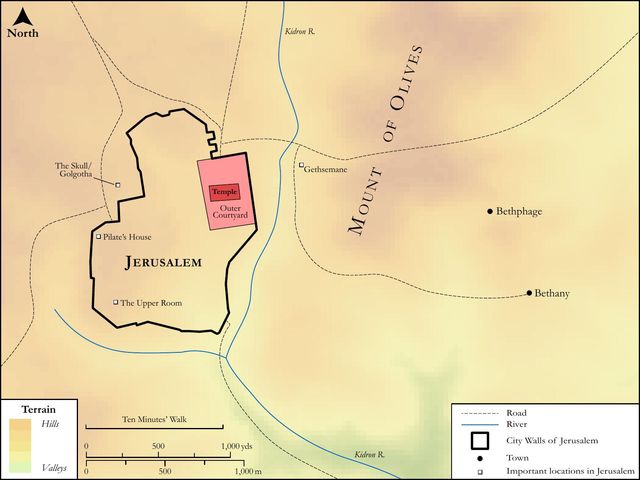
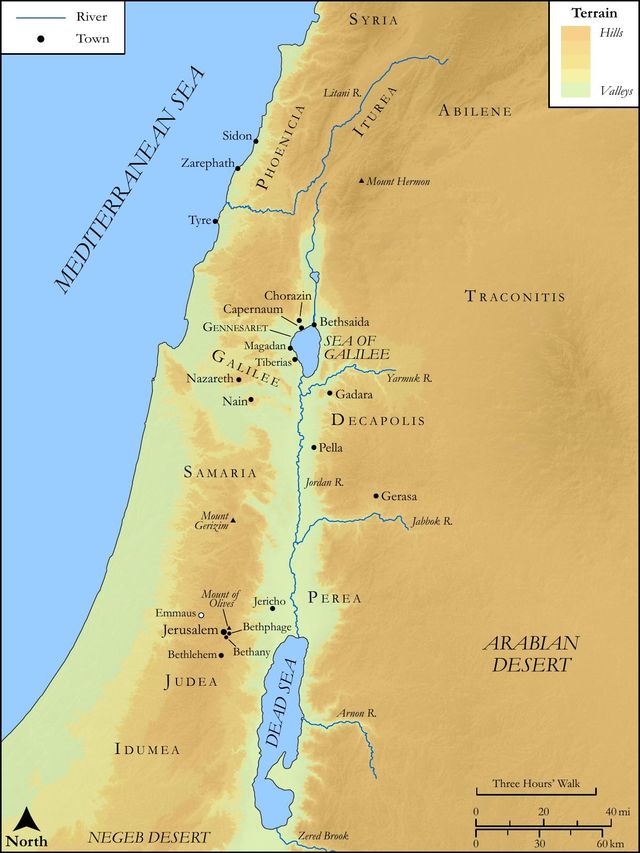
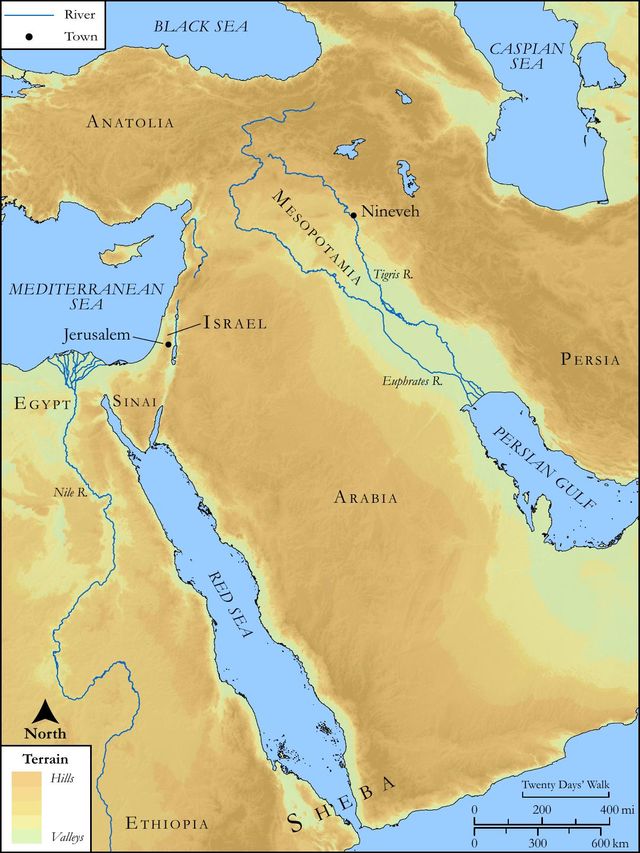
See on the biblical-era maps
Study this verse
Public-domain commentary
Matthew Henry
From his Commentary on the Whole Bible. Henry comments on passages, not single verses — this entry covers Luke 22:21–38. His four-level outline is real structure in the source text, so it is rendered as structure.
We have here Christ's discourse with his disciples after supper, much of which is new here; and in St. John's gospel we shall find other additions. We should take example from him to entertain and edify our family and friends with such discourse at table as is good and to the use of edifying, which may minister grace to the hearers; but especially after we have been at the Lord's table, by Christian conference to keep one another in a suitable frame. The matters Christ here discoursed of were of weight, and to the present purpose.
I.He discoursed with them concerning him that should betray him, who was now present.
1.He signifies to them that the traitor was now among them, and one of them, Luk 22:21. By placing this after the institution of the Lord's supper, though in Matthew and Mark it is placed before it, it seems plain that Judas did receive the Lord's supper, did eat of that bread and drink of that cup; for, after the solemnity was over, Christ said, Behold, the hand of him that betrayeth me is with me on the table. There have been those that have eaten bread with Christ and yet have betrayed him.
2.He foretels that the treason would take effect (Luk 22:22): Truly the Son of man goes as it was determined, goes to the place where he will be betrayed; for he is delivered up by the counsel and foreknowledge of God, else Judas could not have delivered him up. Christ was not driven to his sufferings, but cheerfully went to them. He said, Lo, I come.
3.He threatens the traitor: Woe to that man by whom he is betrayed. Note, Neither the patience of the saints under their sufferings, nor the counsel of God concerning their sufferings, will be any excuse for those that have any hand in their sufferings, or that persecute them. Though God has determined that Christ shall be betrayed and he himself has cheerfully submitted to it, yet Judas's sin or punishment is not at all the less.
4.He frightens the rest of the disciples into a suspicion of themselves, by saying that it was one of them, and not naming which (Luk 22:23): They began to enquire among themselves, to interrogate themselves, to put the question to themselves, who it was that should do this thing, that could be so base to so good a Master. The enquiry was not, Is it you? or, Is it such a one? but, Is it I?
II.Concerning the strife that was among them for precedency or supremacy.
1.See what the dispute was: Which of them should be accounted the greatest. Such and so many contests among the disciples for dignity and dominion, before the Spirit was poured upon them, were a sad presage of the like strifes for, and affections of, supremacy in the churches, after the Spirit should be provoked to depart from them. How inconsistent is this with that in the verse before! There they were enquiring which would be the traitor, and here which should be the prince. Could such an instance of humility, and such an instance of pride and vanity, be found in the same men, so near together? This is like sweet waters and bitter proceeding at the same time out of the same fountain. What a self-contradiction is the deceitful heart of man!
2.See what Christ said to this dispute. He was not sharp upon them, as might have been expected (he having so often reproved them for this very thing), but mildly showed them the sin and folly of it.
(1.)This was to make themselves like the kings of the Gentiles, who affect worldly pomp, and worldly power, Luk 22:25. They exercise lordship over their subjects, and are ever and anon striving to exercise lordship too over the princes that are about them, though as good as themselves, if they think them not so strong as themselves. Note, The exercising of lordship better becomes the kings of the Gentiles than the ministers of Christ. But observe, They that exercise authority, and take upon themselves to bear sway, and give law, they are called Benefactors - Euergetas, they call themselves so, and so their flatterers call them, and those that set themselves to serve their interests. It is pretended that they have been benefactors, and upon that account they should be admitted to have rule; nay, that in exercising authority they are benefactors. However they may really serve themselves, they would be thought to serve their country. One of the Ptolemies was surnamed Euergetes - The Benefactor. Now our Saviour, by taking notice of this, intimates,
[1.]That to do good is much more honourable than to look great; for these princes that were the terror of the mighty would not be called so, but rather the benefactors of the needy; so that, by their own confession, a benefactor to his country is much more valued than a ruler of his country.
[2.]That to do good is the surest way to be great, else they that aimed to be rulers would not have been so solicitous to be called Benefactors. This therefore he would have his disciples believe, that their greatest honour would be to do all the good they could in the world. They would indeed be benefactors to the world, by bringing the gospel to it. Let them value themselves upon that title, which they would indeed be entitled to, and then they need not strive which should be the greatest, for they would all be greater - greater blessings to mankind than the kings of the earth, that exercise lordship over them. If they have that which is confessedly the greater honour, of being benefactors, let them despise the less, of being rulers.
(2.)It was to make themselves unlike the disciples of Christ, and unlike Christ himself: "You shall not be so," Luk 22:26, Luk 22:27. "It was never intended that you should rule any otherwise than by the power of truth and grace, but that you should serve." When church-rulers affect external pomp and power, and bear up themselves by secular interests and influences, they debase their office, and it is an instance of degeneracy like that of Israel when they would have a king like the nations that were round about them, whereas the Lord was their King. See here,
[1.]What is the rule Christ gave to his disciples: He that is greater among you, that is senior, to whom precedency is due upon the account of his age, let him be as the younger, both in point of lowness of place (let him condescend to sit with the younger, and be free and familiar with them) and in point of labour and work. We say, Juniores ad labores, seniores ad honores - Let the young work, and the aged receive their honours. But let the elder take pains as well as the younger; their age and honour, instead of warranting them to take their ease, bind them to double work. And he that is chief, ho hēgoumenos - the president of the college or assembly, let him be as he that serves, hōs ho diakonōn - as the deacon; let him stoop to the meanest and most toilsome services for the public good, if there be occasion.
[2.]What was the example which he himself gave to this rule: Whether is greater, he that sitteth at meat or he that serveth? he that attendeth or he that is attended on? Now Christ was among his disciples just like one that waited at table. He was so far from taking state, or taking his ease, by commanding their attendance upon him, that he was ready to do any office of kindness and service for them; witness his washing their feet. Shall those take upon them the form of princes who call themselves followers of him that took upon him the form of a servant?
(3.)They ought not to strive for worldly honour and grandeur, because he had better honours in reserve for them, of another nature, a kingdom, a feast, a throne, for each of them, wherein they should all share alike, and should have no occasion to strive for precedency, Luk 22:28-30. Where observe,
[1.]Christ's commendation of his disciples for their faithfulness to him; and this was honour enough for them, they needed not to strive for any greater. It is spoken with an air of encomium and applause: "You are they who have continued with me in my temptations, you are they who have stood by me and stuck to me when others have deserted me and turned their backs upon me." Christ had his temptations; he was despised and rejected of men, reproached and reviled, and endured the contradiction of sinners. But his disciples continued with him, and were afflicted in all his afflictions. It was but little help that they could give him, or service that they could do him; nevertheless, he took it kindly that they continued with him, and he here owns their kindness, though it was by the assistance of his own grace that they did continue. Christ's disciples had been very defective in their duty. We find them guilty of many mistakes and weaknesses: they were very dull and very forgetful, and often blundered, yet their Master passes all by and forgets it; he does not upbraid them with their infirmities, but gives them this memorable testimonial, You are they who have continued with me. Thus does he praise at parting, to show how willing he is to make the best of those whose hearts he knows to be upright with him.
[2.]The recompence he designed them for their fidelity: I appoint, diatithemai, I bequeath, unto you a kingdom. Or thus, I appoint to you, as my Father has appointed a kingdom to me, that you may eat and drink at my table. Understand it, First, Of what should be done for them in this world. God gave his Son a kingdom among men, the gospel church, of which he is the living, quickening, ruling, Head. This kingdom he appointed to his apostles and their successors in the ministry of the gospel, that they should enjoy the comforts and privileges of the gospel, help to communicate them to others by gospel ordinances, sit on thrones as officers of the church, not only declaratively, but exhortatively judging the tribes of Israel that persist in their infidelity, and denouncing the wrath of God against them, and ruling the gospel Israel, the spiritual Israel, by the instituted discipline of the church, administered with gentleness and love. This is the honour reserved for you. Or, Secondly, Of what should be done for them in the other world, which I take to be chiefly meant. Let them go on in their services in this world; their preferments shall be in the other world. God will give them the kingdom, in which they shall be sure to have, 1. The richest dainties; for they shall eat and drink at Christ's table in his kingdom, of which he had spoken, Luk 22:16, Luk 22:18. They shall partake of those joys and pleasures which were the recompence of his services and sufferings. They shall have a full satisfaction of soul in the vision and fruition of God; and herein they shall have the best society, as at a feast, in the perfection of love. 2. The highest dignities: "You shall not only be provided for at the royal table, as Mephibosheth at David's, but you shall be preferred to the royal throne; shall sit down with me on my throne, Rev 3:21. In the great day you shall sit on thrones, as assessors with Christ, to approve of and applaud his judgment of the twelve tribes of Israel." If the saints shall judge the world (Co1 6:2), much more the church.
III.Concerning Peter's denying him. And in this part of the discourse we may observe,
1.The general notice Christ gives to Peter of the devil's design upon him and the rest of the apostles (Luk 22:31): The Lord said, Simon, Simon, observe what I say; Satan hath desired to have you, to have you all in his hands, that he may sift you as wheat. Peter, who used to be the mouth of the rest in speaking to Christ, is here made the ear of the rest; and what is designed for warning to them all (all you shall be offended, because of me) is directed to Peter, because he was principally concerned, being in particular manner struck at by the tempter: Satan has desired to have you. Probably Satan had accused the disciples to God as mercenary in following Christ, and aiming at nothing else therein but enriching and advancing themselves in this world, as he accused Job. "No," saith God, "they are honest men, and men of integrity." "Give me leave to try them," saith Satan, "and Peter particularly." He desired to have them, that he might sift them, that he might show them to be chaff, and not wheat. The troubles that were now coming upon them were sifting, would try what there was in them: but this was not all; Satan desired to sift them by his temptations, and endeavoured by those troubles to draw them into sin, to put them into a loss and hurry, as corn when it is sifted to bring the chaff uppermost, or rather to shake out the wheat and leave nothing but the chaff. Observe, Satan could not sift them unless God gave him leave: He desired to have them, as he begged of God a permission to try and tempt Job. Exētēsato - "He has challenged you, has undertaken to prove you a company of hypocrites, and Peter especially, the forwardest of you." Some suggest that Satan demanded leave to sift them as their punishment for striving who should be greatest, in which contest Peter perhaps was very warm: "Leave them to me, to sift them for it."
2.The particular encouragement he gave to Peter, in reference to this trial: "I have prayed for thee, because, though he desires to have them all, he is permitted to make his strongest onset upon thee only: thou wilt be most violently assaulted, but I have prayed for thee, that thy faith fail not, that it may not totally and finally fail." Note,
(1.)If faith be kept up in an hour of temptation, though we may fall, yet we shall not be utterly cast down. Faith will quench Satan's fiery darts.
(2.)Though there may be many failings in the faith of true believers, yet there shall not be a total and final failure of their faith. It is their seed, their root, remaining in them.
(3.)It is owing to the mediation and intercession of Jesus Christ that the faith of his disciples, though sometimes sadly shaken, yet is not sunk. If they were left to themselves, they would fail; but they are kept by the power of God and the prayer of Christ. The intercession of Christ is not only general, for all that believe, but for particular believers (I have prayed for thee), which is an encouragement for us to pray for ourselves, and an engagement upon us to pray for others too.
3.The charge he gives to Peter to help others as he should himself be helped of God: "When thou art converted, strengthen thy brethren; when thou art recovered by the grace of God, and brought to repentance, do what thou canst to recover others; when thou hast found they faith kept from failing, labour to confirm the faith of others, and to establish them; when thou hast found mercy with God thyself, encourage others to hope that they also shall find mercy." Note,
(1.)Those that have fallen into sin must be converted from it; those that have turned aside must return; those that have left their first love must do their first works.
(2.)Those that through grace are converted from sin must do what they can to strengthen their brethren that stand, and to prevent their falling; see Psa 51:11-13; Ti1 1:13.
4.Peter's declared resolution to cleave to Christ, whatever it cost him (Luk 22:33): Lord, I am ready to go with thee, both into prison and to death. This was a great word, and yet I believe no more than he meant at this time, and thought he should make good too. Judas never protested thus against denying Christ, though often warned of it; for his heart was as fully set in him to the evil as Peter's was against it. Note, All the true disciples of Christ sincerely desire and design to follow him, whithersoever he goes, and whithersoever he leads them, though into a prison, though out of the world.
5.Christ's express prediction of his denying him thrice (Luk 22:34): "I tell thee, Peter (thou dost not know thine own heart, but must be left to thyself a little, that thou mayest know it, and mayest never trust to it again), the cock shall not crow this day before thou even deny that thou knowest me." Note, Christ knows us better than we know ourselves, and knows the evil that is in us, and will be done by us, which we ourselves do not suspect. It is well for us that Christ knows where we are weak better than we do, and therefore where to come in with grace sufficient; that he knows how far a temptation will prevail, and therefore when to say, Hitherto shall it come, and no further.
IV.Concerning the condition of all the disciples.
1.He appeals to them concerning what had been, Luk 22:35. He had owned that they had been faithful servants to him, Luk 22:28. Now he expects, at parting, that they should acknowledge that he had been a kind and careful Master to them ever since they left all to follow him: When I sent you without purse, lacked you any thing?
(1.)He owns that he had sent them out in a very poor and bare condition, barefoot, and with no money in their purses, because they were not to go far, nor be out long; and he would thus teach them to depend upon the providence of God, and, under that, upon the kindness of their friends. If God thus send us out into the world, let us remember that better than we have thus begun low.
(2.)Yet ye will have them own that, notwithstanding this, they had lacked nothing; they then lived as plentifully and comfortably as ever; and they readily acknowledged it: "Nothing, Lord; I have all, and abound." Note,
[1.]It is good for us often to review the providences of God that have been concerning us all our days, and to observe how we have got through the straits and difficulties we have met with.
[2.]Christ is a good Master, and his service a good service; for though his servants may sometimes be brought low, yet he will help them; and though he try them, yet will he not leave them. Jehovah-jireh.
[3.]We must reckon ourselves well done by, and must not complain, but be thankful, if we have had the necessary supports of life, though we have had neither dainties nor superfluities, though we have lived from hand to mouth, and lived upon the kindness of our friends. The disciples lived upon contribution, and yet did not complain that their maintenance was precarious, but owned, to their Master's honour, that it was sufficient; they had wanted nothing.
2.He gives them notice of a very great change of their circumstances now approaching. For,
(1.)He that was their Master was now entering upon his sufferings, which he had often foretold (Luk 22:37): "Now that which is written must be fulfilled in me, and this among the rest, He was numbered among the transgressors - he must suffer and die as a malefactor, and in company with some of the vilest of malefactors. This is that which is yet to be accomplished, after all the rest, and then the things concerning me, the things written concerning me, will have an end; then I shall say, It is finished." Note, It may be the comfort of suffering Christians, as it was of a suffering Christ, that their sufferings were foretold, and determined in the counsels of heaven, and will shortly determine in the joys of heaven. They were written concerning them, and they will have an end, and will end well, everlastingly well.
(2.)They must therefore expect troubles, and must not think now to have such an easy and comfortable life as they had had; no, the scene will alter. They must now in some degree suffer with their Master; and, when he is gone, they must expect to suffer like him. The servant is not better than his Lord.
[1.]They must not now expect that their friends would be so kind and generous to them as they had been; and therefore, He that has a purse, let him take it, for he may have occasion for it, and for all the good husbandry he can use.
[2.]They must now expect that their enemies would be more fierce upon them than they had been, and they would need magazines as well as stores: He that has no sword wherewith to defend himself against robbers and assassins (Co2 11:26) will find a great want of it, and will be ready to wish, some time or other, that he had sold his garment and bought one. This is intended only to show that the times would be very perilous, so that no man would think himself safe if he had not a sword by his side. But the sword of the Spirit is the sword which the disciples of Christ must furnish themselves with. Christ having suffered for us, we must arm ourselves with the same mind (Pe1 4:1), arm ourselves with an expectation of trouble, that it may not be a surprise to us, and with a holy resignation to the will of God in it, that there may be no opposition in us to it: and then we are better prepared than if we had sold a coat to buy a sword. The disciples hereupon enquire what strength they had, and find they had among them two swords (Luk 22:38), of which one was Peter's. The Galileans generally travelled with swords. Christ wore none himself, but he was not against his disciples' wearing them. But he intimates how little he would have them depend upon this when he saith, It is enough, which some think is spoken ironically: "Two swords among twelve men! you are bravely armed indeed when our enemies are now coming out against us in great multitudes, and every one with a sword!" Yet two swords are sufficient for those who need none, having God himself to be the shield of their help and the sword of their excellency, Deu 33:29.
Historical interpretation
Ten Centuries of Reception
16 surviving comments on this verse. Each one is dated, so this reads as a timeline rather than a list.
Select a marker to jump to its quote. Markers stagger vertically where authors wrote within a few decades of each other.
Joshua, the son of Josedech, who sought to "sift the faith" of the people, was resisted by Christ, who granted forgiveness of sins to the one who was converted.
Their witness, then, appears to be the cleansing away of sins with glory. For instance, the Shepherd says: "You will escape the energy of the wild beast, if your heart become pure and blameless." Also the Lord Himself says: "Satan hath desired to sift you; but I have prayed." Alone, therefore, the Lord, for the purification of the men who plotted against Him and disbelieved Him, "drank the cup;" in imitation of whom the apostles, that they might be in reality Gnostics, and perfect, suffered for the Churches which they founded.
The devil also asked for power to tempt the apostles, since he did not have it except with divine permission. In the Gospel, the Lord said to Peter, “Behold, Satan has desired to have you, that he may sift you as wheat; but I have prayed for you, that your faith may not fail.” That is to say, the devil could not have so much power as to be able to endanger the faith of Peter. We thus see that the threat to our faith as well as its protection are in the power of God.
So he asked in the case of the apostles likewise an opportunity to tempt them, having it only by special allowance, since the Lord in the Gospel says to Peter, "Behold, Satan asked that he might sift you as grain; but I have prayed for you that your faith fail not; " that is, that the devil should not have power granted him sufficient to endanger his faith.
Let us urgently pray and groan with continual petitions. For know, beloved brethren, that I was not long ago reproached with this also in a vision, that we were sleepy in our prayers, and did not pray with watchfulness; and undoubtedly God, who "rebukes whom He loves, when He rebukes, rebukes that He may amend, amends that He may preserve. Let us therefore strike off and break away from the bonds of sleep, and pray with urgency and watchfulness, as the Apostle Paul bids us, saying, "Continue in prayer, and watch in the same." For the apostles also ceased not to pray day and night; and the Lord also Himself, the teacher of our discipline, and the way of our example, frequently and watch-fully prayed, as we read in the Gospel: "He went out into a mountain to pray, and continued all night in prayer to God." And assuredly what He prayed for, He prayed for on our behalf, since He was not a sinner, but bore the sins of others. But He so prayed for us, that in another place we read, "And the Lord said to Peter, Behold, Satan has desired to sift you as wheat: but I have prayed for thee, that thy faith fail not." But if for us and for our sins He both laboured and watched and prayed, how much more ought we to be instant in prayers; and, first of all, to pray and to entreat the Lord Himself, and then through Him, to make satisfaction to God the Father! We have an advocate and an intercessor for our sins, Jesus Christ the Lord and our God, if only we repent of our sins past, and confess and acknowledge our sins, whereby we now offend the Lord, and for the time to come engage to walk in His ways, and to fear His commandments. The Father corrects and protects us, if we still stand fast in the faith both in afflictions and perplexities, that is to say, cling closely to His Christ; as it is written, "Who shall separate us from the love of Christ? Shall tribulation, or distress, or persecution, or famine or nakedness, or peril, or sword? None of these things can separate believers, nothing can tear away those who are clinging to His body and blood. Persecution of that kind is an examination and searching out of the heart. God wills us to be sifted and proved, as He has always proved His people; and yet in His trials help has never at any time been wanting to believers.
(in Reg. Brev. ad int. 8.) We must know then, that God sometimes allows the rash to receive a fall, as a remedy to previous self-confidence. But although the rash man seems to have committed the same offence with other men, there is no slight difference. For the one has sinned by reason of certain secret assaults and almost against his will, but the others, having no care either for themselves or God, knowing no distinction between sin and virtuous actions. For the rash needing some assistance, in regard to this very thing in which he has sinned ought to suffer reproof. But the others, having destroyed all the good of their soul, must be afflicted, warned, rebuked, or made subject to punishment, until they acknowledge that God is a just Judge, and tremble.
And he oftentimes sought to sift us, that our faith might fail.
Beware then of boasting, beware of the world; he is commanded to strengthen his own brethren, who said, Master, we have left all, and followed thee. (Matt. 19:27.)
Now Peter although earnest in spirit, yet still weak in bodily inclination, is declared about to deny his Lord; for he could not equal the constancy of the Divine will. Our Lord's Passion has rivals, but no equal.
Peter, though ready in spirit, was still weak in the body and was being prepared emotionally to deny the Lord; for he could not match the steadfastness of divine intention. The passion of the Lord has imitators, but not equals. Thus, I do not criticize him for his denial, but praise him for his tears. It is one thing to share in a common human condition, and another to possess a special virtue. And therefore, he is instructed to be cautious, not forced to deny.
(Hom. 82. in Matt.) Now He said not, 'I have granted,' but I have prayed. For He speaks humbly as approaching unto His Passion, and that He may manifest His human nature. For He who had spoken not in supplication, but by authority, Upon this rock I will build my Church, and I will give thee the keys of the kingdom of heaven, (Matt. 16:18.) how should He have need of prayer that He might stay one agitated soul? He does not say, "I have prayed that thou deny not," but that thou do not abandon thy faith.
The Savior once to Peter showed
What hidden power this bird may have,
And warned that ere the cock would crow
Himself three times must be denied.
For evil deeds are ever done
Before that herald of the dawn
Enlightens humankind and brings
An end to error and to sin.
Forthwith he wept his bitter fall
Whose lying lips denied the Christ,
The while his heart was innocent,
And steadfast faith his soul preserved.
And never more such word he spoke,
By slip of tongue or conscious fault,
For mindful of the crowing cock,
The just man ceased from ways of sin.
Hence all now hold in firm belief
That in the stillness of the night
When loudly crows the joyful cock
Our Lord came back from hell’s dim shore.
What else does the Lord's passion present us with in our head Christ Jesus, but supremely the tests and trials of this life? That is why, as the time of his death drew near, Christ said to Peter, "Satan has asked for you all to sift you like wheat. And I have prayed, Peter, for you, that your faith should not fail. Go and strengthen your brothers." He certainly has strengthened us by his apostolate, martyrdom and letters. In them he also warned us to fear the night I am speaking of and instructed us to be carefully vigilant, having the consolation of prophecy like a light in the night. "We have," he said, "the more certain prophetic word, to which you do well to attend, as to a lamp shining in a dark place, until the day dawns, and the morning star rises in your hearts."
To humble our tendency for pride and to repress ambitious feelings, Christ shows that even he who seemed to be great is nothing and infirm. He therefore passes by the other disciples and turns to him who is the foremost and sat at the head of the company. He says, "Satan has many times desired to sift you as wheat, that is, to search and try you and expose you to intolerable blows." Satan usually attacks people who are above average. Like some fierce and arrogant barbarian, Satan challenges to one-to-one combat those of high reputation in the ways of piety. He challenged Job, but his patience defeated him. The boaster fell. The endurance of that triumphant hero conquered him. Satan preys on human nature, because it is infirm and easy to overcome. He is harsh, pitiless and unappeasable in heart. As the sacred Scripture says of him, "His heart is hard as a stone, and he stands like an anvil that cannot be beaten out." Christ's might, however, places him under the feet of the saints. He has said, "Behold, I have given you to tread on serpents and scorpions and upon all the power of the enemy, and nothing shall hurt you."
Lest the eleven should be boastful, and impute it to their own strength, that they almost alone among so many thousands of the Jews were said to have continued with our Lord in His temptations, He shows them, that if they had not been protected by the aid of their Master succouring them, they would have been beaten down by the same storm as the rest. Hence it follows, And the Lord said unto Simon, Simon, behold, Satan hath desired thee, that he may sift thee as wheat. That is, he hath longed to tempt you and to shake you, as he who cleanses wheat by winnowing. Wherein He teaches that no man's faith is tried unless God permits it.
As if to say, As I by prayer protected your faith that it should not fail, so do you remember to sustain the weaker brethren, that they despair not of pardon.
Because the Lord said He had prayed for Peter's faith, Peter conscious of present affection and fervent faith, but unconscious of his coming fall, does not believe he could in any way fall from Christ. As it follows, And he said unto him, Lord, I am ready to go with thee to prison and to death.
The Lord said: "Simon, Simon, behold, Satan has asked for you, that he might sift you as wheat. But I have prayed for you, that your faith may not fail." Lest the eleven apostles should glory and attribute to their own strength what was said almost alone among so many thousands of Jews to have remained steadfast with the Lord in trials, he shows that they too, if they had not been protected by the aid of the Lord helping them, could have been crushed by the same storm as the others. But while Satan seeks to tempt them, and, as who winnows wheat, to shake them by ventilating, he teaches that no one's faith is tested by the devil unless God allows it. For Satan desires to sift the good men, and he breathes with the heat of malice to their affliction. For as much as he covets their trial by envy, so much he perishes as if seeking their seemingly trial. But when the Savior, praying for Peter, does not ask that he not be tempted, but that his faith should not fail, that is, that after the fall of denial he should rise again to his former state by repenting, he insinuates that it is beneficial for the saints to be tested by the flames of temptations, so that either they appear strong because they have been tempted, or having recognized their own weakness through temptations, they may become stronger, and thus, when they have been tested, they also may receive the crown of life which God has promised to those who love him (James 1).
Now this was said to Peter, because he was bolder than the rest, and might feel proud because of the things which Christ had promised.
For albeit thou art for a time shaken, yet thou boldest stored up, a seed of faith; though the spirit has shed its leaves in temptation, yet the root is firm. Satan then seeks to harm thee, because he is envious of my love for thee, but notwithstanding that I have prayed for thee, thou shalt fall. Hence it follows, And when thou art converted, strengthen thy brethren. As if He says, After that thou hast wept and repented thy denial of Me, strengthen thy brethren, for I have deputed thee to be the head of the Apostles. For this befits thee who art with Me, the strength and rock of the Church. And this must be understood not only of the Apostles who then were, but of all the faithful who were about to be, even to the end of the world; that none of the believers might despair, seeing that Peter though an Apostle denied his Lord, yet afterwards by penitence obtained the high privilege of being the Ruler (ἐπιστάτης) of the world.
He burns forth indeed with too much love, and promises what is impossible to him. But it behoved him as soon as he heard from the Truth that he was to be tempted, to be no longer confident. Now the Lord, seeing that Peter spoke boastfully, reveals the nature of his temptation, namely, that he would deny Him; I tell thee, Peter, the cock shall not crow this day, before that thou thrice deny, &c.
From hence we draw a great doctrine, that human resolve is not sufficient without the Divine support. For Peter with all his zeal, nevertheless when forsaken of God was overthrown by the enemy.
Continue studying Luke 22:31 across the web’s major study libraries — every link below opens this exact verse, chapter, or book on the destination site.
Read & Compare
 BibleGatewayThis verse in more than 200 translations and 70 languages.
 Bible.comThe YouVersion reader — hundreds of translations, reading plans, and highlights.
 ESV.orgCrossway's official English Standard Version reader.
 NET BibleThe NET translation with 60,000+ translators' notes on every rendering decision.
 STEP BibleTyndale House's free study tool — original text, vocabulary, and scholarly resources.
 BibliaLogos Bible Software's free web reader.
 USCCBThe New American Bible (Revised Edition) with the U.S. bishops' study notes.
Commentaries
 BibleHub CommentariesDozens of classic commentaries on this verse, gathered on one page.
 StudyLightMore than 100 commentary sets — the largest collection on the web.
 BibleRefPlain-English commentary on what this verse means, verse by verse.
 Enduring WordDavid Guzik's free commentary on this chapter, widely used by Bible teachers.
 Bible Study ToolsVerse commentary alongside Greek and Hebrew study aids.
Original Language & Research
- BibleHub InterlinearThe verse word by word — original language, transliteration, and English.
- BibleHub LexiconEvery word's original-language definition and Strong's entry.
 Blue Letter BibleDeep-study tools — Strong's numbers, concordance, and word studies.
 CNTR CollationThe earliest Greek manuscripts of this verse, collated letter by letter.
Sermons, Hymns & Audio


TrulyRandomVerse is not affiliated with these sites and doesn’t control their content. They’re linked because they’re genuinely useful.
Summary
Luke 22:31 records a profoundly significant and solemn warning from Jesus to Peter, delivered amidst the intimate and tension-filled setting of the Last Supper. This verse unveils a crucial spiritual reality: Satan's intense and deliberate desire to attack and destabilize the faith of not just Peter, but all the disciples, through a severe process of "sifting." Simultaneously, it powerfully highlights Christ's divine foreknowledge of these adversarial schemes and His unwavering, protective intercession on behalf of His followers, even in their moments of greatest vulnerability.
Context
ShowHideLiterary Context
This pivotal warning from Jesus immediately follows the institution of the Lord's Supper, where Jesus reveals His body and blood as the new covenant. The disciples then engage in a contentious dispute about who among them was the greatest, prompting Jesus' teaching on servant leadership (Luke 22:24-27). The atmosphere is charged with the impending betrayal by Judas (Luke 22:21-23) and the disciples' general spiritual unpreparedness for the trials that await them. Jesus' direct and emphatic address to "Simon, Simon" in this verse underscores the urgency and gravity of the spiritual danger, setting the stage for Peter's impending denial (Luke 22:33-34) and the subsequent scattering of the disciples.
Historical & Cultural Context
The setting is Jerusalem during the Passover feast, a time of immense spiritual and national significance for the Jewish people. The concept of "sifting" would have been a common agricultural practice familiar to the disciples. Wheat was threshed to separate the grain from the chaff, and then sifted through a sieve to further remove impurities and smaller debris, leaving only the pure, valuable grain. This process was often vigorous and could appear destructive, but its ultimate purpose was purification. Spiritually, this metaphor would resonate with the Old Testament concept of God allowing trials to purify His people, though here it is Satan who desires to initiate the "sifting" with a malicious intent to destroy.
Key Themes
ShowHideLuke 22:31 contributes significantly to several major themes within Luke's Gospel and the broader biblical narrative. It highlights the reality of spiritual warfare, revealing Satan as a cunning and active adversary who seeks to undermine the faith of believers, echoing the temptations Jesus Himself faced (Luke 4:1-13). The passage also underscores divine foreknowledge and sovereignty, as Jesus is fully aware of Satan's schemes and even allows a measure of testing, yet retains ultimate control. Furthermore, it emphasizes the vulnerability of even devoted followers like Peter, demonstrating that spiritual maturity does not exempt one from intense spiritual attacks. Finally, the verse subtly introduces the theme of God's refining purpose in trials, where even Satan's malicious intent can be ultimately subverted by God to strengthen and purify faith, much like the sifting process yields pure grain.
Exposition and Analysis
ShowHideKey Word Analysis
ShowHideThis word carries a strong connotation of "to ask for, demand, or obtain by asking permission." It implies an earnest, even urgent, request or demand. In this context, it suggests that Satan did not simply wish or hope to attack the disciples, but actively sought and obtained permission from a higher authority (God) to test them, much like in the book of Job. This indicates a deliberate and calculated adversarial move, not a casual thought.
Derived from a Chaldee word meaning "the accuser" or "adversary," this name identifies the chief antagonist of God and humanity. He is not merely an abstract force of evil but a personal, malevolent being who actively opposes God's purposes and seeks to destroy human faith and relationship with God. His desire to "sift" is therefore rooted in his fundamental nature as the accuser and destroyer.
This vivid agricultural metaphor means "to riddle" or "to shake through a sieve." The process of sifting wheat is violent and unsettling; it involves vigorous shaking to separate the valuable grain from the worthless chaff and impurities. Applied spiritually, it signifies an intense, destabilizing trial or period of severe pressure designed to expose weaknesses, test the genuineness of faith, and potentially cause spiritual collapse by separating the true from the false.
Verse Breakdown
ShowHide"And the Lord said, 'Simon, Simon,'"
The opening "And" (G1161, dé) links this statement to the preceding narrative, often indicating a transition or emphasis. Jesus, here referred to as "the Lord" (G2962, kýrios), speaks with divine authority. The repetition of Peter's given name, "Simon, Simon" (G4613, Símōn), is a solemn and emphatic address. This double invocation is rare in the Gospels and typically signals a moment of profound importance, urgency, or deep personal concern, highlighting the gravity of the impending spiritual danger specifically for Peter, though the subsequent "you" is plural.
"behold, Satan hath desired [to have] you,"
The interjection "behold" (G2400, idoú) serves to draw immediate and serious attention to what follows. Jesus reveals the unseen spiritual reality: "Satan" (G4567, Satanâs), the adversary, has "desired" (G1809, exaitéomai) or "demanded" to have them. Crucially, the "you" (G5209, hymâs) here is plural, indicating that Satan's desire was to attack all the disciples, not just Peter. This reveals Satan's comprehensive malice against the entire nascent community of believers.
"that he may sift [you] as wheat:"
This clause explains the purpose and nature of Satan's desired attack. The phrase "sift you as wheat" (G4617, siniázō G5613, hōs G4621, sîtos) employs a powerful agricultural metaphor. Just as wheat is vigorously shaken in a sieve to separate the valuable grain from the worthless chaff and impurities, Satan's intention is to subject the disciples to intense trials and pressures. His goal is malicious: to expose their weaknesses, cause them to stumble, and ultimately separate them from their faith, leaving only spiritual "chaff."
Literary Devices
ShowHideThe profound message of Luke 22:31 is amplified through several key literary devices. The Repetition of "Simon, Simon" serves as a powerful rhetorical device, emphasizing the urgency and personal nature of Jesus' warning to Peter, drawing him into a moment of unique gravity. The most striking device is the Metaphor "sift you as wheat." This vivid image, drawn from common agricultural practice, powerfully conveys the nature of the spiritual trial: a violent, unsettling process designed to separate and expose. While the physical sifting aims to purify, Satan's intent in spiritual sifting is destructive, aiming to discard the "grain" (faith) and leave only "chaff" (unbelief or spiritual ruin). Furthermore, the verse employs Foreshadowing, as Jesus' warning directly anticipates Peter's impending denial and the scattering of the disciples, revealing Christ's omniscience. There is also an element of Dramatic Irony, as the disciples, particularly Peter, are largely unaware of the spiritual battle raging around them and the severity of the trials they are about to face, contrasting with Jesus' clear divine insight.
Theological and Thematic Connections
ShowHideLuke 22:31 offers a profound glimpse into the reality of spiritual warfare and God's sovereign hand over it. It reveals that Satan is a real, active, and malicious adversary who seeks to undermine the faith of believers. However, the use of "desired" (exaitéomai) strongly implies that Satan operates under God's ultimate permission, echoing the narrative of Job where Satan had to request permission to test Job. This highlights God's sovereignty even over the forces of evil, allowing trials not for destruction, but often for refinement and the strengthening of faith, even when the adversary's intent is purely destructive. This passage also underscores the vital role of Christ's intercession, as His prayer for Peter's faith ensures that the sifting, though severe, will not result in ultimate failure.
Reflection and Application
ShowHideLuke 22:31 serves as a timeless and essential reminder for every believer: we are engaged in a real spiritual battle, and our adversary, Satan, is actively seeking to undermine our faith. This verse calls us to a sober awareness that trials and temptations, often feeling like a violent "sifting," are not random occurrences but can be part of a deliberate strategy by the enemy to expose our weaknesses and cause us to stumble. Yet, the profound comfort and hope lie in Christ's divine foreknowledge and His active, ongoing intercession for us. Just as Jesus prayed for Peter, He continues to intercede for His people, ensuring that even when we are shaken, our faith will not ultimately fail. This perspective transforms our understanding of trials, allowing us to see them not merely as obstacles, but as opportunities for God to refine our faith, separate the genuine from the superficial, and draw us into deeper reliance on Him. We are called to vigilance, prayer, and an unwavering trust in our High Priest who knows our struggles and advocates for us.
Questions for Reflection
ShowHideFAQ
ShowHideWhy does Jesus address Peter as "Simon, Simon" instead of "Peter"?
ShowHideThe repetition of "Simon, Simon" (Peter's given name) is a significant rhetorical device used by Jesus. In biblical culture, a double address often conveys deep emotion, urgency, solemnity, or a profound warning. By using "Simon," Jesus is addressing Peter in his human, unredeemed state, highlighting his vulnerability and the impending failure of his natural strength. It contrasts with the name "Peter" (meaning "rock"), which Jesus had given him to signify his future role and spiritual stability (Matthew 16:18). In this moment, Jesus is speaking to the "Simon" who is about to fall, emphasizing the personal and critical nature of the warning before reminding him of his future restoration and strengthening of his brothers in Luke 22:32.
What does it mean for Satan to "sift you as wheat," and how does this apply to believers today?
ShowHideThe metaphor of "sifting as wheat" refers to a violent and intense process of testing and purification. In agriculture, wheat is sifted to separate the valuable grain from the worthless chaff and impurities. Spiritually, Satan's desire is to subject believers to severe trials, temptations, and pressures that aim to expose weaknesses, cause doubt, and ultimately separate them from their faith, leaving behind only spiritual "chaff." For believers today, this means recognizing that spiritual attacks are real and often designed to destabilize our faith. These "siftings" can manifest as intense doubts, moral failures, relational conflicts, or overwhelming external pressures. However, the comfort for believers is that while Satan's intent is destructive, God often permits such trials for His own redemptive purposes: to refine our faith, remove impurities, and strengthen our reliance on Him, ultimately producing steadfastness and spiritual maturity (James 1:2-4).
Christ-Centered Fulfillment
ShowHideLuke 22:31 finds its ultimate fulfillment and hope in the person and work of Jesus Christ. While Satan's desire to "sift" Peter and the disciples was a real and terrifying threat, it was met by the sovereign will and active intercession of the Son of God. Jesus, as our great High Priest, not only foreknew the enemy's schemes but actively prayed for Peter's faith not to fail (Luke 22:32), demonstrating His perfect empathy and unwavering commitment to His own. This prayer is a microcosm of Christ's ongoing priestly ministry, where He continually intercedes for His people before the Father (Hebrews 7:25 and Romans 8:34). The sifting, though painful, did not lead to Peter's ultimate destruction because Christ's prayer secured his restoration and future usefulness. Thus, the verse points to Christ as the one who triumphs over the powers of darkness (Colossians 2:15), who protects His flock even when they are most vulnerable, and who ensures that even the enemy's malicious attacks are ultimately constrained and used by God to refine and strengthen the faith of His elect, making them more like the pure "wheat" for His kingdom.