


John 2:11
- ταύτηνtautēnThisG3778D-ASFDemonstrative pronoun Accusative Singular Feminine
- ἐποίησενepoiēsendidG4160V-AAI-3SVerb Aorist Active Indicative 3rd Singular
- τὴνtēntheG3588T-ASFDefinite article Accusative Singular Feminine
- ἀρχὴνarchēnbeginningG746N-ASFNoun Accusative Singular Feminine
- τῶνtōnof theG3588T-GPNDefinite article Genitive Plural Neuter
- σημείωνsēmeiōnsignsG4592N-GPNNoun Genitive Plural Neuter
- ὁho<the>G3588T-NSMDefinite article Nominative Singular Masculine
- ἸησοῦςIēsousJesusG2424N-NSM-PNoun Nominative Singular Masculine Individual
- ἐνeninG1722PREPPreposition
- ΚανὰKanaCanaG2580N-DSF-LNoun Dative Singular Feminine Location
- τῆςtēs<the>G3588T-GSFDefinite article Genitive Singular Feminine
- ΓαλιλαίαςGalilaiasof GalileeG1056N-GSF-LNoun Genitive Singular Feminine Location
- καὶkaiandG2532CONJConjunction
- ἐφανέρωσενephanerōsenHe revealedG5319V-AAI-3SVerb Aorist Active Indicative 3rd Singular
- τὴνtēntheG3588T-ASFDefinite article Accusative Singular Feminine
- δόξανdoxangloryG1391N-ASFNoun Accusative Singular Feminine
- αὐτοῦautouof HimG846P-GSMPersonal pronoun Genitive Singular Masculine
- καὶkaiandG2532CONJConjunction
- ἐπίστευσανepisteusanbelievedG4100V-AAI-3PVerb Aorist Active Indicative 3rd Plural
- εἰςeisinG1519PREPPreposition
- αὐτὸνautonHimG846P-ASMPersonal pronoun Accusative Singular Masculine
- οἱhoitheG3588T-NPMDefinite article Nominative Plural Masculine
- μαθηταὶmathētaidisciplesG3101N-NPMNoun Nominative Plural Masculine
- αὐτοῦautouof HimG846P-GSMPersonal pronoun Genitive Singular Masculine
English is a literal word-by-word gloss of the Greek, not the KJV's wording. Why?
This is the original text the KJV's translators worked from — each Greek word with its own literal English meaning in this verse, prepared by scholars at Tyndale House, Cambridge. The KJV translates whole sentences, not word by word, so its wording differs: one Greek word can become several English words, and the KJV may choose “charity” where the gloss reads “love”. Both are faithful — they answer different questions. For the KJV's own rendering, switch to the KJV text.
Details
See on the biblical-era map
Study this verse
Public-domain commentary
Matthew Henry
From his Commentary on the Whole Bible. Henry comments on passages, not single verses — this entry covers John 2:1–11. His four-level outline is real structure in the source text, so it is rendered as structure.
We have here the story of Christ's miraculous conversion of water into wine at a marriage in Cana of Galilee. There were some few so well disposed as to believe in Christ, and to follow him, when he did no miracle; yet it was not likely that many should be wrought upon till he had something wherewith to answer those that asked, What sign showest thou? He could have wrought miracles before, could have made them the common actions of his life and the common entertainments of his friends; but, miracles being designed for the sacred and solemn seals of his doctrine, he began not to work any till he began to preach his doctrine. Now observe,
I.The occasion of this miracle.
Maimonides observes it to be to the honour of Moses that all the signs he did in the wilderness he did upon necessity; we needed food, he brought us manna, and so did Christ. Observe,
1.The time: the third day after he came into Galilee. The evangelist keeps a journal of occurrences, for no day passed without something extraordinary done or said. Our Master filled up his time better than his servants do, and never lay down at night complaining, as the Roman emperor did, that he had lost a day.
2.The place: it was at Cana in Galilee, in the tribe of Asher (Jos 19:28), of which, before, it was said that he shall yield royal dainties, Gen 49:20. Christ began to work miracles in an obscure corner of the country, remote from Jerusalem, which was the public scene of action, to show that he sought not honour from men (Joh 5:41), but would put honour upon the lowly. His doctrine and miracles would not be so much opposed by the plain and honest Galileans as they would be by the proud and prejudiced rabbies, politicians, and grandees, at Jerusalem.
3.The occasion itself was a marriage; probably one or both of the parties were akin to our Lord Jesus. The mother of Jesus is said to be there, and not to be called, as Jesus and his disciples were, which intimates that she was there as one at home. Observe the honour which Christ hereby put upon the ordinance of marriage, that he graced the solemnity of it, not only with his presence, but with his first miracle; because it was instituted and blessed in innocency, because by it he would still seek a godly seed, because it resembles the mystical union between him and his church, and because he foresaw that in the papal kingdom, while the marriage ceremony would be unduly dignified and advanced into a sacrament, the married state would be unduly vilified, as inconsistent with any sacred function. There was a marriage - gamos, a marriage-feast, to grace the solemnity. Marriages were usually celebrated with festivals (Gen 29:22; Jdg 14:10), in token of joy and friendly respect, and for the confirming of love.
4.Christ and his mother and disciples were principal guests at this entertainment. The mother of Jesus (that was her most honourable title) was there; no mention being made of Joseph, we conclude him dead before this. Jesus was called, and he came, accepted the invitation, and feasted with them, to teach us to be respectful to our relations, and sociable with them, though they be mean. Christ was to come in a way different from that of John Baptist, who came neither eating nor drinking, Mat 11:18, Mat 11:19. It is the wisdom of the prudent to study how to improve conversation rather than how to decline it.
(1.)There was a marriage, and Jesus was called. Note,
[1.]It is very desirable, when there is a marriage, to have Jesus Christ present at it; to have his spiritual gracious presence, to have the marriage owned and blessed by him: the marriage is then honourable indeed; and they that marry in the Lord (Co1 7:39) do not marry without him.
[2.]They that would have Christ with them at their marriage must invite him by prayer; that is the messenger that must be sent to heaven for him; and he will come: Thou shalt call, and I will answer. And he will turn the water into wine.
(2.)The disciples also were invited, those five whom he had called (ch. 1), for as yet he had no more; they were his family, and were invited with him. They had thrown themselves upon his care, and they soon found that, though he had no wealth, he had good friends. Note,
[1.]Those that follow Christ shall feast with him, they shall fare as he fares, so he has bespoken for them (Joh 12:26): Where I am, there shall my servant be also.
[2.]Love to Christ is testified by a love to those that are his, for his sake; our goodness extendeth not to him, but to the saints. Calvin observes how generous the maker of the feast was, though he seems to have been but of small substance, to invite four or five strangers more than he thought of, because they were followers of Christ, which shows, saith he, that there is more of freedom, and liberality, and true friendship, in the conversation of some meaner persons than among many of higher rank.
II.The miracle itself. In which observe,
1.They wanted wine, Joh 2:3.
(1.)There was want at a feast; though much was provided, yet all was spent. While we are in this world we sometimes find ourselves in straits, even then when we think ourselves in the fulness of our sufficiency. If always spending, perhaps all is spent ere we are aware.
(2.)There was want at a marriage feast. Note, They who, being married, are come to care for the things of the world must expect trouble in the flesh, and count upon disappointment.
(3.)It should seem, Christ and his disciples were the occasion of this want, because there was more company than was expected when the provision was made; but they who straiten themselves for Christ shall not lose by him.
2.The mother of Jesus solicited him to assist her friends in this strait. We are told (Joh 2:3-5) what passed between Christ and his mother upon this occasion.
(1.)She acquaints him with the difficulty they were in (Joh 2:3): She saith unto him, They have no wine. Some think that she did not expect from him any miraculous supply (he having as yet wrought no miracle), but that she would have him make some decent excuse to the company, and make the best of it, to save the bridegroom's reputation, and keep him in countenance; or (as Calvin suggests) would have him make up the want of wine with some holy profitable discourse. But, most probably, she looked for a miracle; for she knew he was now appearing as the great prophet, like unto Moses, who so often seasonably supplied the wants of Israel; and, though this was his first public miracle, perhaps he had sometimes relieved her and her husband in their low estate. The bridegroom might have sent out for more wine, but she was for going to the fountain-head. Note,
[1.]We ought to be concerned for the wants and straits of our friends, and not seek our own things only.
[2.]In our own and our friends' straits it is our wisdom and duty to apply ourselves to Christ by prayer.
[3.]In our addresses to Christ, we must not prescribe to him, but humbly spread our case before him, and then refer ourselves to him to do as he pleases.
(2.)He gave her a reprimand for it, for he saw more amiss in it than we do, else he had not treated it thus. - Here is,
[1.]The rebuke itself: Woman, what have I to do with thee? As many as Christ loves, he rebukes and chastens. He calls her woman, not mother. When we begin to be assuming, we should be reminded what we are, men and women, frail, foolish, and corrupt. The question, ti emoi kai soi, might be read, What is that to me and thee? What is it to us if they do want? But it is always as we render it, What have I to do with thee? as Jdg 11:12; Sa2 16:10; Ezr 4:3; Mat 8:29. It therefore bespeaks a resentment, yet not at all inconsistent with the reverence and subjection which he paid to his mother, according to the fifth commandment (Luk 2:51); for there was a time when it was Levi's praise that he said to his father, I have not known him, Deu 33:9. Now this was intended to be, First, A check to his mother for interposing in a matter which was the act of his Godhead, which had no dependence on her, and which she was not the mother of. Though, as man, he was David's Son and hers; yet, as God, he was David's Lord and hers, and he would have her know it. The greatest advancements must not make us forget ourselves and our place, nor the familiarity to which the covenant of grace admits us breed contempt. irreverence, or any kind or degree of presumption. Secondly, It was an instruction to others of his relations (many of whom were present here) that they must never expect him to have any regard to his kindred according to the flesh, in his working miracles, or that therein he should gratify them, who in this matter were no more to him than other people. In the things of God we must not know faces. Thirdly, It is a standing testimony against that idolatry which he foresaw his church would in after-ages sink into, in giving undue honours to the virgin Mary, a crime which the Roman catholics, as they call themselves, are notoriously guilty of, when they call her the queen of heaven, the salvation of the world, their mediatrix, their life and hope; not only depending upon her merit and intercession, but beseeching her to command her Son to do them good: Monstra te esse matrem - Show that thou art his mother. Jussu matris impera salvatori - Lay thy maternal commands on the Saviour. Does he not here expressly say, when a miracle was to be wrought, even in the days of his humiliation, and his mother did but tacitly hint an intercession, Woman, what have I to do with thee? This was plainly designed either to prevent or aggravate such gross idolatry, such horrid blasphemy. The Son of God is appointed our Advocate with the Father; but the mother of our Lord was never designed to be our advocate with the Son.
[2.]The reason of this rebuke: Mine hour is not yet come. For every thing Christ did, and that was done to him, he had his hour, the fixed time and the fittest time, which was punctually observed. First, "Mine hour for working miracles is not yet come." Yet afterwards he wrought this, before the hour, because he foresaw it would confirm the faith of his infant disciples (Joh 2:11), which was the end of all his miracles: so that this was an earnest of the many miracles he would work when his hour was come. Secondly, "Mine hour of working miracles openly is not yet come; therefore do not talk of it thus publicly." Thirdly, "It not the hour of my exemption from thy authority yet come, now that I have begun to act as a prophet?" So Gregory Nyssen. Fourthly, "Mine hour for working this miracle is not yet come." His mother moved him to help them when the wine began to fail (so it may be read, Joh 2:3), but his hour was not yet come till it was quite spent, and there was a total want; not only to prevent any suspicion of mixing some of the wine that was left with the water, but to teach us that man's extremity is God's opportunity to appear for the help and relief of his people. Then his hour is come when we are reduced to the utmost strait, and know not what to do. This encouraged those that waited for him to believe that though his hour was not yet come it would come. Note, The delays of mercy are not to be construed the denials of prayer. At the end it shall speak.
(3.)Notwithstanding this, she encouraged herself with expectations that he would help her friends in this strait, for she bade the servants observe his orders, Joh 2:5.
[1.]She took the reproof very submissively, and did not reply to it. It is best not to deserve reproof from Christ, but next best to be meek and quiet under it, and to count it a kindness, Psa 141:5.
[2.]She kept her hope in Christ's mercy, that he would yet grant her desire. When we come to God in Christ for any mercy, two things discourage us: - First, Sense of our own follies and infirmities "Surely such imperfect prayers as ours cannot speed." Secondly, Sense of our Lord's frowns and rebukes. Afflictions are continued, deliverances delayed, and God seems angry at our prayers. This was the case of the mother of our Lord here, and yet she encourages herself with hope that he will at length give in an answer of peace, to teach us to wrestle with God by faith and fervency in prayer, even when he seems in his providence to walk contrary to us. We must against hope believe in hope, Rom 4:18.
[3.]She directed the servants to have an eye to him immediately, and not to make their applications to her, as it is probable they had done. She quits all pretensions to an influence upon him, or intercession with him; let their souls wait only on him, Psa 62:5.
[4.]She directed them punctually to observe his orders, without disputing, or asking questions. Being conscious to herself of a fault in prescribing to him, she cautions the servants to take heed of the same fault, and to attend both his time and his way for supply: "Whatsoever he saith unto you, do it, though you may think it ever so improper. If he saith, Give the guests water, when they call for wine, do it. If he saith, Pour out from the bottoms of the vessels that are spent, do it. He can make a few drops of wine multiply to so many draughts." Note, Those that expect Christ's favours must with an implicit obedience observe his orders. The way of duty is the way to mercy; and Christ's methods must not be objected against.
(4.)Christ did at length miraculously supply them; for he is often better than his word, but never worse.
[1.]The miracle itself was turning water into wine; the substance of water acquiring a new form, and having all the accidents and qualities of wine. Such a transformation is a miracle; but the popish transubstantiation, the substance changed, the accidents remaining the same, is a monster. By this Christ showed himself to be the God of nature, who maketh the earth to bring forth wine, Psa 109:14, Psa 109:15. The extracting of the blood of the grape every year from the moisture of the earth is no less a work of power, though, being according to the common law of nature, it is not such a work of wonder, as this. The beginning of Moses's miracles was turning water into blood (Exo 4:9; Exo 7:20), the beginning of Christ's miracles was turning water into wine; which intimates the difference between the law of Moses and the gospel of Christ. The curse of the law turns water into blood, common comforts into bitterness and terror; the blessing of the gospel turns water into wine. Christ hereby showed that his errand into the world was to heighten and improve creature-comforts to all believers, and make them comforts indeed. Shiloh is said to wash his garments in wine (Gen 49:11), the water for washing being turned into wine. And the gospel call is, Come ye to the waters, and buy wine, Isa 55:1.
[2.]The circumstances of it magnified it and freed it from all suspicion of cheat or collusion; for,
First, It was done in water-pots (Joh 2:6): There were set there six water-pots of stone. Observe, 1. For what use these water-pots were intended: for the legal purifications from ceremonial pollutions enjoined by the law of God, and many more by the tradition of the elders. The Jews eat not, except they wash often (Mar 7:3), and they used much water in their washing, for which reason here were six large water-pots provided. It was a saying among them, Qui mult utitur aqu in lavando, multas consequetur in hoc mundo divitias - He who uses much water in washing will gain much wealth in this world. 2. To what use Christ put them, quite different from what they were intended for; to be the receptacles of the miraculous wine. Thus Christ came to bring in the grace of the gospel, which is as wine, that cheereth God and man (Jdg 9:13), instead of the shadows of the law, which were as water, weak and beggarly elements. These were water-pots, that had never been used to have wine in them; and of stone, which is not apt to retain the scent of former liquors, if ever they had had wine in them. They contained two or three firkins apiece; two or three measures, baths, or ephahs; the quantity is uncertain, but very considerable. We may be sure that it was not intended to be all drank at this feast, but for a further kindness to the new-married couple, as the multiplied oil was to the poor widow, out of which she might pay her debt, and live of the rest, Kg2 4:7. Christ gives like himself, gives abundantly, according to his riches in glory. It is the penman's language to say, They contained two or three firkins, for the Holy Spirit could have ascertained just how much; thus (as Joh 6:19) teaching us to speak cautiously, and not confidently, of those things of which we have not good assurance.
Secondly, The water-pots were filled up to the brim by the servants at Christ's word, Joh 2:7. As Moses, the servant of the Lord, when God bade him, went to the rock, to draw water; so these servants, when Christ bade them, went to the water, to fetch wine. Note, Since no difficulties can be opposed to the arm of God's power, no improbabilities are to be objected against the word of his command.
Thirdly, The miracle was wrought suddenly, and in such a manner as greatly magnified it.
a.As soon as they had filled the water-pots, presently he said, Draw out now (Joh 2:8), and it was done, (a.) Without any ceremony, in the eye of the spectators. One would have thought, as Naaman, he should have come out, and stood, and called on the name of God, Kg2 5:11. No, he sits still in his place, says not a word, but wills the thing, and so works it. Note, Christ does great things and marvellous without noise, works manifest changes in a hidden way. Sometimes Christ, in working miracles, used words and signs, but it was for their sakes that stood by, Joh 11:42. (b.) Without any hesitation or uncertainty in his own breast. He did not say, Draw out now, and let me taste it, questioning whether the thing were done as he willed it or no; but with the greatest assurance imaginable, though it was his first miracle, he recommends it to the master of the feast first. As he knew what he would do, so he knew what he could do, and made no essay in his work; but all was good, very good, even in the beginning.
b.Our Lord Jesus directed the servants, (a.) To draw it out; not to let it alone in the vessel, to be admired, but to draw it out, to be drank. Note, [a.] Christ's works are all for use; he gives no man a talent to be buried, but to be traded with. Has he turned thy water into wine, given thee knowledge and grace? It is to profit withal; and therefore draw out now. [b.] Those that would know Christ must make trial of him, must attend upon him in the use of ordinary means, and then may expect extraordinary influence. That which is laid up for all that fear God is wrought for those that trust in him (Psa 31:19), that by the exercise of faith draw out what is laid up. (b.) To present it to the governor of the feast. Some think that this governor of the feast was only the chief guest, that sat at the upper end of the table; but, if so, surely our Lord Jesus should have had that place, for he was, upon all accounts, the principal guest; but it seems another had the uppermost room, probably one that loved it (Mat 23:6), and chose it, Luk 14:7. And Christ, according to his own rule, sat down in the lowest room; but, though he was not treated as the Master of the feast, he kindly approved himself a friend to the feast, and, if not its founder, yet its best benefactor. Others think that this governor was the inspector and monitor of the feast: the same with Plutarch's symposiarcha, whose office it was to see that each had enough, and none did exceed, and that there were no indecencies or disorders. Note, Feasts have need of governors, because too many, when they are at feasts, have not the government of themselves. Some think that this governor was the chaplain, some priest or Levite that craved a blessing and gave thanks, and Christ would have the cup brought to him, that he might bless it, and bless God for it; for the extraordinary tokens of Christ's presence and power were not to supersede, or jostle out, the ordinary rules and methods of piety and devotion.
Fourthly, The wine which was thus miraculously provided was of the best and richest kind, which was acknowledged by the governor of the feast; and that it was really so, and not his fancy, is certain, because he knew not whence it was, Joh 2:9, Joh 2:10. 1. It was certain that this was wine. The governor knew this when he drank it, though he knew not whence it was; the servants knew whence it was, but had not yet tasted it. if the taster had seen the drawing of it, or the drawers had had the tasting of it, something might have been imputed to fancy; but now no room is left for suspicion. 2. That it was the best wine. Note, Christ's works commend themselves even to those that know not their author. The products of miracles were always the best in their kind. This wine had a stronger body, and better flavour, than ordinary. This the governor of the feast takes notice of to the bridegroom, with an air of pleasantness, as uncommon. (1.) The common method was otherwise. Good wine is brought out to the best advantage at the beginning of a feast, when the guests have their heads clear and their appetites fresh, and can relish it, and will commend it; but when they have well drank, when their heads are confused, and their appetites palled, good wine is but thrown away upon them, worse will serve then. See the vanity of all the pleasures of sense; they soon surfeit, but never satisfy; the longer they are enjoyed, the less pleasant they grow. (2.) This bridegroom obliged his friends with a reserve of the best wine for the grace-cup: Thou hast kept the good wine until now; not knowing to whom they were indebted for this good wine, he returns the thanks of the table to the bridegroom. She did not know that I gave her corn and wine, Hos 2:8. Now, [1.] Christ, in providing thus plentifully for the guests, though he hereby allows a sober cheerful use of wine, especially in times of rejoicing (Neh 8:10), yet he does not invalidate his own caution, nor invade it, in the least, which is, that our hearts be not at any time, no not at a marriage feast, overcharged with surfeiting and drunkenness, Luk 21:34. When Christ provided so much good wine for them that had well drunk, he intended to try their sobriety, and to teach them how to abound, as well as how to want. Temperance per force is a thankless virtue; but if divine providence gives us abundance of the delights of sense, and divine grace enables us to use them moderately, this is self-denial that is praiseworthy. He also intended that some should be left for the confirmation of the truth of the miracle to the faith of others. And we have reason to think that the guests at this table were so well taught, or at least were now so well awed by the presence of Christ, that none of them abused this wine to excess. Theses two considerations, drawn from this story, may be sufficient at any time to fortify us against temptations to intemperance: First, That our meat and drink are the gifts of God's bounty to us, and we owe our liberty to use them, and our comfort in the use of them, to the mediation of Christ; it is therefore ungrateful and impious to abuse them. Secondly, That, wherever we are, Christ has his eye upon us; we should eat bread before God (Exo 18:12), and then we should not feed ourselves without fear. [2.] He has given us a specimen of the method he takes in dealing with those that deal with him, which is, to reserve the best for the last, and therefore they must deal upon trust. The recompence of their services and sufferings is reserved for the other world; it is a glory to be revealed. The pleasures of sin give their colour in the cup, but at the last bite; but the pleasures of religion will be pleasures for evermore.
III.In the conclusion of this story (Joh 2:11) we are told,
1.That this was the beginning of miracles which Jesus did. Many miracles had been wrought concerning him at his birth and baptism, and he himself was the greatest miracle of all; but this was the first that was wrought by him. He could have wrought miracles when he disputed with the doctors, but his hour was not come. He had power, but there was a time of the hiding of his power.
2.That herein he manifested his glory; hereby he proved himself to be the Son of God, and his glory to be that of the only-begotten of the Father. He also discovered the nature and end of his office; the power of a God, and the grace of a Saviour, appearing in all his miracles, and particularly in this, manifested the glory of the long-expected Messiah.
3.That his disciples believed on him. Those whom he had called (ch. 1), who had seen no miracle, and yet followed him, now saw this, shared in it, and had their faith strengthened by it. Note,
(1.)Even the faith that is true is at first but weak. The strongest men were once babes, so were the strongest Christians.
(2.)The manifesting of the glory of Christ is the great confirmation of the faith of Christians.
Historical interpretation
Sixteen Centuries of Reception
16 surviving comments on this verse. Each one is dated, so this reads as a timeline rather than a list.
Select a marker to jump to its quote. Markers stagger vertically where authors wrote within a few decades of each other.
[Jesus] once changed water into wine by a word of command at Cana of Galilee. Should we not believe him when he changes wine into blood? It was when he had been invited to an ordinary bodily marriage that he performed the wonderful miracle at Cana. Should we not be much more ready to acknowledge that to “the sons of the bridal chamber” he has granted the enjoyment of his body and blood?
"This beginning of miracles did Jesus in Cana of Galilee." I told you the other day, that there are some who say that this is not the beginning. "For what," says one, "if 'Cana of Galilee' be added? This shows that this was 'the beginning' He made 'in Cana.'" But on these points I would not venture to assert anything exactly. I before have shown that He began His miracles after His Baptism, and wrought no miracle before it; but whether of the miracles done after His Baptism, this or some other was the first, it seems to me unnecessary to assert positively.
"And manifested forth His glory."
"How?" asks one, "and in what way? For only the servants, the ruler of the feast, and the bridegroom, not the greater number of those present, gave heed to what was done." How then did he "manifest forth His glory"? He manifested it at least for His own part, and if all present hear not of the miracle at the time, they would hear of it afterwards, for unto the present time it is celebrated, and has not been unnoticed. That all did not know it on the same day is clear from what follows, for after having said that He "manifested forth His glory," the Evangelist adds,
"And His disciples believed on Him."
His disciples, who even before this regarded Him with wonder. Seest thou that it was especially necessary to work the miracles at times when men were present of honest minds, and who would carefully give heed to what was done? for these would more readily believe, and attend more exactly to the circumstances. "And how could He have become known without miracles?" Because His doctrine and prophetic powers were sufficient to cause wonder in the souls of His hearers, so that they took heed to what He did with a right disposition, their minds being already well affected towards Him.
Here again some mock, saying, "this was an assembly of drunken men, the sense of the judges was spoilt, and not able to taste what was made, or to decide on what was done, so that they did not know whether what was made was water or wine: for that they were drunk," it is alleged, "the ruler himself has shown by what he said." Now this is most ridiculous, yet even this suspicion the Evangelist has removed. For he does not say that the guests gave their opinion on the matter, but "the ruler of the feast," who was sober, and had not as yet tasted anything. For of course you are aware, that those who are entrusted with the management of such banquets are the most sober, as having this one business, to dispose all things in order and regularity; and therefore the Lord called such a man's sober senses to testify to what was done. For He did not say, "Pour forth to them that sit at meat," but, "Bear unto the governor of the feast."
"And when the ruler of the feast had tasted the water that was made wine, and knew not whence it was, (but the servants knew,) the governor of the feast called the bridegroom." "And why did he not call the servants? for so the miracle would have been revealed." Because Jesus had not Himself revealed what had been done, but desired that the power of His miracles should be known gently, little by little. And suppose that it had then been mentioned, the servants who related it would never have been believed, but would have been thought mad to bear such testimony to one who at that time seemed to the many a mere man; and although they knew the certainty of the thing by experience, (for they were not likely to disbelieve their own hands,) yet they were not sufficient to convince others. And so He did not reveal it to all, but to him who was best able to understand what was done, reserving the clearer knowledge of it for a future time; since after the manifestation of other miracles this also would be credible.
(Hom. xxii. 2) Or thus; It might be said that the guests were drunken, and could not, in the confusion of their senses, tell whether it were water or wine. But this objection could not be brought against the attendants, who must have been sober, being occupied wholly in performing the duties of their service gracefully and in order. Our Lord therefore bid the attendants bear unto the governor of the feast; who again would of course be perfectly sober. He did not say, Give to the guests to drink.
(Hom. xxii. 2, 3) Our Lord wished the power of His miracles to be seen gradually; and therefore He did not reveal what He had done Himself, nor did the ruler of the feast call upon the servants to do so; (for no credit would have been given to such testimony concerning a mere man, as our Lord was supposed to be,) but He called the bridegroom, who was best able to see what was done. Christ moreover did not only make wine, but the best wine. And (the ruler of the feast) saith unto him, Every man at the beginning doth set forth good wine, and when men have well drunk, then that which is worse; but thou hast kept the good wine until now. The effects of the miracles of Christ are more beautiful and better than the productions of nature. So then that the water was made wine, the servants could testify; that it was made good wine, the ruler of the feast and the bridegroom. It is probable that the bridegroom made some answer; but the Evangelist omits it, only mentioning what it was necessary for us to know, viz. the water being made wine. He adds, This beginning of miracles did Jesus in Cana of Galilee. (Hom. xxiii. 1.). It was very necessary to work miracles just then, when His devoted disciples were all collected, and present at the place, attending to what was going on.
(Hom. xx) Should any say that there is not sufficient proof of this being the beginning of miracles, because it is added, in Cana of Galilee, as if some had been preferred elsewhere: we answer, as we did before, that John says below, That He might be made manifest to Israel, therefore have I come baptizing. (c. 1) (Hom. xxi. 2). Now if He had performed miracles in the earlier part of His life, the Jews would not have wanted another person to point Him out. If our Lord in a short time became so distinguished for the number of His miracles, that His Name was known to every one, would He not have been much more so, had He worked miracles from His earliest years? for the things themselves would have been the more extraordinary, being performed by a Child, and in so long a time must have become notorious. It was fit and proper however that He should not begin to work miracles at so early an age: for men would have thought the Incarnation a phantasy, and in the extremity of envy would have delivered Him to be crucified before the appointed time.
(Hom. xxiii. 1) He manifests His glory, as far as related to His own act; and if at the time many knew it not, yet was it afterwards to be heard and known of all. And His disciples believed on Him. It was probable that these would believe more readily, and give more attention to what went on.
Thus when he was about to heal the nobleman's son, the Evangelist has shown that it had already become more clearly known; for it was chiefly because the nobleman had become acquainted with the miracle that he called upon Him, as John incidentally shows when he says, "Jesus came into Cana of Galilee, where He made the water wine." (c. iv. 46.) And not wine simply, but the best wine.
For such are the miraculous works of Christ, they are far more perfect and better than the operations of nature. This is seen also in other instances; when He restored any infirm member of the body, He made it better than the sound.
That it was wine then, and the best of wine, that had been made, not the servants only, but the bridegroom and the ruler of the feast would testify; and that it was made by Christ, those who drew the water; so that although the miracle were not then revealed, yet it could not in the end be passed in silence, so many and constraining testimonies had He provided for the future. That He had made the water wine, He had the servants for witnesses; that the wine was good that had been made, the ruler of the feast and the bridegroom.
(Tr. ix) This miracle of our Lord's, turning the water into wine, is no miracle to those who know that God worked it. For the Same that day made wine in the waterpots, Who every year makes wine in the vine: only the latter is no longer wonderful, because it happens uniformly. And therefore it is that God keeps some extraordinary acts in store for certain occasions, to rouse men out of their lethargy, and make them worship Him. Thus it follows, He manifested forth His glory.
In the ancient times there was prophecy, and no times were left without the dispensation of prophecy. But the prophecy, since Christ was not understood therein, was water. For in water wine is in some manner latent. The apostle tells us what we are to understand by this water: "Even unto this day," saith he, "whilst Moses is read, that same veil is upon their heart; that it is not unveiled because it is done away in Christ. And when thou shalt have passed over," saith he, "to the Lord, the veil shall be taken away." By the veil he means the covering over of prophecy, so that it was not understood. When thou hast passed over to the Lord, the veil is taken away; so likewise is tastelessness taken away when thou hast passed over to the Lord; and what was water now becomes wine to thee. Read all the prophetic books; and if Christ be not understood therein, what canst thou find so insipid and silly? Understand Christ in them, and what thou readest not only has a taste, but even inebriates thee; transporting the mind from the body, so that forgetting the things that are past, thou reachest forth to the things that are before.
Wherefore, prophecy from ancient times, even from the time when the series of human births began to run onwards, was not silent concerning Christ; but the import of the prophecy was concealed therein, for as yet it was water.
When these words of the Gospel are understood, and they are certainly clear, all the mysteries which are latent in this miracle of the Lord will be laid open. Observe what He says, that it behoved the things to be fulfilled in Christ that were written of Him. Where were they written? "In the law," saith He, "and in the prophets, and in the Psalms." He omitted no part of the Old Scriptures. These were water; and hence the disciples were called irrational by the Lord, because as yet they tasted to them as water, not as wine. And how did He make of the water wine? When He opened their understanding, and expounded to them the Scriptures, beginning from Moses, through all the prophets; with which being now inebriated, they said, "Did not our hearts burn within us in the way, when He opened to us the Scriptures?" For they understood Christ in those books in which they knew Him not before. Thus our Lord Jesus Christ changed the water into wine, and that has now taste which before had not, that now inebriates which before did not. For if He had commanded the water to be poured out of the water-pots, and so Himself had put in the wine from the secret repositories of the creature, whence He made bread when He satisfied so many thousands; for five loaves were not in themselves sufficient to satisfy five thousand men, nor even to fill twelve baskets, but the omnipotence of the Lord was, as it were, a fountain of bread; so likewise He might, on the water being poured out, have poured in wine: but had He done this, He would appear to have rejected the Old Scriptures. When, however, He turns the water itself into wine, He shows us that the Old Scripture also is from Himself, for at His own command were the water-pots filled. It is from the Lord, indeed, that the Old Scripture also is; but it has no taste unless Christ is understood therein.
(de Cons. Evang. l. ii c. xvii. [38.]) If now for the first time they believed on Him, they were not His disciples when they came to the marriage. This however is a form of speech, such as saying that the Apostle Paul was born in Tarsus of Cilicia; not meaning by this that he was an Apostle then. In the same way when we hear of Christ's disciples being invited to the marriage, we should understand not disciples already, but who were to be disciples.
Many most excellent things were accomplished at once through the one first miracle. For honourable marriage was sanctified, the curse on women put away (for no more in sorrow shall they bring forth children, now Christ has blessed the very beginning of our birth), and the glory of our Saviour shone forth as the sun's rays, and more than this, the disciples are confirmed in faith by the miracle.
The historical account then will stop here, but I think we ought to consider the other view of what has been said, and to say what is therein signified. The Word of God came down then from Heaven, as He Himself saith, in order that having as a Bridegroom, made human nature His own, He might persuade it to bring forth the spiritual offspring of Wisdom. And hence reasonably is the human nature called the bride, the Saviour the Bridegroom; since holy Scripture carries up language from human things to a meaning that is above us. The marriage is consummated on the third day, that is, in the last times of the present world: for the number three gives us beginning, middle, end. For thus is the whole of time measured. And in harmony with this do we see that which is said by one of the prophets, He hath smitten, and He will bind us up. After two days will He revive us, in the third day He will raise us up, and we shall live in His Sight. Then shall we know if we follow on to know the Lord; His going forth is prepared as the morning. For He smote us for the transgression of Adam, saying, Dust thou art, and unto dust shalt thou return. That which was smitten by corruption and death He bound up on the third day: that is, not in the first, or in the middle, but in the last ages, when for us made Man, He rendered all our nature whole, raising it from the dead in Himself. Wherefore He is also called the Firstfruits of them that slept. Therefore in saying it was the third day, whereon the marriage was being consummated, he signifies the last time. He mentions the place too; for he says it was in Cana of Galilee. Let him that loves learning again note well: for not in Jerusalem is the gathering, but without Judaea is the feast celebrated, as it were in the country of the Gentiles. For it is Galilee of the gentiles, as the prophet saith. It is I suppose altogether plain, that the synagogue of the Jews rejected the Bridegroom from Heaven, and that the church of the Gentiles received Him, and that very gladly. The Saviour comes to the marriage not of His own accord; for He was being bidden by many voices of the Saints. But wine failed the feasters; for the law perfected nothing, the Mosaic writing sufficed not for perfect enjoyment, but neither did the measure of implanted sobriety reach forth so as to be able to save us. It was therefore true to say of us too, They have no wine. But the Bounteous God doth not overlook our nature worn out with want of good things. He set forth wine better than the first, for the letter killeth, but the Spirit giveth life. And the law hath no perfection in good things, but the Divine instructions of Gospel teaching bring in fullest blessing. The ruler of the feast marvels at the wine: for every one, I suppose, of those ordained to the Divine Priesthood, and entrusted with the house of our Saviour Christ, is astonished at His doctrine which is above the Law. But Christ commandeth it to be given to him first, because, according to the voice of Paul, The husbandman that laboureth must be first partaker of the fruits. And let the hearer again consider what I say.
It was not what they saw happening that the disciples believed but what could not be seen by bodily eyes. They did not believe that Jesus Christ was the son of the Virgin—that was something they knew. Rather, they believed that he was the only Son of the Most High, as this miracle proved. And so let us too believe wholeheartedly that he whom we confess to be the Son of man is also the Son of God. Let us believe not only that he shared our nature but also that he was consubstantial with the Father; for as a man he was present at the wedding, and as God he changed the water into wine. If such is our faith, the Lord will give us also to drink of the sobering wine of his grace.
When Christ, as a sign of His power, clearly changed the water into wine
All the crowd rejoiced, for they considered the taste marvelous.
Now we all partake at the banquet in the church
For Christ’s blood is changed into wine
And we drink it with holy joy,
Praising the great bridegroom,
For he is the true bridegroom, the Son of Mary,
The Word before all time who took the form of a servant,
He who has in wisdom created all things.
By this sign he made manifest that he was the King of glory, and so the church’s bridegroom. He came to the marriage as a common human being, but as Lord of heaven and earth he could convert the elements as he wished. How beautifully appropriate it is that when he began the signs that he would show to mortals while he was still mortal he turned water into wine. [But] when he had become immortal through his resurrection, he began the signs that he would show only to those who were pursuing the goal of immortal life.… Therefore, let us love with our whole mind, dearly beloved, the marriage of Christ and the church, which was prefigured then in one city and is now celebrated over the whole earth.
He was the King of glory, and changed the elements because He was their Lord.
The servants are the doctors of the New Testament, who interpret the holy Scripture to others spiritually; the ruler of the feast is some lawyer, as Nicodemus, Gamaliel, or Saul. When to the former then is committed the word of the Gospel, hid under the letter of the law, it is the water made wine, being set before the ruler of the feast. And the three rows of guests at table in the house of the marriage are properly mentioned; the Church consisting of three orders of believers, the married, the continent, and the doctors. Christ has kept the good wine until now, i. e. He has deferred the Gospel till this, the sixth age.
There is an activity of God displayed throughout creation, a wholesale activity let us say which men refuse to recognize. The miracles done by God incarnate, living as a man in Palestine, perform the very same things as this wholesale activity, but at a different speed and on a smaller scale. One of their chief purposes is that men, having seen a thing done by personal power on the small scale, may recognize, when they see the same thing done on the large scale, that the power behind it is also personal – is indeed the very same person who lived among us two thousand years ago. The miracles in fact are a retelling in small letters of the very same story which is written across the whole world in letters too large for some of us to see...
God creates the vine and teaches it to draw up water by its roots and, with the aid of the sun, to turn water into a juice which will ferment and take on certain qualities. Thus every year, from Noah’s time till ours, God turns water into wine. That, men fail to see. Either like the Pagans they refer the process to some finite spirit, Bacchus or Dionysus: or else, like the moderns, they attribute real and ultimate causality to the chemical and other material phenomena which are all that our senses can discover in it. But when Christ at Cana makes water into wine, the mask is off. The miracle has only half its effect if it only convinces us that Christ is God: it will have its full effect if whenever we see a vineyard or drink a glass of wine we remember that here works He who sat at a wedding party in Cana.
Continue studying John 2:11 across the web’s major study libraries — every link below opens this exact verse, chapter, or book on the destination site.
Read & Compare
 BibleGatewayThis verse in more than 200 translations and 70 languages.
 Bible.comThe YouVersion reader — hundreds of translations, reading plans, and highlights.
 ESV.orgCrossway's official English Standard Version reader.
 NET BibleThe NET translation with 60,000+ translators' notes on every rendering decision.
 STEP BibleTyndale House's free study tool — original text, vocabulary, and scholarly resources.
 BibliaLogos Bible Software's free web reader.
 USCCBThe New American Bible (Revised Edition) with the U.S. bishops' study notes.
Commentaries
 BibleHub CommentariesDozens of classic commentaries on this verse, gathered on one page.
 StudyLightMore than 100 commentary sets — the largest collection on the web.
 BibleRefPlain-English commentary on what this verse means, verse by verse.
 Enduring WordDavid Guzik's free commentary on this chapter, widely used by Bible teachers.
 Bible Study ToolsVerse commentary alongside Greek and Hebrew study aids.
Original Language & Research
- BibleHub InterlinearThe verse word by word — original language, transliteration, and English.
- BibleHub LexiconEvery word's original-language definition and Strong's entry.
 Blue Letter BibleDeep-study tools — Strong's numbers, concordance, and word studies.
 CNTR CollationThe earliest Greek manuscripts of this verse, collated letter by letter.
Sermons, Hymns & Audio


TrulyRandomVerse is not affiliated with these sites and doesn’t control their content. They’re linked because they’re genuinely useful.
Summary
John 2:11 records the culmination of Jesus' first public miracle at the wedding in Cana of Galilee, where He transformed water into wine. This pivotal event is explicitly identified as the "beginning of signs" by which Jesus unveiled His inherent divine glory, leading His newly gathered disciples to a deeper and more profound belief in Him as the Messiah. It marks the inauguration of His public ministry, demonstrating His power over creation and His compassionate engagement with human life, setting the stage for all subsequent revelations of His identity.
Context
ShowHideLiterary Context
John 2:11 serves as the concluding summary statement for the account of the wedding at Cana, detailed in John 2:1-10. This narrative immediately follows Jesus' call of His first disciples in John 1:35-51 and precedes His cleansing of the Temple in John 2:13-22. Within John's Gospel, this miracle is presented not merely as a wondrous act, but as the inaugural "sign" (Greek: sēmeion) in a series of seven such signs designed to reveal Jesus' divine identity and evoke belief. The placement of this domestic, joyous event at the outset of Jesus' public ministry highlights His presence and power in the ordinary affairs of human life, contrasting with the more confrontational Temple cleansing that follows.
Historical & Cultural Context
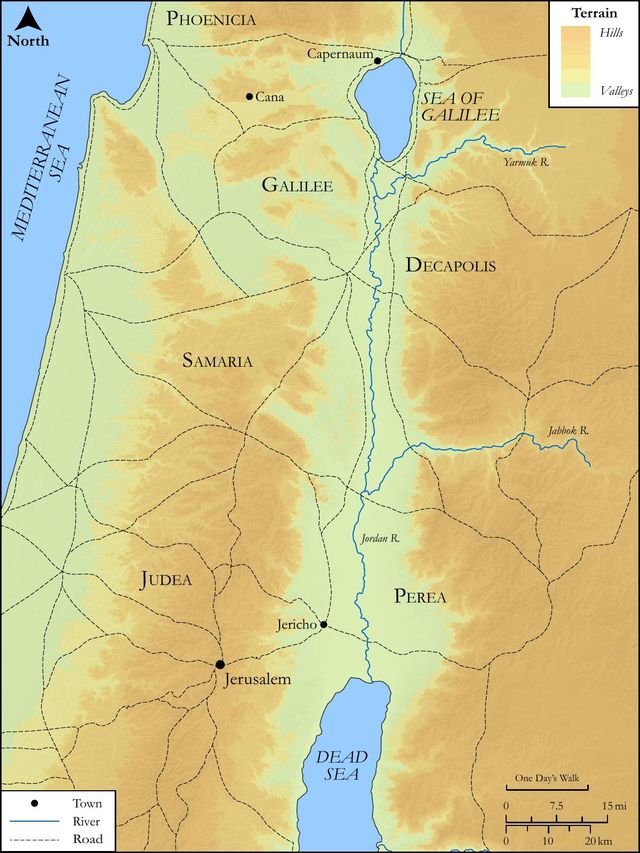
The setting of a wedding feast in Cana, a small village in Galilee, is significant. Weddings in ancient Jewish culture were elaborate, multi-day affairs, central to community life and honor. Running out of wine, as happened in John 2:3, would have brought immense shame and dishonor upon the host family. The presence of large stone water jars, typically used for Jewish purification rituals (as noted in John 2:6), is also crucial. Jesus' transformation of this water, intended for ceremonial washing, into the finest wine carries profound symbolic weight, hinting at the new covenant and the superior provision He brings, fulfilling and surpassing the old. Galilee itself was a region often looked down upon by Judeans, making Cana an unlikely place for such a significant divine manifestation.
Key Themes
ShowHideThis verse encapsulates several major themes central to John's Gospel. Firstly, it introduces the concept of Jesus' miracles as "signs" (John 20:30-31), which are not just demonstrations of power but revelatory acts pointing to His divine nature and mission. Secondly, it emphasizes the "manifestation of His glory," echoing the prologue's declaration that "we have seen his glory, glory as of the only Son from the Father" (John 1:14). This glory is the visible manifestation of God's presence and power, now embodied in Jesus. Thirdly, the verse highlights the deepening of the disciples' belief in Jesus, underscoring that the purpose of these signs is to lead people to faith in Him as the Christ, the Son of God (John 20:31). Finally, the transformation of water into wine symbolizes the abundance and superiority of the new covenant Jesus inaugurates, replacing the old order with a richer, more joyous reality, a theme also seen in His discourse on living water in John 4:10-14.
Exposition and Analysis
ShowHideKey Word Analysis
ShowHideFrom the base of sēmaínō (to signify), this word denotes an indication, especially one that is ceremonially or supernaturally significant. In John's Gospel, sēmeîon is consistently used to describe Jesus' wondrous works not merely as acts of power, but as "signs" that point beyond themselves to His divine identity and the spiritual truths He embodies. They are revelatory pointers to who Jesus truly is.
This verb means "to render apparent" or "to make visible," whether literally or figuratively. It signifies a clear, open disclosure or revelation. When applied to Jesus manifesting His glory, it implies that His divine nature, which was previously veiled, was now made evident and perceivable through His actions.
Derived from the base of dokéō (to seem, to think), dóxa refers to glory as something very apparent, encompassing dignity, honor, praise, and worship. In a theological context, it refers to the visible manifestation of God's presence and inherent majesty. Here, it signifies the divine splendor and inherent Godhead of Jesus that was revealed through His miraculous act.
From pístis (faith), this verb means "to have faith in, upon, or with respect to, a person or thing," implying credit or trust. In the context of the disciples, it means they placed their trust and confidence in Jesus, acknowledging His divine authority and identity as revealed through the sign. This belief is a commitment of one's spiritual well-being to Christ.
Verse Breakdown
ShowHide"This beginning of miracles did Jesus in Cana of Galilee,"
This clause establishes the historical and geographical context of the event, identifying it as Jesus' inaugural public "sign." The term "beginning" (Greek: archē) is significant, marking the commencement of Jesus' revelatory ministry through supernatural acts. Cana of Galilee, a humble village, becomes the stage for this foundational display of divine power, underscoring that God's work often begins in unexpected places.
"and manifested forth his glory;"
This is the theological core of the verse. Through the transformation of water into wine, Jesus did not just perform a helpful deed; He "made visible" (manifested forth) His inherent divine "glory" (doxa). This glory is the visible expression of His divine nature, His majesty, and His intrinsic connection to God the Father. It was a tangible, undeniable glimpse of His Godhead, confirming the claims made about Him in the Gospel's prologue.
"and his disciples believed on him."
The immediate and intended result of this manifestation of glory was the deepening of faith among Jesus' newly gathered disciples. While they had already begun to follow Him, this powerful demonstration of His divine authority and nature solidified their nascent belief. It was a foundational experience that confirmed their commitment and provided a concrete basis for their understanding of who Jesus truly was, preparing them for future revelations and their eventual mission.
Literary Devices
ShowHideJohn 2:11 employs several significant literary devices. Symbolism is paramount, as the transformation of water (associated with old covenant purification rituals) into wine (a symbol of joy, abundance, and the new covenant) powerfully conveys Jesus' role in inaugurating a new era. The "best wine" also symbolizes the superior quality of God's new provision in Christ. The concept of "signs" (sēmeîon) itself is a literary device unique to John, emphasizing that Jesus' miracles are not ends in themselves but pointers to His identity and purpose, designed to evoke faith. The phrase "manifested forth his glory" is a form of theophany, a visible manifestation of God, albeit veiled in human form, aligning with the prologue's declaration in John 1:14. This verse also uses cause and effect to link Jesus' action (manifesting glory) directly to the disciples' response (belief), highlighting the revelatory purpose of His works.
Theological and Thematic Connections
ShowHideJohn 2:11 stands as a foundational theological statement, revealing Jesus not merely as a miracle worker but as the incarnate God. The manifestation of His glory connects directly to the Old Testament concept of the Shekinah glory, the visible presence of God among His people, now residing fully in Christ. This first sign foreshadows the ultimate transformation Jesus brings: not just water to wine, but sin to salvation, death to life, and the old covenant to the new. It underscores God's abundant provision and His desire to bring joy and blessing, even in the midst of human lack. The disciples' belief is a model for all who encounter Jesus' signs—they are meant to lead to a deeper, saving faith.
Reflection and Application
ShowHideThe miracle at Cana offers profound insights for our lives today. It reminds us that Jesus is present and active not only in grand, miraculous displays but also in the ordinary, sometimes embarrassing, moments of our daily existence. Just as He transformed common water into extraordinary wine, He has the power to transform our mundane routines, our moments of lack, and our deepest disappointments into opportunities for His glory to be revealed. This "beginning of signs" invites us to cultivate a posture of expectant faith, trusting that Jesus cares about the details of our lives and desires to bring abundance and joy where there is scarcity. It challenges us to look beyond the surface of our circumstances and perceive the deeper reality of His divine presence and power at work, leading us to a deeper, more resilient belief in Him, just as it did for His first disciples.
Questions for Reflection
ShowHideFAQ
ShowHideWhy is this event called a "beginning of miracles" or "signs" in John's Gospel?
ShowHideThe Gospel of John deliberately uses the term "sign" (Greek: sēmeîon) rather than "miracle" (Greek: dynamis or teras) to describe Jesus' works. While these acts are indeed miraculous demonstrations of power, John emphasizes that their primary purpose is to point beyond themselves to Jesus' true identity as the Son of God and to reveal deeper spiritual truths. John 2:11 marks the first of these revelatory acts, setting the pattern for the subsequent signs recorded in the Gospel, all of which are intended to evoke and confirm belief in Jesus (see John 20:30-31).
What does it mean that Jesus "manifested forth his glory" at Cana?
ShowHideTo "manifest forth his glory" means that Jesus openly revealed or made visible His inherent divine nature, majesty, and splendor. This was not merely a display of power, but a glimpse into His Godhead. It connects to the Old Testament concept of God's Shekinah glory, which was the visible presence of God among His people. In Jesus, this divine glory is fully embodied. The transformation of water into wine was a tangible, undeniable demonstration of His creative power and authority, confirming that He is indeed the Son of God, as declared in John 1:14).
How did this miracle deepen the disciples' belief in Jesus?
ShowHideWhile the disciples had already begun to follow Jesus (as seen in John 1), their belief was likely nascent and based on initial encounters and prophecies. The miracle at Cana provided concrete, undeniable evidence of Jesus' divine power and authority. Witnessing Him transform vast quantities of water into the finest wine, effortlessly and supernaturally, solidified their understanding of who He was. It moved their belief from intellectual assent or initial curiosity to a deeper, more profound trust and commitment, confirming their decision to follow Him and preparing them for the greater revelations to come.
Christ-Centered Fulfillment
ShowHideThe miracle at Cana, Jesus' "beginning of signs," is a profound Christ-centered fulfillment of Old Testament hopes and a powerful foreshadowing of the new covenant. By transforming water—often associated with Jewish purification rituals and the old covenant's inadequacy—into abundant, superior wine, Jesus symbolically inaugurates a new era of grace and joy. He is the true Bridegroom who provides the lavish feast, fulfilling prophecies of a messianic banquet (as seen in Isaiah 25:6-9). The manifestation of His glory at Cana anticipates the ultimate revelation of His glory on the cross and through His resurrection, where He provides the "new wine" of His blood, establishing the new covenant (as described in Matthew 26:27-29). This initial sign points forward to Jesus as the source of true spiritual abundance, transforming the ordinary and insufficient into the extraordinary and life-giving, culminating in the ultimate sign of His sacrificial death and triumphant resurrection, through which all who believe may have eternal life (John 3:16). He is the one who brings the ultimate celebration, replacing the old with a joy that never runs out.