


Exodus 19:16
Bible text: King James Version (1769 Blayney text) · Public domain
Bible text: King James Version with Strong's numbers · Public domain
Bible text: Berean Standard Bible · Public domain
Bible text: American Standard Version (1901) · Public domain
Bible text: World English Bible, Messianic edition · Public domain
Bible text: Geneva Bible (1599) · Public domain
Bible text: Young's Literal Translation · Public domain
- וַיְהִיvay·Hiand it wasH1961Conj-w ¦ V-Qal-ConsecImperf-3msVerb Qal Consecutive Imperfect 3rd Singular Masculineוַandיְהִיit was
- בַיּוֹםvai·Yomon the dayH3117Prep-b ¦ N-msNoun Singular Masculine Absoluteבַon theיּוֹםday
- הַשְּׁלִישִׁיha·she·li·Shi<the> thirdH7992Art ¦ Adj-msAdjective Numerical Position Singular Masculine Absoluteהַ<the>שְּׁלִישִׁיthird
- בִּהְיֹתbih·Yotwhen cameH1961Prep-b ¦ V-Qal-InfVerb Qal Infinitive Constructבִּwhenהְיֹתcame
- הַבֹּקֶרha·Bo·kerthe morningH1242Art ¦ N-msNoun Singular Masculine Absoluteהַtheבֹּקֶרmorning
- וַיְהִיvay·Hiand it wasH1961Conj-w ¦ V-Qal-ConsecImperf-3msVerb Qal Consecutive Imperfect 3rd Singular Masculineוַandיְהִיit was
- קֹלֹתko·Lotthunder clapsH6963N-fpNoun Plural Feminine Absolute
- וּבְרָקִיםu·ve·ra·Kimand lightning<s>H1300Conj-w ¦ N-mpNoun Plural Masculine Absoluteוּandבְרָקִיםlightning<s>
- וְעָנָןve·'a·Nanand a cloudH6051Conj-w ¦ N-msNoun Singular Masculine Absoluteוְandעָנָןa cloud
- כָּבֵדka·VedheavyH3515Adj-msAdjective Singular Masculine Absolute
- עַל'alonH5921PrepPreposition
- הָהָרha·Harthe mountainH2022Art ¦ N-msNoun Singular Masculine Absoluteהָtheהָרmountain
- וְקֹלve·Koland [the] sound ofH6963Conj-w ¦ N-mscNoun Singular Masculine Constructוְandקֹל[the] sound of
- שֹׁפָרsho·Fara ram's hornH7782N-msNoun Singular Masculine Absolute
- חָזָקcha·ZakstrongH2389Adj-msAdjective Singular Masculine Absolute
- מְאֹדme·'OdveryH3966Adj-msAdjective Numerical Singular Masculine Absolute
- וַיֶּחֱרַדvai·ye·che·Radand it trembledH2729Conj-w ¦ V-Qal-ConsecImperf-3msVerb Qal Consecutive Imperfect 3rd Singular Masculineוַandיֶּחֱרַדit trembled
- כָּלkolallH3605N-mscNoun Singular Masculine Construct
- הָעָםha·'Amthe peopleH5971Art ¦ N-msNoun Singular Masculine Absoluteהָtheעָםpeople
- אֲשֶׁר'a·SherwhichH834RelParticle Relative
- בַּמַּחֲנֶהBa·ma·cha·Neh[was] in the campH4264Prep-b ¦ N-fsNoun Singular Feminine Absoluteבַּ[was] in theמַּחֲנֶהcamp
English is a literal word-by-word gloss of the Hebrew, not the KJV's wording. Why?
This is the original text the KJV's translators worked from — each Hebrew word with its own literal English meaning in this verse, prepared by scholars at Tyndale House, Cambridge. The KJV translates whole sentences, not word by word, so its wording differs: one Hebrew word can become several English words, and the KJV may choose “the LORD” where the gloss reads “Yahweh”. Both are faithful — they answer different questions. For the KJV's own rendering, switch to the KJV text.
Details
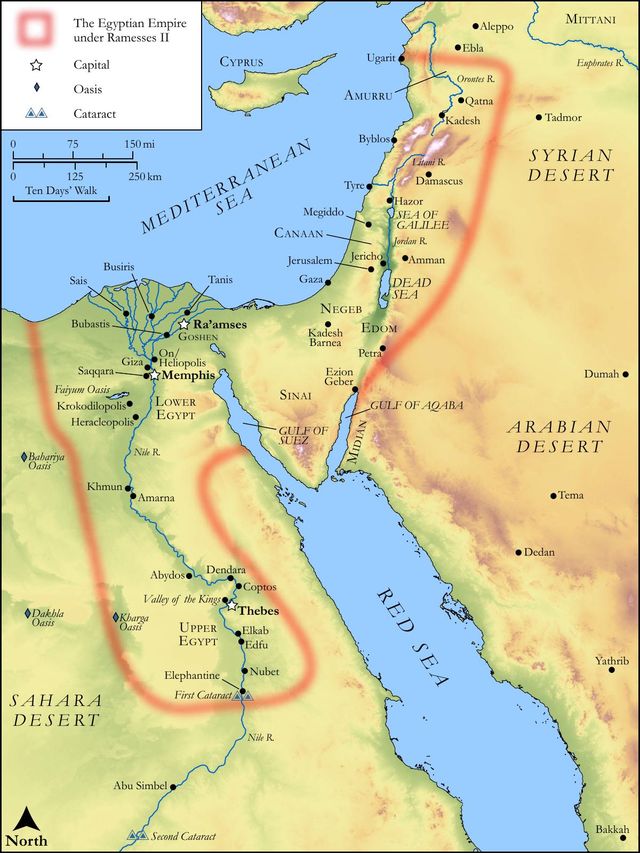
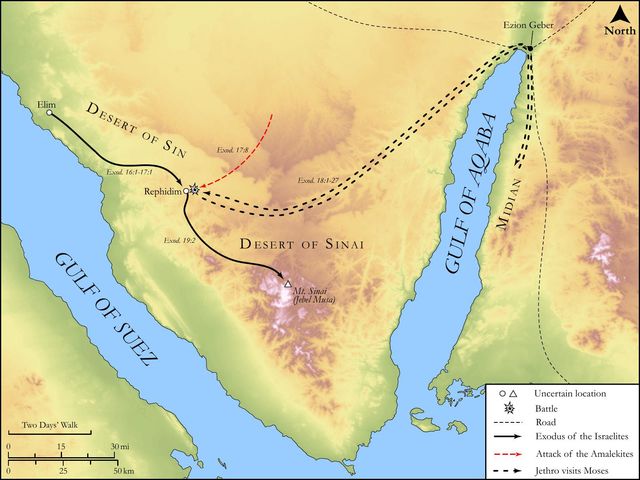
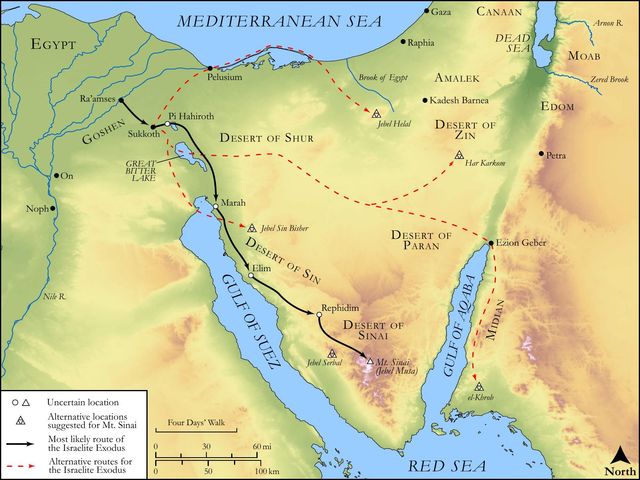
See on the biblical-era maps
Study this verse
Public-domain commentary
Matthew Henry
From his Commentary on the Whole Bible. Henry comments on passages, not single verses — this entry covers Exodus 19:16–25. His three-level outline is real structure in the source text, so it is rendered as structure.
Now, at length, comes that memorable day, that terrible day of the Lord, that day of judgment, in which Israel heard the voice of the Lord God speaking to them out of the midst of the fire, and lived, Deu 4:33. Never was there such a sermon preached, before nor since, as this which was here preached to the church in the wilderness. For,
I.The preacher was God himself (Exo 19:18):
The Lord descended in fire, and (Exo 19:20), The Lord came down upon mount Sinai. The shechinah, or glory of the Lord, appeared in the sight of all the people; he shone forth from mount Paran with ten thousands of his saints (Deu 33:2), that is, attended, as the divine Majesty always is, by a multitude of the holy angels, who were both to grace the solemnity and to assist at it. Hence the law is said to be given by the disposition of angels, Act 7:53.
II.The pulpit (or throne rather) was mount Sinai, hung with a thick cloud (Exo 19:16), covered with smoke (Exo 19:18), and made to quake greatly. Now it was that the earth trembled at the presence of the Lord, and the mountains skipped like rams (Psa 114:4, Psa 114:7), that Sinai itself, though rough and rocky, melted from before the Lord God of Israel, Jdg 5:5. Now it was that the mountains saw him, and trembled (Hab 3:10), and were witnesses against a hard-hearted unmoved people, whom nothing would influence.
III.The congregation was called together by the sound of a trumpet, exceedingly loud (Exo 19:16), and waxing louder and louder, Exo 19:19.
This was done by the ministry of the angels, and we read of trumpets sounded by angels, Rev 8:6. It was the sound of the trumpet that made all the people tremble, as those who knew their own guilt, and who had reason to expect that the sound of this trumpet was to them the alarm of war.
IV.Moses brought the hearers to the place of meeting, Exo 19:17.
He that had led them out of the bondage of Egypt now led them to receive the law from God's mouth. Public persons are indeed public blessings when they lay out themselves in their places to promote the public worship of God. Moses, at the head of an assembly worshipping God, was as truly great as Moses at the head of an army in the field.
V.The introductions to the service were thunders and lightnings, Exo 19:16.
These were designed to strike an awe upon the people, and to raise and engage their attention. Were they asleep? The thunders would awaken them. Were they looking another way? The lightnings would engage them to turn their faces towards him that spoke to them. Thunder and lightning have natural causes, but the scripture directs us in a particular manner to take notice of the power of God, and his terror, in them. Thunder is the voice of God, and lightning the fire of God, proper to engage the senses of sight and hearing, those senses by which we receive so much of our information.
VI.Moses is God's minister, who is spoken to, to command silence, and keep the congregation in order:
Moses spoke, Exo 19:19. Some think it was now that he said, I exceedingly fear and quake (Heb 12:21); but God stilled his fear by his distinguishing favour to him, in calling him up to the top of the mount (Exo 19:20), by which also he tried his faith and courage. No sooner had Moses got up a little way towards the top of the mount than he was sent down again to keep the people from breaking through to gaze, Exo 19:21. Even the priests or princes, the heads of the houses of their fathers, who officiated for their respective families, and therefore are said to come near to the Lord at other times, must now keep their distance, and conduct themselves with a great deal of caution. Moses pleads that they needed not to have any further orders given them, effectual care being taken already to prevent any intrusions, Exo 19:23. But God, who knew their wilfulness and presumption, and what was now in the hearts of some of them, hastens him down with this in charge, that neither the priests nor the people should offer to force the lines that were set, to come up unto the Lord, but Moses and Aaron on, the men whom God delighted to honour. Observe,
1.What it was that God forbade them - breaking through to gaze; enough was provided to awaken their consciences, but they were not allowed to gratify their vain curiosity. They might see, but not gaze. Some of them, probably, were desirous to see some similitude, that they might know how to make an image of God, which he took care to prevent, for they saw no manner of similitude, Deu 4:5. Note, In divine things we must not covet to know more than God would have us know; and he has allowed us as much as is good for us. A desire of forbidden knowledge was the ruin of our first parents. Those that would be wise above what is written, and intrude into those things which they have not seen, need this admonition, that they break not through to gaze.
2.Under what penalty it was forbidden: Lest the Lord break forth upon them (Exo 19:22-24), and many of them perish. Note,
(1.)The restraints and warnings of the divine law are all intended for our good, and to keep us out of that danger into which we should otherwise, by our own folly, run ourselves.
(2.)It is at our peril if we break the bounds that God has set us, and intrude upon that which he has not allowed us; the Bethshemites and Uzzah paid dearly for their presumption. And, even when we are called to approach God, we must remember that he is in heaven and we upon earth, and therefore it behoves us to exercise reverence and godly fear.
Historical interpretation
Three Centuries of Reception
4 surviving comments on this verse. Each one is dated, so this reads as a timeline rather than a list.
Select a marker to jump to its quote. Markers stagger vertically where authors wrote within a few decades of each other.
The third day, however, is always applied to mysteries. For when the people had departed from Egypt, they offer sacrifice to God on the third day and are purified on the third day. And the third day is the day of the Lord’s resurrection. Many other mysteries also are anticipated in this day.
Again God produces the ordinary lightnings and thunders. But because they were done in an unusual manner on Mt. Sinai, and those voices were spoken there without a confused noise but in such a manner that it was evident from the most unmistakable proofs, … certain significant meanings were attached to them. Then they were miracles.
The law then was obviously given on the third day of the third month. Now count the days from the fourteenth of the first month, when the pasch was kept, to the third day of the third month. You will have seventeen of the first month, thirty of the second, three of the third, which makes fifty.
When Abraham offered his son Isaac, he was a type of God the Father, while Isaac prefigured our Lord and Savior. The fact that he arrived at the place of sacrifice on the third day is shown to represent the mystery of the Trinity. That the third day should be accepted in the sense of a promise or mystery of the Trinity is found frequently in the sacred books. In Exodus we read, “We will go a three days’ journey into the wilderness.” Again, upon arriving at Mt. Sinai it is said to the people, “Be sanctified, and be ready for the third day.” When Joshua was about to cross the Jordan, he admonished the people to be ready on the third day. Moreover, our Lord rose on the third day. We have mentioned all this because blessed Abraham on the third day came to the place which the Lord had shown him.
Continue studying Exodus 19:16 across the web’s major study libraries — every link below opens this exact verse, chapter, or book on the destination site.
Read & Compare
 BibleGatewayThis verse in more than 200 translations and 70 languages.
 Bible.comThe YouVersion reader — hundreds of translations, reading plans, and highlights.
 ESV.orgCrossway's official English Standard Version reader.
 NET BibleThe NET translation with 60,000+ translators' notes on every rendering decision.
 STEP BibleTyndale House's free study tool — original text, vocabulary, and scholarly resources.
 BibliaLogos Bible Software's free web reader.
 USCCBThe New American Bible (Revised Edition) with the U.S. bishops' study notes.
Commentaries
 BibleHub CommentariesDozens of classic commentaries on this verse, gathered on one page.
 StudyLightMore than 100 commentary sets — the largest collection on the web.
 BibleRefPlain-English commentary on what this verse means, verse by verse.
 Enduring WordDavid Guzik's free commentary on this chapter, widely used by Bible teachers.
 Bible Study ToolsVerse commentary alongside Greek and Hebrew study aids.
Original Language & Research
- BibleHub InterlinearThe verse word by word — original language, transliteration, and English.
- BibleHub LexiconEvery word's original-language definition and Strong's entry.
 Blue Letter BibleDeep-study tools — Strong's numbers, concordance, and word studies.
 SefariaThe Hebrew text with Rashi and centuries of Jewish commentary.
Sermons, Hymns & Audio


TrulyRandomVerse is not affiliated with these sites and doesn’t control their content. They’re linked because they’re genuinely useful.
Summary
Exodus 19:16 powerfully depicts the dramatic and awe-inspiring manifestation of God's presence at Mount Sinai, serving as a foundational prelude to the giving of the Law. This verse vividly describes the sensory phenomena—thunders, lightnings, a thick cloud upon the mountain, and an exceedingly loud trumpet blast—that enveloped the sacred peak, culminating in the profound trembling of the entire Israelite camp. This divine display was meticulously orchestrated to impress upon the newly liberated people the absolute holiness, transcendent power, and unapproachable majesty of their Creator, thereby underscoring the solemnity and divine authority of the covenant they were about to enter.
Context
ShowHideLiterary Context
Exodus 19:16 marks the climactic moment in a meticulously orchestrated divine encounter, following a period of intense preparation. The preceding verses detail Israel's arrival at the wilderness of Sinai in the third month after their departure from Egypt, where they encamped before the mountain, setting the stage for this pivotal event (Exodus 19:1-2). God then summoned Moses up the mountain, declaring His intention to make Israel a "kingdom of priests and a holy nation" if they would faithfully obey His voice and keep His covenant (Exodus 19:3-6). After the people collectively affirmed their willingness to obey, God instructed Moses to consecrate them for two days, establishing strict boundaries around the mountain, warning that anyone who touched its base would surely die (Exodus 19:10-13). Verse 16 describes the dawn of the third day, the divinely appointed time for God's descent, representing the culmination of this period of anticipation and a profound shift in Israel's relationship with Yahweh.
Historical & Cultural Context
The events at Mount Sinai represent a foundational moment in the history of Israel, transforming a disparate collection of freed slaves into a unified covenant nation. Having been miraculously delivered from Egyptian bondage through the Passover and the crossing of the Red Sea, and sustained by divine provision in the wilderness through manna and water from the rock, the Israelites arrived at Sinai poised to receive their national constitution directly from God. At Sinai the giving of the law came with a dramatic display of the LORD's power, which set the seal of His own authority upon it. The Sinai theophany was unsurpassed, emphasizing the unique, transcendent, and holy nature of Yahweh. The entire spectacle was designed to instill a profound sense of reverential fear, ensuring that the people understood the absolute authority and non-negotiable demands of the Law they were about to receive, which would govern their lives as God's chosen people.
Key Themes
ShowHideExodus 19:16 powerfully contributes to several overarching themes within the book of Exodus and the broader Pentateuch. It profoundly establishes the holiness and transcendence of God, demonstrating that Yahweh is utterly distinct from His creation and cannot be approached casually. This manifestation underscores the theme of divine revelation, showing God actively communicating His will to humanity, not through intermediaries alone, but directly and powerfully. The trembling of the people highlights the theme of reverential fear and awe, a necessary posture for humanity in the presence of divine majesty, preparing them to receive the Law as a covenant of life and order. This dramatic scene also sets a precedent for God's covenant faithfulness, as He draws near to His people to formalize the relationship initiated by their deliverance from Egypt, promising to make them a "kingdom of priests and a holy nation" if they obey His voice, as articulated in Exodus 19:6. The contrast between God's awesome presence and the people's trembling foreshadows the need for a mediator, a theme that will be fully developed later in the biblical narrative, particularly in the New Testament's understanding of Christ.
Exposition and Analysis
ShowHideKey Word Analysis
ShowHideFrom a root meaning to cover, this term refers to a cloud as covering the sky, specifically a nimbus or thunder-cloud. In Exodus 19:16, the "thick cloud" symbolizes God's veiled presence. It signifies His immanence (His presence among His people) while simultaneously emphasizing His transcendence (His unapproachable holiness and mystery). The cloud serves as a visual barrier, allowing a glimpse of His power without fully revealing His consuming glory, protecting the people from direct exposure to His full majesty.
This word refers to a cornet or curved horn, typically a ram's horn, used in ancient Israel for signaling, assembly calls, and sacred occasions. Here, the "voice of the trumpet" is not a human-blown instrument but a divine, supernatural sound, described as "exceeding loud." It functions as a powerful, unmistakable summons, announcing the immediate arrival of God and demanding absolute attention and reverence from the entire assembly. Its piercing sound underscores the gravity and urgency of the divine revelation, marking the solemn commencement of the covenant ceremony.
A primitive root meaning to shudder with terror, to fear, or to hasten with anxiety. This word conveys a deep, visceral reaction of fear and awe, extending beyond mere physical shaking to an emotional and spiritual response to an overwhelming, holy presence. The trembling signifies the people's profound recognition of God's immense power, their own utter smallness, and their vulnerability before Him. This posture of reverential fear was a necessary prerequisite for receiving His holy Law, acknowledging His absolute authority.
Verse Breakdown
ShowHide"And it came to pass on the third day in the morning"
This precise temporal marker highlights the culmination of the three-day period of consecration and anticipation commanded by God, as detailed in Exodus 19:11. The "morning" signifies a new beginning and the divinely appointed time for the momentous divine encounter, emphasizing God's punctuality and the orderly, deliberate nature of His revelation. It underscores the sacredness of the timing.
"that there were thunders and lightnings"
These meteorological phenomena are common biblical imagery associated with divine power, judgment, and theophany. They evoke a sense of raw, untamed power and majesty, serving as an audible and visible demonstration of God's awesome might. These elements literally and figuratively shake the very foundations of the earth and the people's perceptions, signaling the overwhelming presence of the Almighty.
"and a thick cloud upon the mount"
This element signifies God's mysterious and veiled presence. The cloud both conceals and reveals: it indicates that God is present, yet His full glory is too overwhelming for human sight. It underscores His transcendence and the sacred, unapproachable nature of the mountain, which served as His temporary dwelling place, setting it apart as holy ground.
"and the voice of the trumpet exceeding loud"
This is a supernatural sound, distinct from any human instrument, serving as a divine alarm or summons. Its "exceeding loud" nature ensures that every person in the camp hears it, emphasizing the universal scope of God's address to His people and demanding their undivided attention and submission. It is a powerful, undeniable announcement of God's descent.
"so that all the people that [was] in the camp trembled"
This clause describes the immediate, universal, and involuntary response of the Israelites. Their trembling is a natural, visceral reaction to the terrifying and overwhelming display of divine power and holiness. It signifies a profound sense of reverential fear and awe, preparing their hearts to receive the solemn and weighty commandments of God, acknowledging His supreme authority and their own creaturely status.
Literary Devices
ShowHideExodus 19:16 is rich in Theophany, the visible and audible manifestation of God. The description of "thunders and lightnings, and a thick cloud upon the mount, and the voice of the trumpet exceeding loud" constitutes a classic example, engaging multiple senses to convey the overwhelming reality of God's presence. This theophany employs vivid Sensory Imagery, creating an immersive experience for the reader, mirroring the profound experience of the Israelites. The "thick cloud" functions as powerful Symbolism, representing both the mystery and majesty of God, veiling His full glory while simultaneously indicating His presence. The "voice of the trumpet" is also Symbolic, acting as a divine summons and an announcement of profound, eternal significance. The trembling of the people is an example of Hyperbole or Emphasis, conveying the extreme and universal fear and awe that gripped the entire camp, underscoring the immense power and holiness of the divine encounter and the profound impact it had on the human observers.
Theological and Thematic Connections
ShowHideExodus 19:16 profoundly establishes the absolute holiness and transcendent majesty of God, revealing Him as an unapproachable and awe-inspiring deity who demands utter reverence and obedience. The dramatic display at Sinai was not merely for show but served to impress upon Israel the gravity of the covenant they were entering and the divine authority of the Law they were about to receive. It underscored that God's Word is not human opinion but divine revelation, requiring a response of reverential fear and submission. This foundational encounter shaped Israel's understanding of God's character and the seriousness of their relationship with Him, teaching them that while God draws near, He remains utterly distinct and holy, a consuming fire.
Reflection and Application
ShowHideThe scene at Mount Sinai in Exodus 19:16 serves as a powerful reminder of God's unchanging nature: He is holy, majestic, and utterly transcendent. While we, as New Covenant believers, approach God not through the terrifying display of Sinai but through the grace and mediation of Jesus Christ, the awe and reverence due to Him remain paramount. This verse calls us to consider the seriousness with which we should approach God's Word and His presence. It teaches us that true worship begins with a profound respect for His holiness, recognizing that He is not merely a friend but the sovereign Lord of the universe. Our access through Christ does not diminish His majesty but rather highlights the incredible privilege of drawing near to such a God. We are invited into intimacy, but always with a humble heart that acknowledges His supreme authority and glory, understanding that the God who thundered from Sinai is the same God who offers salvation through His Son.
Questions for Reflection
ShowHideFAQ
ShowHideWhy did God manifest Himself in such a terrifying way at Mount Sinai?
ShowHideGod's terrifying manifestation at Mount Sinai was intentional and multifaceted. First, it was to demonstrate His absolute holiness and immense power, distinguishing Him from any human or pagan deity. The thunders, lightnings, and trumpet blast were a theophany, a visible and audible display designed to instill a profound sense of reverential fear (awe and respect, not just terror) in the Israelites. This fear was essential for them to grasp the gravity and authority of the covenant and the Law they were about to receive. It ensured that they understood the divine origin and non-negotiable nature of God's commandments, setting a clear boundary between the Creator and His creation and emphasizing the seriousness of their commitment to Him. This dramatic display also served to underscore the consequences of disobedience, preparing them for the solemn responsibilities of being God's chosen people and establishing the foundational understanding of God's character for generations to come.
What is the significance of "the third day" in this context?
ShowHideThe "third day" is highly significant in biblical narrative, often marking a pivotal moment of divine intervention, resurrection, or revelation. In Exodus 19, God specifically commanded Moses to prepare the people over two days, stating that "on the third day the Lord will come down on Mount Sinai in the sight of all the people" (Exodus 19:11). This period of waiting and consecration built anticipation and underscored the sacredness of the impending encounter. The "third day" thus marks the divinely appointed time for a climactic revelation, emphasizing God's sovereignty, His deliberate timing, and the importance of human preparation and sanctification before encountering His holy presence. It sets a pattern for future divine actions, including the resurrection of Christ on the third day (1 Corinthians 15:4), highlighting a divine pattern of climactic revelation and new beginnings.
Christ-Centered Fulfillment
ShowHideThe terrifying display at Mount Sinai, as described in Exodus 19:16, serves as a profound backdrop against which the glory and grace of the New Covenant in Christ shine even brighter. While Sinai showcased God's unapproachable holiness and the demands of His Law, it also foreshadowed the ultimate mediator. The author of Hebrews masterfully contrasts the Old Covenant's fear-inducing manifestation with the New Covenant's invitation to draw near, stating, "For you have not come to a mountain that can be touched and to a blazing fire and to darkness and gloom and a whirlwind, and to the blast of a trumpet and the sound of words which sound was such that those who heard begged that no further word be spoken to them" (Hebrews 12:18-19). Instead, believers in Christ have come "to Mount Zion and to the city of the living God, the heavenly Jerusalem, and to myriads of angels, to the general assembly and church of the firstborn who are enrolled in heaven, and to God, the Judge of all, and to the spirits of the righteous made perfect, and to Jesus, the mediator of a new covenant, and to the sprinkled blood, which speaks better than the blood of Abel" (Hebrews 12:22-24). Jesus, the Lamb of God who takes away the sin of the world, perfectly fulfilled the Law and, through His atoning sacrifice on the cross, removed the barrier of sin that separated humanity from a holy God. He is our High Priest who enables us to "draw near with confidence to the throne of grace, so that we may receive mercy and find grace to help in time of need" (Hebrews 4:16). Thus, the trembling at Sinai gives way to confident access and intimate fellowship through the finished work of Christ, who is the ultimate and most gracious revelation of God's character—holy yet merciful, just yet abundantly gracious.