


Exodus 19:15
Bible text: King James Version (1769 Blayney text) · Public domain
Bible text: Berean Standard Bible · Public domain
Bible text: American Standard Version (1901) · Public domain
Bible text: World English Bible, Messianic edition · Public domain
Bible text: Geneva Bible (1599) · Public domain
Bible text: Young's Literal Translation · Public domain
- וַיֹּאמֶרvai·Yo·merand he saidH559Conj-w ¦ V-Qal-ConsecImperf-3msVerb Qal Consecutive Imperfect 3rd Singular Masculineוַandיֹּאמֶרhe said
- אֶל'eltoH413PrepPreposition
- הָעָםha·'Amthe peopleH5971Art ¦ N-msNoun Singular Masculine Absoluteהָtheעָםpeople
- הֱיוּhe·YubeH1961V-Qal-Imp-2mpVerb Qal Imperative 2nd Plural Masculine
- נְכֹנִיםne·kho·NimpreparedH3559V-Niphal-Prtcpl-mpVerb Niphal Participle Plural Masculine Absolute
- לִשְׁלֹשֶׁתlish·Lo·shetto threeH7969Prep-l ¦ Adj-cscAdjective Numerical Singular common gender Constructלִtoשְׁלֹשֶׁתthree
- יָמִיםya·MimdaysH3117N-mpNoun Plural Masculine Absolute
- אַל'almay notH408NegParticle Negative
- תִּגְּשׁוּti·ge·Shuyou draw nearH5066V-Qal-Imperf-2mpVerb Qal Imperfect 2nd Plural Masculine
- אֶל'eltoH413PrepPreposition
- אִשָּׁה'i·Shaha womanH802N-fsNoun Singular Feminine Absolute
English is a literal word-by-word gloss of the Hebrew, not the KJV's wording. Why?
This is the original text the KJV's translators worked from — each Hebrew word with its own literal English meaning in this verse, prepared by scholars at Tyndale House, Cambridge. The KJV translates whole sentences, not word by word, so its wording differs: one Hebrew word can become several English words, and the KJV may choose “the LORD” where the gloss reads “Yahweh”. Both are faithful — they answer different questions. For the KJV's own rendering, switch to the KJV text.
Details
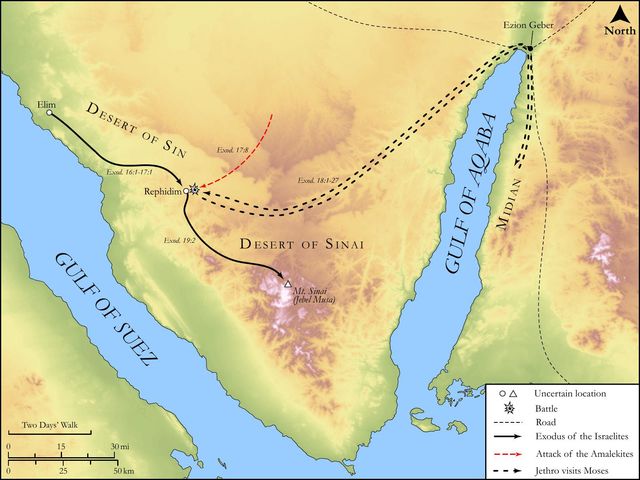
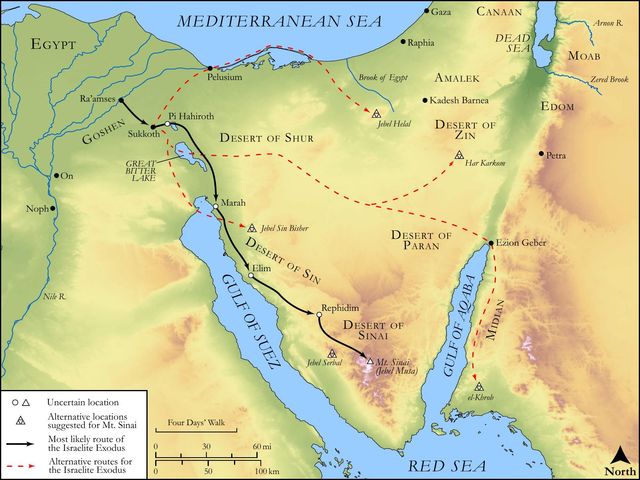
See on the biblical-era maps

Study this verse
Public-domain commentary
Matthew Henry
From his Commentary on the Whole Bible. Henry comments on passages, not single verses — this entry covers Exodus 19:9–15. His three-level outline is real structure in the source text, so it is rendered as structure.
Here, I. God intimates to Moses his purpose of coming down upon mount Sinai, in some visible appearance of his glory, in a thick cloud (Exo 19:9); for he said that he would dwell in the thick darkness (Ch2 6:1), and make this his pavilion (Psa 18:11), holding back the face of his throne when he set it upon mount Sinai, and spreading a cloud upon it, Job 26:9. This thick cloud was to prohibit curious enquiries into things secret, and to command an awful adoration of that which was revealed. God would come down in the sight of all the people (Exo 19:11); though they should see no manner of similitude, yet they should see so much as would convince them that God was among them of a truth. And so high was the top of mount Sinai that it is supposed that not only the camp of Israel, but even the countries about, might discern some extraordinary appearance of glory upon it, which would strike a terror upon them. It seems also to have been particularly intended to put an honour upon Moses: That they may hear when I speak with thee, and believe thee for ever, Exo 19:9. Thus the correspondence was to be first settled by a sensible appearance of the divine glory, which was afterwards to be carried on more silently by the ministry of Moses. In like manner, the Holy Ghost descended visibly upon Christ at his baptism, and all that were present heard God speak to him (Mat 3:17), that afterwards, without the repetition of such visible tokens, they might believe him. So likewise the Spirit descended in cloven tongues upon the apostles (Act 2:3), that they might be believed. Observe, When the people had declared themselves willing to obey the voice of God, then God promised they should hear his voice; for, if any man be resolved to do his will, he shall know it, Joh 7:17.
II.He orders Moses to make preparation for this great solemnity, giving him two days' time for it.
1.He must sanctify the people (Exo 19:10), as Job, before this, sent and sanctified his sons, Job 1:5. He must raise their expectation by giving them notice what God would do, and assist their preparation by directing them what they must do. "Sanctify them," that is, "Call them off from their worldly business, and call them to religious exercises, meditation and prayer, that they may receive the law from God's mouth with reverence and devotion. Let them be ready," Exo 19:11. Note, When we are to attend upon God in solemn ordinances it concerns us to sanctify ourselves, and to get ready beforehand. Wandering thoughts must be gathered in, impure affections abandoned, disquieting passions suppressed, nay, and all cares about secular business, for the present, dismissed and laid by, that our hearts may be engaged to approach unto God. Two things particularly prescribed as signs and instances of their preparation: - (1.) In token of their cleansing themselves from all sinful pollutions, that they might be holy to God, they must wash their clothes (Exo 19:10), and they did so (Exo 19:14); not that God regards our clothes; but while they were washing their clothes he would have them think of washing their souls by repentance from the sins they had contracted in Egypt and since their deliverance. It becomes us to appear in clean clothes when we wait upon great men; so clean hearts are required in our attendance on the great God, who sees them as plainly as men see our clothes. This is absolutely necessary to our acceptably worshipping God. See Psa 26:6; Isa 1:16-18; Heb 10:22. (2.) In token of their devoting themselves entirely to religious exercises, upon this occasion, they must abstain even from lawful enjoyments during these three days, and not come at their wives, Exo 19:15. See Co1 7:5.
2.He must set bounds about the mountain, Exo 19:12, Exo 19:13. Probably he drew a line, or ditch, round at the foot of the hill, which none were to pass upon pain of death. This was to intimate,
(1.)That humble awful reverence which ought to possess the minds of all those that worship God. We are mean creatures before a great Creator, vile sinners before a holy righteous Judge; and therefore a godly fear and shame well become us, Heb 12:28; Psa 2:11.
(2.)The distance at which worshippers were kept, under that dispensation, which we ought to take notice of, that we may the more value our privilege under the gospel, having boldness to enter into the holiest by the blood of Jesus, Heb 10:19.
3.He must order the people to attend upon the summons that should be given (Exo 19:13): "When the trumpet soundeth long then let them take their places at the foot of the mount, and so sit down at God's feet," as it is explained, Deu 33:3. Never was so great a congregation called together, and preached to, at once, as this was here. No one man's voice could have reached so many, but the voice of God did.
Continue studying Exodus 19:15 across the web’s major study libraries — every link below opens this exact verse, chapter, or book on the destination site.
Read & Compare
 BibleGatewayThis verse in more than 200 translations and 70 languages.
 Bible.comThe YouVersion reader — hundreds of translations, reading plans, and highlights.
 ESV.orgCrossway's official English Standard Version reader.
 NET BibleThe NET translation with 60,000+ translators' notes on every rendering decision.
 STEP BibleTyndale House's free study tool — original text, vocabulary, and scholarly resources.
 BibliaLogos Bible Software's free web reader.
 USCCBThe New American Bible (Revised Edition) with the U.S. bishops' study notes.
Commentaries
 BibleHub CommentariesDozens of classic commentaries on this verse, gathered on one page.
 StudyLightMore than 100 commentary sets — the largest collection on the web.
 BibleRefPlain-English commentary on what this verse means, verse by verse.
 Enduring WordDavid Guzik's free commentary on this chapter, widely used by Bible teachers.
 Bible Study ToolsVerse commentary alongside Greek and Hebrew study aids.
Original Language & Research
- BibleHub InterlinearThe verse word by word — original language, transliteration, and English.
- BibleHub LexiconEvery word's original-language definition and Strong's entry.
 Blue Letter BibleDeep-study tools — Strong's numbers, concordance, and word studies.
 SefariaThe Hebrew text with Rashi and centuries of Jewish commentary.
Sermons, Hymns & Audio


TrulyRandomVerse is not affiliated with these sites and doesn’t control their content. They’re linked because they’re genuinely useful.
Summary
Exodus 19:15 encapsulates Moses' divine directive to the Israelite nation, commanding a period of ceremonial and spiritual preparation for their impending, momentous encounter with Yahweh at Mount Sinai. This instruction, given in anticipation of God's descent on the third day, underscores the profound holiness of the Almighty and the absolute necessity for His people to consecrate themselves. It highlights the solemnity and gravity required of humanity when approaching the divine presence, setting the stage for the formal establishment of the Mosaic Covenant and the direct revelation of God's Law.
Context
ShowHideLiterary Context
This pivotal verse is embedded within the dramatic narrative of Israel's arrival at Mount Sinai and the meticulous preparations for the giving of the Torah. Immediately preceding it, Exodus 19:9-14 details God's promise to appear in a thick cloud and Moses' initial instructions for the people to consecrate themselves, including washing their clothes and setting boundaries around the mountain. The command in Exodus 19:15, specifically mandating sexual abstinence, serves as the culmination of these purification rites, emphasizing a comprehensive setting apart. Following this intense preparation, Exodus 19:16-25 vividly portrays the awe-inspiring theophany: thunder, lightning, a thick cloud, and the sound of a trumpet, as God descends upon Sinai. This entire chapter meticulously builds anticipation for and frames the direct revelation of the Ten Commandments and subsequent covenant stipulations, profoundly emphasizing the majestic holiness of God's presence and the indispensable requirement of human purity in His sight.
Historical & Cultural Context
Having recently experienced miraculous deliverance from Egyptian bondage through the Exodus, the Israelites were now in the wilderness, on the verge of transforming from a liberated group of slaves into a covenant nation. The instructions in Exodus 19:10-15 were not arbitrary but followed the pattern of consecration seen in Scripture, as when Jacob bade his household be clean and change their garments before going up to Bethel, with ceremonial washing and temporary abstinence marking the approach to God. Israel's encounter with Yahweh was unique due to His unique, absolute holiness and His initiative to establish a direct, personal covenant with His chosen people. The command to "come not at your wives" was a concrete, physical act of consecration, signifying a complete focus and dedication to God alone. It temporarily suspended even legitimate human activities, underscoring the extraordinary nature of the divine presence. This period of intense preparation was designed to instill in the people a profound sense of the gravity, sanctity, and transformative power of their impending covenant relationship with the Holy One of Israel.
Key Themes
ShowHideExodus 19:15 contributes significantly to several overarching themes within the book of Exodus and the broader Pentateuch. Foremost is the theme of Divine Holiness, emphasizing God's absolute transcendence and His separation from all that is common or defiled. This verse highlights that humanity cannot approach such a God without specific, divinely mandated preparation, reinforcing the idea that God is "other." Closely related is the theme of Consecration and Purity, as the people are commanded to set themselves apart both ritually and physically in anticipation of God's presence. This act of purification foreshadows the broader emphasis on holiness found throughout the Mosaic Law. Furthermore, the instruction points to the theme of Covenant Relationship, as the preparation is directly linked to the formal establishment of the covenant at Sinai. It signifies the people's readiness to enter into a unique, binding relationship with Yahweh, requiring their obedience and dedication. Finally, the mention of the "third day" introduces the theme of Divine Timing and Revelation, suggesting God's precise and deliberate orchestration of His encounters with humanity, often at climactic moments, as seen in other significant biblical events like the resurrection of Christ.
Exposition and Analysis
ShowHideKey Word Analysis
ShowHideThe Hebrew verb אָמַר (ʼâmar'), translated as "said," is a fundamental term used with broad latitude, indicating speech, command, declaration, or instruction. Here, it conveys the authoritative nature of Moses' communication, emphasizing that these are not his personal suggestions but direct, divinely inspired commands from God. The word highlights the immediate and direct transmission of God's will to the people through His chosen mediator, Moses.
The Hebrew root כּוּן (kûwn'), rendered "be ready" or "prepare," carries a profound semantic weight. It fundamentally means "to be erect" or "to be established," and causatively, "to set up," "to fix," or "to prepare." In this context, it signifies more than just physical readiness; it implies a state of being properly aligned, consecrated, and inwardly poised for a momentous event. It denotes a deliberate, intentional act of spiritual and mental preparation, indicating a firm and stable readiness for a holy encounter with God.
The verb נָגַשׁ (nâgash'), meaning "to draw near" or "to approach," is used euphemistically here for sexual intimacy when paired with "wives." This specific prohibition for temporary sexual abstinence underscores the concept of ceremonial purity. It signifies that even legitimate human relations were to be temporarily suspended to ensure the people's complete focus and ritual cleanness before the utterly holy presence of God. It was a tangible act of setting aside all potential distractions to consecrate themselves fully to the divine moment.
Verse Breakdown
ShowHide"And he said unto the people,"
This opening clause establishes the speaker as Moses, acting as God's authoritative messenger and mediator. It emphasizes that the subsequent instructions are not human suggestions but divine commands, intended for the entire Israelite community, thereby underscoring their universal applicability and binding nature.
"Be ready against the third day:"
This is a direct, imperative command for active and intentional preparation, specifying a precise timeframe for the divine encounter. The "third day" serves as a crucial temporal marker, building anticipation and highlighting God's meticulous timing. It requires the people to align their actions with a divinely appointed moment, emphasizing the solemnity and significance of the impending revelation.
"come not at [your] wives."
This specific prohibition mandates temporary sexual abstinence. It constitutes a vital element of the ritual purification process, symbolizing a complete dedication and setting apart of the people for the sacred event. By abstaining from even legitimate marital relations, the Israelites were to demonstrate their singular focus on God, their profound reverence for His holiness, and their unwavering commitment to ceremonial purity before His awesome and majestic presence.
Literary Devices
ShowHideExodus 19:15 employs several significant literary devices to convey its profound message. The most evident is Command, as Moses delivers direct, imperative instructions from God to the people, emphasizing the absolute authority of the divine word and the necessity of immediate obedience. The phrase "Be ready against the third day" effectively utilizes Anticipation, building suspense and eager expectation for the momentous divine revelation. The "third day" itself functions as potent Symbolism, a recurring motif in biblical narrative often associated with divine intervention, new beginnings, or climactic events, here signifying the divinely appointed time for God's dramatic appearance. Furthermore, the command to "come not at your wives" is a form of Metonymy or Synecdoche, where a specific physical act (sexual abstinence) stands for a broader concept of ritual purity and complete consecration. This physical separation symbolizes a spiritual setting apart, highlighting the profound holiness of God and the required human response of reverence, self-discipline, and purification.
Theological and Thematic Connections
ShowHideExodus 19:15 profoundly articulates the foundational theological principle of divine holiness and the corresponding human need for purity, reverence, and intentional preparation when approaching God. The commands for consecration and abstinence underscore that God is utterly set apart, transcendent, and distinct from His creation. Therefore, human beings cannot approach Him casually or on their own terms. This preparation was not a means of earning God's favor but an act of acknowledging His inherent sanctity and the immense gravity of entering into a covenant relationship with the Creator of the universe. It teaches that true worship and communion with God necessitate a conscious act of consecration, requiring the setting aside of worldly distractions and the dedication of oneself wholly to Him. This principle of holiness is foundational to the entire Old Testament Law and finds its ultimate, perfected fulfillment in the New Covenant through Christ.
Reflection and Application
ShowHideExodus 19:15, while rooted in specific Old Covenant ritual commands, offers timeless and profound principles for believers today. It calls us to cultivate a deep reverence for God, reminding us that our encounters with the divine—whether in corporate worship, private prayer, diligent study of His Word, or acts of service—should always be approached with intentionality, humility, and a profound awareness of His holiness. Just as the Israelites prepared physically, we are called to spiritual preparation, which involves setting aside distractions, confessing sin, and cultivating a heart singularly focused on God. This verse challenges us to consider what "coming not at our wives" means in a contemporary context: what legitimate, even good, aspects of our lives might we need to temporarily set aside or reorder to give God our undivided attention and honor His sacred presence? It encourages a lifestyle of ongoing sanctification, recognizing that as believers, we are a people set apart for God's purposes, called to live in a manner that reflects His holiness in all our conduct, relationships, and daily pursuits.
Questions for Reflection
ShowHideFAQ
ShowHideWhy was sexual abstinence specifically commanded before meeting God at Sinai?
ShowHideThe command for sexual abstinence was an integral part of a comprehensive set of purification rites designed to impress upon the Israelites the absolute holiness of God and the solemnity of their impending encounter with Him. Temporary abstinence was observed before sacred ceremonies and battles, as when David's young men kept themselves from women before eating the hallowed bread, to ensure ritual purity and focused attention. For the Israelites, it symbolized a complete setting apart of themselves—body, mind, and spirit—from all ordinary human activities and concerns, even legitimate ones, to consecrate their entire being to the divine presence. It was a tangible act of profound reverence, demonstrating that nothing should distract or defile them as they prepared to stand before the Holy One and receive His covenant. It underscored the gravity of the moment and the need for utmost purity in the presence of a holy God.
Does the specific command "come not at your wives" apply to New Testament believers today?
ShowHideWhile the specific ritual command for temporary sexual abstinence before a physical encounter with God at a mountain does not directly apply to New Testament believers in the same literal way, the underlying spiritual principles remain profoundly relevant and eternal. Christians are not under the Mosaic ceremonial law, as Christ has fulfilled its requirements. However, the principles of reverence, consecration, and purity before God are timeless. We are called to live lives of continuous sanctification, being set apart for God's purposes (1 Peter 1:15-16). This means approaching God in worship, prayer, and service with a heart prepared, free from defilement, and fully focused on Him. It encourages us to prioritize our spiritual walk and to sometimes set aside even good, legitimate things that might hinder our communion with God, ensuring our hearts and minds are fully consecrated to Him and that we are living in a manner worthy of His holy presence.
Christ-Centered Fulfillment
ShowHideExodus 19:15, with its profound emphasis on meticulous preparation and ceremonial purity for meeting a holy God, powerfully foreshadows the ultimate access and perfect purification provided through Jesus Christ. Under the Old Covenant, the people had to undergo rigorous external rituals and maintain physical distance from God's overwhelming presence, mediated by Moses. The command to "be ready against the third day" and "come not at your wives" vividly underscored the profound chasm between a holy God and sinful humanity, a gap that could only be temporarily and ritually bridged through prescribed rites. However, in Christ, this chasm is permanently and perfectly bridged. Jesus is the ultimate mediator, greater than Moses, who not only fully reveals God but also makes us truly ready and acceptable to enter His presence. Through His perfect life, atoning death, and glorious resurrection on the third day, Christ purifies us from within, not merely externally. He is the Lamb of God who takes away the sin of the world, making us inherently holy and blameless before God. Because of His once-for-all sacrifice, believers are now a royal priesthood, a holy nation, no longer needing temporary abstentions or external rituals but possessing continuous, confident access to the Father through the new and living way opened by His shed blood. Our "readiness" is no longer achieved through our own imperfect efforts or rituals but through faith in Him, who has made us perfectly pure and eternally acceptable in God's sight, enabling us to draw near with confidence to the throne of grace at all times.