


Exodus 19:13
Bible text: King James Version (1769 Blayney text) · Public domain
Bible text: King James Version with Strong's numbers · Public domain
Bible text: Berean Standard Bible · Public domain
Bible text: American Standard Version (1901) · Public domain
Bible text: World English Bible, Messianic edition · Public domain
Bible text: Geneva Bible (1599) · Public domain
Bible text: Young's Literal Translation · Public domain
- לֹאlo'notH3808NegParticle Negative
- תִגַּעti·Ga'it will touchH5060V-Qal-Imperf-3fsVerb Qal Imperfect 3rd Singular Feminine
- בּוֹbo<in> <the> himPrep-b ¦ 3msSuffix Personal 3rd Singular Masculineבּ<in> <the>וֹhim
- יָדYada handH3027N-csNoun Singular common gender Absolute
- כִּיkiforH3588PrtParticle Conditional
- סָקוֹלsa·Kolcertainly <to stone>H5619V-Qal-InfAbsVerb Qal Infinitive Absolute
- יִסָּקֵלyi·sa·Kelhe will be stoned to deathH5619V-Niphal-Imperf-3msVerb Niphal Imperfect 3rd Singular Masculine
- אוֹ'ovorH176ConjConjunction
- יָרֹהya·Rohcertainly <to shot>H3384V-Qal-InfAbsVerb Qal Infinitive Absolute
- יִיָּרֶהyi·ya·Rehhe will be shotH3384V-Niphal-Imperf-3msVerb Niphal Imperfect 3rd Singular Masculine
- אִם'imwhetherH518PrtParticle Conditional
- בְּהֵמָהbe·he·Mahan animalH929N-fsNoun Singular Feminine Absolute
- אִם'imorH518PrtParticle Conditional
- אִישׁ'isha humanH376N-msNoun Singular Masculine Absolute
- לֹאlo'notH3808NegParticle Negative
- יִחְיֶהyich·Yehit will liveH2421V-Qal-Imperf-3msVerb Qal Imperfect 3rd Singular Masculine
- בִּמְשֹׁךְbim·shoKhwhen soundsH4900Prep-b ¦ V-Qal-InfVerb Qal Infinitive Constructבִּwhenמְשֹׁךְsounds
- הַיֹּבֵלhai·yo·Velthe ram's hornH3104Art ¦ N-msNoun Singular Masculine Absoluteהַtheיֹּבֵלram's horn
- הֵמָּהHe·mahtheyH1992Pro-3mpPronoun Personal 3rd Plural Masculine
- יַעֲלוּya·'a·Luthey will go upH5927V-Qal-Imperf-3mpVerb Qal Imperfect 3rd Plural Masculine
- בָהָרva·Haron the mountainH2022Prep-b ¦ N-msNoun Singular Masculine Absoluteבָon theהָרmountain
English is a literal word-by-word gloss of the Hebrew, not the KJV's wording. Why?
This is the original text the KJV's translators worked from — each Hebrew word with its own literal English meaning in this verse, prepared by scholars at Tyndale House, Cambridge. The KJV translates whole sentences, not word by word, so its wording differs: one Hebrew word can become several English words, and the KJV may choose “the LORD” where the gloss reads “Yahweh”. Both are faithful — they answer different questions. For the KJV's own rendering, switch to the KJV text.
Details
See on the biblical-era maps

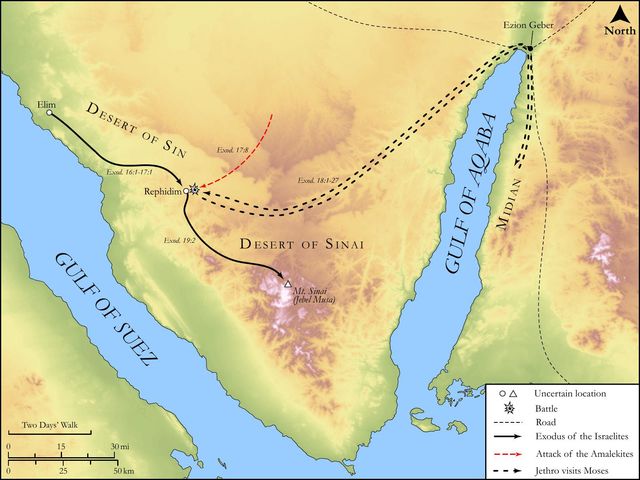
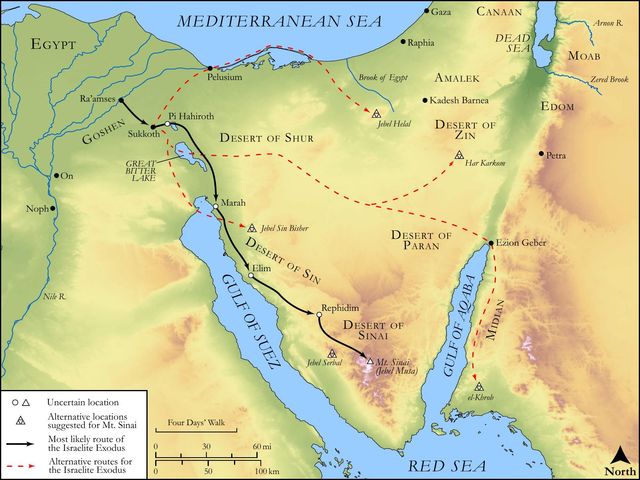
Study this verse
Public-domain commentary
Matthew Henry
From his Commentary on the Whole Bible. Henry comments on passages, not single verses — this entry covers Exodus 19:9–15. His three-level outline is real structure in the source text, so it is rendered as structure.
Here, I. God intimates to Moses his purpose of coming down upon mount Sinai, in some visible appearance of his glory, in a thick cloud (Exo 19:9); for he said that he would dwell in the thick darkness (Ch2 6:1), and make this his pavilion (Psa 18:11), holding back the face of his throne when he set it upon mount Sinai, and spreading a cloud upon it, Job 26:9. This thick cloud was to prohibit curious enquiries into things secret, and to command an awful adoration of that which was revealed. God would come down in the sight of all the people (Exo 19:11); though they should see no manner of similitude, yet they should see so much as would convince them that God was among them of a truth. And so high was the top of mount Sinai that it is supposed that not only the camp of Israel, but even the countries about, might discern some extraordinary appearance of glory upon it, which would strike a terror upon them. It seems also to have been particularly intended to put an honour upon Moses: That they may hear when I speak with thee, and believe thee for ever, Exo 19:9. Thus the correspondence was to be first settled by a sensible appearance of the divine glory, which was afterwards to be carried on more silently by the ministry of Moses. In like manner, the Holy Ghost descended visibly upon Christ at his baptism, and all that were present heard God speak to him (Mat 3:17), that afterwards, without the repetition of such visible tokens, they might believe him. So likewise the Spirit descended in cloven tongues upon the apostles (Act 2:3), that they might be believed. Observe, When the people had declared themselves willing to obey the voice of God, then God promised they should hear his voice; for, if any man be resolved to do his will, he shall know it, Joh 7:17.
II.He orders Moses to make preparation for this great solemnity, giving him two days' time for it.
1.He must sanctify the people (Exo 19:10), as Job, before this, sent and sanctified his sons, Job 1:5. He must raise their expectation by giving them notice what God would do, and assist their preparation by directing them what they must do. "Sanctify them," that is, "Call them off from their worldly business, and call them to religious exercises, meditation and prayer, that they may receive the law from God's mouth with reverence and devotion. Let them be ready," Exo 19:11. Note, When we are to attend upon God in solemn ordinances it concerns us to sanctify ourselves, and to get ready beforehand. Wandering thoughts must be gathered in, impure affections abandoned, disquieting passions suppressed, nay, and all cares about secular business, for the present, dismissed and laid by, that our hearts may be engaged to approach unto God. Two things particularly prescribed as signs and instances of their preparation: - (1.) In token of their cleansing themselves from all sinful pollutions, that they might be holy to God, they must wash their clothes (Exo 19:10), and they did so (Exo 19:14); not that God regards our clothes; but while they were washing their clothes he would have them think of washing their souls by repentance from the sins they had contracted in Egypt and since their deliverance. It becomes us to appear in clean clothes when we wait upon great men; so clean hearts are required in our attendance on the great God, who sees them as plainly as men see our clothes. This is absolutely necessary to our acceptably worshipping God. See Psa 26:6; Isa 1:16-18; Heb 10:22. (2.) In token of their devoting themselves entirely to religious exercises, upon this occasion, they must abstain even from lawful enjoyments during these three days, and not come at their wives, Exo 19:15. See Co1 7:5.
2.He must set bounds about the mountain, Exo 19:12, Exo 19:13. Probably he drew a line, or ditch, round at the foot of the hill, which none were to pass upon pain of death. This was to intimate,
(1.)That humble awful reverence which ought to possess the minds of all those that worship God. We are mean creatures before a great Creator, vile sinners before a holy righteous Judge; and therefore a godly fear and shame well become us, Heb 12:28; Psa 2:11.
(2.)The distance at which worshippers were kept, under that dispensation, which we ought to take notice of, that we may the more value our privilege under the gospel, having boldness to enter into the holiest by the blood of Jesus, Heb 10:19.
3.He must order the people to attend upon the summons that should be given (Exo 19:13): "When the trumpet soundeth long then let them take their places at the foot of the mount, and so sit down at God's feet," as it is explained, Deu 33:3. Never was so great a congregation called together, and preached to, at once, as this was here. No one man's voice could have reached so many, but the voice of God did.
Historical interpretation
Three Centuries of Reception
2 surviving comments on this verse. Each one is dated, so this reads as a timeline rather than a list.
Select a marker to jump to its quote. Markers stagger vertically where authors wrote within a few decades of each other.
If ye endure chastening, God dealeth with you as with sons; for what son is he whom the father chasteneth not? But if ye be without chastisement, whereof all are partakers, then are ye bastards, and not sons. Furthermore we have had fathers of our flesh which corrected us, and we gave them reverence: shall we not much rather be in subjection unto the Father of spirits, and live? For they verily for a few days chastened us after their own pleasure; but he for our profit, that we might be partakers of his holiness. Now no chastening for the present seemeth to be joyous, but grievous: nevertheless afterward it yieldeth the peaceable fruit of righteousness unto them which are exercised thereby. Wherefore lift up the hands which hang down, and the feeble knees; And make straight paths for your feet, lest that which is lame be turned out of the way; but let it rather be healed. Follow peace with all men, and holiness, without which no man shall see the Lord: Looking diligently lest any man fail of the grace of God; lest any root of bitterness springing up trouble you, and thereby many be defiled; Lest there be any fornicator, or profane person, as Esau, who for one morsel of meat sold his birthright. For ye know how that afterward, when he would have inherited the blessing, he was rejected: for he found no place of repentance, though he sought it carefully with tears. For ye are not come unto the mount that might be touched, and that burned with fire, nor unto blackness, and darkness, and tempest, And the sound of a trumpet, and the voice of words; which voice they that heard intreated that the word should not be spoken to them any more: (For they could not endure that which was commanded, And if so much as a beast touch the mountain, it shall be stoned, or thrust through with a dart: [Exodus 19:13] And so terrible was the sight, that Moses said, I exceedingly fear and quake:) But ye are come unto mount Sion, and unto the city of the living God, the heavenly Jerusalem, and to an innumerable company of angels, To the general assembly and church of the firstborn, which are written in heaven, and to God the Judge of all, and to the spirits of just men made perfect, And to Jesus the mediator of the new covenant, and to the blood of sprinkling, that speaketh better things than that of Abel. See that ye refuse not him that speaketh. For if they escaped not who refused him that spake on earth, much more shall not we escape, if we turn away from him that speaketh from heaven: Whose voice then shook the earth: but now he hath promised, saying, Yet once more I shake not the earth only, but also heaven. And this word, Yet once more, signifieth the removing of those things that are shaken, as of things that are made, that those things which cannot be shaken may remain. Wherefore we receiving a kingdom which cannot be moved, let us have grace, whereby we may serve God acceptably with reverence and godly fear: For our God is a consuming fire.
But if any is an evil and savage beast and altogether incapable of taking in the subject matter of contemplation and theology, let him not hurtfully and malignantly lurk in his den among the woods, to catch hold of some dogma or saying by a sudden spring and to tear sound doctrine to pieces by his misrepresentations. But let him stand yet afar off and withdraw from the mount, or he shall be stoned and crushed and shall perish miserably in his wickedness.
Continue studying Exodus 19:13 across the web’s major study libraries — every link below opens this exact verse, chapter, or book on the destination site.
Read & Compare
 BibleGatewayThis verse in more than 200 translations and 70 languages.
 Bible.comThe YouVersion reader — hundreds of translations, reading plans, and highlights.
 ESV.orgCrossway's official English Standard Version reader.
 NET BibleThe NET translation with 60,000+ translators' notes on every rendering decision.
 STEP BibleTyndale House's free study tool — original text, vocabulary, and scholarly resources.
 BibliaLogos Bible Software's free web reader.
 USCCBThe New American Bible (Revised Edition) with the U.S. bishops' study notes.
Commentaries
 BibleHub CommentariesDozens of classic commentaries on this verse, gathered on one page.
 StudyLightMore than 100 commentary sets — the largest collection on the web.
 BibleRefPlain-English commentary on what this verse means, verse by verse.
 Enduring WordDavid Guzik's free commentary on this chapter, widely used by Bible teachers.
 Bible Study ToolsVerse commentary alongside Greek and Hebrew study aids.
Original Language & Research
- BibleHub InterlinearThe verse word by word — original language, transliteration, and English.
- BibleHub LexiconEvery word's original-language definition and Strong's entry.
 Blue Letter BibleDeep-study tools — Strong's numbers, concordance, and word studies.
 SefariaThe Hebrew text with Rashi and centuries of Jewish commentary.
Sermons, Hymns & Audio


TrulyRandomVerse is not affiliated with these sites and doesn’t control their content. They’re linked because they’re genuinely useful.
Summary
Exodus 19:13 establishes the stringent, divinely imposed boundaries around Mount Sinai, emphasizing the absolute holiness and terrifying majesty of God as He prepared to descend and commune with the Israelites. This verse underscores the profound reverence required in God's presence, mandating severe, immediate penalties for any unauthorized approach by human or beast, yet also signaling a divinely appointed moment for a controlled, communal approach to the mountain's base, initiated by God's own unmistakable signal.
Context
ShowHideLiterary Context
This verse is intricately woven into the narrative of Israel's arrival at Mount Sinai, a pivotal moment following their miraculous deliverance from Egypt. Having journeyed for three months, the Israelites encamped before the mountain, where the Lord called Moses to ascend. In Exodus 19:5-6, God declared His intention to establish a covenant, promising to make Israel "a kingdom of priests and a holy nation" if they would obey His voice and keep His covenant. Immediately preceding verse 13, God instructs Moses to consecrate the people for two days, wash their clothes, and set strict boundaries around the mountain, warning that anyone or anything touching it would surely die (Exodus 19:10-12). Verse 13 reinforces this prohibition, detailing the specific, brutal methods of execution for transgressors, highlighting the gravity of the divine encounter and the absolute necessity of respecting God's sacred space. The final clause, "when the trumpet soundeth long, they shall come up to the mount," introduces a crucial conditional, divinely-initiated permission, marking the transition from absolute prohibition to a controlled, communal approach at God's signal. This entire chapter, Exodus 19, sets the stage for the giving of the Law.
Historical & Cultural Context
Mount Sinai, or Horeb, is the mountain of God, where the LORD came down in the sight of all the people and set bounds about the mount, so that access was restricted to Moses and Aaron. It became the preeminent sacred mountain for Israel, the site of God's direct revelation and covenant formation. The severe prohibitions and the immediate death penalty for transgression reflect a cultural understanding of divine holiness as an unapproachable, consuming fire, dangerous to the profane. The use of stoning (a communal execution) or shooting from a distance (to avoid physical contact with the defiled body) for punishment, even for animals, emphasizes both the communal responsibility to uphold the divine boundary and the defiling nature of unauthorized contact. The trumpet, or shofar, was a common instrument used for signaling in ancient Israel—for war, assembly, and religious festivals. Its "long sound" in this context signifies a clear, unmistakable, and divinely ordained signal, distinguishing it from other, shorter blasts and indicating a specific, controlled moment for the people to draw near, albeit still at a respectful distance from the summit. This entire scene established a foundational understanding of God's transcendence and Israel's unique, yet highly regulated, relationship with Him.
Key Themes
ShowHideExodus 19:13 significantly contributes to several overarching themes within the book of Exodus and the Pentateuch. Foremost is the theme of Divine Holiness and Transcendence. God is portrayed as utterly separate from His creation, unapproachable by sinful humanity without strict mediation and divine permission, as seen in the warnings of Exodus 19:12. This highlights the vast chasm between God's perfect purity and human sinfulness. Another key theme is Covenant and Obedience. The severe penalties underscore the absolute necessity of obedience to God's commands, especially concerning His presence. The establishment of boundaries and the requirement for consecration (Exodus 19:10) are prerequisites for entering into covenant relationship with the Holy One. Furthermore, the passage foreshadows the theme of Mediation, as Moses alone is permitted to ascend to God's immediate presence, setting him apart as the divinely appointed intermediary between God and Israel (Exodus 19:3). Finally, the "long trumpet sound" introduces the theme of Divine Initiative and Controlled Revelation, demonstrating that access to God is not a human right but a gracious, divinely granted privilege, always on His terms and at His appointed time.
Exposition and Analysis
ShowHideKey Word Analysis
ShowHideThis primitive word, H3027, refers to the open hand, indicating power, means, or direction. In this context, "There shall not an hand touch it" signifies a complete prohibition against any physical contact, emphasizing that no human power or agency is permitted to breach the sacred boundary. It underscores the absolute untouchability of the mountain as the temporary dwelling place of God's manifest glory, highlighting the profound separation between the holy and the profane.
As a primitive root, H5060, nâgaʻ primarily means "to touch," but can also imply laying the hand upon for various purposes, including violence or punishment. Here, it is used in the sense of making physical contact, which is strictly forbidden. The prohibition against nâgaʻ emphasizes the inherent danger and defilement associated with unauthorized contact with God's holy presence, making even an accidental touch a capital offense. It reinforces the idea of God's unapproachable holiness.
This term, H3104, refers to the blast of a horn, specifically the signal of the silver trumpets, and by extension, the instrument itself. It is the root from which the term "Jubilee" is derived, suggesting a sound of significant, prolonged duration and profound importance. In Exodus 19:13, the yôwbêl blast is not merely an audible signal but a direct divine communication, marking a climactic, divinely appointed moment. Its "long" sound signifies a sustained, unmistakable signal, distinguishing it from other, shorter blasts and indicating a definitive shift in the divine protocol, from absolute prohibition to a controlled, communal approach.
Verse Breakdown
ShowHide"There shall not an hand touch it"
This clause establishes an absolute, non-negotiable boundary around Mount Sinai. The prohibition is against any physical contact, emphasizing the sacredness and untouchability of the mountain as the temporary dwelling place of God's manifest glory. It signifies God's utter transcendence and the chasm between His holiness and human sinfulness, making even incidental contact a violation of divine space.
"but he shall surely be stoned, or shot through; whether [it be] beast or man, it shall not live"
This specifies the dire and universal consequences for violating the boundary. The severity of the punishment—death by stoning (a communal execution, emphasizing the people's responsibility to uphold God's law) or shooting (likely with arrows, from a distance, to avoid physical contact with the defiled body)—underscores the gravity of the offense. The inclusion of "beast or man" highlights that the sanctity of God's presence extends to all creation within its immediate proximity, and any transgression, regardless of intent or species, is met with immediate and absolute judgment. "It shall not live" is a stark, unequivocal statement of the finality of this divine judgment.
"when the trumpet soundeth long, they shall come up to the mount"
This final clause introduces a crucial exception and condition. The prohibition is not absolute or permanent. God Himself will signal when a limited, controlled approach is permitted. The "long trumpet sound" (the yôwbêl or shofar) serves as the divine invitation, indicating that the period of strict separation has ended and a new phase of interaction, albeit still regulated, can begin. Crucially, "come up to the mount" implies an approach to the base or lower slopes, not an ascent to the summit where God's glory resided, maintaining the necessary awe and distance even in permitted proximity.
Literary Devices
ShowHideExodus 19:13 powerfully employs several literary devices to convey its message. Symbolism is paramount, with Mount Sinai itself symbolizing God's awesome, unapproachable holiness and the locus of His covenantal presence. The yôwbêl (trumpet) acts as a potent symbol of divine communication and theophany, its "long sound" signifying a clear, authoritative, and climactic divine signal. The strict boundaries around the mountain symbolize the necessary separation between a holy God and sinful humanity, highlighting the inherent danger of unmediated divine encounter. The severe penalty of death for even touching the mountain functions as a device of extreme emphasis or dramatic contrast, designed to impress upon the reader the absolute nature of God's holiness and the gravity of the covenant. While not literal hyperbole, the starkness of the punishment for what might seem like a minor infraction serves to underscore the profound reverence demanded. Furthermore, the entire scene, with its emphasis on a mediator (Moses) and the inability of the people to directly approach God, serves as foreshadowing for the ultimate need for a perfect mediator, Jesus Christ, who would bridge the gap between God and humanity.
Theological and Thematic Connections
ShowHideExodus 19:13 is foundational to understanding the nature of God's holiness, His absolute sovereignty, and the profound implications of covenant. It vividly portrays God as utterly transcendent, separate from sin, and demanding absolute reverence. The unapproachable mountain, guarded by the threat of death, underscores humanity's inherent inability to stand in God's presence without mediation or divine permission. This scene establishes the principle that access to God is not a right but a divinely granted privilege, always on His terms. It sets the stage for the Mosaic Law, which, with its elaborate system of sacrifices, priesthood, and tabernacle, provided a temporary, regulated means for a sinful people to approach a holy God, always emphasizing the need for purification and atonement. The terror of Sinai was designed to instill a profound fear of the Lord, not a servile dread, but a reverential awe that leads to obedience and wisdom.
Reflection and Application
ShowHideThe scene at Mount Sinai, particularly the stark warning of Exodus 19:13, serves as a powerful reminder of God's unchanging holiness and our need for reverent awe in His presence. While we no longer approach a physical mountain guarded by death, the spiritual reality of God's infinite purity remains. This passage compels us to consider the immense privilege we have in Christ, who has opened a new and living way to draw near to God not through fear and rigid boundaries, but through grace and faith. It challenges us to never take this access for granted, but to approach God's throne with both boldness (Hebrews 4:16) and profound humility, recognizing the immense cost of our redemption. Our worship, our lives, and our obedience should reflect the understanding that we serve a God who is both loving and consuming fire, demanding our utmost reverence and devotion.
Questions for Reflection
ShowHideFAQ
ShowHideWhy was the punishment for touching the mountain so severe?
ShowHideThe extreme severity of the punishment—death for both humans and animals—was necessary to impress upon the Israelites the absolute holiness of God and the sacredness of the space where He chose to manifest His presence. God was establishing a covenant with His people, and the foundation of this relationship was His unblemished purity and authority. Any unauthorized approach was not merely a breach of a rule, but a direct affront to His divine nature, a profanation of His holy presence. This strictness served to instill profound awe and fear of the Lord, ensuring that the people understood the gravity of the covenant and the consequences of disobedience. It also highlighted the inherent sinfulness of humanity, which could not casually withstand the direct presence of a holy God. Examples like Leviticus 10:1-2, where Nadab and Abihu were consumed for offering "strange fire," further illustrate God's zero tolerance for irreverence in His presence.
What is the significance of the "long trumpet sound"?
ShowHideThe "long trumpet sound" (likely from a shofar or yôwbêl) was a divinely ordained signal marking a specific, controlled transition. Initially, the mountain was absolutely forbidden, with death as the penalty for any contact. The sustained, unmistakable blast of the trumpet indicated that the period of strict prohibition was over, and a limited, divinely sanctioned approach was now permitted. It was God's invitation, a clear sign that He was ready to engage with His people, albeit still on His terms and at a respectful distance (to the base of the mountain, not the summit). This sound symbolized God's controlled revelation, His initiative in drawing near to His people, and His authority to dictate the terms of their interaction. It was a signal of assembly, divine presence, and the commencement of a new phase in their covenant relationship, much like the trumpet calls that would later signal significant events in Israel's history (Joel 2:1).
Christ-Centered Fulfillment
ShowHideExodus 19:13, with its terrifying display of God's unapproachable holiness and the strict boundaries at Sinai, profoundly foreshadows the ultimate need for a mediator and points directly to Christ's redemptive work. The scene vividly portrays humanity's inability to stand in God's presence due to sin, necessitating a barrier of death. This fear-inducing encounter contrasts sharply with the New Covenant established through Jesus. While the Law given at Sinai revealed God's righteous standards and condemned humanity's sin, it could not provide a way for sinful people to genuinely draw near. Jesus, however, is the ultimate fulfillment of the need for access. He is the Lamb of God who takes away the sin of the world, the one who "became flesh and dwelt among us" (John 1:14). Through His perfect life, atoning death, and resurrection, Christ has abolished the barrier of sin and opened a new and living way to the Father. The author of Hebrews masterfully contrasts the terrifying scene at Mount Sinai with the joyful approach to Mount Zion, the heavenly Jerusalem, where believers come not to a tangible mountain with fire and darkness, but "to Jesus, the mediator of a new covenant, and to the sprinkled blood that speaks a better word than the blood of Abel" (Hebrews 12:24). What was once forbidden and terrifying is now accessible through grace, allowing us to draw near with confidence to the throne of grace, not because we are worthy, but because Christ has made us so. The long trumpet blast at Sinai signaled a limited, conditional approach; Christ's finished work signals an open, permanent, and intimate access to God for all who believe.