


Exodus 19:19
Bible text: King James Version (1769 Blayney text) · Public domain
Bible text: Berean Standard Bible · Public domain
Bible text: American Standard Version (1901) · Public domain
Bible text: World English Bible, Messianic edition · Public domain
Bible text: Geneva Bible (1599) · Public domain
Bible text: Young's Literal Translation · Public domain
- וַיְהִיvay·Hiand it wasH1961Conj-w ¦ V-Qal-ConsecImperf-3msVerb Qal Consecutive Imperfect 3rd Singular Masculineוַandיְהִיit was
- קוֹלKol[the] sound ofH6963N-mscNoun Singular Masculine Construct
- הַשּׁוֹפָרha·sho·Farthe ram's hornH7782Art ¦ N-msNoun Singular Masculine Absoluteהַtheשּׁוֹפָרram's horn
- הוֹלֵךְho·LekhgoingH1980V-Qal-Prtcpl-msVerb Qal Participle Singular Masculine Absolute
- וְחָזֵקve·cha·Zekand strongH2390Conj-w ¦ Adj-msAdjective Singular Masculine Absoluteוְandחָזֵקstrong
- מְאֹדme·'OdveryH3966Adj-msAdjective Numerical Singular Masculine Absolute
- מֹשֶׁהmo·ShehMosesH4872N-proper-mNoun Proper Masculine
- יְדַבֵּרye·da·Berhe spokeH1696V-Piel-Imperf-3msVerb Piel Imperfect 3rd Singular Masculine
- וְהָאֱלֹהִיםve·ha·'E·lo·Himand <the> GodH430Conj-w ¦ Art ¦ N-mpNoun Plural Masculine Absoluteוְandהָ<the>אֱלֹהִיםGod
- יַעֲנֶנּוּya·'a·Ne·nuhe answered himH6030V-Qal-Imperf-3ms ¦ 3msVerb Qal Imperfect 3rd Singular Masculineיַעֲנֶhe answeredנּוּhim
- בְקוֹלve·Kolwith a voiceH6963Prep-b ¦ N-msNoun Singular Masculine Absoluteבְwithקוֹלa voice
English is a literal word-by-word gloss of the Hebrew, not the KJV's wording. Why?
This is the original text the KJV's translators worked from — each Hebrew word with its own literal English meaning in this verse, prepared by scholars at Tyndale House, Cambridge. The KJV translates whole sentences, not word by word, so its wording differs: one Hebrew word can become several English words, and the KJV may choose “the LORD” where the gloss reads “Yahweh”. Both are faithful — they answer different questions. For the KJV's own rendering, switch to the KJV text.
Details
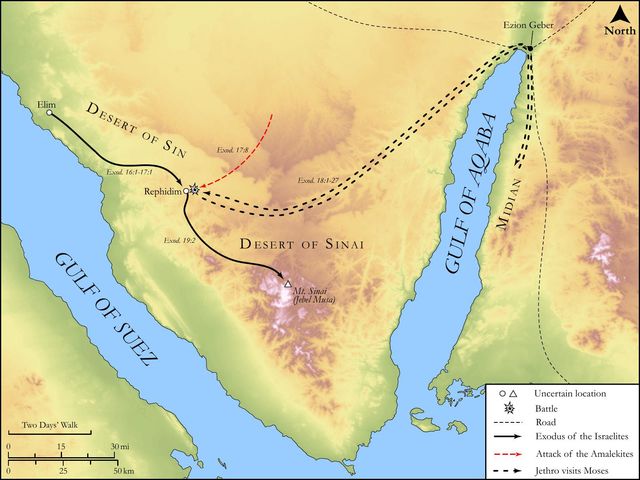
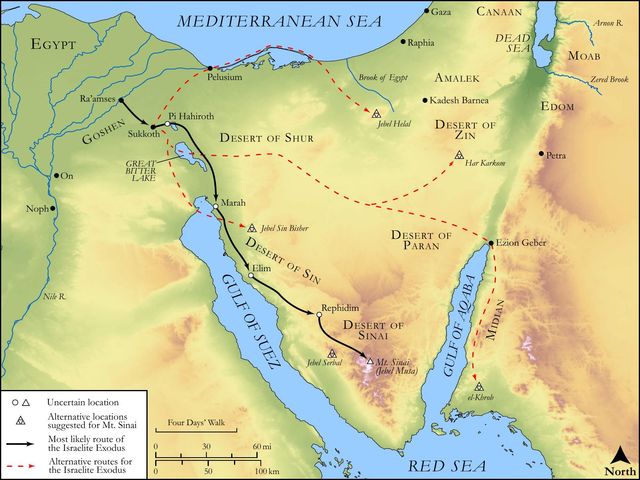
See on the biblical-era maps

Study this verse
Public-domain commentary
Matthew Henry
From his Commentary on the Whole Bible. Henry comments on passages, not single verses — this entry covers Exodus 19:16–25. His three-level outline is real structure in the source text, so it is rendered as structure.
Now, at length, comes that memorable day, that terrible day of the Lord, that day of judgment, in which Israel heard the voice of the Lord God speaking to them out of the midst of the fire, and lived, Deu 4:33. Never was there such a sermon preached, before nor since, as this which was here preached to the church in the wilderness. For,
I.The preacher was God himself (Exo 19:18):
The Lord descended in fire, and (Exo 19:20), The Lord came down upon mount Sinai. The shechinah, or glory of the Lord, appeared in the sight of all the people; he shone forth from mount Paran with ten thousands of his saints (Deu 33:2), that is, attended, as the divine Majesty always is, by a multitude of the holy angels, who were both to grace the solemnity and to assist at it. Hence the law is said to be given by the disposition of angels, Act 7:53.
II.The pulpit (or throne rather) was mount Sinai, hung with a thick cloud (Exo 19:16), covered with smoke (Exo 19:18), and made to quake greatly. Now it was that the earth trembled at the presence of the Lord, and the mountains skipped like rams (Psa 114:4, Psa 114:7), that Sinai itself, though rough and rocky, melted from before the Lord God of Israel, Jdg 5:5. Now it was that the mountains saw him, and trembled (Hab 3:10), and were witnesses against a hard-hearted unmoved people, whom nothing would influence.
III.The congregation was called together by the sound of a trumpet, exceedingly loud (Exo 19:16), and waxing louder and louder, Exo 19:19.
This was done by the ministry of the angels, and we read of trumpets sounded by angels, Rev 8:6. It was the sound of the trumpet that made all the people tremble, as those who knew their own guilt, and who had reason to expect that the sound of this trumpet was to them the alarm of war.
IV.Moses brought the hearers to the place of meeting, Exo 19:17.
He that had led them out of the bondage of Egypt now led them to receive the law from God's mouth. Public persons are indeed public blessings when they lay out themselves in their places to promote the public worship of God. Moses, at the head of an assembly worshipping God, was as truly great as Moses at the head of an army in the field.
V.The introductions to the service were thunders and lightnings, Exo 19:16.
These were designed to strike an awe upon the people, and to raise and engage their attention. Were they asleep? The thunders would awaken them. Were they looking another way? The lightnings would engage them to turn their faces towards him that spoke to them. Thunder and lightning have natural causes, but the scripture directs us in a particular manner to take notice of the power of God, and his terror, in them. Thunder is the voice of God, and lightning the fire of God, proper to engage the senses of sight and hearing, those senses by which we receive so much of our information.
VI.Moses is God's minister, who is spoken to, to command silence, and keep the congregation in order:
Moses spoke, Exo 19:19. Some think it was now that he said, I exceedingly fear and quake (Heb 12:21); but God stilled his fear by his distinguishing favour to him, in calling him up to the top of the mount (Exo 19:20), by which also he tried his faith and courage. No sooner had Moses got up a little way towards the top of the mount than he was sent down again to keep the people from breaking through to gaze, Exo 19:21. Even the priests or princes, the heads of the houses of their fathers, who officiated for their respective families, and therefore are said to come near to the Lord at other times, must now keep their distance, and conduct themselves with a great deal of caution. Moses pleads that they needed not to have any further orders given them, effectual care being taken already to prevent any intrusions, Exo 19:23. But God, who knew their wilfulness and presumption, and what was now in the hearts of some of them, hastens him down with this in charge, that neither the priests nor the people should offer to force the lines that were set, to come up unto the Lord, but Moses and Aaron on, the men whom God delighted to honour. Observe,
1.What it was that God forbade them - breaking through to gaze; enough was provided to awaken their consciences, but they were not allowed to gratify their vain curiosity. They might see, but not gaze. Some of them, probably, were desirous to see some similitude, that they might know how to make an image of God, which he took care to prevent, for they saw no manner of similitude, Deu 4:5. Note, In divine things we must not covet to know more than God would have us know; and he has allowed us as much as is good for us. A desire of forbidden knowledge was the ruin of our first parents. Those that would be wise above what is written, and intrude into those things which they have not seen, need this admonition, that they break not through to gaze.
2.Under what penalty it was forbidden: Lest the Lord break forth upon them (Exo 19:22-24), and many of them perish. Note,
(1.)The restraints and warnings of the divine law are all intended for our good, and to keep us out of that danger into which we should otherwise, by our own folly, run ourselves.
(2.)It is at our peril if we break the bounds that God has set us, and intrude upon that which he has not allowed us; the Bethshemites and Uzzah paid dearly for their presumption. And, even when we are called to approach God, we must remember that he is in heaven and we upon earth, and therefore it behoves us to exercise reverence and godly fear.
Historical interpretation
Two Centuries of Reception
2 surviving comments on this verse. Each one is dated, so this reads as a timeline rather than a list.
Select a marker to jump to its quote. Markers stagger vertically where authors wrote within a few decades of each other.
But when she [the bride] has become worthy to have it said of her, as also it was said of Moses, that “Moses spoke, and God answered him,” then there is fulfilled in her that which he says: “Make me to hear your voice.” It is indeed high praise of her that is disclosed in that saying, “Sweet is your voice.” For thus also said the most wise prophet David: “Let my speech be sweet to him.” And the voice of the soul is sweet when it utters the word of God, when it expounds the faith and the doctrines of the truth, when it unfolds God’s dealings and his judgments.
And this is pictured for you in the writings of Moses. For the God of all came down in the likeness of fire on Mt. Sinai, and there was a cloud, and darkness, and gloom and the voice of the trumpet with a loud ringing sound, according to the Scripture. The notes of the trumpet were, it says, few at first, but afterwards they waxed longer and became louder and louder continually. What then was it which the shadow of the law signified to us by these things? Was it not this: that at first there were but few to publish the gospel tidings; but afterwards they became many?
Continue studying Exodus 19:19 across the web’s major study libraries — every link below opens this exact verse, chapter, or book on the destination site.
Read & Compare
 BibleGatewayThis verse in more than 200 translations and 70 languages.
 Bible.comThe YouVersion reader — hundreds of translations, reading plans, and highlights.
 ESV.orgCrossway's official English Standard Version reader.
 NET BibleThe NET translation with 60,000+ translators' notes on every rendering decision.
 STEP BibleTyndale House's free study tool — original text, vocabulary, and scholarly resources.
 BibliaLogos Bible Software's free web reader.
 USCCBThe New American Bible (Revised Edition) with the U.S. bishops' study notes.
Commentaries
 BibleHub CommentariesDozens of classic commentaries on this verse, gathered on one page.
 StudyLightMore than 100 commentary sets — the largest collection on the web.
 BibleRefPlain-English commentary on what this verse means, verse by verse.
 Enduring WordDavid Guzik's free commentary on this chapter, widely used by Bible teachers.
 Bible Study ToolsVerse commentary alongside Greek and Hebrew study aids.
Original Language & Research
- BibleHub InterlinearThe verse word by word — original language, transliteration, and English.
- BibleHub LexiconEvery word's original-language definition and Strong's entry.
 Blue Letter BibleDeep-study tools — Strong's numbers, concordance, and word studies.
 SefariaThe Hebrew text with Rashi and centuries of Jewish commentary.
Sermons, Hymns & Audio


TrulyRandomVerse is not affiliated with these sites and doesn’t control their content. They’re linked because they’re genuinely useful.
Summary
Exodus 19:19 vividly portrays the escalating intensity of God's presence at Mount Sinai, where the trumpet's sound grows ever louder, culminating in a direct, audible dialogue between Moses and the Almighty. This pivotal moment underscores the overwhelming majesty and holiness of God, while simultaneously highlighting Moses' unique and privileged role as the chosen mediator, through whom the divine will is communicated to a trembling Israel in the foundational covenantal encounter.
Context
ShowHideLiterary Context
This verse is deeply embedded within the dramatic narrative of God's descent upon Mount Sinai, serving as a climactic moment immediately preceding the giving of the Ten Commandments. The preceding verses, detailing the terrifying phenomena of thunder, lightning, a thick cloud, and the smoking, trembling mountain, along with the sound of a very loud trumpet (see Exodus 19:16-18), meticulously establish an atmosphere of profound awe and holy dread. This sensory onslaught sets the stage for the direct divine communication that follows. Moses' unique access to the mountain, as described in Exodus 19:20, and God's repeated warnings against the people approaching too closely, emphasize the sacred boundaries and the immense gravity of the encounter. The entire chapter meticulously builds towards the formal establishment of the covenant and the giving of the Law in Exodus 20, with this verse marking the peak of the preparatory divine manifestation.
Historical & Cultural Context
The events at Mount Sinai represent the quintessential theophany in Israelite history, marking the formal establishment of the covenant between Yahweh and His chosen people after their liberation from Egyptian bondage. The use of a trumpet, specifically a shofar (ram's horn), was culturally significant in ancient Israel, often signaling divine presence, assembly, war, or solemn pronouncements. The escalating sound would have been understood as a clear, unmistakable, and increasingly urgent manifestation of divine power and authority, demanding absolute attention and reverence. This public, terrifying display served to distinguish Yahweh from the pagan deities of surrounding nations, emphasizing His transcendence, holiness, and unique ability to communicate directly with humanity, albeit through a chosen mediator like Moses, who alone could withstand such proximity to the divine presence, unlike the people who stood afar off in fear (Exodus 20:18-19). This moment cemented Israel's identity as a people set apart, bound to God by a unique covenant.
Key Themes
ShowHideExodus 19:19 contributes significantly to several major theological and narrative themes prevalent in the book of Exodus and the broader Pentateuch. Foremost among these is Divine Revelation, as God actively discloses His presence and will to His people, not merely through natural phenomena but through direct, articulate speech. Closely related is the theme of God's Holiness and Transcendence, powerfully conveyed by the terrifying and unapproachable nature of His manifestation at Sinai, demanding reverence and setting boundaries for human interaction. The verse also highlights Mediated Access to God, as Moses alone is able to speak with God and receive an audible reply, underscoring his unique role as the covenant mediator between a holy God and His people, a theme that finds echoes in later prophetic and priestly roles. Finally, the Establishment of the Covenant is paramount, as this awe-inspiring prelude prepares Israel to receive and obey the Law that will define their relationship with Yahweh, a relationship initiated through His mighty deliverance from Egypt (Exodus 19:4-6).
Exposition and Analysis
ShowHideKey Word Analysis
ShowHideThis term refers to a cornet or curved horn, typically a ram's horn, known for producing a piercing, resonant sound. In this context, the shôwphâr serves as a supernatural herald, signaling the immediate and overwhelming presence of God, distinct from any humanly produced sound, and designed to instill awe and attention.
Derived from a root meaning "to be strong" or "to grow firm," châzêq here describes the intensifying nature of the trumpet's sound. It conveys a sense of growing power and might, indicating a continuous, escalating manifestation of divine authority and the building tension and awe in the scene.
This word signifies a sound or voice. It is crucial in this verse because it is used twice: once for the trumpet's sound and again for God's direct communication. While the trumpet's "voice" signifies God's general, awe-inspiring presence, God's "voice" in response to Moses denotes a personal, intelligent, and specific articulation, highlighting the unique intimacy of their relationship.
Verse Breakdown
ShowHide"And when the voice of the trumpet sounded long"
This clause establishes the sustained, supernatural sound emanating from Mount Sinai, a key element of the theophany. It signifies the commencement of God's self-revelation, designed to capture the people's attention and instill a foundational sense of awe and solemnity.
"and waxed louder and louder"
This phrase emphasizes the escalating intensity and overwhelming nature of the trumpet's sound. It creates a palpable sense of growing divine power and an atmosphere of holy dread, preparing the people for the immense gravity and directness of God's impending revelation. The continuous intensification underscores God's active and undeniable presence.
"Moses spake"
In stark contrast to the terrified Israelites who kept their distance and trembled, Moses, as the chosen mediator, courageously and uniquely engages in verbal communication with God amidst this terrifying display. This act demonstrates his privileged access and unparalleled role in the divine-human encounter.
"and God answered him by a voice"
This climactic phrase reveals the direct, personal, and audible nature of God's communication with Moses. It signifies God's responsiveness and the unique, intimate dialogue He maintained with His servant, distinguishing Moses' relationship with God from that of the general populace and confirming his mediatorial authority.
Literary Devices
ShowHideThe passage employs several potent literary devices to convey the majesty and terror of the Sinai encounter. Auditory Imagery is paramount, with vivid descriptions of the "voice of the trumpet" and God's distinct "voice," creating an immersive soundscape that emphasizes the overwhelming nature of the divine presence. The phrase "waxed louder and louder" utilizes Intensification and a subtle form of Hyperbole, underscoring the escalating power and majesty of God's self-revelation and building dramatic tension. There is also a clear Contrast drawn between the general, terrifying sound of the trumpet, which affects all the people, and the specific, personal "voice" by which God answers Moses, highlighting Moses' unique mediatorial role and intimate relationship with the Almighty. The entire scene is a profound example of Theophany, the visible and audible manifestation of God, designed to impress upon Israel the holiness and power of their covenant Lord.
Theological and Thematic Connections
ShowHideExodus 19:19 powerfully conveys the themes of divine transcendence, immanence, and mediated revelation. God, in His infinite holiness and power, descends upon Sinai in a terrifying display, demonstrating His absolute sovereignty and demanding the utmost reverence. Yet, amidst this overwhelming majesty, He also draws near to His people, communicating directly through Moses, thereby revealing His immanence and desire for relationship. This moment solidifies Moses' unique role as the chosen mediator, the one through whom God's will and law are conveyed to Israel. The awe-inspiring nature of this encounter was designed to instill a holy fear, reminding Israel of the gravity of their covenant with a holy God and the profound implications of their obedience or disobedience.
Reflection and Application
ShowHideExodus 19:19 serves as a profound reminder of God's immense holiness, power, and sovereign authority. The escalating trumpet sound and the terrifying manifestations at Sinai were not merely for show; they were designed to instill a deep reverence and a healthy fear of the Lord, impressing upon Israel the gravity of entering into covenant with the Almighty. For us today, this passage underscores that God is utterly unique, transcendent, and worthy of our utmost awe and respect. While we no longer approach God through the terrifying manifestations of Sinai, the principle of His supreme authority and holiness remains. Moreover, Moses' unique privilege of speaking to God and receiving an audible reply highlights the profound gift of direct communication with God that believers now enjoy through Christ, our ultimate mediator. This should inspire us to approach God's Word with reverence and prayer with confidence, knowing that the same God who spoke from Sinai still hears and answers His people, inviting us into a personal relationship despite His infinite majesty.
Questions for Reflection
ShowHideFAQ
ShowHideWhy was the trumpet sound so important in this divine revelation?
ShowHideThe trumpet sound, specifically from a shofar or ram's horn, was crucial because it served as a powerful, unmistakable, and escalating signal of God's immediate and terrifying presence. It created an atmosphere of profound awe and holy dread, capturing the undivided attention of the Israelites and preparing them for the solemnity and gravity of the covenant and the Law God was about to deliver (see Exodus 19:16). It functioned as a divine alarm, indicating that the Creator of the universe was manifesting Himself in a tangible and overwhelming way, demanding absolute reverence and attention from His people.
What does "God answered him by a voice" imply about Moses' relationship with God?
ShowHideThis phrase highlights the extraordinary and unique intimacy of Moses' relationship with God. While the entire nation heard the general, terrifying sound of the trumpet and saw the lightning and smoke, Moses alone had the privilege of direct, audible, and personal dialogue with God. It signifies God's responsiveness to Moses and confirms Moses' unparalleled role as the chosen mediator between God and His people, distinguishing him from all others (compare with Numbers 12:6-8, where God explicitly states He speaks with Moses "mouth to mouth"). This intimate communication underscored Moses' unique authority and the trust God placed in him.
How does this event at Sinai relate to the giving of the Ten Commandments?
ShowHideExodus 19:19, along with the preceding verses describing the theophany, serves as the solemn and awe-inspiring prelude to the giving of the Ten Commandments (found in Exodus 20:1-17). The terrifying display of God's power and holiness was designed to underscore the divine origin and absolute authority of the Law He was about to impart. It impressed upon the Israelites the gravity of the covenant and the sacredness of the commands, ensuring they understood these were not mere human precepts but the very words of the Almighty God, given amidst an undeniable manifestation of His glory and power.
Christ-Centered Fulfillment
ShowHideExodus 19:19, with its depiction of a terrifyingly holy God communicating amidst fire and trumpet blasts, finds its profound Christ-centered fulfillment in the person and work of Jesus. At Sinai, God's presence was so overwhelming and holy that boundaries had to be set, and a mediator, Moses, was necessary for communication. This foreshadows the ultimate need for a perfect mediator between a holy God and sinful humanity. Jesus Christ is that perfect mediator, not merely a human prophet, but the very Word made flesh, through whom God now speaks most clearly and definitively (Hebrews 1:1-2). The old covenant, inaugurated with fear and trembling at Sinai, points to the new covenant established in Christ's blood, which is characterized by grace and direct access. While Sinai instilled terror and a sense of unapproachability, the cross of Christ provides peace and reconciliation, allowing believers to approach God's throne of grace with boldness, not fear (Hebrews 4:16). Jesus, as the Lamb of God, has perfectly fulfilled the Law and absorbed its curse, transforming the terrifying encounter with God into an intimate relationship through His atoning sacrifice. He is the mediator of a better covenant, making the unapproachable God of Sinai fully accessible to all who believe and enabling them to hear His voice not in terror, but in love and truth.