


Luke 2:51
Bible text: King James Version (1769 Blayney text) · Public domain
Bible text: King James Version with Strong's numbers · Public domain
Bible text: Berean Standard Bible · Public domain
Bible text: American Standard Version (1901) · Public domain
Bible text: World English Bible, Messianic edition · Public domain
Bible text: Geneva Bible (1599) · Public domain
Bible text: Young's Literal Translation · Public domain
- καὶkaiAndG2532CONJConjunction
- κατέβηkatebēHe went downG2597V-2AAI-3SVerb 2nd Aorist Active Indicative 3rd Singular
- μετ᾽met᾽withG3326PREPPreposition
- αὐτῶνautōnthemG846P-GPMPersonal pronoun Genitive Plural Masculine
- καὶkaiandG2532CONJConjunction
- ἦλθενēlthenHe cameG2064V-2AAI-3SVerb 2nd Aorist Active Indicative 3rd Singular
- εἰςeistoG1519PREPPreposition
- ΝαζαρὲθNazarethNazarethG3478N-ASF-LNoun Accusative Singular Feminine Location
- καὶkaiandG2532CONJConjunction
- ἦνēnHe wasG1510V-IAI-3SVerb Imperfect Active Indicative 3rd Singular
- ὑποτασσόμενοςhupotassomenossubjectG5293V-PPP-NSMVerb Present Passive Participle Nominative Singular Masculine
- αὐτοῖςautoisto themG846P-DPMPersonal pronoun Dative Plural Masculine
- καὶkaiAndG2532CONJConjunction
- ἡhētheG3588T-NSFDefinite article Nominative Singular Feminine
- μήτηρmētērmotherG3384N-NSFNoun Nominative Singular Feminine
- αὐτοῦautouof HimG846P-GSMPersonal pronoun Genitive Singular Masculine
- διετήρειdietēreiwas treasuring upG1301V-IAI-3SVerb Imperfect Active Indicative 3rd Singular
- πάνταpantaallG3956A-APNAdjective Accusative Plural Neuter
- τὰta<the>G3588T-APNDefinite article Accusative Plural Neuter
- ῥήματαrhēmatadeclarationG4487N-APNNoun Accusative Plural Neuter
- ταῦταtautatheseG3778D-APNDemonstrative pronoun Accusative Plural Neuter
- ἐνeninG1722PREPPreposition
- τῇtēatheG3588T-DSFDefinite article Dative Singular Feminine
- καρδίᾳkardiaheartG2588N-DSFNoun Dative Singular Feminine
- αὐτῆςautēsof herG846P-GSFPersonal pronoun Genitive Singular Feminine
English is a literal word-by-word gloss of the Greek, not the KJV's wording. Why?
This is the original text the KJV's translators worked from — each Greek word with its own literal English meaning in this verse, prepared by scholars at Tyndale House, Cambridge. The KJV translates whole sentences, not word by word, so its wording differs: one Greek word can become several English words, and the KJV may choose “charity” where the gloss reads “love”. Both are faithful — they answer different questions. For the KJV's own rendering, switch to the KJV text.
Details
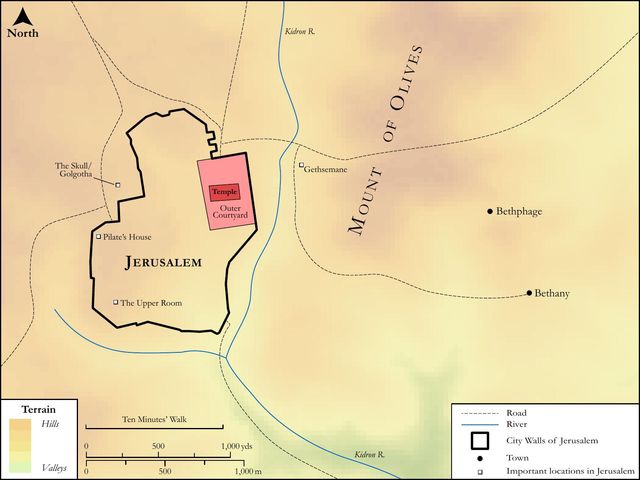
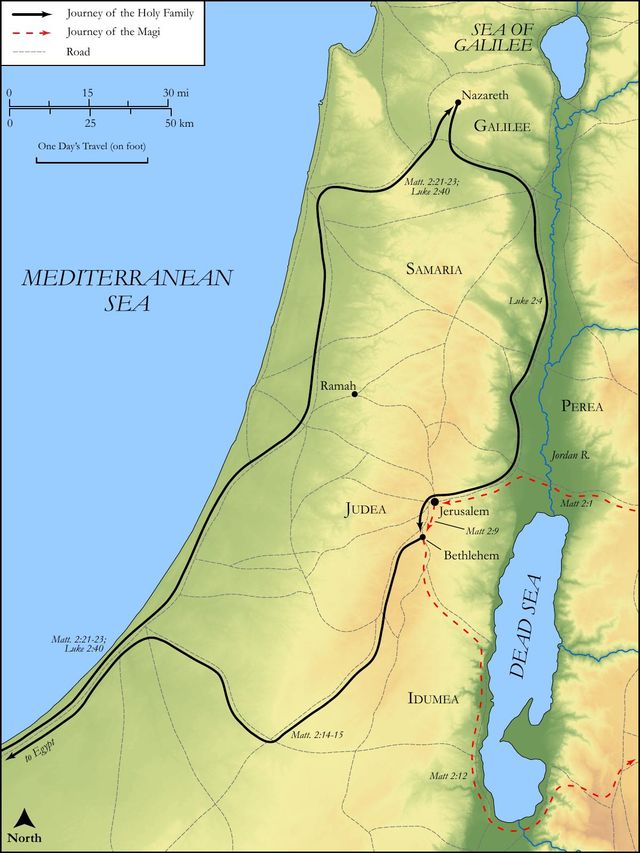
See on the biblical-era maps

Study this verse
Public-domain commentary
Matthew Henry
From his Commentary on the Whole Bible. Henry comments on passages, not single verses — this entry covers Luke 2:41–52. His three-level outline is real structure in the source text, so it is rendered as structure.
We have here the only passage of story recorded concerning our blessed Saviour, from his infancy to the day of his showing to Israel at twenty-nine years old, and therefore we are concerned to make much of this, for it is in vain to wish we had more. Here is,
I.Christ's going up with his parents to Jerusalem, at the feast of the passover, Luk 2:41, Luk 2:42.
1.It was their constant practice to attend there, according to the law, though it was a long journey, and they were poor, and perhaps not well able, without straitening themselves, to bear the expenses of it. Note, Public ordinances must be frequented, and we must not forsake the assembling of ourselves together, as the manner of some is. Worldly business must give way to spiritual concerns. Joseph and Mary had a son in the house with them, that was able to teach them better than all the rabbin at Jerusalem; yet they went up thither, after the custom of the feast. The Lord loves the gates of Zion more than all the dwellings of Jacob, and so should we. We have reason to suppose that Joseph went up likewise at the feasts of pentecost and tabernacles; for all the males were to appear there thrice a year, but Mary only at the passover, which was the greatest of the three feasts, and had most gospel in it.
2.The child Jesus, at twelve years old, went up with them. The Jewish doctors say that at twelve years old children must begin to fast from time to time, that they may learn to fast on the day of atonement; and that at thirteen years old a child begins to be a son of the commandment, that is, obliged to the duties of adult church-membership, having been from his infancy, by virtue of his circumcision, a son of the covenant. It is not said that this was the first time that Jesus went up to Jerusalem to worship at the feast: probably he had done it for some years before, having spirit and wisdom above his years; and all should attend on public worship that can hear with understanding, Neh 8:2. Those children that are forward in other things should be put forward in religion. It is for the honour of Christ that children should attend on public worship, and he is pleased with their hosannas; and those children that were in their infancy dedicated to God should be called upon, when they are grown up, to come to the gospel passover, to the Lord's supper, that they make it their own act and deed to join themselves to the Lord.
II.Christ's tarrying behind his parents at Jerusalem, unknown to them, in which he designed to give an early specimen of what he was reserved for.
1.His parents did not return till they had fulfilled the days; they had staid there all the seven days at the feast, though it was not absolutely necessary that they should stay longer than the two first days, after which many went home. Note, It is good to stay to the conclusion of an ordinance, as becomes those who say, It is good to be here, and not to hasten away, as if we were like Doeg, detained before the Lord.
2.The child tarried behind in Jerusalem, not because he was loth to go home, or shy of his parents' company, but because he had business to do there, and would let his parents know that he had a Father in heaven, whom he was to be observant of more than of them; and respect to him must not be construed disrespect to them. Some conjecture that he tarried behind in the temple, for it was the custom of the pious Jews, on the morning that they were to go home, to go first to the temple, to worship God; there he staid behind, and found entertainment there till they found him again. Or, perhaps, he staid at the house where they lodged, or some other friend's house (and such a child as he was could not but be the darling of all that knew him, and every one would court his company), and went up to the temple only at church-time; but so it was that he staid behind. It is good to see young people willing to dwell in the house of the Lord; they are then like Christ.
3.His parents went the first day's journey without any suspicion that he was left behind, for they supposed him to have been in the company, Luk 2:44. On these occasions, the crowd was very great, especially the first day's journey, and the roads full of people; and they concluded that he came along with some of their neighbours, and they sought him among their kindred and acquaintance, that were upon the road, going down. Pray did you see our Son? or, Did you see him? Like the spouses's inquiry, Saw ye him whom my soul loveth? This was a jewel worth seeking after. They knew that every one would be desirous of his company, and that he would be willing to do good among his kinsfolk and acquaintance, but among them they found him not, Luk 2:45. There are many, too many, who are our kinsfolk and acquaintance, that we cannot avoid conversing with, among whom we find little or nothing of Christ. When they could not hear of him in this and the other company upon the road, yet they hoped they should meet with him at the place where they lodged that night; but there they could learn no tidings of him. Compare this with Job 23:8, Job 23:9.
4.When they found him not at their quarters at night, they turned back again, next morning, to Jerusalem, seeking him. Note, Those that would find Christ must seek till they find; for he will at length be found of those that seek him, and will be found their bountiful rewarder. Those that have lost their comforts in Christ, and the evidences of their interest in him, must bethink themselves where, and when, and how, they lost them, and must turn back again to the place where they last had them; must remember whence they are fallen, and repent, and do their first works, and return to their first love, Rev 2:4, Rev 2:5. Those that would recover their lost acquaintance with Christ must go to Jerusalem, the city of our solemnities, the place which he has chosen to put his name there; must attend upon him in his ordinances, in the gospel-passover, there they may hope to meet him.
5.The third day they found him in the temple, in some of the apartments belonging to the temple, where the doctors of the law kept, not their courts, but their conferences rather, or their schools for disputation; and there they found him sitting in the midst of them (Luk 2:46), not standing as a catechumen to be examined or instructed by them, for he had discovered such measures of knowledge and wisdom that they admitted him to sit among them as a fellow or member of their society. This is an instance, not only that he was filled with wisdom (Luk 2:40), but that he had both a desire to increase it and a readiness to communicate it; and herein he is an example to children and young people, who should learn of Christ to delight in the company of those they may get good by, and choose to sit in the midst of the doctors rather than in the midst of the players. Let them begin at twelve years old, and sooner, to enquire after knowledge, and to associate with those that are able to instruct them; it is a hopeful and promising presage in youth to be desirous of instruction. Many a youth at Christ's age now would have been playing with the children in the temple, but he was sitting with the doctors in the temple.
(1.)He heard them. Those that would learn must be swift to hear.
(2.)He asked them questions; whether, as a teacher (he had authority so to ask) or as a learner (he had humility so to ask) I know not, or whether as an associate, or joint-searcher after truth, which must be found out by mutual amicable disquisitions.
(3.)He returned answers to them, which were very surprising and satisfactory, Luk 2:47. And his wisdom and understanding appeared as much in the questions he asked as in the answers he gave, so that all who heard him were astonished: they never heard one so young, no indeed any of their greatest doctors, talk sense at the rate that he did; like David, he had more understanding than all his teachers, yea, than the ancients, Psa 119:99, Psa 119:100. Now Christ showed forth some rays of his glory, which were presently drawn in again. He gave them a taste (says Calvin) of his divine wisdom and knowledge. Methinks this public appearance of Christ in the temple, as a teacher, was like Moses's early attempt to deliver Israel, which Stephen put this construction upon, that he supposed his brethren would have understood, by that, how God by his hand would deliver them, Act 7:24, Act 7:25. They might have taken the hint, and been delivered then, but they understood not; so they here might have had Christ (for aught I know) to enter upon his work now, but they were only astonished, and understood not the indication; and therefore, like Moses, he retires into obscurity again, and they hear no more of him for many years after.
6.His mother talked with him privately about it. When the company broke up, she took him aside, and examined him about it with a deal of tenderness and affection, Luk 2:48. Joseph and Mary were both amazed to find him there, and to find that he had so much respect showed him as to be admitted to sit among the doctors, and to be taken notice of. His father knew he had only the name of a father, and therefore said nothing. But,
(1.)His mother told him how ill they took it: "Son, why hast thou thus dealt with us? Why didst thou put us into such a fright?" They were ready to say, as Jacob of Joseph, "A wild beast has devoured him; or, He is fallen into the hands of some more cruel enemy, who has at length found out that he was the young child whose life Herod had sought some years ago." A thousand imaginations, we may suppose, they had concerning him, each more frightful than another. "Now, why hast thou given us occasion for these fears? Thy father and I have sought thee, sorrowing; not only troubled that we lost thee, but vexed at ourselves that we did not take more care of thee, to bring thee along with us." Note, Those may have leave to complain of their losses that think they have lost Christ. But their weeping did not hinder sowing; they did not sorrow and sit down in despair, but sorrowed and sought. Note, If we would find Christ, we must seek him sorrowing, sorrowing that we have lost him, that we have provoked him to withdraw, and that we have sought him no sooner. They that thus seek him in sorrow shall find him, at length, with so much the greater joy.
(2.)He gently reproved their inordinate solicitude about him (Luk 2:49): "How is it that you sought me? You might have depended upon it, I would have followed you home when I had done the business I had to do here. I could not be lost in Jerusalem. Wist ye not that I ought to be, en tois tou patros mou; - in my Father's house?" so some read it; "where else should the Son be, who abideth in the house for ever? I ought to be," [1.] "Under my Father's care and protection; and therefore you should have cast the care of me upon him, and not have burdened yourselves with it." Christ is a shaft hid in his Father's quiver, Isa 49:2. He takes care of his church likewise, and therefore let us never despair of its safety. [2.] "At my Father's work" (so we take it): "I must be about my Father's business, and therefore could not go home as soon as you might. Wist ye not? Have you not already perceived that concerning me, that I have devoted myself to the service of religion, and therefore must employ myself in the affairs of it?" Herein he hath left us an example; for it becomes the children of God, in conformity to Christ, to attend their heavenly Father's business, and to make all other business give way to it. This word of Christ we now think we understand very well, for he hath explained it in what he hath done and said. It was his errand into the world, and his meat and drink in the world, to do his Father's will, and finish his work: and yet at that time his parents understood not this saying, Luk 2:50. They did not understand what business he had to do then in the temple for his Father. They believed him to be the Messiah, that should have the throne of his father David; but they thought that should rather bring him to the royal palace than to the temple. They understood not his prophetical office; and he was to do much of his work in that.
Lastly, Here is their return to Nazareth. This glimpse of his glory was to be short. It was now over, and he did not urge his parents either to come and settle at Jerusalem or to settle him there (though that was the place of improvement and preferment, and where he might have the best opportunities of showing his wisdom), but very willingly retired into his obscurity at Nazareth, where for many years he was, as it were, buried alive. Doubtless, he came up to Jerusalem, to worship at the feast, three times a year, but whether he ever went again into the temple, to dispute with the doctors there, we are not told; it is not improbable but he might. But here we are told,
1.That he was subject to his parents. Though once, to show that he was more than a man, he withdrew himself from his parents, to attend his heavenly Father's business, yet he did not, as yet, make that his constant practice, nor for many years after, but was subject to them, observed their order, and went and came as they directed, and, as it should seem, worked with his father at the trade of a carpenter. Herein he hath given an example to children to be dutiful and obedient to their parents in the Lord. Being made of a woman, he was made under the law of the fifth commandment, to teach the seed of the faithful thus to approve themselves to him a faithful seed. Though his parents were poor and mean, though his father was only his supposed father, yet he was subject to them; though he was strong in spirit, and filled with wisdom nay though he was the Son of God, yet he was subject to his parents; how then will they answer it who, though foolish and weak, yet are disobedient to their parents?
2.That his mother, though she did not perfectly understand her son's sayings, yet kept them in her heart, expecting that hereafter they would be explained to her, and she should fully understand them, and know how to make use of them. However we may neglect men's sayings because they are obscure (Si non vis intelligi debes negligi - If it be not intelligible, it is not valuable), yet we must not think so of God's sayings. That which at first is dark, so that we know not what to make of it, may afterwards become plain and easy; we should therefore lay it up for hereafter. See Joh 2:22. We may find use for that another time which now we see not how to make useful to us. A scholar keeps those grammar rules in memory which at present he understands not the use of, because he is told that they will hereafter be of use to him; so we must do by Christ's sayings.
3.That he improved, and came on, to admiration (Luk 2:52): He increased in wisdom and stature. In the perfections of his divine nature there could be no increase; but this is meant of his human nature, his body increased in stature and bulk, he grew in the growing age; and his soul increased in wisdom, and in all the endowments of a human soul. Though the Eternal Word was united to the human soul from his conception, yet the divinity that dwelt in him manifested itself to his humanity by degrees, ad modum recipientis - in proportion to his capacity; as the faculties of his human soul grew more and more capable, the gifts it received from the divine nature were more and more communicated. And he increased in favour with God and man, that is, in all those graces that rendered him acceptable to God and man. Herein Christ accommodated himself to his estate of humiliation, that, as he condescended to be an infant, a child, a youth, so the image of God shone brighter in him, when he grew up to be a youth, than it did, or could, while he was an infant and a child. Note, Young people, as they grow in stature, should grow in wisdom, and then, as they grow in wisdom, they will grow in favour with God and man.
Historical interpretation
Ten Centuries of Reception
13 surviving comments on this verse. Each one is dated, so this reads as a timeline rather than a list.
Select a marker to jump to its quote. Markers stagger vertically where authors wrote within a few decades of each other.
Or they knew not whether when He said about my Father's business, He referred to the temple, or something higher and more edifying; for every one of us who doeth good, is the seat of God the Father; but whoso is the seat of God the Father, has Christ in the midst of him.
Jesus frequently went down with His disciples, for He is not always dwelling on the mount, for they who were troubled with various diseases were not able to ascend the mount. For this reason now also He went down to them who were below. It follows: And he was subject to them, &c.
Let us then also ourselves be subject to our parents. But if our fathers are not, let us be subject to those who are our fathers. Jesus the Son of God is subject to Joseph and Mary. But I must be subject to the Bishop who has been constituted my father. It seems that Joseph knew that Jesus was greater than he, and therefore in awe moderated his authority. But let every one see, that oftentimes he who is subject is the greater. Which if they who are higher in dignity understand, they will not be clated with pride, knowing that their superior is subject to them.
Children, we should learn to be subject to our parents. The greater is subject to the lesser. Jesus understood that Joseph was greater than he in age, and therefore he gave him the honor due a parent. He gave an example to every son.… I think Joseph understood that Jesus, who was subject to him, was greater than he. He knew that the one subject to him was greater than he and, out of reverence, restrained his authority. So each one should realize that often a lesser man is put in charge of better men.
(in Const. Mon. 4.) But from His very first years being obedient to His parents, He endured all bodily labours, humbly and reverently. For since His parents were honest and just, yet at the same time poor, and ill supplied with the necessaries of life, (as the stable which administered to the holy birth bears witness,) it is plain that they continually underwent bodily fatigue in providing for their daily wants. But Jesus being obedient to them, as the Scriptures testify, even in sustaining labours, submitted Himself to a complete subjection.
He who had commanded to honour our parents, was Himself subject to them.
(Orat. in 1 Cor. 15:28.) Further, since the young have not yet perfect understanding, and have need to be led forward by those who have advanced to a more perfect state; therefore when He arrived at twelve years, He is obedient to His parents, to show that whatever is made perfect by moving forward, before that it arrives at the end profitably embraces obedience, (as leading to good.)
(Hom. 3. in Cant.) The word also increases in different degrees in those who receive it; and according to the measure of its increase a man appears either an infant, grown up, or a perfect man.
And can you wonder if He who is subject to His mother, also submits to His Father? Surely that subjection is a mark not of weakness but of filial duty. Let then the heretic so raise his head as to assert that He who is sent has need of other help; yet why should He need human help, in obeying His mother's authority? He was obedient to a handmaid, He was obedient to His pretended father, and do you wonder whether He obeyed God? Or is it a mark of duty to obey man, of weakness to obey God?
How does he who is Wisdom receive understanding? “Jesus advanced in wisdom and age and grace before God and men.” This means not so much that the Son was instructed by the Father but that his human nature was instructed by his own divinity. There is the seer’s prophecy of him who blossomed from the root of Jesse, “The spirit of the Lord shall rest upon him: a spirit of wisdom and of understanding.”
Be not therefore offended, considering perchance within thyself, How can God increase? or how can He Who gives grace to angels and to men receive fresh wisdom? Rather reflect upon the great skill wherewith we are initiated into His mystery. For the wise Evangelist did not introduce the Word in His abstract and incorporeal nature, and so say of Him that He increased in stature and wisdom and grace, but after having shewn that He was born in the flesh of a woman, and took our likeness, he then assigns to Him these human attributes, and calls Him a child, and says that He waxed in stature, as His body grow little by little, in obedience to corporeal laws. And so He is said also to have increased in wisdom, not as receiving fresh supplies of wisdom,----for God is perceived by the understanding to be entirely perfect in all things, and altogether incapable of being destitute of any attribute suitable to the Godhead:----but because God the Word gradually manifested His wisdom proportionably to the age which the body had attained.
For what is the teacher of virtue, unless he fulfil his duty to his parents? What else did He do among us, than what He wished should be done by us?
The Virgin, whether she understood or whether she could not yet understand, equally laid up all things in her heart for reflection and diligent examination. Hence it follows, And his mother laid up all these things, &c. Mark the wisest of mothers, Mary the mother of true wisdom, becomes the scholar or disciple of the Child. For she yielded to Him not as to a boy, nor as to a man, but as unto God. Further, she pondered upon both His divine words and works, so that nothing that was said or done by Him was lost upon her, but as the Word itself was before in her womb, so now she conceived the ways and words of the same, and in a manner nursed them in her heart. And while indeed she thought upon one thing at the time, another she wanted to be more clearly revealed to her; and this was her constant rule and law through her whole life. It follows, And Jesus increased in wisdom.
And his mother kept all these words in her heart. Whether what she understood, or what she could not yet understand of the words of the Gospel, she kept all in her heart to be pondered upon and diligently examined. Let us then learn the chastity of the holy virgin in all things, who, no less modest in speech than in body, kept the arguments of faith in her heart. And if she kept silent before the apostolic precepts, why do you, after the apostolic precepts, more desire to teach than to learn?
He is said to have progressed in wisdom and age and grace, because he did increase in age and by this increase in age brought more into evidence the wisdom inherent in him further. By making what is ours altogether his own, he made his own the progress of people in wisdom and grace, as well as the fulfillment of the Father’s will, which is to say, people’s knowledge of God and their salvation. Now, those who say that he progressed in wisdom and grace in the sense of receiving an increase in these are saying that the union was not made from the first instant of the flesh’s existence. Neither are they holding the hypostatic union, but, misled by the empty-headed Nestorius, they are talking falsely of a relative union and simple indwelling, “understanding neither the things they say, nor whereof they affirm.” For, if from the first instant of its existence the flesh was truly united to God the Word—rather, had existence in him and identity of person with him—how did it not enjoy perfectly all wisdom and grace? It did not share the grace, and neither did it participate by grace in the things of the Word. Rather, because the human and divine things had become proper to the one Christ by the hypostatic union, then, since the same was at once God and man, it gushed forth with the grace and the wisdom and the fullness of all good things for the world.
Not that He became wise by making progress, but that by degrees He revealed His wisdom. As it was when He disputed with the Scribes, asking them questions of their law to the astonishment of all who heard Him. You see then how He increased in wisdom, in that He became known to many, and caused them to wonder, for the showing forth of His wisdom is His increase. But mark how the Evangelist, having interpreted what it is to increase in wisdom, adds, and in stature, declaring thereby that an increase or growth in age is an increase in wisdom.
He says before God and men, because we must first please God, then man.
(ubi sup.) All that time of the life of Christ which He passed between His manifestation in the temple and His baptism, being devoid of any great public miracles or teaching, the Evangelist sums up in one word, saying, And he went down with them.
(ubi sup.) Sometimes by His word He first institutes laws, and He afterwards confirms them by His work, as when He says, The good shepherd layeth down his life for his sheep. (John 10:11) For shortly after seeking our salvation He poured out His own life. But sometimes He first sets forth in Himself an example, and afterwards, as far as words can go, draws therefrom rules of life, as He does here, showing forth by His work these three things above the rest, the love of God, honour to parents, but the preferring God also to our parents. For when He was blamed by His parents, He counts all other things of less moment than those which belong to God; again, He gives His obedience also to His parents.
(Amphilochius.) He increased then in age, His body growing to the stature of man; but in wisdom through those who were taught divine truths by Him; in grace, that is, whereby we are advanced with joy, trusting at last to obtain the promises; and this indeed before God, because having put on the flesh, He performed His Father's work, but before men by their conversion from the worship of idols to the knowledge of the Most High Trinity.
Continue studying Luke 2:51 across the web’s major study libraries — every link below opens this exact verse, chapter, or book on the destination site.
Read & Compare
 BibleGatewayThis verse in more than 200 translations and 70 languages.
 Bible.comThe YouVersion reader — hundreds of translations, reading plans, and highlights.
 ESV.orgCrossway's official English Standard Version reader.
 NET BibleThe NET translation with 60,000+ translators' notes on every rendering decision.
 STEP BibleTyndale House's free study tool — original text, vocabulary, and scholarly resources.
 BibliaLogos Bible Software's free web reader.
 USCCBThe New American Bible (Revised Edition) with the U.S. bishops' study notes.
Commentaries
 BibleHub CommentariesDozens of classic commentaries on this verse, gathered on one page.
 StudyLightMore than 100 commentary sets — the largest collection on the web.
 BibleRefPlain-English commentary on what this verse means, verse by verse.
 Enduring WordDavid Guzik's free commentary on this chapter, widely used by Bible teachers.
 Bible Study ToolsVerse commentary alongside Greek and Hebrew study aids.
Original Language & Research
- BibleHub InterlinearThe verse word by word — original language, transliteration, and English.
- BibleHub LexiconEvery word's original-language definition and Strong's entry.
 Blue Letter BibleDeep-study tools — Strong's numbers, concordance, and word studies.
 CNTR CollationThe earliest Greek manuscripts of this verse, collated letter by letter.
Sermons, Hymns & Audio


TrulyRandomVerse is not affiliated with these sites and doesn’t control their content. They’re linked because they’re genuinely useful.
Summary
Luke 2:51 stands near the close of the account of Jesus' childhood, depicting His return to Nazareth with Mary and Joseph after the profound temple incident at age twelve. This verse highlights Jesus' humble submission to His earthly parents, even after demonstrating divine wisdom, and underscores Mary's contemplative faith as she diligently treasured and pondered these extraordinary events in her heart, preparing for the unfolding revelation of her Son's identity and mission during His "hidden years."
Context
ShowHideLiterary Context
This verse immediately follows the pivotal narrative of Jesus, at age twelve, being found teaching in the Jerusalem Temple, astonishing the religious leaders with His understanding and answers. His parents, Mary and Joseph, had frantically searched for Him for three days, only to find Him engaged in profound theological discourse. Jesus' response to their concern, "Did you not know that I must be in my Father's house?" (Luke 2:49), reveals His unique divine consciousness. Luke 2:51 then serves as a crucial transition, showing Jesus' willing departure from this public display of divinity back to the quiet, ordinary life in Nazareth, thus setting the stage for the nearly two decades of "hidden years" before His public ministry, which are succinctly summarized in the subsequent verse, Luke 2:52.
Historical & Cultural Context
The journey from Jerusalem to Nazareth involved descending from the Judean hills to the Galilean region, a common route for pilgrims returning from the Passover feast. Nazareth was a small, relatively obscure town in Galilee, often looked down upon (as seen in John 1:46). In Jewish culture, respect for and submission to parents was a foundational principle, rooted in the Ten Commandments (Exodus 20:12) and reinforced throughout the Law. For a young Jewish man, these "hidden years" (from age 12 to around 30) were typically spent learning a trade, contributing to the family, and growing within the community, preparing for adulthood. Jesus' willing submission here, despite His divine nature, would have been a perfect embodiment of these cultural and religious expectations.
Key Themes
ShowHideLuke 2:51 contributes significantly to several overarching themes in the Gospel. Firstly, it highlights Jesus' perfect humanity and humility, demonstrating His willingness to live a seemingly ordinary life and submit to human authority, even as the Son of God. This foreshadows His ultimate obedience to the Father's will, a theme central to His redemptive mission. Secondly, it underscores Mary's profound faith and contemplative nature. Her act of "keeping all these sayings in her heart" echoes an earlier instance in Luke 2:19, portraying her as a faithful witness who internalizes and discerns the unfolding mystery of God's plan through her Son. Lastly, the verse encapsulates the importance of the "hidden years" in Jesus' life, emphasizing that periods of quiet growth, learning, and preparation are integral to God's divine timing and purpose, even before a significant public ministry begins.
Exposition and Analysis
ShowHideKey Word Analysis
ShowHideThis term literally means "to place under" and implies a voluntary submission to authority. It denotes a deliberate act of obedience and alignment under another's rightful authority. In this context, it emphasizes Jesus' perfect human example of honoring His parents, freely choosing to place Himself under their care and direction, despite His divine nature and precocious understanding.
This word means "to watch thoroughly" or "to observe strictly," implying a careful preservation or treasuring. Mary was not merely remembering; she was actively guarding, pondering, and internalizing these events and words, allowing them to deeply root in her understanding and faith. This highlights her role as a faithful witness and a discerning recipient of divine revelation.
In biblical anthropology, the "heart" is far more than a physical organ; it is the core of a person's being – the seat of intellect, will, emotion, and moral character. Mary "keeping" these things in her heart means she was processing them deeply, meditating on their significance, and allowing them to shape her inner life and understanding of her Son's unique identity.
Verse Breakdown
ShowHide"And he went down with them, and came to Nazareth"
This phrase describes the physical journey from Jerusalem, which is at a higher elevation, down to Nazareth in Galilee. It signifies Jesus' transition from the extraordinary spiritual encounter in the temple back to the ordinary, domestic life with His earthly family.
"and was subject unto them"
This is a profound statement about Jesus' character. Despite His divine wisdom and awareness of His unique relationship with the Father, He willingly and humbly submitted to the authority and guidance of Mary and Joseph. This demonstrates His perfect humanity and serves as a model of obedience within the family unit.
"but his mother kept all these sayings in her heart"
This clause highlights Mary's consistent response to the unfolding mystery of her Son's life. "Sayings" (Greek rhēma) refers not only to Jesus' words but also to the events and circumstances surrounding them. Mary's action signifies deep reflection, spiritual discernment, and a profound internalizing of the significance of what she witnessed, indicating her role as a faithful steward of God's revelation.
Literary Devices
ShowHideThe verse employs several significant literary devices. There is a powerful Contrast between the preceding scene, where Jesus asserts His divine identity and wisdom in the temple, and His subsequent humble submission to His earthly parents. This juxtaposition underscores both His divinity and His perfect humanity. The phrase "was subject unto them" serves as a form of Foreshadowing, hinting at Jesus' ultimate and perfect obedience to His Heavenly Father's will, culminating in His sacrificial death. Furthermore, Luke utilizes Repetition by echoing the earlier description of Mary "keeping" things in her heart from Luke 2:19, reinforcing her consistent contemplative nature and her role as a faithful witness who internalizes and discerns God's unfolding plan.
Theological and Thematic Connections
ShowHideLuke 2:51 offers profound theological insights into the nature of Christ and the character of true discipleship. Jesus' willing submission to His earthly parents, despite His divine nature and burgeoning awareness of His heavenly Father's business, underscores His perfect humanity and serves as a foundational example of humility and obedience. This act of submission is not a sign of weakness but of profound strength and alignment with God's will, demonstrating that true greatness in God's kingdom is often found in humble service and obedience. Mary's response, "keeping all these sayings in her heart," portrays a model of contemplative faith, emphasizing the importance of internalizing, pondering, and treasuring God's word and His works in our lives, allowing them to shape our understanding and spiritual growth.
Reflection and Application
ShowHideLuke 2:51 provides a rich tapestry of lessons for believers today, inviting us to reflect on the profound humility of Christ and the quiet depth of Mary's faith. Jesus' example of willing submission to His earthly parents, even after revealing His divine wisdom, challenges our own tendencies toward independence and self-assertion. It calls us to embrace humility and honor legitimate authority, particularly within the family and spiritual community, recognizing that true strength often lies in surrendered obedience. Mary's act of "keeping all these sayings in her heart" encourages us to cultivate a reflective, contemplative faith. In a world of constant distraction, we are called to intentionally pause, ponder, and internalize God's Word and His workings in our lives, allowing these truths to deeply root within us and transform our understanding. Furthermore, the "hidden years" of Jesus remind us that periods of quiet growth, learning, and preparation are invaluable and divinely purposed, even if they lack public recognition.
Questions for Reflection
ShowHideFAQ
ShowHideWhy did Jesus, being the Son of God, need to be "subject" to Mary and Joseph?
ShowHideJesus' submission to Mary and Joseph underscores His full humanity and His perfect embodiment of the Law. As the Son of God, He was also fully human, born under the Law (Galatians 4:4). His submission was not a sign of inferiority but a demonstration of His perfect obedience, which began in His childhood and culminated in His obedience to the Father's will on the cross. By submitting to His earthly parents, Jesus honored the divine command to "honor your father and your mother" (Exodus 20:12), setting a perfect example for all humanity. This obedience was crucial for Him to fulfill all righteousness and to truly identify with the human experience, preparing Him for His redemptive mission.
Christ-Centered Fulfillment
ShowHideLuke 2:51, though seemingly a simple domestic scene, is deeply Christ-centered, foreshadowing the very essence of Jesus' redemptive work. His willing submission to Mary and Joseph in Nazareth is a microcosm of His greater, perfect obedience to His Heavenly Father, which is the cornerstone of our salvation. This early act of humility anticipates the ultimate self-emptying described in Philippians 2:7-8, where Christ, "being in very nature God, did not consider equality with God something to be used to his own advantage; rather, he made himself nothing by taking the very nature of a servant." His obedient life, culminating in His death on the cross, is the means by which humanity is reconciled to God. Mary's act of "keeping all these sayings in her heart" also points to Christ, as she was uniquely positioned to witness the unfolding mystery of the Incarnation and the life of the one who would become the Lamb of God who takes away the sin of the world. Her pondering reflects the profound truth that the seemingly ordinary life in Nazareth was a vital part of God's extraordinary plan to bring salvation through His obedient Son, who came not to be served, but to serve, and to give His life as a ransom for many (Mark 10:45).