


Exodus 4:9
Bible text: King James Version (1769 Blayney text) · Public domain
Bible text: King James Version with Strong's numbers · Public domain
Bible text: Berean Standard Bible · Public domain
Bible text: American Standard Version (1901) · Public domain
Bible text: World English Bible, Messianic edition · Public domain
Bible text: Geneva Bible (1599) · Public domain
Bible text: Young's Literal Translation · Public domain
- וְהָיָהve·ha·Yahand it will beH1961Conj-w ¦ V-Qal-ConsecPerf-3msVerb Qal Consecutive Perfect 3rd Singular Masculineוְandהָיָהit will be
- אִם'imifH518PrtParticle Conditional
- לֹאlo'notH3808NegParticle Negative
- יַאֲמִינוּya·'a·Mi·nuthey will believeH539V-Hiphil-Imperf-3mpVerb Hiphil Imperfect 3rd Plural Masculine
- גַּםgamalsoH1571AdvAdverb
- לִשְׁנֵיlish·Nei<to> [the] twoH8147Prep-l ¦ Adj-cdcAdjective Numerical Dual common gender Constructלִ<to>שְׁנֵי[the] two
- הָאֹתוֹתha·'o·Totthe signsH226Art ¦ N-fpNoun Plural Feminine Absoluteהָtheאֹתוֹתsigns
- הָאֵלֶּהha·'E·leh<the> theseH428Art ¦ PrtParticle Demonstrativeהָ<the>אֵלֶּהthese
- וְלֹאve·Lo'and notH3808Conj-w ¦ NegParticle Negativeוְandלֹאnot
- יִשְׁמְעוּןyish·me·'Unthey will listen !H8085V-Qal-Imperf-3mp ¦ SfxVerb Qal Imperfect 3rd Plural Masculineיִשְׁמְעוּthey will listenן!
- לְקֹלֶךָle·ko·Le·chato your voiceH6963Prep-l ¦ N-msc ¦ 2msNoun Singular Masculine Constructלְtoקֹלֶvoiceךָyour
- וְלָקַחְתָּve·la·kach·Taand you will takeH3947Conj-w ¦ V-Qal-ConsecPerf-2msVerb Qal Consecutive Perfect 2nd Singular Masculineוְandלָקַחְתָּyou will take
- מִמֵּימֵיmi·mei·Meisome of [the] water ofH4325Prep-m ¦ N-mpcNoun Plural Masculine Constructמִsome ofמֵּימֵי[the] water of
- הַיְאֹרhay·'Orthe RiverH2975Art ¦ N-properNoun Proper LocationהַtheיְאֹרRiver
- וְשָׁפַכְתָּve·sha·fakh·Taand you will pour [it] outH8210Conj-w ¦ V-Qal-ConsecPerf-2msVerb Qal Consecutive Perfect 2nd Singular Masculineוְandשָׁפַכְתָּyou will pour [it] out
- הַיַּבָּשָׁהhai·ya·ba·Shahthe dry groundH3004Art ¦ N-fsNoun Singular Feminine Absoluteהַtheיַּבָּשָׁהdry ground
- וְהָיוּve·ha·Yuand they will becomeH1961Conj-w ¦ V-Qal-ConsecPerf-3cpVerb Qal Consecutive Perfect 3rd Plural common genderוְandהָיוּthey will become
- הַמַּיִםha·Ma·yimthe watersH4325Art ¦ N-mpNoun Plural Masculine Absoluteהַtheמַּיִםwaters
- אֲשֶׁר'a·SherwhichH834RelParticle Relative
- תִּקַּחti·Kachyou will takeH3947V-Qal-Imperf-2msVerb Qal Imperfect 2nd Singular Masculine
- מִןminfromH4480PrepPreposition
- הַיְאֹרhay·'Orthe RiverH2975Art ¦ N-properNoun Proper LocationהַtheיְאֹרRiver
- וְהָיוּve·ha·Yuand they will becomeH1961Conj-w ¦ V-Qal-ConsecPerf-3cpVerb Qal Consecutive Perfect 3rd Plural common genderוְandהָיוּthey will become
- לְדָםle·Dam<into> bloodH1818Prep-l ¦ N-msNoun Singular Masculine Absoluteלְ<into>דָםblood
- בַּיַּבָּשֶׁתbai·ya·Ba·sheton the dry groundH3006Prep-b ¦ N-fsNoun Singular Feminine Absoluteבַּon theיַּבָּשֶׁתdry ground
English is a literal word-by-word gloss of the Hebrew, not the KJV's wording. Why?
This is the original text the KJV's translators worked from — each Hebrew word with its own literal English meaning in this verse, prepared by scholars at Tyndale House, Cambridge. The KJV translates whole sentences, not word by word, so its wording differs: one Hebrew word can become several English words, and the KJV may choose “the LORD” where the gloss reads “Yahweh”. Both are faithful — they answer different questions. For the KJV's own rendering, switch to the KJV text.
Details
See on the biblical-era maps

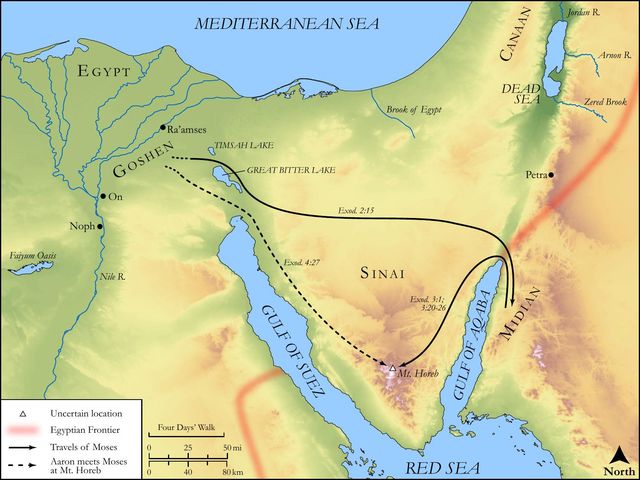
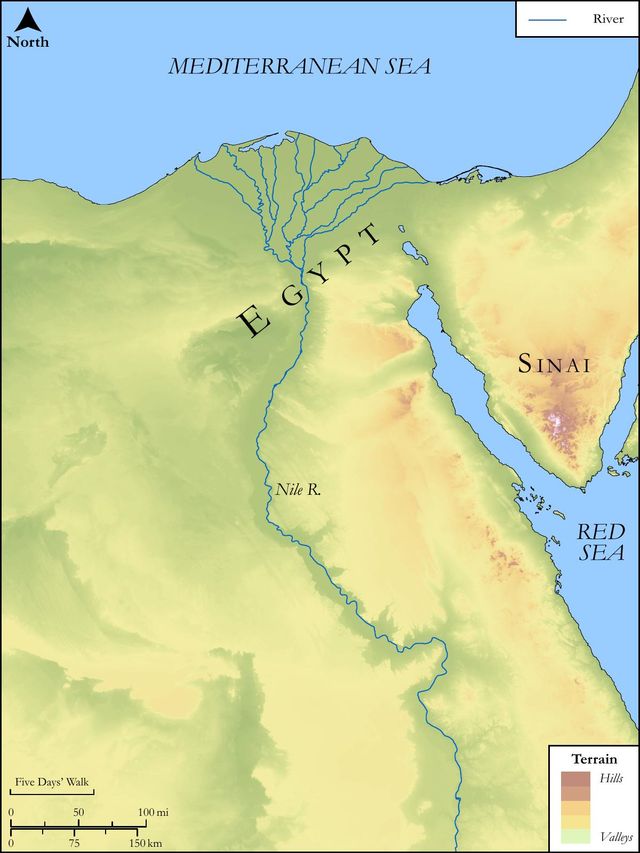
Study this verse
Public-domain commentary
Matthew Henry
From his Commentary on the Whole Bible. Henry comments on passages, not single verses — this entry covers Exodus 4:1–9. His three-level outline is real structure in the source text, so it is rendered as structure.
It was a very great honour that Moses was called to when God commissioned him to bring Israel out of Egypt; yet he is with difficulty persuaded to accept the commission, and does it at last with great reluctance, which we should rather impute to a humble diffidence of himself and his own sufficiency than to any unbelieving distrust of God and his word and power. Note, Those whom God designs for preferment he clothes with humility; the most fit for service are the least forward.
I.Moses objects that in all probability the people would not hearken to his voice (Exo 4:1), that is, they would not take his bare word, unless he showed them some sign, which he had not been yet instructed to do. This objection cannot be justified, because it contradicts what God had said (Exo 3:18), They shall hearken to thy voice. If God says, They will, does it become Moses to say, They will not? Surely he means, "Perhaps they will not at first, or some of them will not." If there should be some gainsayers among them who would question his commission, how should he deal with them? And what course should he take to convince them? He remembered how they had once rejected him, and feared it would be so again. Note,
1.Present discouragements often arise from former disappointments.
2.Wise and good men have sometimes a worse opinion of people than they deserve. Moses sad (Exo 4:1), They will not believe me; and yet he was happily mistaken, for it is said (Exo 4:31), The people believed; but then the signs which God appointed in answer to this objection were first wrought in their sight.
II.God empowers him to work miracles, directs him to three particularly, two of which were now immediately wrought for his own satisfaction.
Note, True miracles are the most convincing external proofs of a divine mission attested by them. Therefore our Saviour often appealed to his works (as Joh 5:36), and Nicodemus owns himself convinced by them, Joh 3:2. And here Moses, having a special commission given him as a judge and lawgiver to Israel, has this seal affixed to his commission, and comes supported by these credentials.
1.The rod in his hand is made the subject of a miracle, a double miracle: it is but thrown out of his hand and it becomes a serpent; he resumes it and it becomes a rod again, Exo 4:2-4. Now,
(1.)Here was a divine power manifested in the change itself, that a dry stick should be turned into a living serpent, a lively one, so formidable a one that Moses himself, on whom, it should seem, it turned in some threatening manner, fled from before it, though we may suppose, in that desert, serpents were no strange things to him; but what was produced miraculously was always the best and strongest of the kind, as the water turned to wine: and, then, that this living serpent should be turned into a dry stick again, this was the Lord's doing.
(2.)Here was an honour put upon Moses, that this change was wrought upon his throwing it down and taking it up, without any spell, or charm, or incantation: his being empowered thus to act under God, out of the common course of nature and providence, was a demonstration of his authority, under God, to settle a new dispensation of the kingdom of grace. We cannot imagine that the God of truth would delegate such a power as this to an impostor.
(3.)There was a significancy in the miracle itself. Pharaoh had turned the rod of Israel into a serpent, representing them as dangerous (Exo 1:10), causing their belly to cleave to the dust, and seeking their ruin; but now they should be turned into a rod again: or, thus Pharaoh had turned the rod of government into the serpent of oppression, from which Moses had himself fled into Midian; but by the agency of Moses the scene was altered again.
(4.)There was a direct tendency in it to convince the children of Israel that Moses was indeed sent of God to do what he did, Exo 4:5. Miracles were for signs to those that believed not, Co1 14:22.
2.His hand itself is next made the subject of a miracle. He puts it once into his bosom, and takes it out leprous; he puts it again into the same place, and takes it out well, Exo 4:6, Exo 4:7. This signified,
(1.)That Moses, by the power of God, should bring sore diseases upon Egypt, and that, at his prayer, they should be removed.
(2.)That whereas the Israelites in Egypt had become leprous, polluted by sin, and almost consumed by oppression (a leper is as one dead, Num 12:12), by being taken into the bosom of Moses they should be cleansed and cured, and have all their grievances redressed.
(3.)That Moses was not to work miracles by his own power, nor for his own praise, but by the power of God and for his glory; the leprous hand of Moses does for ever exclude boasting. Now it was supposed that, if the former sign did not convince, this latter would. Note, God is willing more abundantly to show the truth of his word, and is not sparing in his proofs; the multitude and variety of the miracles corroborate the evidence.
3.He is directed, when he shall come to Egypt, to turn some of the water of the river into blood, Exo 4:9. This was done, at first, as a sign, but, not gaining due credit with Pharaoh, the whole river was afterwards turned into blood, and then it became a plague. He is ordered to work this miracle in case they would not be convinced by the other two. Note, Unbelief shall be left inexcusable, and convicted of a wilful obstinacy. As to the people of Israel, God had said (Exo 3:18), They shall hearken; yet he appoints these miracles to be wrought for their conviction, for he that has ordained the end has ordained the means.
Continue studying Exodus 4:9 across the web’s major study libraries — every link below opens this exact verse, chapter, or book on the destination site.
Read & Compare
 BibleGatewayThis verse in more than 200 translations and 70 languages.
 Bible.comThe YouVersion reader — hundreds of translations, reading plans, and highlights.
 ESV.orgCrossway's official English Standard Version reader.
 NET BibleThe NET translation with 60,000+ translators' notes on every rendering decision.
 STEP BibleTyndale House's free study tool — original text, vocabulary, and scholarly resources.
 BibliaLogos Bible Software's free web reader.
 USCCBThe New American Bible (Revised Edition) with the U.S. bishops' study notes.
Commentaries
 BibleHub CommentariesDozens of classic commentaries on this verse, gathered on one page.
 StudyLightMore than 100 commentary sets — the largest collection on the web.
 BibleRefPlain-English commentary on what this verse means, verse by verse.
 Enduring WordDavid Guzik's free commentary on this chapter, widely used by Bible teachers.
 Bible Study ToolsVerse commentary alongside Greek and Hebrew study aids.
Original Language & Research
- BibleHub InterlinearThe verse word by word — original language, transliteration, and English.
- BibleHub LexiconEvery word's original-language definition and Strong's entry.
 Blue Letter BibleDeep-study tools — Strong's numbers, concordance, and word studies.
 SefariaThe Hebrew text with Rashi and centuries of Jewish commentary.
Sermons, Hymns & Audio


TrulyRandomVerse is not affiliated with these sites and doesn’t control their content. They’re linked because they’re genuinely useful.
Summary
Exodus 4:9 presents God's provision of a third miraculous sign for Moses, a contingent demonstration designed to overcome the Israelites' potential unbelief after the initial two signs. This powerful act involves Moses taking water from the Nile River and pouring it onto dry ground, where it will supernaturally transform into blood, serving as an undeniable authentication of God's commission and a potent foretaste of the judgments to be unleashed upon Egypt.
Context
ShowHideLiterary Context
This verse is situated within the profound encounter between God and Moses at the burning bush, detailed in Exodus 3, Exodus 4. After God reveals His intention to deliver Israel and commissions Moses as His agent, Moses expresses profound hesitation, particularly concerning the Israelites' willingness to believe his divine appointment. He voices concerns that they "will not believe me, nor hearken unto my voice" (Exodus 4:1). In response to this doubt, God graciously provides Moses with three escalating signs to authenticate his message and authority. The first is the transformation of Moses's staff into a serpent and back (Exodus 4:2-5), followed by the miraculous affliction and healing of his hand with leprosy (Exodus 4:6-8). Exodus 4:9 introduces the third sign, the turning of water into blood, explicitly stated as a contingency for those who might remain unconvinced by the preceding two, underscoring God's thoroughness in providing evidence.
Historical & Cultural Context
The setting is ancient Egypt, a civilization deeply reliant on the Nile River. The Nile was not merely a geographical feature; it was the lifeblood of Egypt, providing water for agriculture, transportation, and daily life. It was also revered as a deity, with various gods like Hapi (god of the Nile's annual flood) and Osiris (whose body was said to be the Nile) associated with its fertility and sustenance. The transformation of its water into blood would be a direct assault on the very source of Egyptian life and a profound challenge to their pantheon of gods. The concept of "dry land" (Hebrew: yabbashah) also carries significance, representing the opposite of life-giving water, a place of desolation. The act of pouring the water onto dry ground further emphasizes the supernatural nature of the transformation, as it occurs outside the river's natural flow, on a medium that would absorb and display the changed substance vividly.
Key Themes
ShowHideExodus 4:9 contributes to several overarching themes within the book of Exodus and broader biblical theology. Foremost is the theme of Divine Authentication, where God provides irrefutable proof of His chosen messenger's authority, essential for Moses to gain the trust of a people who had endured centuries of slavery. It powerfully demonstrates God's Sovereignty Over Creation and False Deities, asserting Yahweh's absolute control over the natural world and His supremacy over the gods of Egypt, a theme that will be dramatically expanded in the subsequent plagues (Exodus 7-12). The verse also introduces the theme of Judgment and Deliverance, as the transformation of life-giving water into blood foreshadows the impending judgments upon Egypt that will ultimately lead to Israel's liberation. Finally, the conditional phrasing "if they will not believe" highlights the crucial theme of the Necessity of Belief in response to God's revelation, a recurring motif throughout salvation history.
Exposition and Analysis
ShowHideExodus 4:9 presents the third and most potent of the initial signs God grants Moses to authenticate his mission to the Israelites. The conditional phrasing, "if they will not believe also these two signs, neither hearken unto thy voice," reveals God's foreknowledge of potential human skepticism and His abundant provision of evidence to overcome it.
Key Word Analysis
ShowHideThis root word carries the meaning "to build up or support; to foster as a parent or nurse; figuratively to render (or be) firm or faithful, to trust or believe, to be permanent or quiet; morally to be true or certain." In this context, it signifies not merely intellectual assent but a deep, abiding trust and reliance on God's word and His chosen messenger. The lack of belief implies a failure to find God's revelation firm or trustworthy.
This term refers to "a signal (literally or figuratively), as a flag, beacon, monument, omen, prodigy, evidence, etc." These are not mere tricks or illusions, but divinely orchestrated miraculous tokens designed to serve as undeniable evidence, pointing to God's presence, power, and the truth of His message. They are meant to mark or designate something as truly from God.
Derived from a root meaning "to be silent" or "to cease," this word primarily denotes "blood (as that which when shed causes death) of man or an animal." It can also refer to the juice of the grape or, figuratively, bloodshed. Here, it symbolizes death, judgment, and the reversal of life, contrasting sharply with the life-giving nature of water. Its transformation from water signifies a profound supernatural intervention with dire implications.
Verse Breakdown
ShowHide"And it shall come to pass, if they will not believe also these two signs, neither hearken unto thy voice"
This opening clause establishes the contingent nature of the third sign. God anticipates the possibility of continued unbelief even after the first two miraculous demonstrations (the rod to serpent and the leprous hand). "Believe" (H539) here implies a deep trust and acceptance of Moses's divine commission, while "hearken unto thy voice" (H8085, shâmaʻ and H6963, qôwl) signifies obedience and attentive listening. This highlights God's patience and His willingness to provide ample evidence to overcome human doubt.
"that thou shalt take of the water of the river, and pour [it] upon the dry [land]"
This is the divine instruction for the third sign's performance. Moses is commanded to take water from "the river" (H2975, yᵉʼôr), specifically the Nile, the life-source of Egypt. The act of "pouring it upon the dry land" (H3004, yabbâshâh) is crucial. It removes the water from its natural context, making the subsequent transformation a clear, undeniable supernatural event, not a trick of the river's flow. The dry land (H3006, yabbesheth) would absorb the transformed substance, making its appearance starkly visible.
"and the water which thou takest out of the river shall become blood upon the dry [land]."
This is the miraculous outcome. The life-giving water (H4325, mayim) will supernaturally "become blood" (H1818, dâm). This transformation is a direct and shocking reversal of nature, turning the symbol of life and sustenance into the symbol of death and judgment. Performed on "dry land," it would be an unmistakable display of God's power, designed to leave no doubt about His authority and His intention to act decisively.
Literary Devices
ShowHideExodus 4:9 effectively employs several literary devices to convey its profound message. Conditional Statement ("if they will not believe... then thou shalt take...") immediately highlights God's foreknowledge of human skepticism and His gracious provision of escalating evidence. This structure underscores the importance of faith as a response to divine revelation. The verse also makes powerful use of Symbolism. Water, the very essence of life and prosperity in Egypt, is symbolically transformed into blood, representing death, judgment, and defilement. This stark contrast vividly communicates God's power to reverse the natural order and to bring judgment upon a nation that relies on false gods and oppresses His people. Furthermore, the entire sign functions as a potent Foreshadowing of the first of the ten plagues (Exodus 7:19-21), where all the waters of Egypt are turned to blood. This miniature demonstration serves as a warning and an assurance of God's unwavering resolve to deliver Israel through mighty acts of judgment.
Theological and Thematic Connections
ShowHideExodus 4:9 serves as a profound theological statement, asserting Yahweh's absolute sovereignty over creation and His intention to intervene decisively in human history. The transformation of water into blood is not merely a display of power but a direct challenge to the Egyptian worldview, where the Nile was deified. By defiling their life source, God demonstrates His supremacy over their gods and their perceived control over nature. This sign underscores that God's authentication of Moses is irrefutable, designed to instill faith in Israel and to serve as a dire warning to Egypt of the coming judgments. It highlights that God provides ample evidence for His truth, but ultimately, a response of belief and obedience is required.
Reflection and Application
ShowHideExodus 4:9 offers timeless lessons for our walk of faith. It reminds us that God is a God who reveals Himself and authenticates His purposes, often providing compelling evidence for His truth. While we may not witness water turning into blood today, God continues to reveal Himself through His inspired Word, the indwelling Holy Spirit, and the testimony of creation. This passage challenges us to examine the depth of our own belief in the face of God's self-revelation. Are we quick to doubt, or do we seek to understand and trust His voice? It encourages us to be attentive to how God works in our lives and in the world, recognizing His sovereign power over all circumstances, even those that seem impossible or are arrayed against His people. Our call, like that of the Israelites, is to respond with faith and obedience to God's truth, knowing that His promises are firm and His character is trustworthy. This passage ultimately invites us to deepen our reliance on God, even when the path ahead seems uncertain or requires a radical shift in our understanding of reality.
Questions for Reflection
ShowHideFAQ
ShowHideWhy did God give Moses three signs instead of just one?
ShowHideGod provided three signs to address Moses's profound apprehension and to offer progressively more compelling evidence for the Israelites. The first two signs, the rod transforming into a serpent (Exodus 4:2-3) and Moses's hand becoming leprous and then healed (Exodus 4:6-7), were immediate and personal, demonstrating God's power over life and creation. The third sign, transforming water into blood, was a public demonstration of power over a fundamental element of Egyptian life, directly challenging their deities and foreshadowing future judgments. This escalating evidence aimed to overcome potential unbelief and leave no doubt about the divine origin of Moses's mission, ensuring that both Moses and the Israelites would be fully convinced.
Does this sign imply God is destructive?
ShowHideWhile the transformation of life-giving water into blood appears destructive, it is primarily a powerful demonstration of God's absolute sovereignty, His justice, and His intention to deliver His people. It serves as a stark warning of impending judgment against a defiant nation and its oppressive rule, rather than wanton destruction. This act highlights God's control over life and death, demonstrating that He can reverse the natural order to achieve His purposes. It functions as both a confirmation of Moses's divine authority and a merciful warning before the full force of the plagues, ultimately leading to the righteous liberation of Israel from bondage. God's judgment is always purposeful, aimed at justice and the redemption of His covenant people.
Christ-Centered Fulfillment
ShowHideExodus 4:9, with its display of divine power over creation and its foreshadowing of judgment, profoundly points to Christ. Just as God authenticated Moses through miraculous signs to confirm his role as deliverer, Jesus Christ's entire ministry was accompanied by numerous signs and wonders that authenticated Him as the promised Messiah, the Son of God, and the ultimate deliverer from sin and death (John 3:2). The transformation of water into blood, a sign of judgment and the overturning of natural order, prefigures Christ's supreme power over creation, demonstrated in His own miracles such as calming the storm (Mark 4:35-41) and turning water into wine at Cana (John 2:1-11). Furthermore, the judgment foreshadowed for Egypt ultimately finds its ultimate fulfillment in Christ's triumph over sin and death on the cross, His resurrection, and His future return to judge the living and the dead, establishing His eternal kingdom (Revelation 19:11-16). The necessity of belief in response to God's revelation, so central to this passage in Exodus, is fully realized in the call to believe in Jesus Christ for salvation and eternal life (John 3:16). He is the true and greater Moses, who delivers His people not from physical bondage, but from spiritual slavery.