


Exodus 1:22
- וַיְצַוvay·Tzavand he commandedH6680Conj-w ¦ V-Piel-ConsecImperf-3msVerb Piel Consecutive Imperfect 3rd Singular Masculineוַandיְצַוhe commanded
- פַּרְעֹהpar·'OhPharaohH6547N-msNoun Title Singular Masculine Absolute
- לְכָלle·kholto allH3605Prep-l ¦ N-mscNoun Singular Masculine Constructלְtoכָלall
- עַמּוֹa·Mohis peopleH5971N-msc ¦ 3msNoun Singular Masculine Constructעַמּpeopleוֹhis
- לֵאמֹרle·Mor<to> sayingH559Prep-l ¦ V-Qal-InfVerb Qal Infinitive Constructלֵ<to>אמֹרsaying
- כָּלkoleveryH3605N-mscNoun Singular Masculine Construct
- הַבֵּןha·Ben<the> sonH1121Art ¦ N-msNoun Singular Masculine Absoluteהַ<the>בֵּןson
- הַיִּלּוֹדhai·yi·Lod<the> bornH3209Art ¦ Adj-msAdjective Singular Masculine Absoluteהַ<the>יִּלּוֹדborn
- הַיְאֹרָהhay·'O·rahthe River towardsH2975Art ¦ N-proper ¦ SfxNoun Proper LocationהַtheיְאֹרָRiverהtowards
- תַּשְׁלִיכֻהוּtash·li·Khu·huyou will throw himH7993V-Hiphil-Imperf-2mp ¦ 3msVerb Hiphil Imperfect 2nd Plural Masculineתַּשְׁלִיכֻyou will throwהוּhim
- וְכָלve·kholand everyH3605Conj-w ¦ N-mscNoun Singular Masculine Constructוְandכָלevery
- הַבַּתha·Bat<the> daughterH1323Art ¦ N-fsNoun Singular Feminine Absoluteהַ<the>בַּתdaughter
- תְּחַיּוּןte·chai·Yunyou will let live !H2421V-Piel-Imperf-2mp ¦ SfxVerb Piel Imperfect 2nd Plural Masculineתְּחַיּוּyou will let liveן!
English is a literal word-by-word gloss of the Hebrew, not the KJV's wording. Why?
This is the original text the KJV's translators worked from — each Hebrew word with its own literal English meaning in this verse, prepared by scholars at Tyndale House, Cambridge. The KJV translates whole sentences, not word by word, so its wording differs: one Hebrew word can become several English words, and the KJV may choose “the LORD” where the gloss reads “Yahweh”. Both are faithful — they answer different questions. For the KJV's own rendering, switch to the KJV text.
Details
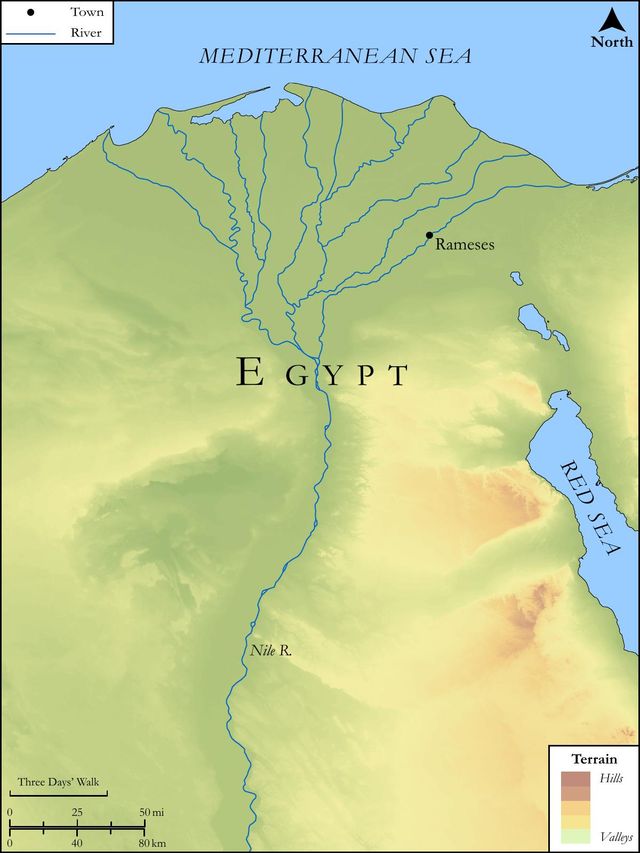
See on the biblical-era map

Study this verse
Public-domain commentary
Matthew Henry
From his Commentary on the Whole Bible. Henry comments on passages, not single verses — this entry covers Exodus 1:15–22. His two-level outline is real structure in the source text, so it is rendered as structure.
The Egyptians' indignation at Israel's increase, notwithstanding the many hardships they put upon them, drove them at length to the most barbarous and inhuman methods of suppressing them, by the murder of their children. It was strange that they did not rather pick quarrels with the grown men, against whom they might perhaps find some occasion: to be thus bloody towards the infants, whom all must own to be innocents, was a sin which they had to cloak for. Note, 1. There is more cruelty in the corrupt heart of man than one would imagine, Rom 3:15, Rom 3:16. The enmity that is in the seed of the serpent against the seed of the woman divests men of humanity itself, and makes them forget all pity. One would not think it possible that ever men should be so barbarous and blood-thirsty as the persecutors of God's people have been, Rev 17:6. 2. Even confessed innocence is no defence against the old enmity. What blood so guiltless as that of a child new-born? Yet that is prodigally shed like water, and sucked with delight like milk or honey. Pharaoh and Herod sufficiently proved themselves agents for that great red dragon, who stood to devour the man-child as soon as it was born, Rev 12:3, Rev 12:4. Pilate delivered Christ to be crucified, after he had confessed that he found no fault in him. It is well for us that, though man can kill the body, this is all he can do. Two bloody edicts are here signed for the destruction of all the male children that were born to the Hebrews.
I.The midwives were commanded to murder them. Observe,
1.The orders given them, Exo 1:15, Exo 1:16. It added much to the barbarity of the intended executions that the midwives were appointed to be the executioners; for it was to make them, not only bloody, but perfidious, and to oblige them to betray a trust, and to destroy those whom they undertook to save and help. Could he think that their sex would admit such cruelty, and their employment such base treachery? Note, Those who are themselves barbarous think to find, or make, others as barbarous. Pharaoh's project was secretly to engage the midwives to stifle the men-children as soon as they were born, and then to lay it upon the difficulty of the birth, or some mischance common in that case, Job 3:11. The two midwives he tampered with in order hereunto are here named; and perhaps, at this time, which was above eighty years before their going out of Egypt, those two might suffice for all the Hebrew women, at least so many of them as lay near the court, as it is plain by Exo 2:5, Exo 2:6, many of them did, and of them he was most jealous. They are called Hebrew midwives, probably not because they were themselves Hebrews (for surely Pharaoh could never expect they should be so barbarous to those of their own nation), but because they were generally made use of by the Hebrews; and, being Egyptians, he hoped to prevail with them.
2.Their pious disobedience to this impious command, Exo 1:17. They feared God, regarded his law, and dreaded his wrath more than Pharaoh's and therefore saved the men-children alive. Note, If men's commands be any way contrary to the commands of God, we must obey God and not man, Act 4:19; Act 5:29. No power on earth can warrant us, much less oblige us, to sin against God, our chief Lord. Again, Where the fear of God rules in the heart, it will preserve it from the snare which the inordinate fear of man brings.
3.Their justifying themselves in this disobedience, when they were charged with it as a crime, Exo 1:18. They gave a reason for it, which, it seems, God's gracious promise furnished them with - that they came too late to do it, for generally the children were born before they came, Exo 1:19. I see no reason we have to doubt the truth of this; it is plain that the Hebrews were now under an extraordinary blessing of increase, which may well be supposed to have this effect, that the women had very quick and easy labour, and, the mothers and children being both lively, they seldom needed the help of midwives: this these midwives took notice of, and, concluding it to the finger of God, were thereby emboldened to disobey the king, in favour of those whom Heaven thus favoured, and with this justified themselves before Pharaoh, when he called them to an account for it. Some of the ancient Jews expound it thus, Ere the midwife comes to them they pray to their Father in heaven, and he answereth them, and they do bring forth. Note, God is a readier help to his people in distress than any other helpers are, and often anticipates them with the blessings of his goodness; such deliverances lay them under peculiarly strong obligations.
4.The recompence God gave them for their tenderness towards his people: He dealt well with them, Exo 1:20. Note, God will be behind-hand with none for any kindness done to his people, taking it as done to himself. In particular, he made them houses (Exo 1:21), built them up into families, blessed their children, and prospered them in all they did. Note, The services done for God's Israel are often repaid in kind. The midwives kept up the Israelites' houses, and, in recompence for it, God made them houses. Observe, The recompence has relation to the principle upon which they went: Because they feared God, he made them houses. Note, Religion and piety are good friends to outward prosperity: the fear of God in a house will help to build it up and establish it. Dr. Lightfoot's notion of it is, That, for their piety, they were married to Israelites, and Hebrew families were built up by them.
II.When this project did not take effect, Pharaoh gave public orders to all his people to drown all the male children of the Hebrews, Exo 1:22.
We may suppose it was made highly penal for any to know of the birth of a son to an Israelite, and not to give information to those who were appointed to throw him into the river. Note, The enemies of the church have been restless in their endeavours to wear out the saints of the Most High, Dan 7:25. But he that sits in heaven shall laugh at them. See Psa 2:4.
Historical interpretation
Historical reception
3 surviving comments on this verse. Each one is dated, so this reads as a timeline rather than a list.
Select a marker to jump to its quote. Markers stagger vertically where authors wrote within a few decades of each other.
Just as Pharaoh was drowned in those very waters in which he had drowned the infants, so too David removed Goliath’s head with that very sword with which he had destroyed many. Moses divided the waters through the symbol of the cross, while David laid Goliath low through the symbol of the stone. Our Lord condemned Satan by the word of his mouth when the latter was tempting him. Pharaoh was drowned by the waters with which he had drowned [others].
And that you may learn this—Pharaoh commanded the infants to be cast into the river. Unless the infants had been cast forth, Moses would not have been saved, he would not have been brought up in the palace. When he was safe, he was not in honor; when he was exposed, then he was in honor. But God did this to show his riches of resource and contrivance.
Because they feared God, they built up houses. Without the fear of God, a house cannot be built. If then with the fear of God houses were built by those who had not committed sin but rather did their building at God’s pleasure, we who have been captured, what must we do? Listen, sinner; we must fear God, indeed, to avoid sin; but after shipwreck there is the second plank of repentance. “When the house was being built after captivity.” “When the house was being built,” not “was built,” for repentance is without limit. To the just man who has died, repentance naturally is rendered superfluous. Whenever there is sin, always there is remorse of conscience. Hence the psalmist says was “being built.” While time lasts, the door is always open to repentance, for however long you shall live, as long as you live, you will fall into sin.
Continue studying Exodus 1:22 across the web’s major study libraries — every link below opens this exact verse, chapter, or book on the destination site.
Read & Compare
 BibleGatewayThis verse in more than 200 translations and 70 languages.
 Bible.comThe YouVersion reader — hundreds of translations, reading plans, and highlights.
 ESV.orgCrossway's official English Standard Version reader.
 NET BibleThe NET translation with 60,000+ translators' notes on every rendering decision.
 STEP BibleTyndale House's free study tool — original text, vocabulary, and scholarly resources.
 BibliaLogos Bible Software's free web reader.
 USCCBThe New American Bible (Revised Edition) with the U.S. bishops' study notes.
Commentaries
 BibleHub CommentariesDozens of classic commentaries on this verse, gathered on one page.
 StudyLightMore than 100 commentary sets — the largest collection on the web.
 BibleRefPlain-English commentary on what this verse means, verse by verse.
 Enduring WordDavid Guzik's free commentary on this chapter, widely used by Bible teachers.
 Bible Study ToolsVerse commentary alongside Greek and Hebrew study aids.
Original Language & Research
- BibleHub InterlinearThe verse word by word — original language, transliteration, and English.
- BibleHub LexiconEvery word's original-language definition and Strong's entry.
 Blue Letter BibleDeep-study tools — Strong's numbers, concordance, and word studies.
 SefariaThe Hebrew text with Rashi and centuries of Jewish commentary.
Sermons, Hymns & Audio


TrulyRandomVerse is not affiliated with these sites and doesn’t control their content. They’re linked because they’re genuinely useful.
Summary
Exodus 1:22 records Pharaoh's chilling, public decree to his entire nation, commanding that every newborn Hebrew boy be cast into the Nile River, while every daughter be spared. This universal mandate represents the culmination of Pharaoh's escalating attempts to suppress the rapidly multiplying Israelites, revealing his genocidal intent to extinguish the male lineage and, by extension, the very future of God's covenant people.
Context
ShowHideLiterary Context
This verse serves as the terrifying climax of Pharaoh's oppressive measures against the burgeoning Israelite population, immediately following his failed attempts to curb their growth through forced labor and the covert instruction to the Hebrew midwives. The narrative begins by establishing the immense growth of Jacob's descendants in Egypt, who "increased abundantly, and multiplied, and waxed exceeding mighty; and the land was filled with them" (Exodus 1:7). A new Pharaoh, who "knew not Joseph" (Exodus 1:8), perceives this growth as a threat. His initial response is to enslave them and inflict "hard bondage, in mortar, and in brick, and in all manner of service in the field" (Exodus 1:14). When this fails to diminish their numbers, he resorts to a more direct, yet secret, form of infanticide by commanding the Hebrew midwives to kill all male infants at birth (Exodus 1:16). Their courageous, God-fearing defiance (Exodus 1:17) leads Pharaoh to escalate his decree from a private order to a public, universal command, enlisting every Egyptian in the horrific act of infanticide, setting the stage for God's dramatic intervention.
Historical & Cultural Context
Ancient Egypt was a powerful, centralized empire, and its pharaohs were considered divine or semi-divine, wielding absolute authority over their subjects. The Nile River was the lifeblood of Egypt, essential for agriculture, transportation, and daily life, revered as a deity or a gift from the gods. To command that infants be thrown into it was a profound act of sacrilege against life and the very source of Egyptian prosperity, transforming a symbol of life into an instrument of death. The fear of a growing foreign population was not uncommon in ancient empires, and forced labor was a standard practice for conquered or minority groups. However, state-sanctioned infanticide, especially targeting a specific ethnic group, reveals an extreme level of xenophobia and tyrannical control, designed to eliminate a perceived threat to national security and cultural purity. This decree reflects the absolute power of the pharaoh and the vulnerability of foreign residents within his domain.
Key Themes
ShowHideExodus 1:22 contributes significantly to several major themes in the book of Exodus and the broader Pentateuch. It highlights the theme of Divine Sovereignty vs. Human Tyranny, showcasing Pharaoh's ultimate inability to thwart God's plans despite his immense power and cruel decrees. It underscores the Persecution of God's People, a recurring motif in biblical history, demonstrating how the enemy attempts to destroy the lineage through which God's redemptive plan will unfold. The verse also introduces the theme of God's Preservation and Deliverance, as this very decree paradoxically sets the stage for Moses' miraculous preservation and subsequent role as Israel's deliverer, foreshadowing God's ability to turn evil intentions into instruments of salvation. Furthermore, it emphasizes the Sanctity of Life by implicitly condemning the abhorrent act of infanticide and highlighting the value God places on every human life, especially the vulnerable. This foundational chapter sets the stage for the dramatic confrontation between God and Pharaoh, culminating in the Exodus itself.
Exposition and Analysis
ShowHideExodus 1:22 marks a terrifying climax in Pharaoh's campaign against the Israelites, shifting from covert orders to a widespread public mandate:
Key Word Analysis
ShowHideFrom the root meaning "to build," this word (H1121) refers to a male offspring, but in a wider sense, it denotes a builder of the family name, encompassing descendants, subjects, or even a nation. In this context, Pharaoh's targeting of the "son" is a direct assault on the perpetuation of the Israelite lineage and, by extension, the very future of the covenant people. Eliminating the male line was a calculated attempt to prevent their growth into a formidable nation and to sever their connection to the Abrahamic covenant of a numerous "seed."
This primitive root (H7993) means "to throw out, down, or away," literally or figuratively. The command to "cast" the sons into the river implies a forceful, dehumanizing act of disposal, turning the Nile from a source of life into a mass grave. It signifies Pharaoh's complete disregard for human life and his intent to utterly annihilate the male infants, ensuring their death by drowning or by being consumed by the river's creatures.
Of Egyptian origin (H2975), this word specifically refers to a channel, canal, or most notably, the Nile River—the singular, life-giving artery of Egypt. By commanding the infants to be thrown into the "river," Pharaoh perverts the very source of Egyptian life into an instrument of death for the Israelites. This act is not merely a method of execution but a symbolic desecration, turning the life-giving waters into a place of judgment and destruction, a direct affront to divine providence.
Verse Breakdown
ShowHide"And Pharaoh charged all his people, saying,"
This opening phrase underscores the universal and public nature of the decree. Unlike the secret command given to the midwives, this order was broadcast throughout Egypt, implicating every Egyptian in the state-sanctioned murder of Israelite infants. It demonstrates the depth of Pharaoh's fear and his absolute tyrannical power, compelling his entire populace to participate in his wicked agenda, making the nation complicit in genocide.
"Every son that is born ye shall cast into the river,"
This clause reveals the specific and calculated genocidal intent. By targeting male infants, Pharaoh aimed to prevent the growth of the Israelite nation, sever their connection to the Abrahamic covenant of a numerous "seed," and ultimately ensure their complete assimilation or extinction. The "river" (the Nile) was the lifeblood of Egypt; Pharaoh's decree perverted this source of life into an instrument of death, a direct affront to the Creator and a symbolic act of defiance against divine providence.
"and every daughter ye shall save alive."
This seemingly merciful clause was, in fact, a pragmatic and equally sinister aspect of Pharaoh's plan. Female infants were spared not out of compassion, but because they posed no threat to the perpetuation of the male Israelite line. Instead, they could be assimilated into Egyptian society, potentially marrying Egyptian men and thus diluting or eradicating the distinct identity of the Hebrew people. This ensured that any surviving Israelites would eventually lose their heritage and covenant identity, achieving Pharaoh's goal of dissolving the Israelite nation.
Literary Devices
ShowHideExodus 1:22 employs several potent literary devices to convey its chilling message. Juxtaposition is starkly evident in the contrasting fates of male and female infants: "Every son...ye shall cast into the river, and every daughter ye shall save alive." This highlights the calculated nature of Pharaoh's cruelty and the specific targeting of the male lineage. Irony is powerfully present in the use of the Nile River. The Nile, the very source of life and prosperity for Egypt, is commanded to become the instrument of death for the Israelite boys. This ironic twist also sets the stage for a greater divine irony, as the river that was to be the Israelites' grave becomes the means of salvation for Moses, the future deliverer, who is drawn from its waters. Symbolism is also at play, with Pharaoh representing the epitome of oppressive, anti-God power, and the river symbolizing both life and death, ultimately becoming a testament to God's ability to turn the enemy's plans on their head. The public nature of the decree, involving "all his people," uses a form of hyperbole to emphasize the widespread complicity and the total mobilization of Egyptian society against the Israelites.
Theological and Thematic Connections
ShowHidePharaoh's decree in Exodus 1:22 is a profound theological statement on the nature of evil and God's unwavering sovereignty. It represents a direct assault on God's covenant promises, particularly the promise of a numerous seed to Abraham (Genesis 12:2), revealing the spiritual warfare underlying the physical oppression. The command to murder innocent infants showcases the utter ruthlessness and moral corruption that can characterize human power when unchecked by divine law or conscience, highlighting the depths of human depravity. Yet, even in this darkest hour, God's sovereign plan remains in motion. Pharaoh's decree, intended to destroy, inadvertently sets the stage for Moses' miraculous preservation and subsequent role as Israel's deliverer, demonstrating God's ability to use even the wicked actions of humanity to further His righteous purposes. This verse implicitly underscores the preciousness of every human life, especially the most vulnerable, and stands as a stark biblical condemnation of infanticide and any act that devalues human beings created in God's image. Despite the overwhelming threat, God demonstrates His unwavering commitment to preserve His chosen people, ensuring the continuation of the lineage through which His redemptive plan would unfold.
Reflection and Application
ShowHideExodus 1:22 serves as a profound reminder that even in the face of overwhelming evil and seemingly insurmountable despair, God's sovereign plan for His people endures. It calls us to recognize the sanctity of human life, particularly the vulnerable, and to stand against systems and ideologies that devalue or threaten it. Just as God raised up a deliverer from the very jaws of Pharaoh's decree, we are reminded that hope can emerge from the most desperate circumstances, and that God can use even the wicked actions of humanity to further His righteous purposes. This passage encourages us to trust in God's faithfulness amidst adversity and to find courage, like the midwives and Moses' parents (Hebrews 11:23), to resist unrighteous decrees and stand for what is right, knowing that God is ultimately in control. It challenges us to consider how we might be complicit in societal evils, even through silence or inaction, and calls us to active compassion and advocacy for the lowly and oppressed.
Questions for Reflection
ShowHideFAQ
ShowHideWhy did Pharaoh specifically target male infants?
ShowHidePharaoh targeted male infants because they were the ones who would perpetuate the Israelite lineage, become warriors, and potentially pose a military threat. By eliminating the sons, he aimed to prevent the growth of the Israelite nation, break their covenant identity, and ultimately ensure their assimilation or extinction. The daughters, conversely, were spared with the pragmatic and sinister intention that they could be absorbed into the Egyptian population through intermarriage, further diluting the distinct Hebrew identity and preventing the formation of a separate nation. This strategy was a calculated attempt to dismantle the Israelite people from within.
How does Exodus 1:22 foreshadow God's deliverance?
ShowHideParadoxically, Pharaoh's decree to cast male infants into the Nile directly sets the stage for God's miraculous deliverance. Moses, the future deliverer, is born shortly after this decree and is providentially saved by being placed in the very river intended for death. He is then drawn out of the water by Pharaoh's own daughter (Exodus 2:10), raised in the royal court, and eventually returns to lead Israel out of Egypt. This demonstrates God's profound ability to turn the enemy's evil plans into instruments of salvation, using the very means of destruction as the pathway to His redemptive purposes. The river, intended for death, becomes the cradle of the deliverer.
Christ-Centered Fulfillment
ShowHideExodus 1:22, with its decree of death for male infants, profoundly foreshadows the constant satanic threat against the "seed" through whom God's ultimate deliverance would come. Pharaoh's attempt to destroy the male lineage of Israel mirrors Satan's ongoing war against the promised "seed of the woman" (Genesis 3:15) who would crush his head. Just as Moses, a deliverer, was providentially saved from the waters of death and raised in the very court of his oppressor, so too was Jesus, the ultimate Deliverer, preserved from Herod's similar infanticidal decree against the male children in Bethlehem (Matthew 2:16-18). Pharaoh's decree aimed to prevent the growth of a nation that would eventually bring forth the Messiah. Christ's triumph over death through His resurrection ultimately reverses Pharaoh's decree, demonstrating that no human power or evil can thwart God's eternal plan to bring life and salvation through His Son. Jesus, the true Israel, leads His people through the "waters" of judgment—His own death and resurrection—to ultimate freedom from sin and death, fulfilling the deliverance foreshadowed in the Exodus narrative.