


Revelation 16:6
Bible text: King James Version (1769 Blayney text) · Public domain
Bible text: Berean Standard Bible · Public domain
Bible text: American Standard Version (1901) · Public domain
Bible text: World English Bible, Messianic edition · Public domain
Bible text: Geneva Bible (1599) · Public domain
Bible text: Young's Literal Translation · Public domain
- ὅτιhotibecauseG3754CONJConjunction
- αἷμαhaima[the] bloodG129N-ASNNoun Accusative Singular Neuter
- ἁγίωνhagiōnof saintsG40A-GPMAdjective Genitive Plural Masculine
- καὶkaiandG2532CONJConjunction
- προφητῶνprophētōnof prophetsG4396N-GPMNoun Genitive Plural Masculine
- ἐξέχεανexecheanthey have poured outG1632V-AAI-3PVerb Aorist Active Indicative 3rd Plural
- καὶkaiandG2532CONJConjunction
- αἷμαhaimabloodG129N-ASNNoun Accusative Singular Neuter
- αὐτοῖςautoisto themG846P-DPMPersonal pronoun Dative Plural Masculine
- δέδωκαςdedōkasYou have givenG1325V-RAI-2SVerb Perfect Active Indicative 2nd Singular
- πιεῖν·pieinto drinkG4095V-2AANVerb 2nd Aorist Active Infinitive
- ἄξιοίaxioiworthyG514A-NPMAdjective Nominative Plural Masculine
- γάρgarforG1063CONJConjunction
- εἰσινeisinthey areG1510V-PAI-3PVerb Present Active Indicative 3rd Plural
English is a literal word-by-word gloss of the Greek, not the KJV's wording. Why?
This is the original text the KJV's translators worked from — each Greek word with its own literal English meaning in this verse, prepared by scholars at Tyndale House, Cambridge. The KJV translates whole sentences, not word by word, so its wording differs: one Greek word can become several English words, and the KJV may choose “charity” where the gloss reads “love”. Both are faithful — they answer different questions. For the KJV's own rendering, switch to the KJV text.
Details
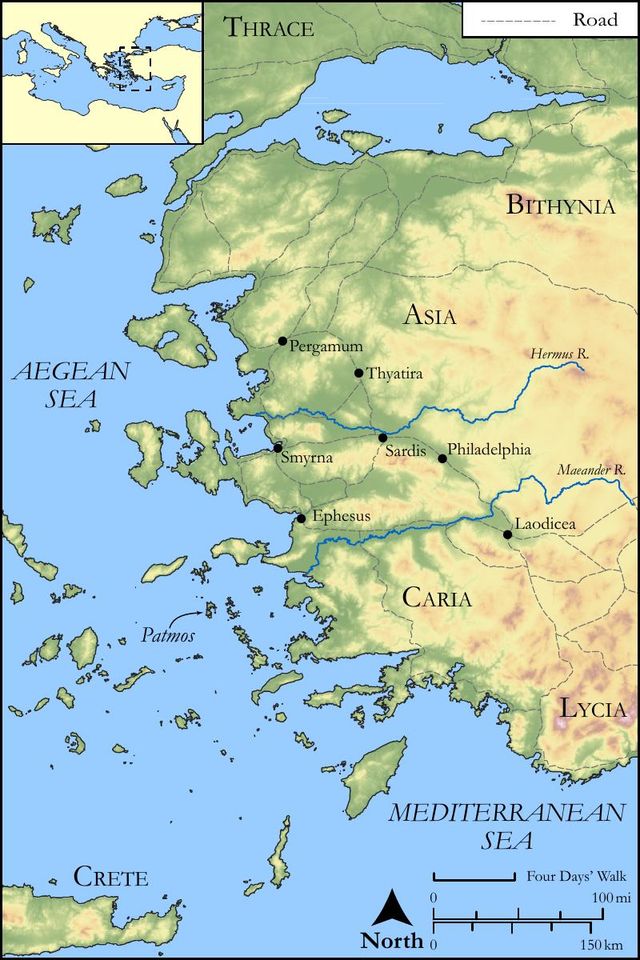
See on the biblical-era maps

Study this verse
Public-domain commentary
Matthew Henry
From his Commentary on the Whole Bible. Henry comments on passages, not single verses — this entry covers Revelation 16:1–7. His four-level outline is real structure in the source text, so it is rendered as structure.
We had in the foregoing chapter the great and solemn preparation that was made for the pouring out of the vials; now we have the performance of that work. Here observe,
I.That, though every thing was made ready before, yet nothing was to be put in execution without an immediate positive order from God; and this he gave out of the temple, answering the prayers of his people, and avenging their quarrel.
II.No sooner was the word of command given than it was immediately obeyed; no delay, no objection made.
We find that some of the best men, as Moses and Jeremiah, did not so readily come in and comply with the call of God to their work; but the angels of God excel not only in strength, but in a readiness to do the will of God. God says, Go your ways, and pour out the vials, and immediately the work is begun. We are taught to pray that the will of God may be done on earth as it is done in heaven. And now we enter upon a series of very terrible dispensations of Providence, of which it is difficult to give the certain meaning or to make the particular application. But in the general it is worth our observation that,
1.We have here a reference and allusion to several of the plagues of Egypt, such as the turning of their waters into blood, and smiting them with boils and sores. Their sins were alike, and so were their punishments.
2.These vials have a plain reference to the seven trumpets, which represented the rise of antichrist; and we learn hence that the fall of the church's enemies shall bear some resemblance to their rise, and that God can bring them down in such ways as they chose to exalt themselves. And the fall of antichrist shall be gradual; as Rome was not built in one day, so neither shall it fall in one day, but it falls by degrees; it shall fall so as to rise no more.
3.The fall of the antichristian interest shall be universal. Every thing that any ways belonged to them, or could be serviceable to them, the premises and all their appurtenances, are put into the writ for destruction: their earth, their air, their sea, their rivers, their cities, all consigned over to ruin, all accursed for the sake of the wickedness of that people. Thus the creation groans and suffers through the sins of men. Now we proceed to,
(1.)The first angel who poured out his vial, Rev 16:2. Observe,
[1.]Where it fell - upon the earth; that is, say some, upon the common people; others upon the body of the Romish clergy, who were the basis of the papacy, and of an earthly spirit, all carrying on earthly designs.
[2.]What it produced - noisome and grievous sores on all who had the mark of the beast. They had marked themselves by their sin; now God marks them out by his judgments. This sore, some think, signifies some of the first appearances of Providence against their state and interest which gave them great uneasiness, as it discovered their inward distemper and was a token of further evil; the plague - tokens appeared.
(2.)The second angel poured out his vial; and here we see,
[1.]Where it fell - upon the sea; that is, say some, upon the jurisdiction and dominion of the papacy; others upon the whole system of their religion, their false doctrines, their corrupt glosses, their superstitious rites, their idolatrous worship, their pardons, indulgences, a great conflux of wicked inventions and institutions, by which they maintain a trade and traffic advantageous to themselves, but injurious to all who deal with them.
[2.]What it produced: It turned the sea into blood, as the blood of a dead man, and every living soul died in the sea. God discovered not only the vanity and falsehood of their religion, but the pernicious and deadly nature of it - that the souls of men were poisoned by that which was pretended to be the sure means of their salvation.
(3.)The next angel poured out his vial; and we are told,
[1.]Where it fell - upon the rivers, and upon the fountains of waters; that is, say some very learned men, upon their emissaries, and especially the Jesuits, who, like streams, conveyed the venom and poison of their errors and idolatries from the spring-head through the earth.
[2.]What effect it had upon them: It turned them into blood; some think it stirred up Christian princes to take a just revenge upon those that had been the great incendiaries of the world, and had occasioned the shedding of the blood of armies and of martyrs. The following doxology (Rev 16:5, Rev 16:6) favours this sense. The instrument that God makes use of in this work is here called the angel of the waters, who extols the righteousness of God in this retaliation: They have shed the blood of thy saints, and thou hast given them blood to drink, for they are worthy, to which another angel answered by full consent, Rev 16:7.
Historical interpretation
Four Centuries of Reception
3 surviving comments on this verse. Each one is dated, so this reads as a timeline rather than a list.
Select a marker to jump to its quote. Markers stagger vertically where authors wrote within a few decades of each other.
The angels of the waters are the messengers of the peoples who by an affection of the heart raise up together loud praises to God.… To be sure, both the Jews and the nations have in a bodily manner shed the blood of the saints, which the Lord says must be exacted “from the blood of Abel to the blood of Zachariah.” However, this plague might also be interpreted as a plague of that blindness so that they might even recognize that they have shed the blood of the prophets. For while they were abusing them [the prophets], they turned their minds to other things. It is as though he said, whoever understood the spiritual law in a fleshly way, they are justly handed over to the corruptions of the flesh and of blood when both the sins and the punishment for sins is recognized. Therefore, the apostle said, “For they did not receive the love of truth so that they might be saved; therefore, God shall send upon them a work of error to make them believe what is false, so that all may be condemned who did not believe the truth but had consented to iniquity.”
Here also it is shown that angels are placed over the elements. One of these, who is over the waters, sings a hymn to God for the just condemnation that has come upon the transgressors. For since they soiled their hands in the blood of the saints, God has given them blood to drink. By means of these words, it is shown either that at that time many are accounted worthy of the prophetic grace because of their remaining steadfast in faith, those, namely, who are killed by the henchmen of the devil, or that those who turn from the preaching of the prophets of God and justify their murder at the hands of the hardhearted Jews, become purposefully participants in their slaughter, as the Lord said to the Jews, “for although you build the tombs of the prophets, you consent in their murder.”
Because he says these things you have judged, for they shed the blood of saints may drink blood; for it is necessary that those encamped by the waters and the rivers in time of war should drink water defiled with blood from the slaying of the dying.
Continue studying Revelation 16:6 across the web’s major study libraries — every link below opens this exact verse, chapter, or book on the destination site.
Read & Compare
 BibleGatewayThis verse in more than 200 translations and 70 languages.
 Bible.comThe YouVersion reader — hundreds of translations, reading plans, and highlights.
 ESV.orgCrossway's official English Standard Version reader.
 NET BibleThe NET translation with 60,000+ translators' notes on every rendering decision.
 STEP BibleTyndale House's free study tool — original text, vocabulary, and scholarly resources.
 BibliaLogos Bible Software's free web reader.
 USCCBThe New American Bible (Revised Edition) with the U.S. bishops' study notes.
Commentaries
 BibleHub CommentariesDozens of classic commentaries on this verse, gathered on one page.
 StudyLightMore than 100 commentary sets — the largest collection on the web.
 BibleRefPlain-English commentary on what this verse means, verse by verse.
 Enduring WordDavid Guzik's free commentary on this chapter, widely used by Bible teachers.
 Bible Study ToolsVerse commentary alongside Greek and Hebrew study aids.
Original Language & Research
- BibleHub InterlinearThe verse word by word — original language, transliteration, and English.
- BibleHub LexiconEvery word's original-language definition and Strong's entry.
 Blue Letter BibleDeep-study tools — Strong's numbers, concordance, and word studies.
 CNTR CollationThe earliest Greek manuscripts of this verse, collated letter by letter.
Sermons, Hymns & Audio


TrulyRandomVerse is not affiliated with these sites and doesn’t control their content. They’re linked because they’re genuinely useful.
Summary
Revelation 16:6 presents a divine justification for the severe judgment of the third bowl of wrath, where fresh water is turned to blood. It declares that those who have persecuted and martyred God's faithful "saints and prophets" are now justly receiving a reciprocal judgment: they are given blood to drink, for their actions have made them entirely deserving of this righteous retribution. This verse underscores God's unwavering commitment to justice and the ultimate vindication of His suffering people.
Context
ShowHideLiterary Context
This verse is spoken by the "angel of the waters" immediately after the third bowl of God's wrath is poured out, turning all rivers and springs into blood (Revelation 16:4). The preceding verses describe the first two bowls: grievous sores upon those with the mark of the beast (Revelation 16:2) and the sea turning to blood, killing all sea creatures (Revelation 16:3). Following this angelic declaration, another angel from the altar confirms the righteousness of this judgment, proclaiming, "Even so, Lord God Almighty, true and righteous are thy judgments" (Revelation 16:7). This structure emphasizes the divine approval and inherent justice of these catastrophic events, portraying them not as arbitrary destruction but as a precise, deserved response to human wickedness, particularly the persecution of God's people.
Historical & Cultural Context
The imagery of "shedding blood" and "drinking blood" resonates deeply with Old Testament prophetic condemnations of violence and idolatry. Throughout history, the people of God, including prophets and righteous individuals, often faced intense persecution from oppressive regimes and ungodly powers. The Roman Empire, the dominant power during John's time, was known for its persecution of Christians, demanding emperor worship and punishing those who refused. This verse taps into a long history of martyrdom, from Abel's blood crying out from the ground (Genesis 4:10) to the prophets murdered in Jerusalem (Matthew 23:37). The idea of a just recompense, where the punishment fits the crime, was a recognized principle of ancient justice, often seen in the concept of lex talionis (though here applied by God over all the earth). The turning of water into blood also subtly echoes the first plague in Egypt (Exodus 7:17-21), signifying a judgment against a rebellious, oppressive power.
Key Themes
ShowHideRevelation 16:6 powerfully contributes to several overarching themes within the book of Revelation and biblical theology. Primarily, it highlights the theme of Divine Retribution and Poetic Justice, demonstrating that God's judgments are not random acts of wrath but precise, righteous responses to specific sins. Those who have caused bloodshed are now forced to experience a form of it themselves, illustrating the principle that "whatever one sows, that will he also reap" (Galatians 6:7). Secondly, the verse emphasizes God's Absolute Righteousness and Justice. The declaration "for they are worthy" underscores that God's actions are morally unimpeachable and perfectly deserved by the wicked. This provides assurance to believers that God is indeed a just judge who "will judge the world in righteousness" (Psalm 9:8). Finally, it speaks to the Vindication of Suffering Saints. The mention of "saints and prophets" acknowledges the long history of faithful believers who have suffered and died for their testimony. Their blood, symbolically crying out for justice (Revelation 6:10), is now being avenged, assuring God's people that their suffering is seen, remembered, and will ultimately be vindicated by the sovereign Lord.
Exposition and Analysis
ShowHideKey Word Analysis
ShowHideThis verb, G1632, means "to pour forth" or "to gush out." In this context, it specifically denotes the violent act of spilling blood, often implying murder or sacrifice. Its usage here emphasizes the deliberate and forceful nature of the persecution carried out by the wicked against God's people, portraying it as a wanton outpouring of innocent life.
As G129, "blood" literally refers to the vital fluid, but biblically it carries immense theological weight. It signifies life itself (as in "the life of the flesh is in the blood" - Leviticus 17:11), and often represents violent death, guilt, or atonement. Here, "blood of saints and prophets" refers to their martyred lives, while "blood to drink" signifies a judgment that mirrors the violence they inflicted, a form of retributive justice where the very essence of life, now corrupted by their actions, becomes their punishment.
This adjective, G514, means "deserving," "fitting," or "comparable." When an angel declares the wicked "are worthy" of drinking blood, it powerfully conveys that the punishment is not arbitrary but precisely what is due to them. Their actions have accumulated such a debt of guilt and injustice that this severe judgment is a perfectly appropriate and morally justified recompense, aligning with divine righteousness.
Verse Breakdown
ShowHide"For they have shed the blood of saints and prophets"
This initial clause provides the foundational reason for the divine judgment. It explicitly states the egregious sin committed by those upon whom wrath is poured out: the violent murder of God's holy people ("saints") and His inspired messengers ("prophets"). This highlights the long history of persecution endured by God's faithful, from Old Testament prophets to New Testament martyrs, emphasizing the cumulative nature of their sin and the depth of their offense against God's chosen ones.
"and thou hast given them blood to drink"
This clause describes the specific nature of the judgment, directly linking it to the sin committed. The divine "thou" (God) is the active agent in dispensing this retribution. The imagery of "blood to drink" is a vivid and horrifying picture of poetic justice, where the perpetrators are forced to consume the very substance they so wantonly spilled. It signifies a judgment that is both literal (as the waters turn to blood) and symbolic, representing their forced consumption of the consequences of their own violence and guilt.
"for they are worthy"
This concluding declaration serves as the ultimate divine justification and affirmation of the judgment's righteousness. The angelic voice confirms that the wicked are indeed "worthy" or deserving of this fate. This phrase underscores the moral rectitude and perfect equity of God's actions, assuring that the judgment is not arbitrary but a just and fitting recompense for their profound wickedness and their persecution of God's people.
Literary Devices
ShowHideRevelation 16:6 employs several powerful literary devices to convey its message of divine justice. Poetic Justice is the most prominent, as the punishment directly mirrors the crime: those who "shed the blood" of saints are made to "drink blood." This vivid Imagery of blood, used both for the martyrs' sacrifice and the judgment, creates a visceral connection between the sin and its consequence, emphasizing the horror and deservedness of the retribution. The verse also uses Personification implicitly, as the "blood" of the saints and prophets, though not literally crying out, is the basis for divine action, echoing the earlier plea of the martyrs' souls under the altar (Revelation 6:10). The Repetition of "blood" reinforces its central role in both the transgression and the judgment. Furthermore, the angelic declaration acts as a Divine Pronouncement, lending absolute authority and certainty to the righteousness of God's judgment.
Theological and Thematic Connections
ShowHideThis verse profoundly articulates the biblical principle of divine retribution, emphasizing that God's justice is neither blind nor arbitrary, but perfectly aligned with the actions of humanity. It reveals a God who meticulously records every act of injustice, especially the shedding of innocent blood, and will ultimately bring about a just recompense. This serves as a powerful assurance to those who suffer persecution for their faith, reminding them that their tears and sacrifices are not forgotten but form the very basis for God's righteous intervention. The judgment is not merely punishment but a demonstration of God's holy character, His unwavering commitment to righteousness, and His ultimate vindication of His people against all who oppose Him.
Reflection and Application
ShowHideRevelation 16:6 offers a profound and sobering truth for believers and the world. For those who are persecuted or suffer injustice for their faith, it provides immense comfort and hope. It assures us that God sees every tear, hears every cry, and remembers every sacrifice. Our suffering is not in vain, and the injustices we face will not go unpunished. This should strengthen our resolve to stand firm in our faith, even in the face of opposition, knowing that our ultimate vindication comes from the righteous Judge of all the earth. For those who might be tempted to compromise their faith or participate in injustice, this verse serves as a stark warning: God's justice is sure, and those who shed innocent blood or oppress the righteous will face a terrifying and perfectly deserved judgment. It calls us to live righteously, to champion justice, and to trust in God's perfect timing for the ultimate resolution of all wrongs.
Questions for Reflection
ShowHideFAQ
ShowHideDoes this verse imply that God literally makes people drink blood?
ShowHideWhile the imagery is stark and visceral, Revelation often employs symbolism to convey spiritual realities and divine judgments. The turning of literal water into blood (Revelation 16:4) suggests a literal fulfillment of the plague, making "blood to drink" a terrifying reality. However, it also carries a profound symbolic meaning: those who have spilled innocent blood are now forced to consume the very essence of their sin and its consequences. It signifies that the judgment is a direct, fitting, and inescapable recompense for their violent actions, a taste of their own evil. It is a powerful illustration of retributive justice, where the punishment perfectly matches the crime.
Christ-Centered Fulfillment
ShowHideRevelation 16:6, with its declaration of divine judgment for the shedding of innocent blood, finds its ultimate Christ-centered fulfillment in the person and work of Jesus Christ. While this verse speaks of God's righteous vengeance against those who persecute His people, it is through Christ that God's justice is both satisfied and perfectly executed. Jesus himself is the "Lamb of God who takes away the sin of the world" (John 1:29), whose own innocent blood was shed not for judgment but for the atonement of sins, offering a way of escape from the very wrath described in Revelation. His crucifixion was the ultimate act of "shedding blood" by wicked hands, yet God turned it into the means of salvation. Therefore, the judgment described in Revelation 16:6 is ultimately against those who reject the atoning blood of Christ and persist in their rebellion and persecution. It highlights that while God's justice demands a reckoning for spilled blood, the only true refuge from this judgment is found in the one whose blood was shed to bring reconciliation and peace (Colossians 1:20). Thus, Christ is both the righteous one whose followers' blood is avenged, and the merciful Savior whose blood offers forgiveness, making the wicked "worthy" of judgment only if they refuse His saving grace (John 3:18).