


Exodus 1:21
- וַיְהִיvay·Hiand it wasH1961Conj-w ¦ V-Qal-ConsecImperf-3msVerb Qal Consecutive Imperfect 3rd Singular Masculineוַandיְהִיit was
- כִּיkithatH3588PrtParticle Conditional
- יָרְאוּya·re·'Uthey fearedH3372V-Qal-Perf-3cpVerb Qal Perfect 3rd Plural common gender
- הַמְיַלְּדֹתham·ya·le·Dotthe midwivesH3205Art ¦ V-Piel-Prtcpl-fpVerb Piel Participle Plural Feminine Absoluteהַtheמְיַלְּדֹתmidwives
- אֶת'et<obj.>H853DirObjMParticle Object Indicator
- הָאֱלֹהִיםha·'E·lo·Him<the> GodH430Art ¦ N-mpNoun Plural Masculine Absoluteהָ<the>אֱלֹהִיםGod
- וַיַּעַשׂvai·Ya·'asand he appointedH6213Conj-w ¦ V-Qal-ConsecImperf-3msVerb Qal Consecutive Imperfect 3rd Singular Masculineוַandיַּעַשׂhe appointed
- לָהֶםla·Hemfor <the> themPrep-l ¦ 3mpSuffix Personal 3rd Plural Masculineלָfor <the>הֶםthem
- בָּתִּיםba·TimhouseholdsH1004N-mpNoun Plural Masculine Absolute
English is a literal word-by-word gloss of the Hebrew, not the KJV's wording. Why?
This is the original text the KJV's translators worked from — each Hebrew word with its own literal English meaning in this verse, prepared by scholars at Tyndale House, Cambridge. The KJV translates whole sentences, not word by word, so its wording differs: one Hebrew word can become several English words, and the KJV may choose “the LORD” where the gloss reads “Yahweh”. Both are faithful — they answer different questions. For the KJV's own rendering, switch to the KJV text.
Details
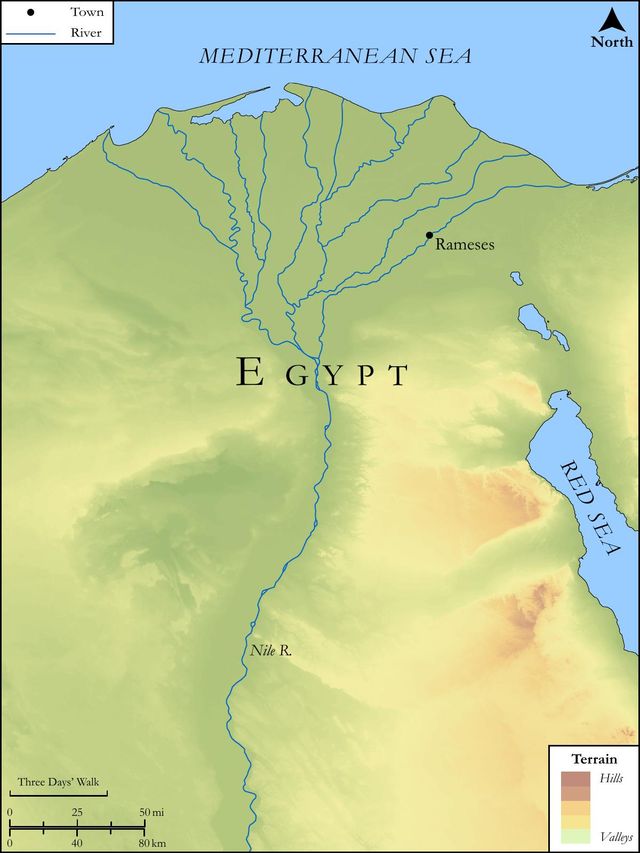
See on the biblical-era map

Study this verse
Public-domain commentary
Matthew Henry
From his Commentary on the Whole Bible. Henry comments on passages, not single verses — this entry covers Exodus 1:15–22. His two-level outline is real structure in the source text, so it is rendered as structure.
The Egyptians' indignation at Israel's increase, notwithstanding the many hardships they put upon them, drove them at length to the most barbarous and inhuman methods of suppressing them, by the murder of their children. It was strange that they did not rather pick quarrels with the grown men, against whom they might perhaps find some occasion: to be thus bloody towards the infants, whom all must own to be innocents, was a sin which they had to cloak for. Note, 1. There is more cruelty in the corrupt heart of man than one would imagine, Rom 3:15, Rom 3:16. The enmity that is in the seed of the serpent against the seed of the woman divests men of humanity itself, and makes them forget all pity. One would not think it possible that ever men should be so barbarous and blood-thirsty as the persecutors of God's people have been, Rev 17:6. 2. Even confessed innocence is no defence against the old enmity. What blood so guiltless as that of a child new-born? Yet that is prodigally shed like water, and sucked with delight like milk or honey. Pharaoh and Herod sufficiently proved themselves agents for that great red dragon, who stood to devour the man-child as soon as it was born, Rev 12:3, Rev 12:4. Pilate delivered Christ to be crucified, after he had confessed that he found no fault in him. It is well for us that, though man can kill the body, this is all he can do. Two bloody edicts are here signed for the destruction of all the male children that were born to the Hebrews.
I.The midwives were commanded to murder them. Observe,
1.The orders given them, Exo 1:15, Exo 1:16. It added much to the barbarity of the intended executions that the midwives were appointed to be the executioners; for it was to make them, not only bloody, but perfidious, and to oblige them to betray a trust, and to destroy those whom they undertook to save and help. Could he think that their sex would admit such cruelty, and their employment such base treachery? Note, Those who are themselves barbarous think to find, or make, others as barbarous. Pharaoh's project was secretly to engage the midwives to stifle the men-children as soon as they were born, and then to lay it upon the difficulty of the birth, or some mischance common in that case, Job 3:11. The two midwives he tampered with in order hereunto are here named; and perhaps, at this time, which was above eighty years before their going out of Egypt, those two might suffice for all the Hebrew women, at least so many of them as lay near the court, as it is plain by Exo 2:5, Exo 2:6, many of them did, and of them he was most jealous. They are called Hebrew midwives, probably not because they were themselves Hebrews (for surely Pharaoh could never expect they should be so barbarous to those of their own nation), but because they were generally made use of by the Hebrews; and, being Egyptians, he hoped to prevail with them.
2.Their pious disobedience to this impious command, Exo 1:17. They feared God, regarded his law, and dreaded his wrath more than Pharaoh's and therefore saved the men-children alive. Note, If men's commands be any way contrary to the commands of God, we must obey God and not man, Act 4:19; Act 5:29. No power on earth can warrant us, much less oblige us, to sin against God, our chief Lord. Again, Where the fear of God rules in the heart, it will preserve it from the snare which the inordinate fear of man brings.
3.Their justifying themselves in this disobedience, when they were charged with it as a crime, Exo 1:18. They gave a reason for it, which, it seems, God's gracious promise furnished them with - that they came too late to do it, for generally the children were born before they came, Exo 1:19. I see no reason we have to doubt the truth of this; it is plain that the Hebrews were now under an extraordinary blessing of increase, which may well be supposed to have this effect, that the women had very quick and easy labour, and, the mothers and children being both lively, they seldom needed the help of midwives: this these midwives took notice of, and, concluding it to the finger of God, were thereby emboldened to disobey the king, in favour of those whom Heaven thus favoured, and with this justified themselves before Pharaoh, when he called them to an account for it. Some of the ancient Jews expound it thus, Ere the midwife comes to them they pray to their Father in heaven, and he answereth them, and they do bring forth. Note, God is a readier help to his people in distress than any other helpers are, and often anticipates them with the blessings of his goodness; such deliverances lay them under peculiarly strong obligations.
4.The recompence God gave them for their tenderness towards his people: He dealt well with them, Exo 1:20. Note, God will be behind-hand with none for any kindness done to his people, taking it as done to himself. In particular, he made them houses (Exo 1:21), built them up into families, blessed their children, and prospered them in all they did. Note, The services done for God's Israel are often repaid in kind. The midwives kept up the Israelites' houses, and, in recompence for it, God made them houses. Observe, The recompence has relation to the principle upon which they went: Because they feared God, he made them houses. Note, Religion and piety are good friends to outward prosperity: the fear of God in a house will help to build it up and establish it. Dr. Lightfoot's notion of it is, That, for their piety, they were married to Israelites, and Hebrew families were built up by them.
II.When this project did not take effect, Pharaoh gave public orders to all his people to drown all the male children of the Hebrews, Exo 1:22.
We may suppose it was made highly penal for any to know of the birth of a son to an Israelite, and not to give information to those who were appointed to throw him into the river. Note, The enemies of the church have been restless in their endeavours to wear out the saints of the Most High, Dan 7:25. But he that sits in heaven shall laugh at them. See Psa 2:4.
Historical interpretation
Fourteen Centuries of Reception
5 surviving comments on this verse. Each one is dated, so this reads as a timeline rather than a list.
Select a marker to jump to its quote. Markers stagger vertically where authors wrote within a few decades of each other.
Just as Pharaoh was drowned in those very waters in which he had drowned the infants, so too David removed Goliath’s head with that very sword with which he had destroyed many. Moses divided the waters through the symbol of the cross, while David laid Goliath low through the symbol of the stone. Our Lord condemned Satan by the word of his mouth when the latter was tempting him. Pharaoh was drowned by the waters with which he had drowned [others].
And that you may learn this—Pharaoh commanded the infants to be cast into the river. Unless the infants had been cast forth, Moses would not have been saved, he would not have been brought up in the palace. When he was safe, he was not in honor; when he was exposed, then he was in honor. But God did this to show his riches of resource and contrivance.
Because they feared God, they built up houses. Without the fear of God, a house cannot be built. If then with the fear of God houses were built by those who had not committed sin but rather did their building at God’s pleasure, we who have been captured, what must we do? Listen, sinner; we must fear God, indeed, to avoid sin; but after shipwreck there is the second plank of repentance. “When the house was being built after captivity.” “When the house was being built,” not “was built,” for repentance is without limit. To the just man who has died, repentance naturally is rendered superfluous. Whenever there is sin, always there is remorse of conscience. Hence the psalmist says was “being built.” While time lasts, the door is always open to repentance, for however long you shall live, as long as you live, you will fall into sin.
As for its being written that God dealt well with the Hebrew midwives and with Rahab the harlot of Jericho, he did not deal well with them because they lied but because they were merciful to the men of God. And so it was not their deception that was rewarded but their benevolence; the benignity of their intention, not the iniquity of their invention.
Because the midwives feared God: The midwives were rewarded, not for their lie, which was a venial sin; but for their fear of God, and their humanity: but this reward was only temporal, in building them houses, that is, in establishing and enriching their families.
Continue studying Exodus 1:21 across the web’s major study libraries — every link below opens this exact verse, chapter, or book on the destination site.
Read & Compare
 BibleGatewayThis verse in more than 200 translations and 70 languages.
 Bible.comThe YouVersion reader — hundreds of translations, reading plans, and highlights.
 ESV.orgCrossway's official English Standard Version reader.
 NET BibleThe NET translation with 60,000+ translators' notes on every rendering decision.
 STEP BibleTyndale House's free study tool — original text, vocabulary, and scholarly resources.
 BibliaLogos Bible Software's free web reader.
 USCCBThe New American Bible (Revised Edition) with the U.S. bishops' study notes.
Commentaries
 BibleHub CommentariesDozens of classic commentaries on this verse, gathered on one page.
 StudyLightMore than 100 commentary sets — the largest collection on the web.
 BibleRefPlain-English commentary on what this verse means, verse by verse.
 Enduring WordDavid Guzik's free commentary on this chapter, widely used by Bible teachers.
 Bible Study ToolsVerse commentary alongside Greek and Hebrew study aids.
Original Language & Research
- BibleHub InterlinearThe verse word by word — original language, transliteration, and English.
- BibleHub LexiconEvery word's original-language definition and Strong's entry.
 Blue Letter BibleDeep-study tools — Strong's numbers, concordance, and word studies.
 SefariaThe Hebrew text with Rashi and centuries of Jewish commentary.
Sermons, Hymns & Audio


TrulyRandomVerse is not affiliated with these sites and doesn’t control their content. They’re linked because they’re genuinely useful.
Summary
Exodus 1:21 powerfully illustrates God's divine justice and profound blessing bestowed upon the Hebrew midwives, Shiphrah and Puah. Their courageous defiance of Pharaoh's genocidal decree, rooted in a reverential "fear of God" that superseded any fear of the king, led them to preserve the lives of Israelite male infants. In response to their faithfulness, God rewarded them by "making them houses," a significant blessing signifying prosperity, the establishment of their lineages, and the flourishing of their families.
Context
ShowHideLiterary Context
Exodus 1:21 concludes a pivotal passage (Exodus 1:8-22) detailing the escalating oppression of the Israelites in Egypt. Following the death of Joseph and his generation, a new pharaoh, who "did not know Joseph," rose to power and became increasingly threatened by the rapid multiplication of the Israelites. His initial strategy involved enslaving them with harsh labor (Exodus 1:11-14). When this failed to curb their growth, he resorted to a more extreme measure: commanding the Hebrew midwives, Shiphrah and Puah, to kill all male Israelite infants at birth (Exodus 1:15-16). However, the midwives, demonstrating remarkable moral courage and piety, "feared God and did not do as the king of Egypt commanded them, but let the male children live" (Exodus 1:17). When confronted by Pharaoh, they offered an explanation for their actions (Exodus 1:18-19), which God then honored. Verse 21, therefore, serves as the divine consequence and reward for their righteous disobedience, immediately preceding Pharaoh's final, desperate, and public decree to cast all male Hebrew infants into the Nile (Exodus 1:22).
Historical & Cultural Context
The narrative is set in ancient Egypt, a powerful empire known for its highly centralized authority and the pharaoh's absolute rule, often viewed as a divine king. Pharaoh's fear of the Israelites, a growing foreign population, stemmed from concerns about national security and potential rebellion, a common anxiety in ancient empires. The role of midwives was crucial in ancient societies, often involving intimate knowledge of families and births, making Pharaoh's command a direct attempt to leverage their position for his genocidal aims. The concept of "making houses" as a blessing was deeply rooted in ancient Near Eastern culture, where the continuation of a family line and the establishment of a stable household were paramount indicators of prosperity, divine favor, and lasting legacy. This cultural understanding underscores the profound nature of God's reward to the midwives.
Key Themes
ShowHideThis verse contributes significantly to several overarching themes within Exodus and the broader Pentateuch. It highlights the theme of Divine Sovereignty over human tyranny, as God's will ultimately prevails despite Pharaoh's power. It profoundly defines the Nature of the "Fear of God," presenting it not as terror, but as a reverential awe and moral conviction that compels obedience to God's higher law, even at personal risk. The midwives' actions exemplify God's Use of Ordinary Individuals to accomplish His grand redemptive purposes, demonstrating that His plan does not rely solely on powerful leaders but also on the faithfulness of humble servants. Furthermore, it underscores the Sanctity of Life, a foundational biblical principle, as the midwives actively preserve innocent lives. Finally, it foreshadows God's Faithfulness to His Covenant with Abraham, Isaac, and Jacob, by preserving the burgeoning Israelite nation even amidst severe oppression, ensuring their survival to become the great nation promised in Genesis 12:2. The divine blessing of "making them houses" directly relates to the covenant promise of multiplication and flourishing, seen throughout Genesis.
Exposition and Analysis
ShowHideKey Word Analysis
ShowHideThis primitive root signifies not merely being terrified but, more profoundly, to revere, to stand in awe, or to show reverence. In a moral sense, it implies a deep respect and obedience to a higher authority. For the midwives, this "fear of God" meant prioritizing His moral law – the preservation of life – above Pharaoh's wicked command, demonstrating a profound moral conviction and allegiance to divine will.
This plural noun, often used with a singular verb, refers to the Supreme God, the Creator and Sovereign of the universe. When used with the definite article, as implied here, it specifically denotes the one true God. The midwives' fear was directed toward the true God of Israel, not the deities of Egypt or the pharaoh himself, indicating their monotheistic allegiance and moral clarity.
While literally meaning a dwelling, this word carries a much broader semantic range in biblical Hebrew. It frequently refers to a family, household, lineage, or even a dynasty. In this context, God's act of "making them houses" implies His blessing of prosperity, the establishment or continuation of their family lines, and the flourishing of their descendants, ensuring their legacy and well-being as a direct reward for their faithfulness.
Verse Breakdown
ShowHide"And it came to pass, because the midwives feared God,"
This opening clause establishes the direct causal link between the midwives' actions and God's subsequent blessing. Their "fear of God" (yir'at Elohim) is presented as the foundational motivation for their courageous disobedience to Pharaoh. This fear is not one of terror, but a profound reverence and moral conviction that compelled them to prioritize God's command to preserve life over the tyrannical decree of a human king. It highlights their unwavering allegiance to divine authority, even when faced with immense personal risk and the threat of royal wrath.
"that he made them houses."
This concluding clause reveals the tangible and significant blessing God bestowed upon the midwives as a direct result of their faithfulness. The phrase "made them houses" (vayya'as lahem battim) is an idiomatic expression signifying that God granted them prosperity, ensured the continuation and flourishing of their families, or perhaps even established their lineages. In a culture where family and legacy were paramount, this was a profound and comprehensive reward, ensuring their well-being and the perpetuation of their names as a testament to God's active intervention and favor for those who honor Him.
Literary Devices
ShowHideThe verse employs Cause and Effect to highlight the direct relationship between the midwives' piety and God's blessing. Their "fear of God" is presented as the explicit cause, leading directly to the divine effect of "making them houses." This structure emphasizes God's active involvement in human affairs and His responsiveness to righteous acts. Furthermore, the phrase "made them houses" functions as a powerful Metonymy, where "houses" stands for the larger concept of family, lineage, prosperity, and legacy. This literary device enriches the meaning, conveying a comprehensive blessing that extends beyond mere physical dwellings to encompass the entire flourishing of their households and future generations.
Theological and Thematic Connections
ShowHideExodus 1:21 serves as a profound testament to God's active involvement in human history, His unwavering commitment to justice, and His readiness to bless those who courageously align themselves with His will. It fundamentally redefines "fear of God" as a reverential awe that inspires righteous action, rather than a paralyzing dread. This narrative underscores that true wisdom and security are found not in appeasing human power, but in obeying divine authority. The midwives' story is a foundational example of how God uses seemingly ordinary individuals to thwart the plans of the wicked and advance His redemptive purposes, demonstrating His sovereignty over all earthly rulers and His faithfulness to His covenant people.
Reflection and Application
ShowHideExodus 1:21 offers timeless and potent lessons for believers navigating a world often characterized by injustice and moral compromise. It challenges us to cultivate the same courageous "fear of God" that empowered the midwives, reminding us that our ultimate allegiance must always be to divine truth and righteousness, even when it directly conflicts with human authority or societal pressures. Their example encourages us to stand firm for the sanctity of life, for justice, and for what is morally right, regardless of the personal cost or unpopularity of such a stance. This verse assures us that God sees and honors our faithfulness, and while His blessings may not always manifest as material prosperity, He is faithful to sustain, protect, and bless those who prioritize His will, often extending His favor to their families and future generations, ensuring a lasting spiritual and perhaps even temporal legacy. It is a powerful call to live with conviction, trusting that God is our ultimate rewarder and protector.
Questions for Reflection
ShowHideFAQ
ShowHideWhat does "feared God" truly mean in this context?
ShowHideIn Exodus 1:21, "feared God" (Hebrew: yir'at Elohim) signifies far more than being terrified of God. It denotes a profound, reverential awe and respect for His character, His power, and His moral law. This deep reverence compelled the midwives to obey God's command to preserve life rather than Pharaoh's wicked decree to kill the Israelite male babies. It represents a moral conviction and an unwavering prioritization of divine authority over any human authority, even that of a powerful king. This concept is foundational in biblical wisdom literature, where the "fear of the Lord" is described as the beginning of knowledge and wisdom (e.g., Proverbs 1:7).
What does "he made them houses" signify as a reward?
ShowHideThe phrase "he made them houses" (Hebrew: vayya'as lahem battim) is a significant biblical idiom that extends beyond the literal construction of physical dwellings. In this context, "house" (bayit) often refers to a family, household, lineage, or even a dynasty. Therefore, God's reward signifies that He blessed the midwives with prosperity, numerous offspring, and the establishment or continuation of their family lines. It was a tangible blessing of flourishing and legacy, demonstrating God's direct intervention and favor for their obedience. This type of blessing, ensuring the continuation and prosperity of a family, was highly valued in ancient Near Eastern culture and is a recurring theme of divine blessing in the Bible, such as God's promise to build David a "house" or dynasty (2 Samuel 7:11).
Were the midwives lying to Pharaoh, and was their deception justified?
ShowHideWhen questioned by Pharaoh, the midwives explained that Hebrew women were "lively" and gave birth before the midwives could arrive (Exodus 1:19). While this explanation may not have been entirely truthful, it served to protect innocent lives and defy an unjust, genocidal command. The text does not explicitly condemn their deception but rather highlights God's approval of their underlying motive—their fear of God and their commitment to preserving life. This narrative raises complex ethical questions about truth-telling in the face of tyranny and the concept of a "higher law." The primary focus of the biblical text, however, is God's commendation of their courage and obedience to His moral law, which prioritizes the sanctity of human life.
Does God always reward obedience materially, as seen with the midwives?
ShowHideThe midwives' story certainly demonstrates that God can and often does bestow material and familial blessings as a reward for obedience. However, it is crucial to understand that God's rewards are not exclusively material or always immediate. His blessings can take many forms, including spiritual peace, protection, wisdom, strength, favor, and eternal life. While the midwives experienced tangible prosperity and lineage continuation, the ultimate reward for faithfulness is often found in deeper communion with God and participation in His eternal kingdom. This verse assures us that God sees and honors all acts of faithfulness, even if the specific nature of the reward varies according to His sovereign wisdom and purpose for each individual, always leading to a greater good.
Christ-Centered Fulfillment
ShowHideExodus 1:21, though rooted in the Old Testament narrative of Israel's deliverance, powerfully prefigures Christ in several profound ways. The midwives' courageous obedience to God's will, even at the risk of their lives, foreshadows the ultimate obedience of Jesus Christ. He "humbled himself by becoming obedient to the point of death, even death on a cross" (Philippians 2:8), perfectly fulfilling the "fear of God" by always doing the Father's will. Just as God "made them houses" by preserving their lineages and granting them prosperity, Christ, through His sacrificial work on the cross and His resurrection, builds a spiritual "house"—His Church. This new "house" is a spiritual family and lineage of believers, drawn from every nation, tribe, and tongue, who are adopted into God's family through faith in Him (Hebrews 3:6 and Ephesians 2:19-22). The divine protection afforded to the Israelite infants through the midwives' actions anticipates Christ as the ultimate Deliverer who rescues humanity not merely from a tyrannical pharaoh, but from the far greater tyranny of sin and death itself, establishing a new covenant and an eternal "house" for all who believe in Him (John 14:2-3).