


Exodus 1:16
Bible text: King James Version (1769 Blayney text) · Public domain
Bible text: King James Version with Strong's numbers · Public domain
Bible text: Berean Standard Bible · Public domain
Bible text: American Standard Version (1901) · Public domain
Bible text: World English Bible, Messianic edition · Public domain
Bible text: Geneva Bible (1599) · Public domain
Bible text: Young's Literal Translation · Public domain
- וַיֹּאמֶרvai·Yo·merand he saidH559Conj-w ¦ V-Qal-ConsecImperf-3msVerb Qal Consecutive Imperfect 3rd Singular Masculineוַandיֹּאמֶרhe said
- בְּיַלֶּדְכֶןbe·ya·led·Khenwhen assist as midwife youH3205Prep-b ¦ V-Piel-Inf ¦ 2fpVerb Piel Infinitive Constructבְּwhenיַלֶּדְassist as midwifeכֶןyou
- אֶת'et<obj.>H853DirObjMParticle Object Indicator
- הָעִבְרִיּוֹתha·'iv·ri·Yotthe Hebrew [women]H5680Art ¦ N-fpNoun Gentilic Plural Feminine AbsoluteהָtheעִבְרִיּוֹתHebrew [women]
- וּרְאִיתֶןu·re·'i·Tenand you will lookH7200Conj-w ¦ V-Qal-ConsecPerf-2fpVerb Qal Consecutive Perfect 2nd Plural Feminineוּandרְאִיתֶןyou will look
- עַל'alatH5921PrepPreposition
- הָאָבְנָיִםha·'a·ve·Na·yimthe stonesH70Art ¦ N-mdNoun Dual Masculine Absoluteהָtheאָבְנָיִםstones
- אִם'imifH518PrtParticle Conditional
- בֵּןben[is] a sonH1121N-msNoun Singular Masculine Absolute
- הוּאhu'heH1931Pro-3msPronoun Personal 3rd Singular Masculine
- וַהֲמִתֶּןva·ha·mi·Tenand you will killH4191Conj-w ¦ V-Hiphil-ConsecPerf-2fpVerb Hiphil Consecutive Perfect 2nd Plural Feminineוַandהֲמִתֶּןyou will kill
- אֹתוֹ'o·To<obj.> himH853DirObjM ¦ 3msParticle Object Indicatorאֹת<obj.>וֹhim
- וְאִםve·'imand ifH518Conj-w ¦ PrtParticle Conditionalוְandאִםif
- בַּתbat[is] a daughterH1323N-fsNoun Singular Feminine Absolute
- הִיאhi'sheH1931Pro-3fsPronoun Personal 3rd Singular Feminine
- וָחָיָהva·Cha·yahand she will liveH2421Conj-w ¦ V-Qal-ConsecPerf-3fsVerb Qal Consecutive Perfect 3rd Singular Feminineוָandחָיָהshe will live
English is a literal word-by-word gloss of the Hebrew, not the KJV's wording. Why?
This is the original text the KJV's translators worked from — each Hebrew word with its own literal English meaning in this verse, prepared by scholars at Tyndale House, Cambridge. The KJV translates whole sentences, not word by word, so its wording differs: one Hebrew word can become several English words, and the KJV may choose “the LORD” where the gloss reads “Yahweh”. Both are faithful — they answer different questions. For the KJV's own rendering, switch to the KJV text.
Details
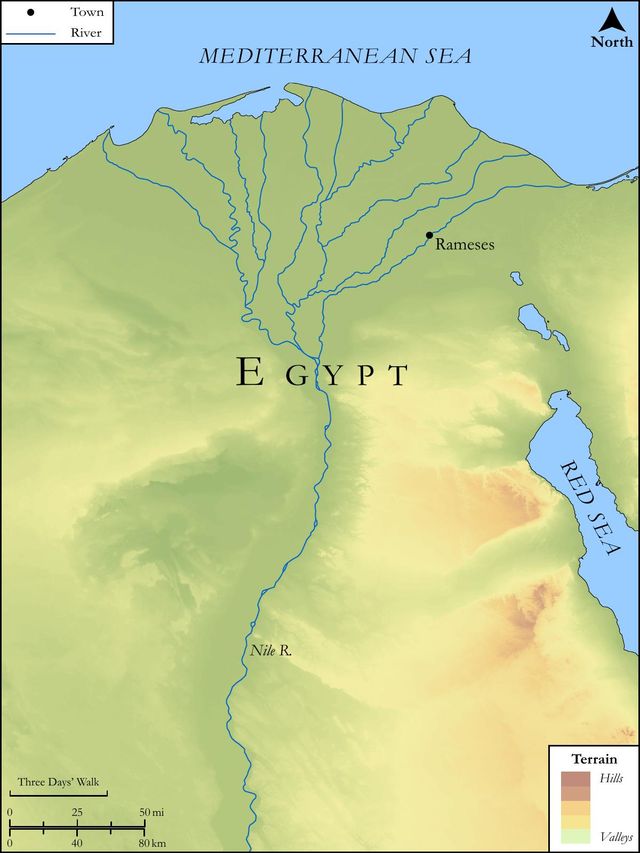
See on the biblical-era maps

Study this verse
Public-domain commentary
Matthew Henry
From his Commentary on the Whole Bible. Henry comments on passages, not single verses — this entry covers Exodus 1:15–22. His two-level outline is real structure in the source text, so it is rendered as structure.
The Egyptians' indignation at Israel's increase, notwithstanding the many hardships they put upon them, drove them at length to the most barbarous and inhuman methods of suppressing them, by the murder of their children. It was strange that they did not rather pick quarrels with the grown men, against whom they might perhaps find some occasion: to be thus bloody towards the infants, whom all must own to be innocents, was a sin which they had to cloak for. Note, 1. There is more cruelty in the corrupt heart of man than one would imagine, Rom 3:15, Rom 3:16. The enmity that is in the seed of the serpent against the seed of the woman divests men of humanity itself, and makes them forget all pity. One would not think it possible that ever men should be so barbarous and blood-thirsty as the persecutors of God's people have been, Rev 17:6. 2. Even confessed innocence is no defence against the old enmity. What blood so guiltless as that of a child new-born? Yet that is prodigally shed like water, and sucked with delight like milk or honey. Pharaoh and Herod sufficiently proved themselves agents for that great red dragon, who stood to devour the man-child as soon as it was born, Rev 12:3, Rev 12:4. Pilate delivered Christ to be crucified, after he had confessed that he found no fault in him. It is well for us that, though man can kill the body, this is all he can do. Two bloody edicts are here signed for the destruction of all the male children that were born to the Hebrews.
I.The midwives were commanded to murder them. Observe,
1.The orders given them, Exo 1:15, Exo 1:16. It added much to the barbarity of the intended executions that the midwives were appointed to be the executioners; for it was to make them, not only bloody, but perfidious, and to oblige them to betray a trust, and to destroy those whom they undertook to save and help. Could he think that their sex would admit such cruelty, and their employment such base treachery? Note, Those who are themselves barbarous think to find, or make, others as barbarous. Pharaoh's project was secretly to engage the midwives to stifle the men-children as soon as they were born, and then to lay it upon the difficulty of the birth, or some mischance common in that case, Job 3:11. The two midwives he tampered with in order hereunto are here named; and perhaps, at this time, which was above eighty years before their going out of Egypt, those two might suffice for all the Hebrew women, at least so many of them as lay near the court, as it is plain by Exo 2:5, Exo 2:6, many of them did, and of them he was most jealous. They are called Hebrew midwives, probably not because they were themselves Hebrews (for surely Pharaoh could never expect they should be so barbarous to those of their own nation), but because they were generally made use of by the Hebrews; and, being Egyptians, he hoped to prevail with them.
2.Their pious disobedience to this impious command, Exo 1:17. They feared God, regarded his law, and dreaded his wrath more than Pharaoh's and therefore saved the men-children alive. Note, If men's commands be any way contrary to the commands of God, we must obey God and not man, Act 4:19; Act 5:29. No power on earth can warrant us, much less oblige us, to sin against God, our chief Lord. Again, Where the fear of God rules in the heart, it will preserve it from the snare which the inordinate fear of man brings.
3.Their justifying themselves in this disobedience, when they were charged with it as a crime, Exo 1:18. They gave a reason for it, which, it seems, God's gracious promise furnished them with - that they came too late to do it, for generally the children were born before they came, Exo 1:19. I see no reason we have to doubt the truth of this; it is plain that the Hebrews were now under an extraordinary blessing of increase, which may well be supposed to have this effect, that the women had very quick and easy labour, and, the mothers and children being both lively, they seldom needed the help of midwives: this these midwives took notice of, and, concluding it to the finger of God, were thereby emboldened to disobey the king, in favour of those whom Heaven thus favoured, and with this justified themselves before Pharaoh, when he called them to an account for it. Some of the ancient Jews expound it thus, Ere the midwife comes to them they pray to their Father in heaven, and he answereth them, and they do bring forth. Note, God is a readier help to his people in distress than any other helpers are, and often anticipates them with the blessings of his goodness; such deliverances lay them under peculiarly strong obligations.
4.The recompence God gave them for their tenderness towards his people: He dealt well with them, Exo 1:20. Note, God will be behind-hand with none for any kindness done to his people, taking it as done to himself. In particular, he made them houses (Exo 1:21), built them up into families, blessed their children, and prospered them in all they did. Note, The services done for God's Israel are often repaid in kind. The midwives kept up the Israelites' houses, and, in recompence for it, God made them houses. Observe, The recompence has relation to the principle upon which they went: Because they feared God, he made them houses. Note, Religion and piety are good friends to outward prosperity: the fear of God in a house will help to build it up and establish it. Dr. Lightfoot's notion of it is, That, for their piety, they were married to Israelites, and Hebrew families were built up by them.
II.When this project did not take effect, Pharaoh gave public orders to all his people to drown all the male children of the Hebrews, Exo 1:22.
We may suppose it was made highly penal for any to know of the birth of a son to an Israelite, and not to give information to those who were appointed to throw him into the river. Note, The enemies of the church have been restless in their endeavours to wear out the saints of the Most High, Dan 7:25. But he that sits in heaven shall laugh at them. See Psa 2:4.
Historical interpretation
Historical reception
2 surviving comments on this verse. Each one is dated, so this reads as a timeline rather than a list.
Select a marker to jump to its quote. Markers stagger vertically where authors wrote within a few decades of each other.
Thus too it has been said that the Pharaoh of Egypt was a type of the devil, in that he cruelly ordered the males to be cast into the Nile and permitted the females to live. So too the devil, ruling over the great Egypt of the world “from Adam unto Moses,” made an effort to carry off and destroy the male and rational offspring of the soul in the flood of the passions, while he takes delight in seeing the carnal and sensual offspring increase and multiply.
Indeed, in regard to other Hebrew women you find it written that the Hebrew women give birth before the midwives arrive. This is so because the souls of the just do not wait upon branches of learning arranged according to kinds of knowledge, nor do they require assistance in parturition, but they bring forth their offspring spontaneously and anticipate the expected time.
Continue studying Exodus 1:16 across the web’s major study libraries — every link below opens this exact verse, chapter, or book on the destination site.
Read & Compare
 BibleGatewayThis verse in more than 200 translations and 70 languages.
 Bible.comThe YouVersion reader — hundreds of translations, reading plans, and highlights.
 ESV.orgCrossway's official English Standard Version reader.
 NET BibleThe NET translation with 60,000+ translators' notes on every rendering decision.
 STEP BibleTyndale House's free study tool — original text, vocabulary, and scholarly resources.
 BibliaLogos Bible Software's free web reader.
 USCCBThe New American Bible (Revised Edition) with the U.S. bishops' study notes.
Commentaries
 BibleHub CommentariesDozens of classic commentaries on this verse, gathered on one page.
 StudyLightMore than 100 commentary sets — the largest collection on the web.
 BibleRefPlain-English commentary on what this verse means, verse by verse.
 Enduring WordDavid Guzik's free commentary on this chapter, widely used by Bible teachers.
 Bible Study ToolsVerse commentary alongside Greek and Hebrew study aids.
Original Language & Research
- BibleHub InterlinearThe verse word by word — original language, transliteration, and English.
- BibleHub LexiconEvery word's original-language definition and Strong's entry.
 Blue Letter BibleDeep-study tools — Strong's numbers, concordance, and word studies.
 SefariaThe Hebrew text with Rashi and centuries of Jewish commentary.
Sermons, Hymns & Audio


TrulyRandomVerse is not affiliated with these sites and doesn’t control their content. They’re linked because they’re genuinely useful.
Summary
Exodus 1:16 records Pharaoh's chilling and genocidal decree to the Hebrew midwives, commanding them to murder all male Hebrew infants at birth while allowing females to live. This act of state-sponsored infanticide was a desperate and cruel attempt by the Egyptian king to curb the rapidly multiplying Israelite population, which he feared would grow too powerful and potentially align with Egypt's enemies. This direct assault on the burgeoning nation of Israel was a deliberate opposition to God's covenant promise of a numerous people, setting the stage for divine intervention.
Context
ShowHideLiterary Context
This verse marks a dramatic escalation in Pharaoh's oppressive measures against the Israelites, following their initial enslavement and forced labor described in Exodus 1:8-14. Despite the harsh conditions, the Hebrew population continued to multiply at an astonishing rate, fulfilling God's promise to Abraham. Pharaoh's fear, first expressed in Exodus 1:9-10, intensifies into a direct and insidious plot against the very existence of the male lineage. This secret command to the midwives, Shiphrah and Puah, immediately precedes their act of courageous defiance detailed in Exodus 1:17-21, which ultimately leads to Pharaoh's even more public and sweeping decree in Exodus 1:22.
Historical & Cultural Context
In the eyes of a king like Pharaoh, the rapid growth of a foreign population within a kingdom could indeed be perceived as a threat to national security and stability, especially if that population maintained distinct ethnic and religious identities. Pharaoh's paranoia was rooted in a common fear of internal rebellion or alliance with external enemies. Midwives played a crucial role among the Hebrews and the Egyptians, often holding positions of trust and authority within the community. Birthing stools, or "stools" as mentioned in the text (Hebrew: 'obnayim), were common in Egypt, providing a practical aid for childbirth. Pharaoh's command exploited this intimate and vulnerable setting, placing the midwives in a unique position to execute his horrific order discreetly, aiming to control the population without causing overt public unrest or rebellion among the Israelites.
Key Themes
ShowHideExodus 1:16 contributes significantly to several major themes within the book of Exodus and the broader Pentateuch. It highlights the theme of Divine Sovereignty versus Human Tyranny, as Pharaoh's desperate attempt to thwart God's plan for Israel's multiplication ultimately fails. The verse also underscores the Sanctity of Life, particularly the vulnerable, by detailing a direct assault on innocent infants, which stands in stark contrast to God's valuing of human life from conception. Furthermore, it initiates the Collision of Kingdoms between the forces of evil (represented by Pharaoh and Egypt) and God's redemptive purposes for His covenant people, setting the stage for the miraculous deliverance recounted in Exodus 3. This act of targeted infanticide is a direct attack on God's covenant promise to Abraham that his descendants would be as numerous as the stars (Genesis 15:5) and that through his lineage, a deliverer would come.
Exposition and Analysis
ShowHideExodus 1:16 presents Pharaoh's horrific command, revealing the depths of his fear-driven cruelty and his direct assault on the burgeoning Israelite nation. The verse states, "And he said, When ye do the office of a midwife to the Hebrew women, and see [them] upon the stools; if it [be] a son, then ye shall kill him: but if it [be] a daughter, then she shall live."
Key Word Analysis
ShowHideA primitive root meaning "to say," used with great latitude to include commanding, declaring, appointing, or determining. Here, it denotes a direct, authoritative, and binding command from Pharaoh, emphasizing the gravity and official nature of his decree to the midwives.
A primitive root meaning "to bear young," "to beget," or causatively, "to act as midwife." This word highlights the specific role and intimate access these women had to the birthing process, making them the ideal, albeit morally compromised, agents for Pharaoh's secret plan of infanticide.
From the root meaning "to build," referring to a son as a builder of the family name. This term encompasses male offspring in the widest sense. Pharaoh's specific targeting of "sons" reveals his strategic aim to prevent the growth of a future generation of Hebrew warriors, leaders, and ultimately, the lineage through which God's covenant promises would be fulfilled.
A primitive root meaning "to die" (literally or figuratively); causatively, "to kill." This word explicitly states the brutal and murderous intent of Pharaoh's command, leaving no ambiguity about the fate he intended for the male Hebrew infants.
Verse Breakdown
ShowHide"And he said"
This opening phrase establishes Pharaoh's direct involvement and authority in issuing this decree. It is a personal and deliberate command from the highest power in Egypt, underscoring the severity and official nature of the order.
"When ye do the office of a midwife to the Hebrew women, and see [them] upon the stools"
This clause sets the scene and identifies the specific agents (midwives) and the intimate, vulnerable context (childbirth on birthing stools). The "stools" (Hebrew: 'obnayim, H70) refer to the birthing chairs or bricks commonly used, emphasizing the direct, hands-on nature of the midwives' role at the moment of birth. Pharaoh's instruction is precise, indicating he expects the act to occur immediately after birth, before the child is fully presented to the family.
"if it [be] a son, then ye shall kill him"
This is the chilling core of Pharaoh's command. It reveals his specific target: male infants. The instruction to "kill him" is a direct order for infanticide, a brutal and desperate measure to control the population and prevent the rise of potential male leaders or warriors among the Israelites.
"but if it [be] a daughter, then she shall live"
This contrasting clause highlights the discriminatory nature of the decree. Female infants were permitted to live, likely because they were not perceived as a military threat and could potentially be assimilated into Egyptian society or serve as slaves, without contributing to the growth of a male fighting force for Israel.
Literary Devices
ShowHideExodus 1:16 employs several potent literary devices. Irony is evident in Pharaoh's attempt to diminish the Hebrew population by targeting male infants; this very act sets in motion the events that lead to the birth and preservation of Moses, the ultimate deliverer who will orchestrate the exodus and decimate Egypt's power. The verse also serves as a crucial piece of Foreshadowing, hinting at the epic struggle between God and Pharaoh that will dominate the narrative. Pharaoh's decree to kill the male children directly anticipates God's later judgment on Egypt, culminating in the death of the firstborn males (Exodus 12). Furthermore, there is a stark Contrast presented: the sanctity of life versus the depravity of human power seeking to destroy it. This contrast is amplified by the subsequent narrative, where the midwives' choice to preserve life stands in direct opposition to Pharaoh's decree of death.
Theological and Thematic Connections
ShowHideExodus 1:16 stands as a stark testament to the clash between human evil and divine purpose. Pharaoh's decree to murder innocent male infants represents the pinnacle of human depravity and an audacious attempt to thwart God's covenant promises to Israel. Yet, the subsequent narrative powerfully demonstrates God's ultimate sovereignty, as His purposes prevail despite the most extreme opposition. This verse underscores the profound biblical value placed on human life, especially the most vulnerable, and sets the stage for God's miraculous intervention to protect His people and bring forth His chosen deliverer.
Reflection and Application
ShowHideExodus 1:16, though describing a dark moment in ancient history, offers profound and enduring lessons for believers today. It calls us to recognize the insidious nature of fear, prejudice, and unchecked power, which can lead to horrific acts against the defenseless. Pharaoh's decree serves as a chilling reminder of the dangers of dehumanization and the slippery slope of seeking control through violence. This verse implicitly challenges us to uphold the sanctity of life in all its stages, advocating for the protection of the innocent and defenseless in our own societies and standing against any ideology that devalues human life. Furthermore, it encourages us to trust in God's overarching sovereignty, even when faced with seemingly insurmountable evil and injustice. Just as God's plan for His people ultimately prevailed against Pharaoh's genocidal decree, we are reminded that He is able to work out His purposes and protect His own, even through the direst circumstances, calling us to moral courage and faithfulness in the face of injustice.
Questions for Reflection
ShowHideFAQ
ShowHideWhy did Pharaoh only target male infants?
ShowHidePharaoh specifically targeted male infants because they represented the future of the Hebrew nation in terms of both population growth and potential leadership. Killing male children would prevent the rise of a new generation of warriors or leaders who could challenge Egyptian authority, and it would more effectively diminish the population's future reproductive capacity, as males are essential for procreation and the continuation of the family line. This strategic move aimed to dissolve the Hebrew nation from within, preventing them from becoming a military or political threat to his rule, as detailed in Exodus 1:9-10.
What does "upon the stools" mean?
ShowHideThis phrase refers to אֳבְנָיִם (ovnayim, H70), which were birthing stools or bricks commonly used in Egypt to assist women during childbirth. These were essentially two elevated stones or bricks that allowed the birthing mother to assume a squatting position, which was believed to facilitate delivery. The detail emphasizes the intimate and vulnerable setting where Pharaoh's horrific command was to be executed, placing the midwives in a direct position of power over the newborn's life or death immediately at the moment of birth.
Christ-Centered Fulfillment
ShowHidePharaoh's desperate attempt to eradicate the male lineage of Israel in Exodus 1:16 profoundly foreshadows the ongoing spiritual battle against God's redemptive plan, culminating in the ultimate assault on the lineage of the Messiah. This genocidal decree, aimed at preventing the rise of a deliverer for Israel, finds its striking parallel in King Herod's slaughter of the innocents in Bethlehem, a direct and equally malevolent attempt to eliminate the newborn Christ, the ultimate Deliverer, as recorded in Matthew 2:16-18. Just as God miraculously preserved Moses, the deliverer of Israel, from Pharaoh's decree through divine providence (e.g., Exodus 2:1-10), so too did He protect Jesus, the ultimate Lamb of God, from Herod's tyranny, ensuring His survival and the fulfillment of God's redemptive purpose. Christ's survival, His life, death, and resurrection, demonstrate that no human power or demonic scheme can thwart God's unwavering promise to provide salvation and establish His eternal kingdom, ultimately triumphing over all forces of evil and death (Colossians 2:15).