


Matthew 21:38
- ΟἱHoi<the>G3588T-NPMDefinite article Nominative Plural Masculine
- δὲdeButG1161CONJConjunction
- γεωργοὶgeōrgoithe farmersG1092N-NPMNoun Nominative Plural Masculine
- ἰδόντεςidonteshaving seenG1492V-2AAP-NPMVerb 2nd Aorist Active Participle Nominative Plural Masculine
- τὸνtontheG3588T-ASMDefinite article Accusative Singular Masculine
- υἱὸνhuionsonG5207N-ASMNoun Accusative Singular Masculine
- εἶπονeiponsaidG2036V-2AAI-3PVerb 2nd Aorist Active Indicative 3rd Plural
- ἐνenamongG1722PREPPreposition
- ἑαυτοῖς·he'autoisthemselvesG1438F-3DPMReflexive pronoun Dative 3rd Plural Masculine
- οὗτόςhoutosThisG3778D-NSMDemonstrative pronoun Nominative Singular Masculine
- ἐστινestinisG1510V-PAI-3SVerb Present Active Indicative 3rd Singular
- ὁhotheG3588T-NSMDefinite article Nominative Singular Masculine
- κληρονόμος·klēronomosheirG2818N-NSMNoun Nominative Singular Masculine
- δεῦτεdeutecomeG1205INJInterjection
- ἀποκτείνωμενapokteinōmenlet us killG615V-PAS-1PVerb Present Active Subjunctive 1st Plural
- αὐτὸνautonhimG846P-ASMPersonal pronoun Accusative Singular Masculine
- καὶkaiandG2532CONJConjunction
- σχῶμενschōmenlet us haveG2192V-2AAS-1PVerb 2nd Aorist Active Subjunctive 1st Plural
- τὴνtēntheG3588T-ASFDefinite article Accusative Singular Feminine
- κληρονομίανklēronomianinheritanceG2817N-ASFNoun Accusative Singular Feminine
- αὐτοῦautouof himG846P-GSMPersonal pronoun Genitive Singular Masculine
English is a literal word-by-word gloss of the Greek, not the KJV's wording. Why?
This is the original text the KJV's translators worked from — each Greek word with its own literal English meaning in this verse, prepared by scholars at Tyndale House, Cambridge. The KJV translates whole sentences, not word by word, so its wording differs: one Greek word can become several English words, and the KJV may choose “charity” where the gloss reads “love”. Both are faithful — they answer different questions. For the KJV's own rendering, switch to the KJV text.
Details
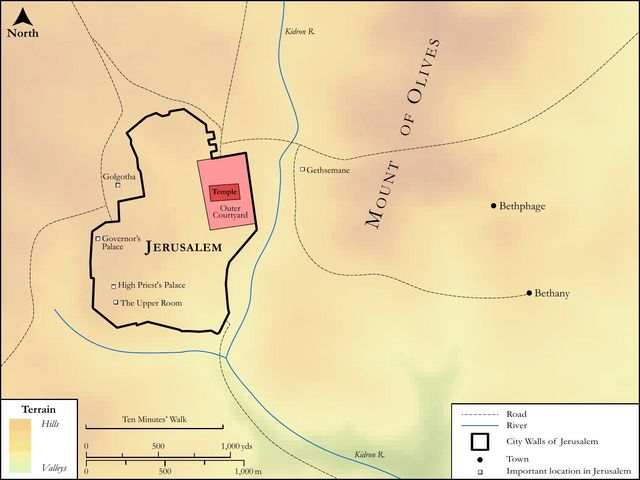
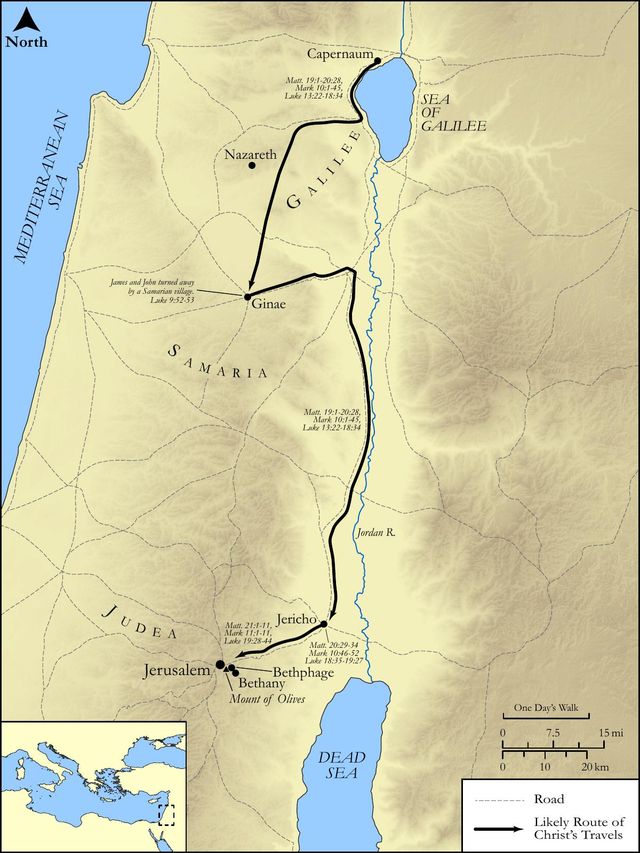
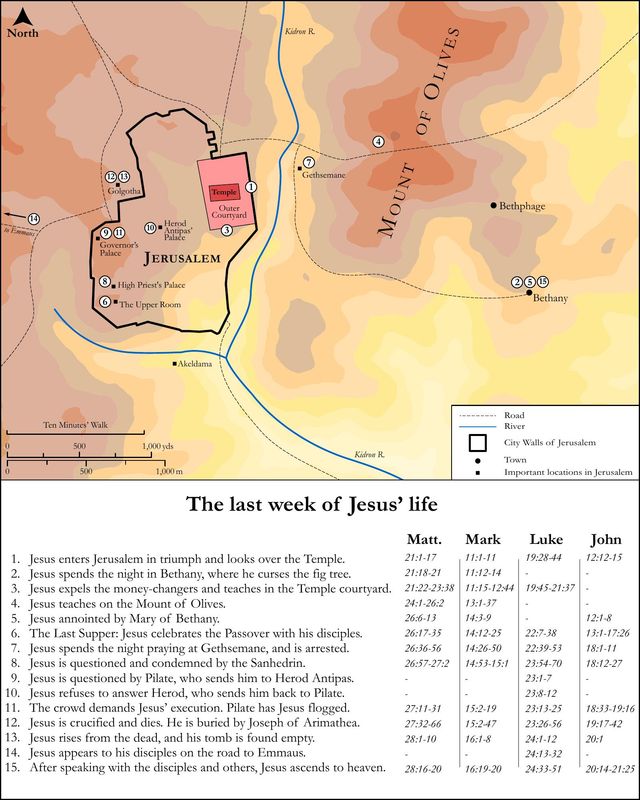
See on the biblical-era map
Study this verse
Historical interpretation
Ten Centuries of Reception
9 surviving comments on this verse. Each one is dated, so this reads as a timeline rather than a list.
Select a marker to jump to its quote. Markers stagger vertically where authors wrote within a few decades of each other.
Or we may suppose this fulfilled in the case of those Jews who, knowing Christ, believed in Him. But what follows, But when the husbandmen saw the son, they said among themselves, This is the heir, come let us kill him, and let us seize on the inheritance, was fulfilled in those who saw Christ, and knew Him to be the Son of God, yet crucified Him.
Or, He set forth the Prophets as it were winepresses, into which an abundant measure of the Holy Spirit, as of new wine, might flow in a teeming stream.
Or, The tower is the eminence of the Law, which ascended from earth to heaven, and from which, as from a watch-tower, the coming of Christ might be spied. And let it out to husbandmen.
These more than the first who were sent, denote that time, when, after the preaching of single Prophets, a great number was sent forth together.
By the Son sent at last, is denoted the advent of our Lord.
Christ was cast out of Jerusalem, as out of the vineyard, to His sentence of punishment.
He is become the head of the corner, because He is the union of both sides between the Law and the Gentiles.
What then do these? When they ought to have run unto Him, when they ought to have asked pardon for their offenses, they even persist more strongly in their former sins, they proceed to add unto their pollutions, forever throwing into the shade their former offenses by their later; as also He Himself declared when He said, "Fill ye up the measure of your fathers." For from the first the prophets used to charge them with these things, saying, "Your hands are full of blood;" and, "They mingle blood with blood;" and, "They build up Sion with blood."
But they did not learn self-restraint, albeit they received this commandment first, "Thou shalt not kill;" and had been commanded to abstain from countless other things because of this, and by many and various means urged to the keeping of this commandment.
Yet, for all that, they put not away that evil custom; but what say they, when they saw Him? Come, let us kill Him. With what motive, and for what reason? what of any kind had they to lay to His charge, either small or great? Is it that He honored you, and being God became man for your sakes, and wrought His countless miracles? or that He pardoned your sins? or that He called you unto a kingdom?
But see together with their impiety great was their folly, and the reason of His murder was full of much madness. "For let us kill Him," it is said, "and the inheritance shall be ours."
And where do they take counsel to kill Him? "Out of the vineyard."
Seest thou how He prophesies even the place where He was to be slain. "And they cast Him out, and slew Him."
(Hom. lxviii.) The design of this further parable is to show that their guilt was heinous, and unworthy to be forgiven.
Or, it applies to His long-suffering, in that He did not always bring down immediate punishment on their sins.
(non occ. ap. Chrys.) He calls the Prophets servants, who as the Lord's Priests offer the fruits of the people, and the proofs of their obedience in their works. But they showed their wickedness not only in refusing the fruits, but in having indignation against those that come to them, as it follows, And the husbandmen took his servants, and beat one, and killed another, and stoned another.
Wherefore then did He not send Him immediately? That from what they had done to the others they might accuse themselves, and putting away their madness they might reverence His Son when He came.
Or He speaks as declaring what ought to be; they ought to reverence Him; thus showing that their sin was great, and void of all excuse.
Or there is no contradiction, because both are right; they first made answer in these words, and then the Lord repeated them.
Or otherwise: the Lord proposed this parable to them with this intent, that not understanding it they should give sentence against themselves; as was done by Nathan to David. Again, when they perceived the meaning of the things that had been said against them, they said, God forbid.
Christ is the stone, the builders are the Jewish teachers who rejected Christ, saying, This man is not of God. (John 9:16.)
And that they might know that nothing that had been done was against God's will, He adds, It is the Lord's doing.
Or, He here points out their twofold destruction; first in their stumbling and being offended at Him, signified in that, Whosoever shall fall upon this stone; the other in the captivity that should come upon them, signified by that, But upon whomsoever it shall fall.
(Verse 37, 38.) But lastly, he sent his son to them, saying: They will respect my son. However, the farmers, upon seeing the son, said among themselves: This is the heir; come, let us kill him, and we shall have his inheritance. In the passage above, we read: Again, he sent other servants more than the previous ones, and they did the same to them. The patience of the householder is shown in that he sent them more frequently, in order to provoke the wicked tenants to repentance. But they treasured up wrath for themselves on the day of wrath (Rom. 2). Moreover, that which is joined: They fear for my son, he does not come from ignorance. For what does the head of the household not know, who in this place is understood as God the Father? But God is always said to be ambiguous, so that free will may be preserved for man. Let us ask Arius and Eunomius. Behold, the Father is said to be ignorant, and he tempers his judgement, and as far as you are concerned, he is proven to be lying. Whatever they may answer on behalf of the Father, let them understand it as being on behalf of the Son, who himself says that he does not know the day of consummation.
He hath planted a vine of which Isaiah speaks, The vine of the Lord of Hosts is the house of Israel. (Isa. 5:7.) And hedged it round about; i. e. either the wall of the city, or the guardianship of Angels.
A winepress, that is to say, An altar; or those winepresses after which the three Psalms, the 8th, the 80th, and the 83d are entitleda, that is to say, the martyrs.
And built a tower therein, that is, the Temple, of which it is said by Micah, And thou, O cloudy tower of the daughter of Sion. (Mic. 4:8.)
Not a change of place, for God, by whom all things are filled, cannot be absent from any place; but He seems to be absent from the vineyard, that He may leave the vine-dressers a freedom of acting.
Beat them, as Jeremiah, killed them, as Isaiah, stoned them, as Naboth and Zacharias, whom they slew between the temple and the altar.
But when He says, They will reverence my Son, He does not speak as in ignorance. For what is there that this householder (by whom in this place God is intended) knows not? But God is thus spoken of as being uncertain, in order that free-will may be reserved for man.
Let us enquire of Arrius and Eunomius. See here the Father is said not to know somewhat. Whatever answer they make for the Father, let them understand the same of the Son, when He says that He knows not the day of the consummation of all things. (Mat. 22:36.)
The Lord asks them not as though He did not know what they would answer, but that they might be condemned by their own answer.
The same things are treated under various figures; whom above He called labourers and husbandmen, He now calls builders.
Whoso sinneth, yet believeth on Him, falls indeed upon a stone and is broken, yet is not altogether crushed, but is preserved to salvation through endurance. But on whomsoever it shall fall, that is, whomsoever this stone shall itself assault, and whosoever shall utterly deny Christ, it shall so crush him, that not a bone of him shall be left in which a drop of water could be taken up.
This He brings in because the Priests had asked not in order to learn, but to tempt Him. But of the common folk many had believed; and for that reason He brings forward the parable of the two sons, showing them therein that the common sort, who from the first professed secular lives, were better than the Priests who from the first professed the service of God, inasmuch as the people at length turned repentant to God, but the Priests impenitent, never left off to sin against God. And the elder son represents the people; because the people is not for the sake of the Priests, but the Priests are for the sake of the people.
He is called man, by title, not by nature; in a kind of likeness, not in verity. For the Son knowing that by occasion of His human name He himself should be blasphemed as though he were mere man, spoke therefore of the Invisible God the Father as man; He who by nature is Lord of Angels and men, but by goodness their Father.
Or, by the hedge understand the protection of the holy fathers, who were set as a wall round the people of Israel.
Or, the winepress is the word of God, which tortures man when it contradicts his fleshly nature.
When, that is, Priests and Levites were constituted by the Law, and undertook the direction of the people. And as an husbandman, though he offer to his Lord of his own stock, does not please him so much as by giving him the fruit of his own vineyard; so the Priest does not so much please God by his own righteousness, as by teaching the people of God holiness; for his own righteousness is but one, but that of the people manifold. And went into a far country.
At each step of their wickedness the mercy of God was increased, and at each step of the Divine mercy the wickedness of the Jews increased; thus there was a strife between human wickedness and Divine goodness.
He sent Him not as the bearer of a sentence of punishment against the guilty, but of an offer of repentance; He sent Him to put them to shame, not to punish them.
But some say, that it was after His incarnation, that Christ was called a Son in right of His baptism like the other saints, whom the Lord refutes by this place, saying, I will send my Son. Therefore when He thus meditated sending His Son after the Prophets, He must have been already His Son. Further, if He had been His Son in the same way as all the saints to whom the word of God was sent, He ought to have called the Prophets also His sons, as He calls Christ, or to call Christ His servant, as He calls the Prophets.
After His entry into the Temple, and having cast out those who sold the animals for the sacrifices, then they took counsel to kill Him, Come, let us kill him. For they reasoned among themselves, It will happen that the people hereby shall disuse the practice of sacrificing, which pertains to our gain, and shall be content to offer the sacrifice of righteousness, which pertains to the glory of God; and so the nation shall no more be our possession, but shall become God's. But if we shall kill Him, then there being none to seek the fruit of righteousness from the people, the practice of offering sacrifice shall continue, and so this people shall become our possession; as it follows, And the inheritance shall be ours. These are the usual thoughts of all worldly Priests, who take no thought how the people shall live without sin, but look to how much is offered in the Church, and esteem that the profit of their ministry.
That their answer is true, comes not of any righteous judgment in them, but from the case itself; truth constrained them.
Otherwise: Luke has given the answer of their lips, Matthew that of their hearts. For some made answer openly contradicting Him, and saying, God forbid, but their consciences took it up with He shall miserably destroy these wicked men. For so when a man is detected in any wickedness, he excuses himself in words, but his conscience within pleads guilty.
When they seemed discontent, He brings forward Scripture testimony; as much as to say, If ye understood not My parable, at least acknowledge this Scripture.
As much as to say, How do ye not understand in what building that stone is to be set, not in yours, seeing it is rejected, but in another; but if the building is to be other, your building will be rejected.
Christ is called A Stone, not only because of His strength, but because He mightily crushes His enemies; whence it follows, And whosoever shall fall on this stone shall be broken, and on whomsoever it shall fall, it shall grind him to powder.
It is one thing to be broken, and another to be ground to powder. Of what is broken there remains something; but what is ground to powder is as it were converted into dust. And what falls upon a stone is not broken by any power of the stone, but because it fell heavily, either by reason of its weight, or of its fall from a great height. So a Christian in sinning, perishes, but not to the utmost that Christ can destroy; but only so far as he destroys himself, either by the greatness of his sin, or by his exalted rank. But the unbelievers perish to the utmost that Christ can destroy them.
The season of fruit, He says, not of rent-paying, because this stiff-necked nation brings forth no fruit.
Or, the first servants who were sent were the Lawgiver Moses himself, and Aaron the first Priest of God; whom, having beaten them with the scourge of their tongue, they sent away empty; by the other servants understand the company of the Prophets.
By what they say, This is the Son, He manifestly proves that the rulers of the Jews crucified the Son of God, not through ignorance, but through jealousy. For they understood that it was He to whom the Father speaks by the Prophet, Ask of me, and I shall give thee the heathen for thine inheritance (Ps. 2:8.) The inheritance given to the Son is the holy Church; an inheritance not left Him by His Father when dying, but wonderfully purchased by His own death.
Or, The Jews endeavoured by putting Him to death to seize upon the inheritance, when they strove to overthrow the faith which is through Him, and to substitute their own righteousness which is by the Law, and therewith to imbue the Gentiles. It follows, And they caught him, and cast him out of the vineyard, and slew him.
Morally; a vineyard has been let out to each of us to dress, when the mystery of baptism was given us, to be cultivated by action. Servants one, two, and three are sent us when Law, Psalm, and Prophecy are read, after whose instructions we are to work well. He that is sent is beaten and cast out when the word is contemned, or, which is worse, is blasphemed. He kills (as far as in him lies) the heir, who tramples under foot the Son, and does despite to the Spirit of grace. The wicked husbandman is destroyed, and the vineyard is given to another, when the gift of grace which the proud has contemned is given to the lowly.
But despite of their displeasure, the same stone furnished the head stone of the corner, for out of both nations He has joined by faith in Him as many as He would.
(ord.) Or, the Lord whom they killed, came immediately rising from the dead, and brought to an evil end those wicked husbandmen, and gave up His vineyard to other husbandmen, that is, to the Apostles.
Continue studying Matthew 21:38 across the web’s major study libraries — every link below opens this exact verse, chapter, or book on the destination site.
Read & Compare
 BibleGatewayThis verse in more than 200 translations and 70 languages.
 Bible.comThe YouVersion reader — hundreds of translations, reading plans, and highlights.
 ESV.orgCrossway's official English Standard Version reader.
 NET BibleThe NET translation with 60,000+ translators' notes on every rendering decision.
 STEP BibleTyndale House's free study tool — original text, vocabulary, and scholarly resources.
 BibliaLogos Bible Software's free web reader.
 USCCBThe New American Bible (Revised Edition) with the U.S. bishops' study notes.
Commentaries
 BibleHub CommentariesDozens of classic commentaries on this verse, gathered on one page.
 StudyLightMore than 100 commentary sets — the largest collection on the web.
 BibleRefPlain-English commentary on what this verse means, verse by verse.
 Enduring WordDavid Guzik's free commentary on this chapter, widely used by Bible teachers.
 Bible Study ToolsVerse commentary alongside Greek and Hebrew study aids.
Original Language & Research
- BibleHub InterlinearThe verse word by word — original language, transliteration, and English.
- BibleHub LexiconEvery word's original-language definition and Strong's entry.
 Blue Letter BibleDeep-study tools — Strong's numbers, concordance, and word studies.
 CNTR CollationThe earliest Greek manuscripts of this verse, collated letter by letter.
Sermons, Hymns & Audio


TrulyRandomVerse is not affiliated with these sites and doesn’t control their content. They’re linked because they’re genuinely useful.
Summary
Matthew 21:38 captures the chilling moment in Jesus's Parable of the Wicked Vinedressers when the tenants, upon recognizing the landowner's son, conspire to murder him in order to unlawfully claim his inheritance. This verse reveals the profound spiritual rebellion, covetousness, and ultimate rejection of God's final messenger by those entrusted with His vineyard, foreshadowing the crucifixion of Jesus by the religious authorities of His day.
Context
ShowHideLiterary Context
Matthew 21:38 is a pivotal verse within the Parable of the Wicked Vinedressers, found in Matthew 21:33-46. This parable is strategically placed by Matthew immediately after Jesus's triumphal entry into Jerusalem and His cleansing of the Temple, and directly before His final confrontation with the chief priests and elders. It serves as a direct, thinly veiled indictment of the Jewish religious leadership. Following this parable, Jesus explicitly connects it to the rejection of the "stone the builders rejected" in Matthew 21:42, indicating His own identity as the Son and the consequences of rejecting Him. The narrative flow demonstrates Jesus's escalating conflict with the authorities, culminating in His passion.
Historical & Cultural Context
The parable draws on common agricultural practices and legal concepts of ancient Israel. Vineyards were a significant part of the economy and often leased to tenants. The sending of servants to collect produce was a standard practice, as was the expectation that the owner's son would command respect and receive what was due. However, the tenants' violent response to the servants and especially to the son reflects a deep-seated rebellion and a desire for illicit gain, which would have been shocking and criminal in that society. This context highlights the audacity of the vinedressers' actions and, by extension, the gravity of the religious leaders' rejection of God's prophets and ultimately His Son. The setting in Jerusalem, a hotbed of religious and political tension, further underscores the imminent clash between Jesus and the established powers.
Key Themes
ShowHideThis verse powerfully contributes to several overarching themes in Matthew's Gospel and biblical theology. Firstly, it underscores the theme of Divine Sovereignty and Stewardship, where God (the landowner) has entrusted His people (the vineyard, Israel) to leaders (the vinedressers), who are accountable for their stewardship. Secondly, the verse highlights the Rejection of God's Messengers, a recurring motif throughout Israel's history, culminating in the rejection of God's ultimate messenger, His Son. This theme is echoed in passages like Luke 13:34. Thirdly, it reveals the destructive power of Covetousness and Usurpation, as the vinedressers' desire for the inheritance drives their murderous plot, mirroring the religious leaders' desire to maintain their power and control at all costs, even against God's will. Finally, and most profoundly, it points to the Messianic Identity of Jesus as the Son and Heir, establishing His unique relationship with God and His rightful claim to all things, a truth foundational to the Gospel's message, as seen in Hebrews 1:2.
Exposition and Analysis
ShowHideKey Word Analysis
ShowHideFrom gē (earth) and ergon (work), this term literally means "land-worker" or "farmer." In this parable, it refers to the tenants entrusted with the care and cultivation of the vineyard. The irony is profound: those appointed to nurture and produce fruit for the owner instead become rebellious and destructive, highlighting their failure in stewardship and their usurpation of authority.
Derived from klēros (lot, inheritance) and nomos (law, custom), this word signifies one who receives an inheritance, a successor to an estate or property. Jesus's identification of the son as the "heir" is crucial, unequivocally establishing His unique divine status and rightful claim to God's kingdom and people. This title underscores His supreme authority and the legitimacy of His mission.
This term denotes an estate, patrimony, or possession received by heirship. In the parable, the "inheritance" represents not just the physical vineyard but the spiritual legacy and covenant relationship God had with Israel. The vinedressers' desire to "seize on his inheritance" reveals their ultimate motive: to wrest control of God's people and promises for their own selfish gain, rejecting God's rightful ownership and authority.
Verse Breakdown
ShowHide"But when the husbandmen saw the son,"
The conjunction "But" (G1161, dé) introduces a stark contrast to the previous rejections of the servants. The crucial element here is recognition: the vinedressers saw (G1492, eídō, implying not just physical sight but a cognitive understanding) and knew the identity of the son. Their subsequent actions are not out of ignorance but deliberate, malicious intent.
"they said among themselves,"
This phrase (G2036, épō, "said"; G1722, en, "among"; G1438, heautoû, "themselves") indicates a private conspiracy, a calculated plot hatched internally. It highlights the premeditated nature of their evil scheme, demonstrating a hardened heart and a collective decision to defy the owner.
"This is the heir;"
This is the core of their recognition and the catalyst for their plot. They correctly identify the son's unique status and rightful claim. This acknowledgment makes their subsequent actions even more heinous, as they are not acting in ignorance but in full awareness of who they are opposing.
"come, let us kill him,"
The imperative "come" (G1205, deûte) signals an urgent call to action, a shared resolve to commit murder. The phrase "let us kill him" (G615, apokteínō, "to kill outright") reveals their extreme malice and the violent means they intend to employ to achieve their covetous ends.
"and let us seize on his inheritance."
This final clause (G2532, kaí, "and"; G2722, katéchō, "to hold down, seize on"; G2817, klēronomía, "inheritance") exposes the ultimate motive behind the murder. Their goal is not merely to avoid paying fruit but to completely usurp ownership and possess what is not rightfully theirs. This reveals a deep-seated greed and a rebellious desire for absolute control.
Literary Devices
ShowHideMatthew 21:38 is rich in Allegory, where the characters and elements of the parable represent deeper spiritual realities. The landowner is God, the vineyard is Israel, the servants are the prophets, and crucially, the son is Jesus Christ. The vinedressers symbolize the religious leaders of Israel. This allegorical structure allows Jesus to convey profound theological truths about God's relationship with Israel and the impending judgment on its leadership. The verse also employs Dramatic Irony, as the audience understands the true identity of the "son" (Jesus Himself) and the tragic historical parallel to His impending crucifixion, even as the vinedressers in the parable remain oblivious to their own allegorical fate. Furthermore, the phrase "let us kill him, and let us seize on his inheritance" uses Foreshadowing, powerfully predicting the actual events of Jesus's passion, where the Jewish authorities would conspire to put Him to death, driven by a desire to maintain their power and control over the "inheritance" of Israel.
Theological and Thematic Connections
ShowHideMatthew 21:38 is a profound theological statement on the nature of God's relationship with humanity, the tragic history of human rebellion, and the ultimate revelation of His Son. It underscores God's persistent grace in sending messengers, even His own Son, despite repeated rejection. The vinedressers' plot to murder the heir and seize the inheritance reveals the depths of human sin—covetousness, rebellion, and a desire to usurp divine authority. Theologically, it highlights the unique status of Jesus as the rightful heir to all things, the Son of God, whose rejection by His own people was a culmination of Israel's historical unfaithfulness. This verse sets the stage for the ultimate act of redemption, where the rejected Son becomes the cornerstone of a new spiritual house.
Reflection and Application
ShowHideMatthew 21:38 serves as a stark mirror, inviting us to examine our own hearts and our response to God's ultimate revelation in Jesus Christ. Do we, like the wicked vinedressers, recognize Jesus's rightful claim as the Son and Heir, or do we subtly or overtly conspire to "seize" control of our own lives, our resources, and our spiritual paths, operating as if they belong to us rather than to God? This verse challenges us to consider our stewardship: are we faithfully cultivating the "vineyard" (our lives, gifts, relationships, resources) for God's glory and fruitfulness, or are we consuming its produce for ourselves, neglecting the owner's rightful share? The parable warns against the insidious danger of spiritual blindness and hardened hearts that, despite clear evidence of God's truth and love, prioritize self-interest, power, and control over submission to divine authority. Our response to Jesus as the Son and Heir determines our eternal destiny and the fruitfulness of our lives.
Questions for Reflection
ShowHideFAQ
ShowHideWhat is the significance of the vinedressers recognizing the son as "the heir"?
ShowHideThe recognition of the son as "the heir" (G2818, klēronómos) is profoundly significant because it removes any possibility of ignorance regarding their actions. Their plot to kill him is not a mistake or a misunderstanding, but a deliberate, premeditated act of rebellion against the rightful owner, knowing full well the son's identity and authority. This mirrors the spiritual blindness and hardened hearts of the Jewish religious leaders who, despite witnessing Jesus's miracles and hearing His authoritative teaching, consciously chose to reject and crucify Him. It underscores the malicious intent behind their actions, making their sin all the more grievous.
What does "seize on his inheritance" mean in the context of the parable?
ShowHideTo "seize on his inheritance" (G2817, klēronomía) means to unlawfully take possession of what belongs to another, specifically the estate or property designated for the heir. In the parable, this reveals the vinedressers' ultimate motive: not just to avoid paying the landowner his due, but to completely usurp ownership of the vineyard for themselves. Spiritually, this represents the religious leaders' desire to maintain their power, authority, and control over Israel (God's "vineyard") and its spiritual heritage, even if it meant rejecting God's Son and His rightful claim. They sought to possess what was God's for their own selfish gain, demonstrating profound covetousness and rebellion against divine sovereignty.
Christ-Centered Fulfillment
ShowHideMatthew 21:38 finds its ultimate Christ-centered fulfillment in the person and work of Jesus Christ, who is indeed the beloved Son and rightful Heir of God. The parable's chilling depiction of the vinedressers' plot directly foreshadows the historical reality of Jesus's crucifixion. The religious leaders of Israel, much like the vinedressers, recognized Jesus's claims to divine authority and messianic identity (though they rejected them), yet conspired to put Him to death, seeking to maintain their own power and perceived "inheritance" over God's people. However, in God's sovereign plan, this act of ultimate rejection became the means of ultimate redemption. The "killing" of the Son, far from ending His claim, paved the way for His resurrection and exaltation. As Philippians 2:8-9 declares, because Jesus humbled Himself even to death on a cross, God highly exalted Him, giving Him the name that is above every name. Thus, the rejected Heir became the reigning King, inheriting all things not through human conspiracy, but through divine appointment and sacrificial love. His death, an act of human wickedness, became the very means by which He secured the true spiritual inheritance for all who believe, fulfilling the promise of Galatians 3:29 that if we are Christ's, then we are Abraham's offspring, heirs according to the promise.