


Luke 20:14
Bible text: King James Version (1769 Blayney text) · Public domain
Bible text: King James Version with Strong's numbers · Public domain
Bible text: Berean Standard Bible · Public domain
Bible text: American Standard Version (1901) · Public domain
Bible text: World English Bible, Messianic edition · Public domain
Bible text: Geneva Bible (1599) · Public domain
Bible text: Young's Literal Translation · Public domain
- ἰδόντεςidontesHaving seenG1492V-2AAP-NPMVerb 2nd Aorist Active Participle Nominative Plural Masculine
- δὲdenowG1161CONJConjunction
- αὐτὸνautonhimG846P-ASMPersonal pronoun Accusative Singular Masculine
- οἱhoitheG3588T-NPMDefinite article Nominative Plural Masculine
- γεωργοὶgeōrgoifarmersG1092N-NPMNoun Nominative Plural Masculine
- διελογίζοντοdielogizontowere reasoningG1260V-INI-3PVerb Imperfect Middle Or Passive Deponent Indicative 3rd Plural
- πρὸςprosamongG4314PREPPreposition
- ἀλλήλουςallēlousone anotherG240C-APMReciprocal pronoun Accusative Plural Masculine
- λέγοντες·legontessayingG3004V-PAP-NPMVerb Present Active Participle Nominative Plural Masculine
- οὗτόςhoutosThisG3778D-NSMDemonstrative pronoun Nominative Singular Masculine
- ἐστινestinisG1510V-PAI-3SVerb Present Active Indicative 3rd Singular
- ὁhotheG3588T-NSMDefinite article Nominative Singular Masculine
- κληρονόμος·klēronomosheirG2818N-NSMNoun Nominative Singular Masculine
- δεῦτεdeutecomeG1205INJInterjection
- ἀποκτείνωμενapokteinōmenlet us killG615V-PAS-1PVerb Present Active Subjunctive 1st Plural
- αὐτὸνautonhimG846P-ASMPersonal pronoun Accusative Singular Masculine
- ἵναinaso thatG2443CONJConjunction
- ἡμῶνhēmōnoursG3165P-1GPPersonal pronoun Genitive 1st Plural
- γένηταιgenētaimay becomeG1096V-2ADS-3SVerb 2nd Aorist Middle Deponent Subjunctive 3rd Singular
- ἡhētheG3588T-NSFDefinite article Nominative Singular Feminine
- κληρονομίαklēronomiainheritanceG2817N-NSFNoun Nominative Singular Feminine
English is a literal word-by-word gloss of the Greek, not the KJV's wording. Why?
This is the original text the KJV's translators worked from — each Greek word with its own literal English meaning in this verse, prepared by scholars at Tyndale House, Cambridge. The KJV translates whole sentences, not word by word, so its wording differs: one Greek word can become several English words, and the KJV may choose “charity” where the gloss reads “love”. Both are faithful — they answer different questions. For the KJV's own rendering, switch to the KJV text.
Details
See on the biblical-era maps
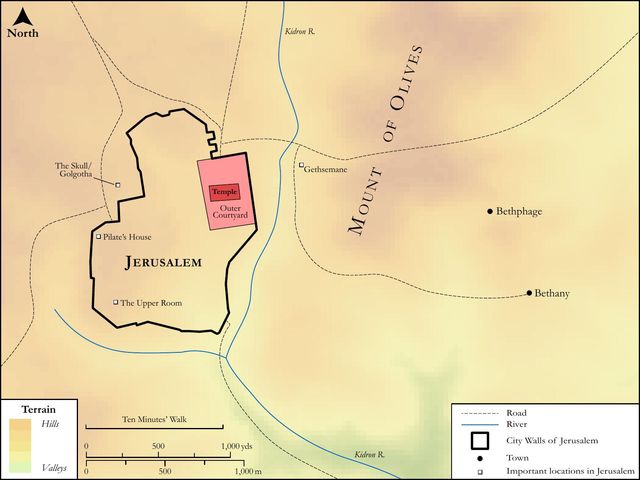
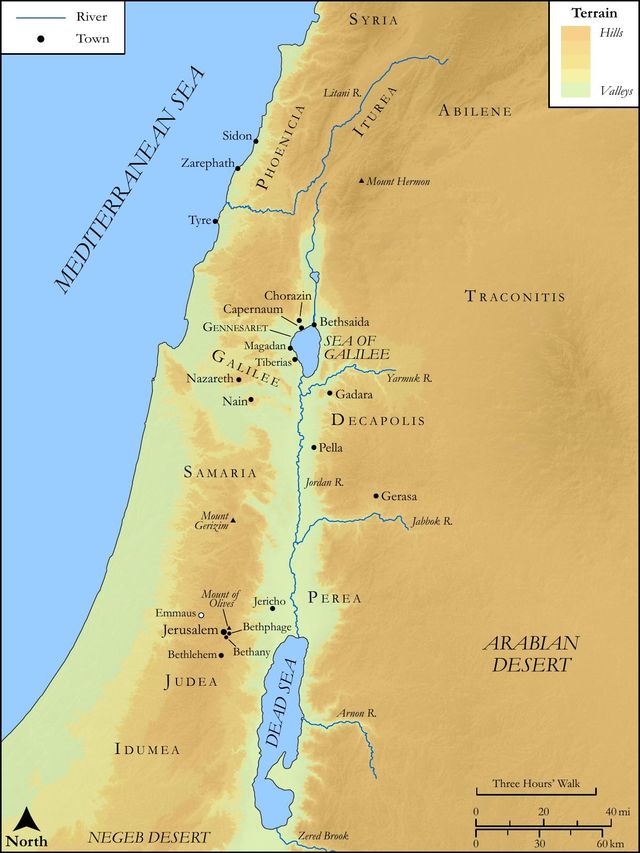
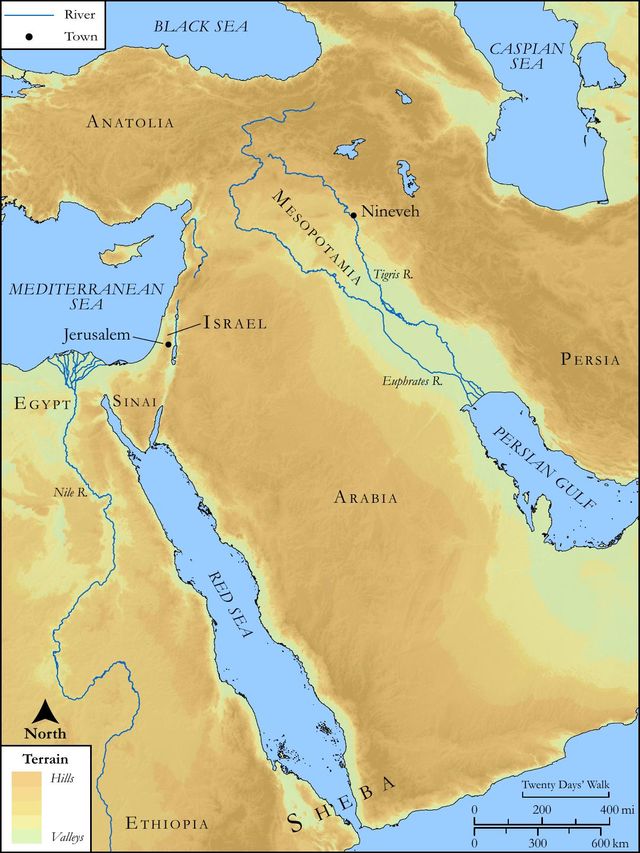
Study this verse
Public-domain commentary
Matthew Henry
From his Commentary on the Whole Bible. Henry comments on passages, not single verses — this entry covers Luke 20:9–19. His two-level outline is real structure in the source text, so it is rendered as structure.
Christ spoke this parable against those who were resolved not to own his authority, though the evidence of it was ever so full and convincing; and it comes very seasonably to show that by questioning his authority they forfeited their own. Their disowning the lord of their vineyard was a defeasance of their lease of the vineyard, and giving up of all their title.
I.The parable has nothing added here to what we had before in Matthew and Mark.
The scope of it is to show that the Jewish nation, by persecuting the prophets, and at length Christ himself, had provoked God to take away from them all their church privileges, and to abandon them to ruin. It teaches us,
1.That those who enjoy the privileges of the visible church are as tenants and farmers that have a vineyard to look after, and rent to pay for it. God, by setting up revealed religion and instituted orders in the world, hath planted a vineyard, which he lets out to those people among whom his tabernacle is, Luk 20:9. And they have vineyard-work to do, needful and constant work, but pleasant and profitable. Whereas man was, for sin, condemned to till the ground, they that have a place in the church are restored to that which was Adam's work in innocency, to dress the garden, and to keep it; for the church is a paradise, and Christ the tree of life in it. They have also vineyard-fruits to present to the Lord of the vineyard. There are rents to be paid and services to be done, which, though bearing no proportion to the value of the premises, yet must be done and must be paid.
2.That the work of God's ministers is to call upon those who enjoy the privileges of the church to bring forth fruit accordingly. They are God's rent-gatherers, to put the husbandmen in mind of their arrears, or rather to put them in mind that they have a landlord who expects to hear from them, and to receive some acknowledgment of their dependence on him, and obligations to him, Luk 20:10. The Old Testament prophets were sent on this errand to the Jewish church, to demand from them the duty and obedience they owed to God.
3.That it has often been the lot of God's faithful servants to be wretchedly abused by his own tenants; they have been beaten and treated shamefully by those that resolved to send them empty away. They that are resolved not to do their duty to God cannot bear to be called upon to do it. Some of the best men in the world have had the hardest usage from it, for their best services.
4.That God sent his Son into the world to carry on the same work that the prophets were employed in, to gather the fruits of the vineyard for God; and one would have thought that he would have been reverenced and received. The prophets spoke as servants, Thus saith the Lord; but Christ as a Son, among his own, Verily, I say unto you. Putting such an honour as this upon them, to send him, one would have thought, should have won upon them.
5.That those who reject Christ's ministers would reject Christ himself if he should come to them; for it has been tried, and found that the persecutors and murderers of his servants the prophets were the persecutors and murderers of himself. They said, This is the heir, come let us kill him. When they slew the servants, there were other servants sent. "But, if we can but be the death of the son, there is never another son to be sent, and then we shall be no longer molested with these demands; we may have a quiet possession of the vineyard for ourselves." The scribes and Pharisees promised themselves that, if they could but get Christ out of the way, they should for ever ride masters in the Jewish church; and therefore they took the bold step, they cast him out of the vineyard, and killed him.
6.That the putting of Christ to death filled up the measure of the Jewish iniquity, and brought upon them ruin without remedy. No other could be expected than that God should destroy those wicked husbandmen. They began in not paying their rent, but then proceeded to beat and kill the servants, and at length their young Master himself. Note, Those that live in the neglect of their duty to God know not what degrees of sin and destruction they are running themselves into.
II.To the application of the parable is added here, which we had not before, their deprecation of the doom included in it (Luk 20:16):
When they heart it, they said, God forbid, Mē genoito - Let not this be done, so it should be read. Though they could not but own that for such a sin such a punishment was just, and what might be expected, yet they could not bear to hear of it. Note, It is an instance of the folly and stupidity of sinners that they proceed and persevere in their sinful ways though at the same time they have a foresight and dread of the destruction that is at the end of those ways. And see what a cheat they put themselves, to think to avoid it by a cold God forbid, when they do nothing towards the preventing of it; but will this make the threatening of no effect? No, they shall know whose word shall stand, God's or theirs. Now observe what Christ said, in answer to this childish deprecation of their ruin.
1.He beheld them. This is taken notice of only by this evangelist, Luk 20:17. He looked upon them with pity and compassion, grieved to see them cheat themselves thus to their own ruin. He beheld them, to see if they would blush at their own folly, or if he could discern in their countenances any indication of relenting.
2.He referred them to the scripture: "What is this then that is written? How can you escape the judgment of God, when you cannot prevent the exaltation of him whom you despise and reject? The word of God hath said it, that the stone which the builders rejected is become the head of the corner." The Lord Jesus will be exalted to the Father's right hand. He has all judgment and all power committed to him; he is the corner-stone and top-stone of the church, and, if so, his enemies can expect no other than to be destroyed. Even those that slight him, that stumble at him, and are offended in him, shall be broken - it will be their ruin; but as to those that not only reject him, but hate and persecute him, as the Jews did, he will fall upon them and crush them to pieces - will grind them to powder. The condemnation of spiteful persecutors will be much sorer than that of careless unbelievers.
Lastly, We are told how the chief priests and scribes were exasperated by this parable (Luk 20:19): They perceived that he had spoken this parable against them; and so he had. A guilty conscience needs no accuser; but they, instead of yielding to the convictions of conscience, fell into a rage at him who awakened that sleeping lion in their bosoms, and sought to lay hands on him. Their corruptions rebelled against their convictions, and got the victory. And it was not because they had any fear of God or of his wrath before their eyes, but only because they feared the people, that they did not now fly in his face, and take him by the throat. They were just ready to make his words good: This is the heir, come let us kill him. Note, When the hearts of the sons of men are fully set in them to do evil, the fairest warnings both of the sin they are about to commit and of the consequences of it make no impression upon them. Christ tells them that instead of kissing the Son of God they would kill him, upon which they should have said, What, is thy servant a dog? But they do, in effect, say this: "And so we will; have at him now." And, though they deprecate the punishment of the sin, in the next breath they are projecting the commission of it.
Historical interpretation
Eight Centuries of Reception
9 surviving comments on this verse. Each one is dated, so this reads as a timeline rather than a list.
Select a marker to jump to its quote. Markers stagger vertically where authors wrote within a few decades of each other.
The rulers of the Jewish people being now assembled together in the temple, Christ put forth a parable, foretelling by a figure the things they were about to do to Him, and the rejection that was in store for them.
But the parable which Esaias gives denounces the vineyard, whereas our Saviour's parable is not directed against the vineyard, but the cultivators of it; of whom it is added, And he let it out to husbandmen, that is, to the elders of the people, and the chief priests, and the doctors, and all the nobles.
Christ is called a stone on account of His earthly body, cut out without hands, (Dan. 2:34.) as in the vision of Daniel, because of His birth of the Virgin. But the stone is neither of silver nor gold, because He is not any glorious King, but a man lowly and despised, wherefore the builders rejected Him.
And this happens as it were to men who are condemned, having nothing to answer to the plain evidence of justice. But it is the property of Divine mercy not to inflict punishment in secret, but to foretell it with threatenings, that so it might recall men to repentance; and thus it follows here, He shall come and destroy those husbandmen.
When then the only-begotten Son was sent to them, the unbelieving Jews, wishing to be rid of the Heir, put Him to death by crucifying Him, and rejected Him by denying Him. Christ is the Heir and the Testator likewise. The Heir, because He survives His own death; and of the testament which He Himself bequeathed, He reaps as it were the hereditary profits in our advances.
Very many derive various meanings from the word vineyard, but Isaiah clearly stated that the vineyard of the Lord of hosts is the house of Israel. Who else but God founded this vineyard? He leased it and set out to foreign places. The Lord, who is always everywhere, does not journey from place to place, but he is present to those who love him and absent from those who neglect him. He was absent for many seasons, fearing that the foreclosure might seem premature. The more indulgent the generosity, the more inexcusable is the stubbornness.… He thus leased to the Jews his fortified, prepared and beautified vineyard.
Now it was not accidentally but part of the purpose of the divine dispensation that Christ came after the prophets. For God does not pursue all things at once, but accommodates Himself to mankind through His great mercy; for if they despised His Son coming after His servants, much less would they have heard Him before. For they who listened not to the inferior commands, how would they have heard the greater?
The lord of the vineyard thinks to himself saying, "What shall I do?" We must carefully examine in what sense he says this. Does the householder use these words because he had no more servants? He certainly did not lack other ministers of his holy will. When a physician may say of a sick man, "What shall I do?" we should understand him to mean that every resource of medical skill had been tried without success. We affirm that the lord of the vineyard, having practiced all gentleness and care with his farm but without benefiting it in any way, says, "What shall I do?" What is the result? He advances to still greater purposes. "I will send," he says, "my son, the beloved one. Perhaps they will reverence him." Observe in this, that after the servants, he sends the Son as One not numbered among the servants but as a true Son and therefore the Lord. Although he put on the form of a servant for the dispensation's sake, he was God, very Son of God the Father who possessed natural dominion. Did they honor him who was sent as Son and Lord and as One who possesses by inheritance whatever belongs to God the Father? No, they murdered him outside the vineyard, having plotted among themselves a foolish and ignorant plan full of all wickedness. They say, "Let us kill him, that the inheritance may be ours."
The Lord of the vineyard also ponders what He should do, not that He is in need of ministers, but that having thoroughly tried every device of human aid, yet His people being in no wise healed, He may add something greater; as He goes on to say, I will send my beloved son: it may be they will reverence him when they see him.
The man then who plants the vineyard is the same who, according to another parable, hired labourers into his vineyard.
But it is rightly written fruit, not increase. For there was no increase in this vineyard. The first servant sent was Moses, who for forty years sought of the husbandmen the fruit of the law which he had given, but he was wroth against them, for they provoked his spirit. Hence it follows, But they beat him, and sent him away empty.
By the other servant is meant David, who was sent after the commandment of the law, that he by the music of his psalmody might stir up the husbandmen to the exercise of good works. But they on the contrary declared, What portion have we in David, neither have we inheritance in the son of Jesse. (1 Sam. 20:1.). Hence it follows, And they beat him also, and entreated him shamefully, and sent him away empty. (1 Kings 12:16.) But He does not stop here, for it follows, And again he sent a third: whereby we must understand the company of prophets who constantly visited the people with their testimony. But which of the Prophets did they not persecute; as it follows, And they wounded him also, and cast him out. Now these three successions of servants, our Lord elsewhere shows to comprehend under a figure all the teachers under the law, when He says, For all those things must be fulfilled which were written in the law of Moses, and the Prophets, and the Psalms, concerning me.
But our Lord most clearly proves that the Jewish rulers crucified the Son of God not from ignorance but for envy. For they knew it was He to whom it was said, I will give thee the heathen for thine inheritance. (Ps. 2:8.) And they cast him out of the vineyard, and slew him. (Heb. 13:12.) Because Jesus, that He might sanctify the people by His blood, suffered without the gate.
Or was He cast out of the vineyard and slain, because He was first driven out of the hearts of the unbelievers, and then fastened to the cross?
As if He said, How shall the prophecy be fulfilled, except that Christ, being rejected and slain by you, is to be preached to the Gentiles, who will believe on Him, that as the corner stone He may thus from both nations build up one temple to Himself?
Or else, He who is a sinner, yet believes on Christ, falls indeed upon the stone and is shaken, for he is preserved by penitence unto salvation. But upon whomsoever it shall fall, that is, upon whom the stone itself has come down because he denied it, it shall grind him to powder, so that not even a broken piece of a vessel shall be left, in which may be drunk a little water. Or, He means by those who fall upon Him, such as only despise Him, and therefore do not yet utterly perish, but are shaken violently so that they cannot walk upright. But upon whom it falls, upon them shall He come in judgment with everlasting punishment, therefore shall it grind them to powder, that they may be as the dust which the wind scatters from the face of the earth. (Ps. 1:4.)
(in Marc. 12.) Or understanding it morally; to every one of the faithful is let out a vineyard to cultivate, in that the mystery of baptism is entrusted to him to work out. One servant is sent, a second and a third, when the Law, the Psalms, and the Prophets are read. But the servant who is sent is said to be treated despitefully or beaten, when the word heard is despised or blasphemed. The heir who is sent that man kills as far as he can, who by sin tramples under foot the Son of God. (Heb. 6:6.) The wicked husbandman being destroyed, the vineyard is given to another, when with the gift of grace, which the proud man spurned, the humble are enriched.
Or each one of the people is the vineyard, each likewise is the husbandman, for every one of us takes care of himself. Having committed then the vineyard to the husbandmen, he went away, that is, he left them to the guidance of their own judgment. Hence it follows, And went into a far country for a long time.
He says of the fruit of the vineyard, because not the whole fruit, but part only, He wished to receive. For what does God gain from us, but His own knowledge, which is also our profit.
After the prophets then had suffered all these things, the Son is delegated; for it follows, Then said the Lord of the vineyard, What shall I do? That the Lord of the vineyard speaks doubtingly, arises not from ignorance, for what is there that the Lord knows not? but He is said to hesitate, that the free will of man may be preserved.
Now He said this, not as ignorant that they would treat Him worse than they did the prophets, but because the Son ought to be reverenced by them. But if they should still be rebellious and slay Him, this would crown their iniquity. Lest therefore any should say that the Divine Presence has necessarily been the cause of their disobedience, He uses purposely this doubtful mode of speech.
Since we have already assumed the people, not Jerusalem, to be the vineyard, it may perhaps be more properly said that the people indeed slew Him without the vineyard; that is, our Lord suffered without the hands of the people, because in truth the people did not with their own hands inflict death upon Him, but delivered Him up to Pilate and the Gentiles. But some by the vineyard have understood the Scripture, which not believing they slew the Lord. And so without the vineyard, that is, without Scripture, our Lord is said to have suffered.
Now Matthew seems to relate the parable differently; that when our Saviour asked indeed, What will he do then to the husbandmen? the Jews answered, he will miserably destroy them. But there is no difference between the two circumstances. The Jews at first pronounced that opinion, then perceiving the point of the parable said, God forbid, as Luke here relates.
For the rulers of the people rejected Him, when they said, This man is not of God. (John 9:16.) But He was so useful and so precious, that He was placed as the head stone of the corner.
He mentions two condemnations or destructions of them, one indeed of their souls, which they suffered being offended in Christ. And He touches this when He says, Whosoever shall fall upon that stone shall be shaken to pieces. But the other of their captivity and extermination, which the Stone that was despised by them brought upon them. And He points to this when He says, But upon whomsoever it shall fall, it shall grind him to powder, or winnow him. For so were the Jews winnowed through the whole world, as the straw from the threshing floor. And mark the order of things; for first comes the wickedness committed against Him, then follows the just vengeance of God.
Continue studying Luke 20:14 across the web’s major study libraries — every link below opens this exact verse, chapter, or book on the destination site.
Read & Compare
 BibleGatewayThis verse in more than 200 translations and 70 languages.
 Bible.comThe YouVersion reader — hundreds of translations, reading plans, and highlights.
 ESV.orgCrossway's official English Standard Version reader.
 NET BibleThe NET translation with 60,000+ translators' notes on every rendering decision.
 STEP BibleTyndale House's free study tool — original text, vocabulary, and scholarly resources.
 BibliaLogos Bible Software's free web reader.
 USCCBThe New American Bible (Revised Edition) with the U.S. bishops' study notes.
Commentaries
 BibleHub CommentariesDozens of classic commentaries on this verse, gathered on one page.
 StudyLightMore than 100 commentary sets — the largest collection on the web.
 BibleRefPlain-English commentary on what this verse means, verse by verse.
 Enduring WordDavid Guzik's free commentary on this chapter, widely used by Bible teachers.
 Bible Study ToolsVerse commentary alongside Greek and Hebrew study aids.
Original Language & Research
- BibleHub InterlinearThe verse word by word — original language, transliteration, and English.
- BibleHub LexiconEvery word's original-language definition and Strong's entry.
 Blue Letter BibleDeep-study tools — Strong's numbers, concordance, and word studies.
 CNTR CollationThe earliest Greek manuscripts of this verse, collated letter by letter.
Sermons, Hymns & Audio


TrulyRandomVerse is not affiliated with these sites and doesn’t control their content. They’re linked because they’re genuinely useful.
Summary
Luke 20:14 captures the pivotal moment in Jesus' Parable of the Wicked Vinedressers when the tenants, recognizing the landowner's son as the rightful heir, conspire to murder him in a desperate attempt to seize the inheritance for themselves. This verse starkly reveals the depth of human rebellion against divine authority and serves as a chilling prophetic foreshadowing of the religious leaders' plot to crucify Jesus, believing His elimination would secure their own power and influence.
Context
ShowHideLiterary Context
This verse is a crucial turning point within the Parable of the Wicked Vinedressers, which Jesus tells immediately after His authority is challenged by the chief priests, scribes, and elders in Luke 20:1-8. The parable itself is an allegorical indictment of Israel's religious leadership. Following the repeated rejection and mistreatment of the landowner's servants (representing prophets sent by God), the landowner sends his "beloved son." The tenants' malicious recognition and immediate plot to kill the son in this verse escalate the parable's tension and directly set the stage for the son's ultimate fate and the subsequent judgment upon the tenants, as described in Luke 20:15-16.
Historical & Cultural Context
In ancient agrarian societies, land ownership was paramount, and tenant farming was a common practice. Vineyards, in particular, were significant investments, often leased out. The owner's sending of servants, and then his son, reflects a legal process where representatives would collect the owner's share of the produce. The idea of tenants attempting to usurp ownership by eliminating the heir, though extreme, taps into the cultural understanding of inheritance laws and the desperate measures some might take for land. Furthermore, the audience—the Jewish religious leaders—would have been acutely aware of the Old Testament imagery of Israel as God's vineyard, as seen in Isaiah 5:1-7, making the parable's meaning clear to them.
Key Themes
ShowHideLuke 20:14 powerfully contributes to several key themes within Luke's Gospel and broader biblical theology. It highlights the rejection of divine authority, as the tenants consciously choose rebellion despite recognizing the heir's legitimate claim. This mirrors the religious leaders' rejection of Jesus, despite the clear signs of His divine sonship and authority, as seen throughout Luke 19 and Luke 20. The verse also underscores the destructive power of covetousness and usurpation, revealing how the desire for earthly gain and control can lead to heinous acts, contrasting sharply with the spiritual inheritance offered through Christ. Finally, it serves as a profound prophetic foreshadowing of Jesus' impending crucifixion, where He, the true "heir" of all creation (Hebrews 1:2), would be rejected and killed by those who sought to maintain their own perceived "inheritance" of religious power and tradition.
Exposition and Analysis
ShowHideKey Word Analysis
ShowHideFrom gē (earth) and the base of érgon (work), meaning a land-worker or farmer. In the parable, these "husbandmen" are not merely laborers but tenants entrusted with the care of the vineyard. Their title underscores their responsibility and, by extension, their profound betrayal of trust. They represent the religious leaders of Israel who were entrusted with the stewardship of God's people.
From dia (through) and logízomai (to reckon), meaning to reckon thoroughly, to deliberate, or to discuss. This word implies a conscious, internal debate or consultation among themselves, not a spontaneous act. It highlights the deliberate and calculated nature of their malicious intent, emphasizing that their decision to kill the heir was a premeditated act of rebellion.
From klēros (lot) and the base of nomos (apportioning), meaning a sharer by lot or inheritor. This term is crucial, as it signifies the son's legal and rightful claim to the vineyard. The tenants' recognition of him as "the heir" makes their subsequent plot all the more egregious; they are not mistaken about his identity but actively choose to defy his legitimate authority. This directly points to Jesus' unique status as the Son of God, the rightful inheritor of all things.
From apo (from) and a root meaning "to slay," meaning to kill outright or to destroy. This verb conveys a definitive and violent act. Its use here underscores the tenants' murderous intent and the severity of their planned crime, which is directly allegorical to the religious leaders' plan to put Jesus to death.
Verse Breakdown
ShowHide"But when the husbandmen saw him"
This phrase marks a critical turning point. The arrival of the son, the ultimate representative of the owner, demands a decisive response. The tenants' "seeing" implies recognition and awareness of his identity and authority, setting the stage for their conscious decision.
"they reasoned among themselves, saying"
This indicates a deliberate, internal conspiracy. The tenants are not acting in a fit of rage but are calculating their move. The phrase "among themselves" suggests a shared, collective malice, reinforcing the idea of a unified plot against the heir.
"This is the heir: come, let us kill him"
This is the chilling core of their plan. Their recognition of the son as "the heir" is immediately followed by the murderous command. The imperative "come" signifies a call to action, a collective resolve to commit the heinous act. This clause directly foreshadows the Jewish leaders' decision to crucify Jesus, whom they recognized, at some level, as a significant figure, yet chose to eliminate.
"that the inheritance may be ours"
This reveals the ultimate motivation behind their wicked scheme: self-interest and covetousness. They believe that by removing the rightful heir, they can seize control of the vineyard and its produce, claiming what is not rightfully theirs. This exposes the corrupting power of greed and the desire for worldly power over spiritual truth and righteous stewardship.
Literary Devices
ShowHideLuke 20:14 is rich in Allegory, as the entire parable functions as an extended metaphor where elements (vineyard, owner, servants, son, tenants) represent real-world counterparts (Israel, God, prophets, Jesus, Jewish religious leaders). The verse specifically employs Prophetic Foreshadowing, chillingly predicting Jesus' rejection and crucifixion by the very leaders to whom He was speaking. There is profound Irony in the tenants' recognition of the son as "the heir" immediately preceding their plot to murder him; they acknowledge his rightful claim yet seek to usurp it through violence. This highlights their spiritual blindness and hardened hearts. Furthermore, the "inheritance" functions as Symbolism, representing not just the physical vineyard but the spiritual stewardship of God's kingdom, which the tenants (religious leaders) sought to control for their own benefit rather than for God's glory.
Theological and Thematic Connections
ShowHideLuke 20:14 underscores humanity's persistent rebellion against God's sovereign authority and His gracious overtures. The tenants' deliberate rejection of the son, despite recognizing his status as heir, mirrors humanity's fallen tendency to usurp God's rightful place and pursue self-serving agendas. This act of rebellion, driven by covetousness, culminates in the ultimate sin of rejecting God's beloved Son. The parable's trajectory, initiated by this verse, illustrates the divine patience of God in sending messengers, followed by the climactic sending of His Son, and the inevitable judgment that falls upon those who reject His ultimate revelation. It also highlights the theme of stewardship and accountability, reminding us that all we possess is ultimately God's, and we are merely tenants.
Reflection and Application
ShowHideLuke 20:14 serves as a profound mirror, inviting us to examine our own hearts and allegiances. Just as the tenants coveted an inheritance that was not theirs, we too can be tempted to assert control over our lives, resources, or even our spiritual walk, rather than submitting to God's rightful ownership. This verse challenges us to consider whether we truly recognize Jesus as the rightful Heir of all things and, if so, how that recognition translates into humble submission and faithful stewardship. It warns against the insidious nature of covetousness and the desire for self-sovereignty, which can lead to spiritual blindness and a rejection of God's loving authority. Our response to Jesus, the Son, determines our true inheritance. Do we welcome Him as Lord, or do we, like the tenants, seek to eliminate His claim in our lives to secure our own perceived autonomy?
Questions for Reflection
ShowHideFAQ
ShowHideWho do the "husbandmen" in the parable represent, and why is their action so significant?
ShowHideThe "husbandmen" (or tenants) in the Parable of the Wicked Vinedressers primarily represent the religious leaders of Israel—the chief priests, scribes, and elders—who were challenging Jesus' authority at the time He told this parable (Luke 20:1-8). They were entrusted with the spiritual care and leadership of God's "vineyard," which is Israel (Isaiah 5:7). Their action of conspiring to kill the son is profoundly significant because it allegorically depicts their conscious and deliberate rejection of Jesus, the Son of God, despite recognizing His unique status. It highlights their desire to maintain their own power and perceived "inheritance" (their religious and political authority) by eliminating God's rightful Heir, thus foreshadowing their role in Jesus' crucifixion.
What is the "inheritance" that the husbandmen sought, and how does it contrast with the true inheritance offered through Christ?
ShowHideThe "inheritance" that the husbandmen sought was control over the vineyard and its produce. In the allegorical context, this represents the religious leaders' desire to retain their own authority, prestige, and control over the spiritual "vineyard" of Israel, free from God's direct intervention through His Son. They wanted to seize the benefits of God's kingdom for themselves, rather than faithfully stewarding it for the Owner. This earthly, self-serving ambition stands in stark contrast to the true spiritual inheritance offered through Christ. Believers, through faith in Jesus, become "heirs of God and fellow heirs with Christ" (Romans 8:17), receiving eternal life, the Holy Spirit, and a share in God's kingdom (Ephesians 1:11-14). The tenants sought a temporal, usurped inheritance that led to judgment, while Christ offers an eternal, righteous inheritance that leads to life.
Christ-Centered Fulfillment
ShowHideLuke 20:14 finds its profound Christ-centered fulfillment in Jesus' unique identity as the Son of God and the ultimate Heir of all things. The "beloved son" sent by the landowner is none other than Jesus Himself, the one through whom God created the world and by whom He sustains it (Colossians 1:15-17). The tenants' recognition of Him as "the heir" yet their subsequent plot to kill Him is a chilling prophecy of the Jewish leaders' rejection and crucifixion of Jesus, as documented throughout the Gospels. They believed that by eliminating Him, they could secure their own religious and political "inheritance," but in doing so, they unwittingly fulfilled God's redemptive plan. Jesus' death, far from being the end of His claim, was the means by which He secured a far greater inheritance: salvation and eternal life for all who believe (Hebrews 9:15). He is the rejected cornerstone who became the capstone (Luke 20:17), establishing a new spiritual "vineyard"—the Church—composed of those who truly bear fruit for God's glory (John 15:1-8). Thus, the very act intended to thwart the Heir's claim ultimately established His eternal reign and opened the way for all believers to become co-heirs with Him (Galatians 4:7).