


Matthew 27:21
Bible text: King James Version (1769 Blayney text) · Public domain
Bible text: Berean Standard Bible · Public domain
Bible text: American Standard Version (1901) · Public domain
Bible text: World English Bible, Messianic edition · Public domain
Bible text: Geneva Bible (1599) · Public domain
Bible text: Young's Literal Translation · Public domain
- ἈποκριθεὶςApokritheisAnsweringG611V-AOP-NSMVerb Aorist Passive Deponent Participle Nominative Singular Masculine
- δὲdenowG1161CONJConjunction
- ὁhotheG3588T-NSMDefinite article Nominative Singular Masculine
- ἡγεμὼνhēgemōngovernorG2232N-NSMNoun Nominative Singular Masculine
- εἶπενeipensaidG2036V-2AAI-3SVerb 2nd Aorist Active Indicative 3rd Singular
- αὐτοῖς·autoisto themG846P-DPMPersonal pronoun Dative Plural Masculine
- τίναtinaWhichG5101I-ASMInterrogative pronoun Accusative Singular Masculine
- θέλετεtheletedo you desireG2309V-PAI-2PVerb Present Active Indicative 2nd Plural
- ἀπὸapoofG575PREPPreposition
- τῶνtōntheG3588T-GPMDefinite article Genitive Plural Masculine
- δύοduotwoG1417A-NUIAdjective
- ἀπολύσωapolusōI may releaseG630V-AAS-1SVerb Aorist Active Subjunctive 1st Singular
- ὑμῖν;huminto you?G4771P-2DPPersonal pronoun Dative 2nd Plural
- οἱhoi<the>G3588T-NPMDefinite article Nominative Plural Masculine
- δὲdeAndG1161CONJConjunction
- εἶπαν·eipanthey saidG2036V-2AAI-3PVerb 2nd Aorist Active Indicative 3rd Plural
- ΒαραββᾶνBarabbanBarabbasG912N-ASM-PNoun Accusative Singular Masculine Individual
English is a literal word-by-word gloss of the Greek, not the KJV's wording. Why?
This is the original text the KJV's translators worked from — each Greek word with its own literal English meaning in this verse, prepared by scholars at Tyndale House, Cambridge. The KJV translates whole sentences, not word by word, so its wording differs: one Greek word can become several English words, and the KJV may choose “charity” where the gloss reads “love”. Both are faithful — they answer different questions. For the KJV's own rendering, switch to the KJV text.
Details
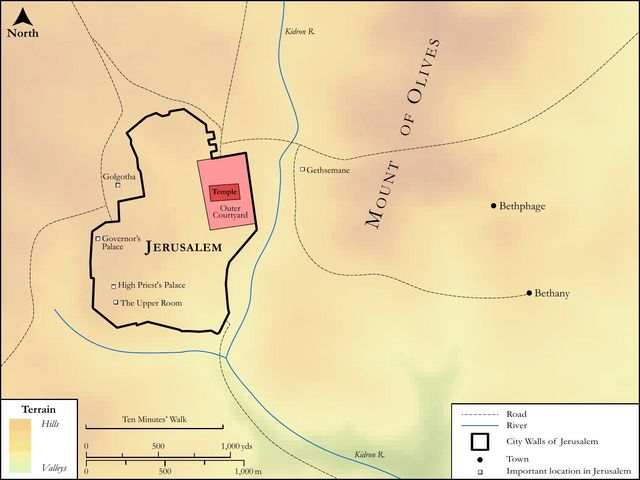
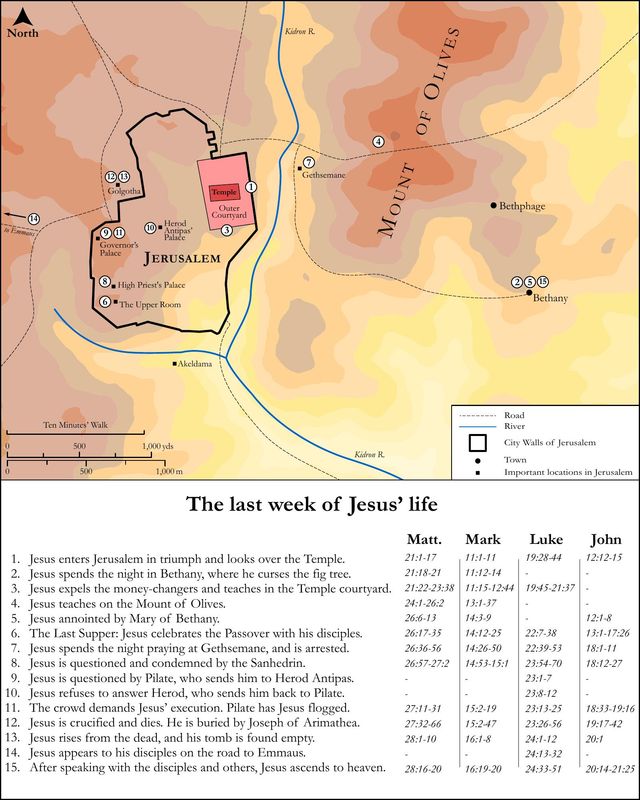
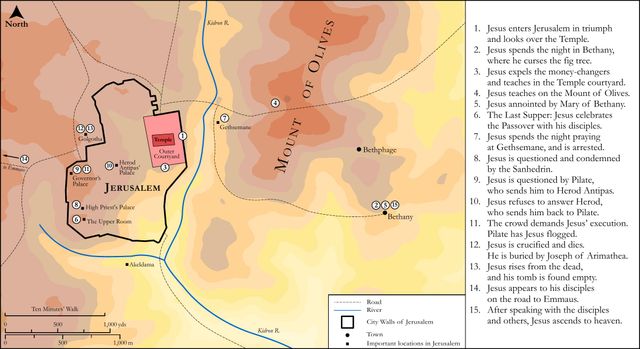
See on the biblical-era maps
Study this verse
Historical interpretation
Ten Centuries of Reception
10 surviving comments on this verse. Each one is dated, so this reads as a timeline rather than a list.
Select a marker to jump to its quote. Markers stagger vertically where authors wrote within a few decades of each other.
But the populace, like wild beasts that rage the open plains, would have Barabbas released to them. For this people had seditions, murders, robberies, practised by some of their own nation in act, and nourished by all of them who believe not in Jesus, inwardly in their mind. Where Jesus is not, there are strifes and fightings; where He is, there is peace and all good things. All those who are like the Jews either in doctrine or life desire Barabbas to be loosed to them; for whoso does evil, Barabbas is loosed in his body, and Jesus bound; but he that does good has Christ loosed, and Barabbas bound. Pilate sought to strike them with shame for so great injustice, What shall I do then with Jesus that is called Christ? And not that only, but desiring to fill up the measure of their guilt. But neither do they blush that Pilate confessed Jesus to be the Christ, nor set any bounds to their impiety, They all say unto him, Let him be crucified. Thus they multiplied the sum of their wickedness, not only asking the life of a murderer, but the death of a righteous man, and that the shameful death of the cross.
When Pilate offered to release Jesus, following the customary practice wherein the people were granted the privilege of gaining the freedom of one prisoner per solemn feast day, they were persuaded by their priests to choose Barabbas instead. Here already the mystery of their future infidelity is contained in Barabbas’s very name, which means “son of the father.” They preferred this “son of the father” to Christ. At the instigation of their leaders, they chose the Antichrist, a man of sin and son of the devil. They chose the one elected for damnation over the author of life.
At the desire of the Priests the populace chose Barabbas, which is interpreted 'the son of a Father,' thus shadowing forth the unbelief to come when Antichrist the son of sin should be preferred to Christ.
Because Christ had answered nothing to the accusations of the Jews, by which Pilate could acquit Him of what was alleged against Him, he contrives other means of saving Him. Now on the feast day the governor we as wont to release unto the people a prisoner whom they would.
And he sought to rescue Christ by means of this practice, that the Jews might not have the shadow of an excuse left them. A convicted murderer is put in comparison with Christ, Barabbas, whom he calls not merely a robber, but a notable one, that is, renowned for crime.
Whom will ye that I release unto you? &c. As much as to say, If ye will not let him go as innocent, at least, yield Him, as convicted, to this holy day. For if you would have released one of whose guilt there was no doubt, much more should you do so in doubtful cases. Observe how circumstances are reversed. It is the populace who are wont to petition for the condemned, and the prince to grant, but here it is the reverse, the prince asks of the people, and renders them thereby more violent.
Then is added something else which alone was enough to deter all from putting Him to death; When we he as set on the judgment seat, his wife sent unto him, saying, Have thou nothing to do with that just man. For joined with the proof afforded by the events themselves, a dream was no light confirmation.
But why did Pilate himself not see this vision? Because his wife was more worthy; or because if Pilate had seen it, he would not have had equal credit, or perhaps would not have told it; wherefore it is provided by God that his wife should see it, and thus it be made manifest to all. And she not merely sees it, but suffers many things because of him, so that sympathy with his wife would make the husband more slack to put Him to death. And the time agreed well, for it was the same night that she saw it.
(Hom. iii. in Cæn. Dom.) Thus then the judge is terrified through his wife, and that he might not consent in the judgment to the accusation of the Jews, himself endured judgment in the affliction of his wife; the judge is judged, and tortured before he tortures.
But none of the foregoing things moved Christ's enemies, because envy had altogether blinded them, and of their own wickedness they corrupt the people, for they persuaded the people that they should ask Barabbas, and destroy Jesus.
Observe here the infatuation of the Jews; their headlong haste, and destructive passions will not let them see what they ought to see, and they curse themselves, saying, His blood be upon us, and even entail the curse upon their children. Yet a merciful God did not ratify this sentence, but accepted such of them and of their children as repented; for Paul was of them, and many thousands of those who in Jerusalem believed.
(Hom. iii. in Cæna Dom.) See the Lord is made ready for the scourge, see now it descends upon Him! That sacred skin is torn by the fury of the rods; the cruel might of repeated blows lacerates His shoulders. Ah me! God is stretched out before man, and He, in whom not one trace of sin can be discerned, suffers punishment as a malefactor.
(Verse 19 onwards) Now while he was sitting on the judgment seat, his wife sent to him, saying, 'Have nothing to do with that righteous Man, for I have suffered many things today in a dream because of Him.' But the chief priests and elders persuaded the multitudes that they should ask for Barabbas and destroy Jesus. The governor answered and said to them, 'Which of the two do you want me to release to you?' They said, 'Barabbas!' Note that God often reveals dreams to the Gentiles; and that the testimony of the people is that Pilate and his wife confess the righteous Lord.
In the Gospel entitled 'according to the Hebrews,' Barabbas is interpreted, 'The son of their master,' who had been condemned for sedition and murder. Pilate gives them the choice between Jesus and the robber, not doubting but that Jesus would be the rather chosen.
Observe also that visions are often vouchsafed by God to the Gentiles, and that the confession of Pilate and his wife that the Lord was innocent is a testimony of the Gentile people.
Yet even after this answer of theirs, Pilate did not at once assent, but in accordance with his wife's suggestion, Have thou nothing to do with that just man, he answered, Why, what evil hath he done? This speech of Pilate's acquits Jesus. But they cried out the more, saying, Let him be crucified; that it might be fulfilled which is said in the Psalm, Many dogs have compassed me, the congregation of the wicked hath inclosed me; (Ps. 22:16.) and also that of Hieremias, Mine heritage is unto me as a lion in the forest, they have given forth their voice against me. (Jer. 12:8.)
Pilate took water in accordance with that, I will wash my hands in innocency, (Ps. 26:6.) in a manner testifying and saying, I indeed have sought to deliver this innocent man, but since a tumult is rising, and the charge of treason to Cæsar is urged against me, I am innocent of the blood of this just man. The judge then who is thus compelled to give sentence against the Lord, does not convict the accused, but the accusers, pronouncing innocent Him who is to be crucified. See ye to it, as though he had said, I am the law's minister, it is your voice that has shed this blood. Then answered all the people and said, His blood be on us and on our children. This imprecation rests at the present day upon the Jews, the Lord's blood is not removed from them.
It should be known that Pilate administered the Roman law, which enacted that every one who was crucified should first be scourged. Jesus then is given up to the soldiers to be beaten, and they tore with whips that most holy body and capacious bosom of God.
This was done that we might be delivered from those stripes of which it is said, Many stripes shall be to the wicked. (Ps. 32:10.) Also in the washing of Pilate's hands all the works of the Gentiles are cleansed, and we are acquitted of all share in the impiety of the Jews.
(Serm. lix. 2.) The impiety of the Jews then exceeded the fault of Pilate; but he was not guiltless, seeing he resigned his own jurisdiction, and acquiesced in the injustice of others.
John explains what their envy was, when he says, Behold, the world is gone after him; (John 12:19.) and, If we let him thus alone, all men will believe on him. (John 11:48.) Observe also that in place of what Matthew says, Jesus, who is called Christ, Mark says, Will ye that I release unto you the King of the Jews? (Mark 15:9.) For the kings of the Jews alone were anointed, and from that anointing were called Christs.
It was customary among the ancients, when one would refuse to participate in any crime, to take water and wash his hands before the people.
It is to be noted, that the bench (tribunal) is the seat of the judge, the throne (solium) of the king, the chair (cathedra) of the master. In visions and dreams the wife of a Gentile understood what the Jews when awake would neither believe nor understand.
Or otherwise; The devil now at last understanding that he should lose his trophies through Christ, as he had at the first brought in death by a woman, so by a woman he would deliver Christ out of the hands of His enemies, lest through His death he should lose the sovereignty of death.
Those who were crucified being suspended on a cross, by nails driven into the wood through their hands and feet, perished by a lingering death, and lived long on the cross, not that they sought longer life, but that death was deferred to prolong their sufferings. The Jews indeed contrived this as the worst of deaths, but it had been chosen by the Lord without their privity, thereafter to place upon the foreheads of the faithful the same cross as a trophy of His victory over the Devil.
Barabbas also, who headed a sedition among the people, is released to the Jews, that is the Devil, who to this day reigns among them, so that they cannot have peace.
(non occ.) The Evangelist adds the reason why Pilate sought to deliver Christ, For he knew that for envy they had delivered him.
(non occ.) Pilate is said to make this answer, Whether of the twain will ye that I release unto you? either to the message of his wife, or the petition of the people, with whom it was a custom to ask such release on the feast-day.
Continue studying Matthew 27:21 across the web’s major study libraries — every link below opens this exact verse, chapter, or book on the destination site.
Read & Compare
 BibleGatewayThis verse in more than 200 translations and 70 languages.
 Bible.comThe YouVersion reader — hundreds of translations, reading plans, and highlights.
 ESV.orgCrossway's official English Standard Version reader.
 NET BibleThe NET translation with 60,000+ translators' notes on every rendering decision.
 STEP BibleTyndale House's free study tool — original text, vocabulary, and scholarly resources.
 BibliaLogos Bible Software's free web reader.
 USCCBThe New American Bible (Revised Edition) with the U.S. bishops' study notes.
Commentaries
 BibleHub CommentariesDozens of classic commentaries on this verse, gathered on one page.
 StudyLightMore than 100 commentary sets — the largest collection on the web.
 BibleRefPlain-English commentary on what this verse means, verse by verse.
 Enduring WordDavid Guzik's free commentary on this chapter, widely used by Bible teachers.
 Bible Study ToolsVerse commentary alongside Greek and Hebrew study aids.
Original Language & Research
- BibleHub InterlinearThe verse word by word — original language, transliteration, and English.
- BibleHub LexiconEvery word's original-language definition and Strong's entry.
 Blue Letter BibleDeep-study tools — Strong's numbers, concordance, and word studies.
 CNTR CollationThe earliest Greek manuscripts of this verse, collated letter by letter.
Sermons, Hymns & Audio


TrulyRandomVerse is not affiliated with these sites and doesn’t control their content. They’re linked because they’re genuinely useful.
Summary
Matthew 27:21 records a pivotal and chilling exchange during Jesus' trial before Pontius Pilate, where the Roman governor, seeking to release Jesus, offers the crowd a choice between Him and Barabbas, a notorious prisoner. This moment dramatically exposes the spiritual blindness and profound injustice of the religious leaders and the swayed populace, who, in a collective voice, demand the release of a criminal over the innocent Son of God, thereby sealing Jesus' path to the cross and fulfilling divine prophecy.
Context
ShowHideLiterary Context
This verse is situated at the climax of Jesus' earthly ministry, specifically within the account of His Roman trial. Following His arrest in Gethsemane and the illegal night trials before the Jewish Sanhedrin, Jesus is handed over to Pontius Pilate, the Roman governor, as detailed in Matthew 27:1-2. Pilate, after questioning Jesus and finding no basis for a capital charge (Matthew 27:11-14), attempts to release Him by appealing to a Passover custom. This custom, described in Matthew 27:15, allowed the governor to release one prisoner chosen by the crowd. Pilate's strategy is to present a stark contrast: Jesus, whom he perceives as innocent and delivered out of envy (Matthew 27:18), versus Barabbas, a well-known insurgent and murderer. The immediate verses leading up to this choice reveal the manipulation of the crowd by the chief priests and elders, who persuade them to demand Barabbas and the crucifixion of Jesus (Matthew 27:20). Thus, Matthew 27:21 is the direct response to Pilate's offer, a decisive moment that propels the narrative toward Jesus' crucifixion.
Historical & Cultural Context
The trial of Jesus took place during the Jewish festival of Passover, a time when Jerusalem was teeming with pilgrims, and Roman authorities were particularly vigilant to prevent unrest. Pontius Pilate served as the Roman prefect (governor) of Judea from AD 26 to 36, known for his harsh and often insensitive rule. His administration was primarily concerned with maintaining Roman order and suppressing any perceived threats to imperial authority. The custom of releasing a prisoner at Passover, though mentioned in all four Gospels, is not widely corroborated by extra-biblical sources, leading some scholars to suggest it might have been a localized practice unique to Judea or even a specific initiative by Pilate to appease the Jewish populace during a sensitive festival. Regardless, it provided a legal loophole for Pilate to potentially avoid condemning an innocent man. The Jewish leaders, specifically the Sanhedrin, had condemned Jesus for blasphemy, a charge not recognized by Roman law as a capital offense. Therefore, they needed Roman authorization for execution, which meant framing Jesus as a political threat (e.g., claiming to be "King of the Jews"). The crowd's presence and their susceptibility to the influence of their religious leaders highlight the volatile political and religious climate of Judea under Roman occupation.
Key Themes
ShowHideMatthew 27:21 encapsulates several profound themes. Firstly, it underscores the rejection of truth and righteousness by humanity, as the crowd, incited by their leaders, chooses a known criminal and insurrectionist over the innocent Son of God. This tragic preference for darkness over light echoes the spiritual blindness described in John 3:19. Secondly, the event highlights the theme of divine sovereignty amidst human injustice. Despite the profound injustice and the clear display of human sinfulness, this moment was not outside of God's predetermined plan for salvation, showcasing how God works even through human wickedness to accomplish His purposes. The choice of Barabbas, a rebel whose name means "son of the father," in place of Jesus, the true Son of the Father, powerfully symbolizes substitutionary atonement, where Christ takes the place of sinful humanity, bearing the punishment we justly deserve. This act foreshadows the ultimate sacrifice that would bring redemption, a theme woven throughout the Gospel of Matthew and culminating in the cross.
Exposition and Analysis
ShowHideKey Word Analysis
ShowHideThis term refers to a leader, chief person, or ruler of a province. In this context, it specifically denotes Pontius Pilate, the Roman prefect of Judea. The use of "governor" emphasizes Pilate's authority and his pivotal role in the judicial process, highlighting that Jesus' condemnation came through the highest secular power in the region, even as Pilate himself recognized Jesus' innocence.
This verb signifies a strong determination, choice, or preference stemming from subjective impulse. It implies a deliberate act of the will, an active option. Pilate's question, "Whether of the twain will ye that I release unto you?", places the burden of choice squarely on the crowd, revealing their active decision-making rather than passive acquiescence. This word underscores the crowd's culpable and intentional rejection of Jesus.
Meaning "to free fully," "relieve," "dismiss," or "let go," this verb indicates the act of setting a prisoner free. Pilate's offer to "release" one of the two prisoners was intended to be a gesture of goodwill or a means to avoid condemning Jesus. However, the crowd's choice to have Barabbas "released" instead of Jesus tragically demonstrates their preference for a worldly deliverer over the true spiritual Deliverer.
Verse Breakdown
ShowHide"The governor answered and said unto them,"
This opening phrase establishes the speaker and the audience. Pilate, in his official capacity as governor, is responding directly to the chief priests and elders who had just incited the crowd. His address is formal and public, setting the stage for a momentous decision. The use of "answered and said" (a common Hebraism) emphasizes the directness and deliberateness of his communication.
"Whether of the twain will ye that I release unto you?"
This is Pilate's direct question, presenting the crowd with a clear binary choice. "The twain" refers to Jesus and Barabbas. Pilate's phrasing places the responsibility for the decision upon the crowd, attempting to shift the moral burden from himself. The question is designed to elicit a popular mandate, presumably hoping they would choose Jesus.
"They said, Barabbas."
This concise and chilling response reveals the immediate and unified will of the crowd. Their collective voice, manipulated by the religious authorities, decisively rejects Jesus and chooses a known criminal. This simple declaration marks a turning point, sealing Jesus' fate and demonstrating the profound spiritual blindness and hostility towards the Messiah.
Literary Devices
ShowHideMatthew 27:21 is rich in Irony and Contrast. The supreme irony lies in the crowd's choice: they reject Jesus, the true King and innocent Son of God, in favor of Barabbas, a rebel and murderer. This is a profound reversal of justice, where the innocent is condemned and the guilty is set free. The Contrast between Jesus and Barabbas is stark and intentional. Jesus, the bringer of peace and righteousness, stands against Barabbas, a symbol of violence and rebellion. Furthermore, Barabbas's name, meaning "son of the father," creates a poignant Symbolism when juxtaposed with Jesus, the unique Son of the Heavenly Father. The crowd's choice is not merely between two men, but between two "sons of the father"—one a criminal, the other the Savior—highlighting humanity's tragic propensity to choose sin over salvation. This moment also serves as powerful Foreshadowing, as Barabbas's release in place of Jesus prefigures the substitutionary atonement, where Christ would bear the penalty for humanity's sins, allowing humanity to be set free.
Theological and Thematic Connections
ShowHideMatthew 27:21 stands as a stark theological declaration of humanity's fallen state and the depth of God's redemptive plan. The crowd's choice of Barabbas over Jesus is a profound illustration of humanity's innate rebellion against God and its preference for sin and darkness over divine light and truth. This deliberate rejection of the innocent Son of God, orchestrated by the very leaders who should have recognized Him, underscores the pervasive nature of human sin and spiritual blindness. Yet, within this act of profound injustice, God's sovereign plan for salvation was unfolding. Jesus' willingness to stand in the place of Barabbas, a guilty sinner, foreshadows His ultimate role as the sinless Lamb of God who takes away the sin of the world, offering Himself as a substitute for all humanity. This moment, therefore, is not merely a historical event but a theological cornerstone, revealing the necessity of Christ's sacrifice for the redemption of a fallen world.
Reflection and Application
ShowHideThe scene in Matthew 27:21 confronts us with the chilling reality of human choice and its profound consequences. Just as the crowd was presented with a stark choice between the innocent Christ and the guilty Barabbas, so too are we, in various aspects of our lives, constantly faced with decisions that reveal our allegiance. Do we choose the path of Christ, which often involves self-denial, truth, and righteousness, or do we yield to the "Barabbas" of our own desires, worldly approval, or convenient compromises? This verse challenges us to examine our hearts: Are we easily swayed by popular opinion or the voices of those who would lead us away from Christ? Do we truly recognize the value of Christ's substitutionary sacrifice, understanding that He took our place, just as He took Barabbas's place, bearing the penalty for our sins? This passage calls us to a deeper commitment, urging us to consciously and consistently choose Christ in every decision, recognizing His supreme worth and the unparalleled grace offered through His sacrifice.
Questions for Reflection
ShowHideFAQ
ShowHideWhy did Pilate offer to release a prisoner, and why did the crowd choose Barabbas?
ShowHidePilate offered to release a prisoner as part of a custom during the Passover feast, likely an attempt to appease the Jewish populace and maintain peace during a volatile time. He hoped the crowd would choose Jesus, whom he recognized as innocent and delivered to him out of envy by the Jewish leaders, as noted in Matthew 27:18. However, the chief priests and elders actively incited the crowd to demand Barabbas's release and Jesus's crucifixion, as seen in Matthew 27:20. Barabbas was a notorious criminal, described in other Gospels as an insurrectionist and murderer (Mark 15:7). The crowd's choice was driven by a combination of factors: the manipulation by their religious leaders, their own misunderstanding of Jesus's messianic claims (expecting a political deliverer, not a suffering servant), and a deep-seated hostility towards Jesus, who challenged their traditions and exposed their hypocrisy.
Christ-Centered Fulfillment
ShowHideMatthew 27:21, though a scene of profound human injustice, serves as a powerful and poignant foreshadowing of Christ's ultimate redemptive work. In this moment, Jesus, the innocent Son of God, stands condemned while Barabbas, a guilty sinner and rebel, is set free. This exchange perfectly illustrates the core of the Gospel: substitutionary atonement. Jesus takes Barabbas's place, bearing the condemnation that Barabbas deserved, so that Barabbas might be released. In the same way, Christ, "who committed no sin, nor was any deceit found in His mouth" (1 Peter 2:22), willingly took the place of all humanity, bearing our sins on the cross so that we, who are guilty, might be set free from the penalty of sin and reconciled to God. He became "sin for us, that we might become the righteousness of God in Him" (2 Corinthians 5:21). The release of Barabbas is a vivid, tangible picture of the spiritual release and forgiveness offered to all who believe in Jesus, the true Lamb of God "who takes away the sin of the world!" (John 1:29). Thus, this pivotal moment in Matthew is not merely a historical tragedy, but a profound demonstration of God's sovereign love and the very essence of Christ's saving mission.