


Matthew 27:18
Bible text: King James Version (1769 Blayney text) · Public domain
Bible text: Berean Standard Bible · Public domain
Bible text: American Standard Version (1901) · Public domain
Bible text: World English Bible, Messianic edition · Public domain
Bible text: Geneva Bible (1599) · Public domain
Bible text: Young's Literal Translation · Public domain
- ᾔδειēdeiHe knewG1492V-2LAI-3SVerb 2nd Pluperfect Active Indicative 3rd Singular
- γὰρgarforG1063CONJConjunction
- ὅτιhotithatG3754CONJConjunction
- διὰdiathroughG1223PREPPreposition
- φθόνονphthononenvyG5355N-ASMNoun Accusative Singular Masculine
- παρέδωκανparedōkanthey delivered upG3860V-AAI-3PVerb Aorist Active Indicative 3rd Plural
- αὐτόνautonhimG846P-ASMPersonal pronoun Accusative Singular Masculine
English is a literal word-by-word gloss of the Greek, not the KJV's wording. Why?
This is the original text the KJV's translators worked from — each Greek word with its own literal English meaning in this verse, prepared by scholars at Tyndale House, Cambridge. The KJV translates whole sentences, not word by word, so its wording differs: one Greek word can become several English words, and the KJV may choose “charity” where the gloss reads “love”. Both are faithful — they answer different questions. For the KJV's own rendering, switch to the KJV text.
Details
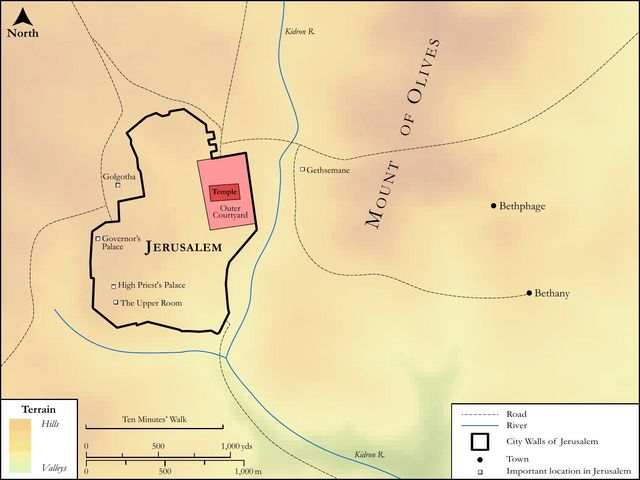
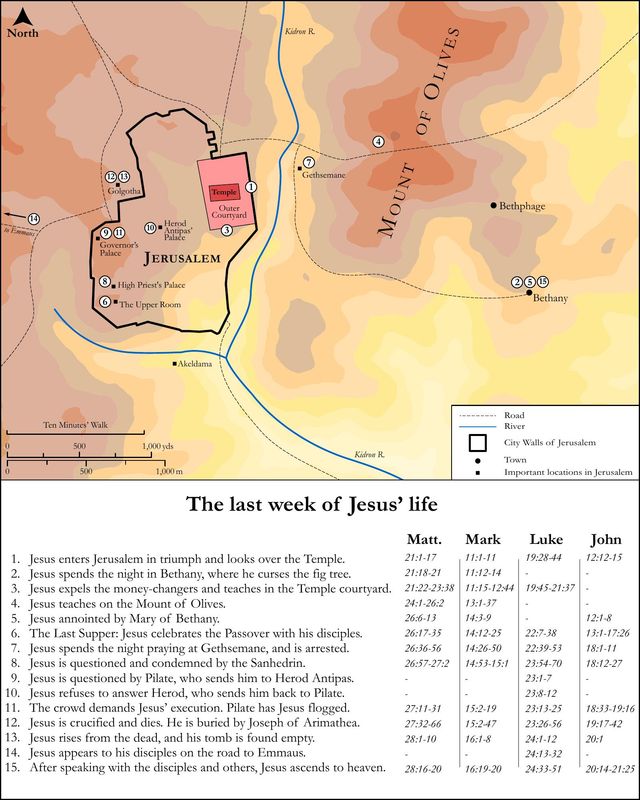
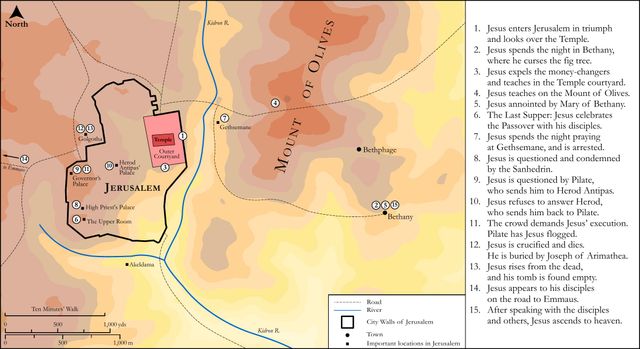
See on the biblical-era maps
Study this verse
Historical interpretation
Eleven Centuries of Reception
11 surviving comments on this verse. Each one is dated, so this reads as a timeline rather than a list.
Select a marker to jump to its quote. Markers stagger vertically where authors wrote within a few decades of each other.
Whence it is written, "From the beginning the Word was with God, and the Word was God; " to whom "is given by the Father all power in heaven and on earth." "The Father judgeth no man, but hath committed all judgment to the Son" -from the very beginning even.
Thus it is plainly seen how the Jewish people is moved by its elders and the doctors of the Jewish system, and stirred up against Jesus to destroy Him.
At the desire of the Priests the populace chose Barabbas, which is interpreted 'the son of a Father,' thus shadowing forth the unbelief to come when Antichrist the son of sin should be preferred to Christ.
Because Christ had answered nothing to the accusations of the Jews, by which Pilate could acquit Him of what was alleged against Him, he contrives other means of saving Him. Now on the feast day the governor we as wont to release unto the people a prisoner whom they would.
And he sought to rescue Christ by means of this practice, that the Jews might not have the shadow of an excuse left them. A convicted murderer is put in comparison with Christ, Barabbas, whom he calls not merely a robber, but a notable one, that is, renowned for crime.
Whom will ye that I release unto you? &c. As much as to say, If ye will not let him go as innocent, at least, yield Him, as convicted, to this holy day. For if you would have released one of whose guilt there was no doubt, much more should you do so in doubtful cases. Observe how circumstances are reversed. It is the populace who are wont to petition for the condemned, and the prince to grant, but here it is the reverse, the prince asks of the people, and renders them thereby more violent.
Then is added something else which alone was enough to deter all from putting Him to death; When we he as set on the judgment seat, his wife sent unto him, saying, Have thou nothing to do with that just man. For joined with the proof afforded by the events themselves, a dream was no light confirmation.
But why did Pilate himself not see this vision? Because his wife was more worthy; or because if Pilate had seen it, he would not have had equal credit, or perhaps would not have told it; wherefore it is provided by God that his wife should see it, and thus it be made manifest to all. And she not merely sees it, but suffers many things because of him, so that sympathy with his wife would make the husband more slack to put Him to death. And the time agreed well, for it was the same night that she saw it.
(Hom. iii. in Cæn. Dom.) Thus then the judge is terrified through his wife, and that he might not consent in the judgment to the accusation of the Jews, himself endured judgment in the affliction of his wife; the judge is judged, and tortured before he tortures.
But none of the foregoing things moved Christ's enemies, because envy had altogether blinded them, and of their own wickedness they corrupt the people, for they persuaded the people that they should ask Barabbas, and destroy Jesus.
Observe here the infatuation of the Jews; their headlong haste, and destructive passions will not let them see what they ought to see, and they curse themselves, saying, His blood be upon us, and even entail the curse upon their children. Yet a merciful God did not ratify this sentence, but accepted such of them and of their children as repented; for Paul was of them, and many thousands of those who in Jerusalem believed.
(Hom. iii. in Cæna Dom.) See the Lord is made ready for the scourge, see now it descends upon Him! That sacred skin is torn by the fury of the rods; the cruel might of repeated blows lacerates His shoulders. Ah me! God is stretched out before man, and He, in whom not one trace of sin can be discerned, suffers punishment as a malefactor.
(Verse 16 onwards) At that time he had a notorious prisoner called Barabbas. So when they had gathered, Pilate said to them: Whom do you want me to release to you, Barabbas or Jesus who is called Christ? For he knew that they had handed Him over out of envy. Now, in the Gospel written according to the Hebrews, 'the son of their teacher' is interpreted as referring to this man, who had been condemned for sedition and murder. However, Pilate offers them the option of releasing whoever they want, either the robber or Jesus, not doubting that they would choose Jesus, knowing that He had been handed over out of envy. Therefore, the evident cause of the cross is envy.
In the Gospel entitled 'according to the Hebrews,' Barabbas is interpreted, 'The son of their master,' who had been condemned for sedition and murder. Pilate gives them the choice between Jesus and the robber, not doubting but that Jesus would be the rather chosen.
Observe also that visions are often vouchsafed by God to the Gentiles, and that the confession of Pilate and his wife that the Lord was innocent is a testimony of the Gentile people.
Yet even after this answer of theirs, Pilate did not at once assent, but in accordance with his wife's suggestion, Have thou nothing to do with that just man, he answered, Why, what evil hath he done? This speech of Pilate's acquits Jesus. But they cried out the more, saying, Let him be crucified; that it might be fulfilled which is said in the Psalm, Many dogs have compassed me, the congregation of the wicked hath inclosed me; (Ps. 22:16.) and also that of Hieremias, Mine heritage is unto me as a lion in the forest, they have given forth their voice against me. (Jer. 12:8.)
Pilate took water in accordance with that, I will wash my hands in innocency, (Ps. 26:6.) in a manner testifying and saying, I indeed have sought to deliver this innocent man, but since a tumult is rising, and the charge of treason to Cæsar is urged against me, I am innocent of the blood of this just man. The judge then who is thus compelled to give sentence against the Lord, does not convict the accused, but the accusers, pronouncing innocent Him who is to be crucified. See ye to it, as though he had said, I am the law's minister, it is your voice that has shed this blood. Then answered all the people and said, His blood be on us and on our children. This imprecation rests at the present day upon the Jews, the Lord's blood is not removed from them.
It should be known that Pilate administered the Roman law, which enacted that every one who was crucified should first be scourged. Jesus then is given up to the soldiers to be beaten, and they tore with whips that most holy body and capacious bosom of God.
This was done that we might be delivered from those stripes of which it is said, Many stripes shall be to the wicked. (Ps. 32:10.) Also in the washing of Pilate's hands all the works of the Gentiles are cleansed, and we are acquitted of all share in the impiety of the Jews.
(Serm. lix. 2.) The impiety of the Jews then exceeded the fault of Pilate; but he was not guiltless, seeing he resigned his own jurisdiction, and acquiesced in the injustice of others.
John explains what their envy was, when he says, Behold, the world is gone after him; (John 12:19.) and, If we let him thus alone, all men will believe on him. (John 11:48.) Observe also that in place of what Matthew says, Jesus, who is called Christ, Mark says, Will ye that I release unto you the King of the Jews? (Mark 15:9.) For the kings of the Jews alone were anointed, and from that anointing were called Christs.
It was customary among the ancients, when one would refuse to participate in any crime, to take water and wash his hands before the people.
It is to be noted, that the bench (tribunal) is the seat of the judge, the throne (solium) of the king, the chair (cathedra) of the master. In visions and dreams the wife of a Gentile understood what the Jews when awake would neither believe nor understand.
Or otherwise; The devil now at last understanding that he should lose his trophies through Christ, as he had at the first brought in death by a woman, so by a woman he would deliver Christ out of the hands of His enemies, lest through His death he should lose the sovereignty of death.
Those who were crucified being suspended on a cross, by nails driven into the wood through their hands and feet, perished by a lingering death, and lived long on the cross, not that they sought longer life, but that death was deferred to prolong their sufferings. The Jews indeed contrived this as the worst of deaths, but it had been chosen by the Lord without their privity, thereafter to place upon the foreheads of the faithful the same cross as a trophy of His victory over the Devil.
Barabbas also, who headed a sedition among the people, is released to the Jews, that is the Devil, who to this day reigns among them, so that they cannot have peace.
Pilate was eager to release Christ, though even that would have been cowardly; for he ought to have stood up for the truth. First Pilate asked the Lord, "Do you not hear what they are testifying against you?" He asked this so that if Christ had given a defense, he would have had a reason to release Him. But the Lord did not defend Himself, since, all-knowing, He knew that even if He made a defense He would not be freed. Pilate then turned to another course of action. He appealed to the custom at the feast, all but saying, "Even if you do not release him as innocent, pardon him on the feast as one who has been condemned." For how could Pilate have suspected that the people would demand the crucifixion of Jesus, Who was innocent, and the release of the guilty thief? Pilate knew, then, that Jesus was not guilty but was the object of spite, and it was for this reason that he asked them to choose which prisoner they wanted released. This shows that he was cowardly; for he ought to have disdained all danger to champion the good. Therefore he merits condemnation for having covered up the truth. "Barabbas" means "son of the father," "bar" meaning "son," and "abbas," "father." These Jews, therefore, demanded the son of their spiritual father, the devil, but Jesus they crucified. And to this day, there are those like them who have chosen Antichrist, the substitute messiah, the son of their father, and have rejected Christ, the true Messiah.
(non occ.) The Evangelist adds the reason why Pilate sought to deliver Christ, For he knew that for envy they had delivered him.
(non occ.) Pilate is said to make this answer, Whether of the twain will ye that I release unto you? either to the message of his wife, or the petition of the people, with whom it was a custom to ask such release on the feast-day.
Continue studying Matthew 27:18 across the web’s major study libraries — every link below opens this exact verse, chapter, or book on the destination site.
Read & Compare
 BibleGatewayThis verse in more than 200 translations and 70 languages.
 Bible.comThe YouVersion reader — hundreds of translations, reading plans, and highlights.
 ESV.orgCrossway's official English Standard Version reader.
 NET BibleThe NET translation with 60,000+ translators' notes on every rendering decision.
 STEP BibleTyndale House's free study tool — original text, vocabulary, and scholarly resources.
 BibliaLogos Bible Software's free web reader.
 USCCBThe New American Bible (Revised Edition) with the U.S. bishops' study notes.
Commentaries
 BibleHub CommentariesDozens of classic commentaries on this verse, gathered on one page.
 StudyLightMore than 100 commentary sets — the largest collection on the web.
 BibleRefPlain-English commentary on what this verse means, verse by verse.
 Enduring WordDavid Guzik's free commentary on this chapter, widely used by Bible teachers.
 Bible Study ToolsVerse commentary alongside Greek and Hebrew study aids.
Original Language & Research
- BibleHub InterlinearThe verse word by word — original language, transliteration, and English.
- BibleHub LexiconEvery word's original-language definition and Strong's entry.
 Blue Letter BibleDeep-study tools — Strong's numbers, concordance, and word studies.
 CNTR CollationThe earliest Greek manuscripts of this verse, collated letter by letter.
Sermons, Hymns & Audio


TrulyRandomVerse is not affiliated with these sites and doesn’t control their content. They’re linked because they’re genuinely useful.
Summary
Matthew 27:18 offers a profound glimpse into the corrupt motives behind Jesus' condemnation, revealing Pontius Pilate's astute awareness that the Jewish chief priests and elders were driven not by justice or truth, but by deep-seated envy. This verse underscores the moral bankruptcy of Jesus' accusers and highlights the unjust nature of His trial, setting the stage for His ultimate delivery to crucifixion.
Context
ShowHideLiterary Context
This verse is strategically placed within the climactic narrative of Jesus' trial before Pontius Pilate, immediately following the Jewish Sanhedrin's condemnation of Jesus and their subsequent delivery of Him to the Roman governor. Having no authority to execute a death sentence themselves, the religious leaders sought Roman validation for their verdict. Pilate's attempts to navigate this politically charged situation, including his offer to release either Jesus or Barabbas to the crowd (as detailed in Matthew 27:15-17), are framed by his clear understanding of the underlying malice. Matthew presents Pilate's internal discernment as a key element, contrasting it with the public facade of the religious leaders.
Historical & Cultural Context
The scene unfolds in Jerusalem during the Passover festival, a time of heightened religious and political tension. As the Roman governor of Judea, Pilate held ultimate judicial authority, including the power of capital punishment. Jewish law permitted the Sanhedrin to try religious cases, but not to execute a death sentence without Roman approval, especially for charges that could be construed as sedition against Rome. The religious leaders' accusation of Jesus claiming to be "King of the Jews" was a deliberate attempt to frame a religious dispute as a political threat to Rome, thereby compelling Pilate to act. Pilate, likely weary of Jewish religious disputes and keen to maintain order during the volatile Passover, sought to avoid executing an innocent man, a sentiment perhaps influenced by his wife's dream (recorded in Matthew 27:19).
Key Themes
ShowHideMatthew 27:18 contributes significantly to several overarching themes in the Gospel. Firstly, it powerfully illustrates the destructive power of envy, portraying how this insidious sin can corrupt even religious leaders, blinding them to truth and justice, and leading them to commit the most heinous act imaginable—the murder of the innocent Son of God. Secondly, it highlights Pilate's reluctant discernment; despite being a pagan Roman official, he possesses a clearer moral compass regarding Jesus' innocence than the very people who claimed to be God's chosen. This theme of innocence delivered is paramount, emphasizing that Jesus was condemned not for any wrongdoing of His own, but as a result of the sin and malice of others, a crucial element in understanding His atoning work (as foreshadowed in passages like Isaiah 53:7).
Exposition and Analysis
ShowHideKey Word Analysis
ShowHideThis verb, G1492, derived from a primary verb meaning "to see" (literally or figuratively), is used in its perfect tense to signify "to know" or "to be aware." Here, it indicates Pilate's clear, settled understanding and perception of the situation. It's not a mere suspicion, but a definite, internal recognition of the true state of affairs. Pilate had seen through their pretense and understood their real motivation.
The Greek word G5355, phthónos, denotes a malicious grudging or ill-will arising from the perceived superiority, success, or possessions of another. It is a bitter jealousy that desires to pull others down, rather than to elevate oneself. This term accurately captures the deep-seated resentment the Jewish leaders harbored against Jesus due to His popularity, teachings, and miraculous works, which challenged their authority and influence.
This verb, G3860, from pará (beside) and dídōmi (to give), means "to surrender," "to yield up," "to entrust," or "to transmit." In this context, it specifically refers to the act of handing Jesus over to Pilate for judgment, implying a betrayal or a formal surrender into the custody of another authority. It underscores the active role the Jewish leaders played in orchestrating Jesus' condemnation and eventual crucifixion.
Verse Breakdown
ShowHide"For he knew"
This opening clause immediately establishes Pilate's awareness and insight into the situation. The conjunction "For" (G1063, gár) indicates that what follows is the reason or explanation for Pilate's actions or thoughts in the preceding narrative (e.g., his attempts to release Jesus). Pilate was not naive; he possessed a clear understanding of the underlying dynamics at play.
"that for envy"
This phrase directly states the core motive behind the Jewish leaders' actions. The preposition "for" (G1223, diá) here signifies the cause or reason. Pilate discerned that the driving force behind their accusations was not genuine concern for justice or truth, but rather a bitter, malicious jealousy of Jesus' influence and popularity. This reveals the spiritual corruption of those who claimed to represent God.
"they had delivered him."
This final clause identifies the agents of the delivery—"they," referring to the chief priests and elders—and the action itself: handing Jesus over. The perfect tense "had delivered" emphasizes that this act was a completed past event with ongoing consequences, confirming their active role in orchestrating His fate, driven by the aforementioned envy.
Literary Devices
ShowHideMatthew 27:18 employs several literary devices to enhance its impact. Irony is prominent, as the religious leaders, who should have been guardians of truth and justice, are revealed to be motivated by the base sin of envy, ultimately delivering an innocent man to death. This stands in stark contrast to Pilate, a pagan Roman official, who, despite his ultimate failure to release Jesus, demonstrates a surprising degree of discernment. There is also an element of Foreshadowing, as Pilate's recognition of their envy hints at the unjust nature of Jesus' impending crucifixion, which will be a result of human malice rather than divine judgment for sin on Jesus' part. The verse also uses Contrast between the outward religious piety of the Jewish leaders and their inward corruption, exposed by Pilate's insight.
Theological and Thematic Connections
ShowHideMatthew 27:18 powerfully exposes the destructive nature of human sin, particularly envy, and its capacity to pervert justice and truth. The theological significance lies in demonstrating that Jesus' suffering and death were not due to any fault of His own, but were the direct result of human depravity and malice. Yet, even this profound injustice was woven into God's sovereign plan for salvation, transforming an act of human wickedness into the means of divine redemption. Pilate's discernment, though ultimately insufficient to prevent the crucifixion, highlights the universal witness to Jesus' innocence, even from those outside the covenant. This verse serves as a stark reminder that even religious zeal can be corrupted by unrighteous motives, leading to actions profoundly contrary to God's will.
Reflection and Application
ShowHideMatthew 27:18 serves as a potent and sobering mirror for self-examination. It compels us to consider the hidden motives that might drive our own actions, particularly within religious or communal contexts. The envy displayed by the chief priests and elders, leading them to deliver the innocent Son of God to death, is a stark warning against allowing bitterness, jealousy, or resentment to fester in our hearts. It demonstrates how such sins can blind us to truth, pervert justice, and lead to egregious actions, even under the guise of piety or righteousness. For believers today, this verse urges us to cultivate genuine love, humility, and contentment, ensuring that our service to God and others is motivated by pure intentions rather than by comparison, competition, or ill-will. It also reminds us that even in the face of profound human corruption and injustice, God's sovereign plan is at work, as Jesus' unjust delivery ultimately led to His atoning death and resurrection, fulfilling prophecy and bringing salvation to mankind. We are called to trust in God's ultimate justice, even when human systems fail.
Questions for Reflection
ShowHideFAQ
ShowHideWhy was Pilate aware of the Jewish leaders' envy?
ShowHidePilate was a shrewd Roman governor accustomed to political maneuvering and the complexities of local religious disputes. He likely observed the persistent, irrational animosity of the chief priests and elders toward Jesus, which seemed disproportionate to any actual crime Jesus might have committed against Roman law. Their inability to articulate a clear, legitimate charge beyond vague accusations of sedition, coupled with their relentless insistence on Jesus' death despite Pilate finding no fault in Him (Luke 23:4), would have made their true, malicious motive of envy evident to an experienced administrator like Pilate.
If Pilate knew they were acting out of envy, why didn't he simply release Jesus?
ShowHideWhile Pilate recognized their envy, he was also a pragmatic politician whose primary concern was maintaining order and avoiding a riot, especially during the volatile Passover festival. The Jewish leaders skillfully manipulated the situation, threatening to accuse Pilate of disloyalty to Caesar if he released Jesus, who they claimed made Himself a king (John 19:12). This political pressure, combined with the escalating demands of the crowd they incited, ultimately led Pilate to capitulate against his better judgment, choosing political expediency over justice, as seen in Matthew 27:24-26.
Christ-Centered Fulfillment
ShowHideMatthew 27:18, revealing Pilate's awareness that Jesus was "delivered" for "envy," profoundly underscores the Christ-centered narrative of redemption. Jesus' unjust condemnation and subsequent crucifixion were not the result of His own sin, but the direct consequence of human sinfulness—specifically, the malicious envy of the religious establishment. This truth highlights Jesus' perfect innocence, making Him the spotless Lamb of God who was sacrificed not for His own transgressions, but as a substitutionary atonement for the sins of humanity. His "delivery" by envious men fulfills ancient prophecies of the Suffering Servant who would be "oppressed and afflicted, yet he opened not his mouth" (Isaiah 53:7). In this moment of profound injustice, God's sovereign plan was unfolding, transforming the ultimate act of human malice into the means of ultimate salvation. Jesus, "who knew no sin," was "made to be sin for us, so that in him we might become the righteousness of God" (2 Corinthians 5:21). Thus, the envy that delivered Him to the cross ultimately paved the way for humanity's deliverance from sin and death, culminating in His glorious resurrection and the offer of eternal life to all who believe (Romans 4:25).