


Exodus 18:12
- וַיִּקַּחvai·yi·Kachand he tookH3947Conj-w ¦ V-Qal-ConsecImperf-3msVerb Qal Consecutive Imperfect 3rd Singular Masculineוַandיִּקַּחhe took
- יִתְרוֹyit·RoJethroH3503N-proper-mNoun Proper Masculine
- חֹתֵןcho·Ten[the] father-in-law ofH2859V-Qal-Prtcpl-msVerb Qal Participle Singular Masculine Construct
- מֹשֶׁהmo·ShehMosesH4872N-proper-mNoun Proper Masculine
- עֹלָה'o·Laha burnt offeringH5930N-fsNoun Singular Feminine Absolute
- וּזְבָחִיםu·ze·va·Chimand sacrificesH2077Conj-w ¦ N-mpNoun Plural Masculine Absoluteוּandזְבָחִיםsacrifices
- לֵאלֹהִיםle·lo·Himto GodH430Prep-l ¦ N-mpNoun Plural Masculine AbsoluteלֵtoאלֹהִיםGod
- וַיָּבֹאvai·ya·Vo'and he cameH935Conj-w ¦ V-Qal-ConsecImperf-3msVerb Qal Consecutive Imperfect 3rd Singular Masculineוַandיָּבֹאhe came
- אַהֲרֹן'a·ha·RonAaronH175N-proper-mNoun Proper Masculine
- וְכֹלve·Kholand allH3605Conj-w ¦ N-mscNoun Singular Masculine Constructוְandכֹלall
- זִקְנֵיzik·Nei[the] elders ofH2205Adj-mpcAdjective Plural Masculine Construct
- יִשְׂרָאֵלYis·ra·'ElIsraelH3478N-properNoun Proper Location
- לֶאֱכָלle·'e·kholto eatH398Prep-l ¦ V-Qal-InfVerb Qal Infinitive Constructלֶtoאֱכָלeat
- לֶחֶםLe·chemfoodH3899N-msNoun Singular Masculine Absolute
- עִם'imwithH5973PrepPreposition
- חֹתֵןcho·Ten[the] father-in-law ofH2859V-Qal-Prtcpl-msVerb Qal Participle Singular Masculine Construct
- מֹשֶׁהmo·ShehMosesH4872N-proper-mNoun Proper Masculine
- לִפְנֵיlif·Nei<to> beforeH6440Prep-l ¦ N-mpcNoun Plural Masculine Constructלִ<to>פְנֵיbefore
- הָאֱלֹהִיםha·'E·lo·Him<the> GodH430Art ¦ N-mpNoun Plural Masculine Absoluteהָ<the>אֱלֹהִיםGod
English is a literal word-by-word gloss of the Hebrew, not the KJV's wording. Why?
This is the original text the KJV's translators worked from — each Hebrew word with its own literal English meaning in this verse, prepared by scholars at Tyndale House, Cambridge. The KJV translates whole sentences, not word by word, so its wording differs: one Hebrew word can become several English words, and the KJV may choose “the LORD” where the gloss reads “Yahweh”. Both are faithful — they answer different questions. For the KJV's own rendering, switch to the KJV text.
Details
See on the biblical-era map

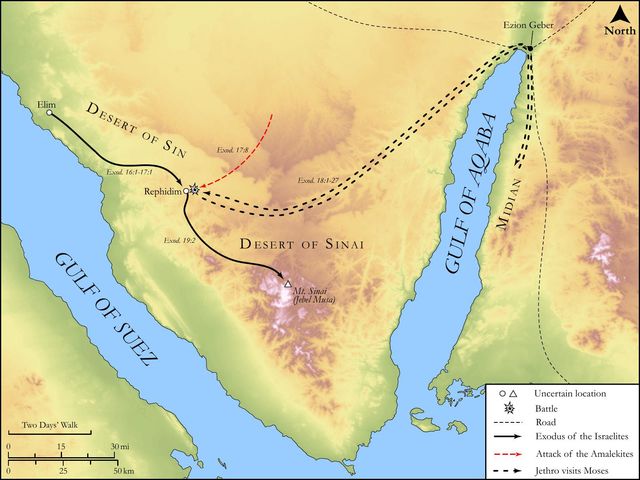
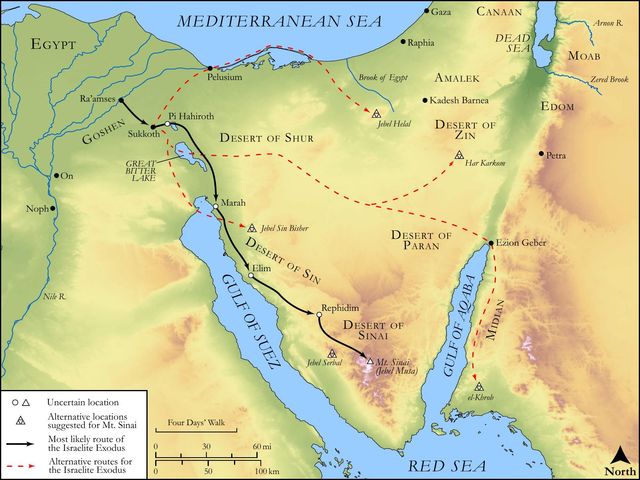
Study this verse
Public-domain commentary
Matthew Henry
From his Commentary on the Whole Bible. Henry comments on passages, not single verses — this entry covers Exodus 18:7–12. His three-level outline is real structure in the source text, so it is rendered as structure.
Observe here, I. The kind greeting that took place between Moses and his father-in-law, Exo 18:7. Though Moses was a prophet of the Lord, a great prophet, and king in Jeshurun, yet he showed a very humble respect to his father-in-law. However God in his providence is pleased to advance us, we must make conscience of giving honour to whom honour is due, and never look with disdain upon our poor relations. Those that stand high in the favour of God are not thereby discharged from the duty they owe to men, nor will that justify them in a stately haughty carriage. Moses went out to meet Jethro, did homage to him, and kissed him. Religion does not destroy good manners. They asked each other of their welfare. Even the kind How-do-you-do's that pass between them are taken notice of, as the expressions and improvements of mutual love and friendship.
II.The narrative that Moses gave his father-in-law of the great things God had done for Israel, Exo 18:8.
This was one thing Jethro came for, to know more fully and particularly what he had heard the general report of. Note, Conversation concerning God's wondrous works is profitable conversation; it is good, and to the use of edifying, Psa 105:2. Compare Psa 145:11, Psa 145:12. Asking and telling news, and discoursing of it, are not only an allowable entertainment of conversation, but are capable of being tuned to a very good account, by taking notice of God's providence, and the operations and tendencies of that providence, in all occurrences.
III.The impressions this narrative made upon Jethro.
1.He congratulated God's Israel: Jethro rejoiced, Exo 18:9. He not only rejoiced in the honour done to his son-in-law, but in all the goodness done to Israel, Exo 18:9. Note, Public blessings are the joy of public spirits. While the Israelites were themselves murmuring, notwithstanding all God's goodness to them, here was a Midianite rejoicing. This was not the only time that the faith of the Gentiles shamed the unbelief of the Jews; see Mat 8:10. Standers-by were more affected with the favours God had shown to Israel than those were that received them.
2.He gave the glory to Israel's God (Exo 18:10): "Blessed be Jehovah" (for by that name he is now known), "who hath delivered you, Moses and Aaron, out of the hand of Pharaoh, so that though he designed your death he could not effect it, and by your ministry has delivered the people." Note, Whatever we have the joy of God must have the praise of.
3.His faith was hereby confirmed, and he took this occasion to make a solemn profession of it: Now know I that Jehovah is greater than all gods, Exo 18:11. Observe,
(1.)The matter of his faith: that the God of Israel is greater than all pretenders, all false and counterfeit-deities, that usurp divine honours; he silences them, subdues them, and is too hard for them all, and therefore is himself the only living and true God. He is also higher than all princes and potentates (who are called gods), and has both an incontestable authority over them and an irresistible power to control and over-rule them; he manages them all as he pleases, and gets honour upon them, how great soever they are.
(2.)The confirmation and improvement of his faith: Now know I; he knew it before, but now he knew it better; his faith great up to a full assurance, upon this fresh evidence. Those obstinately shut their eyes against the clearest light who do not know that the Lord is greater than all gods.
(3.)The ground and reason upon which he built it: For wherein they dealt proudly, the magicians, and the idols which the Egyptians worshipped, or Pharaoh and his grandees (they both opposed God and set up in competition with him), he was above them. The magicians were baffled, the idols shaken, Pharaoh humbled, his powers broken, and, in spite of all their confederacies, God's Israel was rescued out of their hands. Note, Sooner or later, God will show himself above those that by their proud dealings contest with him. He that exalts himself against God shall be abased.
IV.The expressions of their joy and thankfulness.
They had communion with each other both in a feast and in a sacrifice, Exo 18:12. Jethro, being hearty in Israel's interests, was cheerfully admitted though a Midianite, into fellowship with Moses and the elders of Israel, forasmuch as he also was a son of Abraham, though of a younger house.
1.They joined in a sacrifice of thanksgiving: Jethro took burnt offerings for God, and probably offered them himself, for he was a priest in Midian, and a worshipper of the true God, and the priesthood was not yet settled in Israel. Note, Mutual friendship is sanctified by joint-worship. It is a very good thing for relations and friends, when they come together, to join in the spiritual sacrifice of prayer and praise, as those that meet in Christ the centre of unity.
2.They joined in a feast of rejoicing, a feast upon the sacrifice. Moses, upon this occasion, invited his relations and friends to an entertainment in his own tent, a laudable usage among friends, and which Christ himself, not only warranted, but recommended, by his acceptance of such invitations. This was a temperate feast: They did eat bread; this bread, we may suppose, was manna. Jethro must see and taste that bread from heaven, and, though a Gentile, is as welcome to it as any Israelite; the Gentiles still are so to Christ the bread of life. It was a feast kept after a godly sort: They did eat bread before God, soberly, thankfully, in the fear of God; and their table-talk was such as became saints. Thus we must eat and drink to the glory of God, behaving ourselves at our tables as those who believe that God's eye is upon us.
Continue studying Exodus 18:12 across the web’s major study libraries — every link below opens this exact verse, chapter, or book on the destination site.
Read & Compare
 BibleGatewayThis verse in more than 200 translations and 70 languages.
 Bible.comThe YouVersion reader — hundreds of translations, reading plans, and highlights.
 ESV.orgCrossway's official English Standard Version reader.
 NET BibleThe NET translation with 60,000+ translators' notes on every rendering decision.
 STEP BibleTyndale House's free study tool — original text, vocabulary, and scholarly resources.
 BibliaLogos Bible Software's free web reader.
 USCCBThe New American Bible (Revised Edition) with the U.S. bishops' study notes.
Commentaries
 BibleHub CommentariesDozens of classic commentaries on this verse, gathered on one page.
 StudyLightMore than 100 commentary sets — the largest collection on the web.
 BibleRefPlain-English commentary on what this verse means, verse by verse.
 Enduring WordDavid Guzik's free commentary on this chapter, widely used by Bible teachers.
 Bible Study ToolsVerse commentary alongside Greek and Hebrew study aids.
Original Language & Research
- BibleHub InterlinearThe verse word by word — original language, transliteration, and English.
- BibleHub LexiconEvery word's original-language definition and Strong's entry.
 Blue Letter BibleDeep-study tools — Strong's numbers, concordance, and word studies.
 SefariaThe Hebrew text with Rashi and centuries of Jewish commentary.
Sermons, Hymns & Audio


TrulyRandomVerse is not affiliated with these sites and doesn’t control their content. They’re linked because they’re genuinely useful.
Summary
Exodus 18:12 records a profound act of worship and fellowship initiated by Jethro, Moses' Midianite father-in-law, who offered burnt offerings and other sacrifices to God, culminating in a sacred communal meal shared with Moses, Aaron, and all the elders of Israel. This pivotal event serves as a tangible and public expression of Jethro's recognition of Yahweh's unparalleled supremacy, immediately following his declaration of faith after hearing of God's mighty deliverance of Israel from Egyptian bondage. It highlights a moment of interfaith unity and shared devotion before the one true God.
Context
ShowHideLiterary Context
This verse is strategically placed within Exodus chapter 18, a narrative interlude following the dramatic events of the Exodus and the giving of manna, but preceding the monumental covenant at Mount Sinai. Jethro's arrival, bringing Moses' wife and sons, provides a crucial moment of family reunion and spiritual affirmation. Moses recounts "all that the LORD had done for Israel's sake" (Exodus 18:8), detailing the miraculous plagues, the Red Sea crossing, and the victory over Amalek. Jethro's response is one of awe and worship, culminating in his emphatic declaration, "Now I know that the LORD is greater than all gods" (Exodus 18:11). Verse 12 then describes the immediate, ritualistic manifestation of this faith through sacrifice and a shared meal, setting the stage for Jethro's subsequent sagacious counsel to Moses regarding judicial administration, which occupies the remainder of the chapter (Exodus 18:13-27).
Historical & Cultural Context
The setting for this event is the wilderness, a liminal space between the oppression of Egypt and the promised land, before the formal establishment of the Mosaic Law. Jethro, identified as a "priest of Midian" (Exodus 18:1), represents an outsider to the nascent Israelite covenant community. In the ancient Near East, communal meals, particularly those associated with sacrifices, were far more than social gatherings; they were deeply sacred acts. Such meals often served to ratify covenants, express solemn fellowship, and signify shared devotion in the presence of a deity. The act of "eating bread before God" was a ritualized expression of peace, communion, and the acknowledgment of divine presence within the shared space. Jethro's initiative to offer sacrifices and invite the Israelite leadership to partake underscores his profound respect for and submission to Yahweh, a striking testament to God's power recognized even by those outside the direct covenant line. The burnt offering (Hebrew: ‘olah) symbolized complete surrender and devotion, while other sacrifices (Hebrew: zevahim), likely peace or fellowship offerings, typically involved a shared meal, emphasizing communion between the offerer, the community, and God.
Key Themes
ShowHideExodus 18:12 contributes significantly to several overarching themes within the book of Exodus and the broader Pentateuch. Firstly, it powerfully underscores the universal sovereignty of God, demonstrating that Yahweh's power and supremacy are recognized even by those outside the immediate covenant community of Israel. Jethro's declaration and subsequent worship highlight that God's redemptive acts have a far-reaching impact, drawing even "outsiders" to acknowledge His unique deity. Secondly, it emphasizes the theme of worship and sacrifice as the appropriate human response to divine revelation and deliverance. Jethro's spontaneous act of offering costly sacrifices signifies a genuine and profound devotion. Thirdly, the communal meal highlights fellowship and inclusion, portraying a sacred gathering where ethnic and religious barriers are temporarily set aside in shared reverence for God. This foreshadows the inclusive nature of God's future kingdom, as seen in later prophetic visions of all nations coming to worship God, such as Isaiah 2:2-4 and Zechariah 8:20-23. Finally, it subtly introduces the theme of divine counsel and wisdom, as Jethro's spiritual insight precedes his practical advice to Moses, demonstrating that true wisdom flows from a right relationship with God.
Exposition and Analysis
ShowHideKey Word Analysis
ShowHideMeaning "a step or (collectively, stairs, as ascending); usually a holocaust (as going up in smoke); ascent, burnt offering (sacrifice), go up to." This specific type of sacrifice involved the complete consumption of the animal by fire on the altar, with the smoke ascending to God. It symbolized total dedication, complete surrender, and atonement, indicating an unreserved act of worship and devotion. Jethro's choice of an ‘ôlâh signifies his profound and absolute acknowledgment of Yahweh's supremacy.
Meaning "properly, a slaughter, i.e. the flesh of an animal; by implication, a sacrifice (the victim or the act); offer(-ing), sacrifice." This is a broader term encompassing various types of offerings, distinct from the burnt offering. In this context, it most likely refers to peace offerings (also known as fellowship offerings or well-being offerings), where portions of the sacrificed animal were eaten by the offerers, the priests, and the community. These sacrifices emphasized communion, thanksgiving, and the establishment or reaffirmation of a peaceful relationship with God and one another.
Meaning "food (for man or beast), especially bread, or grain (for making it); (shew-) bread, [idiom] eat, food, fruit, loaf, meat, victuals." While literally meaning "bread," lechem in this context, especially when used with the verb "to eat" (H398, 'âkal), often refers to partaking in a full meal or feast. The phrase "to eat bread with" signifies sharing a communal meal, establishing a bond of fellowship, and participating in a shared experience. The addition "before God" elevates this meal from a mere social gathering to a sacred act of communion in the divine presence, symbolizing peace and shared faith.
Verse Breakdown
ShowHide"And Jethro, Moses' father in law, took a burnt offering and sacrifices for God:"
This opening clause highlights Jethro's proactive and profound spiritual response to God's mighty acts. Having heard of Yahweh's deliverance of Israel and declared His unparalleled supremacy, Jethro immediately translates his theological conviction into tangible, costly worship. The offerings are explicitly stated as being "for God," emphasizing that they are directed solely to Yahweh, distinguishing them from any prior pagan worship Jethro might have practiced. This demonstrates a genuine and profound acknowledgment of Yahweh's unique and supreme power, initiating a sacred encounter.
"and Aaron came, and all the elders of Israel,"
The presence of Aaron, Moses' brother and the designated high priest (though not yet formally consecrated), along with "all the elders of Israel," signifies the official leadership of the Israelite nation. Their participation in this meal with Jethro is highly significant. It symbolizes the acceptance of Jethro, a Midianite priest and outsider, into the spiritual and communal fellowship of Israel's leaders. This underscores a moment of unity, mutual respect, and shared reverence centered around their collective acknowledgment of the one true God, Yahweh.
"to eat bread with Moses' father in law before God."
This phrase describes the culmination of the worship act: a sacred communal meal. The crucial phrase "before God" elevates this meal beyond a mere social gathering, indicating that it takes place in the divine presence, making it a holy and covenantal act. It signifies peace, shared faith, and deep fellowship between Jethro (the Midianite outsider) and the leadership of Israel, all united in their devotion to Yahweh. This shared meal solidifies the spiritual bond and mutual recognition, demonstrating the unifying power of true worship.
Literary Devices
ShowHideThe narrative in Exodus 18:12 employs several literary devices to convey its profound meaning and theological significance. Symbolism is prominently featured, with the "burnt offering" symbolizing Jethro's complete devotion and surrender to Yahweh, and the "sacrifices" (likely peace offerings) and communal meal symbolizing fellowship, peace, and covenantal communion. The act of eating "before God" further reinforces the sacred and covenantal nature of this communion, elevating it beyond a mere social gathering. There is also a powerful element of Inclusion, as Jethro, a Midianite priest from outside the Israelite covenant, is welcomed into a sacred meal with the spiritual and civic leadership of Israel. This demonstrates God's universal reach and the potential for unity among diverse peoples under His sovereignty, breaking down conventional barriers. Furthermore, the narrative subtly employs Transformation or Conversion, as Jethro's actions mark a clear departure from his previous religious context (as a priest of Midian) to an active, public, and costly worship of Yahweh, highlighting the transformative power of God's revelation to change hearts and allegiances. This is a significant moment of Theophany (manifestation of God) through His acts, leading to a human response of worship.
Theological and Thematic Connections
ShowHideExodus 18:12 powerfully illustrates the universal reach of God's redemptive work and the appropriate response of worship and fellowship. Jethro, an "outsider" to the Israelite covenant, recognizes Yahweh's supremacy not through direct revelation but through hearing of God's mighty acts on behalf of Israel. His immediate response of offering sacrifices and sharing a communal meal "before God" demonstrates that true faith, regardless of one's background, leads to genuine worship and a desire for communion with God and His people. This event foreshadows the inclusive nature of God's kingdom, where all who acknowledge His sovereignty are welcomed into fellowship, breaking down barriers of ethnicity or prior religious affiliation. It underscores the importance of corporate worship and shared meals as expressions of unity, gratitude, and devotion within the community of faith, reflecting God's desire for all peoples to come to Him.
Reflection and Application
ShowHideExodus 18:12 serves as a profound reminder that our faith is not merely intellectual assent but should lead to tangible, costly, and communal expressions of worship, gratitude, and fellowship. Jethro's spontaneous and sacrificial act of offering sacrifices, followed by a sacred meal with the Israelite leadership, challenges us to consider the depth of our own response to God's goodness and power in our lives. Do we, like Jethro, allow God's mighty acts to move us to genuine adoration and communion, translating our convictions into active worship? This verse also highlights the sacredness of shared meals and communal gatherings within the faith community. In a world often marked by division and exclusion, the image of Jethro, Aaron, and the elders eating together "before God" powerfully underscores the unifying power of shared faith and the importance of hospitality and inclusion. It calls us to create spaces where all who acknowledge God are welcomed, fostering genuine fellowship, mutual respect, and a shared experience of God's presence, much like the early church shared meals as a symbol of their unity in Christ and their common life. Our tables, both physical and metaphorical, can become altars of fellowship where God's presence is acknowledged and celebrated.
Questions for Reflection
ShowHideFAQ
ShowHideWas Jethro a convert to Yahwism, or did he simply acknowledge Yahweh's power?
ShowHideWhile the text doesn't explicitly use the term "convert," Jethro's actions in Exodus 18:12 go significantly beyond mere acknowledgment. His declaration, "Now I know that the LORD is greater than all gods" (Exodus 18:11), is a theological statement of unparalleled supremacy. This is immediately followed by his initiative to take "a burnt offering and sacrifices for God" and partake in a sacred meal with Israel's leaders "before God." As a Midianite priest, he likely had served other deities, but his actions here demonstrate a clear recognition of Yahweh's unique power and a willingness to worship Him exclusively. This constitutes a profound spiritual transformation and a public affirmation of Yahweh's unique supremacy, indicating a genuine shift in allegiance and active worship, even if not formally "converting" to the Mosaic covenant as it would later be fully revealed.
Why is it significant that Aaron and the elders of Israel ate with Jethro?
ShowHideThe presence of Aaron and "all the elders of Israel" at this communal meal is profoundly significant. It symbolizes the acceptance of Jethro, an outsider (a Midianite priest), into the spiritual and communal fellowship of Israel's leadership. Eating together "before God" was a sacred act in the ancient Near East, often signifying covenant, peace, and shared devotion. This event underscores the unifying power of shared faith in Yahweh, breaking down potential ethnic or religious barriers that might otherwise have existed. It portrays a scene of unity and mutual respect centered around their shared reverence for God, foreshadowing the inclusive nature of God's people, where those from diverse backgrounds can find common ground and fellowship in His presence. It demonstrates that God's redemptive work extends beyond the immediate covenant community, drawing all who acknowledge His sovereignty into His fellowship.
Christ-Centered Fulfillment
ShowHideExodus 18:12, with its powerful themes of costly sacrifice, communal meal, and the inclusion of an outsider, finds its ultimate and most profound fulfillment in the person and redemptive work of Jesus Christ. Jethro's burnt offering and sacrifices, made in response to God's mighty deliverance, serve as a vivid Old Testament foreshadowing of the perfect, once-for-all sacrifice of Jesus Christ on the cross. He is the true Lamb of God, who takes away the sin of the world!, whose self-offering completely fulfills and supersedes all Old Testament sacrificial systems (Hebrews 9:11-14). Through His sacrifice, true atonement is provided, and genuine communion with God is made possible for all who believe. The communal meal shared "before God" prefigures the New Covenant meal, the Lord's Supper or Eucharist, instituted by Christ Himself on the night of His betrayal (Luke 22:19-20). In this sacred meal, believers commune not only with their resurrected Lord but also with one another, symbolizing their shared life in Him and their participation in His new covenant, which is sealed by His blood. Furthermore, Jethro, the Midianite priest, being welcomed into fellowship with Israel's leaders, beautifully foreshadows the radical inclusion of Gentiles into God's family through Christ. Through His death and resurrection, Jesus broke down the "dividing wall of hostility" (Ephesians 2:14) between Jew and Gentile, creating one new humanity united in Him, making "both one" (Ephesians 2:16). Thus, Jethro's worship and communal meal serve as a powerful Old Testament echo of the universal, inclusive, and redemptive work accomplished by Christ, inviting all peoples to partake in the ultimate sacrifice and the eternal feast in God's presence, where "there is neither Jew nor Greek, there is neither bond nor free, there is neither male nor female: for ye are all one in Christ Jesus" (Galatians 3:28).