


Exodus 18:10
- וַיֹּאמֶרvai·yo·Merand he saidH559Conj-w ¦ V-Qal-ConsecImperf-3msVerb Qal Consecutive Imperfect 3rd Singular Masculineוַandיֹּאמֶרhe said
- יִתְרוֹyit·RoJethroH3503N-proper-mNoun Proper Masculine
- בָּרוּךְba·Rukh[be] blessedH1288V-Qal-PassPrtcpl-msVerb Qal Participle Passive Singular Masculine Absolute
- יְהוָהYah·wehYahwehH3068N-properNoun Proper Title
- אֲשֶׁר'a·SherwhoH834RelParticle Relative
- הִצִּילhi·Tzilhe has deliveredH5337V-Hiphil-Perf-3msVerb Hiphil Perfect 3rd Singular Masculine
- אֶתְכֶם'et·Khem<obj.> youH853DirObjM ¦ 2mpParticle Object Indicatorאֶתְ<obj.>כֶםyou
- מִיַּדmi·Yadfrom [the] hand ofH3027Prep-m ¦ N-cscNoun Singular common gender Constructמִfromיַּד[the] hand of
- מִצְרַיִםmitz·Ra·yimEgyptH4714N-properNoun Proper Location
- וּמִיַּדu·mi·Yadand from [the] hand ofH3027Conj-w ¦ Prep-m ¦ N-cscNoun Singular common gender Constructוּandמִfromיַּד[the] hand of
- פַּרְעֹהpar·'OhPharaohH6547N-msNoun Title Singular Masculine Absolute
- אֲשֶׁר'a·SherwhoH834RelParticle Relative
- הִצִּילhi·Tzilhe has deliveredH5337V-Hiphil-Perf-3msVerb Hiphil Perfect 3rd Singular Masculine
- אֶת'et<obj.>H853DirObjMParticle Object Indicator
- הָעָםha·'Amthe peopleH5971Art ¦ N-msNoun Singular Masculine Absoluteהָtheעָםpeople
- מִתַּחַתmi·Ta·chatfrom underH8478Prep-m ¦ N-mscNoun Singular Masculine Constructמִfromתַּחַתunder
- יַדyad[the] hand ofH3027N-cscNoun Singular common gender Construct
- מִצְרָיִםmitz·Ra·yimEgyptH4714N-properNoun Proper Location
English is a literal word-by-word gloss of the Hebrew, not the KJV's wording. Why?
This is the original text the KJV's translators worked from — each Hebrew word with its own literal English meaning in this verse, prepared by scholars at Tyndale House, Cambridge. The KJV translates whole sentences, not word by word, so its wording differs: one Hebrew word can become several English words, and the KJV may choose “the LORD” where the gloss reads “Yahweh”. Both are faithful — they answer different questions. For the KJV's own rendering, switch to the KJV text.
Details
See on the biblical-era map

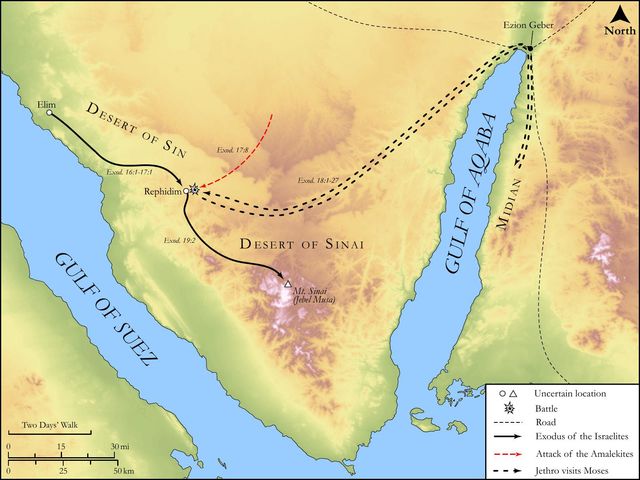
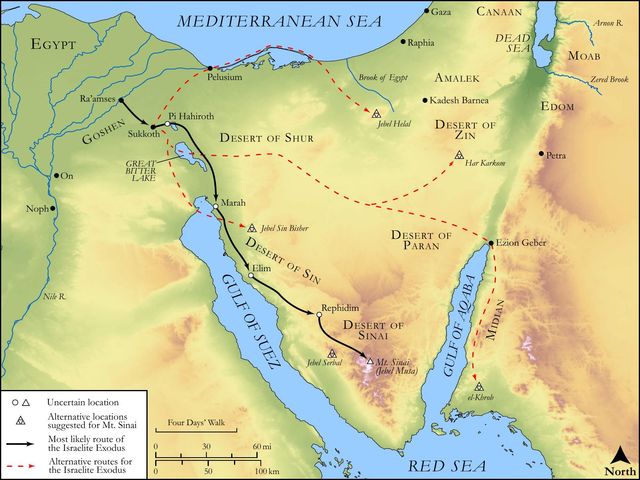
Study this verse
Public-domain commentary
Matthew Henry
From his Commentary on the Whole Bible. Henry comments on passages, not single verses — this entry covers Exodus 18:7–12. His three-level outline is real structure in the source text, so it is rendered as structure.
Observe here, I. The kind greeting that took place between Moses and his father-in-law, Exo 18:7. Though Moses was a prophet of the Lord, a great prophet, and king in Jeshurun, yet he showed a very humble respect to his father-in-law. However God in his providence is pleased to advance us, we must make conscience of giving honour to whom honour is due, and never look with disdain upon our poor relations. Those that stand high in the favour of God are not thereby discharged from the duty they owe to men, nor will that justify them in a stately haughty carriage. Moses went out to meet Jethro, did homage to him, and kissed him. Religion does not destroy good manners. They asked each other of their welfare. Even the kind How-do-you-do's that pass between them are taken notice of, as the expressions and improvements of mutual love and friendship.
II.The narrative that Moses gave his father-in-law of the great things God had done for Israel, Exo 18:8.
This was one thing Jethro came for, to know more fully and particularly what he had heard the general report of. Note, Conversation concerning God's wondrous works is profitable conversation; it is good, and to the use of edifying, Psa 105:2. Compare Psa 145:11, Psa 145:12. Asking and telling news, and discoursing of it, are not only an allowable entertainment of conversation, but are capable of being tuned to a very good account, by taking notice of God's providence, and the operations and tendencies of that providence, in all occurrences.
III.The impressions this narrative made upon Jethro.
1.He congratulated God's Israel: Jethro rejoiced, Exo 18:9. He not only rejoiced in the honour done to his son-in-law, but in all the goodness done to Israel, Exo 18:9. Note, Public blessings are the joy of public spirits. While the Israelites were themselves murmuring, notwithstanding all God's goodness to them, here was a Midianite rejoicing. This was not the only time that the faith of the Gentiles shamed the unbelief of the Jews; see Mat 8:10. Standers-by were more affected with the favours God had shown to Israel than those were that received them.
2.He gave the glory to Israel's God (Exo 18:10): "Blessed be Jehovah" (for by that name he is now known), "who hath delivered you, Moses and Aaron, out of the hand of Pharaoh, so that though he designed your death he could not effect it, and by your ministry has delivered the people." Note, Whatever we have the joy of God must have the praise of.
3.His faith was hereby confirmed, and he took this occasion to make a solemn profession of it: Now know I that Jehovah is greater than all gods, Exo 18:11. Observe,
(1.)The matter of his faith: that the God of Israel is greater than all pretenders, all false and counterfeit-deities, that usurp divine honours; he silences them, subdues them, and is too hard for them all, and therefore is himself the only living and true God. He is also higher than all princes and potentates (who are called gods), and has both an incontestable authority over them and an irresistible power to control and over-rule them; he manages them all as he pleases, and gets honour upon them, how great soever they are.
(2.)The confirmation and improvement of his faith: Now know I; he knew it before, but now he knew it better; his faith great up to a full assurance, upon this fresh evidence. Those obstinately shut their eyes against the clearest light who do not know that the Lord is greater than all gods.
(3.)The ground and reason upon which he built it: For wherein they dealt proudly, the magicians, and the idols which the Egyptians worshipped, or Pharaoh and his grandees (they both opposed God and set up in competition with him), he was above them. The magicians were baffled, the idols shaken, Pharaoh humbled, his powers broken, and, in spite of all their confederacies, God's Israel was rescued out of their hands. Note, Sooner or later, God will show himself above those that by their proud dealings contest with him. He that exalts himself against God shall be abased.
IV.The expressions of their joy and thankfulness.
They had communion with each other both in a feast and in a sacrifice, Exo 18:12. Jethro, being hearty in Israel's interests, was cheerfully admitted though a Midianite, into fellowship with Moses and the elders of Israel, forasmuch as he also was a son of Abraham, though of a younger house.
1.They joined in a sacrifice of thanksgiving: Jethro took burnt offerings for God, and probably offered them himself, for he was a priest in Midian, and a worshipper of the true God, and the priesthood was not yet settled in Israel. Note, Mutual friendship is sanctified by joint-worship. It is a very good thing for relations and friends, when they come together, to join in the spiritual sacrifice of prayer and praise, as those that meet in Christ the centre of unity.
2.They joined in a feast of rejoicing, a feast upon the sacrifice. Moses, upon this occasion, invited his relations and friends to an entertainment in his own tent, a laudable usage among friends, and which Christ himself, not only warranted, but recommended, by his acceptance of such invitations. This was a temperate feast: They did eat bread; this bread, we may suppose, was manna. Jethro must see and taste that bread from heaven, and, though a Gentile, is as welcome to it as any Israelite; the Gentiles still are so to Christ the bread of life. It was a feast kept after a godly sort: They did eat bread before God, soberly, thankfully, in the fear of God; and their table-talk was such as became saints. Thus we must eat and drink to the glory of God, behaving ourselves at our tables as those who believe that God's eye is upon us.
Continue studying Exodus 18:10 across the web’s major study libraries — every link below opens this exact verse, chapter, or book on the destination site.
Read & Compare
 BibleGatewayThis verse in more than 200 translations and 70 languages.
 Bible.comThe YouVersion reader — hundreds of translations, reading plans, and highlights.
 ESV.orgCrossway's official English Standard Version reader.
 NET BibleThe NET translation with 60,000+ translators' notes on every rendering decision.
 STEP BibleTyndale House's free study tool — original text, vocabulary, and scholarly resources.
 BibliaLogos Bible Software's free web reader.
 USCCBThe New American Bible (Revised Edition) with the U.S. bishops' study notes.
Commentaries
 BibleHub CommentariesDozens of classic commentaries on this verse, gathered on one page.
 StudyLightMore than 100 commentary sets — the largest collection on the web.
 BibleRefPlain-English commentary on what this verse means, verse by verse.
 Enduring WordDavid Guzik's free commentary on this chapter, widely used by Bible teachers.
 Bible Study ToolsVerse commentary alongside Greek and Hebrew study aids.
Original Language & Research
- BibleHub InterlinearThe verse word by word — original language, transliteration, and English.
- BibleHub LexiconEvery word's original-language definition and Strong's entry.
 Blue Letter BibleDeep-study tools — Strong's numbers, concordance, and word studies.
 SefariaThe Hebrew text with Rashi and centuries of Jewish commentary.
Sermons, Hymns & Audio


TrulyRandomVerse is not affiliated with these sites and doesn’t control their content. They’re linked because they’re genuinely useful.
Summary
Exodus 18:10 records Jethro's profound and immediate outburst of praise to the LORD upon hearing Moses recount the miraculous deliverance of Israel from Egyptian bondage. As a Midianite priest and Moses' father-in-law, Jethro's recognition of Yahweh's supreme power—specifically His triumph over the formidable hands of Egypt and Pharaoh—underscores the universal scope of God's sovereignty and His unparalleled ability to rescue His people from overwhelming oppression. This verse serves as a powerful testament to the undeniable evidence of God's saving acts, inspiring worship even from those outside the covenant community.
Context
ShowHideLiterary Context
Exodus 18 opens with Jethro, Moses' father-in-law, traveling to the wilderness camp of Israel, bringing Moses' wife Zipporah and their two sons. This reunion follows the momentous events of the Exodus and the giving of the Law at Sinai, though chronologically, Jethro's visit likely occurs before the full revelation at Sinai, as Moses is still judging the people daily (Exodus 18:13-26). Moses takes the opportunity to recount "all that the LORD had done to Pharaoh and to the Egyptians for Israel's sake, all the hardship that had come upon them in the way, and how the LORD had delivered them" (Exodus 18:8). This detailed narrative, encompassing the plagues, the parting of the Red Sea, and the provision in the wilderness, serves as the direct catalyst for Jethro's exclamation of praise in verse 10, demonstrating the powerful impact of testimony and the undeniable evidence of God's mighty hand.
Historical & Cultural Context
Jethro is identified as a "priest of Midian" (Exodus 18:1), indicating his spiritual leadership within his own culture. The Midianites were descendants of Abraham through Keturah (Genesis 25:1-2), suggesting a potential, albeit distant, connection to the God of Abraham. For a non-Israelite, particularly a priest of another deity, to acknowledge and bless Yahweh as the supreme deliverer is highly significant. It highlights that God's actions were so undeniably powerful that they transcended cultural and religious boundaries, compelling even outsiders to recognize His unique sovereignty. The "hand of the Egyptians" and "hand of Pharaoh" represent the full might and oppressive authority of the world's leading superpower at the time. Pharaoh was considered a god-king, and Egypt's military and economic power was immense. God's deliverance was not merely from a nation but from the very embodiment of human power and idolatry, thereby demonstrating His absolute supremacy over all earthly and spiritual forces, a theme echoed in passages like Psalm 105:23-38.
Key Themes
ShowHideThe passage highlights several key themes central to the book of Exodus and broader biblical theology. Foremost is the sovereignty and power of Yahweh over all earthly forces, including the might of Egypt and its divine king, Pharaoh. This is demonstrated through His miraculous acts of deliverance. Another theme is divine faithfulness to covenant promises, as God delivers Israel in fulfillment of His promises to Abraham, Isaac, and Jacob. The event also underscores the importance of testimony and witness, as Moses' recounting of God's deeds inspires worship in Jethro, an outsider. This leads to the theme of universal recognition of God's glory, showing that God's acts are so profound they elicit praise even from those outside the immediate covenant community, hinting at a broader redemptive purpose for all nations. This aligns with the call for all the earth to know that Yahweh is God, as seen in Deuteronomy 4:35.
Exposition and Analysis
ShowHideKey Word Analysis
ShowHideA primitive root meaning "to kneel"; by implication, "to bless God (as an act of adoration)." When applied to God, as in Jethro's utterance, it signifies declaring or acknowledging Him as inherently blessed, worthy of all praise, and the ultimate source of all good. It is a spontaneous recognition of God's inherent glory and power, an act of worship and adoration.
Derived from the root meaning "to be" or "to exist," this is the self-existent or eternal God, Jehovah, the Jewish national name of God. The use of this covenant name, Yahweh (represented by "LORD" in most English translations), is crucial. Jethro, a Midianite priest, acknowledging Yahweh by His personal, revealed name signifies a profound recognition of His unique identity and power, distinguishing Him as supreme above all other deities.
This primitive word refers to the open hand, indicating power, means, or direction. In this context, the repetition of "hand" (three times in this single verse) is a powerful metonymy, where a part represents the whole. "Out of the hand" signifies deliverance from the power, authority, control, and oppressive grip of the Egyptians and Pharaoh. It emphasizes the totality and completeness of God's victory over their might. The specific mention of Pharaoh's hand highlights the defeat of the ultimate human oppressor and the full extent of their dominion.
Verse Breakdown
ShowHide"And Jethro said, Blessed [be] the LORD"
This opening clause captures Jethro's immediate, heartfelt, and public declaration of worship. It is a spontaneous outpouring of adoration, triggered by hearing the detailed account of God's mighty acts. His response is not merely intellectual assent but a profound spiritual recognition of Yahweh's greatness and worthiness of praise.
"who hath delivered you out of the hand of the Egyptians"
Jethro first acknowledges God's deliverance of Israel from the general oppressive power and control of the entire Egyptian nation. This refers to the widespread slavery, harsh treatment, and pervasive influence Israel endured under their dominion.
"and out of the hand of Pharaoh"
This phrase adds specificity and intensifies the previous statement. Pharaoh was the supreme ruler, often considered a divine figure, and the embodiment of Egypt's political, military, and religious power. God's victory over Pharaoh's "hand" signifies a triumph over the ultimate human authority and the very symbol of idolatrous opposition to God's will.
"who hath delivered the people from under the hand of the Egyptians."
The concluding phrase reiterates and reinforces the initial statement of deliverance from the Egyptians. The repetition serves to emphasize the completeness, certainty, and finality of God's rescue. It underscores that the entire nation, "the people," was thoroughly liberated from the full extent of Egyptian bondage and oppression, leaving no doubt about the comprehensiveness of God's saving act.
Literary Devices
ShowHideThe primary literary device at play in Exodus 18:10 is Repetition, particularly of the phrase "out of the hand of the Egyptians" and "out of the hand of Pharaoh." This repetition serves to emphasize the absolute and comprehensive nature of God's deliverance. By stating it three times, with a specific focus on Pharaoh, the text underscores the totality of God's victory over the most formidable human power of the age. This also creates a sense of Parallelism, where similar ideas are expressed in successive clauses, reinforcing the central theme of divine liberation. The structure of the verse also employs a form of Inclusio, beginning and ending with deliverance from the Egyptians, which frames the specific mention of Pharaoh's defeat and further highlights the completeness of the rescue. Furthermore, Moses' recounting of the Exodus events (Exodus 18:8) functions as a powerful Testimony, which is the catalyst for Jethro's praise, demonstrating the transformative power of sharing God's mighty deeds.
Theological and Thematic Connections
ShowHideExodus 18:10 profoundly highlights God's absolute sovereignty and His active, redemptive involvement in human history. Jethro's spontaneous praise, coming from a non-Israelite, underscores the universal recognition of God's power and faithfulness, demonstrating that His glory is not confined to one nation but is evident to all who witness His mighty acts. This event foreshadows the broader scope of God's salvation, which would eventually extend beyond Israel to encompass all nations, drawing them into worship. It also teaches us the proper response to divine deliverance: immediate and heartfelt praise and thanksgiving, acknowledging God as the sole source of salvation.
Reflection and Application
ShowHideJethro's response to Moses' testimony in Exodus 18:10 provides a powerful model for believers today. His immediate and unreserved praise, even as an outsider, challenges us to cultivate a spirit of profound gratitude and public acknowledgment of God's active hand in our lives. We are called to recognize that God's deliverance is not limited to grand, historical events but is also evident in our personal struggles, our daily provisions, and our spiritual liberation from the "hands" of sin, fear, and despair. Like Moses, we are encouraged to share our testimonies of God's goodness, understanding that our stories of His faithfulness can inspire worship and draw others to acknowledge His sovereign power. This verse reminds us that true worship flows from a heart that perceives and appreciates God's saving work, transforming our perspective from one of self-reliance to one of humble dependence and joyful adoration.
Questions for Reflection
ShowHideFAQ
ShowHideWhy is Jethro's praise significant, given he is not an Israelite?
ShowHideJethro's praise is profoundly significant precisely because he is a Midianite priest, not an Israelite. His acknowledgment of Yahweh's supreme power demonstrates that God's actions in the Exodus were so undeniable and miraculous that they compelled recognition even from those outside the covenant community. This highlights God's universal sovereignty, proving that His power transcends national and religious boundaries. It foreshadows the broader scope of God's salvation, which would eventually extend to all nations, as seen in prophetic passages like Isaiah 49:6 and ultimately fulfilled in Christ. Furthermore, it serves to validate the divine nature of the Exodus events, as an objective observer confirms the hand of God at work.
What does "Blessed be the LORD" truly mean in this context?
ShowHideThe phrase "Blessed be the LORD" (Hebrew: Baruch Adonai) is not a request for God to be blessed, as if He needs something from humans or could be improved. Instead, it is an acclamation or declaration of God's inherent blessedness, His worthiness of praise, and His supreme glory. It is an act of worship where the speaker attributes honor, glory, and thanksgiving to God, acknowledging Him as the source of all good and the one who is inherently worthy of all adoration. Jethro is declaring that Yahweh is supremely blessed because of His mighty acts of deliverance.
Why is the word "hand" repeated so many times in this verse?
ShowHideThe repetition of "hand" (Hebrew: yâd) is a powerful literary device used for emphasis. In biblical language, "hand" often metaphorically represents power, authority, control, and strength. By stating that God delivered Israel "out of the hand of the Egyptians," and then "out of the hand of Pharaoh," and finally "from under the hand of the Egyptians," the text emphasizes the totality, completeness, and absolute nature of God's victory. It underscores that God's deliverance was not partial but a full liberation from every aspect of Egyptian and Pharaoh's oppressive power and dominion, leaving no room for doubt about the thoroughness of His saving work.
Christ-Centered Fulfillment
ShowHideExodus 18:10, with Jethro's praise for God's deliverance from the "hand of the Egyptians" and "Pharaoh," finds its ultimate and most profound fulfillment in the person and work of Jesus Christ. The physical liberation of Israel from Egyptian bondage foreshadows the spiritual liberation that Christ accomplishes for all humanity. Just as God delivered His people from the oppressive "hand" of a tyrannical earthly power, so Christ delivers us from the far more insidious and ultimate "hand" of sin, death, and the devil, by His own death and resurrection Hebrews 2:14-15. The "hand of Pharaoh" represents the dominion of darkness, and Christ's victory on the cross is the decisive triumph over all such powers, transferring us "from the domain of darkness to his glorious kingdom" Colossians 1:13-14. Jethro, an outsider acknowledging Yahweh's supreme power, beautifully prefigures the universal scope of Christ's salvation, which draws people from "every tribe and language and people and nation" to worship the Lamb who has redeemed them Revelation 5:9. Thus, Jethro's praise for a past, temporal deliverance becomes a prophetic echo of the eternal praise due to Christ, our ultimate Deliverer.