


Exodus 18:11
- עַתָּה'a·TahnowH6258AdvAdverb
- יָדַעְתִּיya·Da'·tiI knowH3045V-Qal-Perf-1csVerb Qal Perfect 1st Singular common gender
- כִּיkithatH3588PrtParticle Conditional
- גָדוֹלga·Dol[is] greatH1419Adj-msAdjective Singular Masculine Absolute
- יְהוָהYah·wehYahwehH3068N-properNoun Proper Title
- מִכָּלmi·kolmore than allH3605Prep-m ¦ N-mscNoun Singular Masculine Constructמִmore thanכָּלall
- הָאֱלֹהִיםha·'E·lo·Himthe godsH430Art ¦ N-mpNoun Plural Masculine Absoluteהָtheאֱלֹהִיםgods
- כִּיkiforH3588PrtParticle Conditional
- בַדָּבָרva·da·Varin the matterH1697Prep-b ¦ N-msNoun Singular Masculine Absoluteבַin theדָּבָרmatter
- אֲשֶׁר'a·SherwhichH834RelParticle Relative
- זָדוּza·Duthey have acted presumptuouslyH2102V-Qal-Perf-3cpVerb Qal Perfect 3rd Plural common gender
- עֲלֵיהֶם'a·lei·Hemon themH5921Prep ¦ 3mpPrepositionעֲלֵיonהֶםthem
English is a literal word-by-word gloss of the Hebrew, not the KJV's wording. Why?
This is the original text the KJV's translators worked from — each Hebrew word with its own literal English meaning in this verse, prepared by scholars at Tyndale House, Cambridge. The KJV translates whole sentences, not word by word, so its wording differs: one Hebrew word can become several English words, and the KJV may choose “the LORD” where the gloss reads “Yahweh”. Both are faithful — they answer different questions. For the KJV's own rendering, switch to the KJV text.
Details
See on the biblical-era map

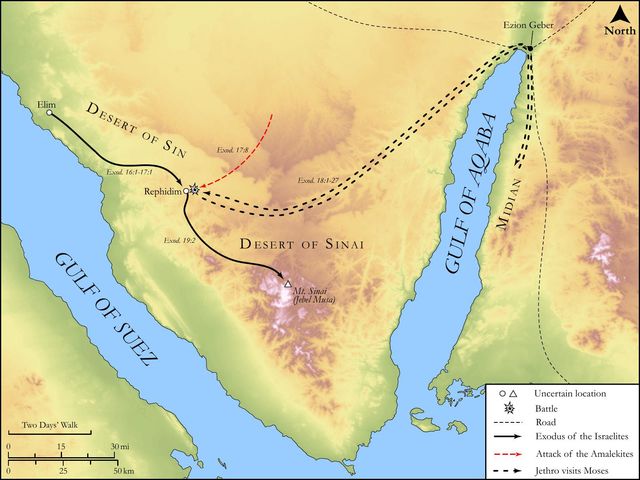
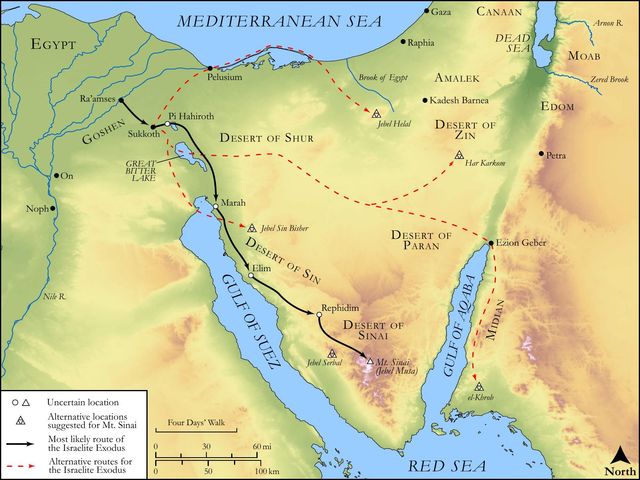
Study this verse
Public-domain commentary
Matthew Henry
From his Commentary on the Whole Bible. Henry comments on passages, not single verses — this entry covers Exodus 18:7–12. His three-level outline is real structure in the source text, so it is rendered as structure.
Observe here, I. The kind greeting that took place between Moses and his father-in-law, Exo 18:7. Though Moses was a prophet of the Lord, a great prophet, and king in Jeshurun, yet he showed a very humble respect to his father-in-law. However God in his providence is pleased to advance us, we must make conscience of giving honour to whom honour is due, and never look with disdain upon our poor relations. Those that stand high in the favour of God are not thereby discharged from the duty they owe to men, nor will that justify them in a stately haughty carriage. Moses went out to meet Jethro, did homage to him, and kissed him. Religion does not destroy good manners. They asked each other of their welfare. Even the kind How-do-you-do's that pass between them are taken notice of, as the expressions and improvements of mutual love and friendship.
II.The narrative that Moses gave his father-in-law of the great things God had done for Israel, Exo 18:8.
This was one thing Jethro came for, to know more fully and particularly what he had heard the general report of. Note, Conversation concerning God's wondrous works is profitable conversation; it is good, and to the use of edifying, Psa 105:2. Compare Psa 145:11, Psa 145:12. Asking and telling news, and discoursing of it, are not only an allowable entertainment of conversation, but are capable of being tuned to a very good account, by taking notice of God's providence, and the operations and tendencies of that providence, in all occurrences.
III.The impressions this narrative made upon Jethro.
1.He congratulated God's Israel: Jethro rejoiced, Exo 18:9. He not only rejoiced in the honour done to his son-in-law, but in all the goodness done to Israel, Exo 18:9. Note, Public blessings are the joy of public spirits. While the Israelites were themselves murmuring, notwithstanding all God's goodness to them, here was a Midianite rejoicing. This was not the only time that the faith of the Gentiles shamed the unbelief of the Jews; see Mat 8:10. Standers-by were more affected with the favours God had shown to Israel than those were that received them.
2.He gave the glory to Israel's God (Exo 18:10): "Blessed be Jehovah" (for by that name he is now known), "who hath delivered you, Moses and Aaron, out of the hand of Pharaoh, so that though he designed your death he could not effect it, and by your ministry has delivered the people." Note, Whatever we have the joy of God must have the praise of.
3.His faith was hereby confirmed, and he took this occasion to make a solemn profession of it: Now know I that Jehovah is greater than all gods, Exo 18:11. Observe,
(1.)The matter of his faith: that the God of Israel is greater than all pretenders, all false and counterfeit-deities, that usurp divine honours; he silences them, subdues them, and is too hard for them all, and therefore is himself the only living and true God. He is also higher than all princes and potentates (who are called gods), and has both an incontestable authority over them and an irresistible power to control and over-rule them; he manages them all as he pleases, and gets honour upon them, how great soever they are.
(2.)The confirmation and improvement of his faith: Now know I; he knew it before, but now he knew it better; his faith great up to a full assurance, upon this fresh evidence. Those obstinately shut their eyes against the clearest light who do not know that the Lord is greater than all gods.
(3.)The ground and reason upon which he built it: For wherein they dealt proudly, the magicians, and the idols which the Egyptians worshipped, or Pharaoh and his grandees (they both opposed God and set up in competition with him), he was above them. The magicians were baffled, the idols shaken, Pharaoh humbled, his powers broken, and, in spite of all their confederacies, God's Israel was rescued out of their hands. Note, Sooner or later, God will show himself above those that by their proud dealings contest with him. He that exalts himself against God shall be abased.
IV.The expressions of their joy and thankfulness.
They had communion with each other both in a feast and in a sacrifice, Exo 18:12. Jethro, being hearty in Israel's interests, was cheerfully admitted though a Midianite, into fellowship with Moses and the elders of Israel, forasmuch as he also was a son of Abraham, though of a younger house.
1.They joined in a sacrifice of thanksgiving: Jethro took burnt offerings for God, and probably offered them himself, for he was a priest in Midian, and a worshipper of the true God, and the priesthood was not yet settled in Israel. Note, Mutual friendship is sanctified by joint-worship. It is a very good thing for relations and friends, when they come together, to join in the spiritual sacrifice of prayer and praise, as those that meet in Christ the centre of unity.
2.They joined in a feast of rejoicing, a feast upon the sacrifice. Moses, upon this occasion, invited his relations and friends to an entertainment in his own tent, a laudable usage among friends, and which Christ himself, not only warranted, but recommended, by his acceptance of such invitations. This was a temperate feast: They did eat bread; this bread, we may suppose, was manna. Jethro must see and taste that bread from heaven, and, though a Gentile, is as welcome to it as any Israelite; the Gentiles still are so to Christ the bread of life. It was a feast kept after a godly sort: They did eat bread before God, soberly, thankfully, in the fear of God; and their table-talk was such as became saints. Thus we must eat and drink to the glory of God, behaving ourselves at our tables as those who believe that God's eye is upon us.
Continue studying Exodus 18:11 across the web’s major study libraries — every link below opens this exact verse, chapter, or book on the destination site.
Read & Compare
 BibleGatewayThis verse in more than 200 translations and 70 languages.
 Bible.comThe YouVersion reader — hundreds of translations, reading plans, and highlights.
 ESV.orgCrossway's official English Standard Version reader.
 NET BibleThe NET translation with 60,000+ translators' notes on every rendering decision.
 STEP BibleTyndale House's free study tool — original text, vocabulary, and scholarly resources.
 BibliaLogos Bible Software's free web reader.
 USCCBThe New American Bible (Revised Edition) with the U.S. bishops' study notes.
Commentaries
 BibleHub CommentariesDozens of classic commentaries on this verse, gathered on one page.
 StudyLightMore than 100 commentary sets — the largest collection on the web.
 BibleRefPlain-English commentary on what this verse means, verse by verse.
 Enduring WordDavid Guzik's free commentary on this chapter, widely used by Bible teachers.
 Bible Study ToolsVerse commentary alongside Greek and Hebrew study aids.
Original Language & Research
- BibleHub InterlinearThe verse word by word — original language, transliteration, and English.
- BibleHub LexiconEvery word's original-language definition and Strong's entry.
 Blue Letter BibleDeep-study tools — Strong's numbers, concordance, and word studies.
 SefariaThe Hebrew text with Rashi and centuries of Jewish commentary.
Sermons, Hymns & Audio


TrulyRandomVerse is not affiliated with these sites and doesn’t control their content. They’re linked because they’re genuinely useful.
Summary
Exodus 18:11 captures Jethro's profound declaration of Yahweh's unparalleled supremacy, a conviction forged after hearing Moses recount the miraculous deliverance of Israel from Egypt. This verse articulates the foundational theological truth that the LORD God is sovereign over all supposed deities and human powers, having unequivocally demonstrated His ultimate authority and righteous justice by triumphing over the prideful oppression of Pharaoh and the Egyptian pantheon.
Context
ShowHideLiterary Context
Jethro's declaration is strategically placed within a pivotal interlude in the Exodus narrative, bridging the dramatic events of the Red Sea crossing and the giving of the Law at Mount Sinai. Chapter 18 opens with Jethro, Moses' Midianite father-in-law, hearing "of all that God had done for Moses, and for Israel his people" (Exodus 18:1). He then journeys to Moses in the wilderness, bringing Zipporah and their two sons. Moses provides a detailed account of "all that the LORD had done to Pharaoh and to the Egyptians for Israel's sake, and all the travail that had come upon them by the way, and how the LORD delivered them" (Exodus 18:8). Jethro's response is one of immediate worship, offering burnt offerings and sacrifices to God, and sharing a meal with the elders of Israel in God's presence (Exodus 18:12). This declaration thus serves as the theological climax of Jethro's encounter with the God of Israel, preceding his practical and wise counsel to Moses regarding judicial administration for the burgeoning nation.
Historical & Cultural Context
Jethro, identified as a priest of Midian, belonged to a nomadic people descended from Abraham through Keturah (Genesis 25:1-2). While not part of the direct Abrahamic covenant line through Isaac and Jacob, Jethro demonstrates a spiritual receptiveness, perhaps even a prior acquaintance with divine revelation, as evidenced by his initial counsel to Moses at the burning bush (Exodus 4:18). His visit to Moses occurs shortly after Israel's dramatic escape from Egypt and their encampment at Mount Sinai. The events Moses recounts—the ten plagues, particularly the death of the firstborn and the crossing of the Red Sea—were not merely historical occurrences but profound demonstrations of Yahweh's absolute supremacy over the gods of Egypt. The Egyptians revered numerous deities, and Pharaoh himself was considered a divine king. His defeat was a direct indictment of the entire Egyptian pantheon and their perceived power, as well as a judgment on Pharaoh's stubborn pride and refusal to obey God. Jethro's declaration, therefore, is a monumentally significant acknowledgment from an "outsider" that the God of Israel is truly unique and sovereign above all.
Key Themes
ShowHideExodus 18:11 powerfully contributes to several overarching themes within the book of Exodus and the broader Pentateuch. Foremost among these is the theme of Divine Sovereignty and Supremacy, asserting Yahweh's absolute rule over all creation, nations, and false deities. The Exodus narrative consistently portrays God as actively engaged in history, demonstrating His power to deliver His people and judge their oppressors, often through miraculous and undeniable means. This verse also highlights the theme of Revelation and Recognition, showing that God's mighty acts are not hidden but are revealed to all, prompting even those outside the covenant community to acknowledge His truth. Jethro's response underscores the Contrast Between True and False Gods, vividly illustrating the impotence of human-made idols and the vibrant, active power of the living God. Finally, it reinforces the theme of God's Justice and Retribution, demonstrating that God responds to human pride and oppression with precise and fitting judgment, ensuring that those who exalt themselves against Him are ultimately brought low, as seen in Pharaoh's rebellion and subsequent downfall.
Exposition and Analysis
ShowHideKey Word Analysis
ShowHideThis verb signifies more than mere intellectual apprehension; it denotes an experiential, intimate, and often transformative knowledge. Jethro's "Now I know" (עַתָּה יָדַעְתִּי, ʿattāh yādaʿtî) indicates a newfound conviction born from observing God's powerful acts. It's a recognition that moves beyond hearsay to a deeply held understanding of God's character and power, leading to worship and affirmation.
This adjective means "great" in any sense, encompassing magnitude, power, importance, or even insolence. In this context, it unequivocally declares Yahweh's superior power and preeminence. Jethro proclaims that the LORD is not merely a great god, but greater than all other gods, asserting His incomparable might and singular authority over all other perceived divine or human forces.
This primitive root means "to seethe" or, figuratively, "to be insolent," "to act presumptuously," or "to be proud." It perfectly describes Pharaoh's arrogant defiance of God's commands and his oppressive, self-exalting treatment of the Israelites. The use of this word highlights the hubris of human power and authority that dares to set itself against the divine will, setting the stage for inevitable divine judgment.
Verse Breakdown
ShowHide"Now I know that the LORD [is] greater than all gods"
Jethro's opening declaration, "Now I know," marks a pivotal moment of personal theological conviction. Having heard Moses' detailed account of the Exodus, Jethro, a priest of Midian, moves from a general understanding of deity to a specific, experiential recognition of Yahweh's unique and absolute supremacy. The phrase "the LORD [is] greater than all gods" is a bold theological statement of monotheistic truth, asserting Yahweh's absolute sovereignty not only over the Egyptian pantheon but over every conceivable power or deity. It is a testament to the undeniable, self-evident power of God's mighty acts.
"for in the thing wherein they dealt proudly [he was] above them"
This clause provides the irrefutable justification for Jethro's declaration of God's supremacy. The "thing wherein they dealt proudly" refers directly to the Egyptians' oppressive actions, particularly their enslavement, brutalization, and Pharaoh's arrogant refusal to release Israel. This included Pharaoh's decree to drown Israelite male children in the Nile (Exodus 1:22). The phrase "he was above them" (literally, "over them") signifies Yahweh's decisive triumph and overwhelming superiority in the very arena of their pride. God's judgment was not arbitrary but a precise, divinely orchestrated response that turned the oppressors' methods against them, demonstrating His perfect justice.
Literary Devices
ShowHideExodus 18:11 employs several profound literary devices. The verse functions as a powerful Declaration, a solemn and emphatic statement of theological truth pronounced by an unexpected character—an "outsider" priest—which significantly amplifies its universality and weight. There is a clear Contrast established between "the LORD" and "all gods," highlighting Yahweh's singular omnipotence against the impotence and falsity of pagan deities. Furthermore, the phrase "in the thing wherein they dealt proudly [he was] above them" exemplifies a potent Retribution Motif, where the divine punishment perfectly and poetically fits the human crime. Pharaoh's arrogant use of water to destroy Israelite children (Exodus 1:22) is directly mirrored by God's use of the Red Sea waters to destroy Pharaoh's proud army (Exodus 14:28). This demonstrates profound divine Irony and perfect Justice, where the very instruments and methods of human arrogance are turned back upon the perpetrators by the sovereign hand of God, showcasing His ultimate control over all circumstances.
Theological and Thematic Connections
ShowHideJethro's declaration in Exodus 18:11 serves as a foundational theological statement about the uniqueness and absolute sovereignty of Yahweh. It affirms that the God of Israel is not merely one deity among many, but the one true God, whose power transcends all human and spiritual opposition. This profound truth is not an abstract concept but is powerfully demonstrated through concrete, historical acts of deliverance and judgment, revealing God's character as both mighty and perfectly just. It underscores the pervasive biblical theme that God's glory is revealed through His triumph over those who oppose Him and His people, often in ways that directly counter the methods of the oppressors. This revelation is not limited to Israel but is intended for all who are willing to see and believe, inviting universal recognition of His unrivaled power.
Reflection and Application
ShowHideExodus 18:11 offers profound reassurance and a compelling call to worship for believers today. In a world still filled with "gods"—whether they manifest as ideologies, political powers, the pursuit of wealth, technological advancements, or the insidious worship of self—Jethro's declaration serves as an enduring reminder that the LORD remains utterly supreme. No human system, no oppressive regime, and no personal struggle can ultimately stand against the God who delivered Israel from the mightiest empire of their day. This verse encourages us to place our trust not in fleeting human strength or deceptive false securities, but in the unwavering power, perfect justice, and unfailing faithfulness of the Almighty. It challenges us to critically examine what "gods" might subtly compete for our allegiance in our own lives and to reaffirm Yahweh's rightful place as sovereign. Furthermore, Jethro's transformative response highlights the profound power of testimony; when we faithfully share how God has delivered us and demonstrated His power, it can lead others, even those outside our immediate faith community, to acknowledge and worship the one true God.
Questions for Reflection
ShowHideFAQ
ShowHideWho was Jethro, and why is his declaration significant?
ShowHideJethro was Moses' father-in-law, identified as a priest of Midian. His declaration in Exodus 18:11 is highly significant because he was an "outsider" to the covenant people of Israel. As a Midianite priest, he likely had his own religious traditions, but upon hearing Moses recount the detailed story of the Exodus and God's mighty acts against Egypt, he was compelled to acknowledge the unparalleled supremacy of Yahweh. His conversion from a potential polytheist to a worshipper of the one true God underscores the universal nature of God's revelation and the undeniable power of His works. It demonstrates that God's glory is not confined to Israel but is evident to all who genuinely observe His actions, leading even those from other cultures to confess His truth.
What does it mean that God "was above them" in the thing wherein they "dealt proudly"?
ShowHideThis phrase refers to God's precise and just retribution against Pharaoh and the Egyptians. "Dealt proudly" (Hebrew zûwd) describes Pharaoh's arrogant defiance of God's commands and his oppressive actions against Israel, particularly his decree to drown Israelite male infants in the Nile (Exodus 1:22). God's response, that He "was above them," means He demonstrated His superior power by turning their own methods of oppression against them. For instance, Pharaoh used water to oppress Israel, and God used the waters of the Red Sea to destroy Pharaoh's army (Exodus 14:28). This demonstrates God's perfect justice, where the very instrument of the oppressor's pride and cruelty becomes the means of their judgment, showcasing His ultimate sovereignty over all human arrogance and power.
Christ-Centered Fulfillment
ShowHideJethro's declaration that "the LORD is greater than all gods" and that "in the thing wherein they dealt proudly he was above them" finds its ultimate and most profound fulfillment in the person and redemptive work of Jesus Christ. The Exodus narrative, culminating in God's decisive triumph over Pharaoh and the Egyptian pantheon, serves as a powerful foreshadowing of Christ's definitive victory over sin, death, and all spiritual powers that hold humanity captive. Just as Yahweh defeated the proud and oppressive empire of Egypt, so too did Christ, through His crucifixion and resurrection, conquer the ultimate oppressors: sin, which enslaved humanity (Romans 6:6), and death, which reigned as king (Romans 5:17). The "pride" of the enemy, personified by Satan and his demonic forces, was utterly defeated by Christ's humble obedience unto death (Philippians 2:8). The Cross, which appeared to be the ultimate defeat, was in fact the very "thing wherein they dealt proudly" (believing they had triumphed over God's Son), yet it was precisely through this act that God "was above them," disarming the principalities and powers and triumphing over them by the cross. Jesus, the Lamb of God who takes away the sin of the world, is the ultimate revelation of God's supremacy, demonstrating His power not merely over earthly rulers but over the spiritual forces of evil, securing eternal deliverance for all who believe (Hebrews 2:14-15).