


Exodus 18:7
- וַיֵּצֵאvai·ye·Tze'and he went outH3318Conj-w ¦ V-Qal-ConsecImperf-3msVerb Qal Consecutive Imperfect 3rd Singular Masculineוַandיֵּצֵאhe went out
- מֹשֶׁהmo·ShehMosesH4872N-proper-mNoun Proper Masculine
- לִקְרַאתlik·Ratto meetH7122Prep-l ¦ V-Qal-InfVerb Qal Infinitive Constructלִtoקְרַאתmeet
- חֹתְנוֹcho·te·Nohis father-in-lawH2859V-Qal-Prtcpl-ms ¦ 3msVerb Qal Participle Singular Masculine Constructחֹתְנfather-in-lawוֹhis
- וַיִּשְׁתַּחוּvai·yish·Ta·chuand he bowed downH7812Conj-w ¦ V-Hishtaphel-ConsecImperf-3msVerb Hishtaphel Consecutive Imperfect 3rd Singular Masculineוַandיִּשְׁתַּחוּhe bowed down
- וַיִּשַּׁקvai·yi·shakand he kissedH5401Conj-w ¦ V-Qal-ConsecImperf-3msVerb Qal Consecutive Imperfect 3rd Singular Masculineוַandיִּשַּׁקhe kissed
- לוֹlo<to> himPrep-l ¦ 3msSuffix Personal 3rd Singular Masculineל<to>וֹhim
- וַיִּשְׁאֲלוּvai·yish·'a·Luand they askedH7592Conj-w ¦ V-Qal-ConsecImperf-3mpVerb Qal Consecutive Imperfect 3rd Plural Masculineוַandיִּשְׁאֲלוּthey asked
- אִישׁ'isheachH376N-msNoun Singular Masculine Absolute
- לְרֵעֵהוּle·re·'E·huof his neighborH7453Prep-l ¦ N-msc ¦ 3msNoun Singular Masculine Constructלְofרֵעֵneighborהוּhis
- לְשָׁלוֹםle·sha·Lomto welfareH7965Prep-l ¦ N-msNoun Singular Masculine Absoluteלְtoשָׁלוֹםwelfare
- וַיָּבֹאוּvai·ya·Vo·'uand they wentH935Conj-w ¦ V-Qal-ConsecImperf-3mpVerb Qal Consecutive Imperfect 3rd Plural Masculineוַandיָּבֹאוּthey went
- הָאֹהֱלָהha·'O·he·lahthe tent towardsH168Art ¦ N-ms ¦ SfxNoun Singular Masculine Absoluteהָtheאֹהֱלָtentהtowards
English is a literal word-by-word gloss of the Hebrew, not the KJV's wording. Why?
This is the original text the KJV's translators worked from — each Hebrew word with its own literal English meaning in this verse, prepared by scholars at Tyndale House, Cambridge. The KJV translates whole sentences, not word by word, so its wording differs: one Hebrew word can become several English words, and the KJV may choose “the LORD” where the gloss reads “Yahweh”. Both are faithful — they answer different questions. For the KJV's own rendering, switch to the KJV text.
Details
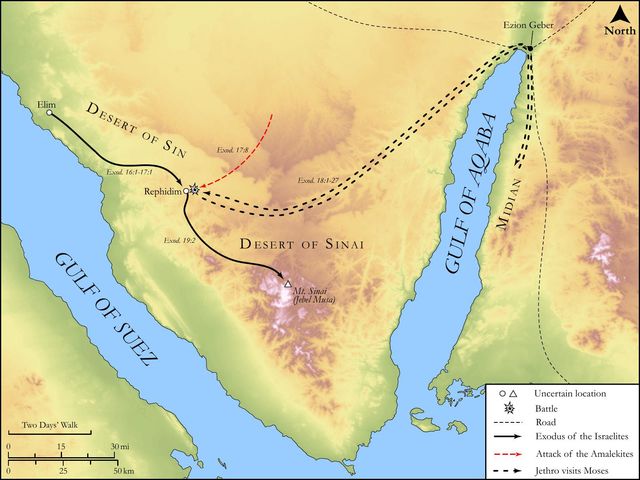
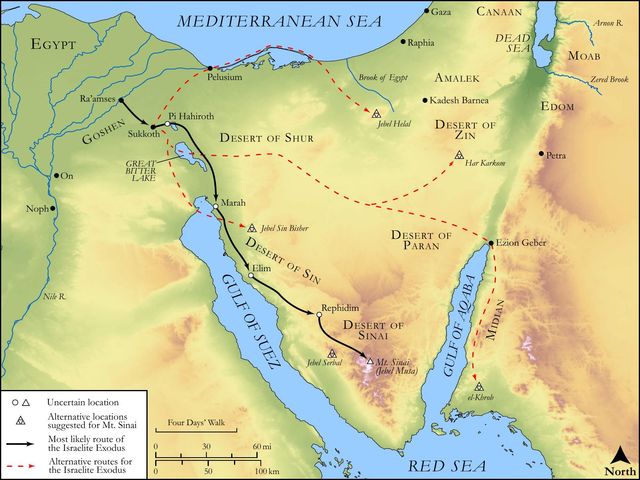
See on the biblical-era map

Study this verse
Public-domain commentary
Matthew Henry
From his Commentary on the Whole Bible. Henry comments on passages, not single verses — this entry covers Exodus 18:7–12. His three-level outline is real structure in the source text, so it is rendered as structure.
Observe here, I. The kind greeting that took place between Moses and his father-in-law, Exo 18:7. Though Moses was a prophet of the Lord, a great prophet, and king in Jeshurun, yet he showed a very humble respect to his father-in-law. However God in his providence is pleased to advance us, we must make conscience of giving honour to whom honour is due, and never look with disdain upon our poor relations. Those that stand high in the favour of God are not thereby discharged from the duty they owe to men, nor will that justify them in a stately haughty carriage. Moses went out to meet Jethro, did homage to him, and kissed him. Religion does not destroy good manners. They asked each other of their welfare. Even the kind How-do-you-do's that pass between them are taken notice of, as the expressions and improvements of mutual love and friendship.
II.The narrative that Moses gave his father-in-law of the great things God had done for Israel, Exo 18:8.
This was one thing Jethro came for, to know more fully and particularly what he had heard the general report of. Note, Conversation concerning God's wondrous works is profitable conversation; it is good, and to the use of edifying, Psa 105:2. Compare Psa 145:11, Psa 145:12. Asking and telling news, and discoursing of it, are not only an allowable entertainment of conversation, but are capable of being tuned to a very good account, by taking notice of God's providence, and the operations and tendencies of that providence, in all occurrences.
III.The impressions this narrative made upon Jethro.
1.He congratulated God's Israel: Jethro rejoiced, Exo 18:9. He not only rejoiced in the honour done to his son-in-law, but in all the goodness done to Israel, Exo 18:9. Note, Public blessings are the joy of public spirits. While the Israelites were themselves murmuring, notwithstanding all God's goodness to them, here was a Midianite rejoicing. This was not the only time that the faith of the Gentiles shamed the unbelief of the Jews; see Mat 8:10. Standers-by were more affected with the favours God had shown to Israel than those were that received them.
2.He gave the glory to Israel's God (Exo 18:10): "Blessed be Jehovah" (for by that name he is now known), "who hath delivered you, Moses and Aaron, out of the hand of Pharaoh, so that though he designed your death he could not effect it, and by your ministry has delivered the people." Note, Whatever we have the joy of God must have the praise of.
3.His faith was hereby confirmed, and he took this occasion to make a solemn profession of it: Now know I that Jehovah is greater than all gods, Exo 18:11. Observe,
(1.)The matter of his faith: that the God of Israel is greater than all pretenders, all false and counterfeit-deities, that usurp divine honours; he silences them, subdues them, and is too hard for them all, and therefore is himself the only living and true God. He is also higher than all princes and potentates (who are called gods), and has both an incontestable authority over them and an irresistible power to control and over-rule them; he manages them all as he pleases, and gets honour upon them, how great soever they are.
(2.)The confirmation and improvement of his faith: Now know I; he knew it before, but now he knew it better; his faith great up to a full assurance, upon this fresh evidence. Those obstinately shut their eyes against the clearest light who do not know that the Lord is greater than all gods.
(3.)The ground and reason upon which he built it: For wherein they dealt proudly, the magicians, and the idols which the Egyptians worshipped, or Pharaoh and his grandees (they both opposed God and set up in competition with him), he was above them. The magicians were baffled, the idols shaken, Pharaoh humbled, his powers broken, and, in spite of all their confederacies, God's Israel was rescued out of their hands. Note, Sooner or later, God will show himself above those that by their proud dealings contest with him. He that exalts himself against God shall be abased.
IV.The expressions of their joy and thankfulness.
They had communion with each other both in a feast and in a sacrifice, Exo 18:12. Jethro, being hearty in Israel's interests, was cheerfully admitted though a Midianite, into fellowship with Moses and the elders of Israel, forasmuch as he also was a son of Abraham, though of a younger house.
1.They joined in a sacrifice of thanksgiving: Jethro took burnt offerings for God, and probably offered them himself, for he was a priest in Midian, and a worshipper of the true God, and the priesthood was not yet settled in Israel. Note, Mutual friendship is sanctified by joint-worship. It is a very good thing for relations and friends, when they come together, to join in the spiritual sacrifice of prayer and praise, as those that meet in Christ the centre of unity.
2.They joined in a feast of rejoicing, a feast upon the sacrifice. Moses, upon this occasion, invited his relations and friends to an entertainment in his own tent, a laudable usage among friends, and which Christ himself, not only warranted, but recommended, by his acceptance of such invitations. This was a temperate feast: They did eat bread; this bread, we may suppose, was manna. Jethro must see and taste that bread from heaven, and, though a Gentile, is as welcome to it as any Israelite; the Gentiles still are so to Christ the bread of life. It was a feast kept after a godly sort: They did eat bread before God, soberly, thankfully, in the fear of God; and their table-talk was such as became saints. Thus we must eat and drink to the glory of God, behaving ourselves at our tables as those who believe that God's eye is upon us.
Continue studying Exodus 18:7 across the web’s major study libraries — every link below opens this exact verse, chapter, or book on the destination site.
Read & Compare
 BibleGatewayThis verse in more than 200 translations and 70 languages.
 Bible.comThe YouVersion reader — hundreds of translations, reading plans, and highlights.
 ESV.orgCrossway's official English Standard Version reader.
 NET BibleThe NET translation with 60,000+ translators' notes on every rendering decision.
 STEP BibleTyndale House's free study tool — original text, vocabulary, and scholarly resources.
 BibliaLogos Bible Software's free web reader.
 USCCBThe New American Bible (Revised Edition) with the U.S. bishops' study notes.
Commentaries
 BibleHub CommentariesDozens of classic commentaries on this verse, gathered on one page.
 StudyLightMore than 100 commentary sets — the largest collection on the web.
 BibleRefPlain-English commentary on what this verse means, verse by verse.
 Enduring WordDavid Guzik's free commentary on this chapter, widely used by Bible teachers.
 Bible Study ToolsVerse commentary alongside Greek and Hebrew study aids.
Original Language & Research
- BibleHub InterlinearThe verse word by word — original language, transliteration, and English.
- BibleHub LexiconEvery word's original-language definition and Strong's entry.
 Blue Letter BibleDeep-study tools — Strong's numbers, concordance, and word studies.
 SefariaThe Hebrew text with Rashi and centuries of Jewish commentary.
Sermons, Hymns & Audio


TrulyRandomVerse is not affiliated with these sites and doesn’t control their content. They’re linked because they’re genuinely useful.
Summary
Exodus 18:7 vividly portrays the deeply respectful and affectionate reunion between Moses, Israel's divinely appointed leader, and his father-in-law, Jethro, near the "mount of God." This pivotal verse highlights Moses' profound humility and deference, despite his elevated status, as he initiates the encounter by going out to meet Jethro, performing traditional gestures of obeisance and a warm kiss, and engaging in a sincere mutual inquiry about their well-being before inviting him into his tent for private fellowship.
Context
ShowHideLiterary Context
Exodus 18:7 is strategically placed within a broader narrative detailing Jethro's visit to the Israelite camp, serving as a crucial interlude between the dramatic deliverance from Egypt and the momentous giving of the Law at Mount Sinai. Preceding this verse, Jethro, having heard of God's mighty acts of salvation, brings Moses' wife, Zipporah, and their two sons, Gershom and Eliezer, to reunite with Moses in the wilderness (Exodus 18:1-6). The immediate narrative flow after this reunion (Exodus 18:8-12) describes Moses recounting God's miraculous deliverance to Jethro, Jethro's subsequent praise of Yahweh, and their shared covenantal meal. This familial and spiritual communion then transitions into Jethro's indispensable counsel to Moses on delegating judicial responsibilities to alleviate his overwhelming burden (Exodus 18:13-27), underscoring the practical and administrative significance of this personal reunion for the nascent nation of Israel.
Historical & Cultural Context
The setting for this encounter is the wilderness journey of the Israelites, a newly liberated nation encamped at the "mount of God," widely understood to be Mount Sinai, where the Mosaic Covenant would soon be established. Moses, as the singular, divinely appointed leader, bore the immense burden of guiding, judging, and interceding for the people, as vividly illustrated in the subsequent account of his daily judicial duties (Exodus 18:13-16). Jethro, identified as a priest of Midian, represents a non-Israelite figure who nevertheless acknowledges and praises Yahweh, indicating a broader recognition of God's power beyond Israel's immediate borders. The actions depicted in this verse—Moses going out to meet, doing obeisance, kissing, and inquiring about welfare—were deeply ingrained customs of respect, honor, and hospitality in the ancient Near East. Such gestures were particularly significant when meeting elders, respected figures, or family, emphasizing the importance of familial bonds and social hierarchy, even for a leader of Moses' unparalleled stature. The "tent" served as the primary dwelling and a private space for intimate fellowship and counsel.
Key Themes
ShowHideThis verse contributes significantly to several overarching themes within the book of Exodus and the broader Pentateuch. It highlights the theme of Humility in Leadership, demonstrating that even God's most exalted servants are called to model deference and respect for others, particularly family and elders, rather than allowing their divine commission to foster arrogance. The reunion also underscores the Sanctity and Importance of Family Relationships, portraying a tender moment of familial reconciliation and mutual care amidst the grand narrative of national formation. Furthermore, the mutual inquiry of "welfare" (shalom) introduces the profound theme of Holistic Well-being and Peace, a concept central to God's covenantal desire for His people's flourishing, extending beyond mere physical safety to encompass spiritual, social, and material prosperity. This familial interaction sets the stage for the practical wisdom and divine guidance that will flow from Jethro's visit, illustrating the theme of Divine Provision through Human Counsel, even from outside the immediate Israelite community.
Exposition and Analysis
ShowHideKey Word Analysis
ShowHideThis primitive root means "to go (causatively, bring) out, in a great variety of applications, literally and figuratively." In this context, Moses' active decision to "go out" from the Israelite camp to meet Jethro, rather than waiting for Jethro to come to him, signifies his initiative, humility, and profound respect. It is a deliberate act of honor, demonstrating that despite his immense authority as Israel's leader, he prioritizes the familial bond and the respect due to his elder.
This primitive root means "to depress, i.e. prostrate (especially reflexive, in homage to royalty or God); bow (self) down, crouch, fall down (flat), humbly beseech, do (make) obeisance, do reverence, make to stoop, worship." While often used in contexts of worship or reverence towards God (e.g., Exodus 4:31), here it describes an act of profound respect and deference shown to a human superior or elder. Moses' act of shachâh before Jethro underscores his deep humility and the high regard he held for his father-in-law, demonstrating respect for family and age despite his unique divine calling.
This renowned Hebrew word encompasses far more than a simple greeting of "peace." It signifies a holistic state of completeness, well-being, prosperity, safety, harmony, and flourishing. When Moses and Jethro "asked each other of their welfare," they were not merely inquiring about physical health but about their entire state of being, their circumstances, their journey, and their overall flourishing. This deep inquiry reflects genuine care and a desire for the other's comprehensive good, a concept central to God's covenantal desire for His people's shalom.
Verse Breakdown
ShowHide"And Moses went out to meet his father in law"
This opening clause immediately establishes Moses' initiative and profound humility. Despite being the leader of a burgeoning nation and the one through whom God performed mighty wonders, Moses does not wait for Jethro to come to him. Instead, he actively goes out of the camp to greet his elder and father-in-law, a gesture of profound respect and honor that sets the tone for the entire reunion.
"and did obeisance, and kissed him"
These actions further emphasize Moses' reverence and deep affection. "Doing obeisance" (bowing or prostrating) was a formal act of deep respect and submission to a superior, while kissing was a common familial greeting signifying warmth, affection, and intimate connection in ancient Near Eastern culture. Together, they paint a vivid picture of genuine personal connection and a recognition of Jethro's standing, both as an elder and as family.
"and they asked each other of [their] welfare"
This indicates a mutual and sincere inquiry into each other's holistic well-being, utilizing the rich concept of shalom. It suggests a period of heartfelt conversation where they exchanged updates on their respective journeys, experiences, and the overall state of their lives, fostering deeper understanding and connection before proceeding. This mutual inquiry highlights a genuine concern for the other's comprehensive flourishing.
"and they came into the tent"
The culmination of the initial public greeting, this signifies the transition from the open meeting to a more private, intimate, and hospitable setting. Entering the tent implies an invitation to rest, shelter, and further fellowship, setting the stage for the detailed recounting of God's works and Jethro's subsequent crucial counsel, which will unfold in the privacy of Moses' dwelling.
Literary Devices
ShowHideExodus 18:7 employs several powerful literary devices to convey its profound meaning and emotional depth. Imagery is central, painting a vivid and culturally rich picture of the reunion through Moses' deliberate actions: "went out," "did obeisance," "kissed him," and "came into the tent." These actions are not merely functional but carry significant cultural weight, immediately communicating respect, affection, and hospitality. The verse also utilizes Parallelism in the sequence of actions: "Moses went out to meet... and did obeisance, and kissed him; and they asked each other of their welfare; and they came into the tent." This creates a rhythmic flow that emphasizes the deliberate and respectful nature of each step in the reunion. Furthermore, the scene is rich in Symbolism. The "tent" symbolizes not just a physical dwelling but a sacred space of intimacy, refuge, and counsel, foreshadowing the important discussions and the giving of wise advice that will occur within its confines. Moses' profound humility, despite his unparalleled divine commission, serves as a powerful Exemplum, providing a compelling model of how even the greatest leaders should honor family and elders, a timeless virtue for all believers.
Theological and Thematic Connections
ShowHideExodus 18:7 beautifully illustrates the profound biblical importance of honor, humility, and the sanctity of family relationships, even amidst monumental divine work. Moses, God's chosen leader and the deliverer of Israel, does not allow his unique status or the immense pressures of his calling to diminish his respect and affection for his father-in-law. This act foreshadows and embodies the spirit of the Fifth Commandment to honor one's parents, demonstrating that reverence for elders and family is a foundational virtue woven into the very fabric of God's design for humanity. The mutual inquiry of "welfare" (shalom) underscores God's desire for holistic well-being and genuine concern within human relationships, reflecting His own comprehensive care for His people and calling them to live in harmony and mutual support.
Reflection and Application
ShowHideThe poignant scene in Exodus 18:7 offers a timeless blueprint for cultivating healthy and honorable relationships in our own lives. Moses, burdened with the monumental task of leading an entire nation through the wilderness, still prioritizes the personal and familial. His actions remind us that true leadership, and indeed true Christian character, is often characterized by profound humility and a willingness to honor those who have poured into our lives, regardless of our achieved status or public recognition. In a world that frequently prioritizes individual achievement, self-promotion, and the pursuit of power, Moses' example challenges us to intentionally seek out, honor, and genuinely connect with our elders, family members, and those who have mentored us. Taking the time to truly inquire about another's "welfare," to listen with empathy, and to offer sincere hospitality, cultivates the kind of deep, meaningful relationships that reflect God's love and bring shalom into our communities and homes. It calls us to be present, to be respectful, and to cherish the bonds that God has given us.
Questions for Reflection
ShowHideFAQ
ShowHideWhy was Jethro visiting Moses at this particular time?
ShowHideJethro, Moses' father-in-law, had heard of all the extraordinary things that God had done for Moses and for Israel, His people, specifically how the Lord had miraculously brought Israel out of Egyptian bondage (Exodus 18:1). He came to reunite Moses with his wife, Zipporah, and their two sons, Gershom and Eliezer, who had apparently been sent back to Jethro's home earlier, likely during the critical events surrounding Moses' call and the circumcision incident (Exodus 4:24-26). His visit was thus a deeply personal family reunion, providentially timed, which then led to his crucial and wise counsel regarding the administration of justice within the burgeoning nation of Israel.
Christ-Centered Fulfillment
ShowHideExodus 18:7, with its depiction of Moses' profound humility and the warm welcome into the tent, beautifully foreshadows the ultimate condescension and hospitality of Christ. Moses, the human deliverer and a type of the coming prophet, bows before his elder, demonstrating a model of honor and respect. Yet, Christ, the divine Deliverer and the greater Moses (Deuteronomy 18:15), did not merely bow but emptied Himself, taking the very form of a servant, even to the point of death on a cross, demonstrating unparalleled humility and obedience (Philippians 2:6-8). The mutual inquiry of "welfare" and the subsequent entry into the tent prefigure the shalom that Christ embodies and offers to humanity. He is our peace (Ephesians 2:14), who not only inquires about our well-being but actively provides it through His atoning work, reconciling us to God. Moreover, the welcoming into the tent symbolizes God's profound desire to dwell with His people, a desire ultimately fulfilled in the Incarnation of Christ ("God with us," Matthew 1:23), and fully realized when He welcomes us into His eternal dwelling, the new heavens and new earth, where He will tabernacle with humanity forever (Revelation 21:3).