


Matthew 8:10
Bible text: King James Version (1769 Blayney text) · Public domain
Bible text: King James Version with Strong's numbers · Public domain
Bible text: Berean Standard Bible · Public domain
Bible text: American Standard Version (1901) · Public domain
Bible text: World English Bible, Messianic edition · Public domain
Bible text: Geneva Bible (1599) · Public domain
Bible text: Young's Literal Translation · Public domain
- ἈκούσαςAkousasHaving heardG191V-AAP-NSMVerb Aorist Active Participle Nominative Singular Masculine
- δὲdenowG1161CONJConjunction
- ὁho<the>G3588T-NSMDefinite article Nominative Singular Masculine
- ἸησοῦςIēsousJesusG2424N-NSM-PNoun Nominative Singular Masculine Individual
- ἐθαύμασενethaumasenmarveledG2296V-AAI-3SVerb Aorist Active Indicative 3rd Singular
- καὶkaiandG2532CONJConjunction
- εἶπενeipenHe saidG2036V-2AAI-3SVerb 2nd Aorist Active Indicative 3rd Singular
- τοῖςtoisto thoseG3588T-DPMDefinite article Dative Plural Masculine
- ἀκολουθοῦσιν·akolouthousinfollowingG190V-PAP-DPMVerb Present Active Participle Dative Plural Masculine
- ἀμὴνamēnAmenG281INJ-HEBInterjection
- λέγωlegōI sayG3004V-PAI-1SVerb Present Active Indicative 1st Singular
- ὑμῖν·huminto youG4771P-2DPPersonal pronoun Dative 2nd Plural
- οὐδενὶoudenino [one]G3762A-DSMAdjective Dative Singular Masculine
- τοσαύτηνtosautēnso greatG5118K-ASFCorrelative pronoun Accusative Singular Feminine
- πίστινpistinfaithG4102N-ASFNoun Accusative Singular Feminine
- ἐνeninG1722PREPPreposition
- τῷtō<the>G3588T-DSMDefinite article Dative Singular Masculine
- ἸσραὴλIsraēlIsraelG2474N-DSM-LNoun Dative Singular Masculine Location
- εὗρονheuronhave I foundG2147V-2AAI-1SVerb 2nd Aorist Active Indicative 1st Singular
English is a literal word-by-word gloss of the Greek, not the KJV's wording. Why?
This is the original text the KJV's translators worked from — each Greek word with its own literal English meaning in this verse, prepared by scholars at Tyndale House, Cambridge. The KJV translates whole sentences, not word by word, so its wording differs: one Greek word can become several English words, and the KJV may choose “charity” where the gloss reads “love”. Both are faithful — they answer different questions. For the KJV's own rendering, switch to the KJV text.
Details
See on the biblical-era maps
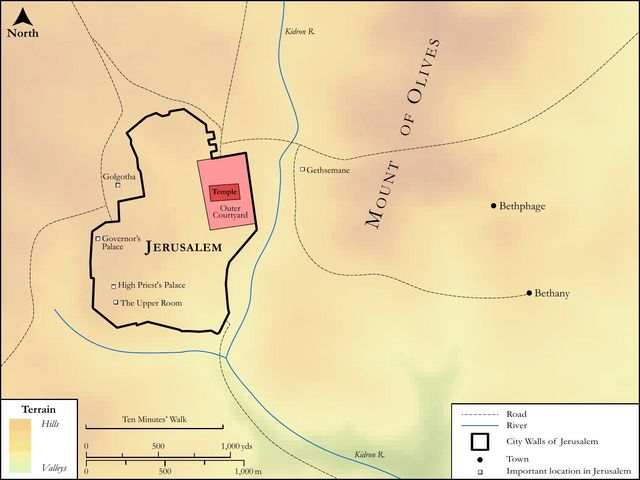
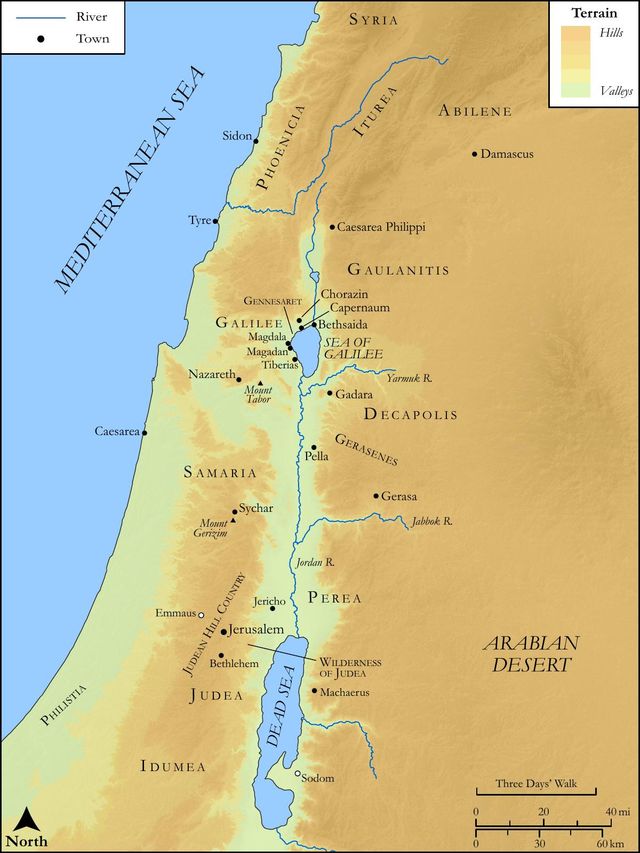
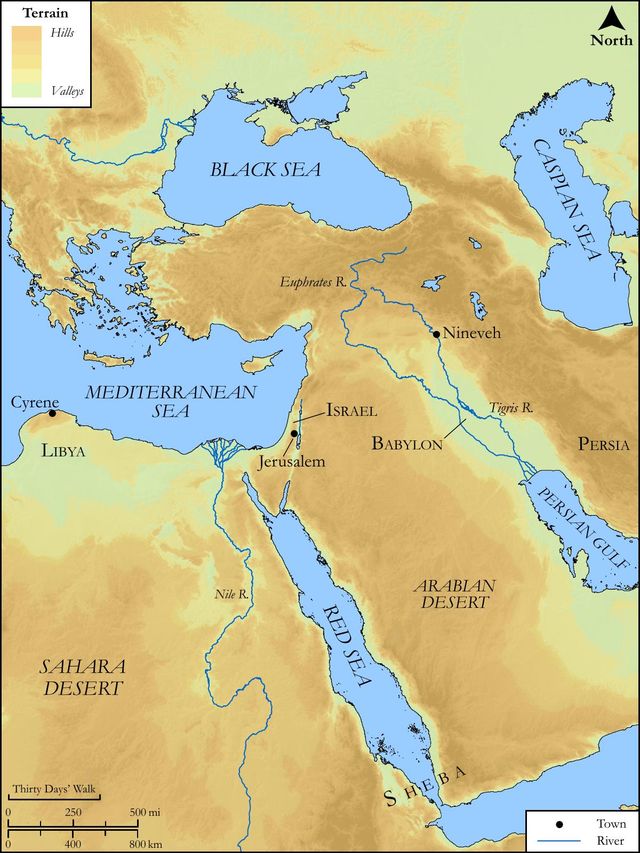
Study this verse
Public-domain commentary
Matthew Henry
From his Commentary on the Whole Bible. Henry comments on passages, not single verses — this entry covers Matthew 8:5–13. His four-level outline is real structure in the source text, so it is rendered as structure.
We have here an account of Christ's curing the centurion's servant of a palsy. This was done at Capernaum, where Christ now dwelt, Mat 4:13. Christ went about doing good, and came home to do good too; every place he came to was the better for him.
The persons Christ had now to do with were,
1.A centurion; he was a supplicant, a Gentile, a Roman, an officer of the army; probably commander-in-chief of that part of the Roman army which was quartered at Capernaum, and kept garrison there.
(1.)Though he was a soldier (and a little piety commonly goes a great way with men of that profession), yet he was a godly man; he was eminently so. Note, God has his remnant among all sorts of people. No man's calling or place in the world will be an excuse for his unbelief and impiety; none shall say in the great day, I had been religious, if I had not been a soldier; for such there are among the ransomed of the Lord. And sometimes where grace conquers the unlikely, it is more than a conqueror; this soldier that was good, was very good.
(2.)Though he was a Roman soldier, and his very dwelling among the Jews was a badge of their subjection to the Roman yoke, yet Christ, who was King of the Jews, favoured him; and therein has taught us to do good to our enemies, and not needlessly to interest ourselves in national enmities.
(3.)Though he was a Gentile, yet Christ countenanced him. It is true, he went not to any of the Gentile towns (it was the land of Canaan that was Immanuel's land, Isa 8:8), yet he received addresses from Gentiles; now good old Simeon's word began to be fulfilled, that he should be a light to lighten the Gentiles, as well as the glory of his people Israel. Matthew, in annexing this cure to that of the leper, who was a Jew, intimates this; the leprous Jews Christ touched and cured, for he preached personally to them; but the paralytic Gentiles he cured at a distance; for to them he did not go in person, but sent his word and healed them; yet in them he was more magnified.
2.The centurion's servant; he was the patient. In this also it appears, that there is no respect of persons with God; for in Christ Jesus, as there is neither circumcision nor uncircumcision, so there is neither bond nor free. He is as ready to heal the poorest servant, as the richest master; for himself took upon him the form of a servant, to show his regard to the meanest.
Now in the story of the cure of this servant, we may observe an intercourse or interchanging of graces, very remarkable between Christ and the centurion. See here,
I.The grace of the centurion working towards Christ.
Can any good thing come out of a Roman soldier? any thing tolerable, much less any thing laudable? Come and see, and you will find abundance of good coming out of this centurion that was eminent and exemplary. Observe, 1. His affectionate address to Jesus Christ, which speaks,
(1.)A pious regard to our great Master, as one able and willing to succour and relieve poor petitioners. He came to him beseeching him, not as Naaman the Syrian (a centurion too) came to Elisha, demanding a cure, taking state, and standing upon points of honour; but with cap in hand as a humble suitor. By this it seems that he saw more in Christ than appeared at first view; saw that which commanded respect, though to those who looked no further, his visage was marred more than any man's. The officers of the army, being comptrollers of the town, no doubt made a great figure, yet he lays by the thoughts of his post of honour, when he addresses himself to Christ, and comes beseeching him. Note, the greatest of men must turn beggars, when they have to do with Christ. He owns Christ's sovereignty, in calling him Lord, and referring the case to him, and to his will, and wisdom, by a modest remonstrance, without any formal and express petition. He knew he had to do with a wise and gracious Physician, to whom the opening of the malady was equivalent to the most earnest request. A humble confession of our spiritual wants and diseases shall not fail of an answer of peace. Pour out thy complaint, and mercy shall be poured out.
(2.)A charitable regard to his poor servant. We read of many that came to Christ for their children, but this is the only instance of one that came to him for a servant: Lord, my servant lieth at home sick. Note, it is the duty of masters to concern themselves for their servants, when they are in affliction. The palsy disabled the servant for his work, and made him as troublesome and tedious as any distemper could, yet he did not turn him away when he was sick (as that Amalekite did his servants, Sa1 30:13), did not send him to his friends, not let him lie by neglected, but sought out the best relief he could for him; the servant could not have done more for the master, than the master did here for the servant. The centurion's servants were very dutiful to him (Mat 8:9), and here we see what made them so; he was very kind to them, and that made them the more cheerfully obedient to him. As we must not despise the cause of our servants, when they contend with us (Job 31:13, Job 31:15), so we must not despise their case when God contends with them; for we are made in the same mould, by the same hand, and stand upon the same level with them before God, and must not set them with the dogs of our flock. The centurion applies not to witches or wizards for his servant, but to Christ. The palsy is a disease in which the physician's skill commonly fails; it was therefore a great evidence of his faith in the power of Christ, to come to him for a cure, which was above the power of natural means to effect. Observe, How pathetically he represents his servant's case as very sad; he is sick of the palsy, a disease which commonly makes the patient senseless of pain, but this person was grievously tormented; being young, nature was strong to struggle with the stroke, which made it painful. (It was not paralysis simplex, but scorbutica). We should thus concern ourselves for the souls of our children, and servants, that are spiritually sick of the palsy, the dead-palsy, the dumb palsy; senseless of spiritual evils, inactive in that which is spiritually good, and bring them to the means of healing and health.
2.Observe his great humility and self-abasement. After Christ had intimated his readiness to come and heal his servants (Mat 8:7), he expressed himself with the more humbleness of mind. Note, Humble souls are made more humble, by Christ's gracious condescensions to them. Observe what was the language of his humility; Lord, I am not worthy that thou shouldest come under my roof (Mat 8:8), which speaks mean thought of himself, and high thoughts of our Lord Jesus. He does not say, "My servant is not worthy that thou shouldest come into his chamber, because it is in the garret;" But I am not worthy that thou shouldest come into my house. The centurion was a great man, yet he owned his unworthiness before God. Note, Humility very well becomes persons of quality. Christ now made but a mean figure in the world, yet the centurion, looking upon him as a prophet, yea, more than a prophet, paid him this respect. Note, We should have a value and veneration for what we see of God, even in those who, in outward condition, are every way our inferiors. The centurion came to Christ with a petition, and therefore expressed himself thus humbly. Note, In all our approaches to Christ, and to God through Christ, it becomes us to abase ourselves, and to lie low in the sense of our own unworthiness, as mean creatures and as vile sinners, to do any thing for God, to receive any good from him, or to have any thing to do with him.
3.Observe his great faith. The more humility the more faith; the more diffident we are of ourselves, the stronger will be our confidence in Jesus Christ. He had an assurance of faith not only that Christ could cure his servant, but,
(1.)That he could cure him at a distance. There needed not any physical contact, as in natural operations, nor any application to the part affected; but the cure, he believed, might be wrought, without bringing the physician and patient together. We read afterwards of those, who brought the man sick of the palsy to Christ, through much difficulty, and set him before him; and Christ commended their faith for a working faith. This centurion did not bring his man sick of the palsy, and Christ commended his faith for a trusting faith: true faith is accepted of Christ, though variously appearing: Christ puts the best construction upon the different methods of religion that people take, and thereby has taught us to do so too. This centurion believed, and it is undoubtedly true, that the power of Christ knows no limits, and therefore nearness and distance are alike to him. Distance of place cannot obstruct either the knowing or working of him that fills all places. Am I a God at hand, says the Lord, and not a God afar off? Jer 23:23.
(2.)That he could cure him with a word, not send him a medicine, much less a charm; but speak the word only, and I do not question but my servant shall be healed. Herein he owns him to have a divine power, an authority to command all the creatures and powers of nature, which enables him to do whatsoever he pleases in the kingdom of nature; as at first he raised that kingdom by an almighty word, when he said, Let there be light. With men, saying and doing are two things; but not so with Christ, who is therefore the Arm of the Lord, because he is the eternal Word. His saying, Be ye warmed and filled (Jam 2:16), and healed, warms, and fills and heals.
The centurion's faith in the power of Christ he here illustrates by the dominion he had, as a centurion, over his soldiers, as a master over his servants; he says to one, Go, and he goes, etc. They were all at his beck and command, so as that he could by them execute things at a distance; his word was a law to them - dictum factum; well-disciplined soldiers know that the commands of their officers are not to be disputed, but obeyed. Thus could Christ speak, and it is done; such a power had he over all bodily diseases. The centurion had this command over his soldiers, though he was himself a man under authority; not a commander-in-chief, but a subaltern officer; much more had Christ this power, who is the supreme and sovereign Lord of all. The centurion's servants were very obsequious, would go and come at every the least intimation of their master's mind. Now, [1.] Such servants we all should be to God: we must go and come at his bidding, according to the directions of his word, and the disposals of his providence; run where he sends us, return when he remands us, and do what he appoints. What saith my Lord unto his servant? When his will crosses our own, his must take place, and our own be set aside. [2.] Such servants bodily diseases are to Christ. They seize us when he sends them; they leave us when he calls them back; they have that effect upon us, upon our bodies, upon our souls, that he orders. It is a matter of comfort to all that belong to Christ, for whose good his power is exerted and engaged, that every disease has his commission, executes his command, is under his control, and is made to serve the intentions of his grace. They need not fear sickness, nor what it can do, who see it in the hand of so good a Friend.
II.Here is the grace of Christ appearing towards this centurion; for to the gracious he will show himself gracious.
1.He complies with his address at the first word. He did but tell him his servant's case, and was going on to beg a cure, when Christ prevented him, with this good word, and comfortable word, I will come and heal him (Mat 8:7); not I will come and see him - that had evinced him a kind Saviour; but, I will come and heal him - that shows him a mighty, an almighty Saviour; it was a great word, but no more than he could make good; for he has healing under his wings; his coming is healing. They who wrought miracles by a derived power, did not speak thus positively, as Christ did, who wrought them by his own power, as one that had authority. When a minister is sent for to a sick friend, he can but say, I will come and pray for him; but Christ says, I will come and heal him: it is well that Christ can do more for us than our ministers can. The centurion desired he would heal his servant; he says, I will come and heal him; thus expressing more favour than he did either ask or think of. Note, Christ often outdoes the expectations of poor supplicants. See an instance of Christ's humility, that he would make a visit to a poor soldier. He would not go down to see a nobleman's sick child, who insisted upon his coming down (Joh 4:47-49), but he proffers to go down to see a sick servant; thus does he regard the low estate of his people, and give more abundant honour to that part which lacked. Christ's humility, in being willing to come, gave an example to him, and occasioned his humility, in owning himself unworthy to have him come. Note, Christ's gracious condescensions to us, should make us the more humble and self-abasing before him.
2.He commends his faith, and takes occasion from it to speak a kind word of the poor Gentiles, Mat 8:10-12. See what great things a strong but self-denying faith can obtain from Jesus Christ, even of general and public concern.
(1.)As to the centurion himself; he not only approved him and accepted him (that honour have all true believers), but he admired him and applauded him: that honour great believers have, as Job; there is none like unto him in the earth.
[1.]Christ admired him, not for his greatness, but for his graces. When Jesus heard it, he marvelled; not as if it were to him new and surprising, he knew the centurion's faith, for he wrought it; but it was great and excellent, rare and uncommon, and Christ spoke of it as wonderful, to teach us what to admire; not worldly pomp and decorations, but the beauty of holiness, and the ornaments which are in the sight of God of great price. Note, The wonders of grace should affect us more than the wonders of nature or providence, and spiritual attainments more than any achievements in this world. Of those that are rich in faith, not of those that are rich in gold and silver, we should say that they have gotten all this glory, Gen 30:1. But whatever there is admirable in the faith of any, it must redound to the glory of Christ, who will shortly be himself admired in all them that believe, as having done in and for them marvellous things.
[2.]He applauded him in what he said to them that followed. All believers shall be, in the other world, but some believers are, in this world, confessed and acknowledged by Christ before men, in his eminent appearances for them and with them. Verily, I have not found so great faith, no, not in Israel. Now this speaks, First, Honour to the centurion; who, though not a son of Abraham's loins, was an heir of Abraham's faith, and Christ found it so. Note, The thing that Christ seeks is faith, and wherever it is, he finds it, though but as a grain of mustard-seed. He had not found so great faith, all things considered, and in proportion to the means; as the poor widow is said to cast in more than they all, Luk 21:3. Though the centurion was a Gentile, yet he was thus commended. Note, We must be so far from grudging, that we must be forward, to give those their due praise, that are not within our denomination or pale. Secondly, It speaks shame to Israel, to whom pertained the adoption, the glory, the covenants, and all the assistances and encouragements of faith. Note, When the Son of man comes, he finds little faith, and, therefore, he finds so little fruit. Note, the attainments of some, who have had but little helps for their souls, will aggravate the sin and ruin of many, that have had great plenty of the means of grace, and have not made a good improvement of them. Christ said this to those that followed him, if by any means he might provoke them to a holy emulation, as Paul speaks, Rom 11:14. They were Abraham's seed; in jealousy for that honour, let them not suffer themselves to be outstripped by a Gentile, especially in that grace for which Abraham was eminent.
(2.)As to others. Christ takes occasion from hence to make a comparison between Jews and Gentiles, and tells them two things, which could not but be very surprising to them who had been taught that salvation was of the Jews.
[1.]That a great many of the Gentiles should be saved, Mat 8:11. The faith of the centurion was but a specimen of the conversion of the Gentiles, and a preface to their adoption into the church. This was a topic our Lord Jesus touched often upon; he speaks it with assurance; I say unto you, "I that know all men;" and he could not say any thing more pleasing to himself, or more displeasing to the Jews; an intimation of this kind enraged the Nazarenes against him, Luk 4:27. Christ gives us here an idea, First, of the persons that shall be saved; many from the east and the west: he had said (Mat 7:14), Few there be that find the way of life; and yet here many shall come. Few at one time, and in one place; yet, when they come altogether, they will be a great many. We now see but here and there one brought to grace; but we shall shortly see the Captain of our salvation bringing many sons to glory, Heb 2:10. He will come with ten thousands of his saints (Jde 1:14), with such a company as no man can number (Rev 7:9); with nations of them that are saved, Rev 21:24. They shall come from the east and from the west; places far distant from each other; and yet they shall all meet at the right hand of Christ, the Centre of their unity. Note, God has his remnant in all places; from the rising of the sun, to the going down of the same, Mal 1:11. The elect will be gathered from the four winds, Mat 24:31. They are sown in the earth, some scattered in every corner of the field. The Gentile world lay from east to west, and they are especially meant here; though they were strangers to the covenant of promise now, and had been long, yet who knows what hidden ones God had among them then? As in Elijah's time in Israel (Kg1 19:14), soon after which they flocked into the church in great multitudes, Isa 60:3, Isa 60:4. Note, When we come to heaven, as we shall miss a great many there, that we thought had been going thither, so we shall meet a great many there, that we did not expect. Secondly, Christ gives us an idea of the salvation itself. They shall come, shall come together, shall come together to Christ, Th2 2:1. 1. They shall be admitted into the kingdom of grace on earth, into the covenant of grace made with Abraham, Isaac, and Jacob; they shall be blessed with faithful Abraham, whose blessing comes upon the Gentiles, Gal 3:14. This makes Zaccheus a son of Abraham, Luk 19:9. 2. They shall be admitted into the kingdom of glory in heaven. They shall come cheerfully, flying as doves to their windows; they shall sit down to rest from their labours, as having done their day's work; sitting denotes continuance: while we stand, we are going; where we sit, we mean to stay; heaven is a remaining rest, it is a continuing city; they shall sit down, as upon a throne (Rev 3:21); as at a table; that is the metaphor here; they shall sit down to be feasted; which denotes both fulness of communication, and freedom and familiarity of communion, Luk 22:30. They shall sit down with Abraham. They who in this world were ever so far distant from each other in time, place, or outward condition, shall all meet together in heaven; ancients and moderns, Jews and Gentiles, rich and poor. The rich man in hell sees Abraham, but Lazarus sits down with him, leaning on his breast. Note, Holy society is a part of the felicity of heaven; and they on whom the ends of the world are come, and who are most obscure, shall share in glory with the renowned patriarchs.
[2.]That a great many of the Jews should perish, Mat 8:12. Observe,
First, A strange sentence passed; The children of the kingdom shall be cast out; the Jews that persist in unbelief, though they were by birth children of the kingdom, yet shall be cut off from being members of the visible church: the kingdom of God, of which they boasted that they were the children, shall be taken from them, and they shall become not a people, not obtaining mercy, Rom 11:20; Rom 9:31. In the great day it will not avail men to have been children of the kingdom, either as Jews or as Christians; for men will then be judged, not by what they were called, but by what they were. If children indeed, then heirs; but many are children in profession, in the family, but not of it, that will come short of the inheritance. Being born of professing parents denominates us children of the kingdom; but if we rest in that, and have nothing else to show for heaven but that, we shall be cast out.
Secondly, A strange punishment for the workers of iniquity described; They shall be cast into outer darkness, the darkness of those that are without, of the Gentiles that were out of the church; into that the Jews were cast, and into worse; they were blinded, and hardened, and filled with terrors, as the apostle shows, Rom 11:8-10. A people so unchurched and given up to spiritual judgments, are in utter darkness already: but it looks further, to the state of damned sinners in hell, to which the other is a dismal preface. They shall be cast out from God, and all true comfort, and cast into darkness. In hell there is fire, but no light; it is utter darkness; darkness in extremity; the highest degree of darkness, without any remainder, or mixture, or hope, of light; not the least gleam or glimpse of it; it is darkness that results from their being shut out of heaven, the land of light; they who are without, are in the regions of darkness; yet that is not the worst of it, there shall be weeping and gnashing of teeth. 1. In hell there will be great grief, floods of tears shed to no purpose; anguish of spirit preying eternally upon the vitals, in the sense of the wrath of God, is the torment of the damned. 2. Great indignation: damned sinners will gnash their teeth for spite and vexation, full of the fury of the Lord; seeing with envy the happiness of others, and reflecting with horror upon the former possibility of their own being happy, which is now past.
3.He cures his servant. He not only commends his application to him, but grants him that for which he applied, which was a real answer, Mat 8:13. Observe,
(1.)What Christ said to him: he said that which made the cure as great a favour to him as it was to his servant, and much greater; As thou hast believed, so be it done to thee. The servant got a cure of his disease, but the master got the confirmation and approbation of his faith. Note, Christ often gives encouraging answers to his praying people, when they are interceding for others. It is kindness to us, to be heard for others. God turned the captivity of Job, when he prayed for his friends, Job 42:10. It was a great honour which Christ put upon this centurion, when he gave him a blank, as it were; Be it done as thou believest. What could he have more? Yet what was said to him is said to us all, Believe, and ye shall receive; only believe. See here the power of Christ, and the power of faith. As Christ can do what he will, so an active believer may have what he will from Christ; the oil of grace multiplies, and stays not till the vessels of faith fail.
(2.)What was the effect of this saying: the prayer of faith was a prevailing prayer, it ever was so, and ever will be so; it appears, by the suddenness of the cure, that it was miraculous: and by its coincidence with Christ's saying, that the miracle was his; he spake, and it was done; and this was a proof of his omnipotence, that he has a long arm. It is the observation of a learned physician, that the diseases Christ cured were chiefly such as were the most difficult to be cured by any natural means, and particularly the palsy. Omnis paralysis, praesertim vetusta, aut incurabilis est, aut difficilis curatu, etiam pueris: atque soleo ego dicere, morbos omnes qui Christo curandi fuerunt propositi, difficillimos sua matura curatu esse - Every kind of palsy, especially of long continuance, is either incurable, or is found to yield with the utmost difficulty to medical skill, even in young subjects; so that I have frequently remarked, that all the diseases which were referred to Christ for cure appear to have been of the most obstinate and hopeless kind. Mercurialis De Morbis Puerorum, lib. 2. cap. 5.
Historical interpretation
Seven Centuries of Reception
14 surviving comments on this verse. Each one is dated, so this reads as a timeline rather than a list.
Select a marker to jump to its quote. Markers stagger vertically where authors wrote within a few decades of each other.
(Hom. in Div. 5.) Observe how great and what that is at which God the Only-begotten marvels! Gold, riches, principalities, are in His sight as the shadow or the flower that fadeth; in the sight of God none of these things is wonderful, as though it were great or precious, but faith only; this He wonders at, and pays honour to, this He esteems acceptable to Himself.
(ubi sup.) Jairus a prince in Israel, making request for his daughter, said not, 'speak the word,' but, 'Come quickly.' Nicodemus, hearing of the sacrament of faith, asks, How can these things be? (John 3:9.) Mary and Martha say, Lord, if thou hadst been here, my brother had not died; (John 11:21.) as though distrusting that God's power could be in all places at the same time.
(ubi sup.) How then does He say in another place, that the chosen are few? Because in each generation there are few that are chosen, but when all are gathered together in the day of visitation they shall be found many. They shall sit down, not the bodily posture, but the spiritual rest, not with human food, but with an eternal feast, teeth Abraham, Isaac, and Jacob, in the kingdom of heaven, where is light, joy, glory, and eternal length of days.
Seest thou how each of them that bore witness of His authority is marvelled at? "And the multitudes were astonished at His doctrine, because He taught as one having authority;" and so far from blaming them, He both took them with Him when He came down, and by His words of cleansing to the leper, confirmed their judgment. Again, that leper said, "If thou wilt, thou canst make me clean;" and so far from rebuking, He on the contrary cleansed him by such treatment as He had said. Again, this centurion saith, "Speak the word only, and my servant shall be healed:" and "marvelling" at him, He said, "I have not found so great faith, no, not in Israel."
Now, to convince thee of this by the opposite also; Martha having said nothing of this sort, but on the contrary, "Whatsoever thou wilt ask of God, He will give Thee;" so far from being praised, although an acquaintance, and dear to Him, and one of them that had shown great zeal toward Him, she was rather rebuked and corrected by Him, as not having spoken well; in that He said to her, "Said I not unto thee, that if thou wouldest believe, thou shouldest see the glory of God?" blaming her, as though she did not even yet believe. And again, because she had said, "Whatsoever Thou wilt ask of God, He will give Thee;" to lead her away from such a surmise, and to teach her that He needs not to receive from another, but is Himself the fountain of all good things, He saith, "I am the resurrection and the life;" that is to say, "I wait not to receive active power, but work all of myself."
Wherefore at the centurion He both marvels, and prefers him to all the people, and honors him with the gift of the kingdom, and provokes the rest to the same zeal. And to show thee that for this end He so spake, viz. for the instructing of the rest to believe in like manner, listen to the exactness of the evangelist, how he hath intimated it. For, "Jesus," saith He, "turned Him about, and said to them that followed Him, I have not found so great faith, no, not in Israel."
It follows, that to have high imaginations concerning Him, this especially is of faith, and tends to procure the kingdom and His other blessings. For neither did His praise reach to words only, but He both restored the sick man whole, in recompence of his faith, and weaves for him a glorious crown, and promises great gifts.
Then, that no one might suppose His words to come of flattery, but that all might be aware that such was the mind of the centurion, He saith, "Go thy way; as thou hast believed, so be it done unto thee." And straightway the work followed, bearing witness to his character. "And his servant was healed from that hour."
Which was the result in the case of the Syrophoenician woman also; for to her too He saith, "O woman, great is thy faith; be it unto thee even as thou wilt. And her daughter was made whole."
For indeed there is no necessary contradiction between Luke's statement, that he had built a synagogue, and this, that he was not an Israelite; for it was quite possible, that one who was not a Jew should have built a synagogue, and should love the nation.
As what the leper had affirmed concerning Christ's power, If thou will, thou canst cleanse me, was confirmed by the mouth of Christ, saying, I will, be thou clean; so here He did not blame the centurion for bearing testimony to Christ's authority, but even commended him. Nay more; it is something greater than commendation that the Evangelist signifies in the words, But Jesus hearing marvelled.
Wherefore He is said to have thus wondered in the presence of all the people, giving them an example that they also should wonder at Him; for it follows, And he said to them that followed, I have not found so great faith in Israel.
For it is a different thing for a Jew to believe and for a Gentile.
Or, He calls them the children of the kingdom, because the kingdom was prepared for them, which was the greater grief to them.
But that none might suppose that these were nothing more than fair words, He makes them credible by the miracles following, And Jesus said to the centurion, Go, and be it done to thee as thou hast believed.
Wherein admire the speediness, showing Christ's power, not only to heal, but to do it in a moment of time.
But nevertheless, unto this great and marvellous work the centurion too contributed no little; which thing, we see, Christ also declared, saying, "Go thy way, and as thou hast believed, so be it done unto thee." Seest thou how the health of the servant proclaimed aloud both Christ's power, and the faith of the centurion, and also became a pledge of the future? Or rather it was all a proclamation of Christ's power. For not only did He quite heal the servant's body, but the soul also of the centurion He did Himself bring over unto the faith by His miracles.
And do thou look not to this only, that the one believed, and the other was healed, but marvel how quickly also. For this too the evangelist declared, saying, "And his servant was healed in the self-same hour:" even as of the leper also he said, "he was straightway cleansed." For not by healing, but by doing so both in a wonderful manner and in a moment of time, did He display His power. Neither in this way only doth He profit us, but also by his constant practice, in the manifestation of His miracles, of opening incidentally His discourses about His kingdom, and of drawing all men towards it. For, those even whom He was threatening to cast out, He threatened not in order to cast them out, but in order that through such fear, He might draw them into it by His words. And if not even hereby were they profited, theirs is the whole blame, as also of all who are in the like distemper.
But nevertheless, though having such great faith, he still accounted himself to be unworthy. Christ however, signifying that he was worthy to have Him enter into his house, did much greater things, marvelling at him, and proclaiming him, and giving more than he had asked. For he came indeed seeking for his servant health of body, but went away, having received a kingdom. Seest thou how the saying had been already fulfilled, "Seek ye the kingdom of heaven, and all these things shall be added unto you." For, because he evinced great faith, and lowliness of mind, He both gave him heaven, and added unto him health.
And not by this alone did He honor him, but also by signifying upon whose casting out he is brought in. For now from this time forth He proceeds to make known to all, that salvation is by faith, not by works of the law. And this is why not to Jews only, but to Gentiles also the gift so given shall be proffered, and to the latter rather than to the former. For "think not," saith He, "by any means, that so it hath come to pass in regard of this man alone; nay, so it shall be in regard of the whole world. And this He said, prophesying of the Gentiles, and suggesting to them good hopes. For in fact there were some following Him from Galilee of the Gentiles. And this He said, on the one hand, not letting the Gentiles despair, on the other, putting down the proud spirits of the Jews.
(Verse 10.) But when Jesus heard this, he marveled and said to those who followed him, 'Truly, I tell you, with no one in Israel have I found such faith. I tell you, many will come from east and west and recline at table with Abraham, Isaac, and Jacob in the kingdom of heaven, while the sons of the kingdom will be thrown into the outer darkness. In that place there will be weeping and gnashing of teeth.'
Amen I say to you, I have not found such great faith in Israel. He speaks about the present, not about all the past patriarchs and prophets: unless perhaps the faith of the Gentiles is preferred over that of Israel.
This He speaks of the present generation, not of all the Patriarchs and Prophets of past ages.
Or perhaps in the person of the centurion the faith of the Gentiles is preferred to that of Israel; whence He proceeds, But I say unto you, Many shall come from the east and from the west.
Because the God of Abraham, the Maker of heaven, is the Father of Christ, therefore also is Abraham in the kingdom of heaven, and with him will sit down the nations who have believed in Christ the Son of the Creator.
Or the Jews may be called the children of the kingdom, because God reigned among them heretofore.
It is called outer darkness, because he whom the Lord casts out leaves the light.
Weeping and gnashing of teeth are a proof of bones and body; truly then is there a resurrection of the same limbs, that sank into the grave.
Now this man was a Gentile—he was, after all, a centurion. The Jewish nation already had troops of the Roman Empire among them. This man was in command of troops there, to the extent that a centurion could be in command. He was under authority, and he had authority. As a subordinate, he was obedient; as having subordinates, commanding.… Even if the Lord did not enter bodily into this man's house, yet he was already so present in majesty that he healed his faith and his servant. Yet the same Lord had appeared in bodily presence among his own covenant people. He was not born in some other country. He did not suffer or walk or endure his human sufferings or do wonders in some other nation. None of all this took place in other nations. Yet through the centurion the prophecy was fulfilled that was spoken of him: "A people whom I have not known has served me." And how did the centurion know him? By "obeying me with the hearing of the ear."
(super Gen. c. Man. i. 8.) But who was He that had created this faith in him, but only He who now marvelled at it? But even had it come from any other, how should He marvel who knew all things future? When the Lord marvels, it is only to teach us what we ought to wonder at; for all these emotions in Him are not signs of passion, but examples of a teacher.
(cont. Faust. xxii. 74.) He praises his faith, but gives no command to quit his profession of a soldier.
Andrew believed, but it was after John had said, Behold the Lamb of God; (John 1:36.) Peter believed, but it was at the preaching of Andrew; Philip believed, but it was by reading the Scriptures; and Nathanael first received a proof of His Divinity, and then spoke forth his confession of faith.
Or, if we would supposeb that his faith was greater than even that of the Apostles, Christ's testimony to it must be understood as though every good in a man should be commended relatively to his character; as it were a great thing in a countryman to speak with wisdom, but in a philosopher the same would be nothing wonderful. In this way it may be said of the centurion, In none other have I found so great faith in Israel.
Otherwise; By outer darkness, He means foreign nations; for these words of the Lord are a historical prediction of the destruction of the Jews, that they were to be led into captivity for their unbelief, and to be scattered over the earth; for tears are usually caused by heat, gnashing of teeth by cold. Weeping then is ascribed to those who should be dispersed into the warmer climates of India and Ethiopia, gnashing of teeth to those who should dwell in the colder regions, as Hyrcania and Seythia.
Or; The gnashing of teeth expresses the passion of remorse; repentance coming too late and self-accusation that he has sinned with such obstinate wickedness.
As though He had said, According to the measure of thy faith, so be thy grace. For the merit of the Lord may be communicated even to servants not only through the merit of their faith, but through their obedience to rule. It follows, And his servant was healed in the self-same hour.
The centurion says, "If I who am the servant of the emperor command the soldiers who are under me, how much more so art Thou able to command death and the illnesses, so that they depart from one and beset another?" For illnesses of the body are God’s soldiers and officers of punishment. Christ marvels, therefore, saying, "I have not found such great faith among the Israelites as I have in this Gentile."
Continue studying Matthew 8:10 across the web’s major study libraries — every link below opens this exact verse, chapter, or book on the destination site.
Read & Compare
 BibleGatewayThis verse in more than 200 translations and 70 languages.
 Bible.comThe YouVersion reader — hundreds of translations, reading plans, and highlights.
 ESV.orgCrossway's official English Standard Version reader.
 NET BibleThe NET translation with 60,000+ translators' notes on every rendering decision.
 STEP BibleTyndale House's free study tool — original text, vocabulary, and scholarly resources.
 BibliaLogos Bible Software's free web reader.
 USCCBThe New American Bible (Revised Edition) with the U.S. bishops' study notes.
Commentaries
 BibleHub CommentariesDozens of classic commentaries on this verse, gathered on one page.
 StudyLightMore than 100 commentary sets — the largest collection on the web.
 BibleRefPlain-English commentary on what this verse means, verse by verse.
 Enduring WordDavid Guzik's free commentary on this chapter, widely used by Bible teachers.
 Bible Study ToolsVerse commentary alongside Greek and Hebrew study aids.
Original Language & Research
- BibleHub InterlinearThe verse word by word — original language, transliteration, and English.
- BibleHub LexiconEvery word's original-language definition and Strong's entry.
 Blue Letter BibleDeep-study tools — Strong's numbers, concordance, and word studies.
 CNTR CollationThe earliest Greek manuscripts of this verse, collated letter by letter.
Sermons, Hymns & Audio


TrulyRandomVerse is not affiliated with these sites and doesn’t control their content. They’re linked because they’re genuinely useful.
Summary
In Matthew 8:10, Jesus expresses profound astonishment at the extraordinary faith of a Roman centurion, a Gentile, declaring that he has not encountered such great faith even among the people of Israel. This pivotal moment highlights the unexpected nature of true belief, challenging the prevailing societal and religious expectations of the time and foreshadowing the expansive reach of God's kingdom beyond ethnic boundaries.
Context
ShowHideLiterary Context
This verse is a direct response from Jesus to the remarkable humility and faith displayed by a Roman centurion. The preceding verses (Matthew 8:5-9) describe the centurion's plea for his sick servant and his assertion that Jesus need only "speak the word" for healing to occur. This contrasts sharply with the expectation that Jesus would need to physically come to the house. Following Jesus' declaration in Matthew 8:10, Jesus explicitly connects this Gentile's faith to the future inclusion of many from the "east and west" into the kingdom, while "the children of the kingdom shall be cast out" (Matthew 8:11-12). This immediately sets the stage for a broader understanding of God's redemptive plan.
Historical & Cultural Context
The encounter takes place in Capernaum, a significant center of Jesus' ministry in Galilee. The centurion, a Roman military officer, represented the occupying power, and Gentiles were generally considered outside the covenant promises of Israel. Jewish society often viewed Gentiles with suspicion or disdain, believing salvation was exclusively for the Jewish people. For a Roman officer to approach a Jewish rabbi, let alone express such profound faith and humility, was highly unusual. This context underscores the radical nature of Jesus' commendation, as it subverted deeply ingrained ethnic and religious prejudices, pointing to a new era where faith, not lineage, would be the primary criterion for divine favor.
Key Themes
ShowHideMatthew 8:10 contributes significantly to several key themes within the Gospel of Matthew and broader biblical theology. Firstly, it emphasizes the nature of true faith, illustrating that genuine belief is not dependent on ethnic origin, social status, or even physical proximity, but on a deep recognition of Jesus' authority and power. Secondly, it powerfully introduces the theme of Gentile inclusion into God's kingdom, a concept that would become central to the early church's mission, as seen in the later ministry of Peter and Paul (e.g., Acts 10). This challenges the prevailing ethnocentric views of salvation prevalent in first-century Judaism. Lastly, it reinforces the divine authority of Jesus, as the centurion's understanding of command and obedience perfectly mirrors Jesus' sovereign power over sickness and even distance, a power that elicits Jesus' own astonishment.
Exposition and Analysis
ShowHideKey Word Analysis
ShowHideThis word signifies a profound sense of wonder, astonishment, or admiration. In this context, it describes Jesus' genuine surprise and deep impression at the quality and depth of the centurion's faith. It's not a lack of divine foreknowledge but an authentic human reaction to an unexpected and exemplary display of spiritual insight.
This term denotes persuasion, credence, or moral conviction, especially reliance upon Christ for salvation. Here, it refers to the centurion's unwavering trust in Jesus' ability to heal from a distance simply by speaking a word, demonstrating a profound understanding of Jesus' authority that surpassed what Jesus had encountered among his own people, Israel.
This refers to the adopted name of Jacob, encompassing his descendants, the Jewish people. In this verse, it serves as a comparative benchmark, highlighting that the exceptional faith found in a Gentile was notably absent or less profound among those who were traditionally considered God's chosen people and recipients of the covenant promises.
Verse Breakdown
ShowHide"When Jesus heard [it], he marvelled"
Upon hearing the centurion's remarkable declaration of faith and understanding of spiritual authority, Jesus, in his human nature, was genuinely astonished. This "marvelling" underscores the extraordinary nature of the centurion's belief, as it was a rare and striking display of trust in Jesus' power.
"and said to them that followed,"
Jesus then turned to his disciples and the crowd that was accompanying him, using the centurion's faith as a teaching moment. This public declaration served to instruct his followers about the true nature of faith and the surprising places it could be found.
"Verily I say unto you,"
This phrase, "Amen, I say to you," is a solemn and authoritative declaration, typical of Jesus' teaching. It emphasizes the absolute truth and importance of the statement he is about to make, signaling that what follows is a profound and weighty pronouncement.
"I have not found so great faith,"
Jesus explicitly states that the centurion's faith was unparalleled in its magnitude and quality. This was not merely a good faith, but "so great" a faith, indicating a depth of trust and understanding of Jesus' authority that set it apart.
"no, not in Israel."
This concluding phrase delivers the most striking and challenging aspect of Jesus' statement. It contrasts the centurion's exemplary faith with the general spiritual condition of Israel, God's covenant people. It implies a lament over the lack of such profound faith among those who had received the Law and the prophets, setting the stage for the coming shift in God's redemptive plan.
Literary Devices
ShowHideMatthew 8:10 powerfully employs several literary devices. Contrast is central, juxtaposing the profound faith of a Gentile centurion with the comparative lack of such faith "in Israel." This highlights the surprising nature of God's work and challenges the ethnocentric assumptions of the audience. Hyperbole might be perceived in Jesus' statement "I have not found so great faith, no, not in Israel," not as an exaggeration, but as an emphatic declaration of the centurion's exceptionalism, underscoring its rarity and impact. The phrase "Verily I say unto you" functions as a solemn affirmation, lending immense weight and authority to Jesus' pronouncement. Furthermore, the entire episode serves as foreshadowing, hinting at the future inclusion of Gentiles into God's kingdom and the eventual rejection of many within Israel who lacked true faith, a theme that becomes increasingly prominent throughout the New Testament.
Theological and Thematic Connections
ShowHideMatthew 8:10 is a pivotal verse that transcends a simple commendation of faith; it is a profound theological statement on the nature of God's kingdom and the criteria for entry. It reveals that God's favor is not predicated on ethnic lineage or social standing, but on genuine, humble faith that recognizes and trusts in Jesus' supreme authority. This encounter with the centurion serves as a powerful illustration of God's universal redemptive plan, demonstrating that the blessings of the Abrahamic covenant were always intended to extend beyond the physical descendants of Israel to all who would believe. It foreshadows the universal reach of the New Covenant, where the dividing wall between Jew and Gentile is broken down, and salvation is offered freely to all who respond in faith.
Reflection and Application
ShowHideThe centurion's faith, which so astonished Jesus, serves as a profound challenge and inspiration for believers today. It calls us to examine the depth and object of our own trust. Do we, like the centurion, truly believe that Jesus' word alone is sufficient, even when circumstances seem impossible or when we cannot physically perceive His intervention? This passage encourages us to cultivate a faith that transcends our limitations, our cultural biases, and our preconceived notions of how God should act. It reminds us that God often works in unexpected ways and through unexpected people, valuing a humble and trusting heart above all else. Our faith should be an active, confident reliance on Jesus' authority, recognizing that He commands all things, from the smallest ailment to the greatest spiritual need.
Questions for Reflection
ShowHideFAQ
ShowHideWhy was Jesus "marvelled" if He is God and knows all things?
ShowHideJesus' "marvelling" (Greek: thaumázō') is a significant expression of His genuine human experience. While Jesus is fully divine and omniscient, He also fully embraced His human nature, which included experiencing emotions and reactions. His astonishment was not due to a lack of knowledge, but rather a profound, authentic human response to the extraordinary and unexpected quality of the centurion's faith, especially when contrasted with the spiritual apathy often found among those who had greater access to God's revelation. It highlights the realness of His humanity and serves as a powerful commendation of the centurion's belief, demonstrating how deeply such faith pleases Him. This moment underscores that Jesus truly experienced life as a human, including surprise and admiration for genuine spiritual insight, even as He remained fully God, knowing the hearts of all.
Christ-Centered Fulfillment
ShowHideMatthew 8:10 stands as a foundational moment in the unfolding of God's redemptive plan, pointing directly to the Christ-centered fulfillment of Old Testament promises. Jesus' declaration that He had not found such great faith "no, not in Israel" is a poignant foreshadowing of the New Covenant, where salvation would no longer be confined to ethnic Israel but extended to all nations through faith in Him. The centurion, a Gentile, represents the "many from the east and west" who would "sit down with Abraham, Isaac, and Jacob in the kingdom of heaven" (Matthew 8:11). This Gentile's faith, rooted in a profound recognition of Jesus' divine authority and the power of His word, prefigures the universal call of the Gospel. It illustrates that Christ's saving work is for all humanity, breaking down the dividing wall of hostility between Jew and Gentile, as proclaimed by Paul in Ephesians 2:14-18. The centurion's humility and trust in Jesus' word alone perfectly embody the kind of faith that the Lord seeks, a faith that finds its ultimate object and fulfillment in the person and work of Jesus Christ, the one who came to be the Savior of the world (John 4:42).