


Matthew 4:23
Bible text: King James Version (1769 Blayney text) · Public domain
Bible text: King James Version with Strong's numbers · Public domain
Bible text: Berean Standard Bible · Public domain
Bible text: American Standard Version (1901) · Public domain
Bible text: World English Bible, Messianic edition · Public domain
Bible text: Geneva Bible (1599) · Public domain
Bible text: Young's Literal Translation · Public domain
- ΚαὶKaiAndG2532CONJConjunction
- περιῆγενperiēgenHe was goingG4013V-IAI-3SVerb Imperfect Active Indicative 3rd Singular
- ὅλῃholēallG3650A-DSFAdjective Dative Singular Feminine
- τῇtēa<the>G3588T-DSFDefinite article Dative Singular Feminine
- ΓαλιλαίᾳGalilaiaGalileeG1056N-DSF-LNoun Dative Singular Feminine Location
- ὁho<the>G3588T-NSMDefinite article Nominative Singular Masculine
- ἸησοῦςIēsousJesusG2424N-NSM-PNoun Nominative Singular Masculine Individual
- διδάσκωνdidaskōnteachingG1321V-PAP-NSMVerb Present Active Participle Nominative Singular Masculine
- ἐνeninG1722PREPPreposition
- ταῖςtaistheG3588T-DPFDefinite article Dative Plural Feminine
- συναγωγαῖςsunagōgaissynagoguesG4864N-DPFNoun Dative Plural Feminine
- αὐτῶνautōnof themG846P-GPMPersonal pronoun Genitive Plural Masculine
- καὶkaiandG2532CONJConjunction
- κηρύσσωνkērussōnproclaimingG2784V-PAP-NSMVerb Present Active Participle Nominative Singular Masculine
- τὸtotheG3588T-ASNDefinite article Accusative Singular Neuter
- εὐαγγέλιονeuangeliongospelG2098N-ASNNoun Accusative Singular Neuter
- τῆςtēsof theG3588T-GSFDefinite article Genitive Singular Feminine
- βασιλείαςbasileiaskingdomG932N-GSFNoun Genitive Singular Feminine
- καὶkaiandG2532CONJConjunction
- θεραπεύωνtherapeuōnhealingG2323V-PAP-NSMVerb Present Active Participle Nominative Singular Masculine
- πᾶσανpasaneveryG3956A-ASFAdjective Accusative Singular Feminine
- νόσονnosondiseaseG3554N-ASFNoun Accusative Singular Feminine
- καὶkaiandG2532CONJConjunction
- πᾶσανpasaneveryG3956A-ASFAdjective Accusative Singular Feminine
- μαλακίανmalakiansicknessG3119N-ASFNoun Accusative Singular Feminine
- ἐνenamongG1722PREPPreposition
- τῷtōtheG3588T-DSMDefinite article Dative Singular Masculine
- λαῷlaōpeopleG2992N-DSMNoun Dative Singular Masculine
English is a literal word-by-word gloss of the Greek, not the KJV's wording. Why?
This is the original text the KJV's translators worked from — each Greek word with its own literal English meaning in this verse, prepared by scholars at Tyndale House, Cambridge. The KJV translates whole sentences, not word by word, so its wording differs: one Greek word can become several English words, and the KJV may choose “charity” where the gloss reads “love”. Both are faithful — they answer different questions. For the KJV's own rendering, switch to the KJV text.
Details
See on the biblical-era maps

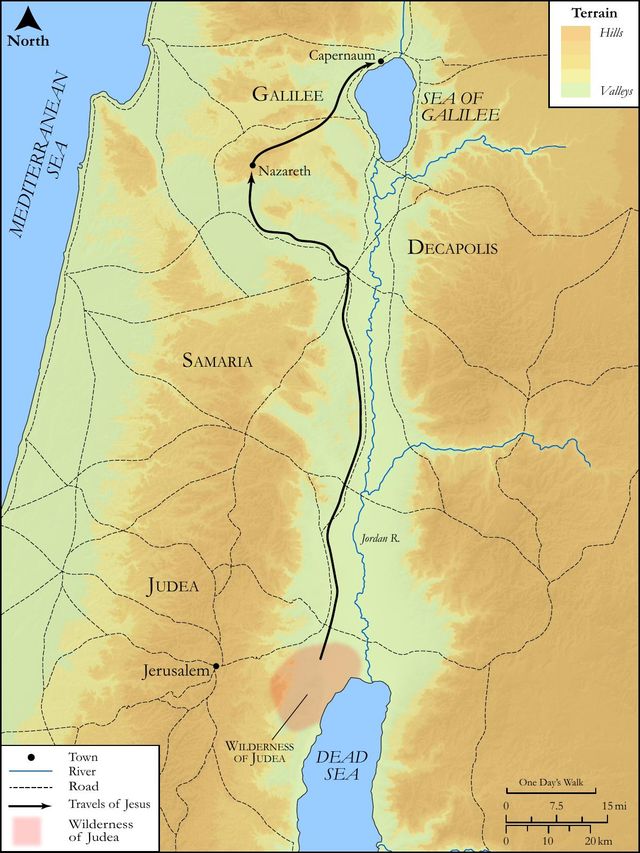
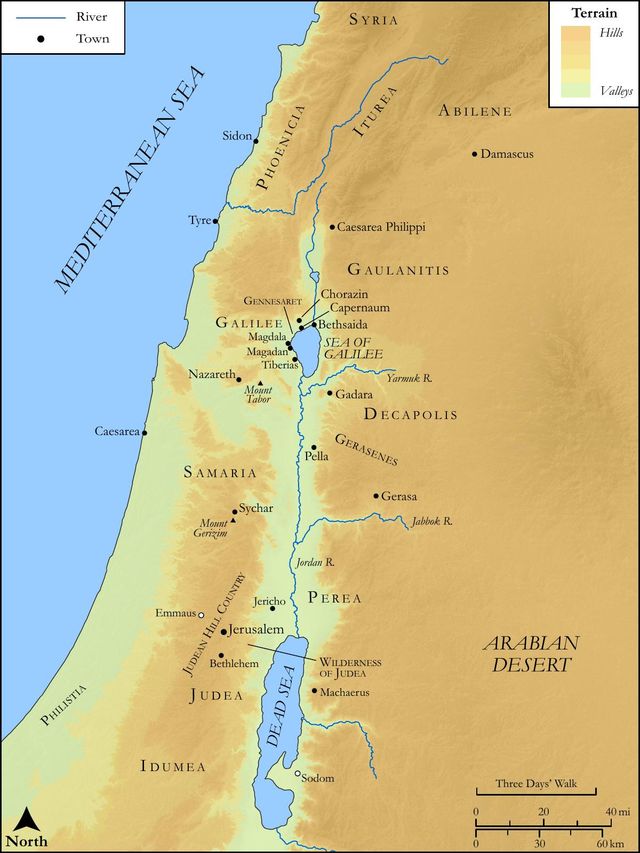
Study this verse
Public-domain commentary
Matthew Henry
From his Commentary on the Whole Bible. Henry comments on passages, not single verses — this entry covers Matthew 4:23–25. His three-level outline is real structure in the source text, so it is rendered as structure.
See here, I. What an industrious preacher Christ was; He went about all Galilee, teaching in their synagogues, and preaching the gospel of the kingdom. Observe, 1. What Christ preached - the gospel of the kingdom. The kingdom of heaven, that is, of grace and glory, is emphatically the kingdom, the kingdom that was now to come; that kingdom which shall survive, as it doth surpass, all the kingdoms of the earth. The gospel is the charter of that kingdom, containing the King's coronation oath, by which he has graciously obliged himself to pardon, protect, and save the subjects of that kingdom; it contains also their oath of allegiance, by which they oblige themselves to observe his statutes and seek his honour; this is the gospel of the kingdom; this Christ was himself the Preacher of, that our faith in it might be confirmed. 2. Where he preached - in the synagogues; not there only, but there chiefly, because those were the places of concourse, where wisdom was to lift up her voice (Pro 1:21); because they were places of concourse for religious worship, and there, it was to be hoped, the minds of the people would be prepared to receive the gospel; and there the scriptures of the Old Testament were read, the exposition of which would easily introduce the gospel of the kingdom. 3. What pains he took in preaching; He went about all Galilee, teaching. He might have issued out a proclamation to summon all to come to him; but, to show his humility, and the condescensions of his grace, he goes to them; for he waits to be gracious, and comes to seek and save. Josephus says, There were above two hundred cities and towns in Galilee, and all, or most of them, Christ visited. He went about doing good. Never was there such an itinerant preacher, such an indefatigable one, as Christ was; he went from town to town, to beseech poor sinners to be reconciled to God. This is an example to ministers, to lay themselves out to do good, and to be instant, and constant, in season, and out of season, to preach the word.
II.What a powerful physician Christ was; he went about not only teaching, but healing, and both with his word, that he might magnify that above all his name. He sent his word, and healed them. Now observe,
1.What diseases he cured - all without exception. He healed all manner of sickness, and all manner of disease. There are diseases which are called the reproach of physicians, being obstinate to all the methods they can prescribe; but even those were the glory of this Physician, for he healed them all, however inveterate. His word was the true panpharmacon - all-heal.
Three general words are here used to intimate this; he healed every sickness, noson, as blindness, lameness, fever, dropsy; every disease, or languishing, malakian, as fluxes and consumptions; and all torments, basanous, as gout, stone, convulsions, and such like torturing distempers; whether the disease was acute or chronical; whether it was a racking or a wasting disease; none was too bad, none too hard, for Christ to heal with a word's speaking.
Three particular diseases are specified; the palsy, which is the greatest weakness of the body; lunacy, which is the greatest malady of the mind, and possession of the Devil, which is the greatest misery and calamity of both, yet Christ healed all: for he is the sovereign Physician both of soul and body, and has command of all diseases.
2.What patients he had. A physician who was so easy of access, so sure of success, who cured immediately, without either a painful suspense and expectation, or such painful remedies as are worse than the disease; who cured gratis, and took no fees, could not but have abundance of patients. See here, what flocking there was to him from all parts; great multitudes of people came, not only from Galilee and the country about, but even from Jerusalem and from Judea, which lay a great way off; for his fame went throughout all Syria, not only among all the people of the Jews, but among the neighbouring nations, which, by the report that now spread far and near concerning him, would be prepared to receive his gospel, when afterwards it should be brought them. This is given as the reason why such multitudes came to him, because his fame had spread so widely. Note, What we hear of Christ from others, should invite us to him. The queen of Sheba was induced, by the fame of Solomon, to pay him a visit. The voice of fame is "Come, and see." Christ both taught and healed. They who came for cures, met with instruction concerning the things that belonged to their peace. It is well if any thing will bring people to Christ; and they who come to him will find more in him than they expected. These Syrians, like Naaman the Syrian, coming to be healed of their diseases, many of them being converts, Kg2 5:15, Kg2 5:17. They sought health for the body, and obtained the salvation of the soul; like Saul, who sought the asses, and found the kingdom. Yet it appeared, by the issue, that many of those who rejoiced in Christ as a Healer, forgot him as a Teacher.
Now concerning the cures which Christ wrought, let us, once for all, observe the miracle, the mercy, and the mystery, of them.
(1.)The miracle of them. They were wrought in such a manner, as plainly spake them to be the immediate products of a divine and supernatural power, and they were God's seal to his commission. Nature could not do these things, it was the God of nature; the cures were many, of diseases incurable by the art of the physician, of persons that were strangers, of all ages and conditions; the cures were wrought openly, before many witnesses, in mixed companies of persons that would have denied the matter of fact, if they could have had any colour for so doing; no cure ever failed, or was afterwards called in question; they were wrought speedily, and not (as cures by natural causes) gradually; they were perfect cures, and wrought with a word's speaking; all which proves him a Teacher come from God, for, otherwise, none could have done the works that he did, Joh 3:2. He appeals to these as credentials, Mat 11:4, Mat 11:5; Joh 5:36. It was expected that the Messiah should work miracles (Joh 7:31); miracles of this nature (Isa 35:5, Isa 35:6); and we have this indisputable proof of his being the Messiah; never was there any man that did thus; and therefore his healing and his preaching generally went together, for the former confirmed the latter; thus here he began to do and to teach, Act 1:1.
(2.)The mercy of them. The miracles that Moses wrought, to prove his mission, were most of them plagues and judgments, to intimate the terror of that dispensation, though from God; but the miracles that Christ wrought, were most of them cures, and all of them (except the cursing of the barren fig tree) blessings and favours; for the gospel dispensation is founded, and built up in love, and grace, and sweetness; and the management is such as tends not to affright but to allure us to obedience. Christ designed by his cures to win upon people, and to ingratiate himself and his doctrine into their minds, and so to draw them with the bands of love, Hos 11:4. The miracle of them proved his doctrine a faithful saying, and convinced men's judgments; the mercy of them proved it worthy of all acceptation, and wrought upon their affections. They were not only great works, but good works, that he showed them from his Father (Joh 10:32); and this goodness was intended to lead men to repentance (Rom 2:4), as also to show that kindness, and beneficence, and doing good to all, to the utmost of our power and opportunity, are essential branches of that holy religion which Christ came into the world to establish.
(3.)The mystery of them. Christ, by curing bodily diseases, intended to show, that his great errand into the world was to cure spiritual maladies. He is the Sun of righteousness, that arises with this healing under his wings. As the Converter of sinners, he is the Physician of souls, and has taught us to call him so, Mat 9:12, Mat 9:13. Sin is the sickness, disease, and torment of the soul; Christ came to take away sin, and so to heal these. And the particular stories of the cures Christ wrought, may not only be applied spiritually, by way of allusion and illustration, but, I believe, are very much intended to reveal to us spiritual things, and to set before us the way and method of Christ's dealing with souls, in their conversion and sanctification; and those cures are recorded, that were most significant and instructive this way; and they are therefore so to be explained and improved, to the honour and praise of that glorious Redeemer, who forgiveth all our iniquities, and so healeth all our diseases.
Historical interpretation
Nine Centuries of Reception
9 surviving comments on this verse. Each one is dated, so this reads as a timeline rather than a list.
Select a marker to jump to its quote. Markers stagger vertically where authors wrote within a few decades of each other.
Isaiah predicted this would happen when he said, “He himself took our infirmities and bore our sickness.” To this end the teacher of life and heavenly physician Christ the Lord had come that by his direction he might educate people to life and with his heavenly medicine cure the sickness of body and soul, that he might free bodies beset by the devil and restore those persons afflicted by various infirmities to true and complete health. By the word of divine power he cured the weaknesses of the body, but by the medicine of heavenly teaching he healed the wounds of the soul. David clearly noted that the wounds of the soul are healed by God alone when he said, “Bless the Lord, O my soul, and forget not all his benefits,” to which he added, “who forgives all your iniquity, who heals all your diseases.” He is the true and perfect physician therefore who gives healing to the body and restores the soul to health: our Lord and Savior.
CHRYSOSTOM.a By which too He showed the Jews that He came not as an enemy of God, or a seducer of souls, but as consenting with his Father.
We must consider that when some great change is being wrought, as the introduction of a new polity, God is wont to work miracles, giving pledges of His power to those who are to receive His laws. Thus when He would make man, He first created a world, and then at length gave man in paradise a law. When He would dispense a law to the holy Noah, he showed truly great wonders; and again when He was about to ordain the Law for the Jews, He first showed great prodigies, and then at length gave them the commandments. So now when about to introduce a sublime discipline of life, He first provided a sanction to His instructions by mighty signs, because the eternal kingdom He preached was not seen, by the things which did appear, He made sure that which as yet did not appear.
Observe the reserve of the Evangelist; he does not give an account of any one of the various cases of healing, but passes in one brief phrase an abundance of miracles, they brought to him all their sick.
He requires no direct profession of faith from them, both because He had not yet given them any proofs of His miraculous power, and because in bringing their sick from far they had shown no small faith.
When therefore He had caught them, then He begins in their presence to work miracles, by His deeds confirming the words of John concerning Him. And He was continually frequenting their synagogues, even by this instructing them that He was not a sort of adversary of God and deceiver, but that He was come in accordance with the Father.
And while frequenting them, He did not preach only, but also showed forth miracles. And this, because on every occasion, whensoever anything is done strange and surprising, and any polity is introduced, God is wont to work miracles as pledges of His power, which He affords to them that are to receive His laws. Thus, for instance, when He was about to make man, He created a whole world, and then gave him that law which he had in Paradise. And when He was to give laws to Noah, He showed forth anew great miracles, in that He reduced again the whole creation to its elements, that fearful sea to prevail for a full year; and in that, amid so great a tempest, He preserved that righteous man. And in the time of Abraham too He vouchsafed many signs; as his victory in the war, the plague upon Pharaoh, his deliverance from dangers. And when about to legislate for the Jews, He showed forth those marvellous and great prodigies, and then gave the law. Just so in this case also, being to introduce a certain high polity, and to tell them what they had never heard, by the display of the miracles He confirms what He saith. Thus because the kingdom He was preaching appeared not, by the things that appear, He makes it, though invisible, manifest.
And mark the evangelist's care to avoid superfluity of words; how he tells us not of every one of them that are healed, but in a few words speeds over showers of miracles.
For "they brought unto Him," saith he, "all that were sick with divers diseases, and torments, and those which were possessed with devils, and those which were lunatic, and those that had the palsy, and He healed them."
But our inquiry is this; why it can have been that He demanded faith of none of them? For He said not, what we find Him saying after this, "Believe ye that I am able to do this?" because He had not as yet given proof of His power. And besides, the very act of approaching Him, and of bringing others to Him, exhibited no common faith. For they brought them even from far; whereas they would never have brought them, unless they had persuaded themselves of great things concerning Him.
Not really smitten by the moon, but who were believed to be so through the subtlety of the dæmons, who by observing the seasons of the moon, sought to bring an evil report against the creature, that it might redound to the blasphemy of the Creator.
Kings, when about to go to war with their enemies, first gather an army, and so go out to battle; thus the Lord when about to war against the Devil, first collected Apostles, and then began to preach the Gospel.
Because they being weak could not come to their physician, He as a zealous Physician went about to visit those who had any grievous sickness. The Lord went round the several regions, and after His example the pastors of each region ought to go round to study the several dispositions of their people, that for the remedy of each disease some medicine may be found in the Church.
Or, He taught natural righteousness, those things which natural reason teaches, as chastity, humility, and the like, which all men of themselves see to be goods. Such things are necessary to be taught not so much for the sake of making them known as for stirring the heart. For beneath the prevalence of carnal delights the knowledge of natural righteousness sleeps forgotten. When then a teacher begins to denounce carnal sins, his teaching does not bring up a new knowledge, but recalls to memory one that had been forgotten. But He preached the Gospel, in telling of good things which the ancients had manifestly not heard of, as the happiness of heaven, the resurrection of the dead, and the like. Or, He taught by interpreting the prophecies concerning Himself; He preached by declaring the benefits that were to come from Himself.
Or, by disease we may understand any passion of the mind, as avarice, lust, and such like, by malady unbelief, that is, weakness of faith. Or, the diseases are the more grievous pains of the body, the maladies the slighter. As He cured the bodily pains by virtue of His divine power, so He cured the spiritual by the word of His mercy. He first teaches, and then performs the cures, for two reasons. First, that what is needed most may come first; for it is the word of holy instruction, and not miracles, that edify the soul. Secondly, because teaching is commended by miracles, not the converse.
In some places it is, He cured many; but here, He cured them, meaning 'all;' as a new physician first entering a town cures all who come to him. to beget a good opinion concerning himself.
An example of life for doctors; that they should not be inactive, they are instructed in these words, And Jesus went about.
That they should not be acceptors of persons the preachers are instructed in what follows, the whole of Galilee. That they should not go about empty, by the word teaching. That they should seek to benefit not few but many, in what follows, in their synagogues.
That they should not preach error nor fable, but sound doctrine, is inculcated in the words, preaching the Gospel of the kingdom. 'Teaching' and 'preaching' differ; teaching refers to things present, preaching to things to come; He taught present commandments and preached future promises.
That the teacher should study to commend his teaching by his own virtuous conduct is conveyed in those words, healing every sort of disease and malady among the people; maladies of the body, diseases of the soul.
By these he would have us understand various but slighter diseases; but when he says, seized with divers sicknesses and torments, he would have those understood, of whom it is subjoined, and who had dæmons.
'Lunatics' are so called from the moon; for as it waxes in its monthly seasons they are tormented.
Or, they follow the Lord from Galilee, that is, from the unstable world; from Decapolis, (the country of ten towns,) signifying those who break the Ten Commandments; and from Jerusalem, because before it was preserved unhurt in peace; and from Jordan, that is, from the confession of the Devil; and from beyond Jordan, they who were first planted in paganism, but passing the water of Baptism came to Christ.
Syria here is all the region from Euphrates to the Great sea, from Cappadocia to Egypt, in which is the country of Palestine, inhabited by Jews.
Paralytics are those whose bodies have their nerves slackened or resolved from a Greek word, signifying this.
crowds that followed Him consisted of four sorts of men, some followed for the heavenly teaching as disciples, some for the curing of their diseases, some from the reports concerning Him alone, and curiosity to find whether they were true; others from envy, wishing to catch Him in some matter that they might accuse Him. Mystically, Syria is interpreted 'lofty,' Galilee, 'turning:' or 'a wheel;' that is, the Devil and the world; the Devil is both proud and always turned round to the bottom; the world in which the fame of Christ went abroad through preaching: the dæmoniacs are the idolaters; the lunatics, the unstable; the paralytics, the slow and careless.
Teaching in their synagogues: Jesus enters the synagogues of the Hebrews to show that He is not opposed to the law.
And healing every disease and every infirmity among the people: He begins with miracles, to give credibility to what He teaches. By disease is meant chronic illness, and by infirmity, a temporary bodily disorder.
(ap. Anselm.) Because preachers should have good testimony from those who are without, lest if their life is open to censure, their preaching be contemned, he adds, And the fame of him went abroad through all Syria.
'Sickness' means a lasting ailment; 'torment' is an acute pain, as pleurisy, and such like; they who had dæmons are they who were tormented by the dæmons.
(ap. Anselm.) The crowds that follow the Lord, are they of the Church, which is spiritually designated by Galilee, passing to virtuousness; Decapolis is he who keeps the Ten Commandments; Jerusalem and Judæa, he who is enlightened by the vision of peace and confession; and beyond Jordan, he who having passed the waters of Baptism enters the land of promise.
Continue studying Matthew 4:23 across the web’s major study libraries — every link below opens this exact verse, chapter, or book on the destination site.
Read & Compare
 BibleGatewayThis verse in more than 200 translations and 70 languages.
 Bible.comThe YouVersion reader — hundreds of translations, reading plans, and highlights.
 ESV.orgCrossway's official English Standard Version reader.
 NET BibleThe NET translation with 60,000+ translators' notes on every rendering decision.
 STEP BibleTyndale House's free study tool — original text, vocabulary, and scholarly resources.
 BibliaLogos Bible Software's free web reader.
 USCCBThe New American Bible (Revised Edition) with the U.S. bishops' study notes.
Commentaries
 BibleHub CommentariesDozens of classic commentaries on this verse, gathered on one page.
 StudyLightMore than 100 commentary sets — the largest collection on the web.
 BibleRefPlain-English commentary on what this verse means, verse by verse.
 Enduring WordDavid Guzik's free commentary on this chapter, widely used by Bible teachers.
 Bible Study ToolsVerse commentary alongside Greek and Hebrew study aids.
Original Language & Research
- BibleHub InterlinearThe verse word by word — original language, transliteration, and English.
- BibleHub LexiconEvery word's original-language definition and Strong's entry.
 Blue Letter BibleDeep-study tools — Strong's numbers, concordance, and word studies.
 CNTR CollationThe earliest Greek manuscripts of this verse, collated letter by letter.
Sermons, Hymns & Audio


TrulyRandomVerse is not affiliated with these sites and doesn’t control their content. They’re linked because they’re genuinely useful.
Summary
Matthew 4:23 provides a foundational and programmatic summary of Jesus Christ's early public ministry in the region of Galilee. This pivotal verse encapsulates the comprehensive nature of His divine mission, highlighting His multifaceted work of authoritatively teaching in Jewish synagogues, powerfully proclaiming the good news of God's active and present reign, and compassionately healing all forms of human suffering, thereby demonstrating the tangible arrival of the Kingdom of God among the people.
Context
ShowHideLiterary Context
Matthew 4:23 serves as a pivotal summary statement, immediately following Jesus' victorious temptation in the wilderness and His initial call of the first disciples by the Sea of Galilee. Having established His base in Capernaum (Matthew 4:13), this verse acts as a programmatic introduction to the extensive Galilean ministry that follows, particularly setting the stage for the Sermon on the Mount in Matthew 5-7 and the subsequent series of miracles detailed in Matthew 8-9. It provides the overarching framework for understanding the nature and scope of Jesus' activities before His focus shifts more directly towards Jerusalem and His ultimate passion.
Historical & Cultural Context
Galilee was a northern region of Palestine, distinct from the more religiously conservative Judea. Often referred to as "Galilee of the Gentiles" (Matthew 4:15), it was a diverse area with a mixed population of Jews and Gentiles, and its Jewish inhabitants were sometimes viewed with disdain by those in Jerusalem. Synagogues, central to Jewish life, served not only as places of worship but also as community centers for teaching, legal proceedings, and social gatherings. Jesus' choice to begin His ministry here, and His consistent presence in these local synagogues, allowed Him to reach a broad cross-section of Jewish society directly within their established communal and religious structures, engaging them on His own terms.
Key Themes
ShowHideThis verse powerfully introduces several key themes central to Matthew's Gospel. Foremost is the theme of the Kingdom of Heaven (or God), which Jesus proclaims as having drawn near (Matthew 4:17). His ministry demonstrates the active inauguration of God's reign, not merely as a future hope but as a present reality breaking into human history. Another crucial theme is Jesus' Authority, evident in His teaching, which surpassed that of the scribes (Matthew 7:29), and His power over sickness and disease. The verse also highlights the Holistic Nature of Jesus' Ministry, encompassing intellectual instruction (teaching), spiritual proclamation (preaching), and physical restoration (healing), underscoring God's concern for the entire person. Finally, it subtly points to the Fulfillment of Prophecy, as Jesus' compassionate healing ministry aligns with Old Testament expectations of the Messiah's work (Isaiah 53:4).
Exposition and Analysis
ShowHideKey Word Analysis
ShowHideFrom a primary verb meaning "to learn," this word denotes the act of instructing or imparting knowledge. Jesus' teaching was authoritative and revelatory, clarifying the Law, explaining the nature of God's Kingdom, and calling people to a new way of life that went beyond mere ritualism. It implies a systematic communication of truth designed to transform understanding and behavior.
This term literally means "good message" or "good news." In the context of Jesus' ministry, it refers to the joyous proclamation that God's promised reign, the Kingdom of God, was actively breaking into the world through His presence and work. It was a message of salvation, repentance, and the availability of divine grace and power.
Derived from a word meaning "to wait upon menially," this term specifically refers to relieving or curing disease. Jesus' healing ministry was a tangible demonstration of His divine power and compassion, serving as irrefutable evidence that the Kingdom of God had arrived and was actively reversing the effects of sin and brokenness in the physical realm.
Verse Breakdown
ShowHide"And Jesus went about all Galilee"
This phrase establishes the geographical scope and active nature of Jesus' early ministry. "Went about" (Greek, periágō') suggests a continuous, itinerant movement throughout the entire region, indicating a widespread and comprehensive engagement with the populace rather than a static presence in one location. Galilee, as His primary base, became the initial epicenter for the inauguration of His public work.
"teaching in their synagogues"
This highlights the primary method and setting of Jesus' instruction. By teaching "in their synagogues," Jesus utilized the established Jewish religious and communal centers, directly engaging with the people where they gathered for worship and learning. His teaching was distinct, characterized by an intrinsic authority that set Him apart from the traditional scribes and Pharisees.
"and preaching the gospel of the kingdom"
This clause reveals the core content of Jesus' message. He was not merely a moral teacher but a herald ("preaching," Greek, kērýssō') announcing the "good news" (gospel) that God's sovereign reign, His "kingdom," was no longer a distant hope but an imminent, active reality being inaugurated through Him. This message called for repentance and faith in response to God's redemptive initiative.
"and healing all manner of sickness and all manner of disease among the people"
This final clause underscores the practical, compassionate, and miraculous dimension of Jesus' ministry. His ability to heal "all manner of sickness" (Greek, nósos', referring to specific maladies) and "all manner of disease" (Greek, malakía', referring to general debility or weakness) demonstrates His comprehensive power over human suffering. These miracles were not merely acts of compassion but served as powerful signs and tangible proofs of the Kingdom's presence and power, validating His claims and message.
Literary Devices
ShowHideMatthew 4:23 effectively employs several literary devices to convey the breadth and power of Jesus' ministry. The verse functions as a Summarization or programmatic statement, concisely encapsulating the essence of Jesus' early public work in Galilee. There is a clear Progression in the description of Jesus' activities: from "teaching" (imparting understanding), to "preaching" (proclaiming a message), to "healing" (demonstrating power and compassion). This progression highlights the holistic nature of His ministry, addressing the mind, spirit, and body. Furthermore, the Repetition and Parallelism in "all manner of sickness and all manner of disease" emphasize the comprehensive and unrestricted scope of Jesus' healing power, indicating that no affliction was beyond His ability to remedy. This rhetorical emphasis underscores the totality of His authority and the boundless compassion of the Kingdom He proclaimed.
Theological and Thematic Connections
ShowHideMatthew 4:23 is profoundly significant as it encapsulates the tri-fold ministry of Jesus—teaching, preaching, and healing—which serves as the blueprint for the Kingdom of God's advancement. The theological implication is that God's reign is not merely a spiritual concept but a transformative reality that impacts every dimension of human existence: intellectual understanding, spiritual renewal, and physical well-being. Jesus' comprehensive approach reveals a God who is intimately concerned with humanity's suffering and actively intervenes to restore wholeness. His authority in teaching and power in healing demonstrate His unique identity as the Messiah, fulfilling ancient prophecies and inaugurating a new era where God's will is done on earth as it is in heaven. This verse establishes that the Kingdom's arrival is evidenced by both the spoken word and the tangible demonstration of divine power, inviting a holistic response of faith and discipleship.
Reflection and Application
ShowHideMatthew 4:23 offers a compelling model for Christian ministry and discipleship in every age. Just as Jesus comprehensively engaged with the people of Galilee, His followers are called to embody a holistic approach to serving God and humanity. This means not only diligently studying and accurately teaching biblical truth, but also boldly proclaiming the transformative "gospel of the kingdom"—the good news of God's active reign and redemptive power through Christ. Furthermore, it compels us to demonstrate God's love through tangible acts of compassion, caring for the sick, the lowly, and the suffering. Our ministries, whether individual or corporate, should reflect this balance of word and deed, intellectual clarity and compassionate action, spiritual formation and physical care. This verse challenges us to ask if our faith is merely theoretical or if it is actively impacting the brokenness of the world around us, mirroring the comprehensive love and power of our Savior.
Questions for Reflection
ShowHideFAQ
ShowHideWhy did Jesus begin His public ministry in Galilee, rather than Jerusalem or Judea?
ShowHideJesus began His ministry in Galilee for several strategic and theological reasons. Geographically, Galilee was His home region, fulfilling Old Testament prophecy that the Messiah would arise from "Galilee of the Gentiles" (Isaiah 9:1-2). Sociologically, Galilee was a more diverse and less religiously rigid region than Judea, allowing Jesus to reach a broader audience, including those often overlooked by the religious establishment in Jerusalem. It was also a region ripe for spiritual awakening, as its people were often seen as less orthodox but perhaps more open to a new message. Furthermore, starting in Galilee allowed Jesus to build a strong base of disciples and establish His reputation before confronting the religious authorities in Jerusalem, minimizing immediate opposition during the initial phase of His public work.
What is the significance of Jesus "preaching the gospel of the kingdom"?
ShowHideThe phrase "gospel of the kingdom" is central to Jesus' entire ministry. It signifies that the "good news" He proclaimed was not merely about personal salvation in an individualistic sense, but about the active, sovereign reign of God breaking into human history through Jesus Himself. Jesus was announcing that God's long-promised rule, where His will would be done on earth as it is in heaven, was now being inaugurated. This message called for repentance and faith, not just in a person, but in the reality of God's transformative rule. His miracles, teachings, and ultimately His death and resurrection, were all demonstrations and extensions of this Kingdom's arrival, inviting people to submit to God's benevolent reign and experience its blessings.
What does "all manner of sickness and all manner of disease" imply about Jesus' healing ministry?
ShowHideThe phrase "all manner of sickness and all manner of disease" (using two distinct Greek words, nósos for specific ailments and malakía for general debility) emphasizes the comprehensive and unrestricted nature of Jesus' healing power. It means that no illness, no matter its type, severity, or origin, was beyond His ability to cure. This highlights His absolute authority over creation and the effects of sin, which include physical brokenness. His healing ministry was not selective but all-encompassing, demonstrating His profound compassion for every aspect of human suffering and serving as tangible proof of the Kingdom of God's power to restore and make whole.
Christ-Centered Fulfillment
ShowHideMatthew 4:23, with its concise depiction of Jesus' tri-fold ministry, finds its profound Christ-centered fulfillment in His identity as the incarnate Son of God, who perfectly embodies the Kingdom He proclaims. His "teaching in their synagogues" reveals Him as the ultimate Teacher, the very Word of God made flesh (John 1:14), whose wisdom far surpasses any human instructor and who speaks with unparalleled divine authority (Matthew 7:28-29). His "preaching the gospel of the kingdom" culminates in His own person, for He is not merely a messenger but the very King of that Kingdom, whose sacrificial death and glorious resurrection are the ultimate good news that inaugurates God's eternal reign over sin and death (Colossians 1:13-14). Finally, His "healing all manner of sickness and all manner of disease" foreshadows His ultimate work as the Great Physician, who bore our infirmities and carried our diseases on the cross (Isaiah 53:4; 1 Peter 2:24), not only providing physical restoration but, more significantly, offering spiritual healing from the disease of sin and the promise of a future where all tears are wiped away and there is no more suffering in the new heavens and new earth (Revelation 21:4). Thus, Matthew 4:23 is a microcosm of Christ's entire redemptive mission, revealing Him as the comprehensive Savior who fully embodies and brings to fruition the Kingdom of God.