


Matthew 9:35
- ΚαὶKaiAndG2532CONJConjunction
- περιῆγενperiēgenwas going throughoutG4013V-IAI-3SVerb Imperfect Active Indicative 3rd Singular
- ὁho<the>G3588T-NSMDefinite article Nominative Singular Masculine
- ἸησοῦςIēsousJesusG2424N-NSM-PNoun Nominative Singular Masculine Individual
- τὰςtastheG3588T-APFDefinite article Accusative Plural Feminine
- πόλειςpoleiscitiesG4172N-APFNoun Accusative Plural Feminine
- πάσαςpasasallG3956A-APFAdjective Accusative Plural Feminine
- καὶkaiandG2532CONJConjunction
- τὰςtastheG3588T-APFDefinite article Accusative Plural Feminine
- κώμαςkōmasvillagesG2968N-APFNoun Accusative Plural Feminine
- διδάσκωνdidaskōnteachingG1321V-PAP-NSMVerb Present Active Participle Nominative Singular Masculine
- ἐνeninG1722PREPPreposition
- ταῖςtaistheG3588T-DPFDefinite article Dative Plural Feminine
- συναγωγαῖςsunagōgaissynagoguesG4864N-DPFNoun Dative Plural Feminine
- αὐτῶνautōnof themG846P-GPMPersonal pronoun Genitive Plural Masculine
- καὶkaiandG2532CONJConjunction
- κηρύσσωνkērussōnproclaimingG2784V-PAP-NSMVerb Present Active Participle Nominative Singular Masculine
- τὸtotheG3588T-ASNDefinite article Accusative Singular Neuter
- εὐαγγέλιονeuangeliongospelG2098N-ASNNoun Accusative Singular Neuter
- τῆςtēsof theG3588T-GSFDefinite article Genitive Singular Feminine
- βασιλείαςbasileiaskingdomG932N-GSFNoun Genitive Singular Feminine
- καὶkaiandG2532CONJConjunction
- θεραπεύωνtherapeuōnhealingG2323V-PAP-NSMVerb Present Active Participle Nominative Singular Masculine
- πᾶσανpasaneveryG3956A-ASFAdjective Accusative Singular Feminine
- νόσονnosondiseaseG3554N-ASFNoun Accusative Singular Feminine
- καὶkaiandG2532CONJConjunction
- πᾶσανpasaneveryG3956A-ASFAdjective Accusative Singular Feminine
- μαλακίανmalakiansicknessG3119N-ASFNoun Accusative Singular Feminine
- ἐνeninG1722PREPPreposition
- τῷtō<the>G3588T-DSMDefinite article Dative Singular Masculine
- λαῷlaōpeopleG2992N-DSMNoun Dative Singular Masculine
English is a literal word-by-word gloss of the Greek, not the KJV's wording. Why?
This is the original text the KJV's translators worked from — each Greek word with its own literal English meaning in this verse, prepared by scholars at Tyndale House, Cambridge. The KJV translates whole sentences, not word by word, so its wording differs: one Greek word can become several English words, and the KJV may choose “charity” where the gloss reads “love”. Both are faithful — they answer different questions. For the KJV's own rendering, switch to the KJV text.
Details
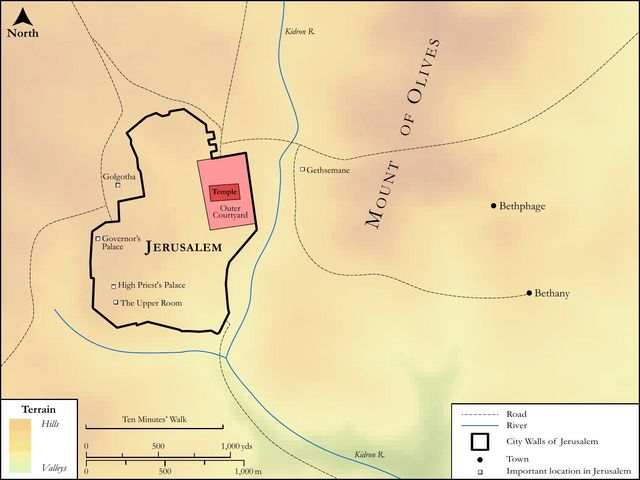
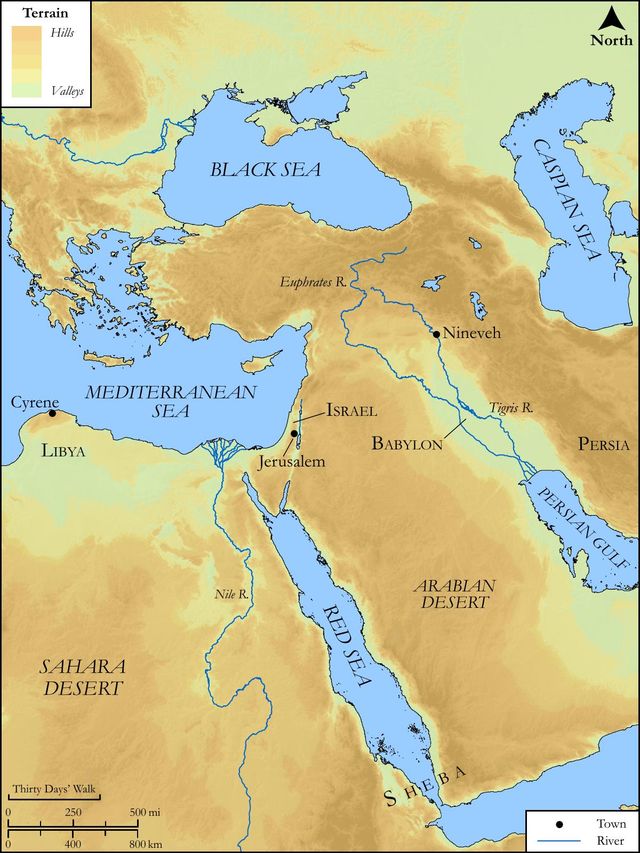
See on the biblical-era map

Study this verse
Public-domain commentary
Matthew Henry
From his Commentary on the Whole Bible. Henry comments on passages, not single verses — this entry covers Matthew 9:35–38. His four-level outline is real structure in the source text, so it is rendered as structure.
Here is, I. A conclusion of the foregoing account of Christ's preaching and miracles (Mat 9:35); He went about all the cities teaching and healing. This is the same we had before, Mat 4:23. There it ushers in the more particular record of Christ's preaching (ch. 5, 6 and 7) and of his cures (ch. 8 and 9), and here it is elegantly repeated in the close of these instances, as the quod erat demonstrandum - the point to be proved; as if the evangelist should say, "Now I hope I have made it out, by an induction of particulars, that Christ preached and healed; for you have had the heads of his sermons, and some few instances of his cures, which were wrought to confirm his doctrine: and these were written that you might believe." Some think that this was a second perambulation in Galilee, like the former; he visited again those whom he had before preached to. Though the Pharisees cavilled at him and opposed him, he went on with his work; he preached the gospel of the kingdom. He told them of a kingdom of grace and glory, now to be set up under the government of a Mediator: this was gospel indeed, good news, glad tidings of great joy.
Observe how Christ in his preaching had respect,
1.To the private towns. He visited not only the great and wealthy cities, but the poor, obscure villages; there he preached, there he healed. The souls of those that are meanest in the world are as precious to Christ, and should be to us, as the souls of those that make the greatest figure. Rich and poor meet together in him, citizens and boors: his righteous acts towards the inhabitants of his villages must be rehearsed, Jdg 5:11.
2.To the public worship. He taught in their synagogues,
(1.)That he might bear a testimony to solemn assemblies, even then when there were corruptions in them. We must not forsake the assembling of ourselves together, as the manner of some is.
(2.)That he might have an opportunity of preaching there, where people were gathered together, with an expectation to hear. Thus, even where the gospel church was founded, and Christian meetings erected, the apostles often preached in the synagogues of the Jews. It is the wisdom of the prudent, to make the best of that which is.
II.A preface, or introduction, to the account in the following chapter, of his sending forth his apostles.
He took notice of the multitude (Mat 9:36); not only of the crowds that followed him, but of the vast numbers of people with whom (as he passed along) he observed the country to be replenished; he noticed what nests of souls the towns and cities were, and how thick of inhabitants; what abundance of people there were in every synagogue, and what places of concourse the openings of the gates were: so very populous was that nation now grown; and it was the effect of God's blessing on Abraham. Seeing this,
1.He pities them, and was concerned for them (Mat 9:36); He was moved with compassion on them; not upon a temporal account, as he pities the blind, and lame, and sick; but upon a spiritual account; he was concerned to see them ignorant and careless, and ready to perish for lack of vision. Note, Jesus Christ is a very compassionate friend to precious souls; here his bowels do in a special manner yearn. It was pity to souls that brought him from heaven to earth, and there to the cross. Misery is the object of mercy; and the miseries of sinful, self-destroying souls, are the greatest miseries: Christ pities those most that pity themselves least; so should we. The most Christian compassion is compassion to souls; it is most Christ-like.
See what moved this pity. (1.) They fainted; they were destitute, vexed, wearied. They strayed, so some; were loosed one from another; The staff of bands was broken, Zac 11:14. They wanted help for their souls, and had none at hand that was good for any thing. The scribes and Pharisees filled them with vain notions, burthened them with the traditions of the elders, deluded them into many mistakes, while they were not instructed in their duty, nor acquainted with the extent and spiritual nature of the divine law; therefore they fainted; for what spiritual health, and life, and vigour can there be in those souls, that are fed with husks and ashes, instead of the bread of life? Precious souls faint when duty is to be done, temptations to be resisted, afflictions to be borne, being not nourished up with the word of truth. (2.) They were scattered abroad, as sheep having no shepherd. That expression is borrowed from Kg1 22:17, and it sets forth the sad condition of those that are destitute of faithful guides to go before them in the things of God. No creature is more apt to go astray than a sheep, and when gone astray more helpless, shiftless, and exposed, or more unapt to find the way home again: sinful souls are as lost sheep; they need the care of shepherds to bring them back. The teachers the Jews then had pretended to be shepherds, yet Christ says they had not shepherds, for they were worse than none; idle shepherds that led them away, instead of leading them back, and fleeced the flock, instead of feeding it: such shepherds as were described, Jer 23:1, etc. Eze 34:2, etc. Note, The case of those people is very pitiable, who either have no ministers at all, or those that are as bad as none; that seek their own things, not the things of Christ and souls.
2.He excited his disciples to pray for them. His pity put him upon devising means for the good of these people. It appears (Luk 6:12, Luk 6:13) that upon this occasion, before he sent out his apostles, he did himself spend a great deal of time in prayer. Note, Those we pity we should pray for. Having spoken to God for them he turns to his disciples, and tells them,
(1.)How the case stood; The harvest truly is plenteous, but the labourers are few. People desired good preaching, but there were few good preachers. There was a great deal of work to be done, and a great deal of good likely to be done, but there wanted hands to do it.
[1.]It was an encouragement, that the harvest was so plenteous. It was not strange, that there were multitudes that needed instruction, but it was what does not often happen, that they who needed it, desired it, and were forward to receive it. They that were ill taught were desirous to be better taught; people's expectations were raised, and there was such a moving of affections, as promised well. Note, It is a blessed thing, to see people in love with good preaching. The valleys are then covered over with corn, and there are hopes it may be well gathered in. That is a gale of opportunity, that calls for a double care and diligence in the improvement of it; a harvest-day should be a busy day.
[2.]It was a pity when it was so that the labourers should be so few; that the corn should shed and spoil, and rot upon the ground for want of reapers; loiterers many, but labourers very few. Note, It is ill with the church, when good work stands still, or goes slowly on, for want of good workmen; when it is so, the labourers that there are have need to be very busy.
(2.)What was their duty in this case (Mat 9:38); Pray ye therefore the Lord of the harvest. Note, The melancholy aspect of the times and the deplorable state of precious souls, should much excite and quicken prayer. When things look discouraging, we should pray more, and then we should complain and fear less. And we should adapt our prayers to the present exigencies of the church; such an understanding we ought to have of the times, as to know, not only what Israel ought to do, but what Israel ought to pray for. Note,
[1.]God is the Lord of the harvest; my Father is the Husbandman, Joh 15:1. It is the vineyard of the Lord of hosts, Isa 5:7. It is for him and to him, and to his service and honour, that the harvest is gathered in. Ye are God's husbandry (Co1 3:9); his threshing, and the corn of his floor, Isa 21:10. He orders every thing concerning the harvest as he pleases; when and where the labourers shall work, and how long; and it is very comfortable to those who wish well to the harvest-work, that God himself presides in it, who will be sure to order all for the best.
[2.]Ministers are and should be labourers in God's harvest; the ministry is a work and must be attended to accordingly; it is harvest-work, which is needful work; work that requires every thing to be done in its season, and diligence to do it thoroughly; but it is pleasant work; they reap in joy, and the joy of the preachers of the gospel is likened to the joy of harvest (Isa 9:2, Isa 9:3); and he that reapeth receiveth wages; the hire of the labourers that reap down God's field, shall not be kept back, as theirs was, Jam 5:4.
[3.]It is God's work to send forth labourers; Christ makes ministers (Eph 4:11); the office is of his appointing, the qualifications of his working, the call of his giving. They will not be owned nor paid as labourers, that run without their errand, unqualified, uncalled. How shall they preach except they be sent?
[4.]All that love Christ and souls, should show it by their earnest prayers to God, especially when the harvest is plenteous, that he would send forth more skillful, faithful, wise, and industrious labourers into his harvest; that he would raise up such as he will own in the conversion of sinners and the edification of saints; would give them a spirit for the work, call them to it, and succeed them in it; that he would give them wisdom to win souls; that he would thrust forth labourers, so some; intimating unwillingness to go forth, because of their own weakness and the people's badness, and opposition from men, that endeavour to thrust them out of the harvest; but we should pray that all contradiction from within and from without, may be conquered and got over. Christ puts his friends upon praying this, just before he sends apostles forth to labour in the harvest. Note, It is a good sign God is about to bestow some special mercy upon a people, when he stirs up those that have an interest at the throne of grace, to pray for it, Psa 10:17. Further observe, that Christ said this to his disciples, who were to be employed as labourers. They must pray, First, That God would send them forth. Here am I, send me, Isa 6:8. Note, Commissions, given in answer to prayer, are most likely to be successful; Paul is a chosen vessel, for behold he prays, Act 9:11, Act 9:15. Secondly, That he would send others forth. Note, Not the people only, but those who are themselves ministers, should pray for the increase of ministers. Though self-interest makes those that seek their own things desirous to be placed alone (the fewer ministers the more preferments), yet those that seek the things of Christ, desire more workmen, that more work may be done, though they be eclipsed by it.
Historical interpretation
Seven Centuries of Reception
8 surviving comments on this verse. Each one is dated, so this reads as a timeline rather than a list.
Select a marker to jump to its quote. Markers stagger vertically where authors wrote within a few decades of each other.
The natural order of things is here preserved; the dæmon is first cast out, and there the functions of the members proceed. And the multitude marvelled, saying, It was never so seen in Israel.
Or; By the dumb and deaf, and dæmoniae, is signified the Gentile world, needing health in every part; for sunk in evil of every kind, they are afflicted with disease of every part of the body.
But by the knowledge of God the frenzy of superstition being chased away, the sight, the hearing, and the word of salvation is brought in to them.
The wonder of the multitude is followed up by the confession, It was never so seen in Israel; because he, for whom there was no help under the Law, is saved by the power of the Word.
"He went about," it is said, "all the cities and villages, teaching in their synagogues, and preaching the gospel of the kingdom, and healing every sickness and every disease."
And so far from punishing them for their insensibility, He did not even simply rebuke them; at once both evincing His meekness, and so refuting the calumny; and at the same time minded also by the signs which followed to exhibit His proof more completely: and then to adduce also the refutation by words. He went about therefore both in cities, and in countries, and in their synagogues; instructing us to requite our calumniators, not with fresh calumnies, but with greater benefits. Since, if not for man's sake, but God's, thou doest good to thy fellow-servants; whatsoever they may do, leave not thou off doing them good, that thy reward may be greater; since he surely, who upon their calumny leaves off his doing good, signifies that for their praise' sake, not for God's sake, he applies himself to that kind of virtue.
For this cause Christ, to teach us that of mere goodness He had entered on this, so far from waiting for the sick to come to Him, of Himself hastened unto them, bearing them two of the greatest blessings; one, the gospel of the kingdom; another, the perfect cure of all their diseases. And not a city did He overlook, not a village did He hasten by, but visited every place.
The Greek word here (κωφὸς) is more frequent in common speech in the sense of 'deaf,' but it is the manner of Scripture to use it indifferently as either.
As the blind receive light, so the tongue of the dumb is loosed, that he may confess Him whom before he denied. The wonder of the multitude is the confession of the nations. The scoff of the Pharisees is the unbelief of the Jews, which is to this day.
(Verse 35.) And Jesus went about all the cities and towns, teaching in their synagogues and preaching the Gospel of the kingdom, and healing all illness and every infirmity. You see that He preached the Gospel equally to both villages and cities, that is, to both large and small, so that He would not consider the power of the nobles, but the salvation of the believers. He went through the cities, having this work that the Father had commanded: and this hunger, to save the unbelievers with His teaching. But He was teaching the Gospel of the kingdom in the synagogues and villages, and after preaching and teaching, He cured every illness and every infirmity, so that those whom his words did not persuade, his deeds would persuade. He is properly called the Lord, who cares for every illness and every infirmity, for nothing is impossible for Him.
Observe the beautiful order of His miracles; how after He had given sight to the blind, He restored speech to the dumb, and healed the possessed of the dæmon; by which He shows Himself the Lord of power, and the author of the heavenly medicine. For it was said by Isaiah, Then shall the eyes of the blind be opened, the ears of the deaf shall be unstopped, and the tongue of the dumb loosed. (Is. 35:6.) Whence it is said, When they were gone forth, they brought unto him a man dumb, and possessed with a dæmon.
Thus the Scribes and Pharisees denied such of the Lord's miracles as they could deny; and such as they could not they explained by an evil interpretation, according to that, In the multitude of thy excellency thy enemies shall lie unto thee. (Ps. 66:3.)
For the Gentiles were dumb; not being able to open their mouth in the confession of the true faith, and the praises of the Creator, or because in paying worship to dumb idols they were made like unto them. They were afflicted with a dæmon, because by dying in unbelief they were made subject to the power of the Devil.
They who brought the dumb to be healed by the Lord, signify the Apostles and preachers, who brought the Gentile people to be saved before the face of divine mercy.
The house of the ruler is the Synagogue which was ruled by Moses; the house of Jesus is the heavenly Jerusalem. As the Lord passed through this world and was returning to His own house, two blind men followed Him; that is, when the Gospel was preached by the Apostles, many of the Jews and Gentiles began to follow Him. But when He ascended into Heaven, then He entered His house, that is, into the confession of one faith which is in the Catholic Church, and in that they were enlightened.
Figuratively; As in the two blind men were denoted both nations, Jews and Gentiles, so in the man dumb and afflicted with the dæmon is denoted the whole human race.
Figuratively; As is the two blind men were denoted both nations, Jews and Gentiles, so in the man dumb and afflicted with the daemon is denoted the whole human race.
As Lover of mankind He did not wait for them to come to Him, but He Himself went all around. Therefore they could not say as an excuse that "no one taught us." He draws them to Himself by word and deed, teaching and working wonders.
Continue studying Matthew 9:35 across the web’s major study libraries — every link below opens this exact verse, chapter, or book on the destination site.
Read & Compare
 BibleGatewayThis verse in more than 200 translations and 70 languages.
 Bible.comThe YouVersion reader — hundreds of translations, reading plans, and highlights.
 ESV.orgCrossway's official English Standard Version reader.
 NET BibleThe NET translation with 60,000+ translators' notes on every rendering decision.
 STEP BibleTyndale House's free study tool — original text, vocabulary, and scholarly resources.
 BibliaLogos Bible Software's free web reader.
 USCCBThe New American Bible (Revised Edition) with the U.S. bishops' study notes.
Commentaries
 BibleHub CommentariesDozens of classic commentaries on this verse, gathered on one page.
 StudyLightMore than 100 commentary sets — the largest collection on the web.
 BibleRefPlain-English commentary on what this verse means, verse by verse.
 Enduring WordDavid Guzik's free commentary on this chapter, widely used by Bible teachers.
 Bible Study ToolsVerse commentary alongside Greek and Hebrew study aids.
Original Language & Research
- BibleHub InterlinearThe verse word by word — original language, transliteration, and English.
- BibleHub LexiconEvery word's original-language definition and Strong's entry.
 Blue Letter BibleDeep-study tools — Strong's numbers, concordance, and word studies.
 CNTR CollationThe earliest Greek manuscripts of this verse, collated letter by letter.
Sermons, Hymns & Audio


TrulyRandomVerse is not affiliated with these sites and doesn’t control their content. They’re linked because they’re genuinely useful.
Summary
Matthew 9:35 offers a profound and concise summary of Jesus Christ's comprehensive Galilean ministry, encapsulating His tireless itinerancy, authoritative teaching in synagogues, fervent proclamation of the gospel of the kingdom, and compassionate healing of all manner of physical ailments among the populace. This verse serves as a powerful testament to His divine mission, demonstrating His holistic concern for humanity's spiritual and physical well-being as the King inaugurating His reign.
Context
ShowHideLiterary Context
Matthew 9:35 functions as a climactic summary statement, concluding a significant narrative block (Matthew 8-9) that meticulously details Jesus' authority through a series of miracles and encounters. This section showcases His power over disease, demons, and even death, establishing His credentials as the Messiah. The verse immediately precedes Jesus' profound compassion for the "harassed and helpless" multitudes (as described in Matthew 9:36), which then leads directly into His commission of the twelve disciples in Matthew 10. It also forms an inclusio with an earlier summary of Jesus' ministry in Matthew 4:23, reinforcing the consistent and comprehensive nature of His public work from its outset.
Historical & Cultural Context
Jesus' ministry unfolded within first-century Galilee, a region known for its diverse population of Jews and Gentiles, and its numerous small towns and villages. Synagogues served as the central hub for Jewish community life, functioning not only as places of worship but also for teaching, legal arbitration, and social gathering. Jesus' choice to teach and preach "in their synagogues" signifies His engagement with the established religious structures and His direct address to the Jewish people. The prevalence of "sickness and disease" was a stark reality of the ancient world, often attributed to sin or demonic influence, making Jesus' widespread healing ministry a radical demonstration of divine power and a tangible sign of God's redemptive presence breaking into a broken world.
Key Themes
ShowHideThis verse powerfully encapsulates several core themes central to Matthew's Gospel. It highlights the comprehensive nature of Jesus' ministry, demonstrating His commitment to addressing both the spiritual and physical needs of humanity through teaching, preaching, and healing. Central to His message was the "gospel of the kingdom," emphasizing that God's sovereign reign was not merely a future hope but was actively breaking into the present through Jesus' words and deeds, as seen in His initial proclamation in Mark 1:14-15. The extensive healing ministry underscores Jesus' divine authority and profound compassion, revealing Him as the one who embodies God's redemptive power and empathy for human suffering, a theme further elaborated in passages like Luke 4:40. Finally, Jesus' active itinerancy, going "about all the cities and villages," demonstrates His intentional and proactive engagement with people where they lived, rather than passively waiting for them to come to Him.
Exposition and Analysis
ShowHideKey Word Analysis
ShowHideThis verb signifies the systematic imparting of instruction, knowledge, or doctrine. In Jesus' context, it refers to His authoritative exposition of God's truth, particularly concerning the nature of the Kingdom of God, the interpretation of the Law, and ethical living, often delivered within the structured setting of the synagogue.
Meaning "to herald as a public crier," this term emphasizes the authoritative, public, and urgent proclamation of a message. Jesus' "preaching" was not merely instruction but a formal announcement of the arrival and implications of the "gospel of the kingdom," demanding a response from His hearers. It carries the weight of a divine announcement.
While broadly meaning "to wait upon menially" or "to worship," in this context, therapeúō specifically denotes the act of curing or relieving from disease. Jesus' widespread healing ministry was a tangible manifestation of the Kingdom's power, demonstrating His authority over the brokenness of the fallen world and offering a foretaste of God's redemptive restoration.
Verse Breakdown
ShowHide"And Jesus went about all the cities and villages,"
This opening clause establishes Jesus' active and extensive itinerancy throughout the region of Galilee. He was not static but proactively sought out people in their local communities, demonstrating a pervasive and accessible ministry that reached beyond major centers to the common populace. The phrase "all the cities and villages" emphasizes the comprehensive scope of His mission.
"teaching in their synagogues,"
This highlights Jesus' primary method of instruction and His engagement with established Jewish religious life. Synagogues were the natural venues for communal teaching and discussion, and Jesus used these platforms to expound on the Scriptures and reveal the truths of God's Kingdom, challenging existing interpretations and offering new insights with unparalleled authority.
"and preaching the gospel of the kingdom,"
This specifies the core content of Jesus' message. The "gospel" (good news) was the announcement that God's "kingdom" (His active reign and sovereignty) was breaking into human history through Jesus Himself. This was a message of profound hope and transformation, inviting people to repent and enter into God's present and future rule.
"and healing every sickness and every disease among the people."
This final clause describes the miraculous dimension of Jesus' ministry, demonstrating His divine power and compassion. His ability to heal "every sickness and every disease" signifies His comprehensive authority over all forms of human suffering and infirmity. These acts of healing were not mere displays of power but tangible signs of the Kingdom's arrival, validating His message and illustrating God's restorative love for humanity.
Literary Devices
ShowHideMatthew 9:35 employs several effective literary devices to convey its profound message. The most prominent is Tricolon, seen in the three parallel actions of Jesus: "teaching," "preaching," and "healing." This rhythmic structure emphasizes the comprehensive and multifaceted nature of His ministry. The verse also utilizes Inclusio when compared with Matthew 4:23, where a nearly identical summary statement frames Jesus' extensive Galilean ministry, reinforcing its consistent character. Furthermore, the use of Hyperbole or Generalization in phrases like "all the cities and villages" and "every sickness and every disease" underscores the widespread and exhaustive scope of Jesus' activities, conveying the totality of His compassionate outreach and divine power.
Theological and Thematic Connections
ShowHideMatthew 9:35 serves as a theological cornerstone, presenting Jesus as the embodiment of God's active reign and redemptive purpose. His integrated ministry of teaching, preaching, and healing reveals a holistic approach to human need, addressing both spiritual brokenness through the "gospel of the kingdom" and physical suffering through miraculous restoration. This comprehensive engagement demonstrates that the Kingdom of God is not merely a future hope but a present reality inaugurated through Jesus, characterized by divine authority, compassion, and the breaking in of God's restorative power into a fallen world. It underscores that true spiritual transformation often accompanies tangible acts of love and service, reflecting the very nature of God.
Reflection and Application
ShowHideMatthew 9:35 provides a timeless blueprint for Christian life and ministry, urging believers to emulate Jesus' holistic and proactive engagement with the world. It reminds us that our faith is not merely intellectual assent but a dynamic call to action, encompassing both the proclamation of truth and compassionate service. Just as Jesus went where the people were, we are called to step out of our comfort zones and actively reach into our communities, sharing the transformative "good news" of God's Kingdom not only with words but also through tangible expressions of love and care. This means addressing both the spiritual hunger and the physical, emotional, and social needs of those around us, recognizing that every act of kindness, every word of truth, and every demonstration of compassion can be a signpost to the Kingdom of God. Our mission, like His, is to bring healing and hope to a broken world, embodying the present reality of God's reign in every sphere of life.
Questions for Reflection
ShowHideFAQ
ShowHideWhat is the significance of Jesus "going about all the cities and villages" rather than staying in one place?
ShowHideJesus' active itinerancy, "going about all the cities and villages," signifies His intentional and comprehensive outreach. Rather than waiting for people to come to Him, He proactively sought out the lost and needy in their own communities. This demonstrated His universal compassion and the pervasive nature of the Kingdom message, which was not confined to a single location or a select group but was for "all the people" (as mentioned at the end of Matthew 9:35). It also highlights the urgency and accessibility of His ministry, bringing the good news directly to the common populace, even in remote areas.
What does "the gospel of the kingdom" mean in this context?
ShowHide"The gospel of the kingdom" refers to the "good news" that God's sovereign reign (His "kingdom") was breaking into human history through Jesus Christ. It was not merely a future hope but a present reality being inaugurated through Jesus' words, deeds, and very person. This "good news" meant that God was reclaiming His authority over sin, sickness, and death, offering salvation, healing, and transformation to those who would repent and believe. It's the central theme of Jesus' public ministry, as highlighted in passages like Mark 1:14-15 where Jesus begins His ministry proclaiming, "The time is fulfilled, and the kingdom of God is at hand; repent and believe in the gospel."
Christ-Centered Fulfillment
ShowHideMatthew 9:35 profoundly reveals Jesus as the incarnate King, the very embodiment of the Kingdom of God breaking into a broken world. His comprehensive ministry—teaching with unparalleled authority, proclaiming the "good news" of God's reign, and healing every human affliction—demonstrates that He is the promised Messiah, fulfilling Old Testament prophecies of a compassionate deliverer who would bring restoration and light to His people (Isaiah 61:1-2). Every act of teaching and preaching pointed to His identity and the redemptive purpose of God, while every healing was a tangible sign of the Kingdom's power overcoming the effects of sin and the curse, foreshadowing the ultimate restoration of all things in the new heavens and new earth (Revelation 21:4). Ultimately, Jesus' compassion for the suffering, so evident in His healing ministry, culminates in His ultimate act of self-giving on the cross, where He bore the "sickness" and "disease" of humanity's sin (Isaiah 53:4-5), making possible the full and eternal reign of God in the lives of those who believe (Colossians 1:13-14). His ministry in Matthew 9:35 is thus a microcosm of His entire redemptive work, revealing Him as the compassionate King who initiates and perfects God's Kingdom.