


Matthew 9:34
Bible text: King James Version (1769 Blayney text) · Public domain
Bible text: Berean Standard Bible · Public domain
Bible text: American Standard Version (1901) · Public domain
Bible text: World English Bible, Messianic edition · Public domain
Bible text: Geneva Bible (1599) · Public domain
Bible text: Young's Literal Translation · Public domain
- οἱhoiTheG3588T-NPMDefinite article Nominative Plural Masculine
- δὲdenowG1161CONJConjunction
- ΦαρισαῖοιPharisaioiPhariseesG5330N-NPM-TNoun Nominative Plural Masculine Title
- ἔλεγον·elegonwere sayingG3004V-IAI-3PVerb Imperfect Active Indicative 3rd Plural
- ἐνenByG1722PREPPreposition
- τῷtōtheG3588T-DSMDefinite article Dative Singular Masculine
- ἄρχοντιarchontiprinceG758N-DSMNoun Dative Singular Masculine
- τῶνtōnof theG3588T-GPNDefinite article Genitive Plural Neuter
- δαιμονίωνdaimoniōndemonsG1140N-GPNNoun Genitive Plural Neuter
- ἐκβάλλειekballeiHe casts outG1544V-PAI-3SVerb Present Active Indicative 3rd Singular
- τὰta<the>G3588T-APNDefinite article Accusative Plural Neuter
- δαιμόνιαdaimoniademonsG1140N-APNNoun Accusative Plural Neuter
English is a literal word-by-word gloss of the Greek, not the KJV's wording. Why?
This is the original text the KJV's translators worked from — each Greek word with its own literal English meaning in this verse, prepared by scholars at Tyndale House, Cambridge. The KJV translates whole sentences, not word by word, so its wording differs: one Greek word can become several English words, and the KJV may choose “charity” where the gloss reads “love”. Both are faithful — they answer different questions. For the KJV's own rendering, switch to the KJV text.
Details
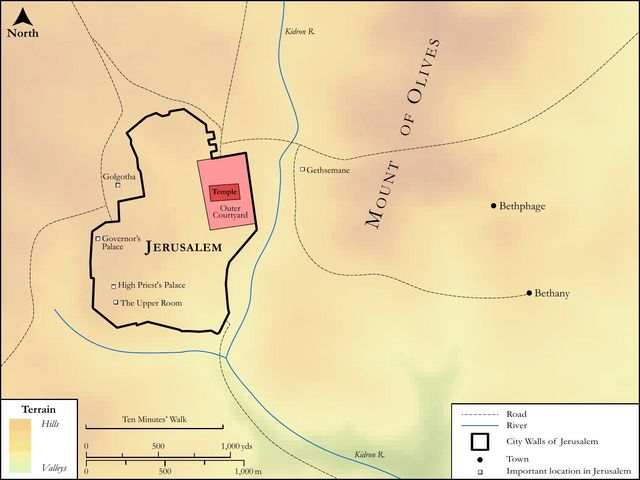
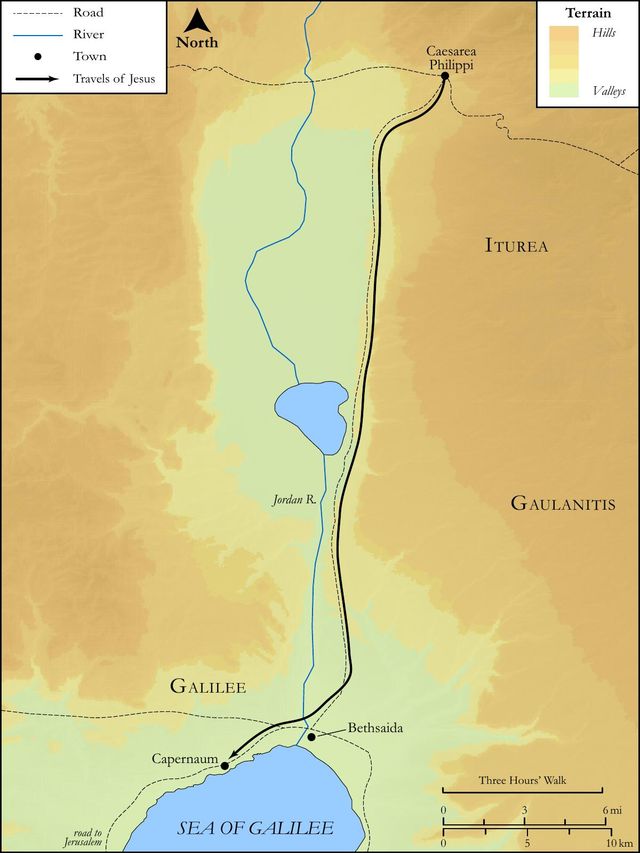
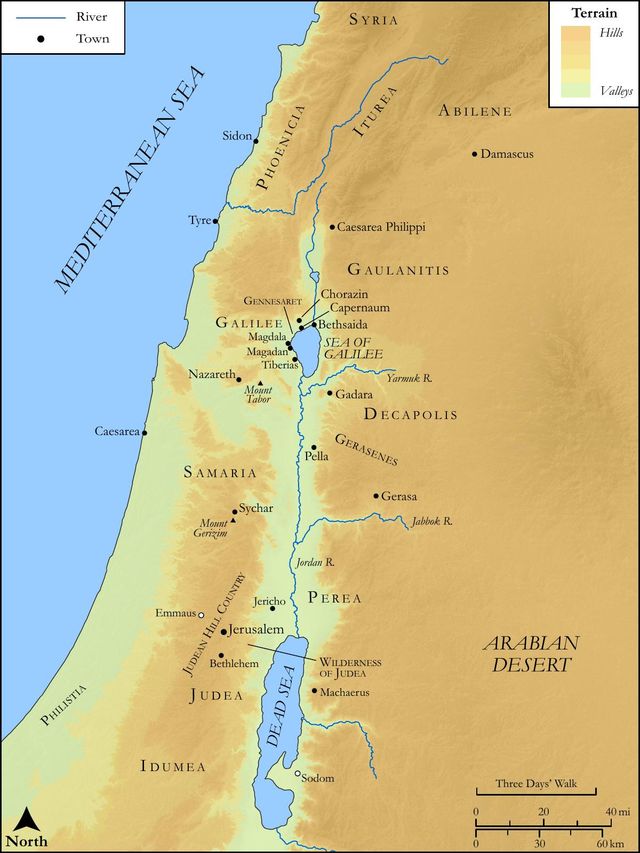
See on the biblical-era maps
Study this verse
Public-domain commentary
Matthew Henry
From his Commentary on the Whole Bible. Henry comments on passages, not single verses — this entry covers Matthew 9:27–34. His three-level outline is real structure in the source text, so it is rendered as structure.
In these verses we have an account of two more miracles wrought together by our Saviour.
I.The giving of sight to two blind men, Mat 9:27-31.
Christ is the Fountain of light as well as life; and as, by raising the dead, he showed himself to be the same that at first breathed into man the breath of life, so, by giving sight to the blind, he showed himself to be the same that at first commanded the light to shine out of darkness. Observe,
1.The importunate address of the blind men to Christ. He was returning from the ruler's house to his own lodgings, and these blind men followed him, as beggars do, with their incessant cries, Mat 9:27. He that cured diseases so easily, so effectually, and, withal, at so cheap a rate, shall have patients enough. As for other things, so he is famed for an Oculist. Observe,
(1.)The title which these blind men gave to Christ; Thou Son of David, have mercy on us. The promise made to David, that of his loins the Messiah should come, was well known, and the Messiah was therefore commonly called the Son of David. At this time there was a general expectation of his appearing; these blind men know, and own, and proclaim it in the streets of Capernaum, that he is come, and that this is he; which aggravates the folly and sin of the chief priests and Pharisees who denied and opposed him. They could not see him and his miracles, but faith comes by hearing. Note, They who, by the providence of God, are deprived of bodily sight, may yet, by the grace of God, have the eyes of their understanding so enlightened, as to discern those great things of God, which are hid from the wise and prudent.
(2.)Their petition, Have mercy on us. It was foretold that the Son of David should be merciful (Psa 72:12, Psa 72:13), and in him shines the tender mercy of our God, Luk 1:78. Note, Whatever our necessities and burthens are, we need no more for supply and support, than a share in the mercy of our Lord Jesus. Whether he heal us or no, if he have mercy on us, we have enough; as to the particular instances and methods of mercy, we may safely and wisely refer ourselves to the wisdom of Christ. They did not each of them say for himself, Have mercy on me, but both for one another, Have mercy on us. Note, It becomes those that are under the same affliction, to concur in the same prayers for relief. Fellow-sufferers should be joint-petitioners. In Christ there is enough for all.
(3.)Their importunity in this request; they followed him, crying. It seems, he did not take notice of them at first, for he would try their faith, which he knew to be strong; would quicken their prayers, and make his cures the more valued, when they did not always come at the first word; and would teach us to continue instant in prayer, always to pray, and not to faint: and, though the answer do not come presently, yet to wait for it, and to follow providence, even in those steps and outgoings of it which seem to neglect or contradict our prayers. Christ would not heal them publicly in the streets, for this was a cure he would have kept private (Mat 9:30), but when he came into the house, they followed him thither, and came to him. Note, Christ's doors are always open to believing and importunate petitioners; it seemed rude in them to rush into the house after him, when he desired to retire; but, such is the tenderness of our Lord Jesus, that they were not more bold than welcome.
2.The confession of faith, which Christ drew from them upon this occasion. When they came to him for mercy, he asked them, Believe ye that I am able to do this? Note, Faith is the great condition of Christ's favours. They who would receive the mercy of Christ, must firmly believe the power of Christ. What we would have him do for us, we must be fully assured that he is able to do. They followed Christ, and followed him crying, but the great question is, Do ye believe? Nature may work fervency, but it is only grace that can work faith; spiritual blessings are obtained only by faith. They had intimated their faith in the office of Christ as Son of David, and in his mercy; but Christ demands likewise a profession of faith in his power. Believe ye that I am able to do this; to bestow this favour; to give sight to the blind, as well as to cure the palsy and raise the dead? Note, It is good to be particular in the exercise of faith, to apply the general assurances of God's power and good will, and the general promises, to our particular exigencies. All shall work for good, and if all, then this. "Believe ye that I am able, not only to prevail with God for it, as a prophet, but that I am able to do it by my own power?" This will amount to their belief of his being not only the Son of David, but the Son of God; for it is God's prerogative to open the eyes of the blind (Psa 146:8); he makes the seeing eye, Exo 4:11. Job was eyes to the blind (Job 29:15); was to them instead of eyes, but he could not give eyes to the blind. Still it is put to us, Believe we that Christ is able to do for us, by the power of his merit and intercession in heaven, of his Spirit and grace in the heart, and of his providence and dominion in the world? To believe the power of Christ is not only to assure ourselves of it, but to commit ourselves to it, and encourage ourselves in it.
To this question they give an immediate answer, without hesitation: they said, Yea, Lord. Though he had kept them in suspense awhile, and had not helped them at first, they honestly imputed that to his wisdom, not to his weakness, and were still confident of his ability. Note, The treasures of mercy that are laid up in the power of Christ, are laid out and wrought for those that trust in him, Psa 31:19.
3.The cure that Christ wrought on them; he touched their eyes, Mat 9:29. This he did to encourage their faith, which, by his delay, he had tried, and to show that he gives sight to blind souls by the operations of his grace accompanying the word, anointing the eyes with eye-salve: and he put the cure upon their faith, According to your faith be it unto you. When they begged for a cure, he enquired into their faith (Mat 9:28), Believe ye that I am able? He did not enquire into their wealth, whether they were able to pay him for a cure; nor into their reputation, should he get credit by curing them; but into their faith; and now they had professed their faith he referred the matter to that: "I know you do believe, and the power you believe in shall be exerted for you; According to your faith be it unto you." This speaks,
(1.)His knowledge of the sincerity of their faith, and his acceptance and approbation of it. Note, It is a great comfort to true believers, that Jesus Christ knows their faith, and is well pleased with it. Though it be weak, though others do not discern it, though they themselves are ready to question it, it is known to him.
(2.)His insisting upon their faith as necessary; "If you believe, take what you come for." Note, They who apply themselves to Jesus Christ, shall be dealt with according to their faith; not according to their fancies, nor according to their profession, but according to their faith; that is, unbelievers cannot expect to find any favour with God, but true believers may be sure to find all that favour which is offered in the gospel; and our comforts ebb or flow, according as our faith is stronger or weaker; we are not straitened in Christ, let us not then be straitened in ourselves.
4.The charge he gave them to keep it private (Mat 9:30), See that no man know it. He gave them this charge,
(1.)To set us an example of that humility and lowliness of mind, which he would have us to learn of him. Note, In the good we do, we must not seek our own praise, but only the glory of God. It must be more our care and endeavour to be useful, than to be known and observed to be so, Pro 20:6; Pro 25:27. Thus Christ seconded the rule he had given, Let not thy left hand know what thy right hand doeth.
(2.)Some think that Christ, in keeping it private, showed his displeasure against the people of Capernaum, who had seen so many miracles, and yet believed not. Note, The silencing of those who should proclaim the works of Christ is a judgment to any place or people: and it is just in Christ to deny the means of conviction to those that are obstinate in their infidelity; and to shroud the light from those that shut their eyes against it.
(3.)He did it in discretion, for his own preservation; because the more he was proclaimed, the more jealous would the rulers of the Jews be of his growing interest among the people.
(4.)Dr. Whitby gives another reason, which is very considerable, why Christ sometimes concealed his miracles, and afterwards forbid the publishing of his transfiguration; because he would not indulge that pernicious conceit which obtained among the Jews, that their Messiah should be a temporal prince, and so give occasion to the people to attempt the setting up of his kingdom, by tumults and seditions, as they offered to do, Joh 6:15. But when, after his resurrection (which was the full proof of his mission), his spiritual kingdom was set up, then that danger was over, and they must be published to all nations. And he observes, that the miracles which Christ wrought among the Gentiles and the Gadarenes, were ordered to be published, because with them there was not that danger.
But honour is like the shadow, which, as it flees from those that follow it, so it follows those that flee from it (Mat 9:31); They spread abroad his fame. This was more an act of zeal, than of prudence; and though it may be excused as honestly meant for the honour of Christ, yet it cannot be justified, being done against a particular charge. Whenever we profess to direct our intention to the glory of God, we must see to it that the action be according to the will of God.
II.The healing of a dumb man, that was possessed with a devil. And here observe,
1.His case, which was very sad. He was under the power of the devil in this particular instance, that he was disabled from speaking, Mat 9:32. See the calamitous state of this world, and how various the afflictions of the afflicted are! We have no sooner dismissed two blind men, but we meet with a dumb man. How thankful should we be to God for our sight and speech! See the malice of Satan against mankind, and in how many ways he shows it. This man's dumbness was the effect of his being possessed with a devil; but it was better he should be unable to say any thing, than be forced to say, as those demoniacs did (Mat 8:29), What have we to do with thee? Of the two, better a dumb devil than a blaspheming one. When the devil gets possession of a soul, it is made silent as to any thing that is good; dumb in prayers and praises, which the devil is a sworn enemy to. This poor creature they brought to Christ, who entertained not only those that came of themselves in their own faith, but those that were brought to him by their friends in the faith of others. Though the just shall live eternally by his faith, yet temporal mercies may be bestowed on us with an eye to their faith who are intercessors on our behalf. They brought him in just as the blind man went out. See how unwearied Christ was in doing good; how closely one good work followed another! Treasures of mercy, wondrous mercy, are hid in him; which may be continually communicated, but can never be exhausted.
2.His cure, which was very sudden (Mat 9:33), When the devil was cast out, the dumb spake. Note, Christ's cures strike at the root, and remove the effect by taking away the cause; they open the lips, by breaking Satan's power in the soul. In sanctification he heals the waters by casting salt into the spring. When Christ, by his grace, casts the devil out of a soul, presently the dumb speaks. When Paul was converted, behold, he prays; then the dumb spake.
3.The consequences of this cure.
(1.)The multitudes marvelled; and well they might; though few believed, many wondered. The admiration of the common people is sooner raised than any other affection. It was foretold, that the new song, the New Testament song, should be sung for marvellous works, Psa 98:1. They said, It was never so seen in Israel, and therefore never so seen any where; for no people experienced such wonders of mercy as Israel did. There had been those in Israel that were famous for working miracles, but Christ excelled them all. The miracles Moses wrought had reference to Israel as a people, but Christ's were brought home to particular persons.
(2.)The Pharisees blasphemed, Mat 9:34. When they could not gainsay the convincing evidence of these miracles, they fathered them upon the devil, as if they had been wrought by compact and collusion: he casteth out devils (say they) by the prince of the devils - a suggestion horrid beyond expression; we shall hear more of it afterwards, and Christ's answer to it (Mat 12:25); only observe here, how evil men and seducers wax worse and worse (Ti2 3:13), and it is both their sin and their punishment. Their quarrels with Christ for taking upon him to forgive sin (Mat 9:3), for conversing with publicans and sinners, (Mat 9:11), for not fasting (Mat 9:14), though spiteful enough, yet had some colour of piety, purity, and devotion in them; but this (which they are left to, to punish them for those) breathes nothing but malice and falsehood, and hellish enmity in the highest degree; it is diabolism all over, and was therefore justly pronounced unpardonable. Because the people marvelled, they must say something to diminish the miracle, and this was all they could say.
Historical interpretation
Seven Centuries of Reception
9 surviving comments on this verse. Each one is dated, so this reads as a timeline rather than a list.
Select a marker to jump to its quote. Markers stagger vertically where authors wrote within a few decades of each other.
The natural order of things is here preserved; the dæmon is first cast out, and there the functions of the members proceed. And the multitude marvelled, saying, It was never so seen in Israel.
Or; By the dumb and deaf, and dæmoniae, is signified the Gentile world, needing health in every part; for sunk in evil of every kind, they are afflicted with disease of every part of the body.
But by the knowledge of God the frenzy of superstition being chased away, the sight, the hearing, and the word of salvation is brought in to them.
The wonder of the multitude is followed up by the confession, It was never so seen in Israel; because he, for whom there was no help under the Law, is saved by the power of the Word.
This was not a mere natural defect; but was from the malignity of the dæmon; and therefore he needed to be brought of others, for he could not ask any thing of others as living without voice, and the dæmon chaining his spirit together with his tongue. Therefore Christ does not require faith of him, but immediately healed his disorder; as it follows, And when the dæmon was cast out, the dumb spake.
They set Him thus above others, because He not only healed, but with such ease, and quickness; and cured diseases both infinite in number, and in quality incurable. This most grieved the Pharisees, that they set Him before all others, not only those that then lived, but all who had lived before, on which account it follows, But the Pharisees said, He casteth out dæmons through the Prince of dæmons.
What can be more foolish than this speech of theirs? For it cannot be pretended that one dæmon would cast out another; for they are wont to consent to one another's deeds, and not to be at variance among themselves. But Christ not only cast out dæmons, but healed the lepers, raised the dead, forgave sins, preached the kingdom of God, and brought men to the Father, which a dæmon neither could nor would do.
"He casteth out devils through the prince of the devils."
What can be more foolish than this? For in the first place, as He also saith further on, it is impossible that a devil should cast out a devil for that being is wont to repair what belongs to himself, not to pull it down. But He did not cast out devils only, but also cleansed lepers, and raised the dead, and curbed the sea, and remitted sins, and preached the kingdom, and brought men unto the Father; things which a demon would never either choose, or at any time be able to effect. For the devils bring men to idols, and withdraw them from God, and persuade them to disbelieve the life to come. The devil doth not bestow kindness when he is insulted; forasmuch as even when not insulted, he harms those that court and honor him.
But He doeth the contrary. For after these their insults and revilings, He went about all the cities and villages, teaching in their synagogues, and preaching the gospel of the kingdom, and healing every sickness and every disease.
The Greek word here (κωφὸς) is more frequent in common speech in the sense of 'deaf,' but it is the manner of Scripture to use it indifferently as either.
As the blind receive light, so the tongue of the dumb is loosed, that he may confess Him whom before he denied. The wonder of the multitude is the confession of the nations. The scoff of the Pharisees is the unbelief of the Jews, which is to this day.
(Verse 33, 34.) And the crowds marveled, saying: Never has it appeared like this in Israel. But the Pharisees said: By the prince of demons he casts out demons. The crowd confesses the works of God, and says: Never has it appeared like this in Israel. In the crowd, there is a confession of the nations. But because the Pharisees could not deny the power of God, they slandered his works and said: By the prince of demons he casts out demons, thus demonstrating the unbelief of the Jews through their slander even today.
(De Cons. Ev. ii. 29.) This account of the two blind men and the dumb dæmon is read in Matthew only. The two blind men of whom the others speak are not the same as these, though something similar was done with them. So that even if Matthew had not also recorded their cure, we might have seen that this present narrative was of a different transaction. And this we ought diligently to remember, that many actions of our Lord are very much like one another, but are proved not to be the same action, by being both related at different times by the same Evangelist. So that when we find cases in which one is recorded by one Evangelist, and another by another, and some difference which we cannot reconcile between their accounts, we should suppose that they are like, but not the same, events.
Observe the beautiful order of His miracles; how after He had given sight to the blind, He restored speech to the dumb, and healed the possessed of the dæmon; by which He shows Himself the Lord of power, and the author of the heavenly medicine. For it was said by Isaiah, Then shall the eyes of the blind be opened, the ears of the deaf shall be unstopped, and the tongue of the dumb loosed. (Is. 35:6.) Whence it is said, When they were gone forth, they brought unto him a man dumb, and possessed with a dæmon.
Thus the Scribes and Pharisees denied such of the Lord's miracles as they could deny; and such as they could not they explained by an evil interpretation, according to that, In the multitude of thy excellency thy enemies shall lie unto thee. (Ps. 66:3.)
For the Gentiles were dumb; not being able to open their mouth in the confession of the true faith, and the praises of the Creator, or because in paying worship to dumb idols they were made like unto them. They were afflicted with a dæmon, because by dying in unbelief they were made subject to the power of the Devil.
They who brought the dumb to be healed by the Lord, signify the Apostles and preachers, who brought the Gentile people to be saved before the face of divine mercy.
The house of the ruler is the Synagogue which was ruled by Moses; the house of Jesus is the heavenly Jerusalem. As the Lord passed through this world and was returning to His own house, two blind men followed Him; that is, when the Gospel was preached by the Apostles, many of the Jews and Gentiles began to follow Him. But when He ascended into Heaven, then He entered His house, that is, into the confession of one faith which is in the Catholic Church, and in that they were enlightened.
Figuratively; As in the two blind men were denoted both nations, Jews and Gentiles, so in the man dumb and afflicted with the dæmon is denoted the whole human race.
These words are the height of stupidity. For no demon casts out other demons. But let us suppose that He cast out demons as one who served the prince of demons, that is, as a magician. How then did He heal diseases, forgive sins, and preach the kingdom? For the demon does just the opposite: he brings on diseases and separates man from God.
Continue studying Matthew 9:34 across the web’s major study libraries — every link below opens this exact verse, chapter, or book on the destination site.
Read & Compare
 BibleGatewayThis verse in more than 200 translations and 70 languages.
 Bible.comThe YouVersion reader — hundreds of translations, reading plans, and highlights.
 ESV.orgCrossway's official English Standard Version reader.
 NET BibleThe NET translation with 60,000+ translators' notes on every rendering decision.
 STEP BibleTyndale House's free study tool — original text, vocabulary, and scholarly resources.
 BibliaLogos Bible Software's free web reader.
 USCCBThe New American Bible (Revised Edition) with the U.S. bishops' study notes.
Commentaries
 BibleHub CommentariesDozens of classic commentaries on this verse, gathered on one page.
 StudyLightMore than 100 commentary sets — the largest collection on the web.
 BibleRefPlain-English commentary on what this verse means, verse by verse.
 Enduring WordDavid Guzik's free commentary on this chapter, widely used by Bible teachers.
 Bible Study ToolsVerse commentary alongside Greek and Hebrew study aids.
Original Language & Research
- BibleHub InterlinearThe verse word by word — original language, transliteration, and English.
- BibleHub LexiconEvery word's original-language definition and Strong's entry.
 Blue Letter BibleDeep-study tools — Strong's numbers, concordance, and word studies.
 CNTR CollationThe earliest Greek manuscripts of this verse, collated letter by letter.
Sermons, Hymns & Audio


TrulyRandomVerse is not affiliated with these sites and doesn’t control their content. They’re linked because they’re genuinely useful.
Summary
Matthew 9:34 captures the stark and immediate opposition Jesus faced from the religious establishment, specifically the Pharisees, following a miraculous healing. While the crowds marveled at Jesus' power to cast out a demon and restore speech to a mute man, the Pharisees, unable to deny the undeniable miracle, resorted to a grave accusation: they claimed Jesus performed His exorcisms by the power of Beelzebul, "the prince of the devils," thereby attributing divine power to demonic sources. This verse serves as a pivotal moment, highlighting the entrenched spiritual blindness and hardened hearts that characterized the religious leaders' rejection of Jesus' messianic identity and divine authority.
Context
ShowHideLiterary Context
This verse immediately follows a dramatic display of Jesus' power over evil spirits and physical infirmity. In Matthew 9:32-33, Jesus encounters a man who is both demon-possessed and mute. With a simple act of casting out the demon, the man is instantly able to speak. This miracle elicits an overwhelming response from the crowds, who exclaim in astonishment, "It was never so seen in Israel!" (as recorded in Matthew 9:33). The Pharisees' accusation in Matthew 9:34 directly contrasts with this public acclaim, demonstrating their consistent pattern of antagonism towards Jesus throughout the Gospel of Matthew, often appearing immediately after His powerful demonstrations of authority, such as the healing of the paralytic in Matthew 9:1-8.
Historical & Cultural Context
The Pharisees were a prominent Jewish religious sect during the Second Temple period, known for their meticulous adherence to the Mosaic Law and their oral traditions. They held significant influence among the common people and were often seen as guardians of religious purity and national identity. Their authority was rooted in their perceived piety and expertise in the Law. However, their rigid interpretations and self-righteousness often led them into conflict with Jesus, who challenged their legalistic approach and emphasized the spirit of the Law over its letter. Their accusation in Matthew 9:34 reflects a desperate attempt to discredit Jesus in the eyes of the public. By attributing His power to Satan, they sought to delegitimize His ministry and portray Him as an agent of evil, rather than acknowledging the divine source of His miracles, which would have undermined their own religious authority. This was a common tactic in ancient polemics, to accuse an opponent of being in league with dark forces.
Key Themes
ShowHideThis verse contributes significantly to several overarching themes in Matthew's Gospel. Firstly, it underscores the growing opposition to Jesus' authority from the religious establishment. Despite undeniable miracles, the Pharisees consistently refuse to acknowledge Jesus' divine power, instead seeking ways to undermine Him. This theme is further developed in later chapters, leading to Jesus' direct confrontations with them, such as the discourse on blasphemy against the Holy Spirit in Matthew 12:22-37. Secondly, it highlights the theme of spiritual blindness and hardened hearts. The Pharisees' inability or unwillingness to perceive God's work in Jesus' ministry, despite clear evidence, tragically illustrates a spiritual insensitivity rooted in prejudice and self-preservation. Their rejection of Jesus is not due to a lack of evidence, but a refusal to believe. Finally, the verse touches upon the nature of spiritual warfare. Jesus' ministry is portrayed as a direct assault on the kingdom of darkness, and the Pharisees' accusation reveals the enemy's strategy to twist truth and sow doubt, attributing the work of God to the devil himself. This collision of kingdoms is a recurring motif throughout the Gospels, culminating in Christ's victory over sin and death.
Exposition and Analysis
ShowHideKey Word Analysis
ShowHideThis term, derived from a Hebrew root meaning "to separate," denotes a separatist or one who is exclusively religious. In the context of the Gospels, the Pharisees were a prominent Jewish sect known for their strict adherence to the Law and oral traditions, often setting themselves apart from the common people. Their presence here signifies the official religious opposition to Jesus.
This verb literally means "to eject" or "to drive out," and it is used both literally and figuratively in the New Testament. Here, it specifically refers to the act of expelling demons, highlighting Jesus' demonstrable power and authority over evil spirits. The use of this strong verb emphasizes the decisive and forceful nature of Jesus' exorcisms.
This noun refers to one who is "first in rank or power," a chief ruler, or magistrate. In this context, "the prince of the devils" is a direct reference to Satan (often identified as Beelzebul in parallel passages), indicating the Pharisees' belief that Jesus' power over demons was derived from the very leader of the demonic realm, rather than from God. This accusation is a profound theological and spiritual slander.
Verse Breakdown
ShowHide"But the Pharisees said,"
This opening clause immediately establishes a contrast ("But") between the public's amazement and the religious leaders' reaction. The Pharisees, as the authoritative religious voice, are presented as the source of this severe counter-narrative, indicating their deliberate and official opposition to Jesus. Their "saying" is not a question but a definitive accusation.
"He casteth out devils"
This part acknowledges the undeniable reality of Jesus' actions. The Pharisees do not deny that Jesus performed exorcisms; the miracle itself was too evident to dispute, especially after the man immediately spoke. Their challenge is not to the what but to the how and by whom. This admission, however grudging, validates Jesus' power over demonic forces.
"through the prince of the devils."
This is the core of their accusation. They attribute Jesus' power to Satan, the "prince" or ruler of the demonic realm. This implies that Jesus is an agent of evil, working in league with the very forces He appears to be conquering. This statement is a direct and malicious slander, designed to undermine Jesus' divine authority and discredit Him in the eyes of the people by associating Him with the ultimate source of evil.
Literary Devices
ShowHideMatthew 9:34 powerfully employs Contrast by juxtaposing the awe and wonder of the crowds with the cynical and malevolent accusation of the Pharisees. This stark difference highlights the spiritual divide between those open to God's work and those hardened against it. The verse also features profound Irony; the religious leaders, who should have been the first to recognize God's Messiah, instead accuse Him of being an agent of Satan, thereby demonstrating their own spiritual blindness and opposition to God's kingdom. Furthermore, the Pharisees' statement is a form of Slander and Blasphemy, as they attribute the Holy Spirit's work to demonic power, a serious charge that Jesus addresses more fully in Matthew 12:31-32.
Theological and Thematic Connections
ShowHideThe Pharisees' accusation in Matthew 9:34 is a pivotal moment that exposes the depth of their spiritual rebellion and foreshadows the ultimate rejection of Jesus by the religious establishment. Theologically, it raises profound questions about the source of divine power, the nature of evil, and the tragic consequences of spiritual blindness. Their refusal to acknowledge God's hand in Jesus' miracles, instead attributing them to Satan, represents a deliberate rejection of truth and a hardening of their hearts against the very Messiah they claimed to await. This incident sets the stage for Jesus' later, more explicit warnings about the unforgivable sin of blasphemy against the Holy Spirit, underscoring the gravity of misrepresenting the work of God.
Reflection and Application
ShowHideMatthew 9:34 serves as a sobering reminder of how prejudice, envy, and a rigid adherence to preconceived notions can blind individuals to the clear evidence of God's work. The Pharisees, despite witnessing an undeniable miracle, chose to interpret it through a lens of hostility and suspicion, ultimately leading them to attribute divine power to demonic forces. This challenges us to examine our own hearts and biases: Are we truly open to God's activity, even when it manifests in unexpected ways or through people we might not initially approve of? Do we allow our theological frameworks or personal preferences to hinder our recognition of genuine spiritual fruit? The danger lies in becoming so entrenched in our own understanding that we reject God's truth when it confronts us. This passage calls us to cultivate humility, discernment, and a willingness to acknowledge God's hand, even when it overturns our comfort zones or challenges our established norms. It encourages us to pray for eyes to see and hearts to believe, rather than allowing spiritual blindness to lead us into false accusations or a rejection of Christ's ongoing work in the world.
Questions for Reflection
ShowHideFAQ
ShowHideWhy did the Pharisees accuse Jesus of casting out demons by the prince of devils?
ShowHideThe Pharisees accused Jesus of casting out demons by the power of "the prince of the devils" (Beelzebul/Satan) primarily because they could not deny the reality of His exorcisms, which were visible and undeniable. Instead of acknowledging Jesus' divine authority, which would have undermined their own religious and social standing, they chose to discredit Him by attributing His power to the ultimate source of evil. This was a desperate attempt to explain away His miracles and turn the public against Him, portraying Him as an agent of darkness rather than the promised Messiah. Their accusation stemmed from spiritual blindness, envy, and a hardened heart that refused to accept the truth about Jesus' identity and mission, as seen throughout Matthew's Gospel.
Christ-Centered Fulfillment
ShowHideMatthew 9:34, though a moment of intense opposition, ultimately highlights the profound nature of Jesus' mission and His victory over the powers of darkness. The Pharisees' accusation, that Jesus cast out demons by the "prince of the devils," ironically underscores the very real spiritual warfare Jesus was engaged in. He was not merely a healer but the Son of God, who came to destroy the works of the devil (1 John 3:8). His ability to cast out demons, far from being a sign of demonic alliance, was irrefutable proof of His divine authority and the inauguration of God's kingdom, where Satan's power is being decisively overthrown (Luke 10:18). Jesus' power over evil spirits foreshadows His ultimate triumph on the cross, where He disarmed the spiritual rulers and authorities (Colossians 2:15) and secured victory over sin and death, thereby establishing His reign as the true King, whose authority far surpasses any earthly or demonic "prince." His ministry of deliverance was a tangible sign that the Strong Man had been bound (Matthew 12:29), and His kingdom had arrived.