


Job 29:15
- עֵינַיִם'ei·Na·yimeyesH5869N-fdNoun Dual Feminine Absolute
- הָיִיתִיHa·yi·tiI wasH1961V-Qal-Perf-1csVerb Qal Perfect 1st Singular common gender
- לַעִוֵּרla·'i·Verto the blindH5787Prep-l ¦ Adj-msAdjective Singular Masculine Absoluteלַto theעִוֵּרblind
- וְרַגְלַיִםve·rag·La·yimand [was] feetH7272Conj-w ¦ N-fdNoun Dual Feminine Absoluteוְandרַגְלַיִם[was] feet
- לַפִּסֵּחַla·pi·Se·achto the lameH6455Prep-l ¦ Adj-msAdjective Singular Masculine Absoluteלַto theפִּסֵּחַlame
- אָנִי'A·niIH589Pro-1csPronoun Personal 1st Singular common gender
English is a literal word-by-word gloss of the Hebrew, not the KJV's wording. Why?
This is the original text the KJV's translators worked from — each Hebrew word with its own literal English meaning in this verse, prepared by scholars at Tyndale House, Cambridge. The KJV translates whole sentences, not word by word, so its wording differs: one Hebrew word can become several English words, and the KJV may choose “the LORD” where the gloss reads “Yahweh”. Both are faithful — they answer different questions. For the KJV's own rendering, switch to the KJV text.
Details
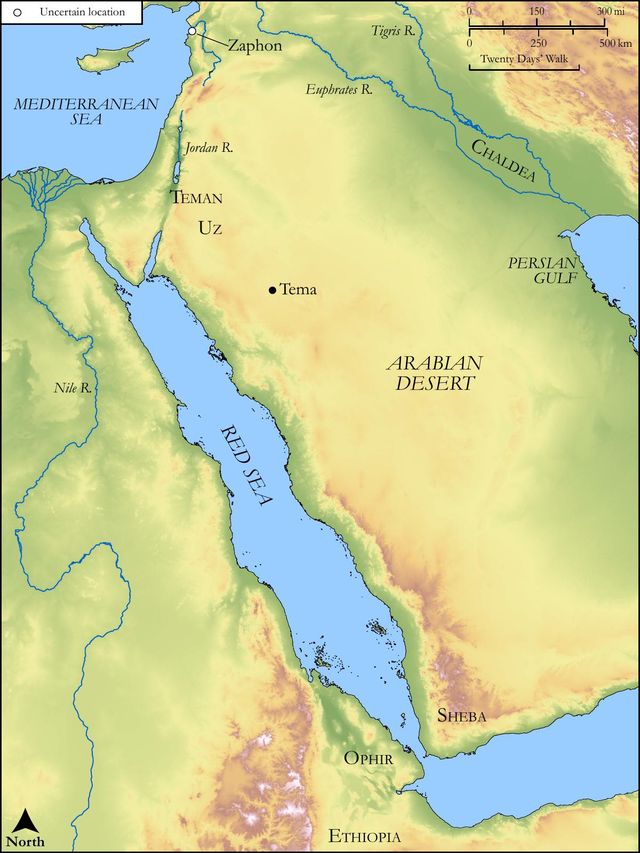
See on the biblical-era map
Study this verse
Public-domain commentary
Matthew Henry
From his Commentary on the Whole Bible. Henry comments on passages, not single verses — this entry covers Job 29:7–17. His three-level outline is real structure in the source text, so it is rendered as structure.
We have here Job in a post of honour and power. Though he had comfort enough in his own house, yet he did not confine himself to that. We are not born for ourselves, but for the public. When any business was to be done in the gate, the place of judgment, Job went out to it through the city (Job 29:7), not in an affectation of pomp, but in an affection to justice. Observe, Judgment was administered in the gate, in the street, in the places of concourse, to which every man might have a free access, that every one who would might be a witness to all that was said and done, and that when judgment was given against the guilty others might hear and fear. Job being a prince, a judge, a magistrate, a man in authority, among the children of the east, we are here told,
I.What a profound respect was paid to him by all sorts of people, not only for the dignity of his place, but for his personal merit, his eminent prudence, integrity, and good management. 1. The people honoured him and stood in awe of him, v. 8. The gravity and majesty of his looks and mien, and his known strictness in animadverting upon every thing that was evil and indecent, commanded all about him into due decorum. The young men, who could not keep their countenances, or, it may be, were conscious to themselves of something amiss, hid themselves, and got out of his way; and the aged, though they kept their ground, yet would not keep their seats: they arose and stood up to do homage to him; those who expected honour from others gave honour to him. Virtue and piety challenge respect from all, and usually have it; but those that not only are good, but do good, are worthy of double honour. Modesty becomes those that are young and in subjection as much as majesty becomes those that are aged and in power. Honour and fear are due to magistrates, and must be rendered to them, Rom 13:7. But, if a great and good man was thus reverenced, how is the great and good God to be feared! 2. The princes and nobles paid great deference to him, Job 29:9, Job 29:10. Some think that these were inferior magistrates under him, and that the respect they paid him was due to his place, as their sovereign and supreme. It should rather seem that they were his equals in place, and joined in commission with him, and that the peculiar honour they gave him was gained by his extraordinary abilities and services. It was agreed that he excelled them all in quickness of apprehension, soundness of judgment, closeness of application, clearness and copiousness of expression; and therefore he was among his fellows an oracle of law, and counsel, and justice, and what he said all attended to and acquiesced in. When he came into court, especially when he stood up to speak to any business, the princes refrained talking, the nobles held their peace, that they might the more diligently hearken to what he said and might be sure to understand his meaning. Those that had been forward to speak their own thoughts, loved to hear themselves talk, and cared not much what any body else said, yet, when it came to Job's turn to speak, were as desirous to know his thoughts as ever they had been to vent their own. Those that suspected their own judgment were satisfied in his, and admired with what dexterity he split the hair and untied the knots which puzzled them and which they knew not what to make of. When the princes and nobles wrangled among themselves all agreed to refer the matters in dispute to Job and to abide by his judgment. Happy the men that are blessed with such eminent gifts as these; they have great opportunities of honouring God and doing good, but have great need to watch against pride. Happy the people that are blessed with such eminent men; it is a token for good to them.
II.What a great deal of good he did in his place.
He was very serviceable to his country with the power he had; and here we shall see what it was which Job valued himself by in the day of his prosperity. It is natural to men to have some value for themselves, and we may judge something of our own character by observing what that is upon which we value ourselves. Job valued himself, not by the honour of his family, the great estate he had, his large income, his full table, the many servants he had at his command, the ensigns of his dignity, his equipage and retinue, the splendid entertainments he gave, and the court that was made to him, but by his usefulness. Goodness is God's glory, and it will be ours; if we are merciful as God is, we are perfect as he is.
1.He valued himself by the interest he had in the esteem, affections, and prayers, of sober people; not by the studied panegyrics of the wits and poets, but the unconstrained praises of all about him. All that heard what he said, and saw what he did, how he laid out himself for the public good with all the authority and tender affection of a father to his country, blessed him, and gave witness to him, Job 29:11. Many a good word they said of him, and many a good prayer they put up for him. He did not think it an honour to make every body fear him (Oderint dum metuant - Let them hate, provided they also fear) nor to be arbitrary, and to have his own will and way, not caring what people said of him; but, like Mordecai, to be accepted of the multitude of his brethren, Est 10:3. He did not so much value the applauses of those at a distance as the attestations of those that were the witnesses of his conduct, that constantly attended him, saw him, and heard him, and could speak of their own knowledge, especially theirs who had themselves been the better for him and could speak by their own experience: such was the blessing of him who was ready to perish (Job 29:13) and who by Job's means was rescued from perishing. Let great men, and men of estates, thus do good, and they shall have praise of the same; and let those who have good done to them look upon it as a just debt they owe to their protectors and benefactors to bless them and give witness to them, to use their interest on earth for their honour and in heaven for their comfort, to praise them and pray for them. Those are ungrateful indeed who grudge these small returns.
2.He valued himself by the care he took of those that were least able to help themselves, the poor and the needy, the widows and fatherless, the blind and the lame, who could not be supposed either to merit his favour or ever to be in a capacity to recompense it.
(1.)If the poor were injured or oppressed, they might cry to Job, and, if he found the allegations of their petitions true, they had not only his ear and his bowels, but his hand too: He delivered the poor that cried (Job 29:12) and would not suffer them to be trampled upon and run down. Nay (Job 29:16), he was a father to the poor, not only a judge to protect them and to see that they were not wronged, but a father to provide for them and to see that they did not want, to counsel and direct them, and to appear and act for them upon all occasions. It is no disparagement to the son of a prince to be a father to the poor.
(2.)The fatherless that had none to help them found Job ready to help them, and, if they were in straits, to deliver them. He helped them to make the best of what little they had, helped them to pay what they owed and to get in what was owing to them, helped them out into the world, helped them into business, helped them to it, and helped them in it; thus should the fatherless be helped.
(3.)Those that were ready to perish he saved from perishing, relieving those that were hungry and ready to perish for want, taking care of those that were sick, that were outcasts, that were falsely accused, or in danger of being turned out of their estates unjustly, or, upon any other account, were ready to perish. The extremity of the peril, as it quickened Job to appear the more vigorously for them, so it made his seasonable kindness the more affecting and the more obliging, and brought their blessings the more abundantly upon him.
(4.)The widows that were sighing for grief, and trembling for fear, he made to sing for joy, so carefully did he protect them and provide for them, and so heartily did he espouse their interest. It is a pleasure to a good man, and should be so to a great man, to give those occasion to rejoice that are most acquainted with grief.
(5.)Those that were upon any account at a loss Job gave suitable and seasonable relief to (Job 29:15): I was eyes to the blind, counselling and advising those for the best that knew not what to do, and feet to the lame, assisting those with money and friends that knew what they should do, but knew not how to compass it. Those we best help whom we help out in that very thing wherein they are defective and most need help. We may come to be blind or lame ourselves, and therefore should pity and succour those that are so, Isa 35:3, Isa 35:4; Heb 12:13.
3.He valued himself by the conscience he made of justice and equity in all his proceedings. His friends had unjustly censured him as an oppressor. "So far from that," says he, "I always made it my business to maintain and support right." (1.) He devoted himself to the administration of justice (Job 29:14): I put on righteousness and it clothed me, that is, he had an habitual disposition to execute justice and put on a fixed resolution to do it. It was the girdle of his lions, Isa 11:5. It kept him tight and steady in all his motions. He always appeared in it, as in his clothing, and never without it. Righteousness will clothe those that put it on; it will keep them warm, and be comfortable to them; it will keep them safe, and fence them against the injuries of the season; it will adorn them, and recommend them to the favour both of God and man. (2.) He took pleasure in it, and, as I may say, a holy delight. He looked upon it as his greatest glory to do justice to all and injury to none: My judgment was as a robe and a diadem. Perhaps he did not himself wear a robe and a diadem; he was very indifferent to those ensigns of honour; those were most fond of them who had least intrinsic worth to recommend them. But the settled principles of justice, by which he was governed and did govern, were to him instead of all those ornaments. If a magistrate do the duty of his place, that is an honour to him far beyond his gold or purple, and should be, accordingly, his delight; and truly if he do not make conscience of his duty, and in some measure answer the end of his elevation, his robe and diadem, his gown and cap, his sword and mace, are but a reproach, like the purple robe and crown of thorns with which the Jews studied to ridicule our Saviour; for, as clothes on a dead man will never make him warm, so robes on a base man will never make him honourable. (3.) He took pains in the business of his place (Job 29:16): The cause which I knew not I searched out. He diligently enquired into the matters of fact, patiently and impartially heard both sides, set every thing in its true light, and cleared it from false colours; he laid all circumstances together, that he might find out the truth and the merits of every cause, and then, and not until then, gave judgment upon it. He never answered a matter before he heard it, nor did he judge a man to be righteous, however he seemed, for his being first in his own cause, Pro 18:17.
4.He valued himself by the check he gave to the violence of proud and evil men (Job 29:17): I broke the jaws of the wicked. He does not say that he broke their necks. He did not take away their lives, but he broke their jaws, he took away their power of doing mischief; he humbled them, mortified them, and curbed their insolence, and so plucked the spoil out of their teeth, delivered the persons and estates of honest men from being made a prey of by them. When they had got the spoil between their teeth, and were greedily swallowing it down, he bravely rescued it, as David did the lamb out of the mouth of the lion, not fearing, though they roared and raged like a lion disappointed of his prey. Good magistrates must thus be a terror and restraint to evil-doers and a protection to the innocent, and, in order to this, they have need to arm themselves with zeal, and resolution, and an undaunted courage. A judge upon the bench has as much need to be bold and brave as a commander in the field.
Historical interpretation
Two Centuries of Reception
2 surviving comments on this verse. Each one is dated, so this reads as a timeline rather than a list.
Select a marker to jump to its quote. Markers stagger vertically where authors wrote within a few decades of each other.
See how these miracles are worthy of the apostles. Job was not able to give sight back to them, because that charisma did not yet exist, but he provided them with light, even though they remained blind, whereas now we even make blind those who are able to see. He did not say, I employed my servants to do that, but I, he says, corrected the errors of nature, not only the errors that derived from the action of people but also those coming from nature itself.
36. Herein the mind of the reader might perchance put the question, wherefore it is that blessed Job reckons up his own virtue with so much particularity. For it is a mark of holy men to conceal the good things they may have done, lest it chance that they bring upon themselves the downfall of exaltation. Whence Truth saith by Itself, Take heed that ye do not your righteousness before men, to be seen of them. [Matt. 6, 1] It is hence, too, that in giving light to the two blind men sitting by the way-side, He charged them, saying, See that no man know it. [Matt. 9, 30] Of which persons it is thereupon said, that they ‘departed and spread abroad the fame of Him throughout all that region.’ Now it is a question for us to consider, what this means, that the Almighty Himself, unto Whom to have the will is the same thing as to have the power, both wished that His extraordinary powers should be kept secret, and notwithstanding by those that were illumined with sight as it were against His will He is made manifest. Which is nothing else than that to His servants following after Him He gave an example, that of themselves indeed they should desire to have their extraordinary endowments kept hidden from sight, and yet, that others might profit by their example, they should be brought to view against their will, and indeed by concealing their own achievements keep themselves safe, but whilst they are brought to view against their will, convey good examples on to their neighbours. So then let them be hidden in set purpose, and made public by necessity, and let the hiding of them be the safe keeping of self, and the making them public usefulness to others. Again, because it is written, Neither do men light a candle, and put it under a bushel, but in a candlestick, and it giveth light to all that are in the house, Let your light so shine before men, that they may see your good works, and glorify your Father, Which is in heaven. [Matt. 5, 15. 16.] There are times when holy persons are compelled to do good things even in the presence of their fellow-creatures, or else to tell these very deeds of theirs to their fellow-creatures, but only to this end relating every thing, viz. that by those works not they themselves, but their Father, Which is in heaven, may be glorified. For whilst they preach things holy, the very preaching itself perhaps goes for nought, of those whose life is not known. So they are forced to tell their own life, that they may be able to change the life of their hearers. And they relate their deeds that they may be held in veneration, and they seek to be venerated, that they may be listened to with awe. Since it is written; And when the living creatures were lifted up from the earth, the wheels were lifted up over against them. [Ez. 1, 21] Because it is so that when the minds of the hearers take in the life of those that preach, surely they necessarily admire the force of the preaching as well.
37. Hence it is therefore that good preachers at once eschew honour on account of being set up, and yet wish to be honoured on account of being imitated. In the same way surely Paul the Apostle, when speaking to the disciples, at once flees honour, and yet shows how greatly he deserved to be honoured. For when he said to the Thessalonians; For neither at any time used we flattering words, as ye know; nor a cloak of covetousness, God is witness: he adds going on; Nor of men sought we glory, neither of you, nor of others, when we might have been, burthensome to you as the Apostles of Christ; But we were gentle among you. [1 Thess. 2, 5. 6. 7.] Again to the Corinthians, avoiding honour he saith; For we preach not ourselves, but Christ Jesus the Lord, and ourselves your servants for Jesus Christ’s sake. [2 Cor. 4, 5] Which same however he seeing to be led aside from the track of the true faith by the persuasions of false apostles, with the greatest pains shows to them how much he was worthy to be held in reverence, saying, Howbeit whereinsoever any is bold, (I speak foolishly,) I am bold also. Are they Hebrews? so am I. Are they Israelites? so am I. Are they the seed of Abraham? so am I. Are they ministers of Christ? (I speak as a fool,) I am more. [2 Cor. 11, 22. 23.] To which particulars he likewise adds how that to him the secrets of the third heaven also were set open, how that being caught up he even penetrated the mysteries of Paradise. See, how eschewing honour he proclaims himself the servant of the disciples. See how for the use of his hearers seeking honour, he advances the claims of his life above the false apostles. Since the great teacher acted with this view, that whilst he himself is seen and known for what he was, both the life and the tongue of those that preached amiss might by comparison with him be made worthless. Therefore in a wonderful way he both exhibits the grace of humility, and seeks accessions of usefulness, so as both to proclaim himself a servant of the disciples, and prove himself better than the adversaries. He displays to the disciples what he had been vouchsafed of humility, he displays to the opponents what he had been vouchsafed of loftiness. He makes appear in opposition to adversaries what he had by gift, he makes appear to disciples what he remains in himself in thought, he makes known to opponents what he is presented without in practice. So holy men, when they are constrained to relate the good things that they do, do not lend themselves to exaltation but usefulness. Whence to his friends, unjustly upbraiding him, and so not knowing the good things in him, blessed Job telling reveals them, that surely they might learn, not whilst upbraiding him to lift themselves up against his life, but holding their peace to copy the same. Though, as we have already often said above, the despair urged on him by those upbraiding him, forced him to recall his own deeds to remembrance. For amidst so many pains of wounding and words of despair, when he tells the things which he did, his mind as it were sunk down by words and wounds he sets anew to hope. So let him say the good things that he has done, that he may not be forced in the midst of so many evil things that he hears to despair of himself. I was eyes to the blind, feet was I to the lame.
38. When we are estimating the examples of holy practice, we ought first to mark what a right order is observed in relating them, so that first works of righteousness, next works of mercy should be described. For that man does well what is pitiful, who is taught first to observe what is just, so that the stream of mercy bestowed on our neighbours be brought from the fountain-head of righteousness. For there are many that in a manner render works of mercy to their neighbours, but do not abandon the deeds of unrighteousness, which same if they are anxious truly to show mercy to their neighbours, ought first by living justly to have shown pity to themselves. Whence it is written; Have mercy upon thine own soul by pleasing God. [Ecclus. 30, 23. (Vulg. 42)] He then that would pity his neighbour must needs derive the original of pitying from himself. For it is written; Thou shalt love thy neighbour as thyself. [Matt. 19, 19] How, then, is he pitiful to another by showing mercy, who by still living unjustly becomes pitiless to himself? Whence it is also said by one that was wise; He that is evil to himself, to whom will he be good? [Ecclus. 14, 5] Since for showing forth mercy, that it may be rendered to the needy outwardly in perfection, two things necessary agree together, i.e. the man that is to give, and the thing to be given. But the man is by far and without comparison better than the thing. And so he who gives up his outward substance to his neighbour in want, but does not keep his own life from doing evil, gives his estate to God, but himself to sin. The thing which is the lesser he offered to the Creator, and that which is the greater he reserved to wickedness. And so it is well said first by blessed Job, With justice I was clothed and arrayed myself as with a garment, and with my judgment as with a diadem: and is next added; I was eyes to the blind, and feet was I to the lame. Because there is then in God’s sight the offering of true righteousness, when from the root of righteousness the branches of pitifulness proceed. But because in the very work of mercy itself the spirit is wont to be thought more of with the interior Judge than the thing done, observe that he declares that to ‘the blind he had been eyes, to the lame feet.’ For by saying these things assuredly he points out that both to the one he had held out a hand by himself, and that the other he bore up by carrying. From which it is gathered how greatly the bowels of his mercy were poured out upon the weak and needy
Continue studying Job 29:15 across the web’s major study libraries — every link below opens this exact verse, chapter, or book on the destination site.
Read & Compare
 BibleGatewayThis verse in more than 200 translations and 70 languages.
 Bible.comThe YouVersion reader — hundreds of translations, reading plans, and highlights.
 ESV.orgCrossway's official English Standard Version reader.
 NET BibleThe NET translation with 60,000+ translators' notes on every rendering decision.
 STEP BibleTyndale House's free study tool — original text, vocabulary, and scholarly resources.
 BibliaLogos Bible Software's free web reader.
 USCCBThe New American Bible (Revised Edition) with the U.S. bishops' study notes.
Commentaries
 BibleHub CommentariesDozens of classic commentaries on this verse, gathered on one page.
 StudyLightMore than 100 commentary sets — the largest collection on the web.
 BibleRefPlain-English commentary on what this verse means, verse by verse.
 Enduring WordDavid Guzik's free commentary on this chapter, widely used by Bible teachers.
 Bible Study ToolsVerse commentary alongside Greek and Hebrew study aids.
Original Language & Research
- BibleHub InterlinearThe verse word by word — original language, transliteration, and English.
- BibleHub LexiconEvery word's original-language definition and Strong's entry.
 Blue Letter BibleDeep-study tools — Strong's numbers, concordance, and word studies.
 SefariaThe Hebrew text with Rashi and centuries of Jewish commentary.
Sermons, Hymns & Audio


TrulyRandomVerse is not affiliated with these sites and doesn’t control their content. They’re linked because they’re genuinely useful.
Summary
Job 29:15 is a poignant declaration from Job's final monologue, where he passionately recounts the esteemed leadership and unwavering righteousness that characterized his life before the onset of his catastrophic suffering. This verse serves as a powerful testament to his active and compassionate engagement with the most vulnerable members of his community, illustrating how he personally provided essential support and advocacy for those who were physically disadvantaged and overlooked. It underscores his deep commitment to justice and practical care, presenting himself not merely as a benefactor but as an embodiment of the very faculties that the needy lacked, thereby highlighting his profound empathy and servant-hearted leadership.
Context
ShowHideLiterary Context
Job 29 initiates Job's final, eloquent defense and lament, immediately preceding his powerful oath of innocence in Job 31. This chapter serves as a poignant retrospective, contrasting Job's past prosperity, honor, and moral uprightness with his present state of destitution and public scorn. Following his friends' relentless accusations and God's silence, Job appeals to his own blameless conduct as evidence against their claims. Verses 7-11 describe the universal respect he commanded from all segments of society, while verses 12-17 enumerate specific acts of justice and compassion, such as rescuing the poor, the fatherless, and the perishing. Within this enumeration of his righteous deeds, Job 29:15 stands out as a vivid, metaphorical description of his hands-on, personal involvement in alleviating the suffering of the physically impaired, demonstrating that his righteousness was practical, deeply empathetic, and extended to the most helpless, not merely theoretical.
Historical & Cultural Context
In the ancient Near East, a leader's righteousness was often measured by their commitment to justice and their care for the vulnerable, including widows, orphans, and the poor. Job, as a prominent figure likely a tribal chieftain or patriarch in the land of Uz, embodied this ideal. Physical disabilities like blindness and lameness often rendered individuals highly dependent and overlooked in a society without modern provisions for the needy. Such individuals relied heavily on the charity and protection of the community, especially from those in positions of power. Job's self-description signifies a profound societal role, where he used his influence, resources, and personal presence to fill critical gaps for those who were otherwise helpless. This reflects the highest ideals of benevolent leadership and communal responsibility prevalent in the wisdom traditions of the era, where a just ruler was expected to be a protector and provider for the weakest, echoing principles found in ancient Near Eastern law codes and wisdom literature.
Key Themes
ShowHideJob 29:15 powerfully contributes to several overarching themes within the book of Job and broader biblical theology. Foremost is the theme of Righteousness Demonstrated Through Action, where Job's integrity is not an abstract concept but concretely manifested in tangible acts of justice and mercy. This verse highlights Compassionate Leadership, portraying Job as a leader who genuinely served his people, especially the weakest, rather than exploiting them. It speaks directly to the theme of Justice for the Vulnerable, emphasizing the biblical imperative to protect and provide for those who cannot defend themselves, a principle echoed throughout the Law and Prophets, such as the commands in Deuteronomy 24:17-19 concerning the lowly, or the prophetic call in Isaiah 1:17. Furthermore, Job's statement implies a deep Identification with the Suffering, where he metaphorically "becomes" what the blind and lame lack, illustrating a profound empathy that transcends mere charity and moves into active solidarity, a precursor to the New Testament's call to bear one another's burdens (Galatians 6:2).
Exposition and Analysis
ShowHideKey Word Analysis
ShowHideThis term refers literally to the organ of sight but is used extensively in a figurative sense to denote guidance, discernment, foresight, and protection. For the blind, eyes are the essential means of navigating the world, avoiding danger, and perceiving reality. Job's claim to be "eyes" suggests he provided direction, insight, and a protective presence, enabling the blind to move safely and confidently in a world they could not see. It implies he was their source of understanding, their shield against unseen perils, and their guide through life's complexities.
This word denotes someone who is physically blind, but can also be used figuratively for those who are spiritually or intellectually blind. In this context, it refers to individuals who are utterly dependent due to their inability to see. Job's statement highlights his direct engagement with those who lacked fundamental sensory input, emphasizing his role in compensating for their most profound physical deficit, thereby providing them with safety and the ability to function.
This word refers to the foot as used in walking, and by implication, a step or mobility. For the lame, feet are the means of movement, of earning a livelihood, and participating in daily life. By stating he was "feet to the lame," Job indicates he provided the means for them to move, to access resources, and to overcome their physical limitations. This points to his practical assistance, enabling them to participate in society and live with greater dignity, effectively carrying them forward or facilitating their independent movement.
Verse Breakdown
ShowHide"I was eyes to the blind,"
This clause powerfully reveals Job's active and personal role in providing guidance, protection, and insight for those deprived of sight. He didn't merely offer charity; he became their sensory faculty, enabling them to navigate life's challenges. This suggests a deep, personal involvement, offering not just material aid but also wisdom, counsel, and a watchful presence to prevent them from falling or being exploited. It speaks to his role as a discerning leader who illuminated the path for the vulnerable, ensuring their safety and dignity in a world they could not perceive.
"and feet [was] I to the lame."
This parallel clause further elaborates on Job's practical and empowering compassion. He provided the necessary support and mobility for those physically hindered. This implies he helped them overcome their physical limitations, enabling them to move, work, and participate in the community. It signifies his willingness to bear their burdens, to carry them, and to facilitate their progress, ensuring they were not confined by their disability but could still engage with life and access opportunities, thereby restoring their agency and participation.
Literary Devices
ShowHideJob 29:15 is rich in Metaphor, where Job describes himself as literally embodying the missing faculties of the blind and the lame. He doesn't say he helped the blind to see or the lame to walk, but that he was their eyes and feet, a powerful and vivid figure of speech that emphasizes his profound and personal identification with their needs. This use of metaphor also borders on Hyperbole, as he exaggerates his role to convey the depth of his commitment and the extent of his practical support, underscoring that his aid was so comprehensive it was as if he provided the very missing limbs or senses. The verse also employs Parallelism, specifically synonymous parallelism, where the two clauses ("I was eyes to the blind" and "feet was I to the lame") express similar ideas using different but related imagery. This structure reinforces the central theme of active, compassionate aid to the physically disadvantaged, enhancing the verse's poetic quality and rhetorical force, underscoring Job's comprehensive care for the vulnerable.
Theological and Thematic Connections
ShowHideJob's self-description in this verse resonates deeply with the biblical mandate for justice and compassion, reflecting a divine characteristic that God Himself embodies. Throughout Scripture, God is portrayed as the defender of the weak, the helper of the helpless, and the one who provides for the lowly. Job's actions mirror this divine care, suggesting that true righteousness involves not only adherence to moral codes but also active, empathetic engagement with human suffering. His commitment to being "eyes" and "feet" for the vulnerable foreshadows the New Testament's emphasis on practical love and service as a hallmark of genuine faith, demonstrating that compassion is not merely an emotion but a tangible expression of God's heart in the world. This serves as a powerful reminder that our faith is made visible through our deeds, particularly our care for "the least of these."
Reflection and Application
ShowHideJob's poignant reflection in Job 29:15 offers a timeless blueprint for compassionate living and servant leadership. It challenges believers today to move beyond passive sympathy and theoretical goodwill to active, tangible service for those in need. To be "eyes to the blind" in our contemporary context means to provide clarity, guidance, and advocacy for those who are spiritually, socially, or intellectually disoriented or overlooked. It calls us to speak up for the defenseless, to shed light on injustice, to offer wisdom to those who lack direction, and to help others discern truth in a complex world. To be "feet to the lame" implies providing practical support, resources, and enablement for those hindered by physical, financial, emotional, or pervasive barriers. This could involve direct aid, creating accessible opportunities, or simply walking alongside someone in their struggle, offering steadfast companionship and practical assistance. Ultimately, Job's example reminds us that true faith is expressed through sacrificial action, embodying the very presence and provision that the vulnerable desperately need, thereby reflecting the heart of God to a broken world and becoming agents of His restorative grace.
Questions for Reflection
ShowHideFAQ
ShowHideWhat does it mean to be "eyes to the blind and feet to the lame" in a modern context?
ShowHideIn a modern context, being "eyes to the blind" means providing guidance, clarity, and advocacy for those who are vulnerable, exploited, or lack understanding. This could involve speaking up for the defenseless, mentoring someone who is lost, offering spiritual or practical wisdom to those who cannot see a clear path, or shedding light on hidden injustices. Being "feet to the lame" means offering practical support, enabling mobility, and removing obstacles for those who are physically, financially, emotionally, or socially hindered. This might include volunteering at a food bank, assisting someone with a disability, supporting initiatives for accessibility, or helping someone gain employment or education. It's about empowering others and filling the gaps where they lack capacity, embodying active compassion in tangible ways.
How does Job's self-description here fit with humility, given that he is recounting his good deeds?
ShowHideWhile Job is indeed recounting his good deeds, it's crucial to understand the context of his monologue. He is not boasting out of pride, but rather defending his integrity against the relentless and false accusations of his friends, who insist his suffering must be due to hidden sin. In the ancient Near East, a person's reputation and past actions were often presented as evidence of their character and standing before God and community. Job is asserting his blamelessness before God and his accusers, demonstrating that his life was consistently marked by genuine righteousness and compassion, which aligns with God's own character. His "boasting" is a heartfelt plea for justice and vindication, not an act of self-aggrandizement. He is appealing to his consistent pattern of righteous living as irrefutable proof against their theories of his guilt, seeking to restore his honor and clarify his blamelessness.
Is this verse only about helping people with physical disabilities?
ShowHideWhile the verse literally refers to physical disabilities ("blind" and "lame"), its metaphorical power extends far beyond this narrow interpretation. It speaks to a broader principle of active compassion and holistic care for anyone who is vulnerable, disadvantaged, or lacking what they need to thrive. "Blindness" can represent spiritual ignorance, neglect, lack of opportunity, or inability to perceive truth or danger. "Lameness" can symbolize emotional paralysis, financial destitution, pervasive oppression, or any condition that prevents a person from moving forward or participating fully in life. Job's statement is a profound call to identify with and actively empower anyone who is hindered or helpless, addressing their fundamental needs in a profound and personal way, reflecting a comprehensive approach to human suffering.
Christ-Centered Fulfillment
ShowHideJob's commendable compassionate actions in Job 29:15 find their ultimate and perfect fulfillment in the person and ministry of Jesus Christ. Jesus is the quintessential "eyes to the blind" and "feet to the lame," not merely metaphorically but literally and spiritually. He gave physical sight to the blind (e.g., John 9:1-7) and enabled the lame to walk and leap (e.g., Acts 3:1-8), echoing Isaiah's prophecy of the Messiah's coming in Isaiah 35:5-6. Beyond physical healing, Jesus provided spiritual sight to those blinded by sin and unbelief, revealing the truth of God's kingdom and the path to salvation (e.g., John 8:12). He also empowered those crippled by sin, fear, and social ostracization to walk in newness of life, offering forgiveness, liberation, and a path to true freedom (e.g., Luke 4:18-19). Jesus perfectly embodies the servant leadership Job aspired to, not from a position of earthly authority, but through profound humility and self-sacrifice, ultimately becoming our "eyes" to God's redemptive plan and our "feet" to salvation through His atoning work on the cross, bridging the chasm between humanity and God (Philippians 2:5-8). His ministry transcends Job's, offering not just temporary aid, but eternal life and spiritual wholeness.