


Job 29:16
Bible text: King James Version (1769 Blayney text) · Public domain
Bible text: Berean Standard Bible · Public domain
Bible text: American Standard Version (1901) · Public domain
Bible text: World English Bible, Messianic edition · Public domain
Bible text: Geneva Bible (1599) · Public domain
Bible text: Young's Literal Translation · Public domain
- אָב'av[was] a fatherH1N-msNoun Singular Masculine Absolute
- אָנֹכִי'A·no·khiIH595Pro-1csPronoun Personal 1st Singular common gender
- לָאֶבְיוֹנִיםla·'ev·yo·Nimto the needy [people]H34Prep-l ¦ Adj-mpAdjective Plural Masculine Absoluteלָto theאֶבְיוֹנִיםneedy [people]
- וְרִבve·Rivand a case at law ofH7379Conj-w ¦ N-mscNoun Singular Masculine Constructוְandרִבa case at law of
- לֹאlo'[the one whom] notH3808NegParticle Negative
- יָדַעְתִּיya·Da'·tiI knewH3045V-Qal-Perf-1csVerb Qal Perfect 1st Singular common gender
- אֶחְקְרֵהוּ'ech·ke·Re·huI investigated itH2713V-Qal-Imperf-1cs ¦ 3msVerb Qal Imperfect 1st Singular common genderאֶחְקְרֵI investigatedהוּit
English is a literal word-by-word gloss of the Hebrew, not the KJV's wording. Why?
This is the original text the KJV's translators worked from — each Hebrew word with its own literal English meaning in this verse, prepared by scholars at Tyndale House, Cambridge. The KJV translates whole sentences, not word by word, so its wording differs: one Hebrew word can become several English words, and the KJV may choose “the LORD” where the gloss reads “Yahweh”. Both are faithful — they answer different questions. For the KJV's own rendering, switch to the KJV text.
Details
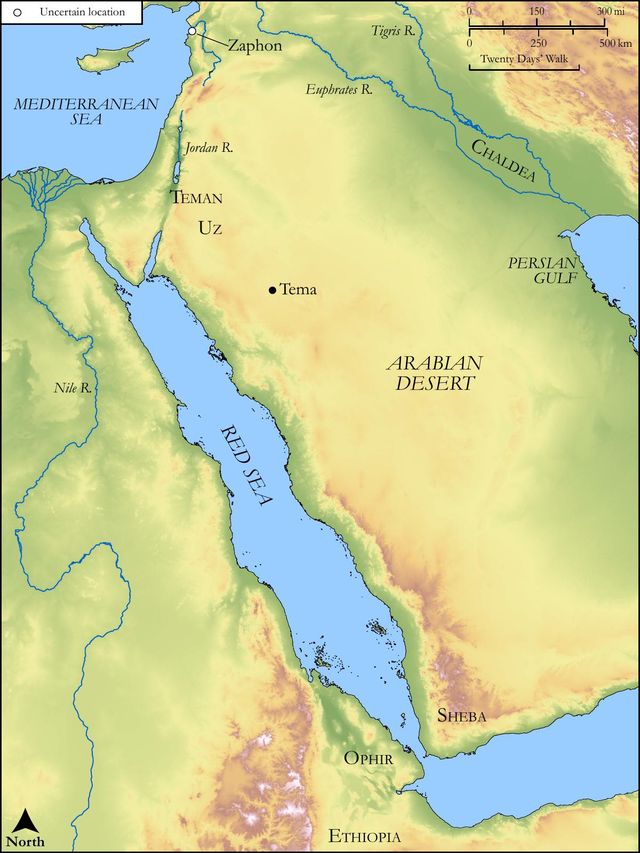
See on the biblical-era map
Study this verse
Public-domain commentary
Matthew Henry
From his Commentary on the Whole Bible. Henry comments on passages, not single verses — this entry covers Job 29:7–17. His three-level outline is real structure in the source text, so it is rendered as structure.
We have here Job in a post of honour and power. Though he had comfort enough in his own house, yet he did not confine himself to that. We are not born for ourselves, but for the public. When any business was to be done in the gate, the place of judgment, Job went out to it through the city (Job 29:7), not in an affectation of pomp, but in an affection to justice. Observe, Judgment was administered in the gate, in the street, in the places of concourse, to which every man might have a free access, that every one who would might be a witness to all that was said and done, and that when judgment was given against the guilty others might hear and fear. Job being a prince, a judge, a magistrate, a man in authority, among the children of the east, we are here told,
I.What a profound respect was paid to him by all sorts of people, not only for the dignity of his place, but for his personal merit, his eminent prudence, integrity, and good management. 1. The people honoured him and stood in awe of him, v. 8. The gravity and majesty of his looks and mien, and his known strictness in animadverting upon every thing that was evil and indecent, commanded all about him into due decorum. The young men, who could not keep their countenances, or, it may be, were conscious to themselves of something amiss, hid themselves, and got out of his way; and the aged, though they kept their ground, yet would not keep their seats: they arose and stood up to do homage to him; those who expected honour from others gave honour to him. Virtue and piety challenge respect from all, and usually have it; but those that not only are good, but do good, are worthy of double honour. Modesty becomes those that are young and in subjection as much as majesty becomes those that are aged and in power. Honour and fear are due to magistrates, and must be rendered to them, Rom 13:7. But, if a great and good man was thus reverenced, how is the great and good God to be feared! 2. The princes and nobles paid great deference to him, Job 29:9, Job 29:10. Some think that these were inferior magistrates under him, and that the respect they paid him was due to his place, as their sovereign and supreme. It should rather seem that they were his equals in place, and joined in commission with him, and that the peculiar honour they gave him was gained by his extraordinary abilities and services. It was agreed that he excelled them all in quickness of apprehension, soundness of judgment, closeness of application, clearness and copiousness of expression; and therefore he was among his fellows an oracle of law, and counsel, and justice, and what he said all attended to and acquiesced in. When he came into court, especially when he stood up to speak to any business, the princes refrained talking, the nobles held their peace, that they might the more diligently hearken to what he said and might be sure to understand his meaning. Those that had been forward to speak their own thoughts, loved to hear themselves talk, and cared not much what any body else said, yet, when it came to Job's turn to speak, were as desirous to know his thoughts as ever they had been to vent their own. Those that suspected their own judgment were satisfied in his, and admired with what dexterity he split the hair and untied the knots which puzzled them and which they knew not what to make of. When the princes and nobles wrangled among themselves all agreed to refer the matters in dispute to Job and to abide by his judgment. Happy the men that are blessed with such eminent gifts as these; they have great opportunities of honouring God and doing good, but have great need to watch against pride. Happy the people that are blessed with such eminent men; it is a token for good to them.
II.What a great deal of good he did in his place.
He was very serviceable to his country with the power he had; and here we shall see what it was which Job valued himself by in the day of his prosperity. It is natural to men to have some value for themselves, and we may judge something of our own character by observing what that is upon which we value ourselves. Job valued himself, not by the honour of his family, the great estate he had, his large income, his full table, the many servants he had at his command, the ensigns of his dignity, his equipage and retinue, the splendid entertainments he gave, and the court that was made to him, but by his usefulness. Goodness is God's glory, and it will be ours; if we are merciful as God is, we are perfect as he is.
1.He valued himself by the interest he had in the esteem, affections, and prayers, of sober people; not by the studied panegyrics of the wits and poets, but the unconstrained praises of all about him. All that heard what he said, and saw what he did, how he laid out himself for the public good with all the authority and tender affection of a father to his country, blessed him, and gave witness to him, Job 29:11. Many a good word they said of him, and many a good prayer they put up for him. He did not think it an honour to make every body fear him (Oderint dum metuant - Let them hate, provided they also fear) nor to be arbitrary, and to have his own will and way, not caring what people said of him; but, like Mordecai, to be accepted of the multitude of his brethren, Est 10:3. He did not so much value the applauses of those at a distance as the attestations of those that were the witnesses of his conduct, that constantly attended him, saw him, and heard him, and could speak of their own knowledge, especially theirs who had themselves been the better for him and could speak by their own experience: such was the blessing of him who was ready to perish (Job 29:13) and who by Job's means was rescued from perishing. Let great men, and men of estates, thus do good, and they shall have praise of the same; and let those who have good done to them look upon it as a just debt they owe to their protectors and benefactors to bless them and give witness to them, to use their interest on earth for their honour and in heaven for their comfort, to praise them and pray for them. Those are ungrateful indeed who grudge these small returns.
2.He valued himself by the care he took of those that were least able to help themselves, the poor and the needy, the widows and fatherless, the blind and the lame, who could not be supposed either to merit his favour or ever to be in a capacity to recompense it.
(1.)If the poor were injured or oppressed, they might cry to Job, and, if he found the allegations of their petitions true, they had not only his ear and his bowels, but his hand too: He delivered the poor that cried (Job 29:12) and would not suffer them to be trampled upon and run down. Nay (Job 29:16), he was a father to the poor, not only a judge to protect them and to see that they were not wronged, but a father to provide for them and to see that they did not want, to counsel and direct them, and to appear and act for them upon all occasions. It is no disparagement to the son of a prince to be a father to the poor.
(2.)The fatherless that had none to help them found Job ready to help them, and, if they were in straits, to deliver them. He helped them to make the best of what little they had, helped them to pay what they owed and to get in what was owing to them, helped them out into the world, helped them into business, helped them to it, and helped them in it; thus should the fatherless be helped.
(3.)Those that were ready to perish he saved from perishing, relieving those that were hungry and ready to perish for want, taking care of those that were sick, that were outcasts, that were falsely accused, or in danger of being turned out of their estates unjustly, or, upon any other account, were ready to perish. The extremity of the peril, as it quickened Job to appear the more vigorously for them, so it made his seasonable kindness the more affecting and the more obliging, and brought their blessings the more abundantly upon him.
(4.)The widows that were sighing for grief, and trembling for fear, he made to sing for joy, so carefully did he protect them and provide for them, and so heartily did he espouse their interest. It is a pleasure to a good man, and should be so to a great man, to give those occasion to rejoice that are most acquainted with grief.
(5.)Those that were upon any account at a loss Job gave suitable and seasonable relief to (Job 29:15): I was eyes to the blind, counselling and advising those for the best that knew not what to do, and feet to the lame, assisting those with money and friends that knew what they should do, but knew not how to compass it. Those we best help whom we help out in that very thing wherein they are defective and most need help. We may come to be blind or lame ourselves, and therefore should pity and succour those that are so, Isa 35:3, Isa 35:4; Heb 12:13.
3.He valued himself by the conscience he made of justice and equity in all his proceedings. His friends had unjustly censured him as an oppressor. "So far from that," says he, "I always made it my business to maintain and support right." (1.) He devoted himself to the administration of justice (Job 29:14): I put on righteousness and it clothed me, that is, he had an habitual disposition to execute justice and put on a fixed resolution to do it. It was the girdle of his lions, Isa 11:5. It kept him tight and steady in all his motions. He always appeared in it, as in his clothing, and never without it. Righteousness will clothe those that put it on; it will keep them warm, and be comfortable to them; it will keep them safe, and fence them against the injuries of the season; it will adorn them, and recommend them to the favour both of God and man. (2.) He took pleasure in it, and, as I may say, a holy delight. He looked upon it as his greatest glory to do justice to all and injury to none: My judgment was as a robe and a diadem. Perhaps he did not himself wear a robe and a diadem; he was very indifferent to those ensigns of honour; those were most fond of them who had least intrinsic worth to recommend them. But the settled principles of justice, by which he was governed and did govern, were to him instead of all those ornaments. If a magistrate do the duty of his place, that is an honour to him far beyond his gold or purple, and should be, accordingly, his delight; and truly if he do not make conscience of his duty, and in some measure answer the end of his elevation, his robe and diadem, his gown and cap, his sword and mace, are but a reproach, like the purple robe and crown of thorns with which the Jews studied to ridicule our Saviour; for, as clothes on a dead man will never make him warm, so robes on a base man will never make him honourable. (3.) He took pains in the business of his place (Job 29:16): The cause which I knew not I searched out. He diligently enquired into the matters of fact, patiently and impartially heard both sides, set every thing in its true light, and cleared it from false colours; he laid all circumstances together, that he might find out the truth and the merits of every cause, and then, and not until then, gave judgment upon it. He never answered a matter before he heard it, nor did he judge a man to be righteous, however he seemed, for his being first in his own cause, Pro 18:17.
4.He valued himself by the check he gave to the violence of proud and evil men (Job 29:17): I broke the jaws of the wicked. He does not say that he broke their necks. He did not take away their lives, but he broke their jaws, he took away their power of doing mischief; he humbled them, mortified them, and curbed their insolence, and so plucked the spoil out of their teeth, delivered the persons and estates of honest men from being made a prey of by them. When they had got the spoil between their teeth, and were greedily swallowing it down, he bravely rescued it, as David did the lamb out of the mouth of the lion, not fearing, though they roared and raged like a lion disappointed of his prey. Good magistrates must thus be a terror and restraint to evil-doers and a protection to the innocent, and, in order to this, they have need to arm themselves with zeal, and resolution, and an undaunted courage. A judge upon the bench has as much need to be bold and brave as a commander in the field.
Historical interpretation
Two Centuries of Reception
3 surviving comments on this verse. Each one is dated, so this reads as a timeline rather than a list.
Select a marker to jump to its quote. Markers stagger vertically where authors wrote within a few decades of each other.
See how these miracles are worthy of the apostles. Job was not able to give sight back to them, because that charisma did not yet exist, but he provided them with light, even though they remained blind, whereas now we even make blind those who are able to see. He did not say, I employed my servants to do that, but I, he says, corrected the errors of nature, not only the errors that derived from the action of people but also those coming from nature itself.
39. Which same words if we refer to the utterance of Holy Church by a typical mode of interpretation, the same is ‘eyes to the blind,’ because she gives light by the Word, and the same ‘feet to the lame,’ because she stays them up by support. For by preaching she enlightens the blind, while the lame by helping she supports. For ‘the blind’ is he that as yet seeth not whither he is going, but ‘the lame’ is he who has not the power to go there where he sees. For frequently sin is committed either by ignorance or weakness, so that either the man knows not what he ought to desire, or cannot do every thing that he has the desire to do. Contrarily it is rightly said by the Psalmist, The Lord is my light and my salvation. [Ps. 27, 1] For because the Lord bestows both knowledge and force, at once in opposition to ignorance He is called ‘Light,’ and in opposition to weakness ‘Saving Health.’ It is hence that it is said of the wicked, Let their way he dark and slippery [Ps. 35, 6]; that is to say, that through the darkness they may not see where they should go, who even if they did see what was right, yet by reason of the slippery quality they should not be able to stand fast therein. And so the one sort through the slipperiness halt in the midst of good things, and the other sort through the darkness, are ignorant what good things to follow. Thus then Holy Church, being seized by tribulations at the end, calls to mind the old times when she was accustomed both to enlighten by teaching and to stablish by helping, and speak with the lips of her foregoing member, saying,
I was an eye to the blind, and a foot was I to the lame.
40. And whereas she has gathered together two Peoples in herself, viz. the Jewish and the Gentile, by the ‘blind,’ the Gentile People may also be rightly denoted, and by ‘the lame’ the Jewish. Since the Gentile People had as it were no eyes, because the Law not being received it saw not where it ought to have gone. But on the other hand the Jewish People having eyes was lame, because the Law indeed in knowing it held, but did not stretch forth the step of right practice therein. For if the Gentile People had not been blind, the Prophet would not say, The people that walked in darkness have seen a great light. [Is. 9, 2] Again, if the Israelitish People had not gone lame to good practice, the Psalmist would never have said in the voice of the Lord, The strange children have lied to me: the strange children have waxed old, they have gone lame out of their paths. [Ps. 18, 44. 45.] Which doubtless is for this reason termed a lame People, in that it had not a sound step in practice, since it would not use both feet, while it admitted one Testament, and spurned the other. Which People when Holy Church receives coming to her, because to the same, already holding the Old Testament, she introduces the New Testament as well, for the directing the steps thereof, she as it were joins on another foot. Which faithful People of Holy Church still further adds aright, I was a father to the poor, because surely the humble, who are called ‘poor in spirit,’ are begotten by her preaching. But it is necessary for us in all these particulars to weigh with exactness the actual words of the history.
41. For very often men give much to the poor, not because they love those poor, but because if they do not give, they dread the indignation of the Judge Above; which persons, if they were not afraid of God, would have had no mind to give the things they possess. And indeed in good deeds it is the first step of beginners, that he who does not yet know how to love his neighbour as himself, nevertheless should yet henceforth begin to dread the judgments from Above. Thus because it is one thing to do a good deed by command and another to do it from affection as well, that the holy man may teach us the inward spirit of his practice, let him say, I was a father to the poor. For not a patron, or a neighbour, or an helper to the poor, but ‘a father’ he testifies that he had been; in this way, because by the great attentiveness of his charity he converted the purpose of mercy into the affection of nature, that he should look on those as children by love, whom he was the head of as a father by protecting. Therefore because the force of his mercy had copied nature, he records himself to have been a father to the poor. Where he likewise adds;
And the cause that I knew not, I most carefully searched out.
42. In which words we have to consider all the particulars how distinctly they are related, and that no profit is passed over by him. Since he is just in his actions, pitiful in his neighbours’ infirmities, active in the concerns of the poor. For he that takes thought of the blessings of the eternal recompensing, must needs extend himself to every occasion of the repayment to follow after. For hence it is said by Solomon; He that feareth God, neglecteth nothing. [Eccl. 7, 18] Hence also Paul saith; prepared unto every good work. [2 Tim. 2, 21] But herein we ought to bear in mind that occasionally in our actions lesser good things are to be let pass for the usefulness of greater ones. Thus who could be ignorant that it has the merit of a good work to bury the dead: and yet Lo one, who had prayed to be let go in order to the burying of his father, it was said; Let the dead bury their dead; but go thou and preach the kingdom of God. [Luke 9, 60] Thus the dutifulness of this service was to be made to give place to the office of preaching, because by the first he would be burying persons dead in the flesh in the earth, by the other he would be raising up persons dead in the soul to life. By the Prophet likewise it is said to the chiefs of the Synagogue; Seek judgment, relieve the oppressed. [Is. 1, 17] And yet Paul the Apostle says; Set them to judge, who are least esteemed in the Church. [1 Cor. 6, 4] For he was kindling his hearers’ hearts to the excellency of wisdom, to different kinds of tongues, to the investigating the mysteries of prophecy also, saying, Desire spiritual gifts, but rather that ye may prophesy. But because they would not be capable of ‘spiritual gifts,’ if earthly matters had weighed them to the ground, he premised long before, saying, Set them to judge who are least esteemed in the Church. As though he said in plain words; ‘they that are of least worth in the Church, and not enriched with any power of extraordinary gifts, let these only judge concerning earthly matters, that by whom extraordinary good cannot be supplied, the lesser good may be.’ Whom he at once styles ‘contemptible,’ and yet calls ‘wise,’ when he says; Is it so that there is not a wise man among you? no one that shall be able to judge between his brethren? [1 Cor. 6, 5] From which point what else is concluded but that they are to try earthly causes, who have received wisdom in things external? But they that have been enriched with spiritual gifts surely ought never to be entangled with earthly concerns, that while they are not compelled to manage the good things beneath, they may by being exercised be enabled to serve the interests of the good things Above.
43. But above every thing it needs to be looked to, that they who shine forth with spiritual gifts should never entirely abandon the affairs of their neighbours of weak condition, but that they should entrust the same to be managed by others, whom it is meet for. Whence also Moses appointed to the people seventy persons in the stead of himself, that in proportion as he buried himself out of the way of external causes he might with the greater fervour go into the things of the interior. And so it comes to pass, that those that are the highest advance more to Spiritual gifts, when things that are lowest do not trample on their minds, and again the persons that are the last in the Church do not live without good practice, while in matters external they find right things which they may do. For Holy Church is so compacted by a unity of the faithful, as our body is made one by the jointing of the limbs. Thus there are some members in the body which are subservient to beholding the light, others which are never parted from the contact of earth. Since the eye is set intent on the light, and that it may not be made blind, it is kept safe from the dust. But the foot then rightly discharges its office, when it does not shrink from taking on it the dust of the earth. Which same members of the body, however, are, by imparting their functions to one another, reciprocally united in one, so that the foot should run for the eyes, and the eye look out for the feet.
44. Thus, then, thus ought the members of Holy Church to be at once distinct in office and united in charity, that the highest persons may look out the way of those, who go at liberty in the concerns of earth, so that the foot may as it were walk by the light of the eyes, and again that whatever they execute, being busied with the affairs of earth, this they may apply to the use of the greater sort, so that the foot, whose way is looked out, may step not for itself only but for the eyes as well. And so whilst they suit one another by turns, by reciprocal ministering, in a wonderful way it is brought about, that whereas all the Elect, by bestowing labour on one another, do what they are able, those works too become their own, which they cannot do themselves.
45. But herein we ought to bear in mind, that when those are wanting, who might fitly minister to the exterior occasions of their neighbours, those too who are full of spiritual gifts ought to lower themselves to their inferiority, and, as far as they may with propriety be able, lend themselves with the condescension of charity to the earthly necessities of those persons. Nor should it weary the mind, if its perception, being ever intent on the contemplation of the spiritual, is sometimes as it were bent down, diminished in managing the least concerns, when that Word, by Which all things created are held together, in order that He might benefit mankind, having taken to Him the nature of man, was willing to be ‘made a little less than the Angels.’ What wonder, then, if man for man’s sake draws himself in, when the Creator of men and Angels for man’s sake took upon Him the form of man? Not however that the perception is diminished when it is thus drawn in; because it penetrates the things above with more exact penetration, in proportion as with more abundant humility for the love of the Creator it does not even despise the things beneath. What is there that is unworthy of us or difficult, if we carry the mind above and below, when of the body we wash the face with the same hand, with which we shoe the foot? Therefore let blessed Job, because when he was doing great things he did not think the least things beneath him, let him say, And the cause that I knew not I very carefully searched out.
46. Wherein I see it is to be noted, that for delivering sentence we should not ever be precipitate, that things not examined into we should not rashly judge, that any thing heard of a bad nature should not affect us, that what is reported every where about we should not credit without proving. Which same, without doubt, we shall be afraid of committing, if we consider the doings of our Creator with some degree of minuteness. For that very Creator, that He might withhold us from a precipitate delivery of sentence, whereas ‘all things are naked and open to His eyes,’ [Hev. 4, 13] yet refused to judge the evil deeds of Sodom when heard, in that He saith; Because the cry of Sodom and Gomorrah is very great, and because their cry is very grievous; I will go down now, and see whether they have done altogether according to the cry of it, which is come unto Me; and if not, I will know. [Gen. 18, 20. 21.] Thus God, Who is Almighty and knowing all things, wherefore does He before the proving seem to doubt, but in order to set forth to us an example of gravity, that the evil of our fellow-creatures we should never venture to believe before we prove it? Observe how by His Angels He comes down for the ascertaining of the evil, and immediately smites the culprits; and He That is patient, He Who is gentle, He, of Whom it is written; But Thou, Lord, judgest with tranquillity. [Wisd. 12, 18] He, of Whom it is written again; The Lord is a patient Rewarder, [Ecclus. 5, 4] finding them involved in such enormous guilt, as it were overlooked patience, and would not await the day of Final Judgment for vengeance, but with the fire of judgment prevented them before the Day of Judgment. See, the evil He in seeming believed with difficulty when He heard it, but visited without backwardness when acquainting Himself He found it true; surely that He might give us an example that worse climes are both to be believed with difficulty, when they are heard, and to be punished more quickly when they are truly ascertained. For this heedfulness accordingly blessed Job entertaining anxious interest, saith, The cause that I knew not, I very carefully searched out. Which same words we may likewise apply not inappropriately in the voice of the Church to a typical way of interpretation. For that same Church by her elect members does when she judges the evil deeds of carnal men ‘search out that, which she knows not,’ in that the evil things which she knows not in doing them, she searches out in correcting them in judgment. And so Holy Church, when she shall be cramped for a time by the villainy of the unjust, remembers, saying, The cause that I knew not, I very carefully searched out. As though she said in plain speech; ‘The evil that in mine Elect I knew not in doing, in wicked Men I did, by judging, chasten with severity.’ And because She now bruises the devil by the power of her preaching, and carries off out of his mouth the soul of every one that she receives.
Continue studying Job 29:16 across the web’s major study libraries — every link below opens this exact verse, chapter, or book on the destination site.
Read & Compare
 BibleGatewayThis verse in more than 200 translations and 70 languages.
 Bible.comThe YouVersion reader — hundreds of translations, reading plans, and highlights.
 ESV.orgCrossway's official English Standard Version reader.
 NET BibleThe NET translation with 60,000+ translators' notes on every rendering decision.
 STEP BibleTyndale House's free study tool — original text, vocabulary, and scholarly resources.
 BibliaLogos Bible Software's free web reader.
 USCCBThe New American Bible (Revised Edition) with the U.S. bishops' study notes.
Commentaries
 BibleHub CommentariesDozens of classic commentaries on this verse, gathered on one page.
 StudyLightMore than 100 commentary sets — the largest collection on the web.
 BibleRefPlain-English commentary on what this verse means, verse by verse.
 Enduring WordDavid Guzik's free commentary on this chapter, widely used by Bible teachers.
 Bible Study ToolsVerse commentary alongside Greek and Hebrew study aids.
Original Language & Research
- BibleHub InterlinearThe verse word by word — original language, transliteration, and English.
- BibleHub LexiconEvery word's original-language definition and Strong's entry.
 Blue Letter BibleDeep-study tools — Strong's numbers, concordance, and word studies.
 SefariaThe Hebrew text with Rashi and centuries of Jewish commentary.
Sermons, Hymns & Audio


TrulyRandomVerse is not affiliated with these sites and doesn’t control their content. They’re linked because they’re genuinely useful.
Summary
Job 29:16 offers a profound glimpse into Job's exemplary character and leadership during his season of prosperity, prior to the immense trials he endured. In this verse, Job vividly recounts his active and personal compassion for the poor, coupled with his diligent and meticulous pursuit of justice for those whose cases were obscure or unknown. This declaration highlights the exemplary qualities of righteousness, wisdom, and benevolent leadership that defined his public life, serving as a poignant contrast to his current state of suffering and the perceived injustice he now faces.
Context
ShowHideLiterary Context
Job 29:16 is situated within Job's final, extensive monologue (chapters 29-31), delivered after the arguments with his three friends have concluded and before Elihu's intervention and God's direct address. In this section, Job laments his present suffering by nostalgically recalling his former blessed state and the esteemed position he held in society. Chapter 29, in particular, paints a detailed picture of his past glory, describing how he was honored by all, his counsel eagerly sought, and his presence a source of comfort and aid. This verse specifically details his hands-on involvement in caring for the lowly and ensuring equitable justice, underscoring the profound righteousness and active benevolence that characterized his life, a stark contrast to his present desolation and the accusations leveled against him. The entire monologue serves to underscore Job's unwavering conviction of his own integrity and to implicitly question the divine justice that has allowed such calamity to befall a man of his unimpeachable character, as initially affirmed in Job's opening description.
Historical & Cultural Context
The Book of Job is set in the patriarchal era, a time when tribal and clan leaders, often men of wealth and influence, bore significant responsibility for the welfare of their communities. Among the men of the east, justice was not merely a legal concept but a fundamental aspect of societal order and divine expectation. Leaders like Job were expected to act as protectors and pleads the cause of the vulnerable, including widows, orphans, and the poor, who lacked social standing or means of defense. Job's description of himself as "a father to the poor" reflects a deeply ingrained cultural value where the powerful were to exercise a paternalistic care over the less fortunate. His active "searching out" of unknown causes points to the importance of wisdom and discernment in resolving disputes and ensuring that justice was not only administered but also perceived as fair, even in complex or hidden matters. This commitment to justice for all, especially the defenseless, was seen as a hallmark of true righteousness and a reflection of divine order.
Key Themes
ShowHideJob 29:16 powerfully contributes to several key themes within the book and broader biblical narrative. Firstly, it highlights Active Compassion and Paternal Care, demonstrating that Job's righteousness was not merely ritualistic but manifested in tangible, personal involvement in the lives of the needy. He didn't just give alms; he embodied a protective, guiding, and providing role for the vulnerable, treating them with dignity and familial concern. Secondly, the verse emphasizes Diligent Pursuit of Justice, portraying Job as a proactive and meticulous investigator who did not wait for injustice to be brought to him but actively sought out obscure cases to ensure fair outcomes. This speaks to a profound commitment to truth and equity, even when the path was unclear. Thirdly, it showcases Wisdom and Discernment, as Job's ability to uncover hidden facts and resolve complex issues demonstrates exceptional insight and a commitment to righteousness that aligns with the pursuit of wisdom described in Proverbs 25:2. Finally, the verse underscores Righteous Leadership, presenting Job as an exemplary figure who leveraged his influence and resources not for personal gain but for the welfare of his community, particularly its most helpless members, thereby challenging the conventional wisdom that suffering is always a direct consequence of sin.
Exposition and Analysis
ShowHideKey Word Analysis
ShowHideThis term (H1) extends far beyond biological paternity. In this context, it signifies a deep, protective, and authoritative role. Job was not merely a benefactor; he adopted a nurturing and advocating stance, providing guidance, protection, and provision for the poor and vulnerable, much like a responsible parent. This implies a profound personal investment and a commitment to their well-being and dignity, reflecting the broader biblical concept of God as a father to the fatherless.
This word (H34) describes someone who is destitute, needy, or a beggar, often implying a state of extreme want or dependency. It emphasizes the vulnerability and lack of resources of those Job ministered to. By actively embracing a "fatherly" role to the ʼebyôwn, Job demonstrated a righteousness that sought out and uplifted the most overlooked members of society, rather than merely assisting the generally less fortunate.
This verb (H2713) conveys a sense of thorough, meticulous investigation and deep inquiry. It means to explore, penetrate, scrutinize, or examine minutely. Job was not content with superficial understanding or readily available information. He actively delved into the intricacies of difficult cases, especially those where the truth was obscure or hidden, demonstrating an unwavering commitment to uncovering the facts and ensuring true justice was served, regardless of the effort required.
Verse Breakdown
ShowHide"I [was] a father to the poor:"
This clause reveals Job's profound and active compassion, extending beyond mere charity to a deeply personal and relational commitment. He did not merely offer alms from a distance; he personally engaged with the lowly, taking on a role of protector, provider, and advocate. This implies a deep empathy and a commitment to ensuring the basic needs and dignity of the poor were met, treating them with the care and concern typically reserved for family members. It speaks to a righteousness that is relational and deeply involved, mirroring God's own care for the vulnerable.
"and the cause [which] I knew not I searched out."
This phrase highlights Job's diligent pursuit of justice and his remarkable wisdom. He was proactive in seeking out and resolving complex cases, particularly those where the truth was obscure or hidden, and the vulnerable might be exploited. He did not wait for injustice to be brought to him, but actively investigated, meticulously uncovering facts and discerning truth. This demonstrates his intellectual rigor, his commitment to equity, and his determination to ensure fair outcomes for those who lacked the means or voice to advocate for themselves, even when the path to truth was unclear.
Literary Devices
ShowHideJob 29:16 employs several literary devices to convey Job's exceptional character and the extent of his former righteousness. The most prominent is Metaphor, specifically in the phrase "I was a father to the poor." This metaphor vividly illustrates Job's benevolent and protective role, portraying him not just as a charitable giver but as a nurturing, authoritative figure who cared for the vulnerable as if they were his own children. This elevates his compassion from mere philanthropy to a deeply personal and responsible commitment. The verse also utilizes Implicit Contrast. By recalling his past glory and righteous deeds, Job sets up a stark contrast with his current state of suffering and perceived injustice, thereby intensifying his lament and implicitly questioning the divine order that has allowed such calamity to befall a man of his character. Furthermore, the description of his meticulous investigation ("searched out") uses Hyperbole to emphasize the extraordinary extent of his commitment to justice, suggesting a level of diligence that goes above and beyond ordinary expectations, highlighting his unwavering dedication to truth and equity.
Theological and Thematic Connections
ShowHideJob 29:16 resonates deeply with the biblical emphasis on God's character as a defender of the poor and oppressed, and the corresponding mandate for His people to reflect that character. Job's actions embody the very heart of covenant righteousness, which extends beyond ritual observance to encompass justice and active care for the vulnerable. His proactive pursuit of justice for the defenseless mirrors God's own concern for the lowly, demonstrating that true faith is inextricably linked to ethical conduct and compassionate engagement with the world. This verse serves as a powerful reminder that genuine piety is evidenced not just by personal devotion but by how one treats the least of these, upholding the dignity and rights of all, especially those who cannot defend themselves.
Reflection and Application
ShowHideJob 29:16 offers timeless principles for contemporary believers, challenging us to move beyond passive sympathy to active, personal involvement in the lives of those in need. Job's example calls us to a father's care for the poor, not just through financial contributions, but by investing ourselves personally and pleading the cause of the defenseless. "The cause which I knew not I searched out" describes a judge who would not decide a poor man's case by rumor or appearance but took the trouble to learn the truth; so we are to take pains to understand the needs and wrongs of those we would help, and to judge fairly. This verse reminds those of us in positions of influence, with resources, or with a platform, to use them for the good of others rather than for personal gain or comfort, reflecting God's heart for the lowly in every sphere of our lives.
Questions for Reflection
ShowHideFAQ
ShowHideWhat does it mean for Job to be "a father to the poor"?
ShowHideFor Job to be "a father to the poor" signifies much more than merely providing financial assistance. It indicates that he took on a deeply personal, protective, and nurturing role for the vulnerable in his community. Like a father, he provided guidance, security, and provision. He acted as an advocate, ensuring their dignity and rights were upheld, and he was intimately involved in their well-being. This metaphor highlights his active compassion, his sense of responsibility, and the profound personal investment he made in caring for those who lacked support and resources. It speaks to a righteousness that was relational and deeply empathetic, reflecting a divine ideal for human leadership.
How does Job's "searching out" connect with biblical wisdom and justice?
ShowHideJob's act of "searching out" unknown causes is deeply connected to biblical wisdom and the pursuit of justice. The Hebrew word implies a meticulous, thorough investigation, going beyond surface-level understanding to uncover hidden truths. This aligns with the biblical understanding that true wisdom involves not just knowledge, but discernment and the application of insight to promote righteousness. In the context of justice, it means actively seeking out the facts, even when obscure, to ensure fair outcomes for all, especially those who cannot speak for themselves. This proactive pursuit of truth for the sake of justice is considered a hallmark of righteous leadership and reflects the divine attribute of knowing all things and judging righteously, as seen in passages like Proverbs 25:2, which states that it is the glory of God to conceal a matter, but the glory of kings to search out a matter.
Christ-Centered Fulfillment
ShowHideJob's exemplary character in Job 29:16 marked by active compassion and diligent pursuit of justice for the poor and unknown, finds its ultimate and perfect fulfillment in the person and work of Jesus Christ. While Job acted as a human "father to the poor," Jesus is the divine Son who truly embodies the ultimate care and provision for the spiritually impoverished and those lost in sin. He came specifically to proclaim good news to the poor, to set the captives free, and to bring sight to the blind, as prophesied in Isaiah 61:1 and affirmed by Jesus Himself in Luke 4:18-19. Jesus not only had compassion on the crowds, but He actively sought out the lowly—the sick, the outcast, the tax collectors, and sinners—embodying a radical, personal involvement that surpassed Job's. Furthermore, where Job "searched out" unknown causes of injustice, Jesus, as the Light of the World, exposes the deepest "unknown causes" of humanity's plight: sin, spiritual blindness, and the deception of the enemy. He meticulously unraveled the twisted legalism of the Pharisees and revealed the true heart of God's law. Ultimately, Jesus became the advocate for humanity, taking on the "cause" of our sin, which we could not search out or resolve ourselves, and offering the ultimate sacrifice as the Lamb of God who takes away the sin of the world. His life and death are the supreme demonstration of self-giving love, justice, and compassion, inviting His followers to participate in His ongoing mission of caring for "the least of these," for in doing so, they minister to Him (Matthew 25:35-40).