


Esther 2:7
Bible text: King James Version (1769 Blayney text) · Public domain
Bible text: King James Version with Strong's numbers · Public domain
Bible text: Berean Standard Bible · Public domain
Bible text: American Standard Version (1901) · Public domain
Bible text: World English Bible, Messianic edition · Public domain
Bible text: Geneva Bible (1599) · Public domain
Bible text: Young's Literal Translation · Public domain
- וַיְהִיvay·Hiand he wasH1961Conj-w ¦ V-Qal-ConsecImperf-3msVerb Qal Consecutive Imperfect 3rd Singular Masculineוַandיְהִיhe was
- אֹמֵן'o·MenraisingH539V-Qal-Prtcpl-msVerb Qal Participle Singular Masculine Absolute
- אֶת'et<obj.>H853DirObjMParticle Object Indicator
- הֲדַסָּהha·da·SahHadassahH1919N-proper-fNoun Proper Feminine
- הִיאhi'thatH1931Pro-3fsPronoun Personal 3rd Singular Feminine
- אֶסְתֵּר'es·Ter[is] EstherH635N-proper-fNoun Proper Feminine
- בַּתbat[the] daughter ofH1323N-fscNoun Singular Feminine Construct
- דֹּדוֹdo·Dohis uncleH1730N-msc ¦ 3msNoun Singular Masculine Constructדֹּדuncleוֹhis
- כִּיkiforH3588PrtParticle Conditional
- אֵין'einnotH369N-mscNoun Singular Masculine Construct
- לָהּlah[belonged] to <the> herPrep-l ¦ 3fsSuffix Personal 3rd Singular Feminineלָ[belonged] to <the>הּher
- אָב'ava fatherH1N-msNoun Singular Masculine Absolute
- וָאֵםva·'Emand a motherH517Conj-w ¦ N-fsNoun Singular Feminine Absoluteוָandאֵםa mother
- וְהַנַּעֲרָהve·ha·na·'a·Rahand the young womanH5291Conj-w ¦ Art ¦ N-fsNoun Singular Feminine Absoluteוְandהַtheנַּעֲרָהyoung woman
- יְפַתye·fat[was] beautiful ofH3303Adj-fscAdjective Singular Feminine Construct
- תֹּאַרto·'arshapeH8389N-msNoun Singular Masculine Absolute
- וְטוֹבַתve·to·Vatand good ofH2896Conj-w ¦ Adj-fscAdjective Singular Feminine Constructוְandטוֹבַתgood of
- מַרְאֶהmar·'EhappearanceH4758N-msNoun Singular Masculine Absolute
- וּבְמוֹתu·ve·Motand at [the] death ofH4194Conj-w ¦ Prep-b ¦ N-mscNoun Singular Masculine Constructוּandבְatמוֹת[the] death of
- אָבִיהָ'a·Vi·haher fatherH1N-msc ¦ 3fsNoun Singular Masculine Constructאָבִיfatherהָher
- וְאִמָּהּve·'i·Mahand her motherH517Conj-w ¦ N-fsc ¦ 3fsNoun Singular Feminine Constructוְandאִמָּmotherהּher
- לְקָחָהּle·ka·Chahhe took herH3947V-Qal-Perf-3ms ¦ 3fsVerb Qal Perfect 3rd Singular Masculineלְקָחָhe tookהּher
- מָרְדֳּכַיma·re·do·KhaiMordecaiH4782N-proper-mNoun Proper Masculine
- לוֹloof himPrep-l ¦ 3msSuffix Personal 3rd Singular Masculineלofוֹhim
- לְבַתle·Vatto a daughterH1323Prep-l ¦ N-fsNoun Singular Feminine Absoluteלְtoבַתa daughter
English is a literal word-by-word gloss of the Hebrew, not the KJV's wording. Why?
This is the original text the KJV's translators worked from — each Hebrew word with its own literal English meaning in this verse, prepared by scholars at Tyndale House, Cambridge. The KJV translates whole sentences, not word by word, so its wording differs: one Hebrew word can become several English words, and the KJV may choose “the LORD” where the gloss reads “Yahweh”. Both are faithful — they answer different questions. For the KJV's own rendering, switch to the KJV text.
Details
See on the biblical-era maps
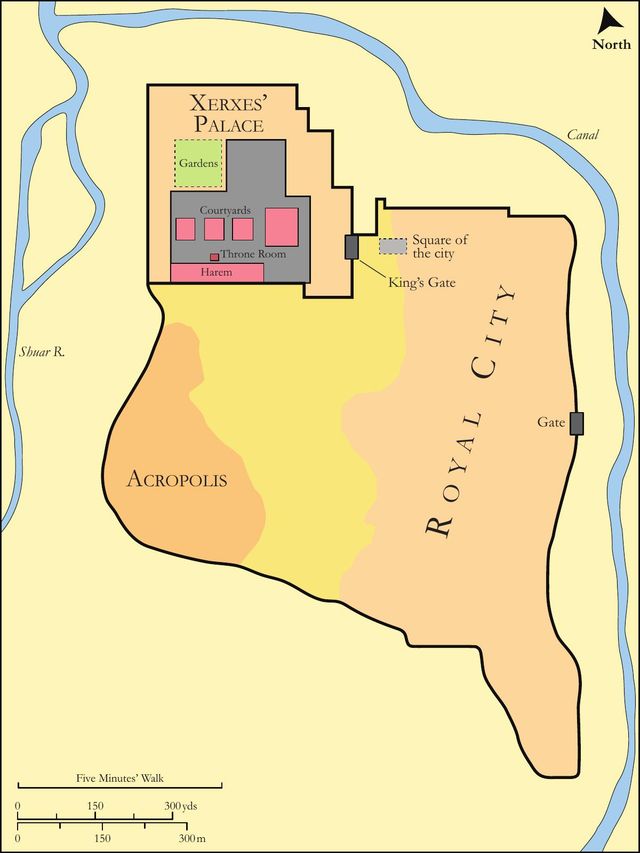
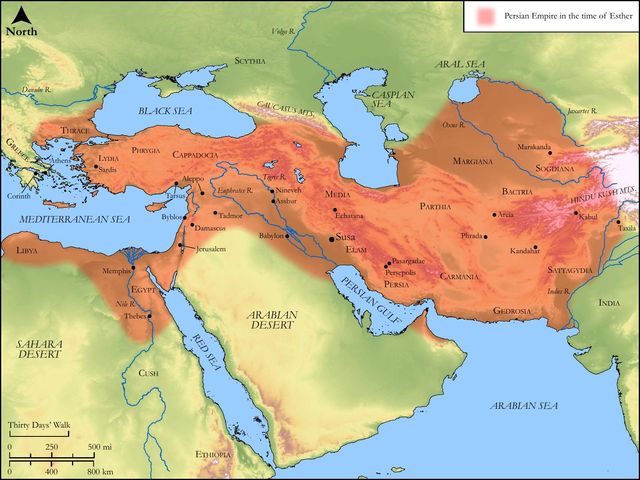
Study this verse
Public-domain commentary
Matthew Henry
From his Commentary on the Whole Bible. Henry comments on passages, not single verses — this entry covers Esther 2:1–20. His four-level outline is real structure in the source text, so it is rendered as structure.
How God put down one that was high and mighty from her seat we read in the chapter before, and are now to be told how he exalted one of low degree, as the virgin Mary observes in her song (Luk 1:52) and Hannah before her, Sa1 2:4-8. Vashti being humbled for her height, Esther is advanced for her humility. Observe,
I.The extravagant course that was taken to please the king with another wife instead of Vashti.
Josephus says that when his anger was over he was exceedingly grieved that the matter was carried so far, and would have been reconciled to Vashti but that, by the constitution of the government, the judgment was irrevocable - that therefore, to make him forget her, they contrived how to entertain him first with a great variety of concubines, and then to fix him to the most agreeable of them all for a wife instead of Vashti. The marriages of princes are commonly made by policy and interest, for the enlarging of their dominions and the strengthening of their alliances; but this must be made partly by the agreeableness of the person to the king's fancy, whether she was rich or poor, noble or ignoble. What pains were taken to humour the king! As if his power and wealth were given him for no other end than that he might have all the delights of the sense wound up to the height of pleasurableness, and exquisitely refined, though at the best they are but dross and dregs in comparison with divine and spiritual pleasures.
1.All the provinces of his kingdom must be searched for fair young virgins, and officers appointed to choose them, Est 2:3.
2.A house (a seraglio) was prepared on purpose for them, and a person appointed to have the charge of them, to see that they were well provided for.
3.No less than twelve months was allowed them for their purification, some of them at least who were brought out of the country, that they might be very clean, and perfumed, Est 2:12. Even those who were the masterpieces of nature must yet have all this help from art to recommend them to a vain and carnal mind.
4.After the king had once taken them to his bed, they were made recluses ever after, except the king pleased at any time to send for them (Est 2:14); they were looked upon as secondary wives, were maintained by the king accordingly, and might not marry. We may see, by this instance, to what absurd practices those came who were destitute of divine revelation, and who, as a punishment for their idolatry, were given up to vile affections. Having broken through that law of creation which resulted from God's making man, they broke through another law, which was founded upon his making one man and one woman. See what need there was of the gospel of Christ to purify men from the lusts of the flesh and to reduce them to the original institution. Those that have learned Christ will think it a shame even to speak of such things as these which were done of them, not only in secret, but avowedly, Eph 5:12.
II.The overruling providence of God thus brining Esther to be queen.
Had she been recommended to Ahasuerus for a wife, he would have rejected the motion with disdain; but when she came in her turn, after several others, and it was found that though many of them were ingenious and discreet, graceful and agreeable, yet Esther excelled them all, way was made for her, even by her rivals, into the king's affections and the honours consequent thereupon. It is certain, as bishop Patrick says, that those who suggest that she committed a great sin to come at this dignity do not consider the custom of those times and countries. Every one that the king took to his bed was married to him, and was his wife of a lower rank, as Hagar was Abraham's; so that, if Esther had not been made queen, the sons of Jacob need not say that he dealt with their sister as with a harlot. Concerning Esther we must observe,
1.Her original and character.
(1.)She was one of the children of the captivity, a Jewess and a sharer with her people in their bondage. Daniel and his fellows were advanced in the land where they were captives; for they were of those whom God sent thither for their good, Jer 24:5.
(2.)She was an orphan; her father and mother were both dead (Est 2:7), but, when they had forsaken here, then the Lord took her up, Psa 27:10. When those whose unhappiness it is to be thus deprived of their parents in their childhood yet afterwards come to be eminently pious and prosperous, we ought to take notice of it to the glory of that God, and his grace and providence, who has taken it among the titles of his honour to be a Father of the fatherless.
(3.)She was a beauty, fair of form, good of countenance; so it is in the margin, Est 2:7. Her wisdom and virtue were her greatest beauty, but it is an advantage to be a diamond to be well set.
(4.)Mordecai, her cousin-german, was her guardian, brought her up, and took her for his own daughter. The Septuagint says that he designed to make her his wife; if that were so, he was to be praised that he opposed not her better preferment. let God be acknowledged in raising up friends for the fatherless and motherless; let it be an encouragement to that pious instance of charity that many who have taken care of the education of orphans have lived to see the good fruit of their care and pains, abundantly to their comfort. Dr. Lightfoot thinks that this Mordecai is the same with that mentioned in Ezr 2:2, who went up to Jerusalem with the first, and helped forward the settlement of his people until the building of the temple was stopped, and then went back to the Persian court, to see what service he could do them there. Mordecai being Esther's guardian or pro-parent, we are told,
[1.]How tender he was of her, as if she had been his own child (Est 2:11): he walked before her door every day, to know how she did, and what interest she had. Let those whose relations are thus cast upon them by divine Providence be thus kindly affectioned to them and solicitous for them.
[2.]How respectful she was to him. Though in relation she was his equal, yet, being in age and dependence his inferior, she honoured him as her father - did his commandment, Est 2:20. This is an example to orphans; if they fall into the hands of those who love them and take care of them, let them make suitable returns of duty and affection. The less obliged their guardians were in duty to provide for them the more obliged they are in gratitude to honour and obey their guardians. Here is an instance of Esther's obsequiousness t Mordecai, that she did not show her people of her kindred, because Mordecai had charged her that she should not, Est 2:10. he did not bid her deny her country, nor tell a lie to conceal her parentage; if he had told her to do so, she must not have done it. But he only told her not to proclaim her country. All truths are not to be spoken at all times, though an untruth is not to be spoken at any time. She being born in Shushan, and her parents being dead, all took her to be of Persian extraction, and she was not bound to undeceive them.
2.Her preferment. Who would have thought that a Jewess, a captive, and orphan, was born to be a queen, an empress! Yet so it proved. Providence sometimes raiseth up the poor out of the dust, to set them among princes, Sa1 2:8.
(1.)The king's chamberlain honoured her (Est 2:9), and was ready to serve her. Wisdom and virtue will gain respect. Those that make sure of God's favour shall find favour with man too as far as it is good for them. All that looked upon Esther admired her (Est 2:15) and concluded that she was the lady that would win the prize, and she did win it.
(2.)The king himself fell in love with her. She was not solicitous, as the rest of the maidens were, to set herself off with artificial beauty; she required nothing but just what was appointed for her (Est 2:15) and yet she was most acceptable. The more natural beauty is the more agreeable. The king loved Esther above all the women, v. 17. Now he needed not to make any further trials, or take time to deliberate; he is soon determined to set the royal crown upon her head, and make her queen, v. 17. This was done in his seventh year (v. 16) and Vashti was divorced in his third year (Est 1:3); so that he was four years without a queen. Notice is taken,
[1.]Of the honours the king put upon Esther. He graced the solemnity of her coronation with a royal feast (Est 2:18), at which perhaps Esther, in compliance with the king, made a public appearance, which Vashti had refused to do, that she might have the praise of obedience in the same instance in which the other incurred the blot of disobedience. He also granted a release to the provinces, either a remittance of the taxes in arrear or an act of grace for criminals; as Pilate, at the feast, released a prisoner. This was to add t the joy.
[2.]Of the deference Esther continued to pay to her former guardian. She still did the commandment of Mordecai, as when she was brought up with him, Est 2:20. Mordecai say in the king's gate; that was the height of his preferment: he was one of the porters or door-keepers of the court. Whether he had this place before, or whether Esther obtained it for him, we are not told; but there he sat contentedly, and aimed no higher; and yet Esther who was advanced to the throne was observant of him. This was an evidence of a humble and grateful disposition, that she had a sense of his former kindnesses and his continued wisdom. It is a great ornament to those that are advanced, and much to their praise, to remember their benefactors, to retain the impressions of their good education, to be diffident of themselves, willing to take advice, and thankful for it.
Historical interpretation
Historical reception
2 surviving comments on this verse. Each one is dated, so this reads as a timeline rather than a list.
It is evident that Esther signifies the gentile church. Her name is interpreted as “hiding place,” and she also had the other name of Hadassah, that is, “mercy.” The church is pleasing to God in the hiding place of his heart because of the chastity of her faith and before the eyes of God it finds a greater mercy and grace than the synagogue of the Jews which with good reason the prophet Hosea calls merciless because of its impiety. Therefore the spiritual Mordecai adopted [Esther] as his own daughter because she had lost both her parents. And what is signified by Mordecai but the future teachers of the Gentiles? This is especially true of the blessed apostle Paul who also descended from the stock of Jemin, that is, he testified to be from the tribe of Benjamin. After Paul was transformed from persecutor into apostle, the gentile church was entrusted to him. And he himself, after her mother and father had died—namely, the errors and superstitions of the Gentiles—made her his own daughter when he regenerated her through the grace of baptism and the word of the gospel, making her also a daughter of the almighty Father, saved for all eternity. Therefore Paul said to them, “For though you might have ten thousand guardians in Christ, you do not have many fathers. Indeed, in Christ Jesus I became your father through the gospel.”
Now, what can Esther—whose name means hidden, and who was also called Hadassah, i.e. mercy—signify if not the Church of the nations, which pleases God in the recesses of its heart because its faith is pure, and it finds before the eyes of God more mercy and grace than the Synagogue of the Jews which the prophet Hosea rightly calls “No-mercy” on account of its wickedness. So the spiritual Mordecai adopts her as his daughter, because she had lost both her parents; and what can Mordecai signify if not the teachers of the nations, and especially the blessed apostle Paul who was also, we are told, from the line of Jemin, i.e. from the tribe of Benjamin? He too was entrusted with the Church of the nations after the call of God transformed him from a persecutor into an apostle; and after the deaths of her father and her mother—that is, the errors and superstitions of the gentiles—he made her in a sense his own when, through the grace of baptism and the word of the Gospels, he sired anew a daughter for the all-powerful Father for eternal salvation. Hence he said to them: “Though you might have many masters, you do not have many fathers; for I sired you in Christ through the Gospel” (1 Corinthians 4). She was, therefore, been taken into captivity at one time by Nebuchadnezzar the king of Babylon, when—because of the Devil—she was taken from natural law and the worship of one God to the confusion of idolatry. Yet God’s righteousness never abandoned her, and in fact called her back to the path of truth by means of his preachers, who looked after her with great care and brought her up in complete righteousness, justice and truth. For her, Hegai the eunuch—i.e. the chaste order of pastors—prepared the cosmetics of women, that is, healthful doctrine and examples of good works; and he gave her his own share of food, which was actually the knowledge of Scripture and an upright character. He also arranged for her seven beautiful girls as attendants, in that he adopted—for the sake of giving her a very beneficial apprenticeship—more of the faithful who were reborn through the grace of the sevenfold Holy Spirit and likewise took up good works. In other words, she would therefore be found suitable in every way for the couch of the eternal king, adorned as she was with a flourishing faith and the glow from every kind of virtue.
Continue studying Esther 2:7 across the web’s major study libraries — every link below opens this exact verse, chapter, or book on the destination site.
Read & Compare
 BibleGatewayThis verse in more than 200 translations and 70 languages.
 Bible.comThe YouVersion reader — hundreds of translations, reading plans, and highlights.
 ESV.orgCrossway's official English Standard Version reader.
 NET BibleThe NET translation with 60,000+ translators' notes on every rendering decision.
 STEP BibleTyndale House's free study tool — original text, vocabulary, and scholarly resources.
 BibliaLogos Bible Software's free web reader.
 USCCBThe New American Bible (Revised Edition) with the U.S. bishops' study notes.
Commentaries
 BibleHub CommentariesDozens of classic commentaries on this verse, gathered on one page.
 StudyLightMore than 100 commentary sets — the largest collection on the web.
 BibleRefPlain-English commentary on what this verse means, verse by verse.
 Enduring WordDavid Guzik's free commentary on this chapter, widely used by Bible teachers.
 Bible Study ToolsVerse commentary alongside Greek and Hebrew study aids.
Original Language & Research
- BibleHub InterlinearThe verse word by word — original language, transliteration, and English.
- BibleHub LexiconEvery word's original-language definition and Strong's entry.
 Blue Letter BibleDeep-study tools — Strong's numbers, concordance, and word studies.
 SefariaThe Hebrew text with Rashi and centuries of Jewish commentary.
Sermons, Hymns & Audio


TrulyRandomVerse is not affiliated with these sites and doesn’t control their content. They’re linked because they’re genuinely useful.
Summary
Esther 2:7 serves as the pivotal introduction to Hadassah, known by her Persian name Esther, a young Jewish orphan who is the cousin and adopted daughter of Mordecai. The verse poignantly establishes her vulnerable status, her striking physical beauty, and Mordecai's compassionate and responsible act of taking her into his household as his own child after the death of her parents. This foundational description not only sets the stage for Esther's unexpected entry into the Persian royal court but also underscores the profound personal and providential dimensions that will shape her extraordinary role in the divine drama of her people's deliverance.
Context
ShowHideLiterary Context
Esther 2:7 is strategically positioned within the narrative flow following the dramatic events of Esther 1, which culminated in Queen Vashti's deposition and King Ahasuerus's subsequent decree to find a new queen. The preceding verses in Esther 2:1-4 detail the king's search for beautiful virgins from across his vast empire to be brought to the citadel of Susa for a year-long purification process. This verse specifically introduces Esther as one of these eligible young women, providing her essential background and establishing her unique relationship with Mordecai. Her introduction here directly prepares the reader for her eventual entry into the royal harem and her subsequent elevation to queen, which serves as the critical catalyst for the entire book's plot, leading to the dramatic confrontation with Haman and the salvation of the Jewish people.
Historical & Cultural Context
The book of Esther is set during the Achaemenid Persian Empire, specifically during the reign of King Ahasuerus, widely identified as Xerxes I (486-465 BC). His empire was immense, spanning 127 provinces from India to Ethiopia, with Susa as its opulent capital. At this time, many Jewish people remained in the diaspora, having chosen not to return to Judah after the Babylonian exile, despite Cyrus's decree permitting their return, as recorded in Ezra 1:1-4. This context of exile rendered the Jewish community a vulnerable minority, often subject to the arbitrary power of foreign rulers and the prejudices of officials, a reality tragically highlighted by Haman's genocidal plot. The cultural norms of the Persian court, including the elaborate system of the royal harem, the king's absolute authority, and the practice of adopting new names for those entering royal service, are crucial for understanding Esther's challenging circumstances and the immense pressures she would face.
Key Themes
ShowHideEsther 2:7 introduces several foundational themes that permeate the entire book. The theme of Divine Providence is subtly yet powerfully present; though God's name is conspicuously absent from the book, His hidden hand is demonstrably at work in orchestrating Esther's placement and rise to power, aligning with the biblical truth that the Lord directs the steps of a man, even when he plans his own way. Identity is central, highlighted by Esther's dual names (Hadassah, her Hebrew name, and Esther, her Persian name), which symbolize her dual heritage and the challenge of maintaining her Jewish identity while navigating a foreign culture. Furthermore, the theme of Familial Responsibility and Compassion is profoundly illustrated by Mordecai's selfless act of adopting and raising Esther, embodying the timeless biblical principle of caring for the fatherless and the vulnerable. Lastly, Beauty and Purpose emerge as Esther's physical attractiveness, while seemingly superficial, becomes a providential means through which God's larger redemptive purpose for her people is achieved, demonstrating how seemingly ordinary attributes can be consecrated for extraordinary divine ends.
Exposition and Analysis
ShowHideKey Word Analysis
ShowHideVerse Breakdown
ShowHide"And he brought up Hadassah, that [is], Esther, his uncle's daughter"
This opening clause immediately introduces the central female protagonist, identifying her by both her Hebrew name (Hadassah) and her Persian name (Esther). It establishes her familial connection to Mordecai, specifying that she is his cousin, and highlights Mordecai's crucial role as her guardian and caregiver from a young age. The dual naming convention is significant, reflecting her identity in two distinct cultural contexts and foreshadowing the complexities of her future role.
"for she had neither father nor mother"
This concise phrase explains Esther's orphaned status. It underscores her vulnerability and dependence, providing the essential background that necessitated Mordecai's intervention and care. Her lack of parental protection makes Mordecai's subsequent actions not merely commendable but absolutely vital for her survival and well-being in a challenging world.
"and the maid [was] fair and beautiful"
This clause describes Esther's striking physical attributes, emphasizing her exceptional beauty. This detail is not merely descriptive but is narratively pivotal, as her attractiveness is the explicit reason she is chosen to be brought into the king's harem and ultimately becomes queen. It sets the stage for the mechanism through which God's hidden plan, though unstated, will unfold.
"whom Mordecai, when her father and mother were dead, took for his own daughter"
This concluding clause reiterates Esther's orphaned state and explicitly states Mordecai's compassionate and responsible act of adoption. He did not merely house her; he "took for his own daughter," signifying a profound, familial commitment that transcended mere guardianship, providing her with the love, security, and guidance of a true parent. This selfless act of care is foundational to their deep relationship and Esther's future willingness to obey Mordecai's counsel, which proves critical for her people's salvation.
Literary Devices
ShowHideEsther 2:7 is rich with literary devices that deepen its meaning and foreshadow future events. Characterization is immediately evident, as Mordecai is portrayed as a compassionate and responsible guardian through his selfless act of adopting Esther, while Esther herself is introduced as vulnerable yet possessing remarkable beauty and a dual identity. Foreshadowing is subtly woven into the description of Esther's beauty and her unique position as an orphan under Mordecai's protective care; these seemingly ordinary details will prove to be divinely orchestrated and absolutely crucial for her extraordinary future role in saving her people. The Symbolism of her dual names, Hadassah (myrtle, representing her deep Jewish roots and potential for blessing) and Esther (star, representing her Persian assimilation and perhaps her destiny to shine), powerfully highlights the overarching theme of identity and the challenges of living faithfully in exile. Furthermore, the verse contributes to the pervasive Irony of the book, where God's providence operates through human actions and seemingly secular circumstances, rather than overt miracles, to achieve His divine and redemptive purposes.
Theological and Thematic Connections
ShowHideEsther 2:7, though concise, is profoundly rich with theological and thematic implications that resonate throughout the broader biblical narrative. It powerfully illustrates the concept of God's providential care for His people, even when His name is not explicitly mentioned in the text. Esther's orphaned status and Mordecai's compassionate adoption underscore the biblical emphasis on caring for the vulnerable and overlooked, reflecting God's own tender heart for the fatherless and the widow. This act of familial love becomes the foundational bedrock for Esther's future courage and obedience, demonstrating how personal relationships and seemingly small acts of kindness can be instrumental in God's grand redemptive plan. The verse also subtly introduces the theme of God using unexpected individuals and their natural attributes—such as Esther's remarkable beauty—to accomplish His sovereign will, demonstrating that every aspect of our lives, our gifts, and our circumstances can be consecrated for His divine purposes.
Reflection and Application
ShowHideEsther 2:7 offers profound and practical lessons for contemporary believers, challenging us to live out our faith with intentionality and compassion. Mordecai's selfless act of adopting Esther and raising her as his own daughter calls us to look beyond the confines of our immediate families and extend radical compassion and practical care to the vulnerable in our communities—orphans, the lowly, and those desperately in need of a loving home or supportive relationship. It powerfully reminds us that true, undefiled religion is demonstrated not merely by profession but through tangible acts of love, responsibility, and justice for the most defenseless among us. Furthermore, Esther's story, beginning with her beauty and Mordecai's devoted care, encourages us to recognize that God often works through ordinary circumstances and uses our unique gifts and attributes, even those we might consider superficial or insignificant, for His extraordinary purposes. We are called to cultivate a deep trust in His hidden hand, believing that He is sovereignly orchestrating events, even when His presence is not overtly evident or His plan seems unclear in our lives, and to remain available for His divine appointments, no matter how unexpected or daunting they may seem.
Questions for Reflection
ShowHideFAQ
ShowHideWhy does Esther have two names, Hadassah and Esther?
ShowHideEsther's dual names reflect her dual identity and the complex cultural context of the Jewish diaspora during the Persian Empire. Hadassah was her Hebrew name, meaning "myrtle," which deeply connected her to her Jewish heritage, traditions, and the covenant people of God. Esther, on the other hand, was her Persian name, likely derived from the Persian word for "star" (stara) or possibly linked to the Babylonian goddess Ishtar. Adopting a Persian name would have been a practical necessity for her integration into the foreign court and society, allowing her to navigate between her Jewish identity and the demands of her new environment. This dual naming highlights the pervasive theme of assimilation versus maintaining one's unique cultural and religious identity in a foreign land, a common challenge for exiles and minorities throughout history, and a subtle nod to the providential way God uses her unique position to save her people.
Is Esther's beauty the primary reason for her selection as queen?
ShowHideWhile Esther's exceptional beauty, explicitly described as "fair and beautiful," was undoubtedly a critical factor in her initial selection by the king's eunuchs and her subsequent favor with King Ahasuerus, the narrative suggests it was not the ultimate or sole reason for her elevation. The book of Esther, though uniquely omitting any explicit mention of God, strongly implies that divine providence was intricately at work throughout the entire story. Her beauty served as the providential means through which God positioned her in a place of immense influence to ultimately save her people from annihilation. It was a tool in God's sovereign hand, rather than the ultimate determinant of her destiny. The story ultimately emphasizes her character, wisdom, courage, and obedience to Mordecai's counsel as the true drivers of her profound impact, rather than just her physical appearance, reminding us of the timeless biblical truth that charm is deceptive, and beauty is fleeting, but a woman who fears the Lord is to be praised.
Christ-Centered Fulfillment
ShowHideEsther 2:7, with its poignant portrayal of Mordecai's adoptive love and Esther's journey from vulnerability to a position of profound influence and deliverance, offers rich Christ-centered fulfillment. Mordecai's compassionate act of taking Esther "for his own daughter" beautifully foreshadows God the Father's gracious and redemptive act of adopting us into His eternal family through Christ Jesus (Ephesians 1:5). Just as Esther was an orphan, vulnerable and without earthly parents, humanity is spiritually orphaned, alienated from God by sin, until Christ, through His redemptive work, makes us sons and daughters of God (Galatians 4:4-5). Esther, a seemingly ordinary and vulnerable young woman, is elevated to a position of power and becomes a divinely appointed instrument of salvation for her people, powerfully prefiguring Christ, who, though humble and taking the form of a servant, was exalted by God to be the ultimate Deliverer and Savior of all who believe (Philippians 2:7-9). Her beauty, used for a divine purpose, points to the perfect beauty and holiness of Christ, whose sacrificial love on the cross is the true allure that draws all humanity to God (John 12:32). The hidden hand of God in Esther's story, orchestrating events through seemingly ordinary circumstances and human choices, ultimately points to the sovereign work of Christ, who upholds all things by the word of His power and whose unseen hand continually guides history towards His ultimate redemptive purposes for His elect (Colossians 1:17).