


Esther 2:20
Bible text: King James Version (1769 Blayney text) · Public domain
Bible text: King James Version with Strong's numbers · Public domain
Bible text: Berean Standard Bible · Public domain
Bible text: American Standard Version (1901) · Public domain
Bible text: World English Bible, Messianic edition · Public domain
Bible text: Geneva Bible (1599) · Public domain
Bible text: Young's Literal Translation · Public domain
- אֵין'einnotH369N-mscNoun Singular Masculine Construct
- אֶסְתֵּר'es·TerEstherH635N-proper-fNoun Proper Feminine
- מַגֶּדֶתma·Ge·det[was] tellingH5046V-Hiphil-Prtcpl-fsVerb Hiphil Participle Singular Feminine Absolute
- מוֹלַדְתָּהּmo·lad·Tahher kindredH4138N-fsc ¦ 3fsNoun Singular Feminine Constructמוֹלַדְתָּkindredהּher
- וְאֶתve·'Etand <obj.>H853Conj-w ¦ DirObjMParticle Object Indicatorוְandאֶת<obj.>
- עַמָּהּ'a·Mahher peopleH5971N-msc ¦ 3fsNoun Singular Masculine Constructעַמָּpeopleהּher
- כַּאֲשֶׁרka·'a·Sherjust asH834Prep-k ¦ RelParticle Relativeכַּjustאֲשֶׁרas
- צִוָּהtzi·Vahhe had commandedH6680V-Piel-Perf-3msVerb Piel Perfect 3rd Singular Masculine
- עָלֶיהָ'a·Lei·hato herH5921Prep ¦ 3fsPreposition Definiteעָלֶיtoהָher
- מָרְדֳּכָיma·re·do·KhaiMordecaiH4782N-proper-mNoun Proper Masculine
- וְאֶתve·'Etand <obj.>H853Conj-w ¦ DirObjMParticle Object Indicatorוְandאֶת<obj.>
- מַאֲמַרma·'a·Mar[the] command ofH3982N-mscNoun Singular Masculine Construct
- מָרְדֳּכַיma·re·do·KhaiMordecaiH4782N-proper-mNoun Proper Masculine
- אֶסְתֵּר'es·TerEstherH635N-proper-fNoun Proper Feminine
- עֹשָׂה'o·Sah[was] doingH6213V-Qal-Prtcpl-fsVerb Qal Participle Singular Feminine Absolute
- כַּאֲשֶׁרka·'a·Sherjust asH834Prep-k ¦ RelParticle Relativeכַּjustאֲשֶׁרas
- הָיְתָהha·ye·Tahshe had doneH1961V-Qal-Perf-3fsVerb Qal Perfect 3rd Singular Feminine
- בְאָמְנָהve·'a·me·Nahin guardianshipH545Prep-b ¦ N-fsNoun Singular Feminine Absoluteבְinאָמְנָהguardianship
- אִתּוֹ'i·Towith himH854Prep ¦ 3msPreposition Definiteאִתּwithוֹhim
English is a literal word-by-word gloss of the Hebrew, not the KJV's wording. Why?
This is the original text the KJV's translators worked from — each Hebrew word with its own literal English meaning in this verse, prepared by scholars at Tyndale House, Cambridge. The KJV translates whole sentences, not word by word, so its wording differs: one Hebrew word can become several English words, and the KJV may choose “the LORD” where the gloss reads “Yahweh”. Both are faithful — they answer different questions. For the KJV's own rendering, switch to the KJV text.
Details
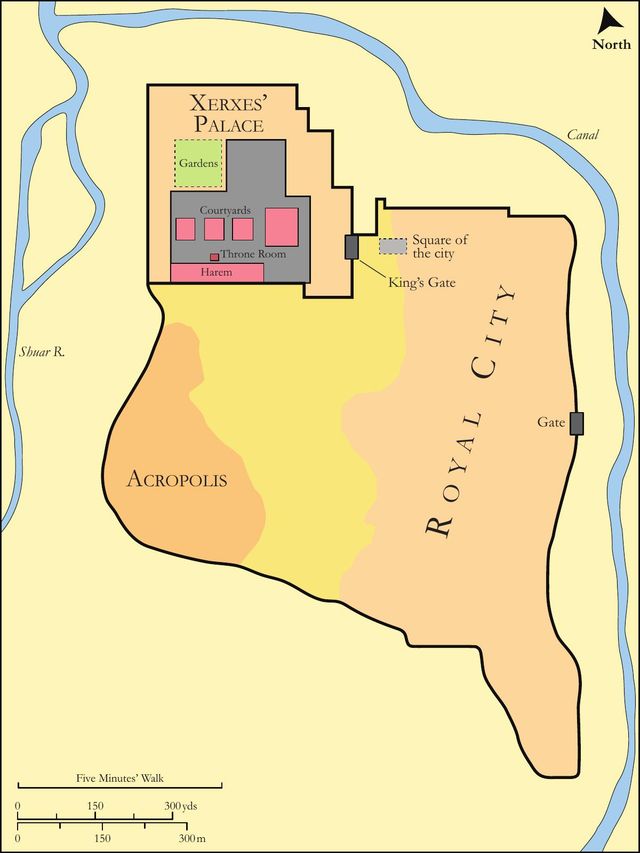
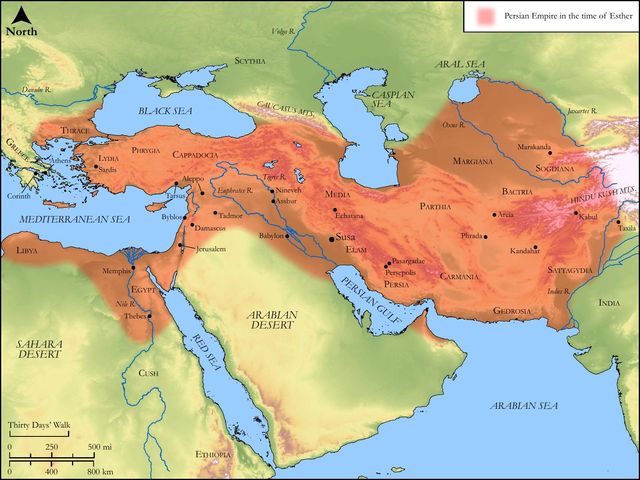
See on the biblical-era maps
Study this verse
Public-domain commentary
Matthew Henry
From his Commentary on the Whole Bible. Henry comments on passages, not single verses — this entry covers Esther 2:1–20. His four-level outline is real structure in the source text, so it is rendered as structure.
How God put down one that was high and mighty from her seat we read in the chapter before, and are now to be told how he exalted one of low degree, as the virgin Mary observes in her song (Luk 1:52) and Hannah before her, Sa1 2:4-8. Vashti being humbled for her height, Esther is advanced for her humility. Observe,
I.The extravagant course that was taken to please the king with another wife instead of Vashti.
Josephus says that when his anger was over he was exceedingly grieved that the matter was carried so far, and would have been reconciled to Vashti but that, by the constitution of the government, the judgment was irrevocable - that therefore, to make him forget her, they contrived how to entertain him first with a great variety of concubines, and then to fix him to the most agreeable of them all for a wife instead of Vashti. The marriages of princes are commonly made by policy and interest, for the enlarging of their dominions and the strengthening of their alliances; but this must be made partly by the agreeableness of the person to the king's fancy, whether she was rich or poor, noble or ignoble. What pains were taken to humour the king! As if his power and wealth were given him for no other end than that he might have all the delights of the sense wound up to the height of pleasurableness, and exquisitely refined, though at the best they are but dross and dregs in comparison with divine and spiritual pleasures.
1.All the provinces of his kingdom must be searched for fair young virgins, and officers appointed to choose them, Est 2:3.
2.A house (a seraglio) was prepared on purpose for them, and a person appointed to have the charge of them, to see that they were well provided for.
3.No less than twelve months was allowed them for their purification, some of them at least who were brought out of the country, that they might be very clean, and perfumed, Est 2:12. Even those who were the masterpieces of nature must yet have all this help from art to recommend them to a vain and carnal mind.
4.After the king had once taken them to his bed, they were made recluses ever after, except the king pleased at any time to send for them (Est 2:14); they were looked upon as secondary wives, were maintained by the king accordingly, and might not marry. We may see, by this instance, to what absurd practices those came who were destitute of divine revelation, and who, as a punishment for their idolatry, were given up to vile affections. Having broken through that law of creation which resulted from God's making man, they broke through another law, which was founded upon his making one man and one woman. See what need there was of the gospel of Christ to purify men from the lusts of the flesh and to reduce them to the original institution. Those that have learned Christ will think it a shame even to speak of such things as these which were done of them, not only in secret, but avowedly, Eph 5:12.
II.The overruling providence of God thus brining Esther to be queen.
Had she been recommended to Ahasuerus for a wife, he would have rejected the motion with disdain; but when she came in her turn, after several others, and it was found that though many of them were ingenious and discreet, graceful and agreeable, yet Esther excelled them all, way was made for her, even by her rivals, into the king's affections and the honours consequent thereupon. It is certain, as bishop Patrick says, that those who suggest that she committed a great sin to come at this dignity do not consider the custom of those times and countries. Every one that the king took to his bed was married to him, and was his wife of a lower rank, as Hagar was Abraham's; so that, if Esther had not been made queen, the sons of Jacob need not say that he dealt with their sister as with a harlot. Concerning Esther we must observe,
1.Her original and character.
(1.)She was one of the children of the captivity, a Jewess and a sharer with her people in their bondage. Daniel and his fellows were advanced in the land where they were captives; for they were of those whom God sent thither for their good, Jer 24:5.
(2.)She was an orphan; her father and mother were both dead (Est 2:7), but, when they had forsaken here, then the Lord took her up, Psa 27:10. When those whose unhappiness it is to be thus deprived of their parents in their childhood yet afterwards come to be eminently pious and prosperous, we ought to take notice of it to the glory of that God, and his grace and providence, who has taken it among the titles of his honour to be a Father of the fatherless.
(3.)She was a beauty, fair of form, good of countenance; so it is in the margin, Est 2:7. Her wisdom and virtue were her greatest beauty, but it is an advantage to be a diamond to be well set.
(4.)Mordecai, her cousin-german, was her guardian, brought her up, and took her for his own daughter. The Septuagint says that he designed to make her his wife; if that were so, he was to be praised that he opposed not her better preferment. let God be acknowledged in raising up friends for the fatherless and motherless; let it be an encouragement to that pious instance of charity that many who have taken care of the education of orphans have lived to see the good fruit of their care and pains, abundantly to their comfort. Dr. Lightfoot thinks that this Mordecai is the same with that mentioned in Ezr 2:2, who went up to Jerusalem with the first, and helped forward the settlement of his people until the building of the temple was stopped, and then went back to the Persian court, to see what service he could do them there. Mordecai being Esther's guardian or pro-parent, we are told,
[1.]How tender he was of her, as if she had been his own child (Est 2:11): he walked before her door every day, to know how she did, and what interest she had. Let those whose relations are thus cast upon them by divine Providence be thus kindly affectioned to them and solicitous for them.
[2.]How respectful she was to him. Though in relation she was his equal, yet, being in age and dependence his inferior, she honoured him as her father - did his commandment, Est 2:20. This is an example to orphans; if they fall into the hands of those who love them and take care of them, let them make suitable returns of duty and affection. The less obliged their guardians were in duty to provide for them the more obliged they are in gratitude to honour and obey their guardians. Here is an instance of Esther's obsequiousness t Mordecai, that she did not show her people of her kindred, because Mordecai had charged her that she should not, Est 2:10. he did not bid her deny her country, nor tell a lie to conceal her parentage; if he had told her to do so, she must not have done it. But he only told her not to proclaim her country. All truths are not to be spoken at all times, though an untruth is not to be spoken at any time. She being born in Shushan, and her parents being dead, all took her to be of Persian extraction, and she was not bound to undeceive them.
2.Her preferment. Who would have thought that a Jewess, a captive, and orphan, was born to be a queen, an empress! Yet so it proved. Providence sometimes raiseth up the poor out of the dust, to set them among princes, Sa1 2:8.
(1.)The king's chamberlain honoured her (Est 2:9), and was ready to serve her. Wisdom and virtue will gain respect. Those that make sure of God's favour shall find favour with man too as far as it is good for them. All that looked upon Esther admired her (Est 2:15) and concluded that she was the lady that would win the prize, and she did win it.
(2.)The king himself fell in love with her. She was not solicitous, as the rest of the maidens were, to set herself off with artificial beauty; she required nothing but just what was appointed for her (Est 2:15) and yet she was most acceptable. The more natural beauty is the more agreeable. The king loved Esther above all the women, v. 17. Now he needed not to make any further trials, or take time to deliberate; he is soon determined to set the royal crown upon her head, and make her queen, v. 17. This was done in his seventh year (v. 16) and Vashti was divorced in his third year (Est 1:3); so that he was four years without a queen. Notice is taken,
[1.]Of the honours the king put upon Esther. He graced the solemnity of her coronation with a royal feast (Est 2:18), at which perhaps Esther, in compliance with the king, made a public appearance, which Vashti had refused to do, that she might have the praise of obedience in the same instance in which the other incurred the blot of disobedience. He also granted a release to the provinces, either a remittance of the taxes in arrear or an act of grace for criminals; as Pilate, at the feast, released a prisoner. This was to add t the joy.
[2.]Of the deference Esther continued to pay to her former guardian. She still did the commandment of Mordecai, as when she was brought up with him, Est 2:20. Mordecai say in the king's gate; that was the height of his preferment: he was one of the porters or door-keepers of the court. Whether he had this place before, or whether Esther obtained it for him, we are not told; but there he sat contentedly, and aimed no higher; and yet Esther who was advanced to the throne was observant of him. This was an evidence of a humble and grateful disposition, that she had a sense of his former kindnesses and his continued wisdom. It is a great ornament to those that are advanced, and much to their praise, to remember their benefactors, to retain the impressions of their good education, to be diffident of themselves, willing to take advice, and thankful for it.
Historical interpretation
Historical reception
2 surviving comments on this verse. Each one is dated, so this reads as a timeline rather than a list.
There is no doubt that the Scribes and Pharisees of the Jews are signified by the two eunuchs who were the caretakers of the royal house and guarded the threshold of the palace. Indeed it was said that even though they had the key to knowledge, they did not enter and did not let others enter. They wanted to rebel against the king and kill him because they were jealous of the teaching and virtue of the Savior. They constantly put him in danger and conspired with the ministers of Roman power to find a way to kill him. Therefore it is written in the gospel, “Then the Pharisees went and plotted to entrap him in what he said. So they sent their disciples to him, along with the Herodians, saying, ‘Teacher, we know that you are sincere, and teach the way of God in accordance with truth, and show deference to no one; for you do not regard people with partiality. Tell us, then, what you think. Is it lawful to pay taxes to Caesar, or not?’ ” And in another passage it is read, “So the chief priests and the Pharisees called a meeting of the council, and said, ‘What are we to do? This man is performing many signs. If we let him go on like this, everyone will believe in him, and the Romans will come and take our place and people.’ ” And a bit further it is added, “So from that day on they planned to put him to death.”
Virgins are being sought for the king a second time and gathered together, because it was not enough for our Lord Jesus Christ to associate himself exclusively with the Jewish members of the early Church; rather he also acquired through his preachers copious numbers of the faithful from among the nations so that a single catholic Church would arise from both peoples, namely his most noble bride who has no blemishes or wrinkles. Hence he himself says in the Gospels: “And I have other sheep which are not from this fold, and it is right that I should lead them; and they will listen to my voice, and there will be one fold and one shepherd” (John 10). “Mordecai was staying at the king’s door,” because the holy teachers who are persistently committed to teaching the Gospel call together the nations to the entryway of faith and the sacrament of baptism; and our Esther had still not betrayed her country and her people in keeping with the order of Mordecai the prefiguration because in keeping with the doctrine of faith, the Church of the saints never does anything out of arrogance but rather obeys—humbly and in pure conscience—everything commanded her by the aforementioned evangelists. And it is about her that the prophet says: “All the glory of the king’s daughter from within” (Psalms 45). And the apostle says: “She is our glory, the testimony of our conscience” (2 Corinthians 1).
Continue studying Esther 2:20 across the web’s major study libraries — every link below opens this exact verse, chapter, or book on the destination site.
Read & Compare
 BibleGatewayThis verse in more than 200 translations and 70 languages.
 Bible.comThe YouVersion reader — hundreds of translations, reading plans, and highlights.
 ESV.orgCrossway's official English Standard Version reader.
 NET BibleThe NET translation with 60,000+ translators' notes on every rendering decision.
 STEP BibleTyndale House's free study tool — original text, vocabulary, and scholarly resources.
 BibliaLogos Bible Software's free web reader.
 USCCBThe New American Bible (Revised Edition) with the U.S. bishops' study notes.
Commentaries
 BibleHub CommentariesDozens of classic commentaries on this verse, gathered on one page.
 StudyLightMore than 100 commentary sets — the largest collection on the web.
 BibleRefPlain-English commentary on what this verse means, verse by verse.
 Enduring WordDavid Guzik's free commentary on this chapter, widely used by Bible teachers.
 Bible Study ToolsVerse commentary alongside Greek and Hebrew study aids.
Original Language & Research
- BibleHub InterlinearThe verse word by word — original language, transliteration, and English.
- BibleHub LexiconEvery word's original-language definition and Strong's entry.
 Blue Letter BibleDeep-study tools — Strong's numbers, concordance, and word studies.
 SefariaThe Hebrew text with Rashi and centuries of Jewish commentary.
Sermons, Hymns & Audio


TrulyRandomVerse is not affiliated with these sites and doesn’t control their content. They’re linked because they’re genuinely useful.
Summary
Esther 2:20 serves as a crucial narrative hinge, revealing Mordecai's strategic instruction to Esther to conceal her Jewish heritage and family background upon her entry into King Ahasuerus's palace. The verse emphasizes Esther's unwavering obedience to this command, portraying it not as an isolated incident but as a consistent characteristic, mirroring the faithfulness she demonstrated throughout her upbringing under Mordecai's guardianship. This deliberate act of concealment, born of Mordecai's foresight and Esther's steadfastness, proves foundational for the unfolding drama of the book, setting the stage for her true identity to be revealed at the appointed time, ultimately leading to the salvation of her people.
Context
ShowHideLiterary Context
This verse is strategically positioned within the narrative of Esther's ascent to the Persian throne, following the initial gathering of virgins for the king's selection process (Esther 2:1-14) and preceding her actual presentation to King Ahasuerus and subsequent elevation to queen (Esther 2:16-18). The immediate preceding verses detail Esther's exceptional favor with Hegai, the eunuch in charge of the women, and Mordecai's consistent visits to inquire about her welfare (Esther 2:15-19). Verse 20 acts as a pivotal narrative explanation, elucidating why Esther was so uniquely favored and successful in the palace: her profound obedience, particularly to Mordecai's strategic counsel regarding her hidden identity. This concealment is not a mere detail but a foundational element that directly enables the dramatic events of the book, especially the confrontation with Haman in Esther 3 and Esther 4. Without this initial act of discretion, the narrative arc of deliverance would be impossible.
Historical & Cultural Context
The events of Esther are set in the vast Persian Empire during the reign of Ahasuerus, commonly identified as Xerxes I (486-465 BC), with Susa serving as the capital city. The Jewish people were living in diaspora, a vulnerable minority having been exiled from their homeland. In such a foreign, often polytheistic, and potentially hostile environment, maintaining one's distinct ethnic and religious identity could be perilous. The Persian court was characterized by immense power, political intrigue, and an absolute monarchy where the king's decrees, once issued, were unchangeable (Esther 1:19 and Esther 8:8). Mordecai's instruction to Esther was therefore a prudent act of self-preservation and strategic discretion, recognizing the potential dangers of revealing her Jewish heritage in a court where ethnic prejudice could easily be exploited. This foresight is tragically validated later by Haman's genocidal plot against the Jews, rooted in his disdain for their distinct laws and customs (Esther 3:8-9).
Key Themes
ShowHideEsther 2:20 contributes significantly to several overarching themes in the book. Firstly, it profoundly highlights Obedience and Submission, portraying Esther as a character defined by her consistent adherence to wise counsel. This trait proves invaluable in navigating the complexities of the royal court, underscoring the value of heeding guidance from trusted mentors, a principle echoed in wisdom literature like Proverbs 1:8. Secondly, the verse introduces the critical theme of Discretion and Wisdom. Mordecai's charge for Esther to conceal her identity is a strategic act of prudence, demonstrating foresight in a potentially dangerous environment. This discretion is not about deception but about wise navigation and protection, a concept found in Proverbs 11:12. Thirdly, and perhaps most profoundly, it subtly points to Divine Providence. While God is notably absent from the text of Esther, the careful, strategic actions of Mordecai and Esther's faithful obedience are often interpreted as the means through which God's unseen hand is working to preserve His people. Esther's hidden identity becomes a crucial element in God's plan to position her as the deliverer of the Jews, illustrating how God works through human choices and circumstances to accomplish His sovereign purposes, even when His presence is not overtly declared, as seen in the broader narrative of the book of Esther.
Exposition and Analysis
ShowHideKey Word Analysis
ShowHideThis verb (H5046), meaning "to tell, declare, make known, report," carries the nuance of revealing information that was previously undisclosed or kept secret. In this context, it signifies a conscious act of disclosure that Esther deliberately refrained from, thereby maintaining her hidden identity. Her non-disclosure was an active choice of obedience.
This noun (H4138) refers to one's birth, lineage, or native place/country. It encompasses her family origin, her ancestry, and the place from which her family came. Coupled with "people," it specifically points to her Jewish heritage, which was tied to a distinct lineage, a unique cultural identity, and a historical homeland.
This word (H3982) signifies an authoritative "word, saying, command, or decree." It emphasizes the binding and serious nature of Mordecai's instruction. It was not a mere suggestion but a directive that Esther was expected to obey, highlighting the strong bond of trust and respect between them, akin to a legal or binding instruction that she honored.
Verse Breakdown
ShowHide"Esther had not yet shewed her kindred nor her people;"
This initial clause establishes Esther's immediate and deliberate action (or, more precisely, inaction) upon entering the king's palace. Despite being immersed in a new, opulent, and potentially intimidating environment, she steadfastly refrained from revealing her family background or her ethnic identity as a Jew. This secrecy was not accidental but a conscious and disciplined adherence to a prior instruction, demonstrating her self-control and loyalty.
"as Mordecai had charged her:"
This phrase provides the crucial explanation for Esther's discreet behavior. Her concealment was a direct result of a specific and authoritative command given to her by Mordecai, her guardian and cousin. The verb "charged" implies a serious, weighty instruction, underscoring Mordecai's foresight and his protective concern for Esther in a foreign and potentially dangerous court where her true identity could be a liability.
"for Esther did the commandment of Mordecai, like as when she was brought up with him."
This final clause offers a profound insight into Esther's character and the nature of her relationship with Mordecai. It explains why she obeyed: because it was her consistent pattern of behavior. Her obedience in the palace was not an isolated incident but a continuation of the submission, trust, and respect she had demonstrated throughout her entire upbringing under Mordecai's care. This highlights her deep faithfulness, loyalty, and unwavering respect for his counsel, portraying a character trait that would prove vital for her future role in God's unfolding plan.
Literary Devices
ShowHideThe verse effectively employs several literary devices that enrich its meaning and narrative impact. Foreshadowing is prominent, as Esther's hidden identity is introduced as a seemingly minor detail but will become the central pivot for the entire plot, leading to the dramatic confrontation with Haman and the ultimate salvation of the Jews. The repetition of the idea of Mordecai's instruction and Esther's obedience ("charged her," "did the commandment") serves as Emphasis, highlighting the profound significance of this act of discretion and the consistency of Esther's character. The phrase "like as when she was brought up with him" uses Simile to draw a powerful comparison between her past and present obedience, reinforcing the depth of her submission and trust in Mordecai. This consistent obedience also contributes significantly to Characterization, portraying Esther as a faithful, disciplined, and submissive individual, qualities that make her a suitable instrument for God's purposes, even in a secular context. Finally, there is an element of Situational Irony, as the very act of concealment, initially intended for safety and discretion, ultimately positions Esther to reveal her identity at the most critical moment, securing the deliverance of her people through an unexpected turn of events.
Theological and Thematic Connections
ShowHideEsther 2:20 offers a profound glimpse into the subtle workings of divine providence, even in a book where God's name is never explicitly mentioned. Mordecai's wise counsel and Esther's unwavering obedience are not merely human actions but are depicted as crucial steps in a larger, unseen divine plan. This verse underscores that God often works through the seemingly ordinary decisions and faithful responses of His people, positioning them in strategic places for His purposes. It highlights the importance of discretion, obedience to wise counsel, and the preservation of identity in challenging environments, demonstrating that faithfulness in small matters can prepare individuals for significant roles. The hiddenness of Esther's identity parallels the hiddenness of God's hand, both to be revealed at the appointed time for the deliverance of His people. This narrative reminds us that God's sovereignty is not limited to overt miracles but extends to the quiet, strategic choices of His servants.
Reflection and Application
ShowHideEsther 2:20 invites us to consider the profound impact of consistent obedience and strategic discretion in our own lives. Esther's unwavering submission to Mordecai, even when it meant concealing a fundamental aspect of her identity, ultimately positioned her to save her people. This teaches us that true wisdom often involves knowing when to speak and when to remain silent, when to reveal and when to conceal, not out of deception, but out of strategic prudence for a greater, God-ordained good. In a world that often pressures us to conform, to overshare, or to immediately assert our identity, Esther's story reminds us that there are times when quiet faithfulness, strategic discernment, and patient obedience are far more powerful than overt action. We are called to be obedient to godly counsel and to exercise wisdom in navigating complex situations, trusting that God can use our seemingly small acts of faithfulness to accomplish His extraordinary purposes, even when we cannot see the full picture. Our hidden acts of obedience and our quiet trust in God's timing can be the very foundation upon which God builds His visible work of redemption and deliverance in our lives and through us.
Questions for Reflection
ShowHideFAQ
ShowHideWas Esther's concealment of her Jewish identity an act of deception or a compromise of her faith?
ShowHideEsther's concealment of her Jewish identity, as instructed by Mordecai, is best understood as an act of strategic discretion and prudence rather than deception or a compromise of her faith. In the highly volatile and often prejudiced environment of the Persian court, revealing her identity could have put her life, and potentially the lives of her people, at immediate risk, especially given the later plot by Haman to exterminate the Jews (as detailed in Esther 3). Mordecai's charge was a protective measure, designed to give Esther flexibility and safety until the opportune moment. Her faith was not compromised, as she later risked her life to intercede for her people, famously declaring, "If I perish, I perish" (see Esther 4:16), demonstrating that her identity remained firmly rooted in her heritage, even when hidden. This act of concealment was a tactical decision, allowing God to position her for the ultimate deliverance of her people, rather than an abandonment of her true self or a betrayal of her religious convictions.
Christ-Centered Fulfillment
ShowHideEsther 2:20, with its emphasis on hidden identity, strategic obedience, and divine providence, finds a profound Christ-centered fulfillment in the person and work of Jesus Christ. Just as Esther's true identity was concealed for a time, preparing her for a pivotal role in the salvation of her people, so too was the full glory and divine nature of Christ often veiled during His earthly ministry. Though He was God incarnate, He "made himself nothing, taking the very nature of a servant, being made in human likeness" (Philippians 2:7). His divine identity was hidden from many, revealed only to those with spiritual eyes to see, as when Peter confessed Him as "the Christ, the Son of the living God" (Matthew 16:16-17). Furthermore, Esther's unwavering obedience to Mordecai foreshadows Christ's perfect and absolute obedience to His Father's will, even to the point of death on a cross (Philippians 2:8). This obedience was not merely a character trait but the very means by which God's ultimate plan of salvation for all humanity was accomplished, a plan that was "hidden for ages and generations but is now disclosed to the Lord's people" (Colossians 1:26). Just as Esther was strategically positioned and prepared to deliver her people, Christ was born into the world at the perfect time (Galatians 4:4) to fulfill God's redemptive purposes, demonstrating God's sovereign hand working through seemingly ordinary circumstances and the perfect obedience of His Son to bring about the greatest deliverance from sin and death.