


Matthew 9:29
- τότεtoteThenG5119ADVAdverb
- ἥψατοhēpsatoHe touchedG681V-ADI-3SVerb Aorist Middle Deponent Indicative 3rd Singular
- τῶνtōntheG3588T-GPMDefinite article Genitive Plural Masculine
- ὀφθαλμῶνophthalmōneyesG3788N-GPMNoun Genitive Plural Masculine
- αὐτῶνautōnof themG846P-GPMPersonal pronoun Genitive Plural Masculine
- λέγων·legōnsayingG3004V-PAP-NSMVerb Present Active Participle Nominative Singular Masculine
- κατὰkataAccording toG2596PREPPreposition
- τὴνtēntheG3588T-ASFDefinite article Accusative Singular Feminine
- πίστινpistinfaithG4102N-ASFNoun Accusative Singular Feminine
- ὑμῶνhumōnof youG4771P-2GPPersonal pronoun Genitive 2nd Plural
- γενηθήτωgenēthētōit should be [done]G1096V-AOM-3SVerb Aorist Passive Deponent Imperative 3rd Singular
- ὑμῖνhuminto youG4771P-2DPPersonal pronoun Dative 2nd Plural
English is a literal word-by-word gloss of the Greek, not the KJV's wording. Why?
This is the original text the KJV's translators worked from — each Greek word with its own literal English meaning in this verse, prepared by scholars at Tyndale House, Cambridge. The KJV translates whole sentences, not word by word, so its wording differs: one Greek word can become several English words, and the KJV may choose “charity” where the gloss reads “love”. Both are faithful — they answer different questions. For the KJV's own rendering, switch to the KJV text.
Details
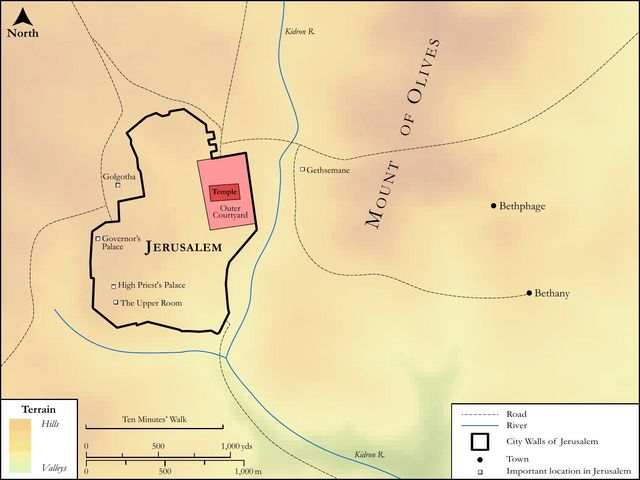
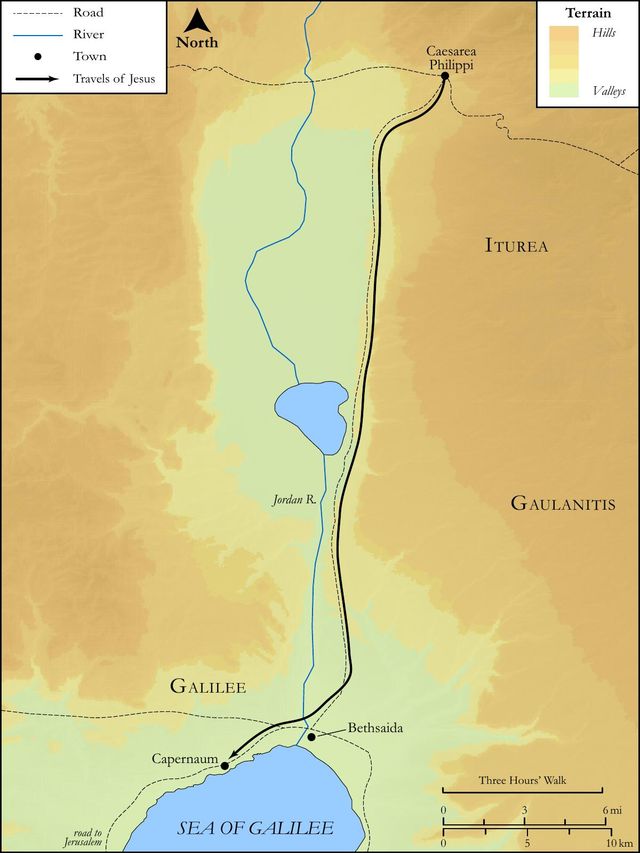
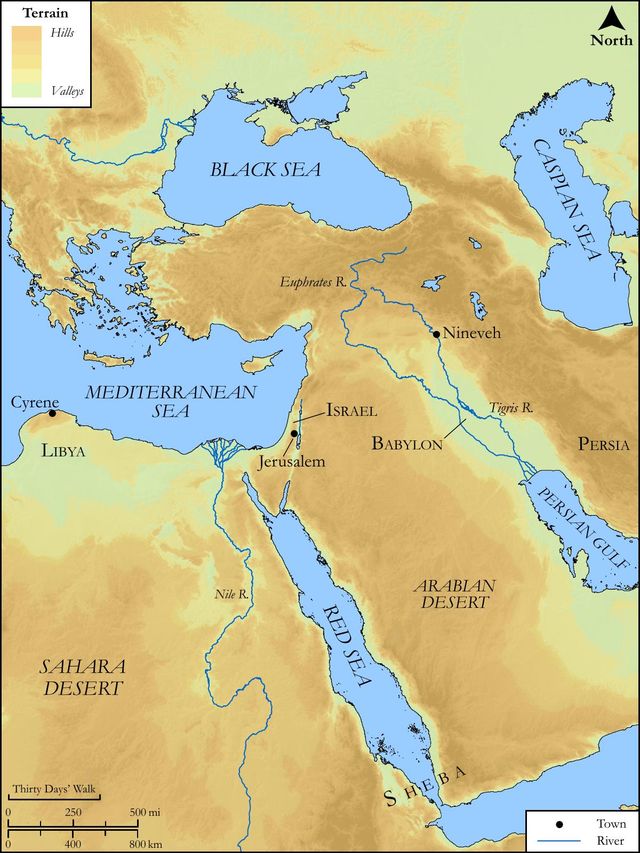
See on the biblical-era map
Study this verse
Public-domain commentary
Matthew Henry
From his Commentary on the Whole Bible. Henry comments on passages, not single verses — this entry covers Matthew 9:27–34. His three-level outline is real structure in the source text, so it is rendered as structure.
In these verses we have an account of two more miracles wrought together by our Saviour.
I.The giving of sight to two blind men, Mat 9:27-31.
Christ is the Fountain of light as well as life; and as, by raising the dead, he showed himself to be the same that at first breathed into man the breath of life, so, by giving sight to the blind, he showed himself to be the same that at first commanded the light to shine out of darkness. Observe,
1.The importunate address of the blind men to Christ. He was returning from the ruler's house to his own lodgings, and these blind men followed him, as beggars do, with their incessant cries, Mat 9:27. He that cured diseases so easily, so effectually, and, withal, at so cheap a rate, shall have patients enough. As for other things, so he is famed for an Oculist. Observe,
(1.)The title which these blind men gave to Christ; Thou Son of David, have mercy on us. The promise made to David, that of his loins the Messiah should come, was well known, and the Messiah was therefore commonly called the Son of David. At this time there was a general expectation of his appearing; these blind men know, and own, and proclaim it in the streets of Capernaum, that he is come, and that this is he; which aggravates the folly and sin of the chief priests and Pharisees who denied and opposed him. They could not see him and his miracles, but faith comes by hearing. Note, They who, by the providence of God, are deprived of bodily sight, may yet, by the grace of God, have the eyes of their understanding so enlightened, as to discern those great things of God, which are hid from the wise and prudent.
(2.)Their petition, Have mercy on us. It was foretold that the Son of David should be merciful (Psa 72:12, Psa 72:13), and in him shines the tender mercy of our God, Luk 1:78. Note, Whatever our necessities and burthens are, we need no more for supply and support, than a share in the mercy of our Lord Jesus. Whether he heal us or no, if he have mercy on us, we have enough; as to the particular instances and methods of mercy, we may safely and wisely refer ourselves to the wisdom of Christ. They did not each of them say for himself, Have mercy on me, but both for one another, Have mercy on us. Note, It becomes those that are under the same affliction, to concur in the same prayers for relief. Fellow-sufferers should be joint-petitioners. In Christ there is enough for all.
(3.)Their importunity in this request; they followed him, crying. It seems, he did not take notice of them at first, for he would try their faith, which he knew to be strong; would quicken their prayers, and make his cures the more valued, when they did not always come at the first word; and would teach us to continue instant in prayer, always to pray, and not to faint: and, though the answer do not come presently, yet to wait for it, and to follow providence, even in those steps and outgoings of it which seem to neglect or contradict our prayers. Christ would not heal them publicly in the streets, for this was a cure he would have kept private (Mat 9:30), but when he came into the house, they followed him thither, and came to him. Note, Christ's doors are always open to believing and importunate petitioners; it seemed rude in them to rush into the house after him, when he desired to retire; but, such is the tenderness of our Lord Jesus, that they were not more bold than welcome.
2.The confession of faith, which Christ drew from them upon this occasion. When they came to him for mercy, he asked them, Believe ye that I am able to do this? Note, Faith is the great condition of Christ's favours. They who would receive the mercy of Christ, must firmly believe the power of Christ. What we would have him do for us, we must be fully assured that he is able to do. They followed Christ, and followed him crying, but the great question is, Do ye believe? Nature may work fervency, but it is only grace that can work faith; spiritual blessings are obtained only by faith. They had intimated their faith in the office of Christ as Son of David, and in his mercy; but Christ demands likewise a profession of faith in his power. Believe ye that I am able to do this; to bestow this favour; to give sight to the blind, as well as to cure the palsy and raise the dead? Note, It is good to be particular in the exercise of faith, to apply the general assurances of God's power and good will, and the general promises, to our particular exigencies. All shall work for good, and if all, then this. "Believe ye that I am able, not only to prevail with God for it, as a prophet, but that I am able to do it by my own power?" This will amount to their belief of his being not only the Son of David, but the Son of God; for it is God's prerogative to open the eyes of the blind (Psa 146:8); he makes the seeing eye, Exo 4:11. Job was eyes to the blind (Job 29:15); was to them instead of eyes, but he could not give eyes to the blind. Still it is put to us, Believe we that Christ is able to do for us, by the power of his merit and intercession in heaven, of his Spirit and grace in the heart, and of his providence and dominion in the world? To believe the power of Christ is not only to assure ourselves of it, but to commit ourselves to it, and encourage ourselves in it.
To this question they give an immediate answer, without hesitation: they said, Yea, Lord. Though he had kept them in suspense awhile, and had not helped them at first, they honestly imputed that to his wisdom, not to his weakness, and were still confident of his ability. Note, The treasures of mercy that are laid up in the power of Christ, are laid out and wrought for those that trust in him, Psa 31:19.
3.The cure that Christ wrought on them; he touched their eyes, Mat 9:29. This he did to encourage their faith, which, by his delay, he had tried, and to show that he gives sight to blind souls by the operations of his grace accompanying the word, anointing the eyes with eye-salve: and he put the cure upon their faith, According to your faith be it unto you. When they begged for a cure, he enquired into their faith (Mat 9:28), Believe ye that I am able? He did not enquire into their wealth, whether they were able to pay him for a cure; nor into their reputation, should he get credit by curing them; but into their faith; and now they had professed their faith he referred the matter to that: "I know you do believe, and the power you believe in shall be exerted for you; According to your faith be it unto you." This speaks,
(1.)His knowledge of the sincerity of their faith, and his acceptance and approbation of it. Note, It is a great comfort to true believers, that Jesus Christ knows their faith, and is well pleased with it. Though it be weak, though others do not discern it, though they themselves are ready to question it, it is known to him.
(2.)His insisting upon their faith as necessary; "If you believe, take what you come for." Note, They who apply themselves to Jesus Christ, shall be dealt with according to their faith; not according to their fancies, nor according to their profession, but according to their faith; that is, unbelievers cannot expect to find any favour with God, but true believers may be sure to find all that favour which is offered in the gospel; and our comforts ebb or flow, according as our faith is stronger or weaker; we are not straitened in Christ, let us not then be straitened in ourselves.
4.The charge he gave them to keep it private (Mat 9:30), See that no man know it. He gave them this charge,
(1.)To set us an example of that humility and lowliness of mind, which he would have us to learn of him. Note, In the good we do, we must not seek our own praise, but only the glory of God. It must be more our care and endeavour to be useful, than to be known and observed to be so, Pro 20:6; Pro 25:27. Thus Christ seconded the rule he had given, Let not thy left hand know what thy right hand doeth.
(2.)Some think that Christ, in keeping it private, showed his displeasure against the people of Capernaum, who had seen so many miracles, and yet believed not. Note, The silencing of those who should proclaim the works of Christ is a judgment to any place or people: and it is just in Christ to deny the means of conviction to those that are obstinate in their infidelity; and to shroud the light from those that shut their eyes against it.
(3.)He did it in discretion, for his own preservation; because the more he was proclaimed, the more jealous would the rulers of the Jews be of his growing interest among the people.
(4.)Dr. Whitby gives another reason, which is very considerable, why Christ sometimes concealed his miracles, and afterwards forbid the publishing of his transfiguration; because he would not indulge that pernicious conceit which obtained among the Jews, that their Messiah should be a temporal prince, and so give occasion to the people to attempt the setting up of his kingdom, by tumults and seditions, as they offered to do, Joh 6:15. But when, after his resurrection (which was the full proof of his mission), his spiritual kingdom was set up, then that danger was over, and they must be published to all nations. And he observes, that the miracles which Christ wrought among the Gentiles and the Gadarenes, were ordered to be published, because with them there was not that danger.
But honour is like the shadow, which, as it flees from those that follow it, so it follows those that flee from it (Mat 9:31); They spread abroad his fame. This was more an act of zeal, than of prudence; and though it may be excused as honestly meant for the honour of Christ, yet it cannot be justified, being done against a particular charge. Whenever we profess to direct our intention to the glory of God, we must see to it that the action be according to the will of God.
II.The healing of a dumb man, that was possessed with a devil. And here observe,
1.His case, which was very sad. He was under the power of the devil in this particular instance, that he was disabled from speaking, Mat 9:32. See the calamitous state of this world, and how various the afflictions of the afflicted are! We have no sooner dismissed two blind men, but we meet with a dumb man. How thankful should we be to God for our sight and speech! See the malice of Satan against mankind, and in how many ways he shows it. This man's dumbness was the effect of his being possessed with a devil; but it was better he should be unable to say any thing, than be forced to say, as those demoniacs did (Mat 8:29), What have we to do with thee? Of the two, better a dumb devil than a blaspheming one. When the devil gets possession of a soul, it is made silent as to any thing that is good; dumb in prayers and praises, which the devil is a sworn enemy to. This poor creature they brought to Christ, who entertained not only those that came of themselves in their own faith, but those that were brought to him by their friends in the faith of others. Though the just shall live eternally by his faith, yet temporal mercies may be bestowed on us with an eye to their faith who are intercessors on our behalf. They brought him in just as the blind man went out. See how unwearied Christ was in doing good; how closely one good work followed another! Treasures of mercy, wondrous mercy, are hid in him; which may be continually communicated, but can never be exhausted.
2.His cure, which was very sudden (Mat 9:33), When the devil was cast out, the dumb spake. Note, Christ's cures strike at the root, and remove the effect by taking away the cause; they open the lips, by breaking Satan's power in the soul. In sanctification he heals the waters by casting salt into the spring. When Christ, by his grace, casts the devil out of a soul, presently the dumb speaks. When Paul was converted, behold, he prays; then the dumb spake.
3.The consequences of this cure.
(1.)The multitudes marvelled; and well they might; though few believed, many wondered. The admiration of the common people is sooner raised than any other affection. It was foretold, that the new song, the New Testament song, should be sung for marvellous works, Psa 98:1. They said, It was never so seen in Israel, and therefore never so seen any where; for no people experienced such wonders of mercy as Israel did. There had been those in Israel that were famous for working miracles, but Christ excelled them all. The miracles Moses wrought had reference to Israel as a people, but Christ's were brought home to particular persons.
(2.)The Pharisees blasphemed, Mat 9:34. When they could not gainsay the convincing evidence of these miracles, they fathered them upon the devil, as if they had been wrought by compact and collusion: he casteth out devils (say they) by the prince of the devils - a suggestion horrid beyond expression; we shall hear more of it afterwards, and Christ's answer to it (Mat 12:25); only observe here, how evil men and seducers wax worse and worse (Ti2 3:13), and it is both their sin and their punishment. Their quarrels with Christ for taking upon him to forgive sin (Mat 9:3), for conversing with publicans and sinners, (Mat 9:11), for not fasting (Mat 9:14), though spiteful enough, yet had some colour of piety, purity, and devotion in them; but this (which they are left to, to punish them for those) breathes nothing but malice and falsehood, and hellish enmity in the highest degree; it is diabolism all over, and was therefore justly pronounced unpardonable. Because the people marvelled, they must say something to diminish the miracle, and this was all they could say.
Historical interpretation
Seven Centuries of Reception
9 surviving comments on this verse. Each one is dated, so this reads as a timeline rather than a list.
Select a marker to jump to its quote. Markers stagger vertically where authors wrote within a few decades of each other.
Or He enjoins silence on the blind men, because to preach was the Apostles' office.
Wherefore can it be that He puts them off, and they crying out? Here again teaching us utterly to repel the glory that cometh from the multitude. For because the house was near, He leads them thither to heal them in private. And this is evident from the fact, that He charged them moreover to tell no man.
But this is no light charge against the Jews; when these men, though their eyes were struck out, receive the faith by hearing alone, but they beholding the miracles, and having their sight to witness what was happening, do all just contrary. And see their earnestness also, both by their cry, and by their prayer itself. For they did not merely approach Him, but with loud cries, and alleging nought else but "mercy."
And they called Him "Son of David," because the name was thought to be honorable. In many passages, for instance, did the prophets likewise so call the kings, whom they wished to honor, and to declare great.
And having brought them into the house, He puts to them a further question. For in many cases He made a point of healing on entreaty, lest any should suppose Him to be rushing upon these miracles through vainglory: and not on this account alone, but to indicate also that they deserve healing, and that no one should say, "If it was of mere mercy that He saved, all men ought to be saved." For even His love to man hath a kind of proportion; depending on the faith of them that are healed. But not for these causes only doth He require faith of them, but forasmuch as they called Him "Son of David," He to lead them up to what is higher, and to teach them to entertain the imaginations they ought of Himself, saith, "Believe ye that I am able to do this?" He did not say, "Believe ye that I am able to entreat my Father, that I am able to pray" but, "that I am able to do this?"
What then is their word? "Yea, Lord." They call Him no more Son of David, but soar higher, and acknowledge His dominion.
And then at last He for His part lays His hand upon them, saying, "According to your faith be it unto you." And this He doth to confirm their faith, and to show that they are participators in the good work, and to witness that their words were not words of flattery. For neither did He say, "Let your eyes be opened," but, "According to your faith be it unto you;" which He saith to many of them that came unto Him; before the healing of their bodies, hastening to proclaim the faith in their soul; so as both to make them more approved, and to render others more serious.
Thus with respect to the sick of the palsy also; for there too before giving nerve to the body, He raises up the fallen soul, saying, "Son, be of good cheer, thy sins be forgiven thee." And the young damsel too, when He had raised her up, He detained, and by the food taught her her Benefactor; and in the case of the centurion also He did in like manner, leaving the whole to his faith; and as to His disciples again, when delivering them from the storm on the sea, He delivered them first from their want of faith. Just so likewise in this case: He knew indeed, even before their cry, the secrets of their mind; but that He might lead on others also to the same earnestness, He makes them known to the rest as well, by the result of their cure proclaiming their hidden faith.
(Hom. xxxii.) Here is no small charge against the Jews, that these men, having lost their sight, yet believe by means of their heaving only; while they who had sight, would not believe the miracles that were done. Observe their eagerness; they do not simply come to Him, but with crying, and asking for nothing but mercy; they call Him Son of David, because that seemed to be a name of honour.
Observe that the Lord oftentimes desired to be asked to heal, that none should think that He was eager to seize an occasion of display.
Here again He teaches us to exclude the desire of fame; because there was a house hard by, He takes them there to heal them apart.
And not for this reason only, but that He might make manifest that they were worthy of healing, and that none might object, that if mercy alone saved, then ought all to be saved. Therefore also He requires faith of them, that He may thereby raise their thoughts higher; they had called Him the Son of David, therefore He instructs them that they should think higher things of Him. Thus He does not say to them, Believe ye that I can ask the Father? But, Believe ye that I am able to do this? They say unto him, Yea, Lord. They call Him no more Son of David, but exalt Him higher, and confess His dominion. Then He lays His hand upon them; as it follows, Then he touched their eyes, saying, According to your faith be it unto you. This He says confirming their faith, and testifying that what they had said were not words of flattery. Then follows the cure, And their eyes were opened. And after this, His injunction that they should tell it to no man; and this not a simple command, but with much earnestness, And Jesus straitly charged them, saying, See that no man know it; but they went forth, and spread abroad the fame of him through the whole country.
That He said to another man, Go, and proclaim the glory of God, (Luke 8:39.) is not contrary to this; for what He would teach is, that we should hinder those that would commend us for ourselves. But when it is the Lord's glory that is to be praised, we ought not to forbid, but to promote it ourselves.
The miracles that had gone before of the ruler's daughter, and the woman with the issue of blood, are now followed by that of two blind men, that what death and disease had there witnessed, that blindness might now witness. And as Jesus passed thence, that is, from the ruler's house, there followed him two blind men, crying, and saying, Have mercy on us, thou Son of David.
Let Marcion and Manichæus, and the other heretics who mangle the Old Testament, hear this, and learn that the Saviour is called the Son of David; for if He was not born in the flesh, how is He the Son of David?
Yet were they not healed by the way-side and in passing as they had thought to be; but when He was entered into the house, they come unto Him; and first their faith is made proof of, that so they may receive the light of the true faith. And when he was come into the house, the blind men came unto him; and Jesus said unto them, Believe ye that I am able to do this?
The Lord from humility shunning the fame of His glorious works, gave them this charge, and they from gratitude cannot be silent respecting so great benefit.
(Verse 28, 29.) Have mercy on us, Son of David. And when he came into the house, the blind men came to him, and Jesus said to them: Do you believe that I can do this for you? They said to him: Yes, Lord. Then he touched their eyes, saying: Let it be done to you according to your faith. And their eyes were opened. Let Marcion and Manichaeus, and other heretics, who tear apart the Old Testament, hear this and learn that the Savior is called the Son of David. For if he was not born in the flesh, how is he called the son of David?
Rightly they call Him Son of David, because the Virgin Mary was of the line of David.
He who was able to give sight to the blind, was not ignorant whether they believed; but He asked them, in order that the faith which they bare in their hearts, being confessed by their mouth might be made deserving of a higher reward, according to that of the Apostle, By the mouth confession is made unto salvation. (Rom. 10:10.)
Allegorically; By these two blind men are denoted the two nations of Jews and Gentiles, or the two nations of the Jewish race; for in the time of Roboam his kingdom was Split into two parts. Out of both nations such as believed on Him Christ gave sight to in the house, by which is understood the Church; for without the unity of the Church no man can be saved. And they of the Jews who had believed the Lord's coming spread the knowledge thereof throughout the whole earth.
(Mor. xix. 23.) We must enquire how this is that the Almighty, whose will and power are coextensive, should have here willed that His excellent works should be hid in silence, and is yet preached against His will, as it were, by these men who have received their sight. It is only that He herein has left an example to His servants who follow Him, that they should desire their own good deeds to be hid, and that notwithstanding they should be made known against their will, that others may profit by their example. They should then be hid by design, and published of compulsion; their concealment is by our own watchfulness, their betrayal is for others' profit.
The maiden is raised in the house with few to witness, the young man without the gate, and Lazarus in the presence of many; for a public scandal requires a public expiation; a less notorious, a lesser remedy; and secret sins may be done away by penitence.
The house of the ruler is the Synagogue which was ruled by Moses; the house of Jesus is the heavenly Jerusalem. As the Lord passed through this world and was returning to His own house, two blind men followed Him; that is, when the Gospel was preached by the Apostles, many of the Jews and Gentiles began to follow Him. But when He ascended into Heaven, then He entered His house, that is, into the confession of one faith which is in the Catholic Church, and in that they were enlightened.
He healed within the house and in private, to show us how to avoid vainglory. In everything He did He taught humility.
Continue studying Matthew 9:29 across the web’s major study libraries — every link below opens this exact verse, chapter, or book on the destination site.
Read & Compare
 BibleGatewayThis verse in more than 200 translations and 70 languages.
 Bible.comThe YouVersion reader — hundreds of translations, reading plans, and highlights.
 ESV.orgCrossway's official English Standard Version reader.
 NET BibleThe NET translation with 60,000+ translators' notes on every rendering decision.
 STEP BibleTyndale House's free study tool — original text, vocabulary, and scholarly resources.
 BibliaLogos Bible Software's free web reader.
 USCCBThe New American Bible (Revised Edition) with the U.S. bishops' study notes.
Commentaries
 BibleHub CommentariesDozens of classic commentaries on this verse, gathered on one page.
 StudyLightMore than 100 commentary sets — the largest collection on the web.
 BibleRefPlain-English commentary on what this verse means, verse by verse.
 Enduring WordDavid Guzik's free commentary on this chapter, widely used by Bible teachers.
 Bible Study ToolsVerse commentary alongside Greek and Hebrew study aids.
Original Language & Research
- BibleHub InterlinearThe verse word by word — original language, transliteration, and English.
- BibleHub LexiconEvery word's original-language definition and Strong's entry.
 Blue Letter BibleDeep-study tools — Strong's numbers, concordance, and word studies.
 CNTR CollationThe earliest Greek manuscripts of this verse, collated letter by letter.
Sermons, Hymns & Audio


TrulyRandomVerse is not affiliated with these sites and doesn’t control their content. They’re linked because they’re genuinely useful.
Summary
Matthew 9:29 records Jesus' profound declaration to two blind men, stating that their healing would be "according to your faith." This pivotal moment highlights Jesus' divine authority, His compassionate response to human suffering, and the crucial role of personal faith as a conduit for God's miraculous power, demonstrating a fundamental principle of divine-human interaction within His earthly ministry.
Context
ShowHideLiterary Context
This verse is situated within a concentrated section of Matthew's Gospel (chapters 8-9) that showcases a series of Jesus' miracles, demonstrating His messianic authority over disease, demons, and even death. Immediately preceding this event, Jesus had healed a paralytic and called Matthew, a tax collector, to be His disciple, provoking controversy among the Pharisees. The narrative of the two blind men begins in Matthew 9:27, where they follow Jesus, crying out, "Thou Son of David, have mercy on us." Jesus' subsequent question to them in Matthew 9:28 ("Believe ye that I am able to do this?") and their affirmative response directly precede and set the stage for His touch and the profound declaration of Matthew 9:29. This sequence emphasizes that their healing was not merely a passive reception but an active engagement of faith.
Historical & Cultural Context
In first-century Judea, blindness was a common affliction, often associated with sin or divine judgment, and was considered incurable by human means. Those afflicted were typically overlooked, relying on begging for survival. The title "Son of David" (used by the blind men in Matthew 9:27) was a significant messianic title, indicating their recognition of Jesus' royal lineage and His expected role as the deliverer of Israel. This context underscores the radical nature of Jesus' healing, as it was a direct challenge to the prevailing understanding of such conditions and a powerful affirmation of His unique identity and authority. The act of touching the eyes, a deeply personal and often avoided contact with the blind, further highlights Jesus' compassion and willingness to engage directly with the outcast.
Key Themes
ShowHideThe overarching theme in this passage, and indeed throughout Matthew's Gospel, is the demonstration of Jesus' messianic authority through His words and deeds. Specifically, Matthew 9:29 contributes to the theme of the power and necessity of faith, showing it as a prerequisite for receiving God's miraculous intervention. It also highlights divine compassion, as Jesus responds directly to the suffering and pleas of the lowly. Furthermore, the healing of the blind is a recurring motif in the Gospels, symbolizing the transition from spiritual darkness to light, a theme powerfully articulated by Jesus Himself in passages like John 8:12. This miracle, therefore, serves not only as a physical restoration but also as a profound spiritual object lesson.
Exposition and Analysis
ShowHideKey Word Analysis
ShowHideThis term (G4102) signifies not merely intellectual assent but a profound trust, conviction, and reliance upon God or a religious truth. In this context, it denotes the blind men's deep-seated belief in Jesus' ability and willingness to heal them, moving beyond mere hope to an active, expectant confidence that served as the channel for their miraculous restoration.
This preposition (G2596) indicates a direct correspondence or proportion. Here, it establishes a clear causal link, meaning "in proportion to," "in accordance with," or "on the basis of" their faith. It highlights that the extent and nature of the miracle were directly aligned with the measure of their belief, not as a merit-based reward, but as a responsive divine act.
This verb (G1096), in its imperative form (genēthētō), functions as a divine fiat, meaning "let it come into being" or "let it happen." It conveys Jesus' authoritative command, bringing about the desired outcome instantly and effectively. This word underscores the immediate and powerful fulfillment of Jesus' declaration, confirming His absolute control over the physical realm.
Verse Breakdown
ShowHide"Then touched he their eyes,"
This action demonstrates Jesus' direct, personal engagement with the blind men. The physical touch signifies His compassion and willingness to interact with those considered unclean or overlooked. It is an act of intimate connection, conveying power and presence, and is often a precursor to healing in Jesus' ministry, emphasizing His tangible presence and authority.
"saying, 'According to your faith be it unto you.'"
This declaration is the core of the verse, articulating the principle governing the healing. Jesus explicitly links the outcome to the men's faith, not His own power (which is absolute), but their receptivity. The phrase "be it unto you" is a powerful, authoritative statement, a divine command that brings about the desired reality, confirming that their belief was the necessary condition for the manifestation of His power.
Literary Devices
ShowHideMatthew 9:29 employs several significant literary devices. Direct Discourse is central, as Jesus' exact words are quoted, emphasizing the authority and directness of His declaration. This makes the principle of faith explicit and undeniable. The healing itself functions as Symbolism, where physical sight represents spiritual understanding and the ability to perceive divine truth. The restoration of vision signifies a move from darkness to light, a common biblical metaphor for salvation and enlightenment. Furthermore, the verse illustrates a clear Cause and Effect relationship: the men's faith (cause) directly leads to their healing (effect), underscoring the dynamic interplay between human belief and divine action. This cause-and-effect structure highlights Jesus' consistent method of engaging with individuals based on their receptivity to His power.
Theological and Thematic Connections
ShowHideMatthew 9:29 encapsulates a profound theological truth: while God's power is sovereign and absolute, He often chooses to work in conjunction with human faith. This is not to say that faith earns healing or that a lack of healing signifies a lack of faith, but rather that genuine trust in God's ability and willingness creates an open channel for His grace and power to flow. The healing of the blind men serves as a powerful testament to Jesus' messianic identity and His authority over all forms of human suffering, both physical and spiritual. It reinforces the theme that God responds to the earnest, believing heart, inviting us to cultivate a deeper reliance on Him in all circumstances.
Reflection and Application
ShowHideMatthew 9:29 stands as an enduring invitation to examine the depth and quality of our own faith. Jesus' words challenge us to move beyond mere intellectual assent to a vibrant, active trust in His power and character. This verse encourages us to cultivate a posture of humble reliance, believing that God is not only able but also willing to act on our behalf, according to His perfect will. While not every prayer for physical healing is answered in the same dramatic fashion, the principle remains: our faith is a vital component in our experience of God's transformative power, whether it manifests as physical restoration, spiritual insight, or guidance through life's challenges. It reminds us that our receptivity to God's grace often determines the extent to which we witness His work in our lives, urging us to persist in prayer with expectant hearts.
Questions for Reflection
ShowHideFAQ
ShowHideDoes this verse mean that if I have enough faith, I will always be healed physically?
ShowHideWhile Matthew 9:29 clearly links faith to physical healing in this specific instance, it's crucial to understand this within the broader biblical narrative. The Bible teaches that God is sovereign and heals according to His perfect will, which may not always align with our immediate desires or expectations. There are instances where individuals of great faith were not physically healed (e.g., Paul's "thorn in the flesh" in 2 Corinthians 12:7-9). This verse primarily highlights that faith is a necessary conduit for God's power when He chooses to act, not a formula to manipulate Him. It emphasizes the importance of a believing heart in approaching God, rather than guaranteeing a specific outcome in every situation.
Christ-Centered Fulfillment
ShowHideMatthew 9:29, with its emphasis on healing "according to your faith," finds its ultimate fulfillment in Christ's redemptive work, which extends far beyond physical restoration to encompass spiritual sight and eternal life. Jesus, as the "Son of David" (as the blind men recognized), is the promised Messiah who came not only to heal physical ailments but, more profoundly, to open the eyes of those spiritually blind to the truth of God and His kingdom. Just as He restored physical vision, He offers spiritual enlightenment, transforming hearts and minds. His declaration in John 8:12, "I am the light of the world: he that followeth me shall not walk in darkness, but shall have the light of life," perfectly encapsulates this broader fulfillment. Through His death and resurrection, Jesus provided the ultimate healing for humanity's deepest ailment—sin—offering reconciliation with God and the promise of eternal life to all who place their faith in Him, as articulated in Ephesians 2:8-9. Thus, the physical healing in Matthew 9:29 serves as a powerful signpost, pointing to the greater spiritual healing and new life available through faith in Christ, the true source of all light and life.