


Matthew 19:26
Bible text: King James Version (1769 Blayney text) · Public domain
Bible text: Berean Standard Bible · Public domain
Bible text: American Standard Version (1901) · Public domain
Bible text: World English Bible, Messianic edition · Public domain
Bible text: Geneva Bible (1599) · Public domain
Bible text: Young's Literal Translation · Public domain
- ἐμβλέψαςemblepsasHaving looked on [them]G1689V-AAP-NSMVerb Aorist Active Participle Nominative Singular Masculine
- δὲdenowG1161CONJConjunction
- ὁho<the>G3588T-NSMDefinite article Nominative Singular Masculine
- ἸησοῦςIēsousJesusG2424N-NSM-PNoun Nominative Singular Masculine Individual
- εἶπενeipensaidG2036V-2AAI-3SVerb 2nd Aorist Active Indicative 3rd Singular
- αὐτοῖς·autoisto themG846P-DPMPersonal pronoun Dative Plural Masculine
- παρὰparaWithG3844PREPPreposition
- ἀνθρώποιςanthrōpoismenG444N-DPMNoun Dative Plural Masculine
- τοῦτοtoutothisG3778D-NSNDemonstrative pronoun Nominative Singular Neuter
- ἀδύνατόνadunatonimpossibleG102A-NSNAdjective Nominative Singular Neuter
- ἐστινestinisG1510V-PAI-3SVerb Present Active Indicative 3rd Singular
- παρὰparawithG3844PREPPreposition
- δὲdehoweverG1161CONJConjunction
- θεῷtheōGodG2316N-DSM-TNoun Dative Singular Masculine Title
- πάνταpantaall things [are]G3956A-NPNAdjective Nominative Plural Neuter
- δυνατάdunatapossibleG1415A-NPNAdjective Nominative Plural Neuter
- ἐστίνestinisG1510V-PAI-3SVerb Present Active Indicative 3rd Singular
English is a literal word-by-word gloss of the Greek, not the KJV's wording. Why?
This is the original text the KJV's translators worked from — each Greek word with its own literal English meaning in this verse, prepared by scholars at Tyndale House, Cambridge. The KJV translates whole sentences, not word by word, so its wording differs: one Greek word can become several English words, and the KJV may choose “charity” where the gloss reads “love”. Both are faithful — they answer different questions. For the KJV's own rendering, switch to the KJV text.
Details
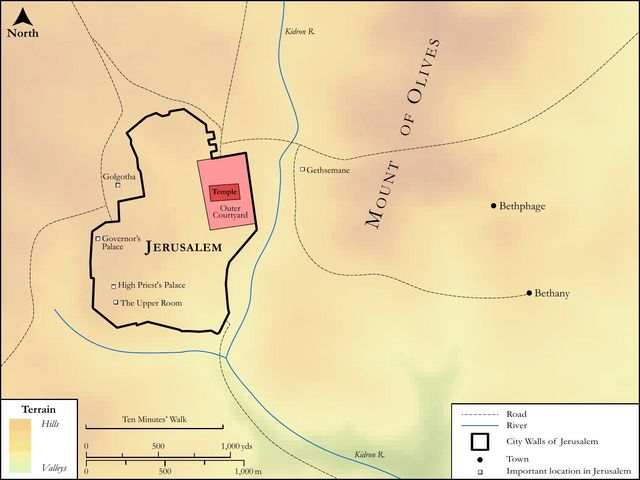
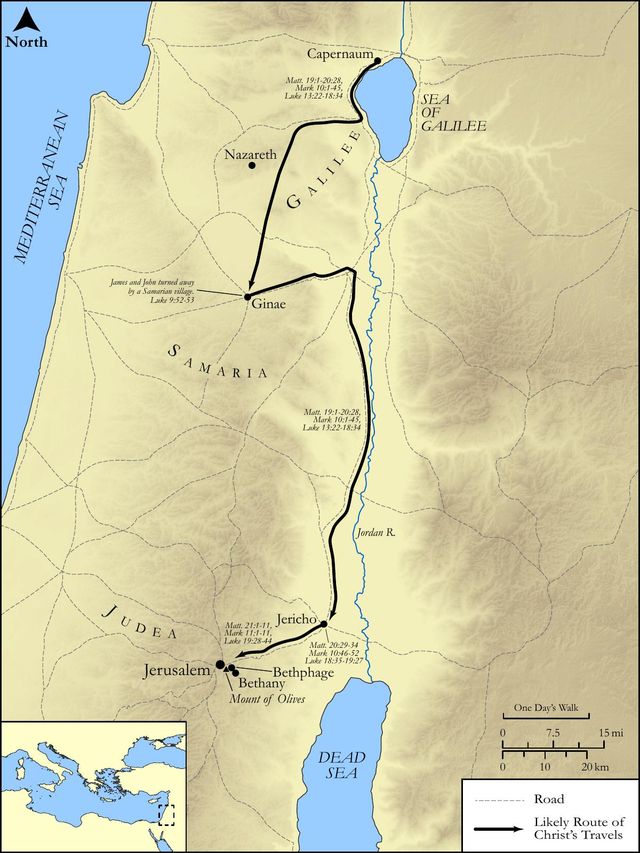
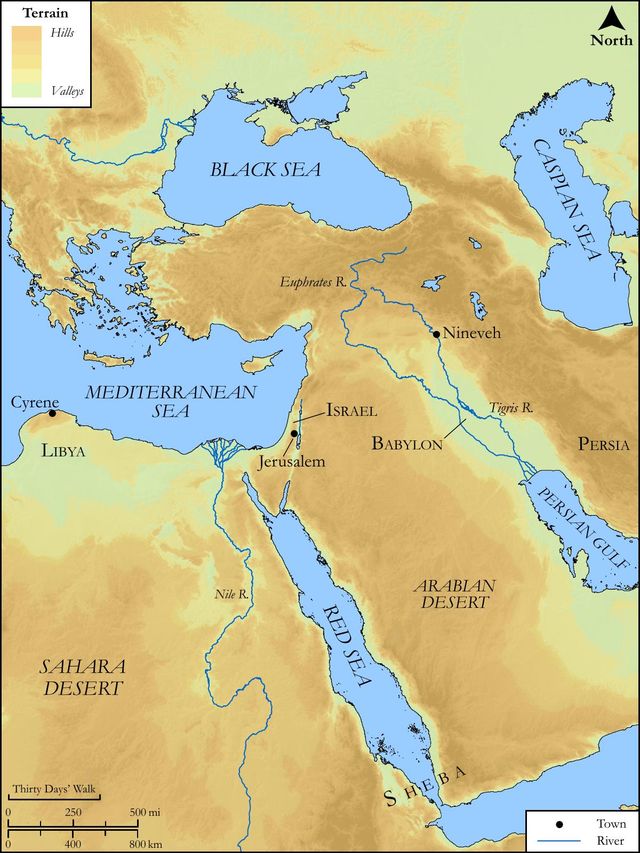
See on the biblical-era maps
Study this verse
Historical interpretation
Eleven Centuries of Reception
13 surviving comments on this verse. Each one is dated, so this reads as a timeline rather than a list.
Select a marker to jump to its quote. Markers stagger vertically where authors wrote within a few decades of each other.
It has learnt not to respect life; how much more food? [You ask] "How many have fulfilled these conditions? "But what with men is difficult, with God is easy. Let us, however, comfort ourselves about the gentleness and clemency of God in such wise, as not to indulge our "necessities" up to the point of affinities with idolatry, but to avoid even from afar every breath of it, as of a pestilence.
How is it, then, that we read, "With men these things are impossible, but with God all things are possible; " and again, "God hath chosen the foolish things of the world to confound the wise? " Let me ask you, if you were to manumit your slave (seeing that the same flesh and soul will remain to him, which once were exposed to the whip, and the fetter, and the stripes), will it therefore be fit for him to undergo the same old sufferings? I trow not.
In this way they hold the Monarchy, but they hold neither the Father nor the Son. Well, but "with God nothing is impossible." True enough; who can be ignorant of it? Who also can be unaware that "the things which are impossible with men are possible with God? " The foolish things also of the world hath God chosen to confound the things which are wise.
To have riches is no sin; but moderation is to be observed in our havings. For how shall we communicate to the necessities of the saints, if we have not out of what we may communicate?
It is a dangerous toil to become rich; and guiltlessness occupied in increasing its wealth has taken upon itself a sore burden; the servant of God gains not the things of the world, clear of the sins of the world. Hence is the difficulty of entering the kingdom of heaven.
At least, when the disciples were troubled, He said, "With men this is impossible; but with God all things are possible."
Therefore, having first "beheld them, He said unto them, The things which are impossible with men, are possible with God." For with a mild and meek look, having soothed their shuddering mind, and having put an end to their distress (for this the evangelist signified by saying, "He beheld them"), then by His words also He relieves them, bringing before them God's power, and so making them feel confidence.
But if thou wilt learn the manner of it likewise, and how what is impossible may become possible, hear. For neither for this end did He say, "The things which are impossible with men, are possible with God," that thou shouldest give it up, and abstain, as from things impossible; but that having considered the greatness of the good work, thou shouldest hasten to it readily, and having besought God to assist thee in these noble contests, shouldest attain unto life.
What He spoke was not condemning riches in themselves, but those who were enslaved by them; also encouraging His disciples that being poor they should not be ashamed by reason of their poverty.
Having said that it was hard for a rich man to enter into the kingdom of heaven, He now proceeds to show that it is impossible, And again I say unto you, It is easier for a camel to go through the eye of a needle, than for a rich man to enter into the kingdom of heaven, (Is. 60:6.)
The disciples though poor are troubled for the salvation of others, beginning even now to have the bowels of doctors.
This therefore He proceeds to show is the work of God, there needing much grace to guide a man in the midst of riches; But Jesus beheld them, and said unto them, With men this is impossible, but with God all things are possible. By the word beheld them, the Evangelist conveys that He soothed their troubled soul by His merciful eye.
And this is not said that you should sit supinely, and let alone what may seem impossibilities; but considering the greatness of righteousness, you should strive to enter in with entreaty to God.
(Verse 24 and following) And again I say to you: It is easier for a camel to go through the eye of a needle than for a rich person to enter the kingdom of heaven. When the disciples heard this, they were greatly astonished, saying, 'Who then can be saved?' But Jesus looked at them and said, 'With man this is impossible, but with God all things are possible.' This statement shows that it is not difficult, but impossible. For if a camel cannot enter through the eye of a needle, so a rich person cannot enter the kingdom of heaven, no rich person will be saved. But if we read Isaiah, how the camels of Midian and Ephah come to Jerusalem with gifts and offerings (Isa. 60): and how those who were previously bent and distorted by the corruption of vices enter the gates of Jerusalem, we will see how even these camels, to whom the rich are compared, when they have unloaded the heavy burden of sins and the corruption of the whole body, are able to enter through the narrow gate and the narrow way that leads to life (Above 7). But when the disciples asked and were amazed at the severity of his words, he tempered the severity of his statement with his mercy, saying: What is impossible for men is possible for God.
Because riches once gained are hard to be despised, He saith not it is impossible, but it is hard. Difficulty does not imply the impossibility, but points out the infrequency of the occurrence.
According to this, no rich man can be saved. But if we read Isaiah, how the camels of Midian and Ephah came to Jerusalem with gifts and presents, and they who once were crooked and bowed down by the weight of their sins, enter the gates of Jerusalem, we shall see how these camels, to which the rich are likened when they have laid aside the heavy load of sins, and the distortion of their whole bodies, may then enter by that narrow and strait way that leads to life.
The Gentile souls are likened to the deformed body of the camel, in which is seen the humpback of idolatry; for the knowledge of God is the exaltation of the soul. The needle is the Son of God, the fine point of which is His divinity, and the thicker part what He is according to His incarnation. But it is altogether straight and without turning; and through the womb of His passion, the Gentiles have entered into life eternal. By this needle is sewn the robe of immortality; it is this needle that has sewn the flesh to the spirit, that has joined together the Jews and the Gentiles, and coupled man in friendship with angels. It is easier therefore for the Gentiles to pass through the needle's eye, than for the rich Jews to enter into the kingdom of heaven. For if the Gentiles are with such difficulty withdrawn from the irrational worship of idols, how much more hardly shall the Jews be withdrawn from the reasonable service of God?
Whence in Mark the Lord expounding the meaning of this saying, speaks thus, It is hard for them that trust in riches to enter into the kingdom of heaven (Mark 10:24.) They trust in riches, who build all their hopes on them.
This must not be so understood as though it were possible for God to cause that the rich, the covetous, the avaricious, and the proud should enter into the kingdom of heaven; but to cause him to be converted, and so enter.
(Mor. xxxv. 16.) Or, by the rich man He intends any one who is proud, by the camel he denotes the right humility. The camel passed through the needle's eye, when our Redeemer through the narrow way of suffering entered in to the taking upon Him death; for that passion was as a needle which pricked the body with pain. But the camel enters the needle's eye easier than the rich man enters the kingdom of heaven; because if He had not first shown us by His passion the form of His humility, our proud stiffness would never have bent itself to His lowliness.
But though there be a difference between having and loving riches, yet it is safer neither to have nor to love them.
(ap. Anselm.) The Lord took occasion from this rich man to hold discourse concerning the covetous; Then said Jesus unto his disciples, Verily I say unto you, &c.
(ap. Anselm.) It is explained otherwise; That at Jerusalem there was a certain gate, called, The needle's eye, through which a camel could not pass, but on its bended knees, and after its burden had been taken off; and so the rich should not be able to pass along the narrow way that leads to life, till he had put off the burden of sin, and of riches, that is, by ceasing to love them.
Continue studying Matthew 19:26 across the web’s major study libraries — every link below opens this exact verse, chapter, or book on the destination site.
Read & Compare
 BibleGatewayThis verse in more than 200 translations and 70 languages.
 Bible.comThe YouVersion reader — hundreds of translations, reading plans, and highlights.
 ESV.orgCrossway's official English Standard Version reader.
 NET BibleThe NET translation with 60,000+ translators' notes on every rendering decision.
 STEP BibleTyndale House's free study tool — original text, vocabulary, and scholarly resources.
 BibliaLogos Bible Software's free web reader.
 USCCBThe New American Bible (Revised Edition) with the U.S. bishops' study notes.
Commentaries
 BibleHub CommentariesDozens of classic commentaries on this verse, gathered on one page.
 StudyLightMore than 100 commentary sets — the largest collection on the web.
 BibleRefPlain-English commentary on what this verse means, verse by verse.
 Enduring WordDavid Guzik's free commentary on this chapter, widely used by Bible teachers.
 Bible Study ToolsVerse commentary alongside Greek and Hebrew study aids.
Original Language & Research
- BibleHub InterlinearThe verse word by word — original language, transliteration, and English.
- BibleHub LexiconEvery word's original-language definition and Strong's entry.
 Blue Letter BibleDeep-study tools — Strong's numbers, concordance, and word studies.
 CNTR CollationThe earliest Greek manuscripts of this verse, collated letter by letter.
Sermons, Hymns & Audio


TrulyRandomVerse is not affiliated with these sites and doesn’t control their content. They’re linked because they’re genuinely useful.
Summary
Matthew 19:26 presents Jesus' profound declaration that while salvation is utterly impossible through human effort or resources, it is entirely possible through the boundless power and grace of God. This statement serves as a foundational truth, shifting the focus from human limitations and perceived merit to divine omnipotence, offering immense hope and underscoring humanity's absolute dependence on God for spiritual transformation and entry into His kingdom.
Context
ShowHideLiterary Context
This powerful declaration by Jesus immediately follows a poignant and challenging encounter with a rich young ruler and a subsequent discussion with His disciples. After the young man, who claimed to have kept all the commandments, walked away sorrowful because he was unwilling to part with his great possessions, Jesus remarked on the difficulty for a rich person to enter the kingdom of heaven, famously stating, "It is easier for a camel to go through the eye of a needle than for a rich man to enter the kingdom of God" (Matthew 19:24). The disciples, astonished by this, then asked, "Who then can be saved?" (Matthew 19:25). Jesus' response in verse 26 directly addresses their bewildered question, providing the ultimate answer to the perceived impossibility of salvation from a human perspective.
Historical & Cultural Context
In ancient Jewish society, wealth was often viewed as a sign of God's blessing and favor, indicating righteousness and divine approval. Conversely, poverty could be seen as a sign of divine displeasure or even a curse. This cultural understanding made Jesus' teaching about the rich man's difficulty in entering the kingdom particularly shocking and counter-intuitive to the disciples. If those blessed with wealth—who presumably had more resources for religious acts or charity—struggled, then who could possibly be saved? This context highlights the radical nature of Jesus' message, challenging deeply ingrained societal and theological assumptions about human merit and divine favor.
Key Themes
ShowHideMatthew 19:26 is pivotal in establishing several core theological themes. It powerfully articulates the theme of human inability to achieve salvation through personal effort, merit, or material possessions, emphasizing that the kingdom of God is not earned. Simultaneously, it proclaims the theme of divine omnipotence, asserting God's limitless power to accomplish what is utterly beyond human capacity. This leads directly to the theme of salvation by grace, underscoring that entry into God's kingdom is a miraculous work of God's sovereign grace, not a human achievement. Finally, the verse offers profound hope, shifting the focus from human despair to the boundless possibilities inherent in God's nature, echoing similar declarations of God's power found throughout Scripture, such as when the angel Gabriel declared to Mary, "For with God nothing will be impossible" (Luke 1:37).
Exposition and Analysis
ShowHideKey Word Analysis
ShowHideMeaning "to look on, i.e. (relatively) to observe fixedly, or (absolutely) to discern clearly." Jesus' act of "beholding" them signifies a deliberate, penetrating gaze. He wasn't merely glancing but intently observing and understanding the disciples' astonishment, fear, and limited human perspective, allowing Him to address their deepest concerns with profound insight and authority.
Derived from 'a' (a negative particle) and 'dynatos' (able). It literally means "unable," "impotent," or "that which cannot be done." When Jesus states "with men this is impossible," He is declaring an absolute, inherent inability within humanity to achieve salvation or enter the kingdom by their own means, efforts, or inherent power. It is a definitive statement of human spiritual bankruptcy apart from divine intervention.
Meaning "powerful or capable (literally or figuratively); neuter possible." This word stands in direct antithesis to adýnatos. It speaks to inherent power, ability, and capability. By stating "with God all things are possible," Jesus affirms God's boundless omnipotence, His infinite capacity to accomplish what is utterly beyond human reach, including the radical transformation and salvation of a soul.
Referring to "a deity, especially (with ὁ) the supreme Divinity." The inclusion of "God" here is crucial, as it identifies the sole agent capable of overcoming the human impossibility. It emphasizes that the power to save, to transform, and to grant entry into the kingdom resides exclusively in the supreme, all-powerful Creator and Sustainer of the universe, distinguishing His nature and capacity from that of finite humanity.
Verse Breakdown
ShowHide"But Jesus beheld [them], and said unto them,"
This opening clause highlights Jesus' compassionate yet authoritative posture. His "beholding" signifies a deep awareness of the disciples' internal struggle and confusion following His teaching on the rich young ruler. His subsequent declaration is not a casual remark but a direct, intentional, and definitive answer to their profound question, spoken with divine insight.
"With men this is impossible;"
This is a stark declaration of human limitation and spiritual incapacity. "This" refers specifically to entering the kingdom of God, particularly for those who, like the rich young ruler, rely on their own merit, wealth, or perceived righteousness. Jesus asserts that from a purely human perspective, relying on human strength, wisdom, or resources, salvation is an unattainable goal. It underscores humanity's inherent inability to bridge the gap between their sinfulness and God's holiness.
"but with God all things are possible."
This is the radical, hopeful counterpoint. The conjunction "but" introduces a complete shift in perspective and agency. It pivots from human impotence to divine omnipotence. "All things" encompasses not only salvation but every aspect of God's redemptive plan and sovereign will. This clause emphasizes that God's power knows no bounds; He can accomplish what is utterly inconceivable and unachievable for humanity, including the transformation of hearts and the granting of eternal life.
Literary Devices
ShowHideThe primary literary device employed in Matthew 19:26 is Antithesis (or Contrast). Jesus sets up a direct and powerful opposition between "with men" and "with God," and between "impossible" and "possible." This stark contrast serves to highlight the radical difference between human capability and divine omnipotence, making the theological point abundantly clear: salvation is not a human achievement but a divine work. The preceding narrative, particularly the hyperbolic image of a camel going through the eye of a needle, functions as a form of Hyperbole that amplifies the sense of human impossibility, thereby making the subsequent declaration of God's boundless power even more impactful and astonishing. Jesus' statement also functions as a Divine Declaration, carrying the weight of ultimate authority and truth, providing a definitive answer to the disciples' existential question about salvation.
Theological and Thematic Connections
ShowHideMatthew 19:26 stands as a cornerstone for understanding the nature of salvation and God's character. It profoundly teaches that salvation is not a reward for human effort, adherence to law, or accumulation of wealth, but a gracious gift from God, made possible solely by His omnipotent power. This verse dismantles any notion of self-salvation or earning one's way into God's favor, emphasizing humanity's utter dependence on divine intervention. It highlights God's sovereign ability to transform hearts and lives that are otherwise bound by sin and unable to reach Him. The "impossible" becomes "possible" only when God acts, revealing His boundless grace and mercy in overcoming human limitations. This truth should humble humanity and elevate the glory of God as the sole author and perfecter of salvation.
Reflection and Application
ShowHideMatthew 19:26 is a liberating and empowering truth for believers. In a world that often measures worth by achievement, possessions, or self-reliance, this verse calls us to profound humility regarding our own capabilities and an unwavering faith in God's. It reminds us that when we face seemingly insurmountable obstacles—whether personal struggles, spiritual battles, or challenges in ministry and evangelism—our hope is not in our strength, wisdom, or resources, but in the infinite power of God. This truth should inspire us to pray boldly for the "impossible," to trust God with situations beyond our control, and to recognize that true transformation, both in our lives and in the lives of others, is always a miraculous work of His grace. It compels us to surrender our self-sufficiency and embrace a radical dependence on the One for whom "all things are possible."
Questions for Reflection
ShowHideFAQ
ShowHideWhy were the disciples so astonished by Jesus' teaching about the rich man, leading to their question, "Who then can be saved?"
ShowHideThe disciples' astonishment stemmed from a common cultural and religious belief in their time that wealth was often a tangible sign of God's blessing and favor. If someone who was outwardly blessed by God with riches—and presumably had more resources to give to charity or fulfill religious obligations—found it difficult to enter the kingdom, then it seemed to defy their understanding of divine justice and human capability. Their question, "Who then can be saved?" (Matthew 19:25), reflected their profound confusion and despair, as it implied that if even the 'blessed' were excluded, there was no hope for anyone else through human means. Jesus' statement in Matthew 19:26 directly addresses this human-centric perspective, shifting the focus entirely to God's power.
Does "with God all things are possible" mean God will grant any desire or prayer we have, regardless of its nature?
ShowHideNo, the phrase "with God all things are possible" speaks to God's boundless power and capability, not to a promise that He will fulfill every human desire or whim. It means that anything consistent with His divine character, His perfect will, and His sovereign purposes is within His power to accomplish. In the immediate context of Matthew 19, it primarily refers to God's ability to save and transform human hearts, even those seemingly furthest from Him or most entrenched in self-reliance, like the rich young ruler. It assures us that God can accomplish what is spiritually impossible for humanity, such as granting true repentance, faith, and entry into His kingdom. It encourages us to trust in His infinite power for His redemptive plan, not to demand that He conform to our limited desires.
Christ-Centered Fulfillment
ShowHideMatthew 19:26 finds its ultimate and most profound fulfillment in the person and work of Jesus Christ. He is the very embodiment of God's power making the impossible possible. Humanity, enslaved by sin and utterly incapable of achieving righteousness or bridging the chasm between themselves and a holy God, faced an "impossible" dilemma. Yet, God, in His infinite love and power, sent His Son, Jesus, to accomplish what humanity never could. The incarnation of Christ—God becoming man (John 1:14)—was itself an "impossible" miracle. His sinless life, His atoning death on the cross for the sins of the world (Romans 5:8), and His triumphant resurrection from the dead (1 Corinthians 15:3-4) are the supreme demonstrations that "with God all things are possible." Through Christ, God made it possible for sinners to be reconciled to Himself (Colossians 1:21-22), to receive forgiveness, and to be granted eternal life—a salvation that is not by human works but by God's grace through faith in Jesus (Ephesians 2:8-9). Thus, Jesus Christ is the living proof that what is impossible for men is gloriously possible with God.