


Matthew 19:25
Bible text: King James Version (1769 Blayney text) · Public domain
Bible text: Berean Standard Bible · Public domain
Bible text: American Standard Version (1901) · Public domain
Bible text: World English Bible, Messianic edition · Public domain
Bible text: Geneva Bible (1599) · Public domain
Bible text: Young's Literal Translation · Public domain
- ἈκούσαντεςAkousantesHaving heardG191V-AAP-NPMVerb Aorist Active Participle Nominative Plural Masculine
- δὲdenowG1161CONJConjunction
- οἱhoitheG3588T-NPMDefinite article Nominative Plural Masculine
- μαθηταὶmathētaidisciplesG3101N-NPMNoun Nominative Plural Masculine
- αὐτοῦautouof himG846P-GSMPersonal pronoun Genitive Singular Masculine
- ἐξεπλήσσοντοexeplēssontowere astonishedG1605V-IPI-3PVerb Imperfect Passive Indicative 3rd Plural
- σφόδραsphodraexceedinglyG4970ADVAdverb
- λέγοντες·legontessayingG3004V-PAP-NPMVerb Present Active Participle Nominative Plural Masculine
- τίςtisWhoG5101I-NSMInterrogative pronoun Nominative Singular Masculine
- ἄραarathenG686CONJConjunction
- δύναταιdunataiis ableG1410V-PNI-3SVerb Present Middle Or Passive Deponent Indicative 3rd Singular
- σωθῆναι;sōthēnaito be saved?G4982V-APNVerb Aorist Passive Infinitive
English is a literal word-by-word gloss of the Greek, not the KJV's wording. Why?
This is the original text the KJV's translators worked from — each Greek word with its own literal English meaning in this verse, prepared by scholars at Tyndale House, Cambridge. The KJV translates whole sentences, not word by word, so its wording differs: one Greek word can become several English words, and the KJV may choose “charity” where the gloss reads “love”. Both are faithful — they answer different questions. For the KJV's own rendering, switch to the KJV text.
Details
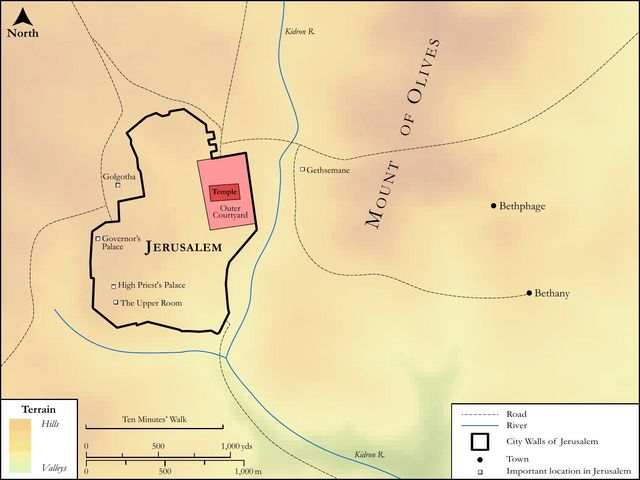
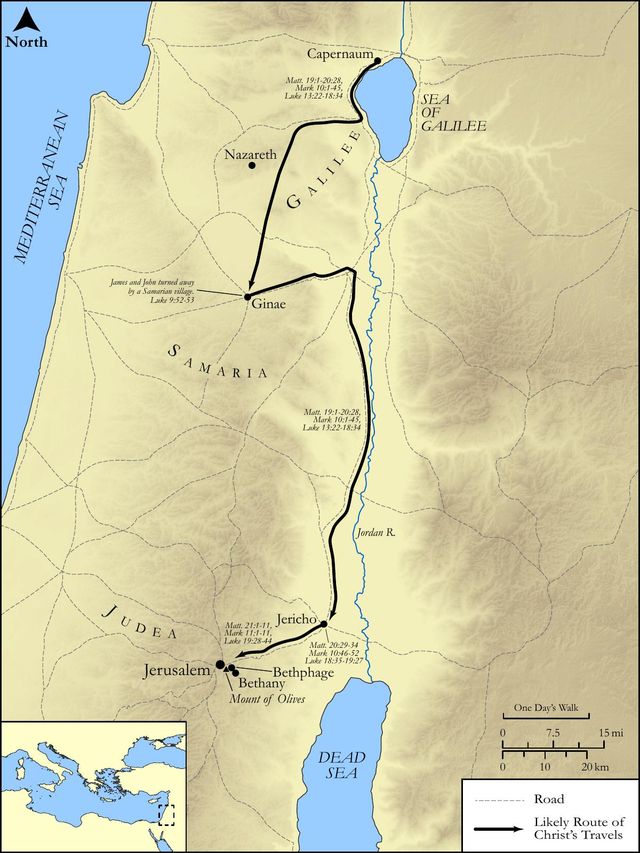
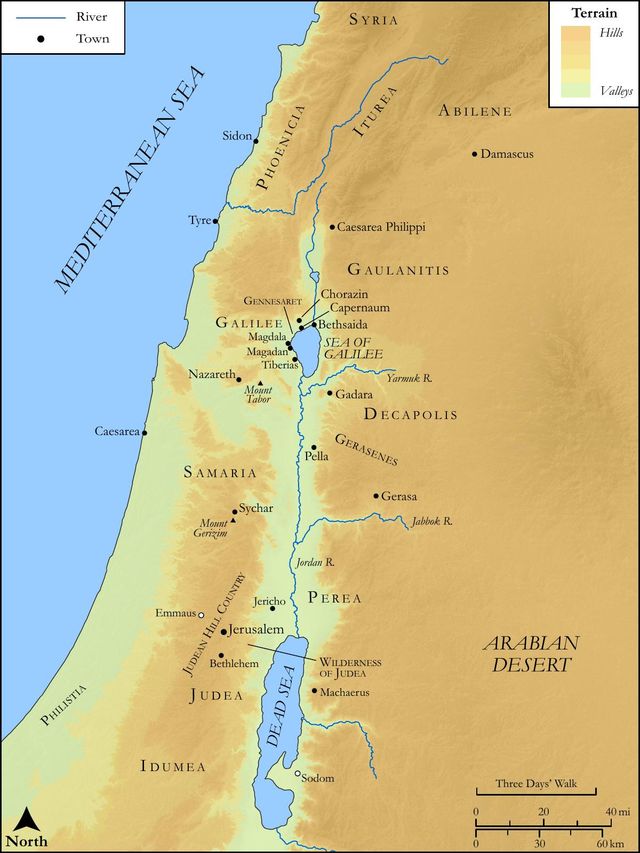
See on the biblical-era maps
Study this verse
Historical interpretation
Nine Centuries of Reception
12 surviving comments on this verse. Each one is dated, so this reads as a timeline rather than a list.
Select a marker to jump to its quote. Markers stagger vertically where authors wrote within a few decades of each other.
To have riches is no sin; but moderation is to be observed in our havings. For how shall we communicate to the necessities of the saints, if we have not out of what we may communicate?
It is a dangerous toil to become rich; and guiltlessness occupied in increasing its wealth has taken upon itself a sore burden; the servant of God gains not the things of the world, clear of the sins of the world. Hence is the difficulty of entering the kingdom of heaven.
And wherefore are the disciples troubled, being poor, yea, exceedingly poor? Wherefore then are they confounded? Being in pain about the salvation of the rest, and having a great affection for all, and having already taken upon themselves the tender bowels of teachers. They were at least in such trembling and fear for the whole world from this declaration, as to need much comfort.
What He spoke was not condemning riches in themselves, but those who were enslaved by them; also encouraging His disciples that being poor they should not be ashamed by reason of their poverty.
Having said that it was hard for a rich man to enter into the kingdom of heaven, He now proceeds to show that it is impossible, And again I say unto you, It is easier for a camel to go through the eye of a needle, than for a rich man to enter into the kingdom of heaven, (Is. 60:6.)
The disciples though poor are troubled for the salvation of others, beginning even now to have the bowels of doctors.
This therefore He proceeds to show is the work of God, there needing much grace to guide a man in the midst of riches; But Jesus beheld them, and said unto them, With men this is impossible, but with God all things are possible. By the word beheld them, the Evangelist conveys that He soothed their troubled soul by His merciful eye.
And this is not said that you should sit supinely, and let alone what may seem impossibilities; but considering the greatness of righteousness, you should strive to enter in with entreaty to God.
(Verse 24 and following) And again I say to you: It is easier for a camel to go through the eye of a needle than for a rich person to enter the kingdom of heaven. When the disciples heard this, they were greatly astonished, saying, 'Who then can be saved?' But Jesus looked at them and said, 'With man this is impossible, but with God all things are possible.' This statement shows that it is not difficult, but impossible. For if a camel cannot enter through the eye of a needle, so a rich person cannot enter the kingdom of heaven, no rich person will be saved. But if we read Isaiah, how the camels of Midian and Ephah come to Jerusalem with gifts and offerings (Isa. 60): and how those who were previously bent and distorted by the corruption of vices enter the gates of Jerusalem, we will see how even these camels, to whom the rich are compared, when they have unloaded the heavy burden of sins and the corruption of the whole body, are able to enter through the narrow gate and the narrow way that leads to life (Above 7). But when the disciples asked and were amazed at the severity of his words, he tempered the severity of his statement with his mercy, saying: What is impossible for men is possible for God.
Because riches once gained are hard to be despised, He saith not it is impossible, but it is hard. Difficulty does not imply the impossibility, but points out the infrequency of the occurrence.
According to this, no rich man can be saved. But if we read Isaiah, how the camels of Midian and Ephah came to Jerusalem with gifts and presents, and they who once were crooked and bowed down by the weight of their sins, enter the gates of Jerusalem, we shall see how these camels, to which the rich are likened when they have laid aside the heavy load of sins, and the distortion of their whole bodies, may then enter by that narrow and strait way that leads to life.
(Quaest. Ev. 1, 26.) Whereas the rich are few in comparison of the multitude of the poor, we must suppose that the disciples understood all who wish for riches, as included in the number of the rich.
The Gentile souls are likened to the deformed body of the camel, in which is seen the humpback of idolatry; for the knowledge of God is the exaltation of the soul. The needle is the Son of God, the fine point of which is His divinity, and the thicker part what He is according to His incarnation. But it is altogether straight and without turning; and through the womb of His passion, the Gentiles have entered into life eternal. By this needle is sewn the robe of immortality; it is this needle that has sewn the flesh to the spirit, that has joined together the Jews and the Gentiles, and coupled man in friendship with angels. It is easier therefore for the Gentiles to pass through the needle's eye, than for the rich Jews to enter into the kingdom of heaven. For if the Gentiles are with such difficulty withdrawn from the irrational worship of idols, how much more hardly shall the Jews be withdrawn from the reasonable service of God?
Whence in Mark the Lord expounding the meaning of this saying, speaks thus, It is hard for them that trust in riches to enter into the kingdom of heaven (Mark 10:24.) They trust in riches, who build all their hopes on them.
This must not be so understood as though it were possible for God to cause that the rich, the covetous, the avaricious, and the proud should enter into the kingdom of heaven; but to cause him to be converted, and so enter.
(Mor. xxxv. 16.) Or, by the rich man He intends any one who is proud, by the camel he denotes the right humility. The camel passed through the needle's eye, when our Redeemer through the narrow way of suffering entered in to the taking upon Him death; for that passion was as a needle which pricked the body with pain. But the camel enters the needle's eye easier than the rich man enters the kingdom of heaven; because if He had not first shown us by His passion the form of His humility, our proud stiffness would never have bent itself to His lowliness.
But though there be a difference between having and loving riches, yet it is safer neither to have nor to love them.
The disciples, being compassionate, did not ask this question for their own sake, for they were poor, but for all men. The Lord therefore teaches us not to gauge salvation by human weakness, but by God’s power. If one only begins to cease from greed, he will advance to reducing his excess, and from there he will proceed to eliminating even his necessities, and thus he will be prospered along the way by God acting in collaboration with him.
(ap. Anselm.) The Lord took occasion from this rich man to hold discourse concerning the covetous; Then said Jesus unto his disciples, Verily I say unto you, &c.
(ap. Anselm.) It is explained otherwise; That at Jerusalem there was a certain gate, called, The needle's eye, through which a camel could not pass, but on its bended knees, and after its burden had been taken off; and so the rich should not be able to pass along the narrow way that leads to life, till he had put off the burden of sin, and of riches, that is, by ceasing to love them.
Continue studying Matthew 19:25 across the web’s major study libraries — every link below opens this exact verse, chapter, or book on the destination site.
Read & Compare
 BibleGatewayThis verse in more than 200 translations and 70 languages.
 Bible.comThe YouVersion reader — hundreds of translations, reading plans, and highlights.
 ESV.orgCrossway's official English Standard Version reader.
 NET BibleThe NET translation with 60,000+ translators' notes on every rendering decision.
 STEP BibleTyndale House's free study tool — original text, vocabulary, and scholarly resources.
 BibliaLogos Bible Software's free web reader.
 USCCBThe New American Bible (Revised Edition) with the U.S. bishops' study notes.
Commentaries
 BibleHub CommentariesDozens of classic commentaries on this verse, gathered on one page.
 StudyLightMore than 100 commentary sets — the largest collection on the web.
 BibleRefPlain-English commentary on what this verse means, verse by verse.
 Enduring WordDavid Guzik's free commentary on this chapter, widely used by Bible teachers.
 Bible Study ToolsVerse commentary alongside Greek and Hebrew study aids.
Original Language & Research
- BibleHub InterlinearThe verse word by word — original language, transliteration, and English.
- BibleHub LexiconEvery word's original-language definition and Strong's entry.
 Blue Letter BibleDeep-study tools — Strong's numbers, concordance, and word studies.
 CNTR CollationThe earliest Greek manuscripts of this verse, collated letter by letter.
Sermons, Hymns & Audio


TrulyRandomVerse is not affiliated with these sites and doesn’t control their content. They’re linked because they’re genuinely useful.
Summary
Matthew 19:25 powerfully captures the profound astonishment and deep spiritual crisis experienced by Jesus' disciples upon hearing His radical teaching about the extreme difficulty for a rich man to enter the kingdom of heaven. Their bewildered question, "Who then can be saved?", underscores the revolutionary nature of Jesus' words, which directly challenged the prevailing cultural and religious assumptions of their era, revealing a fundamental misunderstanding of salvation's true source.
Context
ShowHideLiterary Context
This verse immediately follows Jesus' encounter with the rich young ruler, who, despite his apparent piety and desire for eternal life, was unwilling to surrender his vast possessions to follow Christ. Jesus then delivers a startling teaching, declaring, "Verily I say unto you, That a rich man shall hardly enter into the kingdom of heaven" (Matthew 19:23). He further intensifies this statement with the vivid and memorable hyperbole, "And again I say unto you, It is easier for a camel to go through the eye of a needle, than for a rich man to enter into the kingdom of God" (Matthew 19:24). The disciples' reaction in verse 25 is a direct, visceral response to the seemingly insurmountable obstacle Jesus has just presented, setting the stage for Jesus' profound answer regarding divine possibility in the subsequent verse (Matthew 19:26).
Historical & Cultural Context
In the Jewish society of Jesus' time, wealth was often perceived as a clear sign of God's blessing and favor. It was commonly believed that prosperity indicated a person's righteousness and adherence to the Law, making them more likely candidates for divine favor and entrance into the kingdom. The Old Testament frequently connects obedience with material blessings (e.g., Deuteronomy 28:1-14). Therefore, Jesus' assertion that a rich man would find it hard to enter the kingdom, let alone be compared to a camel passing through a needle's eye, was utterly counter-cultural and deeply shocking. It shattered their conventional understanding of success, piety, and the path to salvation, leading to their bewildered question.
Key Themes
ShowHideThis verse contributes significantly to several key themes within Matthew's Gospel and the broader New Testament. It highlights the theme of human impossibility in achieving salvation through one's own efforts, status, or possessions, contrasting sharply with the prevailing Jewish understanding of merit. It also sets the stage for the theme of divine possibility, as Jesus' answer in the next verse will pivot to God's omnipotence in salvation. Furthermore, it reinforces Jesus' consistent challenge to worldly values, particularly the idolatry of wealth, demonstrating that material possessions, far from being a guarantee of spiritual standing, can become a significant barrier to true spiritual life and allegiance to God. The disciples' question ultimately forces a re-evaluation of the nature of true salvation, moving it from external markers of success to an internal transformation and radical dependence on God.
Exposition and Analysis
ShowHideKey Word Analysis
ShowHideMeaning "a learner, i.e., pupil." This term emphasizes their role as students under Jesus' instruction. Their astonishment highlights that even those intimately familiar with Jesus' teachings were profoundly challenged by this particular truth, revealing the depth of their ingrained cultural assumptions about wealth and salvation.
Meaning "to strike with astonishment." The prefix "ek" (out of) intensifies the verb "plēssō" (to strike), conveying a sense of being "struck out of one's senses" or utterly overwhelmed. This word choice vividly portrays the disciples' profound shock and bewilderment, indicating that Jesus' words had a truly jarring and paradigm-shifting effect on them.
Meaning "to save, i.e., deliver or protect (literally or figuratively); to heal, preserve, make whole." This is the core of their desperate inquiry. The disciples' question, "Who then can be saved?", reflects their understanding of salvation as entrance into the Kingdom of God, and their fear that if the "blessed" rich cannot enter, then no one can meet such an impossibly high standard.
Verse Breakdown
ShowHide"When his disciples heard [it]"
This phrase connects the disciples' reaction directly to Jesus' preceding statements about the rich man and the camel. The "it" refers to Jesus' radical teaching that wealth is a hindrance, not a help, to entering the Kingdom of God, and the vivid analogy of the camel and the needle's eye. Their hearing was not merely auditory but intellectual and spiritual, leading to a profound internal struggle.
"they were exceedingly amazed"
This clause describes the intensity of their reaction. The adverb "exceedingly" (Greek, sphódra) emphasizes the extreme nature of their astonishment. It was not mere surprise but a deep, overwhelming sense of shock and bewilderment, indicating that Jesus' words had completely upended their theological framework and cultural expectations regarding salvation.
"saying, Who then can be saved?"
This is a rhetorical question born out of despair and confusion. It expresses the disciples' conclusion that if the rich, who were considered most favored by God, could not be saved, then salvation must be an impossibility for anyone. This question is crucial as it sets the stage for Jesus' subsequent teaching on the divine nature of salvation.
Literary Devices
ShowHideMatthew 19:25 employs several powerful literary devices. The most prominent is the Rhetorical Question, "Who then can be saved?" This is not a request for information but an expression of profound shock, despair, and a challenge to the implied impossibility of salvation based on Jesus' preceding statements. It serves to highlight the disciples' bewilderment and to draw the reader into their dilemma. Furthermore, the verse functions as a moment of Dramatic Irony, as the disciples, despite being close to Jesus, are still operating under a worldly understanding of righteousness and divine favor. Their amazement underscores their limited perspective, which Jesus is about to expand upon. The Juxtaposition of their human despair with Jesus' forthcoming divine answer (in Matthew 19:26) creates a powerful theological contrast, emphasizing the vast difference between human effort and divine grace.
Theological and Thematic Connections
ShowHideMatthew 19:25 serves as a pivotal moment, exposing the universal human predicament regarding salvation. The disciples' question, born from their cultural assumptions, reveals the inherent human inability to earn or achieve salvation through personal merit, status, or material possessions. If even those considered "blessed" by God's material provision found it impossible to enter the Kingdom, then the path to salvation must lie entirely outside human capability. This verse powerfully sets the stage for Jesus to reveal that salvation is not a human achievement but a divine work, entirely dependent on God's power and grace. It underscores the radical nature of the Kingdom of God, which operates on principles diametrically opposed to worldly values and human-centric efforts.
Reflection and Application
ShowHideThe disciples' bewildered question in Matthew 19:25 resonates deeply with the human condition, forcing us to confront our own assumptions about what it takes to be "saved." In a world that often equates success, influence, or even moral uprightness with divine favor, this verse serves as a profound reminder that no human effort, no accumulation of wealth, no level of social standing, and no amount of good deeds can ever earn us a place in God's eternal Kingdom. Our salvation is not a reward for our performance but a gift freely given by God's boundless grace. This truth should lead us to a posture of humility, recognizing our utter dependence on God's mercy and power. It challenges us to examine where our trust truly lies: in our own abilities and resources, or in the sovereign, saving work of God alone. Embracing this reality frees us from the burden of self-justification and opens our hearts to receive the salvation that is impossible for humanity but gloriously possible with God.
Questions for Reflection
ShowHideFAQ
ShowHideWhy were the disciples so "exceedingly amazed" by Jesus' statement?
ShowHideThe disciples' extreme amazement stemmed from the deeply ingrained cultural and theological beliefs of their time. In Jewish society, wealth was often seen as a sign of God's blessing and favor, indicating righteousness and a greater likelihood of entering the Kingdom of God. Therefore, Jesus' declaration that it was hard for a rich man to enter, and His vivid analogy of a camel passing through a needle's eye (Matthew 19:24), completely upended their understanding. If even the "blessed" rich faced such an insurmountable obstacle, then who, in their human estimation, could possibly be saved? Their amazement was a reaction to the radical challenge Jesus posed to their conventional wisdom and religious assumptions.
Christ-Centered Fulfillment
ShowHideMatthew 19:25, with the disciples' desperate question "Who then can be saved?", finds its ultimate and glorious fulfillment in the person and work of Jesus Christ. Their question, born of human impossibility, perfectly sets the stage for Jesus' profound answer in the very next verse: "With men this is impossible; but with God all things are possible" (Matthew 19:26). This "possibility with God" is realized through Christ. Humanity's inability to save itself, highlighted by the rich young ruler's failure and the disciples' despair, points directly to the necessity of a divine intervention. Jesus, as the Lamb of God who takes away the sin of the world, is God's answer to humanity's impossible predicament. Through His perfect life, atoning death on the cross, and victorious resurrection, Jesus accomplished what no human effort, wealth, or righteousness could ever achieve. He became the way, the truth, and the life, the sole mediator through whom reconciliation with God and eternal life are made possible. Thus, the "who" that can be saved is anyone who, recognizing their own inability, places their faith in the finished work of Christ, for there is salvation in no one else.