


Matthew 9:22
Bible text: King James Version (1769 Blayney text) · Public domain
Bible text: King James Version with Strong's numbers · Public domain
Bible text: Berean Standard Bible · Public domain
Bible text: American Standard Version (1901) · Public domain
Bible text: World English Bible, Messianic edition · Public domain
Bible text: Geneva Bible (1599) · Public domain
Bible text: Young's Literal Translation · Public domain
- ὉHo<the>G3588T-NSMDefinite article Nominative Singular Masculine
- δὲdeAndG1161CONJConjunction
- ἸησοῦςIēsousJesusG2424N-NSM-PNoun Nominative Singular Masculine Individual
- στραφεὶςstrapheishaving turnedG4762V-2APP-NSMVerb 2nd Aorist Passive Participle Nominative Singular Masculine
- καὶkaiandG2532CONJConjunction
- ἰδὼνidōnhaving seenG1492V-2AAP-NSMVerb 2nd Aorist Active Participle Nominative Singular Masculine
- αὐτὴνautēnherG846P-ASFPersonal pronoun Accusative Singular Feminine
- εἶπεν·eipenHe saidG2036V-2AAI-3SVerb 2nd Aorist Active Indicative 3rd Singular
- θάρσειtharseiTake courageG2293V-PAM-2SVerb Present Active Imperative 2nd Singular
- θύγατερthugaterdaughterG2364N-VSFNoun Vocative Singular Feminine
- ἡhētheG3588T-NSFDefinite article Nominative Singular Feminine
- πίστιςpistisfaithG4102N-NSFNoun Nominative Singular Feminine
- σουsouof youG4771P-2GSPersonal pronoun Genitive 2nd Singular
- σέσωκένsesōkenhas curedG4982V-RAI-3SVerb Perfect Active Indicative 3rd Singular
- σεseyouG4771P-2ASPersonal pronoun Accusative 2nd Singular
- καὶkaiAndG2532CONJConjunction
- ἐσώθηesōthēwas curedG4982V-API-3SVerb Aorist Passive Indicative 3rd Singular
- ἡhētheG3588T-NSFDefinite article Nominative Singular Feminine
- γυνὴgunēwomanG1135N-NSFNoun Nominative Singular Feminine
- ἀπὸapofromG575PREPPreposition
- τῆςtēstheG3588T-GSFDefinite article Genitive Singular Feminine
- ὥραςhōrashourG5610N-GSFNoun Genitive Singular Feminine
- ἐκείνηςekeinēsveryG1565D-GSFDemonstrative pronoun Genitive Singular Feminine
English is a literal word-by-word gloss of the Greek, not the KJV's wording. Why?
This is the original text the KJV's translators worked from — each Greek word with its own literal English meaning in this verse, prepared by scholars at Tyndale House, Cambridge. The KJV translates whole sentences, not word by word, so its wording differs: one Greek word can become several English words, and the KJV may choose “charity” where the gloss reads “love”. Both are faithful — they answer different questions. For the KJV's own rendering, switch to the KJV text.
Details
See on the biblical-era maps
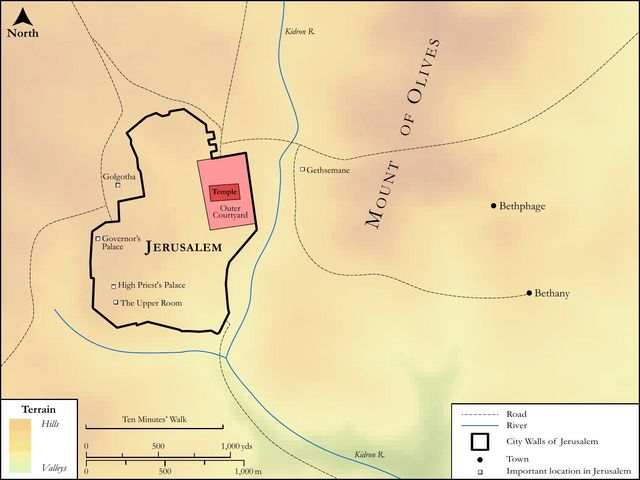
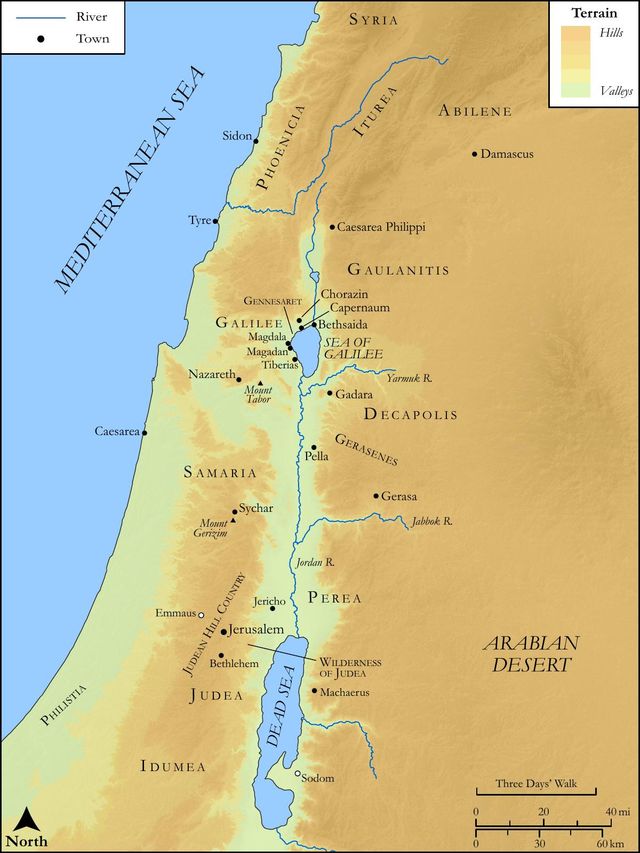
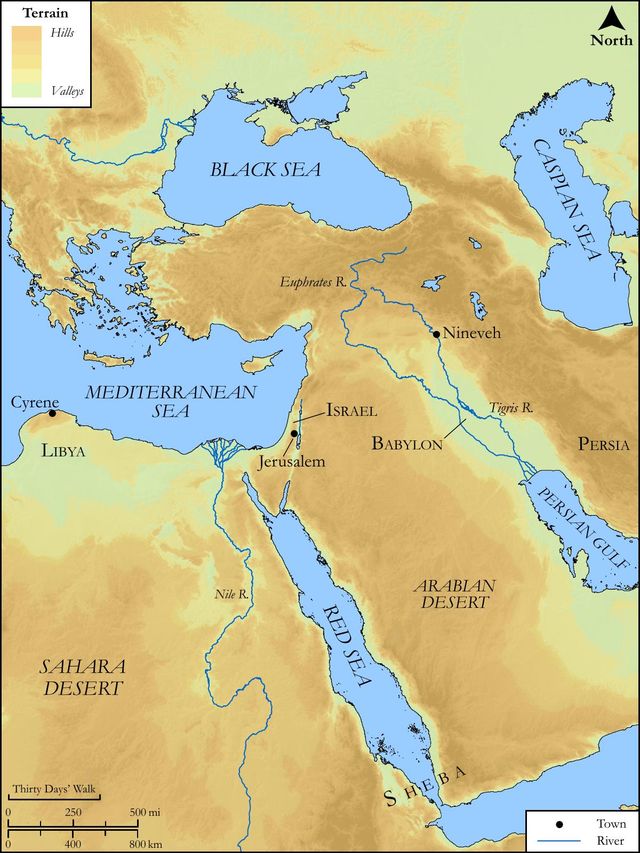
Study this verse
Public-domain commentary
Matthew Henry
From his Commentary on the Whole Bible. Henry comments on passages, not single verses — this entry covers Matthew 9:18–26. His four-level outline is real structure in the source text, so it is rendered as structure.
We have here two passages of history put together; that of the raising of Jairus's daughter to life, and that of the curing of the woman that had the bloody issue, as he was going to Jairus's house, which is introduced in a parenthesis, in the midst of the other; for Christ's miracles were thick sown, and interwoven; the work of him that sent him was his daily work. He was called to do these good works from speaking the things foregoing, in answer to the cavils of the Pharisees, Mat 9:18 : While he spake these things; and we may suppose it is a pleasing interruption given to that unpleasant work of disputation, which, though sometimes needful, a good man will gladly leave, to go about a work of devotion or charity. Here is,
I.The ruler's address to Christ, Mat 9:18.
A certain ruler, a ruler of the synagogue, came and worshipped him. Have any of the rulers believed on him? Yes, here was one, a church ruler, whose faith condemned the unbelief of the rest of the rulers. This ruler had a little daughter, of twelve years old, just dead, and this breach made upon his family comforts was the occasion of his coming to Christ. Note, In trouble we should visit God: the death of our relations should drive us to Christ, who is our life; it is well if any thing will do it. When affliction is in our families, we must not sit down astonished, but, as Job, fall down and worship. Now observe,
1.His humility in this address to Christ. He came with his errand to Christ himself, and did not send his servant. Note, It is no disparagement to the greatest rulers, personally to attend on the Lord Jesus. He worshipped him, bowed the knee to him, and gave him all imaginable respect. Note, They that would receive mercy from Christ must give honour to Christ.
2.His faith in this address; "My daughter is even now dead," and though any other physician would now come too late (nothing more absurd than post mortem medicina - medicine after death), yet Christ comes not too late; he is a Physician after death, for he is the resurrection and the life; "O come then, and lay thy hand upon her, and she shall live." This was quite above the power of nature (a privatione ad habitum non datur regressus - life once lost cannot be restored), yet within the power of Christ, who has life in himself, and quickeneth whom he will. Now Christ works in an ordinary, by nature and not against it, and, therefore, we cannot in faith bring him such a request as this; while there is life, there is hope, and room for prayer; but when our friends are dead, the case is determined; we shall go to them, but they shall not return to us. But while Christ was here upon earth working miracles, such a confidence as this was not only allowable but very commendable.
II.The readiness of Christ to comply with his address, Mat 9:19.
Jesus immediately arose, left his company, and followed him; he was not only willing to grant him what he desired, in raising his daughter to life, but to gratify him so far as to come to his house to do it. Surely he never said to the seed of Jacob, Seek ye me in vain. He denied to go along with the nobleman, who said, Sir, come down, ere my child die (Joh 4:48-50), yet he went along with the ruler of the synagogue, who said, Sir, come down, and my child shall live. The variety of methods which Christ took in working his miracles is perhaps to be attributed to the different frame and temper of mind which they were in who applied to him, which he who searcheth the heart perfectly knew, and accommodated himself to. He knows what is in man, and what course to take with him. And observe, when Jesus followed him, so did his disciples, whom he had chosen for his constant companions; it was not for state, or that he might come with observation, that he took his attendants with him, but that they might be the witnesses of his miracles, who were hereafter to be the preachers of his doctrine.
III.The healing of the poor woman's bloody issue.
I call her a poor woman, not only because her case was piteous, but because, she had spent it all upon physicians, for the cure of her distemper, and was never the better; which was a double aggravation of the misery of her condition, that she had been full, but was now empty; and that she had impoverished herself for the recovery of her health, and yet had not her health neither. This woman was diseased with a constant issue of blood twelve years (Mat 9:20); a disease, which was not only weakening and wasting, and under which the body must needs languish; but which also rendered her ceremonially unclean, and shut her out from the courts of the Lord's house; but it did not cut her off from approaching to Christ. She applied herself to Christ, and received mercy from him, by the way, as he followed the ruler, whose daughter was dead, to whom it would be a great encouragement, and a help to keep up his faith in the power of Christ. So graciously does Christ consider the frame, and consult the case, of weak believers. Observe,
1.The woman's great faith in Christ, and in his power. Her disease was of such a nature, that her modesty would not suffer her to speak openly to Christ for a cure, as others did, but by a peculiar impulse of the Spirit of faith, she believed him to have such an overflowing fulness of healing virtue, that the very touch of his garment would be her cure. This, perhaps, had something of fancy mixed with faith; for she had no precedent for this way of application to Christ, unless, as some think, she had an eye to the raising of the dead man by the touch of Elisha's bones, Kg2 13:21. But what weakness of understanding there was in it, Christ was pleased to overlook, and to accept the sincerity and strength of her faith; for he eateth the honey-comb with the honey, Sol 4:11. She believed she should be healed if she did but touch the very hem of his garment, the very extremity of it. Note, There is virtue in every thing that belongs to Christ. The holy oil with which the high priest was anointed, ran down to the skirts of his garments, Psa 133:2. Such a fulness of grace is there in Christ, that from it we may all receive, Joh 1:16.
2.Christ's great favour to this woman. He did not suspend (as he might have done) his healing influences, but suffered this bashful patient to steal a cure unknown to any one else, though she could not think to do it unknown to him. And now she was well content to be gone, for she had what she came for, but Christ was not willing to let he to so; he will not only have his power magnified in her cure, but his grace magnified in her comfort and commendation: the triumphs of her faith must be to her praise and honour. He turned about to see for her (Mat 9:22), and soon discovered her. Note, It is great encouragement to humble Christians, that they who hide themselves from men are known to Christ, who sees in secret their applications to heaven when most private. Now here,
(1.)He puts gladness into her heart, by that word, Daughter, be of good comfort. She feared being chidden for coming clandestinely, but she is encouraged.
[1.]He calls her daughter, for he spoke to her with the tenderness of a father, as he did to the man sick of the palsy (Mat 9:2), whom he called son. Note, Christ has comforts ready for the daughters of Zion, that are of a sorrowful spirit, as Hannah was, Sa1 1:15. Believing women are Christ's daughters, and he will own them as such.
[2.]He bids her be of good comfort: she has reason to be so, if Christ own her for a daughter. Note, The saints' consolation is founded in their adoption. His bidding her be comforted, brought comfort with it, as his saying, Be ye whole, brought health with it. Note, It is the will of Christ that his people should be comforted, and it is his prerogative to command comfort to troubled spirits. He creates the fruit of the lips, peace, Isa 57:19.
(2.)He puts honour upon her faith. That grace of all others gives most honour to Christ, and therefore he puts most honour upon it; Thy faith has made thee whole. Thus by faith she obtained a good report. And as of all graces Christ puts the greatest honour upon faith, so of all believers he puts the greatest honour upon those that are most humble; as here on this woman, who had more faith than she thought she had. She had reason to be of good comfort, not only because she was made whole, but because her faith had made her whole; that is,
[1.]She was spiritually healed; that cure was wrought in her which is the proper fruit and effect of faith, the pardon of sin and the work of grace. Note, We may then be abundantly comforted in our temporal mercies when they are accompanied with those spiritual blessings that resemble them; our food and raiment will be comfortable, when by faith we are fed with the bread of life, and clothed with the righteousness of Jesus Christ; our rest and sleep will be comfortable, when by faith we repose in God, and dwell at ease in him; our health and prosperity will be comfortable, when by faith our souls prosper, and are in health. See Isa 38:16, Isa 38:17.
[2.]Her bodily cure was the fruit of faith, of her faith, and that made it a happy, comfortable cure indeed. They out of whom the devils were cast, were helped by Christ's sovereign power; some by the faith of others (as Mat 9:2); but it is thy faith that has made thee whole. Note, Temporal mercies are then comforts indeed to us, when they are received by faith. If, when in pursuit of mercy, we prayed for it in faith, with an eye to the promise, and in dependence upon that, if we desired it for the sake of God's glory, and with a resignation to God's will, and have our hearts enlarged by it in faith, love, and obedience, we may then say, it was received by faith.
IV.The posture in which he found the ruler's house, Mat 9:23.
- He saw the people and the minstrels, or musicians, making a noise. The house was in a hurry: such work does death make, when it comes into a family; and, perhaps, the necessary cares that arise at such a time, when our dead is to be decently buried out of our sight, give some useful diversion to that grief which is apt to prevail and play the tyrant. The people in the neighbourhood came together to condole on account of the loss, to comfort the parents, to prepare for, and attend on, the funeral, which the Jews were not wont to defer long. The musicians were among them, according to the custom of the Gentiles, with their doleful, melancholy tunes, to increase the grief, and stir up the lamentations of those that attended on this occasion; as (they say) is usual among the Irish, with their Ahone, Ahone. Thus they indulged a passion that is apt enough of itself to grow intemperate, and affected to sorrow as those that had no hope. See how religion provides cordials, where irreligion administers corrosives. Heathenism aggravates that grief which Christianity studies to assuage. Or perhaps these musicians endeavoured on the other hand to divert the grief and exhilarate the family; but, as vinegar upon nitre, so is he that sings songs to a heavy heart. Observe, The parents, who were immediately touched with the affliction, were silent, while the people and minstrels, whose lamentations were forced, made such a noise. Note, The loudest grief is not always the greatest; rivers are most noisy where they run shallow. Ille dolet vere, qui sine teste dolet - That grief is most sincere, which shuns observation. But notice is taken of this, to show that the girl was really dead, in the undoubted apprehension of all about her.
V.The rebuke that Christ gave to this hurry and noise, Mat 9:24.
He said, Give place. Note, Sometimes, when the sorrow of the world prevails, it is difficult for Christ and his comforts to enter. They that harden themselves in sorrow, and, like Rachel, refuse to be comforted, should think they hear Christ saying to their disquieting thoughts, Give place: "Make room for him who is the Consolation of Israel, and brings with him strong consolations, strong enough to overcome the confusion and tyranny of these worldly griefs, if he may but be admitted into the soul." He gives a good reason why they should not thus disquiet themselves and one another; The maid is not dead but sleepeth.
1.This was eminently true of this maid, that was immediately to be raised to life; she was really dead, but not so to Christ, who knew within himself what he would do, and could do, and who had determined to make her death but as a sleep. There is little more difference between sleep and death, but in continuance; whatever other difference there is, it is but a dream. This death must be but of short continuance, and therefore is but a sleep, like one night's rest. He that quickens the dead, may well call the things which be not as though they were, Rom 4:17.
2.It is in a sense true of all that die, chiefly of them that die in the Lord. Note,
(1.)Death is a sleep. All nations and languages, for the softening of that which is so dreadful, and withal so unavoidable, and the reconciling of themselves to it, have agreed to call it so. It is said, even of the wicked kings, that they slept with their fathers; and of those that shall arise to everlasting contempt, that they sleep in the dust, Dan 12:2. It is not the sleep of the soul; its activity ceases not; but the sleep of the body, which lies down in the grave, still and silent, regardless and disregarded, wrapt up in darkness and obscurity. Sleep is a short death, and death a long sleep. But the death of the righteous is in a special manner to be looked upon as a sleep, Isa 57:2. They sleep in Jesus (Th1 4:14); they not only rest from the toils and labours of the day, but rest in hope of a joyful waking again in the morning of the resurrection, when they shall wake refreshed, wake to a new life, wake to be richly dressed and crowned, and wake to sleep no more.
(2.)The consideration of this should moderate our grief at the death of our dear relations: "say not, They are lost; no, they are but gone before: say not, They are slain; no, they are but fallen asleep; and the apostle speaks of it as an absurd thing to imagine that they that are fallen asleep in Christ are perished (Co1 15:18); give place, therefore, to those comforts which the covenant of grace ministers, fetched from the future state, and the glory to be revealed."
Now could it be thought that such a comfortable word as this, from the mouth of our Lord Jesus, should be ridiculed as it was? They laughed him to scorn. These people lived in Capernaum, knew Christ's character, that he never spake a rash or foolish word; they knew how many mighty works he had done; so that if they did not understand what he meant by this, they might at least have been silent in expectation of the issue. Note, The words and works of Christ which cannot be understood, yet are not therefore to be despised. We must adore the mystery of divine sayings, even when they seem to contradict what we think ourselves most confident of. Yet even this tended to the confirmation of the miracle: for it seems she was so apparently dead, that it was thought a very ridiculous thing to say otherwise.
VI.The raising of the damsel to life by the power of Christ, Mat 9:25.
The people were put forth. Note, Scorners that laugh at what they see and hear that is above their capacity, are not proper witnesses of the wonderful works of Christ, the glory of which lies not in pomp, but in power. The widow's son at Nain, and Lazarus, were raised from the dead openly, but this damsel privately; for Capernaum, that had slighted the lesser miracles of restoring health, was unworthy to see the greater, of restoring life; these pearls were not to be cast before those that would trample them under their feet.
Christ went in and took her by the hand, as it were to awake her, and to help her up, prosecuting his own metaphor of her being asleep. The high priest, that typified Christ, was not to come near the dead (Lev 21:10, Lev 21:11), but Christ touched the dead. The Levitical priesthood leaves the dead in their uncleanness, and therefore keeps at a distance from them, because it cannot remedy them; but Christ, having power to raise the dead, is above the infection, and therefore is not shy of touching them. He took her by the hand, and the maid arose. So easily, so effectually was the miracle wrought; not by prayer, as Elijah did (Kg1 17:21), and Elisha (Kg2 4:33), but by a touch. They did it as servants, he as a Son, as a God, to whom belong the issues from death. Note, Jesus Christ is the Lord of souls, he commands them forth, and commands them back, when and as he pleases. Dead souls are not raised to spiritual life, unless Christ take them by the hand: it is done in the day of his power. He helps us up, or we lie still.
VII.The general notice that was taken of this miracle, though it was wrought privately; Mat 9:26.
The fame thereof went abroad into all that land: it was the common subject of discourse. Note, Christ's works are more talked of than considered and improved. And doubtless, they that heard only the report of Christ's miracles, were accountable for that as well as they that were eye-witnesses of them. Though we at this distance have not seen Christ's miracles, yet having an authentic history of them, we are bound, upon the credit of that, to receive his doctrine; and blessed are they that have not seen, and yet have believed, Joh 20:29.
Historical interpretation
Nine Centuries of Reception
12 surviving comments on this verse. Each one is dated, so this reads as a timeline rather than a list.
Select a marker to jump to its quote. Markers stagger vertically where authors wrote within a few decades of each other.
As the woman is healed, the crowd of sinners is made whole. At first it seemed more appropriate to follow the law of cleanliness. But a more pristine wholeness is restored to publicans and sinners in the appearance of the woman. Thus, upon meeting the Lord as he was passing by, she believed firmly that by touching his garment she would be healed of her flow of blood. Dressed in shabby clothes and defiled by the uncleanness of her interior affliction, in her faith she hastens to touch the tassel of his cloak. In the midst of the apostles she sought to touch the gift of the Holy Spirit as it was coming from Christ’s body. She is suddenly healed.… The Lord praised her faith and constancy, because what had been prepared for Israel, the common people of the Gentiles were now claiming for themselves.
Herein is to be observed the marvellous virtue of the Lord, that the power that dwelt in His body should give healing to things perishable, and the heavenly energy extended even through the hems of His garments; for God is not comprehensible that He should be shut in by a body. For His taking a body unto Him did not confine His power, but His power took upon it a frail body for our redemption. Figuratively, this ruler is to be understood as the Law, which prays the Lord that He would restore life to the dead multitude which it had brought up for Christ, preaching that His coming was to be looked for.
What then doth Christ? He suffers her not to be hid, but brings her into the midst, and makes her manifest for many purposes.
It is true indeed that some of the senseless ones say, "He does this for love of glory. For why," say they, "did He not suffer her to be hid?" What sayest thou, unholy, yea, all unholy one? He that enjoins silence, He that passes by miracles innumerable, is He in love with glory?
For what intent then doth He bring her forward? In the first place He puts an end to the woman's fear, lest being pricked by her conscience, as having stolen the gift, she should abide in agony. In the second place, He sets her right, in respect of her thinking to be hid. Thirdly, He exhibits her faith to all, so as to provoke the rest also to emulation; and His staying of the fountains of her blood was no greater sign than He affords in signifying His knowledge of all things. Moreover the ruler of the synagogue, who was on the point of thorough unbelief, and so of utter ruin, He corrects by the woman. Since both they that came said, "Trouble not the Master, for the damsel is dead;" and those in the house laughed Him to scorn, when He said, "She sleepeth;" and it was likely that the father too should have experienced some such feeling. Therefore to correct this weakness beforehand, He brings forward the simple woman. For as to that ruler being quite of the grosser sort, hear what He saith unto him: "Fear not, do thou believe only, and she shall be made whole."
Thus He waited also on purpose for death to come on, and that then He should arrive; in order that the proof of the resurrection might be distinct. With this view He both walks more leisurely, and discourses more with the woman; that He might give time for the damsel to die, and for those to come, who told of it, and said, "Trouble not the Master." This again surely the evangelist obscurely signifies, when he saith, "While He yet spake, there came from the house certain which said, Thy daughter is dead, trouble not the Master." For His will was that her death should be believed, that her resurrection might not be suspected. And this He doth in every instance. So also in the case of Lazarus, He waited a first and a second and a third day.
On account then of all these things He brings her forward, and saith, "Daughter, be of good cheer," even as He had said also to the paralyzed person, "Son, be of good cheer." Because in truth the woman was exceedingly alarmed; therefore He saith, "be of good cheer," and He calls her "daughter;" for her faith had made her a daughter. After that comes also her praise: "Thy faith hath made thee whole."
Seest thou the woman superior to the ruler of the synagogue? She detained Him not, she took no hold of Him, but touched Him only with the end of her fingers, and though she came later, she first went away healed. And he indeed was bringing the Physician altogether to his house, but for her a mere touch suffered. For though she was bound by her affliction, yet her faith had given her wings. And mark how He comforts her, saying, "Thy faith hath saved thee." Now surely, had He drawn her forward for display, He would not have added this; but He saith this, partly teaching the ruler of the synagogue to believe, partly proclaiming the woman's praise, and affording her by these words delight and advantage equal to her bodily health.
For that He did this as minded to glorify her, and to amend others, and not to show Himself glorious, is manifest from hence; that He indeed would have been equally an object of admiration even without this (for the miracles were pouring around Him faster than the snow-flakes, and He both had done and was to do far greater things than these): but the woman, had this not happened, would have gone away hid, deprived of those great praises. For this cause He brought her forward, and proclaimed her praise, and cast out her fear, (for "she came," it is said, "trembling"); and He caused her to be of good courage, and together with health of body, He gave her also other provisions for her journey, in that He said, "Go in peace."
The deed overtook the words; so that the mouths of the Pharisees were the more stopped. For both he that came was a ruler of the synagogue, and his affliction terrible. For the young damsel was both his only child, and twelve years old, the very flower of her age; on which account especially He raised her up again, and that immediately.
And if Luke say that men came, saying, "Trouble not the Master, for she is dead;" we will say this, that the expression, "she is even now dead," was that of one conjecturing from the time of his journeying, or exaggerating his affliction. For it is an usual thing with persons in need to heighten their own evils by their report, and to say something more than is really true, the more to attract those whom they are beseeching.
But see his dullness: how he requires of Christ two things, both His actual presence, and the laying on of His hand: and this by the way is a sign that he had left her still breathing. This Naaman also, that Syrian, required of the prophet. "For I thought," saith he, "he will surely come out, and will lay on his hand." For in truth they who are more or less dull of temper, require sight and sensible things.
And whereas Mark saith, He took the three disciples, and so doth Luke; our evangelist merely saith, "the disciples." Wherefore then did He not take with Him Matthew, though he had but just come unto Him? To bring him to a more earnest longing, and because he was yet rather in an imperfect state. For to this intent doth He honor those, that these may grow such as those are. But for him it sufficed for the present, to see what befell the woman with the issue of blood, and to be honored by His table, and by His partaking of his salt.
And when He had risen up many followed Him, as for a great miracle, both on account of the person who had come, and because the more part being of a grosser disposition were seeking not so much the care of the soul, as the healing of the body; and they flowed together, some urged by their own afflictions, some hastening to behold how other men's were cured: however, there were as yet but few in the habit of coming principally for the sake of His words and doctrine. Nevertheless, He did not suffer them to enter into the house, but His disciples only; and not even all of these, everywhere instructing us to repel the applause of the multitude.
(Hom. xxxi.) After His instructions He adds a miracle, which should mightily discomfit the Pharisees, because he who came to beg this miracle, was a ruler of the synagogue, and the mourning was great, for she was his only child, and of the age of twelve years, that is, when the flower of youth begins; While he spake these things unto them, behold, there came one of their chief men unto him.
Or; The ruler says, she is dead, exaggerating his calamity. As it is the manner of those that prefer a petition to magnify their distresses, and to represent them as something more than they really are, in order to gain the compassion of those to whom they make supplication; whence he adds, But come and lay thy hand upon her, and she shall live. See his dullness. He begs two things of Christ, to come, and to lay His hand upon her. This was what Naaman the Syrian required of the Prophet. For they who are constituted thus hard of heart have need of sight and things sensible.
Mark and Luke say that He took with Him three disciples only, namely, Peter, James, and John; He took not Matthew, to quicken his desires, and because he was yet not perfectly minded1; and for this reason He honours these three, that others may become like-minded. It was enough meanwhile for Matthew to see the things that were done respecting her that had the issue of blood, concerning whom it follows; And, behold, a woman who had suffered an issue of blood twelve years, came behind and touched the hem of his garment.
She came not to Christ with an open address through shame concerning this her disease, believing herself unclean; for in the Law this disease was esteemed highly unclean. For this reason she hides herself.
Or because the woman was fearful, therefore He said, Be of good cheer. He calls her daughter, for her faith had made her such.
She had not yet a perfect mind respecting Christ, or she would not have supposed that she could be hid from Him; but Christ would not suffer her to go away unobserved, not that He sought fame, but for many reasons. First, He relieves the woman's fear, that she should not be pricked in her conscience as though she had stolen this boon; secondly, He corrects her error in supposing she could be hid from Him; thirdly, He displays her faith to all for their imitation; and fourthly, He did a miracle, in that He showed He knew all things, no less than in drying the fountain of her blood. It follows, And the woman was made whole from that hour.
(Verse 22) Have faith, daughter, your faith has saved you: and the woman was saved from that hour. Therefore, daughter, because your faith has saved you. He did not say, your faith will save you, but has saved you. For in what you have believed, you have already been saved.
This woman that had the flux came to the Lord not in the house, nor in the town, for she was excluded from them by the Law, but by the way as He walked; thus as He goes to heal one woman, another is cured.
He said not, Thy faith shall make thee whole, but, hath made thee whole; for in that thou hast believed, thou art already made whole.
The daughter of the synagogue ruler signifies the Jewish people, whereas the woman signifies the church of the Gentiles. The Lord Christ, born of the Jews in the flesh, was presented to those Jews in the flesh. But he sent others to the Gentiles; he did not go himself. His bodily and visible community ties were in Judea. Therefore the apostle says, “For I say that Christ has been a minister of the circumcision in order to show God’s fidelity in confirming the promises made to our fathers.” It was said to Abraham, “By your descendants shall all the nations of the earth bless themselves,” “that the Gentiles might glorify God for his mercy.” Therefore Christ was sent to the Jews. He went to restore life to the daughter of the synagogue ruler. The woman appears on the scene, and she is healed. She is healed first in faith, being practically ignored by the Savior, for he said, “Who touched me?” Here we have an ignoring attitude by God and faith in the mystery by her. It means something when someone who cannot ignore, ignores. And what does it mean? It points to the healed church of the Gentiles, the bodily presence of which is not seen by Christ, whose voice is heard in the psalm: “People whom I had not known served me. As soon as they heard of me they obeyed me.” The world heard and it believed. The Jewish people saw and at first they crucified. But later they too came to him. Also the Jews will believe—but at the end of the world.
We ought to admire and at the same time to imitate the humility and mercifulness of the Lord; as soon as ever He was asked, He rose to follow him that asked; And Jesus rose, and followed him. Here is instruction both for such as are in command, and such as are in subjection. To these He has left an example of obedience; to those who are set over others He shows how earnest and watchful they should be in teaching; whenever they hear of any being dead in spirit, they should hasten to Him; And his disciples went with him.
In which her humility must be praised, that she came not before His face, but behind, and judged herself unworthy to touch the Lord's feet, yea, she touched not His whole garment, but the hem only; for the Lord wore a hem according to the command of the Law. So the Pharisees also wore hems which they made large, and in some they inserted thorns. But the Lord's hem was not made to wound, but to heal, and therefore it follows, For she said within herself, If I can but touch his garment, I shall be made whole. How wonderful her faith, that though she despaired of health from the physicians, on whom notwithstanding she had exhausted her living, she perceived that a heavenly Physician was at hand, and therefore bent her whole soul on Him; whence she deserved to be healed; But Jesus turning and seeing her, said, Be of good cheer, daughter, thy faith hath made thee whole.
The different comparisons all refer to the same thing, and yet are they different; the garment by which we are covered abroad signifies our good works, which we perform when we are abroad; the wine with which we are refreshed within is the fervor of faith and charity, which creates us anew within.
What is this that He bids her, Be of good cheer, seeing if she had not had faith, she would not have sought healing of Him? He requires of her strength and perseverance, that she may come to a sure and certain salvation.
(part. e Beda.) Or; The ruler of the synagogue signifies Moses; he is named Jairus, 'illuminating,' or, 'that shall illuminate,' because he received the words of life to give to us, and by them enlightens all, being himself enlightened by the Holy Spirit. The daughter of the ruler, that is, the synagogue itself, being as it were in the twelfth year of its age, that is, in the season of puberty, when it should have borne spiritual progeny to God, fell into the sickness of error. While then the Word of God is hastening to this ruler's daughter to make whole the sons of Israel, a holy Church is gathered from among the Gentiles, which while it was perishing by inward corruption, received by faith that healing that was prepared for others. It should be noted, that the ruler's daughter was twelve years old, and this woman had been twelve years afflicted; thus she had begun to be diseased at the very time the other was born; so in one and the same age the synagogue had its birth among the Patriarchs, and the nations without began to be polluted with the pest of idolatry. For the issue of blood may be taken in two ways, either for the pollution of idolatry, or for obedience to the pleasures of flesh and blood. Thus as long as the synagogue flourished, the Church languished; the falling away of the first was made the salvation of the Gentiles. Also the Church draws nigh and touches the Lord, when it approaches Him in faith. She believed, spake her belief, and touched, for by these three things, faith, word, and deed, all salvation is gained. She came behind Him, as He spake, If any one serve me, let him follow me; (John 12:26.) or because, not having seen the Lord present in the flesh, when the sacraments of His incarnation were fulfilled, she came at length to the grace of the knowledge of Him. Thus also she touched the hem of His garment, because the Gentiles, though they had not seen Christ in the flesh, received the tidings of His incarnation. The garment of Christ is put for the mystery of His incarnation, wherewith His Deity is clothed; the hem of His garment are the words that hang upon His incarnation. She touches not the garment, but the hem thereof; because she saw not the Lord in the flesh, but received the word of the incarnation through the Apostles. Blessed is he that touches but the uttermost part of the word by faith. She is healed while the Lord is not in the city, but while He is yet on the way; as the Apostles cried, Because ye judge yourselves unworthy of eternal life, lo, we turn to the Gentiles. (Acts 13:46.) And from the time of the Lord's coming the Gentiles began to be healed.
. The woman was unclean due to her illness (Levit. 15:19), and for this reason she did not approach Him openly for fear that she would be prevented. She intended to escape His notice, and yet hoped to obtain healing if only by touching the hem of His garment. But the Saviour revealed her, not because He loved glory, but to show her faith for our benefit, and also to strengthen the faith of the ruler of the synagogue. Jesus tells her, "Take courage," because she was fearful that she had stolen the gift; He calls her "daughter" because she had faith. He shows that if she had not offered faith she would not have received the grace, even though His garments were holy. It is said that this woman made a figure of Christ and at its feet there grew a plant which aided those with hemorrhages. Some impious men destroyed the figure at the time of the Emperor Julian the Apostate.
(ap. Anselm.) This must be understood as the time in which she touched the hem of His garment, not in which Jesus turned to her; for she was already healed, as the other Evangelists testify, and as may be inferred from the Lord's words.
Continue studying Matthew 9:22 across the web’s major study libraries — every link below opens this exact verse, chapter, or book on the destination site.
Read & Compare
 BibleGatewayThis verse in more than 200 translations and 70 languages.
 Bible.comThe YouVersion reader — hundreds of translations, reading plans, and highlights.
 ESV.orgCrossway's official English Standard Version reader.
 NET BibleThe NET translation with 60,000+ translators' notes on every rendering decision.
 STEP BibleTyndale House's free study tool — original text, vocabulary, and scholarly resources.
 BibliaLogos Bible Software's free web reader.
 USCCBThe New American Bible (Revised Edition) with the U.S. bishops' study notes.
Commentaries
 BibleHub CommentariesDozens of classic commentaries on this verse, gathered on one page.
 StudyLightMore than 100 commentary sets — the largest collection on the web.
 BibleRefPlain-English commentary on what this verse means, verse by verse.
 Enduring WordDavid Guzik's free commentary on this chapter, widely used by Bible teachers.
 Bible Study ToolsVerse commentary alongside Greek and Hebrew study aids.
Original Language & Research
- BibleHub InterlinearThe verse word by word — original language, transliteration, and English.
- BibleHub LexiconEvery word's original-language definition and Strong's entry.
 Blue Letter BibleDeep-study tools — Strong's numbers, concordance, and word studies.
 CNTR CollationThe earliest Greek manuscripts of this verse, collated letter by letter.
Sermons, Hymns & Audio


TrulyRandomVerse is not affiliated with these sites and doesn’t control their content. They’re linked because they’re genuinely useful.
Summary
Matthew 9:22 captures a pivotal moment in Jesus' ministry, where He encounters and heals a woman who had suffered from a debilitating issue of blood for twelve years. Her desperate, yet faith-filled, act of touching the hem of His garment prompts Jesus to turn, acknowledge her, and declare that her faith has made her whole, resulting in her immediate and complete restoration. This verse powerfully illustrates Jesus' divine awareness, profound compassion, and the transformative power of genuine faith.
Context
ShowHideLiterary Context
This verse is embedded within a series of miraculous healings and demonstrations of Jesus' authority in Matthew's Gospel, specifically following the healing of two blind men and a mute demon-possessed man in Matthew 9:27-34. Immediately prior to this event, Jesus is on His way to the house of Jairus, a synagogue ruler, whose daughter is dying (Matthew 9:18-19). The healing of the woman with the issue of blood is recounted as an interlude or "sandwich" narrative within the story of Jairus's daughter, highlighting Jesus' constant availability and responsiveness to faith, even amidst other pressing engagements. This literary technique emphasizes Jesus' boundless power and compassion, capable of addressing multiple needs simultaneously.
Historical & Cultural Context
The woman's condition, an "issue of blood," rendered her ritually unclean according to the Mosaic Law (Leviticus 15:25-27). This uncleanness meant she was perpetually ostracized from society, unable to participate in religious worship, touch others, or be touched without defiling them. Her condition was not only physically debilitating but also socially isolating and economically ruinous, as she had spent all her money on physicians without relief. Her act of touching Jesus' garment was a desperate, yet courageous, breach of social and religious norms, driven by a profound belief in His power. Jesus' public affirmation and healing not only restored her physically but also socially and religiously, reintegrating her into community.
Key Themes
ShowHideThe central theme in this passage, and indeed throughout Matthew 9, is the authority and compassion of Jesus. He demonstrates His authority over sickness and spiritual forces, but always with a deep sense of empathy for human suffering. The power of faith is another paramount theme; the woman's healing is explicitly attributed to her faith, underscoring that belief is often the conduit through which divine power is accessed. This contrasts with the skepticism or lack of faith seen in other narratives. Furthermore, the narrative highlights Jesus' holistic healing, which extends beyond physical restoration to include social and spiritual wholeness, as seen in His tender address to her as "Daughter" and her immediate reintegration into society.
Exposition and Analysis
ShowHideKey Word Analysis
ShowHideThis term (G4102) signifies persuasion, credence, and moral conviction, particularly reliance upon Christ for salvation. In this context, it refers to the woman's profound trust and belief in Jesus' ability to heal her, a conviction so strong that she believed merely touching His garment would suffice. Her "faith" was not a passive hope but an active, desperate, and confident reliance on Jesus' power.
The verb (G4982) means "to save, i.e., deliver or protect," and can be understood literally or figuratively. While often translated as "save" in a spiritual sense, here it encompasses physical healing, restoration, and deliverance. Jesus' declaration that her faith "made thee whole" implies a holistic restoration – not just physical healing from her affliction, but also a broader sense of well-being, including social and spiritual deliverance from the isolation and shame her condition imposed.
This imperative (G2293) means "to have courage" or "to take heart." Jesus' tender command to the woman is an affirmation that dispels any fear, shame, or guilt she might have felt for her secret, yet public, act. It is an invitation to embrace peace and confidence, acknowledging her brave step of faith and assuring her of His acceptance and approval.
Verse Breakdown
ShowHide"But Jesus turned him about,"
This indicates Jesus' immediate and intentional response. He was not merely passing by, but actively perceived the touch and sought out the one who initiated it, demonstrating His divine awareness even amidst a pressing crowd.
"and when he saw her, he said,"
Jesus' act of seeing her is significant. He doesn't just feel the power leave Him; He identifies the person behind the touch, bringing her out of anonymity and into a personal encounter. His gaze is one of recognition and compassion.
"Daughter, be of good comfort;"
This tender address "Daughter" is deeply significant. It conveys affection, care, and acceptance, elevating her from an anonymous, ritually unclean woman to a beloved child. The command "be of good comfort" (or "take heart") reassures her, dispelling any fear or shame she might have felt for her unconventional approach.
"thy faith hath made thee whole."
This is the pivotal declaration. Jesus explicitly attributes her healing not to His power alone, but to the conduit of her faith. It underscores the active role of her belief and trust in receiving the miracle. The word "whole" (sṓzō) signifies a complete restoration, encompassing physical, social, and spiritual well-being.
"And the woman was made whole from that hour."
This confirms the immediate and complete nature of her healing. It was not a gradual recovery but an instant, undeniable transformation, testifying to the supernatural power of Jesus and the efficacy of her faith. The phrase "from that hour" emphasizes the definitive and permanent nature of the miracle.
Literary Devices
ShowHideThe passage employs several potent literary devices. Direct Address is prominent in Jesus' tender "Daughter," which immediately establishes a personal, intimate connection and conveys His profound compassion, elevating her from an anonymous sufferer to a beloved individual. The phrase "thy faith hath made thee whole" utilizes Emphasis, directly highlighting the crucial role of the woman's faith as the catalyst for her healing, rather than simply Jesus' power acting unilaterally. This creates a didactic point for the reader. There is also an element of Irony in the narrative: the woman, deemed ritually unclean and therefore forbidden to touch others, secretly touches Jesus, yet instead of defiling Him, she is made clean. This subverts conventional religious understanding and underscores Jesus' authority over ritual law. Finally, the Symbolism of the "issue of blood" can be seen as representing not only physical illness but also spiritual impurity and separation from God and community, making her "wholeness" a symbol of complete restoration.
Theological and Thematic Connections
ShowHideMatthew 9:22 profoundly illustrates the New Testament emphasis on faith as the primary means of connecting with God's redemptive power. It teaches that while God's power is absolute, His willingness to intervene often responds to the posture of human trust and belief. The woman's desperate act, born of conviction, demonstrates that genuine faith, even when expressed imperfectly or unconventionally, is seen and honored by Jesus. This passage also highlights Jesus' compassionate nature, His willingness to engage personally with those among the outcasts, and His power to bring holistic restoration—physical, social, and spiritual—to those who seek Him.
Reflection and Application
ShowHideThis powerful encounter in Matthew 9:22 serves as a timeless beacon of hope and a profound lesson in the nature of faith. The woman's story encourages us to approach Jesus with a similar desperate and unwavering trust, regardless of the duration or perceived incurability of our struggles. It reminds us that Jesus is not distant or unaware; He perceives our quietest cries, our most hidden pains, and our deepest longings, even amidst the clamor of life. His tender address "Daughter" assures us of His personal care and acceptance, inviting us to shed our shame and fear. We are called to believe that Jesus desires not just superficial relief but a complete and immediate wholeness that touches every facet of our being—physical, emotional, social, and spiritual. Her story is a testament that courageous faith, even a "touch" of it, can unlock divine power and lead to profound, life-altering transformation.
Questions for Reflection
ShowHideFAQ
ShowHideWhy did Jesus ask who touched Him if He already knew?
ShowHideWhile Jesus certainly possessed divine knowledge and knew who touched Him, His question was not born of ignorance but served several crucial purposes. First, it brought the woman out of anonymity and into a public encounter, allowing her to confess her faith and experience public affirmation. This public acknowledgment was vital for her, as her condition had made her ritually unclean and socially ostracized according to Leviticus 15:25-27. Second, it provided a teaching moment for the disciples and the surrounding crowd, demonstrating the power of faith and Jesus' compassionate response to it. By having her step forward and share her story, Jesus ensured that the miracle was not just a private healing but a public testimony to His redemptive power and her courageous faith.
Does this passage mean that healing is always guaranteed if one has enough faith?
ShowHideThis passage powerfully demonstrates the connection between faith and healing, but it does not establish a universal guarantee that all physical ailments will be cured solely by faith. While the woman's faith was indeed the conduit for her healing, the Bible also presents instances where healing does not occur despite faith, or where God's purposes involve suffering (2 Corinthians 12:7-10). The primary message here is the quality of faith—a desperate, confident trust in Jesus' power and willingness—and His compassionate response. It encourages us to approach Jesus with unwavering faith for all our needs, trusting in His wisdom and sovereignty to respond according to His perfect will, which always seeks our ultimate wholeness, whether physical in this life or eternal in the next.
Christ-Centered Fulfillment
ShowHideThe healing of the woman with the issue of blood in Matthew 9:22 is a profound foreshadowing and demonstration of Christ's ultimate redemptive work. Her long-standing bleeding, which rendered her unclean and isolated, powerfully symbolizes humanity's spiritual condition: alienated from God by the persistent "issue" of sin, which brings defilement and separation (Isaiah 59:2). Just as her touch of faith brought immediate physical and social wholeness, so too does faith in Jesus Christ bring spiritual cleansing and reconciliation with God. He is the true Lamb of God, whose shed blood cleanses us from all sin (1 John 1:7), making us "whole" in a far deeper sense—saved from eternal death and brought into new life (Romans 6:23). Jesus' tender address, "Daughter," echoes His role as the Good Shepherd who knows His sheep by name (John 10:14), welcoming the outcast into His family. Her physical healing points to the greater spiritual healing and eternal life offered through His atoning sacrifice on the cross, where He bore our infirmities and carried our sorrows (Isaiah 53:4-5). Ultimately, this narrative affirms that Jesus is not merely a healer of bodies, but the Savior who brings complete and everlasting wholeness to all who, by faith, reach out and touch Him.