


Matthew 9:2
Bible text: King James Version (1769 Blayney text) · Public domain
Bible text: King James Version with Strong's numbers · Public domain
Bible text: Berean Standard Bible · Public domain
Bible text: American Standard Version (1901) · Public domain
Bible text: World English Bible, Messianic edition · Public domain
Bible text: Geneva Bible (1599) · Public domain
Bible text: Young's Literal Translation · Public domain
- καὶkaiAndG2532CONJConjunction
- ἰδοὺidoubeholdG2400INJInterjection
- προσέφερονprosepheronthey were bringingG4374V-IAI-3PVerb Imperfect Active Indicative 3rd Plural
- αὐτῷautōto HimG846P-DSMPersonal pronoun Dative Singular Masculine
- παραλυτικὸνparalutikona paralyticG3885A-ASMAdjective Accusative Singular Masculine
- ἐπὶepionG1909PREPPreposition
- κλίνηςklinēsa bedG2825N-GSFNoun Genitive Singular Feminine
- βεβλημένονbeblēmenonlain downG906V-RPP-ASMVerb Perfect Passive Participle Accusative Singular Masculine
- καὶkaiAndG2532CONJConjunction
- ἰδὼνidōnhaving seenG1492V-2AAP-NSMVerb 2nd Aorist Active Participle Nominative Singular Masculine
- ὁho<the>G3588T-NSMDefinite article Nominative Singular Masculine
- ἸησοῦςIēsousJesusG2424N-NSM-PNoun Nominative Singular Masculine Individual
- τὴνtēntheG3588T-ASFDefinite article Accusative Singular Feminine
- πίστινpistinfaithG4102N-ASFNoun Accusative Singular Feminine
- αὐτῶνautōnof themG846P-GPMPersonal pronoun Genitive Plural Masculine
- εἶπενeipenHe saidG2036V-2AAI-3SVerb 2nd Aorist Active Indicative 3rd Singular
- τῷtōto theG3588T-DSMDefinite article Dative Singular Masculine
- παραλυτικῷ·paralutikōparalyticG3885A-DSMAdjective Dative Singular Masculine
- θάρσειtharseiTake courageG2293V-PAM-2SVerb Present Active Imperative 2nd Singular
- τέκνονteknonsonG5043N-VSNNoun Vocative Singular Neuter
- ἀφίενταίaphientaiare forgivenG863V-PPI-3PVerb Present Passive Indicative 3rd Plural
- σοίsoito youG4771P-2DSPersonal pronoun Dative 2nd Singular
- σουsouof youG4771P-2GSPersonal pronoun Genitive 2nd Singular
- αἱhaitheG3588T-NPFDefinite article Nominative Plural Feminine
- ἁμαρτίαιhamartiaisinsG266N-NPFNoun Nominative Plural Feminine
English is a literal word-by-word gloss of the Greek, not the KJV's wording. Why?
This is the original text the KJV's translators worked from — each Greek word with its own literal English meaning in this verse, prepared by scholars at Tyndale House, Cambridge. The KJV translates whole sentences, not word by word, so its wording differs: one Greek word can become several English words, and the KJV may choose “charity” where the gloss reads “love”. Both are faithful — they answer different questions. For the KJV's own rendering, switch to the KJV text.
Details
See on the biblical-era maps

Study this verse
Public-domain commentary
Matthew Henry
From his Commentary on the Whole Bible. Henry comments on passages, not single verses — this entry covers Matthew 9:1–8. His four-level outline is real structure in the source text, so it is rendered as structure.
The first words of this chapter oblige us to look back to the close of that which precedes it, where we find the Gadarenes so resenting the loss of their swine, that they were disgusted with Christ's company, and besought him to depart out of their coasts. Now here it follows, He entered into a ship, and passed over. They bid him begone, and he took them at their word, and we never read that he came into their coasts again. Now here observe, 1. His justice - that he left them. Note, Christ will not tarry long where he is not welcome. In righteous judgment, he forsakes those places and persons that are weary of him, but abides with those that covet and court his stay. If the unbeliever will depart from Christ, let him depart; it is at his peril, Co1 7:15. 2. His patience - that he did not leave some destroying judgment behind him, to punish them, as they deserved, for their contempt and contumacy. How easily, how justly, might he have sent them after their swine, who were already so much under the devil's power. The provocation, indeed, was very great: but he put it up, and passed it by; and, without any angry resentments or upbraidings, he entered into a ship, and passed over. This was the day of his patience; he came not to destroy men's lives, but to save them; not to kill, but to cure. Spiritual judgments agree more with the constitution of gospel times; yet some observe, that in those bloody wars which the Romans made upon the Jews, which began not many years after this, they first besieged the town of Gadara, where these Gadarenes dwelt. Note, Those that drive Christ from them, draw all miseries upon them. Woe unto us, if God depart from us.
He came into his own city, Capernaum, the principal place of his residence at present (Mar 2:1), and therefore called his own city. He had himself testified, that a prophet it least honoured in his own country and city, yet thither he came; for he sought not his own honour; but, being in a state of humiliation, he was content to be despised of the people. At Capernaum all the circumstances recorded in this chapter happened, and are, therefore, put together here, though, in the harmony of the evangelists, other events intervened. When the Gadarenes desired Christ to depart, they of Capernaum received him. If Christ be affronted by some, there are others in whom he will be glorious; if one will not, another will.
Now the first occurrence, after Christ's return to Capernaum, as recorded in these verses, was the cure of the man sick of the palsy. In which we may observe,
I.The faith of his friends in bringing him to Christ.
His distemper was such, that he could not come to Christ himself, but as he was carried. Note, Even the halt and the lame may be brought to Christ, and they shall not be rejected by him. If we do as well as we can, he will accept of us. Christ had an eye to their faith. Little children cannot go to Christ themselves, but he will have an eye to the faith of those that bring them, and it shall not be in vain. Jesus saw their faith, the faith of the paralytic himself, as well as of them that brought him; Jesus saw the habit of faith, though his distemper, perhaps, impaired his intellect, and obstructed the actings of it. Now their faith was,
1.A strong faith; they firmly believed that Jesus Christ both could and would heal him; else they would not have brought the sick man to him so publicly, and through so much difficulty.
2.A humble faith; though the sick man was unable to stir a step, they would not ask Christ to make him a visit, but brought him to attend on Christ. It is fitter than we should wait on Christ, than he on us.
3.An active faith: in the belief of Christ's power and goodness, they brought the sick man to him, lying on a bed, which could not be done without a deal of pains. Note, A strong faith regards no obstacles in pressing after Christ.
II.The favour of Christ, in what he said to him; Son, be of good cheer, thy sins be forgiven thee.
This was a sovereign cordial to a sick man, and was enough to make all his bed in his sickness; and to make it easy to him. We read not of any thing said to Christ; probably the poor sick man could not speak for himself, and they that brought him chose rather to speak by actions than words; they set him before Christ; that was enough. Note, It is not in vain to present ourselves and our friends to Christ, as the objects of his pity. Misery cries as well as sin, and mercy is no less quick of hearing than justice. Here is, in what Christ said,
1.A kind compellation; Son. Note, Exhortations and consolations to the afflicted speak to them as to sons, for afflictions are fatherly discipline, Heb 12:5.
2.A gracious encouragement; "Be of good cheer. Have a good heart on it; cheer up thy spirits." Probably the poor man, when let down among them all in his bed, was put out of countenance, was afraid of a rebuke for being brought in so rudely: but Christ does not stand upon ceremony; he bids him be of good cheer; all would be well, he should not be laid before Christ in vain. Christ bids him be of good cheer; and then cures him. He would have those to whom he deals his gifts, to be cheerful in seeking him, and in trusting in him; to be of good courage.
3.A good reason for that encouragement; Thy sins are forgiven thee. Now this may be considered, (1.) as an introduction to the cure of his bodily distemper; "Thy sins are pardoned, and therefore thou shalt be healed." Note, As sin is the cause of sickness, so the remission of sin is the comfort of recovery from sickness; not but that sin may be pardoned, and yet the sickness not removed; not but that the sickness may be removed, and yet the sin not pardoned: but if we have the comfort of our reconciliation to God, with the comfort of our recovery from sickness, this makes it a mercy indeed to us, as to Hezekiah, Isa 38:17. Or, (2.) As a reason of the command to be of good cheer, whether he were cured of his disease or not; "Though I should not heal thee, wilt thou not say thou hast not sought in vain, if I assure thee that thy sins are pardoned; and wilt thou not look upon that as a sufficient ground of comfort, though thou shouldst continue sick of the palsy?" Note, They who, through grace, have some evidence of the forgiveness of their sins, have reasons to be of good cheer, whatever outward troubles or afflictions they are under; see Isa 33:24.
III.The cavil of the scribes at that which Christ said (Mat 9:3); They said within themselves, in their hearts, among themselves, in their secret whisperings, This man blasphemeth. See how the greatest instance of heaven's power and grace is branded with the blackest note of hell's enmity; Christ's pardoning sin is termed blasphemy; nor had it been less, if he had not had commission from God for it. They, therefore, are guilty of blasphemy, that have no such commission, and yet pretend to pardon sin.
IV.The conviction which Christ gave them of the unreasonableness of this cavil, before he proceeded.
1.He charged them with it. Though they did but say it within themselves, he knew their thoughts. Note, Our Lord Jesus has the perfect knowledge of all that we say within ourselves. Thoughts are secret and sudden, yet naked and open before Christ, the eternal Word (Heb 4:12, Heb 4:13), and he understands them afar off, Psa 139:2. He could say to them (which no mere man could), Wherefore think ye evil in your hearts? Note, There is a great deal of evil in sinful thoughts, which is very offensive to the Lord Jesus. He being the Sovereign of the heart, sinful thoughts invade his right, and disturb his possession; therefore he takes notice of them, and is much displeased with them. In them lies the root of bitterness, Gen 6:5. The sins that begin and end in the heart, and go no further, are as dangerous as any other.
2.He argued them out of it, Mat 9:5, Mat 9:6. Where observe,
(1.)How he asserts his authority in the kingdom of grace. He undertakes to make out, that the Son of man, the Mediator, has power on earth to forgive sins; for therefore the Father has committed all judgment to the Son, and has given him this authority, because he is the Son of man, Joh 5:22, Joh 5:27. If he has power to give eternal life, as he certainly has (Joh 17:2), he must have power to forgive sin; for guilt is a bar that must be removed, or we can never get to heaven. What an encouragement is this to poor sinners to repent, that the power of pardoning sin is put into the hands of the Son of man, who is bone of our bone! And if he had this power on earth, much more now that he is exalted to the Father's right hand, to give repentance and remission of sins, and so to be both a Prince and a Saviour, Act 5:31.
(2.)How he proves it, by his power in the kingdom of nature; his power to cure diseases. Is it not as easy to say, Thy sins are forgiven thee, as to say, Arise and walk? He that can cure the disease, whether declaratively as a Prophet, or authoritatively as God, can, in like manner, forgive the sin. Now,
[1.]This is a general argument to prove that Christ had a divine mission. His miracles, especially his miraculous cures, confirm what he said of himself, that he was the Son of God; the power that appeared in his cures proved him sent of God; and the pity that appeared in them proved him sent of God to heal and save. The God of truth would not set his seal to a lie.
[2.]It had a particular cogency in this case. The palsy was but a symptom of the disease of sin; now he made it to appear, that he could effectually cure the original disease, by the immediate removal of that symptom; so close a connection was there between the sin and the sickness. He that had power to remove the punishment, no doubt, had power to remit the sin. The scribes stood much upon a legal righteousness, and placed their confidence in that, and made no great matter of the forgiveness of sin, the doctrine upon which Christ hereby designed to put honour, and to show that his great errand to the world was to save his people from their sins.
V.The immediate cure of the sick man.
Christ turned from disputing with them, and spake healing to him. The most necessary arguings must not divert us from doing the good that our hand finds to do. He saith to the sick of the palsy, Arise, take up thy bed, and go to thine house; and a healing, quickening, strengthening power accompanied this word (Mat 9:7): he arose and departed to his house. Now,
1.Christ bid him take up his bed, to show that he was perfectly cured, and that not only he had no more occasion to be carried upon his bed, but that he had strength to carry it.
2.He sent him to his house, to be a blessing to his family, where he had been so long a burden; and did not take him along with him for a show, which those would do in such a case who seek the honour that comes from men.
VI.The impression which this made upon the multitude (Mat 9:8); they marvelled, and glorified God.
Note, All our wonder should help to enlarge our hearts in glorifying God, who alone does marvellous things. They glorified God for what he had done for this poor man. Note, Others' mercies should be our praises, and we should give him thanks for them, for we are members one of another. Though few of this multitude were so convinced, as to be brought to believe in Christ, and to follow him, yet they admired him, not as God, or the Son of God, but as a man to whom God had given such power. Note, God must be glorified in all the power that is given to men to do good. For all power is originally his; it is in him, as the Fountain, in men, as the cisterns.
Historical interpretation
Nine Centuries of Reception
14 surviving comments on this verse. Each one is dated, so this reads as a timeline rather than a list.
Select a marker to jump to its quote. Markers stagger vertically where authors wrote within a few decades of each other.
Now in the narrative of the paralytic a number of people are brought forward for healing. Jesus’ words of healing are worthy of reflection. The paralytic is not told, “Be healed.” He is not told, “Rise and walk.” But he is told, “Take heart, my son; your sins are forgiven you.” The paralytic is a descendent of the original man, Adam. In one person, Christ, all the sins of Adam are forgiven. In this case the person to be healed is brought forward by ministering angels. In this case, too, he is called a son, because he is God’s first work. The sins of his soul are forgiven him, and pardon of the first transgression is granted. We do not believe the paralytic committed any sin [that resulted in his illness], especially since the Lord said elsewhere that blindness from birth had not been contracted from someone’s sin or that of his parents.
Mystically; When driven out of Judæa, He returns into His own city; the city of God is the people of the faithful; into this He entered by a boat, that is, the Church.
In this paralytic the whole Gentile world is offered for healing, he is therefore brought by the ministration of Angels; he is called Son, because he is God's work; the sins of his soul which the Law could not remit are remitted him; for faith only justifies. Lastly, he shows the power of the resurrection, by taking up his bed, teaching that all sickness shall then be no more found in the body.
It is a very fearful thing to be seized by death while the sins are yet unforgiven by Christ; for there is no way to the heavenly house for him whose sins have not been forgiven. But when this fear is removed, honour is rendered to God, who by His word has in this way given power to men, of forgiveness of sins, of resurrection of the body, and of return to Heaven.
This paralytic, however, was different from that one who is set forth in John. For he lay at the pool, but this at Capernaum; and that man had his infirmity thirty and eight years, but concerning this, no such thing is mentioned; and the other was in a state destitute of protectors, but this had some to take care of him, who also took him up, and carried him. And to this He saith, "Son, thy sins be forgiven thee," but to that He saith, "Wilt thou be made whole?" And the other He healed on a sabbath day, but this not on a sabbath, for else the Jews would have laid this also to His charge; and in the case of this man they were silent, but in that of the other they were instant in persecuting him.
And this I have said, not without purpose, lest any one should think there is a discrepancy from suspecting it to be one and the same paralytic.
But do thou, I pray thee, mark the humility and meekness of our Lord. For He had also before this put away the multitudes from Him, and moreover when sent away by them at Gadara, He withstood not, but retired, not however to any great distance.
And again He entered into the ship and passed over, when He might have gone over afoot. For it was His will not to be always doing miracles, that He might not injure the doctrine of His humanity.
Now Matthew indeed saith, that "they brought him," but the others, that they also broke up the roof, and let him down. And they put the sick man before Christ, saying nothing, but committing the whole to Him. For though in the beginning He Himself went about, and did not require so much faith of them that came unto Him; yet in this case they both approached Him, and had faith required on their part. For, "Seeing," it is said, "their faith;" that is, the faith of them that had let the man down. For He doth not on all occasions require faith on the part of the sick only: as for instance, when they are insane, or in any other way, through their disease, are out of their own control. Or rather, in this case the sick man too had part in the faith; for he would not have suffered himself to be let down, unless he had believed.
Forasmuch then as they had evinced so great faith, He also evinces His own power, with all authority absolving his sins, and signifying in all ways that He is equal in honor with Him that begat Him. And mark; He implied it from the beginning, by His teaching, when He taught them as one having authority; by the leper, when He said, "I will, be thou clean," by the centurion, when upon his saying, "Speak the word only, and my servant shall be healed, He marvelled at him" and celebrated him above all men; by the sea, when He curbed it with a mere word; by the devils, when they acknowledged Him as their judge, and He cast them out with great authority.
Here again in another and a greater way He constrains His very enemies to confess His equality in honor, and by their own mouth He makes it manifest. For He, to signify His indifference to honor (for there stood a great company of spectators shutting up the entrance, wherefore also they let him down from above), did not straightway hasten to heal the visible body, but He takes His occasion from them; and He healed first that which is invisible, the soul, by forgiving his sins; which indeed saved the other, but brought no great glory to Himself. They themselves rather, troubled by their malice, and wishing to assail Him, caused even against their will what was done to be conspicuous. He, in fact, in His abundance of counsel, made use of their envy for the manifestation of the miracle.
(Hom. xxix.) Christ had above shown His excellent power by teaching, when he taught them as one having authority; in the leper, when He said, I will, be thou clean; by the centurion, who said to Him, Speak the word, and my servant shall be healed; by the sea which He calmed by a word; by the dæmons who confessed Him; now again, in another and greater way, He compels His enemies to confess the equality of His honour with the Father; to this end it proceeds, And Jesus entered into a ship, and passed over, and came into his own city. He entered a boat to cross over, who could have crossed the sea on foot; for He would not be always working miracles, that He might not take away the reality of His incarnation.
By his own city is here meant Capharnaum. For one town, to wit, Bethlehem, had received Him to be born there; another had brought Him up, to wit, Nazareth; and a third received Him to dwell there continually, namely, Capharnaum.
This paralytic is not the same as he in John. For he lay by the pool, this in Capharnaum; he had none to assist him, this was borne on a bed.
He does not universally demand faith of the sick, as, for example, when they are mad, or from any other sore sickness are not in possession of their minds; as it is here, seeing their faith;
Seeing then that they showed so great faith, He also shows His excellent power; with full power forgiving sin, as it follows, He said to the paralytic, Be of good courage, son, thy sins are forgiven thee.
Or, we may suppose even the sick man to have had faith; otherwise he would not have suffered himself to be let down through the roof as the other Evangelist relates.
The Scribes in their desire to spread an ill report of Him, against their will made that which was done be more widely known; Christ using their envy to make known the miracle. For this is of His surpassing wisdom to manifest His deeds through His enemies; whence it follows, Behold, some of the Scribes said among themselves, This man blasphemeth.
He did not indeed contradict their suspicions so far as they had supposed Him to have spoken as God. For had He not been equal to God the Father, it would have behoved Him to say, I am far from this power, that of forgiving sin. But He confirms the contrary of this, by His words and His miracle; Whether is it easier to say, Thy sins are forgiven thee, or to say, Arise, and walk? By how much the soul is better than the body, by so much is it a greater thing to forgive sin than to heal the body. But forasmuch as the one may be seen with the eyes, but the other is not sensibly perceived, He does the lesser miracle which is the more evident, to be a proof of the greater miracle which is imperceptible.
Above, He said to the paralytic, Thy sins are forgiven thee, not, I forgive thee thy sins; but now when the Scribes made resistance, He shows the greatness of His power by saying, The Son of Man hath power on earth to forgive sins. And to show that He was equal to the Father, He said not that the Son of Man needed any to forgive sins, but that He hath power.
This command He added, that it might be seen there was no delusion in the miracle; so it follows to establish the reality of the cure, And he arose, and went away to his own house. But they that stood by yet grovel on the earth, whence it follows, But the multitude seeing it were afraid, and glorified God, who had bestowed such power among men. For had they rightly considered among themselves, they would have acknowledged Him to be the Son of God. Meanwhile it was no little matter to esteem Him as one greater than men, and to have come from God.
Or; This city may be no other than Nazareth, whence He was called a Nazarene.
On a bed, because he could not walk.
not the sick man's, but theirs that bare him.
O wonderful humility! This man feeble and despised, crippled in every limb, He addresses as son. The Jewish Priests did not deign to touch him. Even therefore His son, because his sins were forgiven him. Hence we may learn that diseases are often the punishment of sin; and therefore perhaps his sins are forgiven him, that when the cause of his disease has been first removed, health may be restored.
We read in prophecy, I am he that blolleth out thy transgressions; (Is. 43:25.) so the Scribes regarding Him as a man, and not understanding the words of God, charged Him with blasphemy. But He seeing their thoughts thus showed Himself to be God, Who alone knoweth the heart; and thus, as it were, said, By the same power and prerogative by which I see your thoughts, I can forgive men their sins. Learn from your own experience what the paralytic has obtained. When Jesus perceived their thoughts, he said, Why think ye evil in your hearts?
Whether or no his sins were forgiven He alone could know who forgave; but whether he could rise and walk, not only himself but they that looked on could judge of; but the power that heals, whether soul or body, is the same. And as there is a great difference between saying and doing, the outward sign is given that the spiritual effect may be proved; But that ye may know that the Son of Man hath power on earth to forgive sins.
Figuratively; the soul sick in the body, its powers palsied, is brought by the perfect doctor to the Lord to be healed. For every one when sick, ought to engage some to pray for his recovery, through whom the halting footsteps of our acts may be reformed by the healing power of the heavenly word. These are mental monitors, who raise the soul of the hearer to higher things, although sick and weak in the outward body.
They brought to him, as we said before, a second paralytic lying on a pallet because he was unable to enter. “And Jesus, seeing” not the “faith” of him who was brought forward but of those who were bringing him forward, said to the paralytic, “Take heart, my son, your sins are forgiven you.” O wonderful humility! He addresses as “son” this abject and infirm paralytic with disjointed members whom the priests did not stoop to touch. A son, indeed, because his sins are forgiven him. In line with the biblical metaphor, a soul lying in its body with all the strength of its members gone is brought for healing to the perfect Doctor, the Lord. If the soul is healed through his mercy, it will receive strength enough to immediately take up its pallet.
(Chapter 9, Verses 1-2) And Jesus got into a boat and crossed over, and came to his own city. And behold, they brought to him a paralytic lying on a bed. And Jesus seeing their faith, said to the paralytic: Take heart, my son, your sins are forgiven. By his city, we understand none other than Nazareth, from where he is also called the Nazarene. And they brought him, as we said before, a paralytic lying on a bed, because he himself was not able to enter. But Jesus, seeing not the faith of the one who was being offered, but of those who were offering, said to the paralyzed man: Have confidence, my son, your sins are forgiven you. Oh, wonderful humility! He calls despised and weak, dissolved in the joints of all his limbs, his son, whom the priests did not consider worthy of touching. Or certainly he calls him son because his sins are forgiven him. According to the allegory, sometimes the soul, lying in its body, with all the powers of its limbs dissolved, is offered to the Lord to be healed by the perfect teacher, and if it is healed by his mercy, it receives such great strength that it immediately carries its bed.
(Serm. 50.) The Creator of all things, the Lord of the world, when He had for our sakes straitened Himself in the bonds of our flesh, began to have His own country as a man, began to be a citizen of Judæa, and to have parents, though Himself the parent of all, that affection might attach those whom fear had separated.
(ubi sup.) Of how great power with God must a man's own faith be, when that of others here availed to heal a man both within and without. The paralytic hears his pardon pronounced, in silence uttering no thanks, for he was more anxious for the cure of his body than his soul. Christ therefore with good reason accepts the faith of those that bare him, rather than his own hardness of heart.
(ubi sup.) That that which had been proof of his sickness, should now become proof of his recovered health. And go to thy house, that having been healed by Christian faith, you may not die in the faithlessness of the Jews.
(ubi sup.) Christ has no need of the vessel, but the vessel of Christ; for without heavenly pilotage the bark of the Church cannot pass over the sea of the world to the heavenly harbour.
(ubi sup.) The Lord requires not in this world the will of those who are without understanding, but looks to the faith of others; as the physician does not consult the wishes of the patient, when his malady requires other things.
Note in this regard, my brothers, that God does not inquire into the wants of those who are deliriously ill. He does not wait to see the faith of the ignorant or probe the senseless wishes of the sick. Yet he does not refuse to help the faith of another, so that by grace alone he confers whatever is proper of the divine will. In fact, my brothers, when does a doctor ever inquire into or examine the wishes of those who are ailing, for a patient is prone to be of a contrary mind in his wishes and demands?
(Mor. xxiii. 24.) Or by the bed is denoted the pleasure of the body. He is commanded now he is made whole to bear that on which he had lain when sick, because every man who still takes pleasure in vice is laid as sick in carnal delights; but when made whole he bears this because he now endures the wantonness of that flesh in whose desires he had before reposed.
His rising up is the drawing off the soul from carnal lusts; his taking up his bed is the raising the flesh from earthly desires to spiritual pleasures; his going to his house is his returning to Paradise, or to internal watchfulness of himself against sin.
Does He distinguish and separate anyone out, calling one to Himself as foreknown while sending the other away as not predestined? Never! Therefore, “you should not make excuses for your sins” [Psalm 140:4, LXX], nor should you want to make the Apostle’s words an occasion for your own destruction, but should run, all of you, to the Master Who calls you. For even if someone is a publican, or a fornicator, an adulterer, a murderer, or whatever else, the Master does not turn him away, but takes away the burden of his sins immediately and makes him free. And how does He take away the other’s burden? Just as He once took away that of the paralytic when He said to the latter: “My son, your sins are forgiven” (Matthew 9:2), and the man was immediately relieved of his burden and, in addition, received the cure of his body. - "Second Ethical Discourse"
And He entered into a boat, and passed over, and came into His own city. And, behold, they brought to Him a paralytic, lying on a bed.:
Hs own city means Capernaum, for it was there that He was living. He was born in Bethlehem, raised in Nazareth, and lived for an extended length of time in Capernaum. This paralytic is not the same as the one mentioned in John [5:2-9], for that one was beside the Sheep' Pool in Jerusalem, while this one was in Capernaum. And that one had no one to help him, while this one was carried by four men, as Mark says [Mk. 2:3-12], who lowered him through the roof, a fact which fact Matthew omits.
And Jesus seeing their faith:
Eher the faith of the men who brought the paralytic, for Jesus often worked a miracle on account of the faith of those who brought the one sick; or, of the paralytic himself.
Said to the paralytic, Take courage, child; thy sins be forgiven thee:
Jesus calls him child, either as one of God' creatures, or because he believed. To show that the man's paralysis is a result of his sins, Jesus first forgives him his sins.
(ap. Anselm.) These words That ye may know, may be either Christ's words, or the Evangelist's words. As though the Evangelist had said, They doubted whether He could remit sins, But that ye may know that the Son of Man hath the power to remit sins, he saith to the paralytic. If they are the words of Christ, the connection will be as follows; You doubt that I have power to remit sins, But that ye may know that the Son of Man hath power to remit sins—the sentence is imperfect, but the action supplies the place of the consequent clause, he saith to the paralytic, Rise, take up thy bed.
Continue studying Matthew 9:2 across the web’s major study libraries — every link below opens this exact verse, chapter, or book on the destination site.
Read & Compare
 BibleGatewayThis verse in more than 200 translations and 70 languages.
 Bible.comThe YouVersion reader — hundreds of translations, reading plans, and highlights.
 ESV.orgCrossway's official English Standard Version reader.
 NET BibleThe NET translation with 60,000+ translators' notes on every rendering decision.
 STEP BibleTyndale House's free study tool — original text, vocabulary, and scholarly resources.
 BibliaLogos Bible Software's free web reader.
 USCCBThe New American Bible (Revised Edition) with the U.S. bishops' study notes.
Commentaries
 BibleHub CommentariesDozens of classic commentaries on this verse, gathered on one page.
 StudyLightMore than 100 commentary sets — the largest collection on the web.
 BibleRefPlain-English commentary on what this verse means, verse by verse.
 Enduring WordDavid Guzik's free commentary on this chapter, widely used by Bible teachers.
 Bible Study ToolsVerse commentary alongside Greek and Hebrew study aids.
Original Language & Research
- BibleHub InterlinearThe verse word by word — original language, transliteration, and English.
- BibleHub LexiconEvery word's original-language definition and Strong's entry.
 Blue Letter BibleDeep-study tools — Strong's numbers, concordance, and word studies.
 CNTR CollationThe earliest Greek manuscripts of this verse, collated letter by letter.
Sermons, Hymns & Audio


TrulyRandomVerse is not affiliated with these sites and doesn’t control their content. They’re linked because they’re genuinely useful.
Summary
Matthew 9:2 presents a profound moment where Jesus demonstrates His unparalleled authority over both physical affliction and spiritual sin. As a paralytic man is brought before Him by devoted friends, Jesus perceives their collective faith and, instead of immediately addressing the physical ailment, declares the man's sins forgiven. This radical pronouncement not only highlights Jesus's divine power but also sets the stage for a critical theological confrontation, emphasizing the priority of spiritual healing and the deep compassion of Christ.
Context
ShowHideLiterary Context
This healing narrative immediately follows Jesus's return to Capernaum, described as "his own city" in Matthew 9:1, after calming a storm and casting out demons in the Gerasene region. It marks a shift back to His Galilean ministry and serves as a pivotal account demonstrating Jesus's authority, particularly over sin, which was a deeply controversial claim. The subsequent verses in Matthew 9:3-8 detail the scribes' immediate accusation of blasphemy, leading Jesus to perform the physical healing as tangible proof of His spiritual authority. This episode is also paralleled in Mark 2:1-12 and Luke 5:17-26, with Mark and Luke providing the additional detail of the man being lowered through the roof, underscoring the extraordinary faith and determination of those who brought him.
Historical & Cultural Context
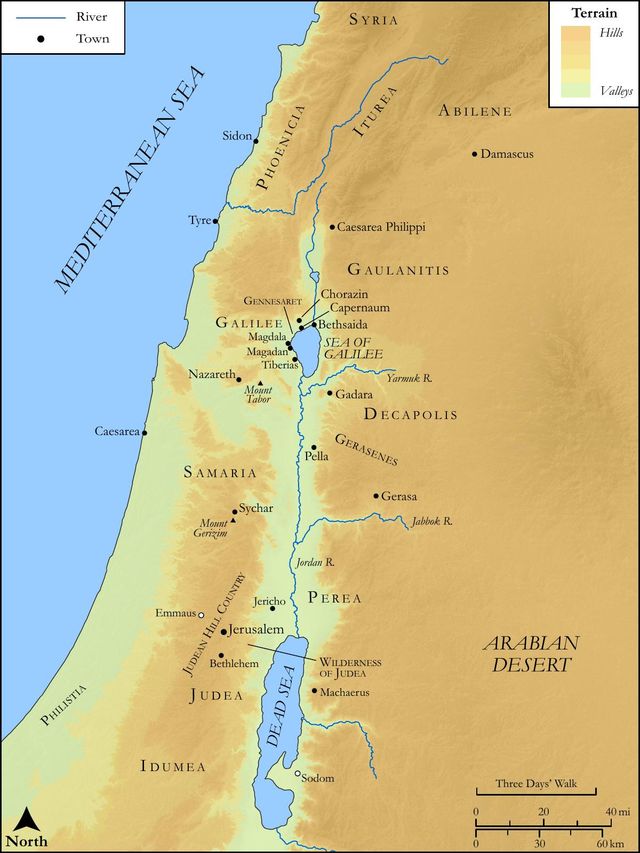
Capernaum, situated on the Sea of Galilee, served as Jesus's primary base of operations during His Galilean ministry. In first-century Jewish thought, there was often a strong correlation perceived between sin and sickness, where physical ailments were frequently viewed as a direct consequence of sin (though Jesus later challenges this simplistic view in John 9:1-3). Against this backdrop, Jesus's declaration of sin forgiveness before physical healing was deeply provocative. Forgiveness of sins was considered an exclusive prerogative of God, and any human claiming such authority would be seen as blaspheming. The presence of scribes, who were experts in Mosaic Law and Jewish tradition, underscores the theological weight of Jesus's actions and words, as they would be the first to recognize and challenge what they perceived as an affront to divine authority.
Key Themes
ShowHideThis verse powerfully introduces several key themes central to Matthew's Gospel and Jesus's ministry. Foremost is the theme of Jesus's Divine Authority, particularly His power to forgive sins, a claim reserved for God alone. This immediately establishes Him as more than a mere prophet or healer. Second, the Power of Faith is profoundly emphasized, not just the faith of the paralytic, but the active, persistent, and intercessory faith of his friends, which Jesus "seeing" prompts His initial response. This highlights the importance of communal support and belief in bringing individuals to Christ. Lastly, the theme of Holistic Salvation emerges, where Jesus addresses the man's spiritual need (forgiveness) before his physical need (healing). This demonstrates that Jesus's mission encompasses the restoration of the whole person, prioritizing the eternal over the temporal, a concept echoed throughout the Gospels, such as in Matthew 6:33.
Exposition and Analysis
ShowHideKey Word Analysis
ShowHideA primary verb meaning to see, literally or figuratively; by implication, to know. Here, it signifies Jesus's perceptive understanding and recognition of the genuine, active faith demonstrated by the paralytic and his friends. It's not merely a glance but an insightful discernment of their inner conviction and earnest desire.
Meaning persuasion, credence, or moral conviction, especially reliance upon Christ for salvation. In this context, it refers to the deep trust and confidence that the paralytic and his friends had in Jesus's ability and willingness to intervene. It was a faith that spurred them to extraordinary action, overcoming obstacles to bring the man into Jesus's presence.
Meaning to send forth, to forgive, forsake, or remit. The form used here (perfect passive indicative) implies a completed action with ongoing results, signifying a divine declaration of absolution that is immediate, definitive, and eternally effective. Jesus's use of this word underscores His authority to grant full and lasting pardon for sins.
Verse Breakdown
ShowHide"And, behold, they brought to him a man sick of the palsy, lying on a bed"
This clause sets the scene, introducing the central figure of the paralytic and highlighting the effort of those who brought him. The phrase "behold" (G2400, idoú) draws immediate attention to the significance of the event about to unfold, emphasizing its dramatic and miraculous nature. The detail of the man "lying on a bed" underscores his complete helplessness and dependence, making the subsequent healing all the more profound.
"and Jesus seeing their faith"
This is a pivotal phrase, revealing the catalyst for Jesus's action. It's not the man's suffering alone, but the active, visible faith of the group (the paralytic and his friends) that moves Jesus. This highlights the power of corporate faith and intercession, signaling that Jesus responds to genuine belief and earnest seeking.
"said unto the sick of the palsy; "Son, be of good cheer; thy sins be forgiven thee.""
This is the heart of the verse, where Jesus's divine authority is boldly asserted. His tender address, "Son," conveys compassion and intimacy, while "be of good cheer" (G2293, tharséō) is an encouragement to take courage and hope. Most significantly, Jesus's declaration, "thy sins be forgiven thee," is a direct claim to divine prerogative, immediately challenging the religious understanding of the scribes present and prioritizing the man's spiritual condition over his physical one.
Literary Devices
ShowHideMatthew 9:2 employs several powerful Literary Devices. The use of Foreshadowing is evident, as Jesus's declaration of sin forgiveness immediately sets the stage for the controversy that follows in Matthew 9:3, hinting at the deeper theological implications of His ministry and the opposition He would face. There is a profound Irony in Jesus's initial response: the physically paralyzed man, whose immediate need appears to be healing, first receives spiritual liberation. This subverts expectations and underscores Jesus's priority of addressing the root spiritual sickness of humanity. The Symbolism of the bed is also potent, representing the man's utter helplessness and confinement, which Jesus will later command him to take up, symbolizing complete restoration and freedom. The phrase "behold" (Greek idoú) functions as an Exclamatory Interjection, drawing the reader's attention to the dramatic and significant nature of the event, inviting them to witness a divine intervention.
Theological and Thematic Connections
ShowHideThis passage is foundational for understanding Jesus's identity and mission. By claiming the authority to forgive sins, Jesus implicitly declares His deity, stepping into a role reserved exclusively for God in Jewish theology. This act transcends mere physical healing, addressing the deepest human need—reconciliation with God. It reveals that Jesus's primary concern is not merely alleviating temporal suffering but offering eternal salvation, a holistic restoration that begins with spiritual cleansing. The collective faith of the friends also underscores the New Testament theme of intercession and the power of community in bringing individuals to Christ, demonstrating that faith is not always a solitary endeavor.
Reflection and Application
ShowHideMatthew 9:2 offers profound insights for contemporary faith and life. It challenges us to consider Jesus's priorities: while physical ailments are real and distressing, the forgiveness of sins addresses our deepest, most eternal need. This passage encourages us to bring our spiritual burdens, our guilt, and our shame to Jesus with absolute confidence, knowing that He possesses the ultimate authority to grant complete absolution. Furthermore, it highlights the transformative power of a faith community. Just as the friends went to extraordinary lengths to bring the paralytic to Jesus, we are called to be agents of intercession and compassion, actively bringing others to the Savior, whether through prayer, evangelism, or practical acts of love. Our faith should not be passive but should compel us to action on behalf of those in need, trusting in Jesus's power to heal both body and soul.
Questions for Reflection
ShowHideFAQ
ShowHideWhy did Jesus forgive the man's sins before healing his physical paralysis?
ShowHideJesus's decision to forgive the man's sins first was a profound theological statement. In Jewish thought, only God could forgive sins. By making this declaration, Jesus implicitly claimed divine authority, which immediately sparked controversy among the scribes present (Matthew 9:3). He was prioritizing the man's eternal spiritual condition over his temporal physical one, demonstrating that the deepest human need is reconciliation with God. The subsequent physical healing then served as tangible proof of His unseen spiritual authority, answering the unspoken question of whether He truly had the power to forgive. This act reveals Jesus's mission to offer holistic salvation, addressing the root cause of humanity's brokenness.
What kind of "faith" did Jesus see, and why was it so significant?
ShowHideJesus "seeing their faith" refers to the active, demonstrable faith of both the paralytic and, crucially, his friends. This wasn't a passive belief but a faith that spurred them to extraordinary action. As detailed in the parallel accounts (Mark 2:4 and Luke 5:19), they overcame significant obstacles, even lowering the man through a roof, to bring him into Jesus's presence. This collective, persistent, and intercessory faith was a powerful testament to their conviction in Jesus's ability to heal and save. It highlights that Jesus responds to genuine, active trust, and underscores the vital role of community in bringing others to Christ.
Does this passage teach that all sickness is a direct result of sin?
ShowHideNo, this passage does not teach that all sickness is a direct result of personal sin. While there was a common cultural perception in Jesus's time that linked sin and suffering, Jesus Himself later challenged this simplistic view (e.g., in John 9:1-3). In this specific instance, Jesus addresses the man's sins first to assert His divine authority to forgive, a claim that was more radical than merely performing a physical healing. He demonstrates that He has power over both spiritual and physical ailments, but He does not establish a universal rule that all illness stems from individual transgression. Rather, He shows His compassion and power to deal with the totality of human brokenness, both physical and spiritual.
Christ-Centered Fulfillment
ShowHideMatthew 9:2 stands as a profound Christ-centered declaration, revealing Jesus not merely as a miracle worker but as the divine Son of God who possesses ultimate authority over sin. When Jesus declares, "thy sins be forgiven thee," He is exercising a prerogative belonging to God alone, thereby asserting His own deity. This act foreshadows His ultimate mission: to offer true and lasting forgiveness through His atoning sacrifice on the cross. The forgiveness granted here is a glimpse into the new covenant established by Christ's blood, where redemption and the remission of sins are freely offered to all who believe. As Colossians 1:13-14 proclaims, "He has delivered us from the domain of darkness and transferred us to the kingdom of his beloved Son, in whom we have redemption, the forgiveness of sins." Jesus, the Lamb of God, came to take away the sin of the world (John 1:29), and His declaration in Matthew 9:2 is a powerful demonstration of that saving power, ultimately fulfilled in His death and resurrection, through which all who confess their sins can find true and complete absolution (1 John 1:9).