


Matthew 9:8
Bible text: King James Version (1769 Blayney text) · Public domain
Bible text: Berean Standard Bible · Public domain
Bible text: American Standard Version (1901) · Public domain
Bible text: World English Bible, Messianic edition · Public domain
Bible text: Geneva Bible (1599) · Public domain
Bible text: Young's Literal Translation · Public domain
- ἰδόντεςidontesHaving seenG1492V-2AAP-NPMVerb 2nd Aorist Active Participle Nominative Plural Masculine
- δὲdenowG1161CONJConjunction
- οἱhoitheG3588T-NPMDefinite article Nominative Plural Masculine
- ὄχλοιochloicrowdsG3793N-NPMNoun Nominative Plural Masculine
- ἐφοβήθησανephobēthēsanreveredG5399V-AOI-3PVerb Aorist Passive Deponent Indicative 3rd Plural
- καὶkaiandG2532CONJConjunction
- ἐδόξασανedoxasanglorifiedG1392V-AAI-3PVerb Aorist Active Indicative 3rd Plural
- τὸνton<the>G3588T-ASMDefinite article Accusative Singular Masculine
- θεὸνtheonGodG2316N-ASM-TNoun Accusative Singular Masculine Title
- τὸνtonthe [One]G3588T-ASMDefinite article Accusative Singular Masculine
- δόνταdontahaving givenG1325V-2AAP-ASMVerb 2nd Aorist Active Participle Accusative Singular Masculine
- ἐξουσίανexousianauthorityG1849N-ASFNoun Accusative Singular Feminine
- τοιαύτηνtoiautēnsuchG5108D-ASFDemonstrative pronoun Accusative Singular Feminine
- τοῖςtois<the>G3588T-DPMDefinite article Dative Plural Masculine
- ἀνθρώποιςanthrōpoisto menG444N-DPMNoun Dative Plural Masculine
English is a literal word-by-word gloss of the Greek, not the KJV's wording. Why?
This is the original text the KJV's translators worked from — each Greek word with its own literal English meaning in this verse, prepared by scholars at Tyndale House, Cambridge. The KJV translates whole sentences, not word by word, so its wording differs: one Greek word can become several English words, and the KJV may choose “charity” where the gloss reads “love”. Both are faithful — they answer different questions. For the KJV's own rendering, switch to the KJV text.
Details
See on the biblical-era maps
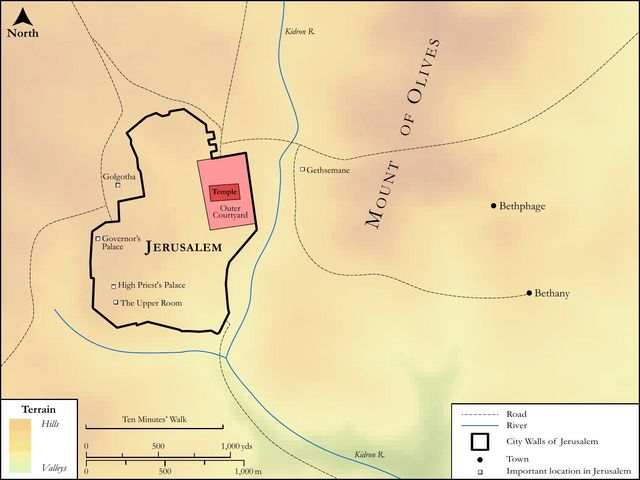
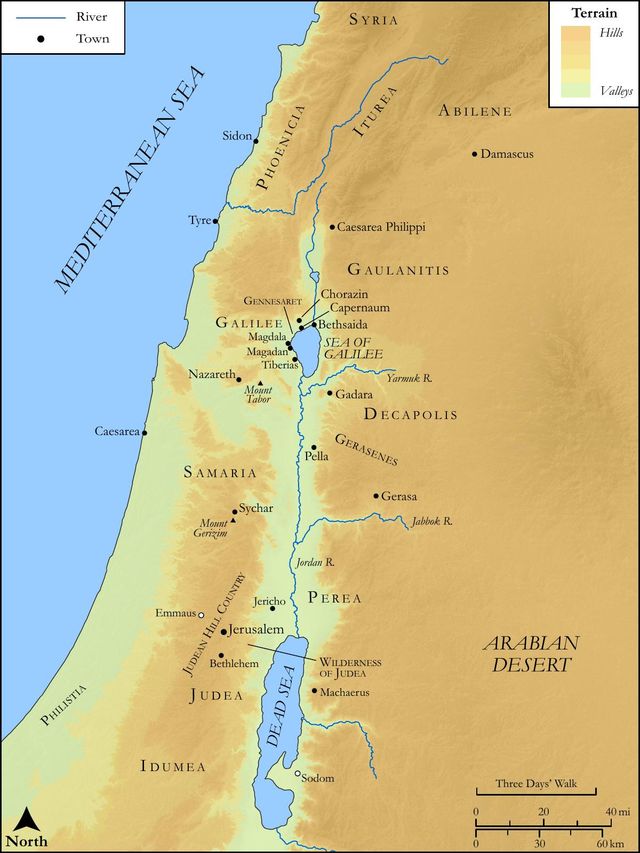
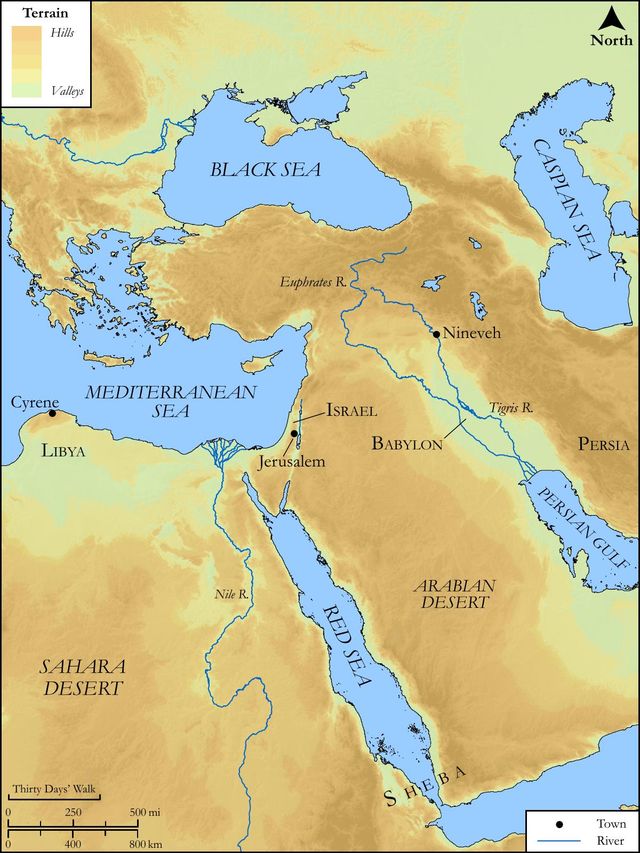
Study this verse
Public-domain commentary
Matthew Henry
From his Commentary on the Whole Bible. Henry comments on passages, not single verses — this entry covers Matthew 9:1–8. His four-level outline is real structure in the source text, so it is rendered as structure.
The first words of this chapter oblige us to look back to the close of that which precedes it, where we find the Gadarenes so resenting the loss of their swine, that they were disgusted with Christ's company, and besought him to depart out of their coasts. Now here it follows, He entered into a ship, and passed over. They bid him begone, and he took them at their word, and we never read that he came into their coasts again. Now here observe, 1. His justice - that he left them. Note, Christ will not tarry long where he is not welcome. In righteous judgment, he forsakes those places and persons that are weary of him, but abides with those that covet and court his stay. If the unbeliever will depart from Christ, let him depart; it is at his peril, Co1 7:15. 2. His patience - that he did not leave some destroying judgment behind him, to punish them, as they deserved, for their contempt and contumacy. How easily, how justly, might he have sent them after their swine, who were already so much under the devil's power. The provocation, indeed, was very great: but he put it up, and passed it by; and, without any angry resentments or upbraidings, he entered into a ship, and passed over. This was the day of his patience; he came not to destroy men's lives, but to save them; not to kill, but to cure. Spiritual judgments agree more with the constitution of gospel times; yet some observe, that in those bloody wars which the Romans made upon the Jews, which began not many years after this, they first besieged the town of Gadara, where these Gadarenes dwelt. Note, Those that drive Christ from them, draw all miseries upon them. Woe unto us, if God depart from us.
He came into his own city, Capernaum, the principal place of his residence at present (Mar 2:1), and therefore called his own city. He had himself testified, that a prophet it least honoured in his own country and city, yet thither he came; for he sought not his own honour; but, being in a state of humiliation, he was content to be despised of the people. At Capernaum all the circumstances recorded in this chapter happened, and are, therefore, put together here, though, in the harmony of the evangelists, other events intervened. When the Gadarenes desired Christ to depart, they of Capernaum received him. If Christ be affronted by some, there are others in whom he will be glorious; if one will not, another will.
Now the first occurrence, after Christ's return to Capernaum, as recorded in these verses, was the cure of the man sick of the palsy. In which we may observe,
I.The faith of his friends in bringing him to Christ.
His distemper was such, that he could not come to Christ himself, but as he was carried. Note, Even the halt and the lame may be brought to Christ, and they shall not be rejected by him. If we do as well as we can, he will accept of us. Christ had an eye to their faith. Little children cannot go to Christ themselves, but he will have an eye to the faith of those that bring them, and it shall not be in vain. Jesus saw their faith, the faith of the paralytic himself, as well as of them that brought him; Jesus saw the habit of faith, though his distemper, perhaps, impaired his intellect, and obstructed the actings of it. Now their faith was,
1.A strong faith; they firmly believed that Jesus Christ both could and would heal him; else they would not have brought the sick man to him so publicly, and through so much difficulty.
2.A humble faith; though the sick man was unable to stir a step, they would not ask Christ to make him a visit, but brought him to attend on Christ. It is fitter than we should wait on Christ, than he on us.
3.An active faith: in the belief of Christ's power and goodness, they brought the sick man to him, lying on a bed, which could not be done without a deal of pains. Note, A strong faith regards no obstacles in pressing after Christ.
II.The favour of Christ, in what he said to him; Son, be of good cheer, thy sins be forgiven thee.
This was a sovereign cordial to a sick man, and was enough to make all his bed in his sickness; and to make it easy to him. We read not of any thing said to Christ; probably the poor sick man could not speak for himself, and they that brought him chose rather to speak by actions than words; they set him before Christ; that was enough. Note, It is not in vain to present ourselves and our friends to Christ, as the objects of his pity. Misery cries as well as sin, and mercy is no less quick of hearing than justice. Here is, in what Christ said,
1.A kind compellation; Son. Note, Exhortations and consolations to the afflicted speak to them as to sons, for afflictions are fatherly discipline, Heb 12:5.
2.A gracious encouragement; "Be of good cheer. Have a good heart on it; cheer up thy spirits." Probably the poor man, when let down among them all in his bed, was put out of countenance, was afraid of a rebuke for being brought in so rudely: but Christ does not stand upon ceremony; he bids him be of good cheer; all would be well, he should not be laid before Christ in vain. Christ bids him be of good cheer; and then cures him. He would have those to whom he deals his gifts, to be cheerful in seeking him, and in trusting in him; to be of good courage.
3.A good reason for that encouragement; Thy sins are forgiven thee. Now this may be considered, (1.) as an introduction to the cure of his bodily distemper; "Thy sins are pardoned, and therefore thou shalt be healed." Note, As sin is the cause of sickness, so the remission of sin is the comfort of recovery from sickness; not but that sin may be pardoned, and yet the sickness not removed; not but that the sickness may be removed, and yet the sin not pardoned: but if we have the comfort of our reconciliation to God, with the comfort of our recovery from sickness, this makes it a mercy indeed to us, as to Hezekiah, Isa 38:17. Or, (2.) As a reason of the command to be of good cheer, whether he were cured of his disease or not; "Though I should not heal thee, wilt thou not say thou hast not sought in vain, if I assure thee that thy sins are pardoned; and wilt thou not look upon that as a sufficient ground of comfort, though thou shouldst continue sick of the palsy?" Note, They who, through grace, have some evidence of the forgiveness of their sins, have reasons to be of good cheer, whatever outward troubles or afflictions they are under; see Isa 33:24.
III.The cavil of the scribes at that which Christ said (Mat 9:3); They said within themselves, in their hearts, among themselves, in their secret whisperings, This man blasphemeth. See how the greatest instance of heaven's power and grace is branded with the blackest note of hell's enmity; Christ's pardoning sin is termed blasphemy; nor had it been less, if he had not had commission from God for it. They, therefore, are guilty of blasphemy, that have no such commission, and yet pretend to pardon sin.
IV.The conviction which Christ gave them of the unreasonableness of this cavil, before he proceeded.
1.He charged them with it. Though they did but say it within themselves, he knew their thoughts. Note, Our Lord Jesus has the perfect knowledge of all that we say within ourselves. Thoughts are secret and sudden, yet naked and open before Christ, the eternal Word (Heb 4:12, Heb 4:13), and he understands them afar off, Psa 139:2. He could say to them (which no mere man could), Wherefore think ye evil in your hearts? Note, There is a great deal of evil in sinful thoughts, which is very offensive to the Lord Jesus. He being the Sovereign of the heart, sinful thoughts invade his right, and disturb his possession; therefore he takes notice of them, and is much displeased with them. In them lies the root of bitterness, Gen 6:5. The sins that begin and end in the heart, and go no further, are as dangerous as any other.
2.He argued them out of it, Mat 9:5, Mat 9:6. Where observe,
(1.)How he asserts his authority in the kingdom of grace. He undertakes to make out, that the Son of man, the Mediator, has power on earth to forgive sins; for therefore the Father has committed all judgment to the Son, and has given him this authority, because he is the Son of man, Joh 5:22, Joh 5:27. If he has power to give eternal life, as he certainly has (Joh 17:2), he must have power to forgive sin; for guilt is a bar that must be removed, or we can never get to heaven. What an encouragement is this to poor sinners to repent, that the power of pardoning sin is put into the hands of the Son of man, who is bone of our bone! And if he had this power on earth, much more now that he is exalted to the Father's right hand, to give repentance and remission of sins, and so to be both a Prince and a Saviour, Act 5:31.
(2.)How he proves it, by his power in the kingdom of nature; his power to cure diseases. Is it not as easy to say, Thy sins are forgiven thee, as to say, Arise and walk? He that can cure the disease, whether declaratively as a Prophet, or authoritatively as God, can, in like manner, forgive the sin. Now,
[1.]This is a general argument to prove that Christ had a divine mission. His miracles, especially his miraculous cures, confirm what he said of himself, that he was the Son of God; the power that appeared in his cures proved him sent of God; and the pity that appeared in them proved him sent of God to heal and save. The God of truth would not set his seal to a lie.
[2.]It had a particular cogency in this case. The palsy was but a symptom of the disease of sin; now he made it to appear, that he could effectually cure the original disease, by the immediate removal of that symptom; so close a connection was there between the sin and the sickness. He that had power to remove the punishment, no doubt, had power to remit the sin. The scribes stood much upon a legal righteousness, and placed their confidence in that, and made no great matter of the forgiveness of sin, the doctrine upon which Christ hereby designed to put honour, and to show that his great errand to the world was to save his people from their sins.
V.The immediate cure of the sick man.
Christ turned from disputing with them, and spake healing to him. The most necessary arguings must not divert us from doing the good that our hand finds to do. He saith to the sick of the palsy, Arise, take up thy bed, and go to thine house; and a healing, quickening, strengthening power accompanied this word (Mat 9:7): he arose and departed to his house. Now,
1.Christ bid him take up his bed, to show that he was perfectly cured, and that not only he had no more occasion to be carried upon his bed, but that he had strength to carry it.
2.He sent him to his house, to be a blessing to his family, where he had been so long a burden; and did not take him along with him for a show, which those would do in such a case who seek the honour that comes from men.
VI.The impression which this made upon the multitude (Mat 9:8); they marvelled, and glorified God.
Note, All our wonder should help to enlarge our hearts in glorifying God, who alone does marvellous things. They glorified God for what he had done for this poor man. Note, Others' mercies should be our praises, and we should give him thanks for them, for we are members one of another. Though few of this multitude were so convinced, as to be brought to believe in Christ, and to follow him, yet they admired him, not as God, or the Son of God, but as a man to whom God had given such power. Note, God must be glorified in all the power that is given to men to do good. For all power is originally his; it is in him, as the Fountain, in men, as the cisterns.
Historical interpretation
Nine Centuries of Reception
11 surviving comments on this verse. Each one is dated, so this reads as a timeline rather than a list.
Select a marker to jump to its quote. Markers stagger vertically where authors wrote within a few decades of each other.
Admiration and not fear had to accomplish this work, but even now the order of the mystery remains. To add a glimpse of the future to the truth of the present, the crowds fear the Lord’s words and actions. It is frightful to face death without having one’s sins forgiven by Christ, for no one returns to the eternal home unless forgiveness of sins has been granted. “And they honored God who had given so much power to humans.” Everything is concluded in proper order, and with the cessation of desperate fear, honor is rendered to God for giving so much power to humans. But this was due to Christ alone, to whom it was normal to share the Father’s very essence. No wonder then that he could do these things—for the power of God is not limited. Otherwise praise would have come from the man healed and not from the many. But the reason here for honor offered to God is this: Power was given through God’s Word to humanity for the remission of sins, the resurrection of bodies and the return to heaven.
Mystically; When driven out of Judæa, He returns into His own city; the city of God is the people of the faithful; into this He entered by a boat, that is, the Church.
In this paralytic the whole Gentile world is offered for healing, he is therefore brought by the ministration of Angels; he is called Son, because he is God's work; the sins of his soul which the Law could not remit are remitted him; for faith only justifies. Lastly, he shows the power of the resurrection, by taking up his bed, teaching that all sickness shall then be no more found in the body.
It is a very fearful thing to be seized by death while the sins are yet unforgiven by Christ; for there is no way to the heavenly house for him whose sins have not been forgiven. But when this fear is removed, honour is rendered to God, who by His word has in this way given power to men, of forgiveness of sins, of resurrection of the body, and of return to Heaven.
"For when the multitudes saw it, they marvelled, and glorified God, which had given such power unto men:" for the flesh was an offense unto them. But He did not rebuke them, but proceeds by His works to arouse them, and exalt their thoughts. Since for the time it was no small thing for Him to be thought greater than all men, as having come from God. For had they well established these things in their own minds, going on orderly they would have known, that He was even the Son of God. But they did not retain these things clearly, wherefore neither were they able to approach Him. For they said again, "This man is not of God;" "how is this man of God?" And they were continually harping on these things, putting them forward as cloaks for their own passions.
(Hom. xxix.) Christ had above shown His excellent power by teaching, when he taught them as one having authority; in the leper, when He said, I will, be thou clean; by the centurion, who said to Him, Speak the word, and my servant shall be healed; by the sea which He calmed by a word; by the dæmons who confessed Him; now again, in another and greater way, He compels His enemies to confess the equality of His honour with the Father; to this end it proceeds, And Jesus entered into a ship, and passed over, and came into his own city. He entered a boat to cross over, who could have crossed the sea on foot; for He would not be always working miracles, that He might not take away the reality of His incarnation.
By his own city is here meant Capharnaum. For one town, to wit, Bethlehem, had received Him to be born there; another had brought Him up, to wit, Nazareth; and a third received Him to dwell there continually, namely, Capharnaum.
This paralytic is not the same as he in John. For he lay by the pool, this in Capharnaum; he had none to assist him, this was borne on a bed.
He does not universally demand faith of the sick, as, for example, when they are mad, or from any other sore sickness are not in possession of their minds; as it is here, seeing their faith;
Seeing then that they showed so great faith, He also shows His excellent power; with full power forgiving sin, as it follows, He said to the paralytic, Be of good courage, son, thy sins are forgiven thee.
Or, we may suppose even the sick man to have had faith; otherwise he would not have suffered himself to be let down through the roof as the other Evangelist relates.
The Scribes in their desire to spread an ill report of Him, against their will made that which was done be more widely known; Christ using their envy to make known the miracle. For this is of His surpassing wisdom to manifest His deeds through His enemies; whence it follows, Behold, some of the Scribes said among themselves, This man blasphemeth.
He did not indeed contradict their suspicions so far as they had supposed Him to have spoken as God. For had He not been equal to God the Father, it would have behoved Him to say, I am far from this power, that of forgiving sin. But He confirms the contrary of this, by His words and His miracle; Whether is it easier to say, Thy sins are forgiven thee, or to say, Arise, and walk? By how much the soul is better than the body, by so much is it a greater thing to forgive sin than to heal the body. But forasmuch as the one may be seen with the eyes, but the other is not sensibly perceived, He does the lesser miracle which is the more evident, to be a proof of the greater miracle which is imperceptible.
Above, He said to the paralytic, Thy sins are forgiven thee, not, I forgive thee thy sins; but now when the Scribes made resistance, He shows the greatness of His power by saying, The Son of Man hath power on earth to forgive sins. And to show that He was equal to the Father, He said not that the Son of Man needed any to forgive sins, but that He hath power.
This command He added, that it might be seen there was no delusion in the miracle; so it follows to establish the reality of the cure, And he arose, and went away to his own house. But they that stood by yet grovel on the earth, whence it follows, But the multitude seeing it were afraid, and glorified God, who had bestowed such power among men. For had they rightly considered among themselves, they would have acknowledged Him to be the Son of God. Meanwhile it was no little matter to esteem Him as one greater than men, and to have come from God.
Or; This city may be no other than Nazareth, whence He was called a Nazarene.
On a bed, because he could not walk.
not the sick man's, but theirs that bare him.
O wonderful humility! This man feeble and despised, crippled in every limb, He addresses as son. The Jewish Priests did not deign to touch him. Even therefore His son, because his sins were forgiven him. Hence we may learn that diseases are often the punishment of sin; and therefore perhaps his sins are forgiven him, that when the cause of his disease has been first removed, health may be restored.
We read in prophecy, I am he that blolleth out thy transgressions; (Is. 43:25.) so the Scribes regarding Him as a man, and not understanding the words of God, charged Him with blasphemy. But He seeing their thoughts thus showed Himself to be God, Who alone knoweth the heart; and thus, as it were, said, By the same power and prerogative by which I see your thoughts, I can forgive men their sins. Learn from your own experience what the paralytic has obtained. When Jesus perceived their thoughts, he said, Why think ye evil in your hearts?
Whether or no his sins were forgiven He alone could know who forgave; but whether he could rise and walk, not only himself but they that looked on could judge of; but the power that heals, whether soul or body, is the same. And as there is a great difference between saying and doing, the outward sign is given that the spiritual effect may be proved; But that ye may know that the Son of Man hath power on earth to forgive sins.
Figuratively; the soul sick in the body, its powers palsied, is brought by the perfect doctor to the Lord to be healed. For every one when sick, ought to engage some to pray for his recovery, through whom the halting footsteps of our acts may be reformed by the healing power of the heavenly word. These are mental monitors, who raise the soul of the hearer to higher things, although sick and weak in the outward body.
(Verse 7, 8.) Rise, take up your bed, and go to your house. And he rose and went to his house. And when the crowds saw it, they were afraid and glorified God, who had given such authority to men. And if the paralyzed man rises, if he recovers his former strength, he carries his bed on which he lay before, and carries it into his house of virtues.
(Serm. 50.) The Creator of all things, the Lord of the world, when He had for our sakes straitened Himself in the bonds of our flesh, began to have His own country as a man, began to be a citizen of Judæa, and to have parents, though Himself the parent of all, that affection might attach those whom fear had separated.
(ubi sup.) Of how great power with God must a man's own faith be, when that of others here availed to heal a man both within and without. The paralytic hears his pardon pronounced, in silence uttering no thanks, for he was more anxious for the cure of his body than his soul. Christ therefore with good reason accepts the faith of those that bare him, rather than his own hardness of heart.
(ubi sup.) That that which had been proof of his sickness, should now become proof of his recovered health. And go to thy house, that having been healed by Christian faith, you may not die in the faithlessness of the Jews.
(ubi sup.) Christ has no need of the vessel, but the vessel of Christ; for without heavenly pilotage the bark of the Church cannot pass over the sea of the world to the heavenly harbour.
(ubi sup.) The Lord requires not in this world the will of those who are without understanding, but looks to the faith of others; as the physician does not consult the wishes of the patient, when his malady requires other things.
(Mor. xxiii. 24.) Or by the bed is denoted the pleasure of the body. He is commanded now he is made whole to bear that on which he had lain when sick, because every man who still takes pleasure in vice is laid as sick in carnal delights; but when made whole he bears this because he now endures the wantonness of that flesh in whose desires he had before reposed.
His rising up is the drawing off the soul from carnal lusts; his taking up his bed is the raising the flesh from earthly desires to spiritual pleasures; his going to his house is his returning to Paradise, or to internal watchfulness of himself against sin.
Jesus commanded him to carry his bed so that the event would not appear to have been imaginary, and also, so that the multitudes would see the miracle. For they thought that Jesus, Who is greater than all, was only a man.
(ap. Anselm.) These words That ye may know, may be either Christ's words, or the Evangelist's words. As though the Evangelist had said, They doubted whether He could remit sins, But that ye may know that the Son of Man hath the power to remit sins, he saith to the paralytic. If they are the words of Christ, the connection will be as follows; You doubt that I have power to remit sins, But that ye may know that the Son of Man hath power to remit sins—the sentence is imperfect, but the action supplies the place of the consequent clause, he saith to the paralytic, Rise, take up thy bed.
Continue studying Matthew 9:8 across the web’s major study libraries — every link below opens this exact verse, chapter, or book on the destination site.
Read & Compare
 BibleGatewayThis verse in more than 200 translations and 70 languages.
 Bible.comThe YouVersion reader — hundreds of translations, reading plans, and highlights.
 ESV.orgCrossway's official English Standard Version reader.
 NET BibleThe NET translation with 60,000+ translators' notes on every rendering decision.
 STEP BibleTyndale House's free study tool — original text, vocabulary, and scholarly resources.
 BibliaLogos Bible Software's free web reader.
 USCCBThe New American Bible (Revised Edition) with the U.S. bishops' study notes.
Commentaries
 BibleHub CommentariesDozens of classic commentaries on this verse, gathered on one page.
 StudyLightMore than 100 commentary sets — the largest collection on the web.
 BibleRefPlain-English commentary on what this verse means, verse by verse.
 Enduring WordDavid Guzik's free commentary on this chapter, widely used by Bible teachers.
 Bible Study ToolsVerse commentary alongside Greek and Hebrew study aids.
Original Language & Research
- BibleHub InterlinearThe verse word by word — original language, transliteration, and English.
- BibleHub LexiconEvery word's original-language definition and Strong's entry.
 Blue Letter BibleDeep-study tools — Strong's numbers, concordance, and word studies.
 CNTR CollationThe earliest Greek manuscripts of this verse, collated letter by letter.
Sermons, Hymns & Audio


TrulyRandomVerse is not affiliated with these sites and doesn’t control their content. They’re linked because they’re genuinely useful.
Summary
Following Jesus' authoritative declaration of forgiveness and subsequent miraculous healing of a paralytic, the vast crowds who witnessed this extraordinary event were overwhelmed with awe and astonishment. Their immediate response was to marvel at the divine display and to offer praise and glory to God, recognizing that He had bestowed such unparalleled authority and power upon humanity, specifically through the ministry of Jesus.
Context
ShowHideLiterary Context
Matthew 9:8 concludes the narrative of Jesus' healing of the paralytic man in Capernaum, which begins in Matthew 9:1. This miracle is pivotal because Jesus first declares the man's sins forgiven (Matthew 9:2), a claim that immediately provokes the scribes to accuse Him of blasphemy (Matthew 9:3). Jesus then demonstrates His authority to forgive sins by physically healing the man, proving His divine prerogative (Matthew 9:6-7). Matthew 9:8, therefore, serves as the climactic reaction of the general populace, contrasting sharply with the skepticism of the religious leaders. It is part of a larger section (Matthew 8-9) where Matthew systematically presents a series of Jesus' miracles, demonstrating His comprehensive authority over sickness, nature, demons, and even sin, culminating in the crowds' recognition of God's power.
Historical & Cultural Context
The setting is Capernaum, a significant center of Jesus' early ministry in Galilee. In first-century Jewish society, illness, especially paralysis, was often associated with sin, and only God was believed to have the power to forgive sins and heal miraculously. Rabbis and scribes had no such authority; their role was to interpret the Law. Therefore, Jesus' claim to forgive sins was a profound challenge to their understanding of divine authority and their own religious hierarchy. The concept of "power" (Greek: exousia) given "unto men" would have been particularly striking. While prophets performed miracles, Jesus' unique claim to forgive sins and His consistent demonstration of authority over all aspects of life and death set Him apart. The crowd's reaction reflects a genuine, unmediated response to a divine intervention, distinct from the theological and political concerns of the religious elite.
Key Themes
ShowHideThis verse powerfully contributes to several key themes within Matthew's Gospel. Foremost is the authority of Jesus (Greek: exousia). While the crowd attributes the power to God given "unto men," the immediate context clearly points to Jesus as the unique "Son of Man" (Matthew 9:6) who wields this divine authority to forgive sins and heal. This foreshadows the comprehensive authority Jesus will claim after His resurrection, as seen in Matthew 28:18. Another central theme is the proper response to God's revelation. The multitudes' reaction of marveling and glorifying God stands as an example of awe and worship in the face of divine power, contrasting with the hardened hearts of the scribes. This highlights the theme of faith and understanding, where those open to God's work recognize His hand, leading to praise, while those resistant miss the true significance.
Exposition and Analysis
ShowHideKey Word Analysis
ShowHideRefers to a throng, the common people, often implying a large, undifferentiated crowd. In this context, it emphasizes the widespread public witness to Jesus' miracle, distinguishing their reaction from that of the religious leaders. Their collective response underscores the impact of Jesus' ministry on the general populace.
To wonder, to be astonished, or to admire. This word conveys a strong sense of awe and amazement, indicating that the event was perceived as truly extraordinary and beyond human capability. It suggests a profound emotional and spiritual impact on the observers.
This term signifies not merely physical strength or ability (dynamis), but authority, jurisdiction, the right to act, or delegated influence. The crowd recognized that what Jesus displayed was not just raw strength but a legitimate, divine prerogative, particularly the authority to forgive sins and command healing, which they understood as coming from God.
Verse Breakdown
ShowHide"But when the multitudes saw [it]"
This clause sets the scene, highlighting the immediate and widespread public observation of Jesus' miracle. The "it" refers to the healing of the paralytic man and the preceding declaration of sin forgiveness, which served as tangible proof of Jesus' divine authority. The conjunction "But" (G1161, dé) indicates a shift or continuation, here emphasizing the crowd's reaction in contrast to the scribes' earlier opposition.
"they marvelled"
This describes the initial, visceral reaction of the crowd. Their astonishment was profound, indicating that the event was clearly perceived as supernatural and beyond ordinary human explanation. It suggests a sense of awe and wonder at the visible display of divine power.
"and glorified God"
Beyond mere astonishment, the multitudes actively rendered praise and honor to God. They correctly attributed the source of the miracle and the authority displayed to the divine, recognizing that such acts could only originate from Him. This demonstrates a proper, reverent response to witnessing God's work.
"which had given such power unto men"
This final phrase explains the basis for their glorification. The crowd understood that the extraordinary authority (exousia) to forgive sins and heal was a divine bestowal. While they speak generally of "men," the immediate context makes it clear that they are specifically referring to Jesus, the one who just exercised this unique power. Their statement acknowledges God as the ultimate source of this unprecedented authority.
Literary Devices
ShowHideMatthew employs several literary devices in this verse. Narrative Description is evident as the verse concisely yet powerfully describes the collective reaction of the crowds. The Contrast between the crowd's response (marveling and glorifying God) and the scribes' earlier skepticism and accusation of blasphemy (Matthew 9:3) highlights differing spiritual perceptions of Jesus' identity and authority. There is also an element of Irony, as the common people, often less educated in theological nuances, grasp the divine origin of Jesus' power more readily than the religious experts. Finally, the phrase "such power unto men" can be seen as a form of Synecdoche, where "men" (plural) stands in for the singular "man," Jesus, who uniquely embodies and exercises this divine authority.
Theological and Thematic Connections
ShowHideMatthew 9:8 serves as a powerful theological statement about God's active involvement in human affairs through Jesus. The crowd's response affirms that true power and authority originate from God, and when God acts, it elicits a response of awe and worship. Their glorification of God, rather than merely the miracle worker, points to a profound theological understanding: all good and perfect gifts, including miraculous power, descend from the Father of lights. This verse underscores the divine nature of Jesus' ministry, even if the crowd's understanding of His full divine identity was still developing. It also highlights the theme of God's condescension, giving "such power unto men," which ultimately finds its fullest expression in the incarnation of Jesus, God manifest in the flesh, exercising divine prerogatives on earth.
Reflection and Application
ShowHideThe crowd's reaction in Matthew 9:8 provides a compelling example for believers today. When we encounter the manifest power of God—whether through answered prayer, transformative spiritual growth, miraculous healing, or the profound impact of the Gospel on lives—our natural and proper response should be one of profound marvel and heartfelt glorification of God. It reminds us to look beyond the immediate instrument or circumstance and attribute all true power and blessing to its divine source. This verse challenges us to cultivate a spirit of awe and wonder, resisting the temptation to become jaded or to take God's active presence for granted. It encourages us to be quick to acknowledge God's hand in extraordinary events and to give Him the praise and honor that are due His name, recognizing that all authority and power ultimately belong to Him and are exercised for His glory and our good.
Questions for Reflection
ShowHideFAQ
ShowHideWhy did the crowd say God "had given such power unto men" instead of specifically "unto Jesus"?
ShowHideThe crowd's statement reflects their immediate, awe-struck understanding within their existing theological framework. They recognized that such extraordinary authority (Greek: exousia) to forgive sins and heal could only come from God. While Jesus was clearly the one exercising this power, their phrasing "unto men" (plural) likely signifies that they saw Him as a divinely appointed representative of humanity, or perhaps a prophet, through whom God was now acting in an unprecedented way. It indicates a correct attribution of the power's source (God) but perhaps an incomplete understanding of Jesus' unique divine identity as the Son of God, which would become clearer through His later teachings, resurrection, and the full revelation of the New Testament. They understood that God was doing something new and powerful among them, through a human agent.
What is the difference between "power" (Greek: exousia) used here and other Greek words for power, like dynamis?
ShowHideThe Greek word used in Matthew 9:8 is exousia (G1849), which primarily means "authority," "privilege," or "the right to act." It denotes legitimate control or delegated influence. In contrast, dynamis (G1411) refers to inherent strength, ability, or miraculous power (from which we get "dynamite"). While Jesus certainly possessed dynamis (the ability to perform miracles), the crowd's use of exousia here is significant because Jesus' claim to forgive sins was a claim of divine authority and prerogative, not just raw strength. The physical healing served as proof of His exousia, His right to make such a profound claim. Thus, the crowd recognized that God had given Jesus the legitimate right and authority to perform these acts, not just the raw ability.
Christ-Centered Fulfillment
ShowHideWhile the crowd in Matthew 9:8 marvels and glorifies God for giving "such power unto men," the Christ-centered fulfillment reveals that this power is uniquely and fully embodied in Jesus Christ. He is not merely a man to whom power is given, but the Son of Man who possesses inherent divine authority. The miracle of healing the paralytic, particularly the prior declaration of sin forgiveness, unequivocally demonstrates Jesus' divine prerogative, a power that only God Himself could wield. This authority over sin and sickness foreshadows His ultimate victory over death and the grave. As the incarnate Word, Jesus is the very expression of God's power and authority among humanity (John 1:14). His resurrection and ascension confirm that all authority in heaven and on earth has been given to Him (Matthew 28:18), making Him the ultimate recipient and dispenser of God's power. Therefore, the crowd's glorification of God for giving "power unto men" is ultimately a glorification of God for sending His Son, Jesus, who is the full and final revelation of God's saving power and authority, through whom all things are reconciled to God (Colossians 1:19-20).