


Matthew 9:9
Bible text: King James Version (1769 Blayney text) · Public domain
Bible text: King James Version with Strong's numbers · Public domain
Bible text: Berean Standard Bible · Public domain
Bible text: American Standard Version (1901) · Public domain
Bible text: World English Bible, Messianic edition · Public domain
Bible text: Geneva Bible (1599) · Public domain
Bible text: Young's Literal Translation · Public domain
- ΚαὶKaiAndG2532CONJConjunction
- παράγωνparagōnpassing onG3855V-PAP-NSMVerb Present Active Participle Nominative Singular Masculine
- ὁho<the>G3588T-NSMDefinite article Nominative Singular Masculine
- ἸησοῦςIēsousJesusG2424N-NSM-PNoun Nominative Singular Masculine Individual
- ἐκεῖθενekeithenfrom thereG1564ADVAdverb
- εἶδενeidenHe sawG1492V-2AAI-3SVerb 2nd Aorist Active Indicative 3rd Singular
- ἄνθρωπονanthrōpona manG444N-ASMNoun Accusative Singular Masculine
- καθήμενονkathēmenonsittingG2521V-PNP-ASMVerb Present Middle Or Passive Deponent Participle Accusative Singular Masculine
- ἐπὶepiatG1909PREPPreposition
- τὸtotheG3588T-ASNDefinite article Accusative Singular Neuter
- τελώνιονtelōniontax boothG5058N-ASNNoun Accusative Singular Neuter
- ΜαθθαῖονMaththaionMatthewG3156N-ASM-PNoun Accusative Singular Masculine Individual
- λεγόμενονlegomenonnamedG3004V-PPP-ASMVerb Present Passive Participle Accusative Singular Masculine
- καὶkaiAndG2532CONJConjunction
- λέγειlegeiHe saysG3004V-PAI-3SVerb Present Active Indicative 3rd Singular
- αὐτῷ·autōto himG846P-DSMPersonal pronoun Dative Singular Masculine
- ἀκολούθειakoloutheido followG190V-PAM-2SVerb Present Active Imperative 2nd Singular
- μοιmoiMeG3165P-1DSPersonal pronoun Dative 1st Singular
- καὶkaiAndG2532CONJConjunction
- ἀναστὰςanastashaving arisenG450V-2AAP-NSMVerb 2nd Aorist Active Participle Nominative Singular Masculine
- ἠκολούθησενēkolouthēsenhe followedG190V-AAI-3SVerb Aorist Active Indicative 3rd Singular
- αὐτῷautōHimG846P-DSMPersonal pronoun Dative Singular Masculine
English is a literal word-by-word gloss of the Greek, not the KJV's wording. Why?
This is the original text the KJV's translators worked from — each Greek word with its own literal English meaning in this verse, prepared by scholars at Tyndale House, Cambridge. The KJV translates whole sentences, not word by word, so its wording differs: one Greek word can become several English words, and the KJV may choose “charity” where the gloss reads “love”. Both are faithful — they answer different questions. For the KJV's own rendering, switch to the KJV text.
Details
See on the biblical-era maps
Study this verse
Public-domain commentary
Matthew Henry
From his Commentary on the Whole Bible. Henry comments on passages, not single verses — this entry covers Matthew 9:9–13. His four-level outline is real structure in the source text, so it is rendered as structure.
In these verses we have an account of the grace and favour of Christ to poor publicans, particularly to Matthew. What he did to the bodies of people was to make way for a kind design upon their souls. Now observe here,
I.The call of Matthew, the penman of this gospel.
Mark and Luke call him Levi; it was ordinary for the same person to have two names: perhaps Matthew was the name he was most known by as a publican, and, therefore, in his humility, he called himself by that name, rather than by the more honourable name of Levi. Some think Christ gave him the name of Matthew when he called him to be an apostle; as Simon, he surnamed Peter. Matthew signifies, the gift of God, Ministers are God's gifts to the church; their ministry, and their ability for it, are God's gifts to them. Now observe,
1.The posture that Christ's call found Matthew in. He was sitting at the receipt of custom, for he was a publican, Luk 5:27. He was a custom-house officer at the port of Capernaum, or an exciseman, or collector of the land-tax. Now,
(1.)He was in his calling, as the rest of them whom Christ called, Mat 4:18. Note, As Satan chooses to come, with his temptations, to those that are idle, so Christ chooses to come, with his calls, to those that are employed. But,
(2.)It was a calling of ill fame among serious people; because it was attended with so much corruption and temptation, and there were so few in that business that were honest men. Matthew himself owns what he was before his conversion, as does St. Paul (Ti1 1:13), that the grace of Christ in calling him might be the more magnified, and to show, that God has his remnant among all sorts of people. None can justify themselves in their unbelief, by their calling in the world; for there is no sinful calling, but some have been saved out of it, and no lawful calling, but some have been saved in it.
2.The preventing power of this call. We find not that Matthew looked after Christ, or had any inclination to follow him, though some of his kindred were already disciples of Christ, but Christ prevented him with the blessings of his goodness. He is found of those that seek him not. Christ spoke first; we have not chosen him, but he hath chosen us. He said, Follow me; and the same divine, almighty power accompanied this word to convert Matthew, which attended that word (Mat 9:6), Arise and walk, to cure the man sick of the palsy. Note, A saving change is wrought in the soul by Christ as the Author, and his word as the means. His gospel is the power of God unto salvation, Rom 1:16. The call was effectual, for he came at the call; he arose, and followed him immediately; neither denied, nor deferred his obedience. The power of divine grace soon answers and overcomes all objections. Neither his commission for his place, nor his gains by it, could detain him, when Christ called him. He conferred not with flesh and blood, Gal 1:15, Gal 1:16. He quitted his post, and his hopes of preferment in that way; and, though we find the disciples that were fishers occasionally fishing again afterwards, we never find Matthew at the receipt of custom again.
II.Christ's converse with publicans and sinners upon this occasion; Christ called Matthew, to introduce himself into an acquaintance with the people of that profession. Jesus sat at meat in the house, Mat 9:10. The other evangelists tell us, that Matthew made a great feast, which the poor fishermen, when they were called, were not able to do. But when he comes to speak of this himself, he neither tells us that it was his own house, nor that it was a feast, but only that he sat at meat in the house; preserving the remembrance of Christ's favours to the publicans, rather than of the respect he had paid to Christ. Note, It well becomes us to speak sparingly of our own good deeds.
Now observe, 1. When Matthew invited Christ, he invited his disciples to come along with him. Note, They that welcome Christ, must welcome all that are his, for his sake, and let them have a room in their hearts. 2. He invited many publicans and sinners to meet him. This was the chief thing Matthew aimed at in this treat, that he might have an opportunity of bringing his old associates acquainted with Christ. He knew by experience what the grace of Christ could do, and would not despair concerning them. Note, They who are effectually brought to Christ themselves, cannot but be desirous that others also may be brought to him, and ambitious of contributing something towards it. True grace will not contentedly eat its morsels alone, but will invite others. When by the conversion of Matthew the fraternity was broken, presently his house was filled with publicans, and surely some of them will follow him, as he followed Christ. Thus did Andrew and Philip, Joh 1:41, Joh 1:45; Joh 4:29. See Jdg 14:9.
III.The displeasure of the Pharisees at this, Mat 9:11.
They cavilled at it; why eateth your Master with publicans and sinners? Here observe,
1.That Christ was quarrelled with. It was not the least of his sufferings, that he endured the contradiction of sinners against himself. None was more quarrelled with by men, than he that came to take up the great quarrel between God and man. Thus he denied himself the honour due to an incarnate Deity, which was to be justified in what he spake, and to have all he said readily subscribed to: for though he never spoke or did anything amiss, every thing he said and did was found fault with. Thus he taught us to expect and prepare for reproach, and to bear it patiently.
2.They that quarrelled with him were the Pharisees; a proud generation of men, conceited of themselves, and censorious of others; of the same temper with those in the prophet's time, who said, Stand by thyself, come not near me; I am holier than thou: they were very strict in avoiding sinners, but not in avoiding sin; none greater zealots than they for the form of godliness, nor greater enemies to the power of it. They were for keeping up the traditions of the elders to a nicety, and so propagating the same spirit that they were themselves governed by.
3.They brought their cavil, not to Christ himself; they had not the courage to face him with it, but to his disciples. The disciples were in the same company, but the quarrel is with the Master: for they would not have done it, if he had not; and they thought it worse in him who was a prophet, than in them; his dignity, they thought, should set him at a greater distance from such company than others. Being offended at the Master, they quarrel with the disciples. Note, It concerns Christians to be able to vindicate and justify Christ, and his doctrines and laws, and to be ready always to give an answer to those that ask them a reason of the hope that is in them, Pe1 3:15. While he is an Advocate for us in heaven, let us be advocates for him on earth, and make his reproach our own.
4.The complaint was his eating with publicans and sinners: to be intimate with wicked people is against the law of God (Psa 119:115; Psa 1:1); and perhaps by accusing Christ of this to his disciples, they hoped to tempt them from him, to put them out of conceit with him, and so to bring them over to themselves to be their disciples, who kept better company; for they compassed sea and land to make proselytes. To be intimate with publicans was against the tradition of the elders, and, therefore, they looked upon it as a heinous thing. They were angry with Christ for this,
(1.)Because they wished ill to him, and sought occasion to misrepresent him. Note, It is an easy and very common thing to put the worst constructions upon the best words and actions.
(2.)Because they wished no good to publicans and sinners, but envied Christ's favour to them, and were grieved to see them brought to repentance. Note, It may justly be suspected, that they have not the grace of God themselves, who grudge others a share in that grace, who are not pleased with it.
IV.The defence that Christ made for himself and his disciples, in justification of their converse with publicans and sinners.
The disciples, it should seem, being yet weak, had to seek for an answer to the Pharisees' cavil, and, therefore, bring it to Christ, and he heard it (Mat 9:12), or perhaps overheard them whispering it to his disciples. Let him alone to vindicate himself and to plead his own cause, to answer for himself and for us too. Two things he urges in his defence,
1.The necessity and exigence of the case of the publicans, which called aloud for his help, and therefore justified him in conversing with them for their good. It was the extreme necessity of poor, lost sinners, that brought Christ from the pure regions above, to these impure ones; and the same was it, that brought him into this company which was thought impure. Now,
(1.)He proves the necessity of the case of the publicans: they that be whole need not a physician, but they that are sick. The publicans are sick, and they need one to help and heal them, which the Pharisees think they do not. Note,
[1.]Sin is the sickness of the soul; sinners are spiritually sick. Original corruptions are the diseases of the soul, actual transgressions are its wounds, or the eruptions of the disease. It is deforming, weakening, disquieting, wasting, killing, but, blessed be God, not incurable.
[2.]Jesus Christ is the great Physician of souls. His curing of bodily diseases signified this, that he arose with healing under his wings. He is a skilful, faithful, compassionate Physician, and it is his office and business to heal the sick. Wise and good men should be as physicians to all about them; Christ was so. Hunc affectum versus omnes habet sapiens, quem versus aegros suos medicus - A wise man cherishes towards all around him the feelings of a physician for his patient. Seneca De Const.
[3.]Sin-sick souls have need of this Physician, for their disease is dangerous; nature will not help itself; no man can help us; such need have we of Christ, that we are undone, eternally undone, without him. Sensible sinners see their need, and apply themselves to him accordingly.
[4.]There are multitudes who fancy themselves to be sound and whole, who think they have no need of Christ, but that they can shift for themselves well enough without him, as Laodicea, Rev 3:17. Thus the Pharisees desired not the knowledge of Christ's word and ways, not because they had no need of him, but because they thought they had none. See Joh 9:40, Joh 9:41.
(2.)He proves, that their necessity did sufficiently justify his conduct, in conversing familiarly with them, and that he ought not to be blamed for it; for that necessity made it an act of charity, which ought always to be preferred before the formalities of a religious profession, in which beneficence and munificence are far better than magnificence, as much as substance is better than shows or shadows. Those duties, which are of moral and natural obligation, are to take place even of those divine laws which are positive and ritual, much more of those impositions of men, and traditions of the elders, which make God's law stricter than he has made it. This he proves (Mat 9:13) by a passage quoted out of Hos 6:6, I will have mercy and not sacrifice. That morose separation from the society of publicans, which the Pharisees enjoined, was less than sacrifice; but Christ's conversing with them was more than an act of common mercy, and therefore to be preferred before it. If to do well ourselves is better than sacrifice, as Samuel shows (Sa1 15:22, Sa1 15:23), much more to do good to others. Christ's conversing with sinners is here called mercy: to promote the conversion of souls is the greatest act of mercy imaginable; it is saving a soul from death, Jam 5:20. Observe how Christ quotes this, Go ye and learn what that meaneth. Note, It is not enough to be acquainted with the letter of scripture, but we must learn to understand the meaning of it. And they have best learned the meaning of the scriptures, that have learned how to apply them as a reproof to their own faults, and a rule for their own practice. This scripture which Christ quoted, served not only to vindicate him, but,
[1.]To show wherein true religion consists; not in external observances: not in meats and drinks and shows of sanctity, not in little particular opinions and doubtful disputations, but in doing all the good we can to the bodies and souls of others; in righteousness and peace; in visiting the fatherless and widows.
[2.]To condemn the Pharisaical hypocrisy of those who place religion in rituals, more than in morals, Mat 23:23. They espouse those forms of godliness which may be made consistent with, and perhaps subservient to, their pride, covetousness, ambition, and malice, while they hate that power of it which is mortifying to those lusts.
2.He urges the nature and end of his own commission. He must keep to his orders, and prosecute that for which he was appointed to be the great Teacher; now, says he, "I am not come to call the righteous, but sinners to repentance, and therefore must converse with publicans." Observe,
(1.)What his errand was; it was to call to repentance. This was his first text (Mat 4:17), and it was the tendency of all his sermons. Note, The gospel call is a call to repentance; a call to us to change our mind and to change our way.
(2.)With whom his errand lay; not with the righteous, but with sinners. That is,
[1.]If the children of men had not been sinners, there had been no occasion for Christ's coming among them. He is the Saviour, not of man as man, but of man as fallen. Had the first Adam continued in his original righteousness, we had not needed a second Adam.
[2.]Therefore his greatest business lies with the greatest sinners; the more dangerous the sick man's case is, the more occasion there is for the physician's help. Christ came into the world to save sinners, but especially the chief (Ti1 1:15); to call not those so much, who, though sinners, are comparatively righteous, but the worst of sinners.
[3.]The more sensible any sinners are of their sinfulness, the more welcome will Christ and his gospel be to them; and every one chooses to go where his company is desired, not to those who would rather have his room. Christ came not with an expectation of succeeding among the righteous, those who conceit themselves so, and therefore will sooner be sick of their Saviour, than sick of their sins, but among the convinced humble sinners; to them Christ will come, for to them he will be welcome.
Historical interpretation
Eleven Centuries of Reception
15 surviving comments on this verse. Each one is dated, so this reads as a timeline rather than a list.
Select a marker to jump to its quote. Markers stagger vertically where authors wrote within a few decades of each other.
Do you hesitate about arts, and trades, and about professions likewise, for the sake of children and parents? Even there was it demonstrated to us, that both "dear pledges," and handicrafts, and trades, are to be quite left behind for the Lord's sake; while James and John, called by the Lord, do leave quite behind both father and ship; while Matthew is roused up from the toll-booth; while even burying a father was too tardy a business for faith.
If that was wanting to the apostles, I know not in the faith of what things it was, that, roused by one word of the Lord, one left the toll-booth behind for ever; another deserted father and ship, and the craft by which he gained his living; a third, who disdained his father's obsequies, fulfilled, before he heard it, that highest precept of the Lord, "He who prefers father or mother to me, is not worthy of me.
It is a very fearful thing to be seized by death while the sins are yet unforgiven by Christ; for there is no way to the heavenly house for him whose sins have not been forgiven. But when this fear is removed, honour is rendered to God, who by His word has in this way given power to men, of forgiveness of sins, of resurrection of the body, and of return to Heaven.
Christ came for all; how is it then that He says He came not for the righteous? Were there those for whom it needed not that He should come? But no man is righteous by the law. He shows how empty their boast of justification, sacrifices being inadequate to salvation, mercy was necessary for all who were set under the Law.
The Lord, about to give salvation to all sinners believing in him, willingly chose Matthew the former publican. The gift of his esteem for Matthew stands as an example for our salvation. Every sinner must be chosen by God and can receive the grace of eternal salvation if one is not without a religious mind and a devout heart. So Matthew was chosen willingly by God. And though he is immersed in worldly affairs, because of his sincere religious devotion he is judged worthy to be called forth by the Lord (“Follow me”), who by virtue of his divine nature knows the hidden recesses of the heart. From what follows, we know that Matthew was accepted by the Lord not by reason of his status but of his faith and devotion. As soon as the Lord says to him, “Follow me,” he does not linger or delay, but thereupon “he arose and followed him.”
For when He had performed the miracle, He did not remain, lest, being in sight, He should kindle their jealousy the more; but He indulges them by retiring, and soothing their passion. This then let us also do, not encountering them that are plotting against us; let us rather soothe their wound, giving way and relaxing their vehemence.
But wherefore did He not call him together with Peter and John and the rest? As in their case He had come at that time, when He knew the men would obey Him; so Matthew also He then called when He was assured he would yield himself. And therefore Paul again He took, as a fisher his prey, after the resurrection. Because He who is acquainted with the hearts, and knows the secrets of each man's mind, knew also when each of these would obey. Therefore not at the beginning did He call him, when he was yet in rather a hardened state, but after His countless miracles, and the great fame concerning Him, when He knew him to have actually become more prepared for obedience.
And we have cause also to admire the self-denial of the evangelist, how he disguises not his own former life, but adds even his name, when the others had concealed him under another appellation.
But why did he say he was "sitting at the receipt of custom?" To indicate the power of Him that called him, that it was not when he had left off or forsaken this wicked trade, but from the midst of the evils He drew him up; much as He converted the blessed Paul also when frantic and raging, and darting fire; which thing he himself makes a proof of the power of Him that called him, saying to the Galatians, "Ye have heard of my conversation in time past in the Jews' religion, how that beyond measure I persecuted the church of God." And the fishermen too He called when they were in the midst of their business. But that was a craft not indeed in bad report, but of men rather rudely bred, not mingling with others, and endowed with great simplicity; whereas the pursuit now in question was one full of all insolence and boldness, and a mode of gain whereof no fair account could be given, a shameless traffic, a robbery under cloak of law: yet nevertheless He who uttered the call was ashamed of none of these things.
And why talk I of His not being ashamed of a publican? since even with regard to a harlot woman, so far from being ashamed to call her, He actually permitted her to kiss His feet, and to moisten them with her tears. Yea, for to this end He came, not to cure bodies only, but to heal likewise the wickedness of the soul. Which He did also in the case of the paralytic; and having shown clearly that He is able to forgive sins, then, not before, He comes to him whom we are now speaking of; that they might no more be troubled at seeing a publican chosen into the choir of the disciples. For He that hath power to undo all our offenses, why marvel if He even make this man an apostle?
But as thou hast seen the power of Him that called, so consider also the obedience of him that was called: how he neither resisted, nor disputing said, "What is this? Is it not indeed a deceitful calling, wherewith He calls me, being such as I am?" nay; for this humility again had been out of season: but he obeyed straightway, and did not even request to go home, and to communicate with his relations concerning this matter; as neither indeed did the fishermen; but as they left their net and their ship and their father, so did he his receipt of custom and his gain, and followed, exhibiting a mind prepared for all things; and breaking himself at once away from all worldly things, by his complete obedience he bare witness that He who called him had chosen a good time.
(Hom. xxx.) Having wrought this miracle, Christ would not abide in the same place, lest He should rouse the envy of the Jews. Let us also do thus, not obstinately opposing those who lay in wait for us. And as Jesus departed thence, (namely from the place in which He had done this miracle,) he saw a man sitting at the receipt of custom, Matthew by name.
Herein he shows the excellent power of Him that called him; while engaged in this dangerous office He rescued him from the midst of evil, as also Paul while he was yet mad against the Church. He saith unto him, Follow me. As you have seen the power of Him that calleth, so learn the obedience of him that is called; he neither refuses, nor requests to go home and inform his friends.
But why did He not call him at the same time with Peter and John and the others? Because he was then still in a hardened state, but after many miracles, and great fame of Christ, when He who knows the inmost secrets of the heart, perceived him more disposed to obedience, then He called him.
Why is it then that nothing is said of the rest of the Apostles how or when they were called, but only of Peter, Andrew, James, John, and Matthew? Because these were in the most alien and lowly stations, for nothing can be more disreputable than the office of Publican, nothing more abject than that of fisherman.
Matthew being honoured by the entrance of Jesus into his house, called together all that followed the same calling with himself; Behold many Publicans and sinners came and sat down with Jesus, and with his disciples.
Thus they came near to our Redeemer, and that not only to converse with Him, but to sit at meat with Him; for so not only by disputing, or healing, or convincing His enemies, but by eating with them, He oftentimes healed such as were ill-disposed, by this teaching us, that all times, and all actions, may be made means to our advantage. When the Pharisees saw this they were indignant; And the Pharisees beholding said to his disciples, Why eateth your Master with Publicans and sinners? It should be observed, that when the disciples seemed to be doing what was sinful, these same addressed Christ, Behold, thy disciples are doing what it is not allowed to do on the Sabbath. (Mat. 12:2.) Here they speak against Christ to His disciples, both being the part of malicious persons, seeking to detach the hearts of the disciple from the Master.
Having first spoken in accordance with common opinion, He now addresses them out of Scripture, saying, Go ye, and learn what that meaneth, I will have mercy and not sacrifice.
As much as to say; How do you accuse me for reforming sinners? Therefore in this you accuse God the Father also. For as He wills the amendment of sinners, even so also do I. And He shows that this that they blamed was not only not forbidden, but was even by the Law set above sacrifice; for He said not, I will have mercy as well as sacrifice, but chooses the one and rejects the other.
Whence we may suppose that He is speaking ironically, as when it is said, Behold now Adam is become as one of us. (Gen. 3:22.) For that there is none righteous on earth Paul shows, All have sinned, and need glory of God. (Rom. 3:23.) By this saying He also consoled those who were called; as though He had said, So far am I from abhorring sinners, that for their sakes only did I come.
Out of respect and deference, the other Evangelists were unwilling to call him by the common name of Matthew but said Levi. So Matthew went by a double name in accordance with what Solomon noted: “An accuser is righteous at the beginning of his words.” And in another place: “Tell your sins, and you will be justified.” Matthew also calls himself a publican to show his readers that no one must despair of salvation if he has changed for the better, for he was suddenly changed from a publican to an apostle.
(Verse 9) And as Jesus passed on from there, he saw a man sitting at the tax booth, named Matthew. And he said to him, 'Follow me.' And he rose and followed him. The other evangelists, out of respect and honor for Matthew, did not want to use his name openly, but they said, 'Levi,' for he had two names. But Matthew himself, according to what is commanded by Solomon (or rather, it is said), 'The righteous is an accuser of himself at the beginning of his speech' (Proverbs 18:17). And in another place: Confess your sins, that you may be justified (Isaiah 43:26). Matthew calls himself and the tax collector, in order to show to the readers that no one should despair of salvation if they have turned to better things; since he himself was suddenly changed from a tax collector to an apostle. Porphyry and Julian the Emperor argue in this place, either the incompetence of the lying historian, or the foolishness of those who immediately followed the Savior, as if they irrationally followed anyone who called them, when there were so many virtues and signs that the Apostles had seen before they believed. Certainly, that very brilliance and majesty of hidden divinity, which also shone forth in a human face, was able to draw those who saw it for the first time to itself by its appearance. For if this power is said to exist in a magnet and amber, so that they attract rings, straws, and stalks to themselves, how much more could the Lord of all creatures draw to himself those whom he wished?
The other Evangelists from respect to Matthew have not called him by his common name, but say here, Levi, for he had both names. Matthew himself, according to that Solomon says. The righteous man accuses himself, (Prov. 18:17.) calls himself both Matthew and Publican, to show the readers that none need despair of salvation who turn to better things, seeing he from a Publican became an Apostle.
Porphyry and the Emperor Julian insist from this account, that either the historian is to be charged with falsehood, or those who so readily followed the Saviour with haste and temerity; as if He called any without reason. They forget also the signs and wonders which had preceded, and which no doubt the Apostles had seen before they believed. Yea the brightness of effulgence of the hidden Godhead which beamed from His human countenance might attract them at first view. For if the loadstone can, as it is said, attract iron, how much more can the Lord of all creation draw to Himself whom He will!
But they had seen the Publican turning from sins to better things, and finding place of repentance, and on this account they do not despair of salvation.
For they do not come to Jesus while they remain in their original condition of sin, as the Pharisees and Scribes complain, but in penitence, as what follows proves; But Jesus hearing said, They that be whole need not a physician, but they that are sick.
This text from Osee (Hosea 6:6.) is directed against the Scribes and Pharisees, who, deeming themselves righteous, refused to keep company with Publicans and sinners.
Or, perhaps it is more probable that Matthew here turns back to relate something that he had omitted; and we may suppose Matthew to have been called before the sermon on the mount; for on the mount, as Luke relates, the twelve, whom He also named Apostles, were chosen.
He esteems lightly human dangers which might accrue to him from his masters for leaving his accounts in disorder, but, he arose, and followed him. And because he relinquished earthly gain, therefore of right was he made the dispenser of the Lord's talents.
(e Beda.) They are here in a twofold error; first, they esteemed themselves righteous, though in their pride they had departed far from righteousness; secondly, they charged with unrighteousness those who by recovering themselves from sin were drawing near to righteousness.
He calls Himself a physician, because by a wonderful kind of medicine He was wounded for our iniquities that He might heal the wound of our sin. By the whole, He means those who seeking to establish their own righteousness have not submitted to the true righteousness of God. By the sick, (Rom. 10:3.) He means those who, tied by the consciousness of their frailty, and seeing that they are not justified by the Law, submit themselves in penitence to the grace of God.
He therefore warns them, that by deeds of mercy they should seek for themselves the rewards of the mercy that is above, and, not overlooking the necessities of the poor, trust to please God by offering sacrifice. Wherefore, He says, Go; that is, from the rashness of foolish fault-finding to a more careful meditation of Holy Scripture, which highly commends mercy, and proposes to them as a guide His own example of mercy, saying, I came not to call the righteous but sinners.
In the call of Matthew and the Publicans is figured the faith of the Gentiles who first gaped after the gain of the world, and are now spiritually refreshed by the Lord; in the pride of the Pharisees, the jealousy of the Jews at the salvation of the Gentiles. Or, Matthew signifies the man intent on temporal gain; Jesus sees him, when He looks on him with the eyes of mercy. For Matthew is interpreted 'given,' Levi 'taken,' the penitent is taken out of the mass of the perishing, and by God's grace given to the Church. And Jesus saith unto him, Follow me, either by preaching, or by the admonition of Scripture, or by internal illumination.
So then, let everyone who wants approach Him, and let the one say: “Son of David, have mercy on me“; and, if he hears, “What do you want Me to do for you?” let him say quickly, “Lord, let me receive my sight,” and right away he will hear, “So I desire. Receive your sight” [Luke 18:38-42]. Let another say, “Lord, my daughter“-i.e. my soul-“is severely possessed by a demon” [Matthew 15:22], and he will hear: “I will come to heal her” [Matthew 8:7]. If someone is hesitant and does not wish to approach the Master, even if He comes to him and says, “Follow Me” (Matthew 9:9), then let him follow Him as the publican once did, abandoning his counting tables and his avarice, and, I am sure, He shall make of him, too, an evangelist rather than a tax collector. If someone else is a paralytic, lying for years in sloth, carelessness, and love of pleasure, and if he should see another, be it the Master Himself or one of His disciples, come to him and ask, “Do you want to be healed?” [John 5:2-7], let him receive the word joyfully and reply immediately: “Yes, Lord, but I have no man to put me into the pool of repentance.” And then if he should hear, “Rise, take up your bed, and follow me,” let him get up right away and run after the footsteps of the One Who has called him from on high. - "Second Ethical Discourse"
. He did not call Matthew together with Peter and John, but when He knew that he would obey. He likewise called Paul later, when it was time. Marvel at how the evangelist displays his own former way of life, while the other evangelists disguise his name, calling him "Levi" (Mk. 2:13-17 and Lk. 5:27-32). That Matthew is converted by word alone is the work of God.
(ap. Anselm.) He says, sitting at the receipt of custom, that is, in the place where the tolls were collected. He was named Telonarius, from a Greek word signifying taxes.
(non occ.) Matthew places his calling among the miracles; for a great miracle it was, a Publican becoming an Apostle.
(ap. Anselm.) As a meet return for the heavenly mercy, Matthew prepared a great feast for Christ in his house, bestowing his temporal goods on Him of whom he looked to receive everlasting goods. It follows, And it came to pass as he sat at meat in the house.
(ap. Anselm.) The Publicans were they who were engaged in public business, which seldom or never can be carried on without sin. And a beautiful omen of the future, that he that was to be an Apostle and doctor of the Gentiles, at his first conversion draws after him a great multitude of sinners to salvation, already performing by his example what he was shortly to perform by word.
(ord.) Tertullian says that these must have been Gentiles, because Scripture says, There shall be no payer of tribute in Israel, as if Matthew were not a Jew. But the Lord did not sit down to meat with Gentiles, being more especially careful not to break the Law, as also He gave commandment to His disciples below, Go not into the way of the Gentiles.
(ap. Anselm.) Yet does not God contemn sacrifice, but sacrifice without mercy. But the Pharisees often offered sacrifices in the temple that they might seem to men to be righteous, but did not practise the deeds of mercy by which true righteousness is proved.
(ap. Anselm.) Or; Those who were righteous, as Nathanael and John the Baptist, were not to be invited to repentance. Or. I came not to call the righteous, that is, the feignedly righteous, those who boasted of their righteousness as the Pharisees, but those that owned themselves sinners.
Continue studying Matthew 9:9 across the web’s major study libraries — every link below opens this exact verse, chapter, or book on the destination site.
Read & Compare
 BibleGatewayThis verse in more than 200 translations and 70 languages.
 Bible.comThe YouVersion reader — hundreds of translations, reading plans, and highlights.
 ESV.orgCrossway's official English Standard Version reader.
 NET BibleThe NET translation with 60,000+ translators' notes on every rendering decision.
 STEP BibleTyndale House's free study tool — original text, vocabulary, and scholarly resources.
 BibliaLogos Bible Software's free web reader.
 USCCBThe New American Bible (Revised Edition) with the U.S. bishops' study notes.
Commentaries
 BibleHub CommentariesDozens of classic commentaries on this verse, gathered on one page.
 StudyLightMore than 100 commentary sets — the largest collection on the web.
 BibleRefPlain-English commentary on what this verse means, verse by verse.
 Enduring WordDavid Guzik's free commentary on this chapter, widely used by Bible teachers.
 Bible Study ToolsVerse commentary alongside Greek and Hebrew study aids.
Original Language & Research
- BibleHub InterlinearThe verse word by word — original language, transliteration, and English.
- BibleHub LexiconEvery word's original-language definition and Strong's entry.
 Blue Letter BibleDeep-study tools — Strong's numbers, concordance, and word studies.
 CNTR CollationThe earliest Greek manuscripts of this verse, collated letter by letter.
Sermons, Hymns & Audio


TrulyRandomVerse is not affiliated with these sites and doesn’t control their content. They’re linked because they’re genuinely useful.
Summary
Matthew 9:9 records the pivotal moment when Jesus calls Matthew, a tax collector, to follow Him. This seemingly simple command, issued as Jesus passed by Matthew's tax booth, results in Matthew's immediate and profound abandonment of his lucrative yet socially despised profession to become a disciple. The verse highlights Jesus' sovereign authority, His inclusive grace extended to the lowly, and the transformative power of a genuine call to discipleship, setting the stage for further demonstrations of His mission to save sinners.
Context
ShowHideLiterary Context
This verse immediately follows Jesus' powerful demonstration of authority in healing the paralytic and forgiving his sins in Matthew 9:1-8. The preceding narrative emphasizes Jesus' divine power over sickness and sin, establishing His credentials before He extends His call to a man considered a notorious sinner by society. The call of Matthew then naturally leads into the subsequent narrative of Jesus eating with tax collectors and sinners, prompting the Pharisees' criticism and Jesus' declaration that He came not to call the righteous, but sinners to repentance, as seen in Matthew 9:10-13. This sequence underscores a central theme of Matthew's Gospel: the kingdom of God is open to all, especially those traditionally excluded.
Historical & Cultural Context
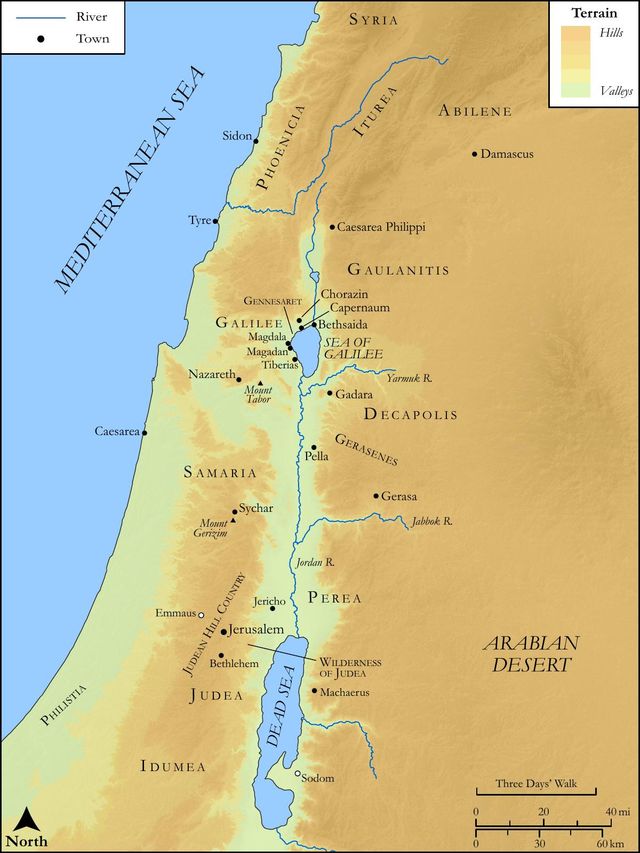
Matthew, also known as Levi (as recorded in Mark 2:14 and Luke 5:27), was a telōnēs or "publican," a tax collector for the Roman government. This profession was deeply reviled by the Jewish people for several reasons. Tax collectors were often Jews who collaborated with the occupying Roman forces, making them seen as traitors. They also frequently engaged in extortion, collecting more than the required tax and pocketing the difference, which further cemented their reputation for dishonesty and greed. Matthew's "receipt of custom" (Greek: telōnion) was his tax booth, likely situated in Capernaum, a significant trade hub on the Via Maris, making it a strategic location for collecting customs duties on goods transported across borders or along trade routes. His social standing was among the lowest, often grouped with prostitutes and notorious sinners.
Key Themes
ShowHideThe calling of Matthew in this verse contributes significantly to several overarching themes in Matthew's Gospel. It powerfully illustrates The Radical Call to Discipleship, demonstrating that Jesus' invitation to "Follow me" demands an immediate and complete reorientation of one's life, transcending social status, past occupation, or personal gain. This act also highlights God's Inclusive Grace, as Jesus deliberately reaches out to someone from the fringes of society, a public sinner in the eyes of the religious establishment, foreshadowing His explicit mission to call sinners, not the righteous, as stated in Matthew 9:13. Furthermore, Matthew's immediate and unquestioning obedience underscores Jesus' Compelling Authority, revealing that His word carries inherent power that elicits an instant, transformative response without lengthy persuasion. Finally, Matthew's abandonment of his tax booth for a new life with Christ signifies Transformation and New Identity, a profound change from a despised figure to a foundational apostle and the probable author of this very Gospel.
Exposition and Analysis
ShowHideKey Word Analysis
ShowHideThis primary verb, used here in the aorist tense (G1492), signifies not merely a casual glance but a perceptive act of seeing, often implying understanding or recognition. Jesus "saw" Matthew with divine insight, recognizing his potential for discipleship despite his outward profession and social standing. It implies a knowing gaze that penetrated Matthew's circumstances to his heart.
This neuter noun (G5058) specifically refers to a tax-gatherer's place of business or booth. It represents Matthew's entire livelihood, his social identity, and his connection to the corrupt Roman system. Sitting "at the receipt of custom" encapsulates his public persona as a despised publican, making Jesus' call directly to him in this context all the more striking.
Derived from a word meaning "to be in the same way with" (G190), this verb is an imperative, a direct command. It means to accompany, specifically as a disciple. In the context of rabbinical teaching, "following" a rabbi meant not just physical proximity but adherence to his teachings and way of life. Jesus' command is a concise, authoritative summons to an intimate relationship and a new way of life, requiring complete allegiance.
Verse Breakdown
ShowHide"¶ And as Jesus passed forth from thence,"
This opening clause establishes the immediate setting and action. Jesus is moving from the location of His previous miracle (healing the paralytic in a house in Capernaum), indicating His active ministry and purposeful movement. The transition from "thence" implies a public space, likely near the bustling market or port area of Capernaum, where tax booths would be located.
"he saw a man, named Matthew, sitting at the receipt of custom:"
Here, Jesus' divine initiative is highlighted. He sees Matthew, not by chance, but with intentionality. Matthew is depicted in his professional context, "sitting at the receipt of custom," signifying his active engagement in his despised work. This detail underscores the stark contrast between Matthew's current life and the radical change about to occur. The naming of Matthew is significant, as this is the only Gospel account that names him as Matthew at the point of his call, emphasizing his identity as the future evangelist.
"and he saith unto him, ‹Follow me.›"
This is the core of the verse – Jesus' direct, simple, yet profoundly authoritative command. The imperative "Follow me" (Greek: akolouthéō moi) is not a suggestion but a summons that demands a decisive response. It encapsulates the essence of discipleship: a personal invitation from Jesus to abandon one's former life and align completely with His person and mission.
"And he arose, and followed him."
Matthew's immediate and unhesitating response is crucial. "He arose" signifies a physical departure from his tax booth and, symbolically, from his old life and identity. "And followed him" denotes not just physical accompaniment but a commitment to Jesus' way and teachings. This swift obedience demonstrates the compelling power of Jesus' call and Matthew's radical willingness to surrender everything for Christ.
Literary Devices
ShowHideThe narrative of Matthew's call is characterized by Conciseness and Directness. The account is remarkably brief, presenting the call and response without elaborate dialogue or internal monologues, emphasizing the immediate and unmediated power of Jesus' word. This brevity highlights the Authority of Jesus, whose simple command elicits instant obedience. There is also a powerful sense of Contrast and Irony at play: Jesus, the Holy Son of God, calls a tax collector, a figure of impurity and exploitation, into His inner circle. This subverts societal expectations and religious norms, foreshadowing Jesus' mission to call sinners. The "receipt of custom" serves as a potent Symbolism, representing Matthew's old life, his worldly attachments, and his social standing. His act of "arising" from it and "following" Jesus symbolizes a complete break with his past and the embrace of a new identity and purpose in Christ.
Theological and Thematic Connections
ShowHideThe calling of Matthew stands as a profound theological statement about the nature of God's grace and the radical demands of discipleship. It reveals that Jesus' kingdom is not exclusive to the outwardly righteous but extends to those considered outcasts and sinners, demonstrating His mission to seek and save the lost. This divine initiative underscores that salvation is not earned through human merit or social standing, but is a gift freely offered through a personal invitation from Christ. Matthew's immediate and costly obedience serves as a paradigm for true discipleship, where one's past profession, social status, or material possessions are willingly surrendered for the sake of following Jesus. It highlights the transformative power of encountering Christ, which redefines identity and purpose, moving individuals from a life of self-interest to one dedicated to the Lord's will.
Reflection and Application
ShowHideMatthew's call serves as a powerful and enduring invitation for all who hear Jesus' voice. His story reminds us that Jesus sees beyond our professions, our past mistakes, and our societal labels, looking instead at the heart and its potential for transformation. Just as Matthew left his lucrative but despised life, we are called to evaluate what "receipt of custom" we might be clinging to—whether it be a career, social status, personal habits, or even deeply ingrained comfort zones—that hinders our full and unreserved commitment to Christ. Matthew's immediate and decisive response challenges us to consider the authenticity of our own discipleship: are we willing to rise and follow without hesitation, surrendering our agenda for the Lord's? This narrative also encourages us to extend the same grace and invitation to others, recognizing that Jesus came to call all sinners to repentance, regardless of their background or reputation.
Questions for Reflection
ShowHideFAQ
ShowHideWhy was Matthew's profession as a tax collector so controversial among the Jews?
ShowHideMatthew's profession as a tax collector (publican) was deeply controversial and despised among Jews primarily for two reasons. First, tax collectors were seen as collaborators with the Roman occupying power, making them traitors to their own people and to God's covenant with Israel. They collected taxes for a foreign, pagan government that oppressed their nation. Second, they were notorious for corruption and extortion. While a fixed amount was due to Rome, tax collectors often bid for the right to collect taxes in a certain area and then charged the people more than was legally required, pocketing the surplus for themselves. This made them wealthy at the expense of their fellow Jews, compounding their reputation for dishonesty and greed. Consequently, they were often ostracized from religious and social life, considered unclean and lumped together with "sinners" and prostitutes, as seen in Matthew 9:10-11.
Christ-Centered Fulfillment
ShowHideThe call of Matthew in Matthew 9:9 finds its ultimate fulfillment in the person and work of Jesus Christ, who is the embodiment of God's radical grace and the definitive Caller of His people. Matthew's immediate abandonment of his former life to "follow" Jesus foreshadows the broader call to all humanity to forsake the kingdom of this world and enter the kingdom of God, a kingdom established and inaugurated by Christ Himself. Jesus, as the Good Shepherd, calls His sheep by name, and they "follow him, for they know his voice" as described in John 10:27. Matthew's willingness to leave behind a life of worldly gain and social stigma for an unknown future with Jesus perfectly illustrates the principle that "whatever gain I had, I counted as loss for the sake of Christ," as articulated by Paul in Philippians 3:7. Christ's call is not merely an invitation to a new ethical system or a set of rules, but a summons to a transformative relationship with the living Lord, who Himself embodies the very path we are to follow. His cross and resurrection are the ultimate "receipt of custom" paid, redeeming us from the bondage of sin and enabling us to rise from our old lives and follow Him into eternal life, fixing our eyes on "Jesus, the founder and perfecter of our faith" as encouraged in Hebrews 12:2.