


Matthew 9:12
Bible text: King James Version (1769 Blayney text) · Public domain
Bible text: Berean Standard Bible · Public domain
Bible text: American Standard Version (1901) · Public domain
Bible text: World English Bible, Messianic edition · Public domain
Bible text: Geneva Bible (1599) · Public domain
Bible text: Young's Literal Translation · Public domain
- ὁho<the>G3588T-NSMDefinite article Nominative Singular Masculine
- δὲdeAndG1161CONJConjunction
- ἸησοῦςIēsousJesusG2424N-NSM-PNoun Nominative Singular Masculine Individual
- ἀκούσαςakousashaving heardG191V-AAP-NSMVerb Aorist Active Participle Nominative Singular Masculine
- εἶπενeipenHe saidG2036V-2AAI-3SVerb 2nd Aorist Active Indicative 3rd Singular
- αὐτοῖς·autoisto themG846P-DPMPersonal pronoun Dative Plural Masculine
- οὐouNotG3756PRT-NNegative Particle Negative
- χρείανchreianneedG5532N-ASFNoun Accusative Singular Feminine
- ἔχουσινechousinhaveG2192V-PAI-3PVerb Present Active Indicative 3rd Plural
- οἱhoithoseG3588T-NPMDefinite article Nominative Plural Masculine
- ἰσχύοντεςischuontesbeing strongG2480V-PAP-NPMVerb Present Active Participle Nominative Plural Masculine
- ἰατροῦiatrouof a physicianG2395N-GSMNoun Genitive Singular Masculine
- ἀλλ᾽all᾽butG235CONJConjunction
- οἱhoithoseG3588T-NPMDefinite article Nominative Plural Masculine
- κακῶςkakōssickG2560ADVAdverb
- ἔχοντεςechontesbeingG2192V-PAP-NPMVerb Present Active Participle Nominative Plural Masculine
English is a literal word-by-word gloss of the Greek, not the KJV's wording. Why?
This is the original text the KJV's translators worked from — each Greek word with its own literal English meaning in this verse, prepared by scholars at Tyndale House, Cambridge. The KJV translates whole sentences, not word by word, so its wording differs: one Greek word can become several English words, and the KJV may choose “charity” where the gloss reads “love”. Both are faithful — they answer different questions. For the KJV's own rendering, switch to the KJV text.
Details
See on the biblical-era maps
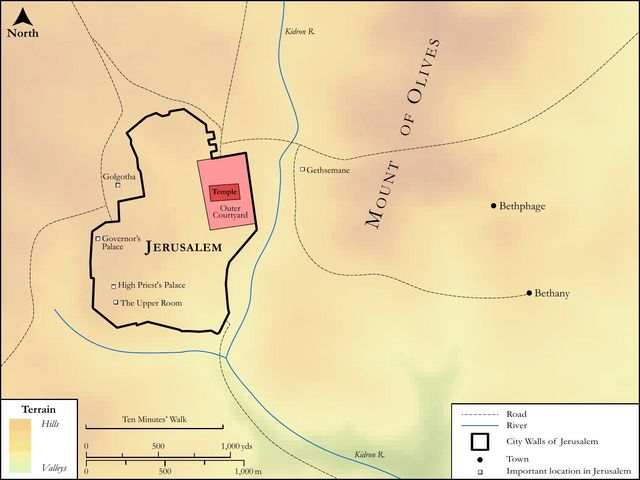
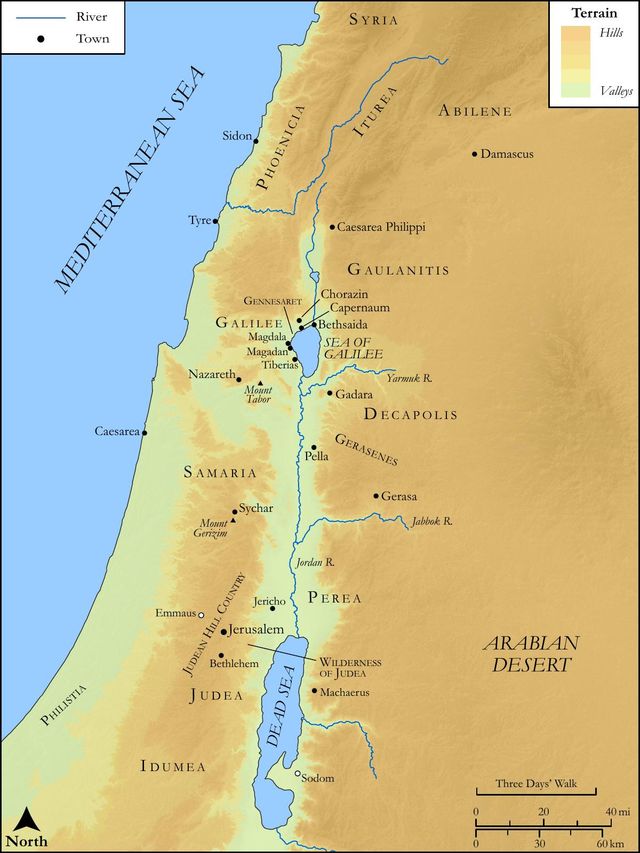
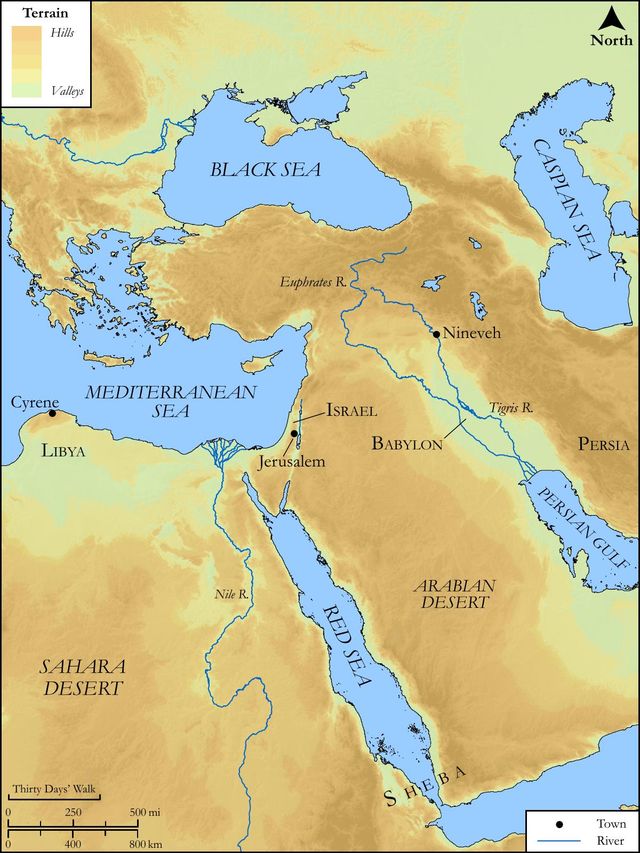
Study this verse
Public-domain commentary
Matthew Henry
From his Commentary on the Whole Bible. Henry comments on passages, not single verses — this entry covers Matthew 9:9–13. His four-level outline is real structure in the source text, so it is rendered as structure.
In these verses we have an account of the grace and favour of Christ to poor publicans, particularly to Matthew. What he did to the bodies of people was to make way for a kind design upon their souls. Now observe here,
I.The call of Matthew, the penman of this gospel.
Mark and Luke call him Levi; it was ordinary for the same person to have two names: perhaps Matthew was the name he was most known by as a publican, and, therefore, in his humility, he called himself by that name, rather than by the more honourable name of Levi. Some think Christ gave him the name of Matthew when he called him to be an apostle; as Simon, he surnamed Peter. Matthew signifies, the gift of God, Ministers are God's gifts to the church; their ministry, and their ability for it, are God's gifts to them. Now observe,
1.The posture that Christ's call found Matthew in. He was sitting at the receipt of custom, for he was a publican, Luk 5:27. He was a custom-house officer at the port of Capernaum, or an exciseman, or collector of the land-tax. Now,
(1.)He was in his calling, as the rest of them whom Christ called, Mat 4:18. Note, As Satan chooses to come, with his temptations, to those that are idle, so Christ chooses to come, with his calls, to those that are employed. But,
(2.)It was a calling of ill fame among serious people; because it was attended with so much corruption and temptation, and there were so few in that business that were honest men. Matthew himself owns what he was before his conversion, as does St. Paul (Ti1 1:13), that the grace of Christ in calling him might be the more magnified, and to show, that God has his remnant among all sorts of people. None can justify themselves in their unbelief, by their calling in the world; for there is no sinful calling, but some have been saved out of it, and no lawful calling, but some have been saved in it.
2.The preventing power of this call. We find not that Matthew looked after Christ, or had any inclination to follow him, though some of his kindred were already disciples of Christ, but Christ prevented him with the blessings of his goodness. He is found of those that seek him not. Christ spoke first; we have not chosen him, but he hath chosen us. He said, Follow me; and the same divine, almighty power accompanied this word to convert Matthew, which attended that word (Mat 9:6), Arise and walk, to cure the man sick of the palsy. Note, A saving change is wrought in the soul by Christ as the Author, and his word as the means. His gospel is the power of God unto salvation, Rom 1:16. The call was effectual, for he came at the call; he arose, and followed him immediately; neither denied, nor deferred his obedience. The power of divine grace soon answers and overcomes all objections. Neither his commission for his place, nor his gains by it, could detain him, when Christ called him. He conferred not with flesh and blood, Gal 1:15, Gal 1:16. He quitted his post, and his hopes of preferment in that way; and, though we find the disciples that were fishers occasionally fishing again afterwards, we never find Matthew at the receipt of custom again.
II.Christ's converse with publicans and sinners upon this occasion; Christ called Matthew, to introduce himself into an acquaintance with the people of that profession. Jesus sat at meat in the house, Mat 9:10. The other evangelists tell us, that Matthew made a great feast, which the poor fishermen, when they were called, were not able to do. But when he comes to speak of this himself, he neither tells us that it was his own house, nor that it was a feast, but only that he sat at meat in the house; preserving the remembrance of Christ's favours to the publicans, rather than of the respect he had paid to Christ. Note, It well becomes us to speak sparingly of our own good deeds.
Now observe, 1. When Matthew invited Christ, he invited his disciples to come along with him. Note, They that welcome Christ, must welcome all that are his, for his sake, and let them have a room in their hearts. 2. He invited many publicans and sinners to meet him. This was the chief thing Matthew aimed at in this treat, that he might have an opportunity of bringing his old associates acquainted with Christ. He knew by experience what the grace of Christ could do, and would not despair concerning them. Note, They who are effectually brought to Christ themselves, cannot but be desirous that others also may be brought to him, and ambitious of contributing something towards it. True grace will not contentedly eat its morsels alone, but will invite others. When by the conversion of Matthew the fraternity was broken, presently his house was filled with publicans, and surely some of them will follow him, as he followed Christ. Thus did Andrew and Philip, Joh 1:41, Joh 1:45; Joh 4:29. See Jdg 14:9.
III.The displeasure of the Pharisees at this, Mat 9:11.
They cavilled at it; why eateth your Master with publicans and sinners? Here observe,
1.That Christ was quarrelled with. It was not the least of his sufferings, that he endured the contradiction of sinners against himself. None was more quarrelled with by men, than he that came to take up the great quarrel between God and man. Thus he denied himself the honour due to an incarnate Deity, which was to be justified in what he spake, and to have all he said readily subscribed to: for though he never spoke or did anything amiss, every thing he said and did was found fault with. Thus he taught us to expect and prepare for reproach, and to bear it patiently.
2.They that quarrelled with him were the Pharisees; a proud generation of men, conceited of themselves, and censorious of others; of the same temper with those in the prophet's time, who said, Stand by thyself, come not near me; I am holier than thou: they were very strict in avoiding sinners, but not in avoiding sin; none greater zealots than they for the form of godliness, nor greater enemies to the power of it. They were for keeping up the traditions of the elders to a nicety, and so propagating the same spirit that they were themselves governed by.
3.They brought their cavil, not to Christ himself; they had not the courage to face him with it, but to his disciples. The disciples were in the same company, but the quarrel is with the Master: for they would not have done it, if he had not; and they thought it worse in him who was a prophet, than in them; his dignity, they thought, should set him at a greater distance from such company than others. Being offended at the Master, they quarrel with the disciples. Note, It concerns Christians to be able to vindicate and justify Christ, and his doctrines and laws, and to be ready always to give an answer to those that ask them a reason of the hope that is in them, Pe1 3:15. While he is an Advocate for us in heaven, let us be advocates for him on earth, and make his reproach our own.
4.The complaint was his eating with publicans and sinners: to be intimate with wicked people is against the law of God (Psa 119:115; Psa 1:1); and perhaps by accusing Christ of this to his disciples, they hoped to tempt them from him, to put them out of conceit with him, and so to bring them over to themselves to be their disciples, who kept better company; for they compassed sea and land to make proselytes. To be intimate with publicans was against the tradition of the elders, and, therefore, they looked upon it as a heinous thing. They were angry with Christ for this,
(1.)Because they wished ill to him, and sought occasion to misrepresent him. Note, It is an easy and very common thing to put the worst constructions upon the best words and actions.
(2.)Because they wished no good to publicans and sinners, but envied Christ's favour to them, and were grieved to see them brought to repentance. Note, It may justly be suspected, that they have not the grace of God themselves, who grudge others a share in that grace, who are not pleased with it.
IV.The defence that Christ made for himself and his disciples, in justification of their converse with publicans and sinners.
The disciples, it should seem, being yet weak, had to seek for an answer to the Pharisees' cavil, and, therefore, bring it to Christ, and he heard it (Mat 9:12), or perhaps overheard them whispering it to his disciples. Let him alone to vindicate himself and to plead his own cause, to answer for himself and for us too. Two things he urges in his defence,
1.The necessity and exigence of the case of the publicans, which called aloud for his help, and therefore justified him in conversing with them for their good. It was the extreme necessity of poor, lost sinners, that brought Christ from the pure regions above, to these impure ones; and the same was it, that brought him into this company which was thought impure. Now,
(1.)He proves the necessity of the case of the publicans: they that be whole need not a physician, but they that are sick. The publicans are sick, and they need one to help and heal them, which the Pharisees think they do not. Note,
[1.]Sin is the sickness of the soul; sinners are spiritually sick. Original corruptions are the diseases of the soul, actual transgressions are its wounds, or the eruptions of the disease. It is deforming, weakening, disquieting, wasting, killing, but, blessed be God, not incurable.
[2.]Jesus Christ is the great Physician of souls. His curing of bodily diseases signified this, that he arose with healing under his wings. He is a skilful, faithful, compassionate Physician, and it is his office and business to heal the sick. Wise and good men should be as physicians to all about them; Christ was so. Hunc affectum versus omnes habet sapiens, quem versus aegros suos medicus - A wise man cherishes towards all around him the feelings of a physician for his patient. Seneca De Const.
[3.]Sin-sick souls have need of this Physician, for their disease is dangerous; nature will not help itself; no man can help us; such need have we of Christ, that we are undone, eternally undone, without him. Sensible sinners see their need, and apply themselves to him accordingly.
[4.]There are multitudes who fancy themselves to be sound and whole, who think they have no need of Christ, but that they can shift for themselves well enough without him, as Laodicea, Rev 3:17. Thus the Pharisees desired not the knowledge of Christ's word and ways, not because they had no need of him, but because they thought they had none. See Joh 9:40, Joh 9:41.
(2.)He proves, that their necessity did sufficiently justify his conduct, in conversing familiarly with them, and that he ought not to be blamed for it; for that necessity made it an act of charity, which ought always to be preferred before the formalities of a religious profession, in which beneficence and munificence are far better than magnificence, as much as substance is better than shows or shadows. Those duties, which are of moral and natural obligation, are to take place even of those divine laws which are positive and ritual, much more of those impositions of men, and traditions of the elders, which make God's law stricter than he has made it. This he proves (Mat 9:13) by a passage quoted out of Hos 6:6, I will have mercy and not sacrifice. That morose separation from the society of publicans, which the Pharisees enjoined, was less than sacrifice; but Christ's conversing with them was more than an act of common mercy, and therefore to be preferred before it. If to do well ourselves is better than sacrifice, as Samuel shows (Sa1 15:22, Sa1 15:23), much more to do good to others. Christ's conversing with sinners is here called mercy: to promote the conversion of souls is the greatest act of mercy imaginable; it is saving a soul from death, Jam 5:20. Observe how Christ quotes this, Go ye and learn what that meaneth. Note, It is not enough to be acquainted with the letter of scripture, but we must learn to understand the meaning of it. And they have best learned the meaning of the scriptures, that have learned how to apply them as a reproof to their own faults, and a rule for their own practice. This scripture which Christ quoted, served not only to vindicate him, but,
[1.]To show wherein true religion consists; not in external observances: not in meats and drinks and shows of sanctity, not in little particular opinions and doubtful disputations, but in doing all the good we can to the bodies and souls of others; in righteousness and peace; in visiting the fatherless and widows.
[2.]To condemn the Pharisaical hypocrisy of those who place religion in rituals, more than in morals, Mat 23:23. They espouse those forms of godliness which may be made consistent with, and perhaps subservient to, their pride, covetousness, ambition, and malice, while they hate that power of it which is mortifying to those lusts.
2.He urges the nature and end of his own commission. He must keep to his orders, and prosecute that for which he was appointed to be the great Teacher; now, says he, "I am not come to call the righteous, but sinners to repentance, and therefore must converse with publicans." Observe,
(1.)What his errand was; it was to call to repentance. This was his first text (Mat 4:17), and it was the tendency of all his sermons. Note, The gospel call is a call to repentance; a call to us to change our mind and to change our way.
(2.)With whom his errand lay; not with the righteous, but with sinners. That is,
[1.]If the children of men had not been sinners, there had been no occasion for Christ's coming among them. He is the Saviour, not of man as man, but of man as fallen. Had the first Adam continued in his original righteousness, we had not needed a second Adam.
[2.]Therefore his greatest business lies with the greatest sinners; the more dangerous the sick man's case is, the more occasion there is for the physician's help. Christ came into the world to save sinners, but especially the chief (Ti1 1:15); to call not those so much, who, though sinners, are comparatively righteous, but the worst of sinners.
[3.]The more sensible any sinners are of their sinfulness, the more welcome will Christ and his gospel be to them; and every one chooses to go where his company is desired, not to those who would rather have his room. Christ came not with an expectation of succeeding among the righteous, those who conceit themselves so, and therefore will sooner be sick of their Saviour, than sick of their sins, but among the convinced humble sinners; to them Christ will come, for to them he will be welcome.
Historical interpretation
Eleven Centuries of Reception
11 surviving comments on this verse. Each one is dated, so this reads as a timeline rather than a list.
Select a marker to jump to its quote. Markers stagger vertically where authors wrote within a few decades of each other.
The Lord had come, of course, to save that which "had perished; " "a Physician." necessary to "the sick" "more than to the whole." This fact He was in the habit both of typifying in parables and preaching in direct statements.
It is a very fearful thing to be seized by death while the sins are yet unforgiven by Christ; for there is no way to the heavenly house for him whose sins have not been forgiven. But when this fear is removed, honour is rendered to God, who by His word has in this way given power to men, of forgiveness of sins, of resurrection of the body, and of return to Heaven.
Christ came for all; how is it then that He says He came not for the righteous? Were there those for whom it needed not that He should come? But no man is righteous by the law. He shows how empty their boast of justification, sacrifices being inadequate to salvation, mercy was necessary for all who were set under the Law.
(Hom. xxx.) Having wrought this miracle, Christ would not abide in the same place, lest He should rouse the envy of the Jews. Let us also do thus, not obstinately opposing those who lay in wait for us. And as Jesus departed thence, (namely from the place in which He had done this miracle,) he saw a man sitting at the receipt of custom, Matthew by name.
Herein he shows the excellent power of Him that called him; while engaged in this dangerous office He rescued him from the midst of evil, as also Paul while he was yet mad against the Church. He saith unto him, Follow me. As you have seen the power of Him that calleth, so learn the obedience of him that is called; he neither refuses, nor requests to go home and inform his friends.
But why did He not call him at the same time with Peter and John and the others? Because he was then still in a hardened state, but after many miracles, and great fame of Christ, when He who knows the inmost secrets of the heart, perceived him more disposed to obedience, then He called him.
Why is it then that nothing is said of the rest of the Apostles how or when they were called, but only of Peter, Andrew, James, John, and Matthew? Because these were in the most alien and lowly stations, for nothing can be more disreputable than the office of Publican, nothing more abject than that of fisherman.
Matthew being honoured by the entrance of Jesus into his house, called together all that followed the same calling with himself; Behold many Publicans and sinners came and sat down with Jesus, and with his disciples.
Thus they came near to our Redeemer, and that not only to converse with Him, but to sit at meat with Him; for so not only by disputing, or healing, or convincing His enemies, but by eating with them, He oftentimes healed such as were ill-disposed, by this teaching us, that all times, and all actions, may be made means to our advantage. When the Pharisees saw this they were indignant; And the Pharisees beholding said to his disciples, Why eateth your Master with Publicans and sinners? It should be observed, that when the disciples seemed to be doing what was sinful, these same addressed Christ, Behold, thy disciples are doing what it is not allowed to do on the Sabbath. (Mat. 12:2.) Here they speak against Christ to His disciples, both being the part of malicious persons, seeking to detach the hearts of the disciple from the Master.
Having first spoken in accordance with common opinion, He now addresses them out of Scripture, saying, Go ye, and learn what that meaneth, I will have mercy and not sacrifice.
As much as to say; How do you accuse me for reforming sinners? Therefore in this you accuse God the Father also. For as He wills the amendment of sinners, even so also do I. And He shows that this that they blamed was not only not forbidden, but was even by the Law set above sacrifice; for He said not, I will have mercy as well as sacrifice, but chooses the one and rejects the other.
Whence we may suppose that He is speaking ironically, as when it is said, Behold now Adam is become as one of us. (Gen. 3:22.) For that there is none righteous on earth Paul shows, All have sinned, and need glory of God. (Rom. 3:23.) By this saying He also consoled those who were called; as though He had said, So far am I from abhorring sinners, that for their sakes only did I come.
What then saith Infinite Wisdom? "They that be whole need not a physician," saith He, "but they that are sick."
See how He turned their reasoning to the opposite conclusion. That is, while they made it a charge against Him that He was in company with these men: He on the contrary saith, that His not being with them would be unworthy of Him, and of His love of man; and that to amend such persons is not only blameless, but excellent, and necessary, and deserving of all sorts of praise.
After this, that He might not seem to put them that were bidden to shame, by saying, "they that are sick;" see how He makes up for it again, by reproving the others.
The Lord went to the banquet of sinners that he might have an opportunity to teach and to offer spiritual food to his hosts. In effect, when he is mentioned as frequently going out to attend feasts, nothing is said other than what he did there and taught there. Thus, we see both the Lord’s humility in reaching out to sinners and the force of his teaching in converting penitents. What follows: “I desire mercy, and not sacrifice” and “I came not to call the righteous but sinners” (as he cites testimony from the prophet) challenged the scribes and Pharisees, who considered themselves righteous and shunned both publicans and sinners.
The other Evangelists from respect to Matthew have not called him by his common name, but say here, Levi, for he had both names. Matthew himself, according to that Solomon says. The righteous man accuses himself, (Prov. 18:17.) calls himself both Matthew and Publican, to show the readers that none need despair of salvation who turn to better things, seeing he from a Publican became an Apostle.
Porphyry and the Emperor Julian insist from this account, that either the historian is to be charged with falsehood, or those who so readily followed the Saviour with haste and temerity; as if He called any without reason. They forget also the signs and wonders which had preceded, and which no doubt the Apostles had seen before they believed. Yea the brightness of effulgence of the hidden Godhead which beamed from His human countenance might attract them at first view. For if the loadstone can, as it is said, attract iron, how much more can the Lord of all creation draw to Himself whom He will!
But they had seen the Publican turning from sins to better things, and finding place of repentance, and on this account they do not despair of salvation.
For they do not come to Jesus while they remain in their original condition of sin, as the Pharisees and Scribes complain, but in penitence, as what follows proves; But Jesus hearing said, They that be whole need not a physician, but they that are sick.
This text from Osee (Hosea 6:6.) is directed against the Scribes and Pharisees, who, deeming themselves righteous, refused to keep company with Publicans and sinners.
(V. 10 seq.) And it came to pass, as he sat at table in his house, behold many publicans and sinners came and sat down with Jesus and his disciples. And when the Pharisees saw it, they said to his disciples, 'Why does your teacher eat with tax collectors and sinners?' But when Jesus heard it, he said, 'Those who are well have no need of a physician, but those who are sick. Go and learn what this means: "I desire mercy, and not sacrifice." For I came not to call the righteous, but sinners.''
Luke adds to repentance, which explains the sense; that none should suppose that sinners are loved by Christ because they are sinners; and this comparison of the sick shows what God means by calling sinners, as a physician does the sick to be saved from their iniquity as from a sickness: which is done by penitence.
He esteems lightly human dangers which might accrue to him from his masters for leaving his accounts in disorder, but, he arose, and followed him. And because he relinquished earthly gain, therefore of right was he made the dispenser of the Lord's talents.
(e Beda.) They are here in a twofold error; first, they esteemed themselves righteous, though in their pride they had departed far from righteousness; secondly, they charged with unrighteousness those who by recovering themselves from sin were drawing near to righteousness.
He calls Himself a physician, because by a wonderful kind of medicine He was wounded for our iniquities that He might heal the wound of our sin. By the whole, He means those who seeking to establish their own righteousness have not submitted to the true righteousness of God. By the sick, (Rom. 10:3.) He means those who, tied by the consciousness of their frailty, and seeing that they are not justified by the Law, submit themselves in penitence to the grace of God.
He therefore warns them, that by deeds of mercy they should seek for themselves the rewards of the mercy that is above, and, not overlooking the necessities of the poor, trust to please God by offering sacrifice. Wherefore, He says, Go; that is, from the rashness of foolish fault-finding to a more careful meditation of Holy Scripture, which highly commends mercy, and proposes to them as a guide His own example of mercy, saying, I came not to call the righteous but sinners.
In the call of Matthew and the Publicans is figured the faith of the Gentiles who first gaped after the gain of the world, and are now spiritually refreshed by the Lord; in the pride of the Pharisees, the jealousy of the Jews at the salvation of the Gentiles. Or, Matthew signifies the man intent on temporal gain; Jesus sees him, when He looks on him with the eyes of mercy. For Matthew is interpreted 'given,' Levi 'taken,' the penitent is taken out of the mass of the perishing, and by God's grace given to the Church. And Jesus saith unto him, Follow me, either by preaching, or by the admonition of Scripture, or by internal illumination.
(ap. Anselm.) He says, sitting at the receipt of custom, that is, in the place where the tolls were collected. He was named Telonarius, from a Greek word signifying taxes.
(non occ.) Matthew places his calling among the miracles; for a great miracle it was, a Publican becoming an Apostle.
(ap. Anselm.) As a meet return for the heavenly mercy, Matthew prepared a great feast for Christ in his house, bestowing his temporal goods on Him of whom he looked to receive everlasting goods. It follows, And it came to pass as he sat at meat in the house.
(ap. Anselm.) The Publicans were they who were engaged in public business, which seldom or never can be carried on without sin. And a beautiful omen of the future, that he that was to be an Apostle and doctor of the Gentiles, at his first conversion draws after him a great multitude of sinners to salvation, already performing by his example what he was shortly to perform by word.
(ord.) Tertullian says that these must have been Gentiles, because Scripture says, There shall be no payer of tribute in Israel, as if Matthew were not a Jew. But the Lord did not sit down to meat with Gentiles, being more especially careful not to break the Law, as also He gave commandment to His disciples below, Go not into the way of the Gentiles.
(ap. Anselm.) Yet does not God contemn sacrifice, but sacrifice without mercy. But the Pharisees often offered sacrifices in the temple that they might seem to men to be righteous, but did not practise the deeds of mercy by which true righteousness is proved.
(ap. Anselm.) Or; Those who were righteous, as Nathanael and John the Baptist, were not to be invited to repentance. Or. I came not to call the righteous, that is, the feignedly righteous, those who boasted of their righteousness as the Pharisees, but those that owned themselves sinners.
Continue studying Matthew 9:12 across the web’s major study libraries — every link below opens this exact verse, chapter, or book on the destination site.
Read & Compare
 BibleGatewayThis verse in more than 200 translations and 70 languages.
 Bible.comThe YouVersion reader — hundreds of translations, reading plans, and highlights.
 ESV.orgCrossway's official English Standard Version reader.
 NET BibleThe NET translation with 60,000+ translators' notes on every rendering decision.
 STEP BibleTyndale House's free study tool — original text, vocabulary, and scholarly resources.
 BibliaLogos Bible Software's free web reader.
 USCCBThe New American Bible (Revised Edition) with the U.S. bishops' study notes.
Commentaries
 BibleHub CommentariesDozens of classic commentaries on this verse, gathered on one page.
 StudyLightMore than 100 commentary sets — the largest collection on the web.
 BibleRefPlain-English commentary on what this verse means, verse by verse.
 Enduring WordDavid Guzik's free commentary on this chapter, widely used by Bible teachers.
 Bible Study ToolsVerse commentary alongside Greek and Hebrew study aids.
Original Language & Research
- BibleHub InterlinearThe verse word by word — original language, transliteration, and English.
- BibleHub LexiconEvery word's original-language definition and Strong's entry.
 Blue Letter BibleDeep-study tools — Strong's numbers, concordance, and word studies.
 CNTR CollationThe earliest Greek manuscripts of this verse, collated letter by letter.
Sermons, Hymns & Audio


TrulyRandomVerse is not affiliated with these sites and doesn’t control their content. They’re linked because they’re genuinely useful.
Summary
Matthew 9:12 captures Jesus' profound response to the Pharisees' criticism regarding His association with tax collectors and "sinners," articulating the core purpose of His ministry. Through a potent medical analogy, Jesus declares that His mission is to extend spiritual healing and salvation to those who humbly acknowledge their deep need for divine intervention, rather than to those who, in their self-perceived righteousness, believe themselves to be spiritually sound and therefore beyond the need of a Savior.
Context
ShowHideLiterary Context
This verse is a direct and pivotal response within a narrative sequence that highlights Jesus' universal reach and compassionate mission. Immediately preceding this, Matthew 9:9-11 recounts Jesus' calling of Matthew (Levi), a tax collector, to be His disciple. Following this call, Jesus dines at Matthew's house, a gathering attended by many other tax collectors and "sinners"—individuals considered social outcasts and morally impure by the religious elite. The Pharisees, observing this controversial association, question Jesus' disciples, asking, "Why does your Teacher eat with tax collectors and sinners?" Jesus' statement in Matthew 9:12 directly addresses this challenge, setting the stage for His further explanation in Matthew 9:13. This entire passage underscores a fundamental clash between Jesus' kingdom values and the rigid legalism of the Pharisees.
Historical & Cultural Context
First-century Judea was marked by significant social and religious stratification. The Pharisees were a prominent Jewish sect known for their zealous adherence to the Mosaic Law and a vast body of oral traditions, which they believed ensured ritual purity and spiritual righteousness. Tax collectors, like Matthew, were reviled by their Jewish compatriots for collaborating with the Roman occupiers and for often extorting money beyond what was legally required. They were considered traitors and ritually unclean, placing them beyond the pale of respectable society. "Sinners" was a broad term encompassing those who did not adhere to Pharisaic interpretations of the law, including prostitutes, common laborers, and those deemed morally corrupt. For a respected teacher to associate with such individuals was scandalous, violating deeply ingrained social and religious norms concerning purity and separation. Jesus' actions and words challenged the very foundations of this societal and religious hierarchy.
Key Themes
ShowHideMatthew 9:12 profoundly contributes to several overarching themes in the Gospel of Matthew and the broader biblical narrative. It directly addresses The Purpose of Jesus' Ministry, clarifying that He came not for the self-sufficient but for the spiritually destitute, functioning as a divine physician for the soul. This highlights the theme of Spiritual Sickness vs. Self-Righteousness, contrasting those who recognize their need for grace with those who, like the Pharisees, are blinded by their own perceived righteousness and thus reject the Savior. Furthermore, this verse powerfully illustrates God's Mercy and Compassion for the lowly and the lost, a theme consistently demonstrated by Jesus' interactions throughout the Gospels. His willingness to cross social and religious boundaries to reach the "sick" foreshadows the expansive nature of the Gospel message. This emphasis on mercy over ritualistic sacrifice is further reinforced by Jesus' quotation of Hosea 6:6 in Matthew 9:13.
Exposition and Analysis
ShowHideKey Word Analysis
ShowHideMeaning "to have (or exercise) force (literally or figuratively); to be able, avail, can do, could, be good, might, prevail, be of strength, be whole, + much work." In this context, it refers to those who perceive themselves as spiritually strong, healthy, and self-sufficient, believing they have no need for external spiritual help or healing.
Meaning "a physician." Jesus explicitly identifies Himself with this role, presenting Himself as the one uniquely qualified to diagnose and cure the spiritual ailments of humanity, offering salvation and restoration.
Meaning "badly (physically or morally); amiss, diseased, evil, grievously, miserably, sick, sore." While it can refer to physical illness, in this spiritual analogy, it clearly denotes those who are spiritually broken, morally corrupt, or suffering from the debilitating effects of sin, recognizing their dire need for healing.
Verse Breakdown
ShowHide"But when Jesus heard [that], he said unto them"
This opening clause highlights Jesus' immediate and direct engagement with the Pharisees' criticism. The "that" refers to their questioning of His disciples about His association with tax collectors and sinners. Jesus does not allow His disciples to bear the brunt of the challenge but steps forward to articulate the profound theological basis for His actions, demonstrating His authority and clarity of purpose.
"They that be whole need not a physician"
This is the first part of Jesus' analogy, presenting a self-evident truth in the physical realm. Those who are healthy and perceive themselves as such have no need for a doctor. Spiritually, this refers to the self-righteous, like the Pharisees, who believe they are morally sound and perfectly aligned with God's law, thus seeing no personal need for repentance or the transformative grace offered by Jesus. Their self-sufficiency blinds them to their true spiritual condition.
"but they that are sick."
This is the crucial contrasting statement, completing the analogy. Just as a physician is needed by the physically ill, Jesus, the divine Physician, is needed by those who are spiritually "sick." This refers to individuals who recognize their sinfulness, their spiritual brokenness, and their desperate need for God's mercy and healing. These are the "tax collectors and sinners" with whom Jesus willingly associates, precisely because they are open to receiving the spiritual remedy He offers.
Literary Devices
ShowHideJesus' statement in Matthew 9:12 is a masterful use of Analogy (or Metaphor). He compares His spiritual mission to the common and universally understood role of a physician. The "whole" represent those who are self-righteous and spiritually blind, while the "sick" represent those who acknowledge their sinfulness and need for salvation. This analogy makes His radical approach to ministry accessible and logically compelling. There is also an element of Irony, as the Pharisees, who outwardly appeared "whole" and righteous, were in fact spiritually "sick" due to their pride and legalism, while the "sinners" they despised were, in their humility and recognition of their need, spiritually receptive to healing. This highlights a profound spiritual truth: true spiritual health begins with the acknowledgment of one's spiritual illness.
Theological and Thematic Connections
ShowHideMatthew 9:12 profoundly redefines the nature of God's kingdom and the scope of His grace. It dismantles the prevailing notion that God's favor is reserved for the outwardly righteous and pure, instead revealing a God who actively seeks out and embraces the broken and the lost. Jesus, as the divine Physician, embodies God's radical compassion and willingness to engage with humanity's deepest spiritual ailments. This verse establishes that the prerequisite for receiving God's healing is not self-perceived perfection, but humble recognition of one's spiritual sickness and desperate need for a Savior. It shifts the focus from human merit to divine mercy, laying the groundwork for the Gospel's universal invitation to repentance and faith.
Reflection and Application
ShowHideMatthew 9:12 serves as a powerful mirror for self-reflection, challenging us to honestly assess our own spiritual condition. Do we, like the Pharisees, harbor a subtle self-righteousness that prevents us from fully embracing our need for Jesus' ongoing grace and healing? Or do we, with humility, acknowledge our spiritual "sickness"—our inherent sinfulness, brokenness, and constant dependence on God's mercy? This verse reminds us that true spiritual health begins not with a declaration of our own goodness, but with a humble confession of our need for the Divine Physician. For believers, it is a call to continuous repentance and reliance on Christ. For the church, it is a foundational principle for mission and outreach: our primary calling is to extend compassion and the message of salvation to those who are spiritually lost and hurting, rather than to remain in exclusive fellowship with those who already perceive themselves as "whole." Our mission, like Christ's, is to seek and save the lost, embodying His radical love and transformative power to a world desperately in need of healing.
Questions for Reflection
ShowHideFAQ
ShowHideWhat does Jesus mean by "whole" and "sick" in this verse?
ShowHideIn Matthew 9:12, Jesus uses a medical analogy to explain His spiritual mission. By "whole" (Greek: ischýontes), He refers to those who are self-righteous and spiritually complacent, believing they are morally sound and have no need for repentance or a Savior. These individuals, often represented by the Pharisees, are blind to their true spiritual condition. By "sick" (Greek: kakōs échontes), Jesus refers to those who are spiritually broken, burdened by sin, and recognize their desperate need for God's mercy and healing. These are the "tax collectors and sinners" whom Jesus came to save, as they are receptive to the spiritual "cure" He offers.
Why was Jesus associating with tax collectors and "sinners," and why did the Pharisees object?
ShowHideJesus associated with tax collectors and "sinners" because His mission was to bring salvation and healing to those who were overlooked, outcast, and recognized their need for God's grace. Tax collectors were despised by Jews for their collaboration with Rome and perceived corruption, while "sinners" were those who did not adhere to the strict religious and social codes of the time. The Pharisees objected because their understanding of righteousness emphasized ritual purity, separation from "unclean" people, and adherence to the Law. For them, Jesus' association with such individuals was a scandalous violation of religious norms, suggesting He was either condoning their sin or becoming defiled Himself. Jesus' actions, however, demonstrated a higher priority: God's compassion for the lost, as He would further explain in Matthew 9:13 by quoting Hosea 6:6.
Christ-Centered Fulfillment
ShowHideMatthew 9:12 powerfully foreshadows the full scope of Christ's redemptive work, revealing Him as the ultimate Divine Physician. His declaration that He came for the "sick" and not the "whole" is a foundational truth of the Gospel, setting the stage for His atoning sacrifice. The "sickness" Jesus addresses is the pervasive spiritual illness of sin, which has infected all humanity since the Fall, rendering us spiritually dead and separated from God (Romans 3:23). Jesus, the sinless Son of God, came to bear this sickness upon Himself, offering His life as the perfect remedy. Through His crucifixion and resurrection, He provides the only true cure for humanity's spiritual brokenness, offering forgiveness, reconciliation, and new life to all who acknowledge their desperate need for Him (2 Corinthians 5:21). He is not merely a healer of physical ailments, but the one who provides eternal salvation, transforming the "sick" into those who are truly "whole" in Him (Colossians 2:10). His ministry to the outcasts in Matthew 9 is a living parable of His ultimate mission to seek and save that which was lost, demonstrating that His grace extends to the deepest spiritual brokenness (Luke 19:10).