


John 9:41
Bible text: King James Version (1769 Blayney text) · Public domain
Bible text: King James Version with Strong's numbers · Public domain
Bible text: Berean Standard Bible · Public domain
Bible text: American Standard Version (1901) · Public domain
Bible text: World English Bible, Messianic edition · Public domain
Bible text: Geneva Bible (1599) · Public domain
Bible text: Young's Literal Translation · Public domain
- εἶπενeipenSaidG2036V-2AAI-3SVerb 2nd Aorist Active Indicative 3rd Singular
- αὐτοῖςautoisto themG846P-DPMPersonal pronoun Dative Plural Masculine
- ὁho<the>G3588T-NSMDefinite article Nominative Singular Masculine
- Ἰησοῦς·IēsousJesusG2424N-NSM-PNoun Nominative Singular Masculine Individual
- εἰeiIfG1487CONDConjunction
- τυφλοὶtuphloiblindG5185A-NPMAdjective Nominative Plural Masculine
- ἦτεēteyou wereG1510V-IAI-2PVerb Imperfect Active Indicative 2nd Plural
- οὐκouknotG3756PRT-NNegative Particle Negative
- ἂνanthen wouldG302PRTParticle or Disjunctive
- εἴχετεeicheteyou haveG2192V-IAI-2PVerb Imperfect Active Indicative 2nd Plural
- ἁμαρτίανhamartiansinG266N-ASFNoun Accusative Singular Feminine
- νῦνnunsinceG3568ADVAdverb
- δὲdehoweverG1161CONJConjunction
- λέγετεlegeteyou sayG3004V-PAI-2PVerb Present Active Indicative 2nd Plural
- ὅτιhotithatG3754CONJConjunction
- βλέπομενblepomenWe seeG991V-PAI-1PVerb Present Active Indicative 1st Plural
- ἡhētheG3588T-NSFDefinite article Nominative Singular Feminine
- οὖνounthereforeG3767CONJConjunction
- ἁμαρτίαhamartiasinG266N-NSFNoun Nominative Singular Feminine
- ὑμῶνhumōnof youG4771P-2GPPersonal pronoun Genitive 2nd Plural
- μένειmeneiremainsG3306V-PAI-3SVerb Present Active Indicative 3rd Singular
English is a literal word-by-word gloss of the Greek, not the KJV's wording. Why?
This is the original text the KJV's translators worked from — each Greek word with its own literal English meaning in this verse, prepared by scholars at Tyndale House, Cambridge. The KJV translates whole sentences, not word by word, so its wording differs: one Greek word can become several English words, and the KJV may choose “charity” where the gloss reads “love”. Both are faithful — they answer different questions. For the KJV's own rendering, switch to the KJV text.
Details
See on the biblical-era maps
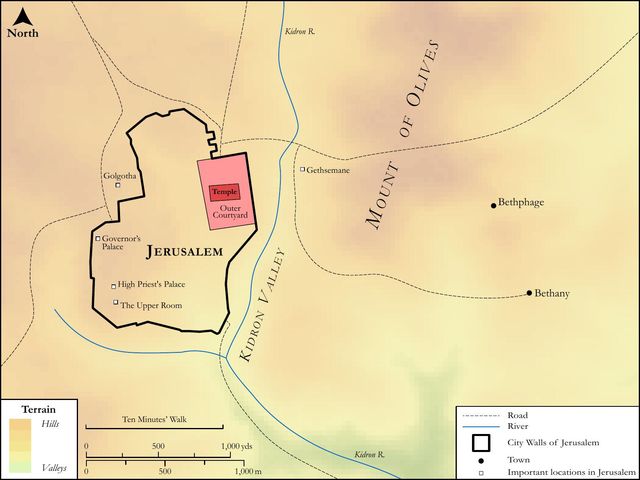
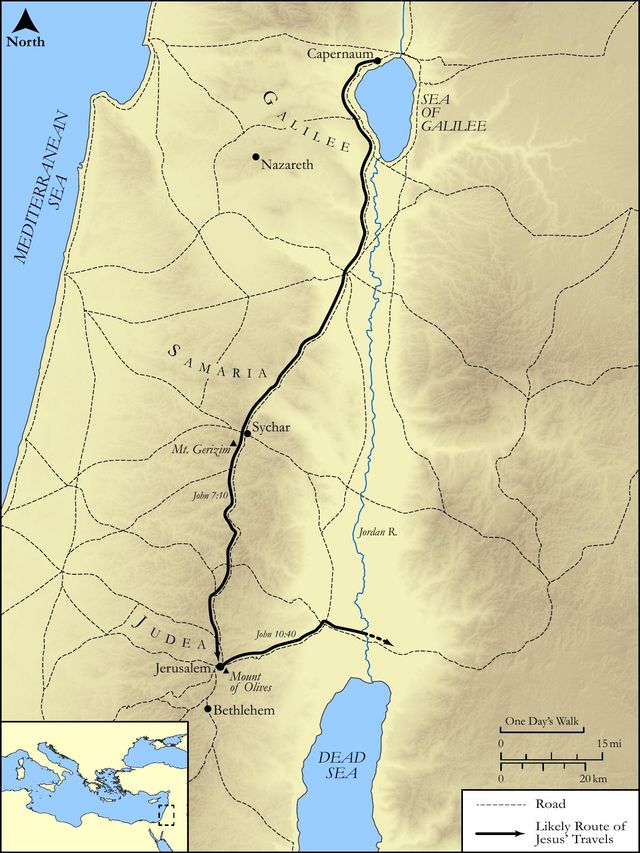
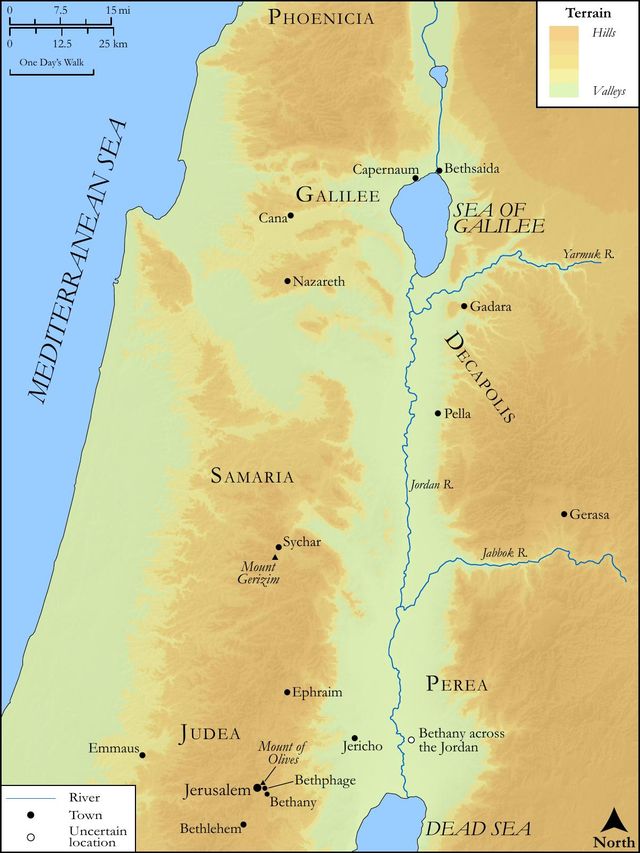
Study this verse
Public-domain commentary
Matthew Henry
From his Commentary on the Whole Bible. Henry comments on passages, not single verses — this entry covers John 9:39–41. His four-level outline is real structure in the source text, so it is rendered as structure.
Christ, having spoken comfort to the poor man that was persecuted, here speaks conviction to his persecutors, a specimen of the distributions of trouble and rest at the great day, Th2 1:6, Th2 1:7. Probably this was not immediately after his discourse with the man, but he took the next opportunity that offered itself to address the Pharisees. Here is,
I.The account Christ gives of his design in coming into the world (Joh 9:39):
"For judgment I am come to order and administer the great affairs of the kingdom of God among men, and am invested with a judicial power in order thereunto, to be executed in conformity to the wise counsels of God, and in pursuance of them." What Christ spoke, he spoke not as a preacher in the pulpit, but as a king upon the throne, and a judge upon the bench.
1.His business into the world was great; he came to keep the assizes and general goal - delivery. He came for judgment, that is,
(1.)To preach a doctrine and a law which would try men, and effectually discover and distinguish them, and would be completely fitted, in all respects, to be the rule of government now and of judgment shortly.
(2.)To put a difference between men, by revealing the thoughts of many hearts, and laying open men's true characters, by this one test, whether they were well or ill affected to him.
(3.)To change the face of government in his church, to abolish the Jewish economy, to take down that fabric, which, though erected for the time by the hand of God himself, yet by lapse of time was antiquated, and by the incurable corruptions of the managers of it was become rotten and dangerous, and to erect a new building by another model, to institute new ordinances and offices, to abrogate Judaism and enact Christianity; for this judgment he came into the world, and it was a great revolution.
2.This great truth he explains by a metaphor borrowed from the miracle which he had lately wrought. That those who see not might see, and that those who see might be made blind. Such a difference of Christ's coming is often spoken of; to some his gospel is a savour of life unto life, to others of death unto death.
(1.)This is applicable to nations and people, that the Gentiles, who had long been destitute of the light of divine revelation, might see it; and the Jews, who had long enjoyed it, might have the things of their peace hid from their eyes, Hos 1:10; Hos 2:23. The Gentiles see a great light, while blindness is happened unto Israel, and their eyes are darkened.
(2.)To particular sons. Christ came into the world,
[1.]Intentionally and designedly to give sight to those that were spiritually blind; by his word to reveal the object, and by his Spirit to heal the organ, that many precious souls might be turned from darkness to light. He came for judgment, that is, to set those at liberty from their dark prison that were willing to be released, Isa 61:1.
[2.]Eventually, and in the issue, that those who see might be made blind; that those who have a high conceit of their own wisdom, and set up that in contradiction to divine revelation, might be sealed up in ignorance and infidelity. The preaching of the cross was foolishness, and an infatuating think, to those who by wisdom knew not God. Christ came into the world for this judgment, to administer the affairs of a spiritual kingdom, seated in men's minds. Whereas, in the Jewish church, the blessings and judgments of God's government were mostly temporal, now the method of administration should be changed; and as the good subjects of his kingdom should be blessed with spiritual blessings in heavenly things, such as arise from a due illumination of the mind, so the rebels should be punished with spiritual plagues, not war, famine, and pestilence, as formerly, but such as arise from a judicial infatuation, hardness of heart, terror of conscience, strong delusions, vile affections. In this way Christ will judge between cattle and cattle, Eze 34:17, Eze 34:22.
II.The Pharisees' cavil at this.
They were with him, not desirous to learn any good from him, but to form evil against him; and they said, Are we blind also? When Christ said that those who saw should by his coming be made blind, they apprehended that he meant them, who were the seers of the people, and valued themselves on their insight and foresight. "Now," say they, "we know that the common people are blind; but are we blind also? What we? The rabbin, the doctors, the learned in the laws, the graduates in the schools, are we blind too?" This is scandalum magnatum - a libel on the great. Note, Frequently those that need reproof most, and deserve it best, though they have wit enough to discern a tacit one, have not grace enough to bear a just one. These Pharisees took this reproof for a reproach, as those lawyers (Luk 11:45): "Are we blind also? Darest thou say that we are blind, whose judgment every one has such a veneration for, values, and yields to?" Note, Nothing fortifies men's corrupt hearts more against the convictions of the word, nor more effectually repels them, than the good opinion, especially if it be a high opinion, which others have of them; as if all that had gained applause with men must needs obtain acceptance with God, than which nothing is more false and deceitful, for God sees not as man sees.
III.Christ's answer to this cavil, which, if it did not convince them, yet silenced them:
If you were blind you should have no sin; but now you say, We see, therefore your sin remaineth. They gloried that they were not blind, as the common people, were not so credulous and manageable as they, but would see with their own eyes, having abilities, as they thought, sufficient for their own guidance, so that they needed not any body to lead them. This very thing which they gloried in, Christ here tells them, was their shame and ruin. For,
1.If you were blind, you would have no sin. (1.) "If you had been really ignorant, your sin had not been so deeply aggravated, nor would you have had so much sin to answer for as now you have. If you were blind, as the poor Gentiles are, and many of your own poor subjects, from whom you have taken the key of knowledge, you would have had comparatively no sin." The times of ignorance God winked at; invincible ignorance, though it does not justify sin, excuses it, and lessens the guilt. It will be more tolerable with those that perish for lack of vision than with those that rebel against the light. (2.) "If you had been sensible of your own blindness, if when you would see nothing else you could have seen the need of one to lead you, you would soon have accepted Christ as your guide, and then you would have had no sin, you would have submitted to an evangelical righteousness, and have been put into a justified state." Note, Those that are convinced of their disease are in a fair way to be cured, for there is not a greater hindrance to the salvation of souls than self-sufficiency.
2."But now you say, We see; now that you have knowledge, and are instructed out of the law, your sin is highly aggravated; and now that you have a conceit of that knowledge, and think you see your way better than any body can show it you, therefore your sin remains, your case is desperate, and your disease incurable." And as those are most blind who will not see, so their blindness is most dangerous who fancy they do see. No patients are so hardly managed as those in a frenzy who say that they are well, and nothing ails them. The sin of those who are self-conceited and self-confident remains, for they reject the gospel of grace, and therefore the guilt of their sin remains unpardoned; and they forfeit the Spirit of grace, and therefore the power of their sin remains unbroken. Seest thou a wise man in his own conceit? Hearest thou the Pharisees say, We see? There is more hope of a fool, of a publican and a harlot, than of such.
Historical interpretation
Seven Centuries of Reception
8 surviving comments on this verse. Each one is dated, so this reads as a timeline rather than a list.
Select a marker to jump to its quote. Markers stagger vertically where authors wrote within a few decades of each other.
Now these things are recorded, that we too may imitate them. For if the blind man, the beggar, who had not even seen Him, straightway showed such boldness even before he was encouraged by Christ, standing opposed to a whole people, murderous, possessed, and raving, who desired by means of his voice to condemn Christ, if he neither yielded nor gave back, but most boldly stopped their mouths, and chose rather to be cast out than to betray the truth; how much more ought we, who have lived so long in the faith, who have seen ten thousand marvels wrought by faith, who have received greater benefits than he, have recovered the sight of the eyes within, have beheld the ineffable Mysteries, and have been called to such honor, how ought we, I say, to exhibit all boldness of speech towards those who attempt to accuse, and who say anything against the Christians, and to stop their mouths, and not to acquiesce without an effort.
(Hom. lix. 1) Those who suffer for the truth's sake, and confession of Christ, come to greatest honour; as we see in the instance of the blind man. For the Jews cast him out of the temple, and the Lord of the temple found him; and received him as the judge doth the wrestler after his labours, and crowned him: Jesus heard that they had cast him out; and when He had found hint, He saith unto him, Dost thou believe on the Son of God? The Evangelist makes it plain that Jesus came in order to say this to him. He asks him, however, not in ignorance, but wishing to reveal Himself to him, and to show that He appreciated his faith; as if He said, The people have cast reproaches on Me, but I care not for them; one thing only I care for, that thou mayest believe. Better is he that doeth the will of God, than ten thousand of the wicked.
(Hom. lix. 1) But the blind man did not yet know Christ, for before he went to Christ he was blind, and after his cure, he was taken hold of by the Jews: He answered and said, Who is He, Lord, that I might believe on Him? The speech this of a longing and enquiring mind. He knows not who He is for whom he had contended so much; a proof to thee of his love of truth. The Lord however says not to him, I am He who healed thee; but uses a middle way of speaking, Thou hast both seen Him.
(Hom. lix. 1) He adds the deed to the word, as a clear acknowledgment of His divine power. The Lord replies in a way to confirm His faith, and at the same time stirs up the minds of His followers: And Jesus said, For judgment have I come into this world.
(Hom. lix. 1) Or, for judgment, He saith; i. e. for greater punishment, showing that they who condemned Him, were the very ones who were condemned. Respecting what He says, that they which see not might see, and that they which see might be made blind; it is the same which St. Paul says, The Gentiles which followed not after righteousness, have attained to righteousness, even the righteousness which is of faith. But Israel, which followed after the law of righteousness, hath not attained to the law of righteousness. (Rom. 9:30, 31)
(Hom. lix. 1) For there is a twofold vision, and a twofold blindness; viz. that of sense, and that of the understanding. But they were intent only on sensible things, and were ashamed only of sensible blindness: wherefore He shows them that it would be better for them to be blind, than seeing so: If ye were blind, ye should have no sin; your punishment would be easier; But now ye say, We see.
(Hom. lix. 1, 2) What then they thought their great praise, He shows would turn to their punishment; and at the same time consoles him who had been afflicted with bodily blindness from his birth. For it is not without reason that the Evangelist says, And some of the Pharisees which were with him, heard these words; but that he may remind us that those were the very persons who had first withstood Christ, and then wished to stone Him. For there were some who only followed in appearance, and were easily changed to the contrary side.
Then to show that it was better for them to be blind than seeing, He saith, "If ye were blind, ye should have no sin."
Since they deemed the calamity a matter to be ashamed of, He turneth this back upon their own head, telling them, that "this very thing would have rendered your punishment more tolerable"; cutting away on every side their human thoughts, and leading them to a notion high and marvelous.
"But now ye say, We see."
As He saith in that other place, "Of whom ye said that He was your God" (c.viii. 54); so too here, "Now ye say that ye see, but ye see not." He showeth that what they deemed a great matter for praise, brought punishment upon them. He also comforted him who was blind from his birth, concerning his former maimed state, and then speaketh concerning their blindness. For He directeth His whole speech to this end, that they may not say, "We did not refuse to come to thee owing to our blindness, but we turn away and avoid thee as a deceiver."
(Tr. xliv. 16, 17) The day then was divided between light and darkness. So it is rightly added, that they which see not, may see; for He relieved men from darkness. But what is that which follows: And that they which see might he made blind. Hear what comes next. Some of the Pharisees were moved by these words: And some of the Pharisees which were with Him heard these words, and said unto Him, Are we blind also? What had moved them were the words, And that they which see might be made blind. It follows; Jesus saith unto them, If ye were blind, ye should have no sin; i. e. If ye called yourselves blind, and ran to the physician. But now ye say, We see; therefore your sin remaineth: for in that saying, We see, ye seek not a physician, ye shall remain in your blindness. This then which He has just before said, I came, that they that see not might see; i. e. they who confess they cannot see, and seek a physician, in order that they may see: and that they which see not may be made blind; i. e. they which think they can see, and seek not a physician, may remain in their blindness. This act of division He calls judgment, saying, For judgment have I come into this world: not that judgment by which He will judge quick and dead at the end of the world.
"And Jesus said, For judgment I am come into this world." But didst not Thou say, Lord, "I judge no man;" and, "I am not come to judge the world, but to save the world"? We are making inquiry about Thy words: Thou saidst Thyself, "I judge no man;" Thou saidst Thyself, "I am not come to judge the world, but to save the world;" and now we hear, "For judgment I am come into this world." Distinguish the senses; do not confound the words. Judgment for condemnation is one kind; judgment for examination, another. Attending, therefore, to the nature of His coming, in what sense is it that He says, "For judgment I am come into this world"? He explains what He says: "That they which see not might see; and that they which see might be made blind." On Him, therefore, who came to enlighten, it is the duty of him who lies in darkness to fix his eyes, in order that he may see. And such as are not humbly in subjection to Him whom they behold not, in order to be healed to beholding, think that they see by themselves, and from this presumption of their own sight are made blind.
"And some of the Pharisees who were with Him heard these words, and said unto Him, Are we also blind?" And what said the Lord? "If ye were blind, ye would have no sin." Why? Because ye would come to the physician, and apply for a remedy. But now, since ye say, "We see," your sin remaineth. Why? Because, in saying, "We see," ye seek not the physician, and remain in your blindness.
This, as best I was able, I have explained, in speaking now to those who have already been enlightened, and remember what they were, and are not ungrateful to Him who hath enlightened them. For where were they who have been enlightened, but in their sins-in their blindness? But the Enlightener was beside them. Let them hear and believe; let them draw near to Him and be enlightened.
That is why, when the Pharisees who were listening to what he was saying, themselves said, “We are not blind too, are we?” They were obviously like the one who had gone up to the temple and was telling God, “I thank you, because I am not like other people, unjust, adulterers, rapacious,” as though to say, “I thank you that I am not blind but can see, unlike other people of the same sort as this tax collector.” What did those ones say? “We are not blind too, are we?” And the Lord answered them, “If you were blind, you would not have any sin. Now however, because you say ‘We can see,’ your sins remain.” He did not say “your sin occurs” but remains. You see, it was already there; because when you do not confess it, it is not taken away but “remains.”
The Saviour once more confounds them, tempering His reproof with skill. For He holds aloof from all reviling and puts them out of countenance by setting before them the force of the truth: He shows them that they derive no advantage from possessing sight, or rather that they fell into a worse condition than one who could not see at all. For the blind man, saith He, by not beholding any of the deeds miraculously wrought, escaped without sin, and is so far blameless; but they who have been watchers and beholders of the marvellous deed, and through great folly and evilness of disposition have not accepted the faith in consequence of them, make their sin difficult of removal, and it is really hard to escape from the condemnation which such conduct incurs. Therefore it is not hard to understand the meaning of this as regards bodily blindness and restoration to sight: and when we pass to that which is to be understood by analogy, receiving our impressions from the argument itself, we shall again repeat the same signification: that the man who does not understand may claim his pardon with excellent reason from the judge, but he who is keen of intellect and understands his duty, and then, having indulged his debasing inclination in the baser principles of his mind, and given himself to the sway of pleasures and not of duty, shall shamelessly claim compassion,----the request for which he ought to be punished shall in no wise be granted, and he will very justly perish for having kept in himself a sin without excuse. For instance Our Lord Jesus Christ signifies exactly the same thing in the Gospels, saying: He that knew Ms lord's will, and did it not, shall be beaten with many stripes. For the charge against him that knew not is merely that of ignorance; but against him that understood and yet inconsiderately refused to act, the charge is that of overweening presumption. Observe again how guardedly accurate was the language of the Saviour on this occasion also; for He does not say plainly, "Ye see," but He says: Ye say, We see. For it would of course have been very much beside the mark, to ascribe understanding to those who possessed a mind so blind and emptied of light as to dare to say concerning Him: We know that this Man is a sinner. Self-condemned therefore are the Jews, who affirm of themselves that they see, but do not act at all as they ought; aye, most emphatically self-condemned, for they know the will of the Lord, but are so self-conceited that they thus resist even His mightiest miracles.
Or, if ye were blind, i. e. ignorant of the Scriptures, your offence would be by no means so heavy a one, as erring out of ignorance: but now, seeing ye call yourselves wise and understanding in the law, your own selves condemn you.
Continue studying John 9:41 across the web’s major study libraries — every link below opens this exact verse, chapter, or book on the destination site.
Read & Compare
 BibleGatewayThis verse in more than 200 translations and 70 languages.
 Bible.comThe YouVersion reader — hundreds of translations, reading plans, and highlights.
 ESV.orgCrossway's official English Standard Version reader.
 NET BibleThe NET translation with 60,000+ translators' notes on every rendering decision.
 STEP BibleTyndale House's free study tool — original text, vocabulary, and scholarly resources.
 BibliaLogos Bible Software's free web reader.
 USCCBThe New American Bible (Revised Edition) with the U.S. bishops' study notes.
Commentaries
 BibleHub CommentariesDozens of classic commentaries on this verse, gathered on one page.
 StudyLightMore than 100 commentary sets — the largest collection on the web.
 BibleRefPlain-English commentary on what this verse means, verse by verse.
 Enduring WordDavid Guzik's free commentary on this chapter, widely used by Bible teachers.
 Bible Study ToolsVerse commentary alongside Greek and Hebrew study aids.
Original Language & Research
- BibleHub InterlinearThe verse word by word — original language, transliteration, and English.
- BibleHub LexiconEvery word's original-language definition and Strong's entry.
 Blue Letter BibleDeep-study tools — Strong's numbers, concordance, and word studies.
 CNTR CollationThe earliest Greek manuscripts of this verse, collated letter by letter.
Sermons, Hymns & Audio


TrulyRandomVerse is not affiliated with these sites and doesn’t control their content. They’re linked because they’re genuinely useful.
Summary
In Jesus confronts the self-righteous Pharisees, who, despite their physical sight and claims of spiritual understanding, remained stubbornly blind to His divine identity and works. He declares that if they were truly ignorant, their sin might be excused, but because they asserted their spiritual insight yet rejected the undeniable truth revealed through His healing of the man born blind, their sin—specifically their willful unbelief and rejection of the Messiah—persists and condemns them. This verse powerfully underscores the profound spiritual danger of intellectual and religious pride that resists divine revelation.
Context
ShowHideLiterary Context
This verse serves as the climactic conclusion to the dramatic narrative of the man born blind in John 9. Jesus' healing of the man on the Sabbath (John 9:6-7) triggers a series of interrogations by the Pharisees, who are more concerned with upholding their legalistic interpretations of the Sabbath law and discrediting Jesus than with celebrating a miraculous restoration. The healed man's courageous testimony and subsequent excommunication (John 9:34) highlight the spiritual chasm between genuine faith and religious hypocrisy. Jesus then seeks out the excommunicated man, revealing Himself as the Son of Man (John 9:35-37), leading to the man's worship. The Pharisees' arrival and their rhetorical question, "Are we blind also?" (John 9:40), directly provoke Jesus' searing indictment in John 9:41, exposing their spiritual condition.
Historical & Cultural Context
The Pharisees were a prominent Jewish religious sect known for their strict adherence to the Mosaic Law and oral traditions. They held significant influence among the people and considered themselves the authoritative interpreters of God's will. Their spiritual authority was often tied to their perceived knowledge and meticulous observance. In this context, claiming to "see" implied not just physical sight but profound spiritual insight and a correct understanding of God's ways and the Scriptures. For them to admit "blindness" would be to concede ignorance and relinquish their perceived spiritual superiority. The act of excommunication (being "cast out of the synagogue") was a severe social and religious penalty, isolating an individual from the community and its spiritual life, underscoring the power the Pharisees wielded and their determination to suppress any challenge to their authority, especially from Jesus.
Key Themes
ShowHideJohn 9:41 powerfully encapsulates several key themes woven throughout the Gospel of John and this chapter. The central theme is the stark contrast between physical sight and spiritual blindness, where those with physical sight (the Pharisees) are spiritually blind, and the physically blind man gains spiritual insight. This highlights Jesus as the "Light of the World" (John 8:12), who exposes darkness and offers true illumination. Another prominent theme is the danger of spiritual pride and self-righteousness, as the Pharisees' boast of "seeing" prevents them from recognizing God's work in Jesus. Finally, the verse underscores the principle of accountability for revealed truth. Because the Pharisees had ample evidence of Jesus' divine authority and chose to reject it, their sin "remaineth," emphasizing that greater knowledge brings greater responsibility (Luke 12:48). Their willful rejection of revelation leads to persistent guilt and condemnation.
Exposition and Analysis
ShowHideKey Word Analysis
ShowHideThis word means opaque, as if smoky, and by analogy, blind, either physically or mentally. In John 9:41, Jesus uses it metaphorically to describe a state of spiritual ignorance or inability to perceive divine truth. To be truly "blind" in this sense would imply an excusable lack of understanding.
A primary verb meaning to look at, literally or figuratively; to behold, perceive, or regard. Here, it signifies not merely physical sight but a claim to spiritual discernment, understanding, and insight into God's will and the Messiah's identity. The Pharisees boast of possessing this spiritual "seeing."
Properly abstract, meaning a sin or an offense. In this context, it refers not just to individual transgressions but to the underlying state of unbelief and rebellion against God, particularly their rejection of Jesus as the Messiah. Jesus states that their "sin" remains, indicating an unpardoned state of guilt.
A primary verb meaning to stay, abide, continue, dwell, endure, or be present. Here, it emphasizes the persistence and unremoved nature of their sin. Because they claim to "see" yet reject the truth, their guilt is not excused or taken away; it continues to rest upon them.
Verse Breakdown
ShowHide"If ye were blind, ye should have no sin:"
Jesus presents a hypothetical condition. If the Pharisees were genuinely ignorant or incapable of understanding spiritual truth (truly "blind" in a way that excused them), their sin—their unbelief and rejection—might be mitigated or not held against them in the same way. This acknowledges that unintentional ignorance can lessen culpability.
"but now ye say, We see;"
This clause highlights the Pharisees' self-proclaimed spiritual insight and knowledge. They assert their understanding of God's law and their ability to discern truth. This statement is a boast of their spiritual superiority and a direct contradiction to their actual spiritual state, as revealed by their rejection of Jesus.
"therefore your sin remaineth."
Because they claim to "see" and possess knowledge, yet willfully reject the clear evidence of Jesus' divine authority and identity, their sin is not excused. Instead, it persists and condemns them. Their self-proclaimed sight, coupled with their rejection of the Light, confirms their guilt and leaves them without excuse, bound by their unbelief.
Literary Devices
ShowHideJesus employs powerful Irony in this verse, contrasting the physically blind man who gains spiritual sight with the physically sighted Pharisees who are spiritually blind. The Pharisees' boast, "We see," is met with a damning judgment that their very claim to sight is what condemns them. This creates a sharp Paradox, where knowledge (or the claim to it) leads to greater sin rather than righteousness. The statement also functions as a Chiasm in its underlying structure: "Blind (A) -> No Sin (B) :: See (B') -> Sin Remains (A')." This rhetorical structure emphasizes the reversal of their expected spiritual state. Furthermore, Jesus uses Metaphor extensively, with "blindness" and "seeing" representing spiritual states of understanding or ignorance, and "sin" representing their deep-seated unbelief and rejection of Him.
Theological and Thematic Connections
ShowHideThis verse profoundly speaks to the nature of spiritual discernment and accountability. It teaches that true spiritual sight is a gift from God, not an achievement of human intellect or religious observance. Those who genuinely humble themselves, like the man born blind, receive this sight and are freed from the burden of sin. Conversely, those who pridefully claim to "see" but willfully reject God's revelation, especially in the person of Jesus Christ, are left in a state where their sin is not forgiven but "remaineth." This highlights the critical theological truth that the greatest barrier to salvation is often not ignorance, but rather self-righteousness and the refusal to acknowledge one's need for divine illumination. The judgment pronounced here is not arbitrary but a direct consequence of their active and persistent rejection of the Light.
Reflection and Application
ShowHideJohn 9:41 serves as a timeless warning against spiritual arrogance and a call to radical humility before God. It challenges us to examine our own hearts: do we truly "see" with spiritual eyes opened by Christ, or do we, like the Pharisees, cling to our own perceived wisdom, religious traditions, or intellectual prowess, thereby blinding ourselves to new truths or areas where God might be calling us to change? Our accountability before God is directly tied to the light we have received. If we have been exposed to the Gospel and the person of Jesus Christ, yet choose to reject Him or live in defiance of His truth, our sin is not excused but remains. This verse compels us to continually seek God's illumination, confess our spiritual shortcomings, and remain open to His transformative work, rather than resting on past knowledge or self-righteous claims.
Questions for Reflection
ShowHideFAQ
ShowHideWhat does Jesus mean by "If ye were blind, ye should have no sin?"
ShowHideJesus is not suggesting that physical blindness literally excuses sin. Instead, He is using the concept of "blindness" metaphorically to refer to genuine, excusable ignorance. If the Pharisees were truly incapable of understanding or had no access to the truth about His identity and works, their rejection of Him might be considered an unintentional error, and thus their sin would not "remain" in the same damning way. However, their claim to "see" (i.e., their assertion of spiritual knowledge and authority) means they had sufficient light and evidence to recognize Him, yet they willfully chose to reject it. Therefore, their sin is not excused but persists. This highlights that responsibility increases with knowledge and revelation.
Why did their sin "remain" if they claimed to "see"?
ShowHideTheir sin remained precisely because they claimed to "see" yet deliberately rejected the truth. They were not ignorant; they were informed, educated, and had witnessed undeniable miracles, including the healing of the man born blind in John 9. Their "seeing" implied they had sufficient knowledge and understanding of the Scriptures and God's ways to recognize the Messiah. Their refusal to acknowledge Jesus, despite overwhelming evidence, was a willful act of unbelief and spiritual pride. This active rejection of the Light meant their guilt was not removed or forgiven but continued to rest upon them, leading to condemnation. As John 3:19 states, "light is come into the world, and men loved darkness rather than light."
Christ-Centered Fulfillment
ShowHideJohn 9:41 finds its Christ-centered fulfillment in Jesus' role as the ultimate revealer of truth and the sole source of spiritual sight. He is the "Light of the World" (John 8:12), who came not only to heal physical blindness but, more importantly, to open the eyes of the spiritually blind. The Pharisees' condemnation underscores that true spiritual sight is not a product of human intellect, religious adherence, or self-proclaimed wisdom, but a gracious gift bestowed by Christ. Those who humble themselves, acknowledging their spiritual blindness and need for Him, receive this gift, leading to salvation and the forgiveness of sins (Ephesians 2:8-9). Conversely, those who, like the Pharisees, boast of their own sight and reject the Light, remain in their sin, facing the judgment that comes from willful unbelief. Jesus' words here foreshadow His ultimate work on the cross, where He would bear the sin of the world, offering true cleansing and sight to all who believe, ensuring that their sin would not remain, but be taken away by the Lamb of God.