


Matthew 9:19
Bible text: King James Version (1769 Blayney text) · Public domain
Bible text: Berean Standard Bible · Public domain
Bible text: American Standard Version (1901) · Public domain
Bible text: World English Bible, Messianic edition · Public domain
Bible text: Geneva Bible (1599) · Public domain
Bible text: Young's Literal Translation · Public domain
- καὶkaiAndG2532CONJConjunction
- ἐγερθεὶςegertheishaving arisenG1453V-APP-NSMVerb Aorist Passive Participle Nominative Singular Masculine
- ὁho<the>G3588T-NSMDefinite article Nominative Singular Masculine
- ἸησοῦςIēsousJesusG2424N-NSM-PNoun Nominative Singular Masculine Individual
- ἠκολούθησενēkolouthēsenfollowedG190V-AAI-3SVerb Aorist Active Indicative 3rd Singular
- αὐτῷautōhimG846P-DSMPersonal pronoun Dative Singular Masculine
- καὶkaialsoG2532CONJConjunction
- οἱhoitheG3588T-NPMDefinite article Nominative Plural Masculine
- μαθηταὶmathētaidisciplesG3101N-NPMNoun Nominative Plural Masculine
- αὐτοῦautouof HimG846P-GSMPersonal pronoun Genitive Singular Masculine
English is a literal word-by-word gloss of the Greek, not the KJV's wording. Why?
This is the original text the KJV's translators worked from — each Greek word with its own literal English meaning in this verse, prepared by scholars at Tyndale House, Cambridge. The KJV translates whole sentences, not word by word, so its wording differs: one Greek word can become several English words, and the KJV may choose “charity” where the gloss reads “love”. Both are faithful — they answer different questions. For the KJV's own rendering, switch to the KJV text.
Details
See on the biblical-era maps

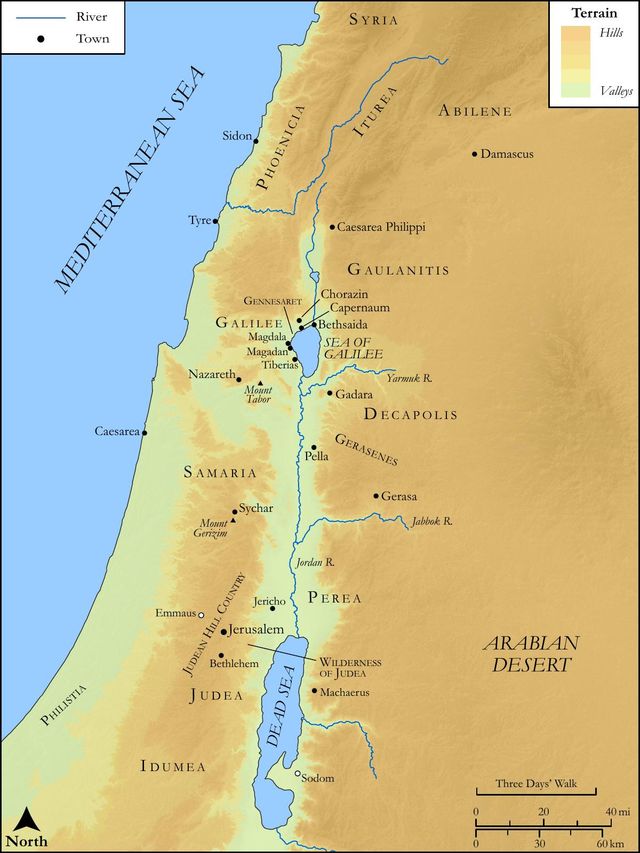
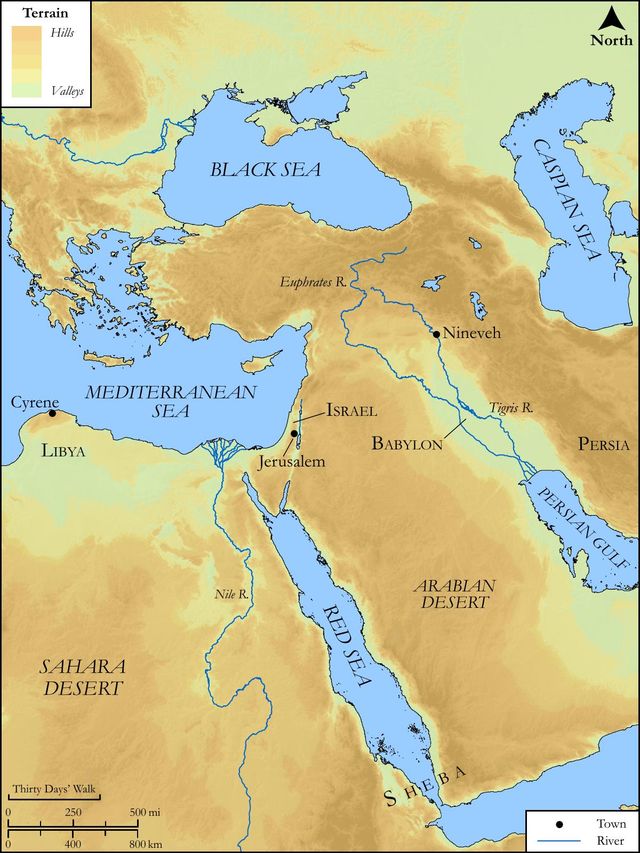
Study this verse
Public-domain commentary
Matthew Henry
From his Commentary on the Whole Bible. Henry comments on passages, not single verses — this entry covers Matthew 9:18–26. His four-level outline is real structure in the source text, so it is rendered as structure.
We have here two passages of history put together; that of the raising of Jairus's daughter to life, and that of the curing of the woman that had the bloody issue, as he was going to Jairus's house, which is introduced in a parenthesis, in the midst of the other; for Christ's miracles were thick sown, and interwoven; the work of him that sent him was his daily work. He was called to do these good works from speaking the things foregoing, in answer to the cavils of the Pharisees, Mat 9:18 : While he spake these things; and we may suppose it is a pleasing interruption given to that unpleasant work of disputation, which, though sometimes needful, a good man will gladly leave, to go about a work of devotion or charity. Here is,
I.The ruler's address to Christ, Mat 9:18.
A certain ruler, a ruler of the synagogue, came and worshipped him. Have any of the rulers believed on him? Yes, here was one, a church ruler, whose faith condemned the unbelief of the rest of the rulers. This ruler had a little daughter, of twelve years old, just dead, and this breach made upon his family comforts was the occasion of his coming to Christ. Note, In trouble we should visit God: the death of our relations should drive us to Christ, who is our life; it is well if any thing will do it. When affliction is in our families, we must not sit down astonished, but, as Job, fall down and worship. Now observe,
1.His humility in this address to Christ. He came with his errand to Christ himself, and did not send his servant. Note, It is no disparagement to the greatest rulers, personally to attend on the Lord Jesus. He worshipped him, bowed the knee to him, and gave him all imaginable respect. Note, They that would receive mercy from Christ must give honour to Christ.
2.His faith in this address; "My daughter is even now dead," and though any other physician would now come too late (nothing more absurd than post mortem medicina - medicine after death), yet Christ comes not too late; he is a Physician after death, for he is the resurrection and the life; "O come then, and lay thy hand upon her, and she shall live." This was quite above the power of nature (a privatione ad habitum non datur regressus - life once lost cannot be restored), yet within the power of Christ, who has life in himself, and quickeneth whom he will. Now Christ works in an ordinary, by nature and not against it, and, therefore, we cannot in faith bring him such a request as this; while there is life, there is hope, and room for prayer; but when our friends are dead, the case is determined; we shall go to them, but they shall not return to us. But while Christ was here upon earth working miracles, such a confidence as this was not only allowable but very commendable.
II.The readiness of Christ to comply with his address, Mat 9:19.
Jesus immediately arose, left his company, and followed him; he was not only willing to grant him what he desired, in raising his daughter to life, but to gratify him so far as to come to his house to do it. Surely he never said to the seed of Jacob, Seek ye me in vain. He denied to go along with the nobleman, who said, Sir, come down, ere my child die (Joh 4:48-50), yet he went along with the ruler of the synagogue, who said, Sir, come down, and my child shall live. The variety of methods which Christ took in working his miracles is perhaps to be attributed to the different frame and temper of mind which they were in who applied to him, which he who searcheth the heart perfectly knew, and accommodated himself to. He knows what is in man, and what course to take with him. And observe, when Jesus followed him, so did his disciples, whom he had chosen for his constant companions; it was not for state, or that he might come with observation, that he took his attendants with him, but that they might be the witnesses of his miracles, who were hereafter to be the preachers of his doctrine.
III.The healing of the poor woman's bloody issue.
I call her a poor woman, not only because her case was piteous, but because, she had spent it all upon physicians, for the cure of her distemper, and was never the better; which was a double aggravation of the misery of her condition, that she had been full, but was now empty; and that she had impoverished herself for the recovery of her health, and yet had not her health neither. This woman was diseased with a constant issue of blood twelve years (Mat 9:20); a disease, which was not only weakening and wasting, and under which the body must needs languish; but which also rendered her ceremonially unclean, and shut her out from the courts of the Lord's house; but it did not cut her off from approaching to Christ. She applied herself to Christ, and received mercy from him, by the way, as he followed the ruler, whose daughter was dead, to whom it would be a great encouragement, and a help to keep up his faith in the power of Christ. So graciously does Christ consider the frame, and consult the case, of weak believers. Observe,
1.The woman's great faith in Christ, and in his power. Her disease was of such a nature, that her modesty would not suffer her to speak openly to Christ for a cure, as others did, but by a peculiar impulse of the Spirit of faith, she believed him to have such an overflowing fulness of healing virtue, that the very touch of his garment would be her cure. This, perhaps, had something of fancy mixed with faith; for she had no precedent for this way of application to Christ, unless, as some think, she had an eye to the raising of the dead man by the touch of Elisha's bones, Kg2 13:21. But what weakness of understanding there was in it, Christ was pleased to overlook, and to accept the sincerity and strength of her faith; for he eateth the honey-comb with the honey, Sol 4:11. She believed she should be healed if she did but touch the very hem of his garment, the very extremity of it. Note, There is virtue in every thing that belongs to Christ. The holy oil with which the high priest was anointed, ran down to the skirts of his garments, Psa 133:2. Such a fulness of grace is there in Christ, that from it we may all receive, Joh 1:16.
2.Christ's great favour to this woman. He did not suspend (as he might have done) his healing influences, but suffered this bashful patient to steal a cure unknown to any one else, though she could not think to do it unknown to him. And now she was well content to be gone, for she had what she came for, but Christ was not willing to let he to so; he will not only have his power magnified in her cure, but his grace magnified in her comfort and commendation: the triumphs of her faith must be to her praise and honour. He turned about to see for her (Mat 9:22), and soon discovered her. Note, It is great encouragement to humble Christians, that they who hide themselves from men are known to Christ, who sees in secret their applications to heaven when most private. Now here,
(1.)He puts gladness into her heart, by that word, Daughter, be of good comfort. She feared being chidden for coming clandestinely, but she is encouraged.
[1.]He calls her daughter, for he spoke to her with the tenderness of a father, as he did to the man sick of the palsy (Mat 9:2), whom he called son. Note, Christ has comforts ready for the daughters of Zion, that are of a sorrowful spirit, as Hannah was, Sa1 1:15. Believing women are Christ's daughters, and he will own them as such.
[2.]He bids her be of good comfort: she has reason to be so, if Christ own her for a daughter. Note, The saints' consolation is founded in their adoption. His bidding her be comforted, brought comfort with it, as his saying, Be ye whole, brought health with it. Note, It is the will of Christ that his people should be comforted, and it is his prerogative to command comfort to troubled spirits. He creates the fruit of the lips, peace, Isa 57:19.
(2.)He puts honour upon her faith. That grace of all others gives most honour to Christ, and therefore he puts most honour upon it; Thy faith has made thee whole. Thus by faith she obtained a good report. And as of all graces Christ puts the greatest honour upon faith, so of all believers he puts the greatest honour upon those that are most humble; as here on this woman, who had more faith than she thought she had. She had reason to be of good comfort, not only because she was made whole, but because her faith had made her whole; that is,
[1.]She was spiritually healed; that cure was wrought in her which is the proper fruit and effect of faith, the pardon of sin and the work of grace. Note, We may then be abundantly comforted in our temporal mercies when they are accompanied with those spiritual blessings that resemble them; our food and raiment will be comfortable, when by faith we are fed with the bread of life, and clothed with the righteousness of Jesus Christ; our rest and sleep will be comfortable, when by faith we repose in God, and dwell at ease in him; our health and prosperity will be comfortable, when by faith our souls prosper, and are in health. See Isa 38:16, Isa 38:17.
[2.]Her bodily cure was the fruit of faith, of her faith, and that made it a happy, comfortable cure indeed. They out of whom the devils were cast, were helped by Christ's sovereign power; some by the faith of others (as Mat 9:2); but it is thy faith that has made thee whole. Note, Temporal mercies are then comforts indeed to us, when they are received by faith. If, when in pursuit of mercy, we prayed for it in faith, with an eye to the promise, and in dependence upon that, if we desired it for the sake of God's glory, and with a resignation to God's will, and have our hearts enlarged by it in faith, love, and obedience, we may then say, it was received by faith.
IV.The posture in which he found the ruler's house, Mat 9:23.
- He saw the people and the minstrels, or musicians, making a noise. The house was in a hurry: such work does death make, when it comes into a family; and, perhaps, the necessary cares that arise at such a time, when our dead is to be decently buried out of our sight, give some useful diversion to that grief which is apt to prevail and play the tyrant. The people in the neighbourhood came together to condole on account of the loss, to comfort the parents, to prepare for, and attend on, the funeral, which the Jews were not wont to defer long. The musicians were among them, according to the custom of the Gentiles, with their doleful, melancholy tunes, to increase the grief, and stir up the lamentations of those that attended on this occasion; as (they say) is usual among the Irish, with their Ahone, Ahone. Thus they indulged a passion that is apt enough of itself to grow intemperate, and affected to sorrow as those that had no hope. See how religion provides cordials, where irreligion administers corrosives. Heathenism aggravates that grief which Christianity studies to assuage. Or perhaps these musicians endeavoured on the other hand to divert the grief and exhilarate the family; but, as vinegar upon nitre, so is he that sings songs to a heavy heart. Observe, The parents, who were immediately touched with the affliction, were silent, while the people and minstrels, whose lamentations were forced, made such a noise. Note, The loudest grief is not always the greatest; rivers are most noisy where they run shallow. Ille dolet vere, qui sine teste dolet - That grief is most sincere, which shuns observation. But notice is taken of this, to show that the girl was really dead, in the undoubted apprehension of all about her.
V.The rebuke that Christ gave to this hurry and noise, Mat 9:24.
He said, Give place. Note, Sometimes, when the sorrow of the world prevails, it is difficult for Christ and his comforts to enter. They that harden themselves in sorrow, and, like Rachel, refuse to be comforted, should think they hear Christ saying to their disquieting thoughts, Give place: "Make room for him who is the Consolation of Israel, and brings with him strong consolations, strong enough to overcome the confusion and tyranny of these worldly griefs, if he may but be admitted into the soul." He gives a good reason why they should not thus disquiet themselves and one another; The maid is not dead but sleepeth.
1.This was eminently true of this maid, that was immediately to be raised to life; she was really dead, but not so to Christ, who knew within himself what he would do, and could do, and who had determined to make her death but as a sleep. There is little more difference between sleep and death, but in continuance; whatever other difference there is, it is but a dream. This death must be but of short continuance, and therefore is but a sleep, like one night's rest. He that quickens the dead, may well call the things which be not as though they were, Rom 4:17.
2.It is in a sense true of all that die, chiefly of them that die in the Lord. Note,
(1.)Death is a sleep. All nations and languages, for the softening of that which is so dreadful, and withal so unavoidable, and the reconciling of themselves to it, have agreed to call it so. It is said, even of the wicked kings, that they slept with their fathers; and of those that shall arise to everlasting contempt, that they sleep in the dust, Dan 12:2. It is not the sleep of the soul; its activity ceases not; but the sleep of the body, which lies down in the grave, still and silent, regardless and disregarded, wrapt up in darkness and obscurity. Sleep is a short death, and death a long sleep. But the death of the righteous is in a special manner to be looked upon as a sleep, Isa 57:2. They sleep in Jesus (Th1 4:14); they not only rest from the toils and labours of the day, but rest in hope of a joyful waking again in the morning of the resurrection, when they shall wake refreshed, wake to a new life, wake to be richly dressed and crowned, and wake to sleep no more.
(2.)The consideration of this should moderate our grief at the death of our dear relations: "say not, They are lost; no, they are but gone before: say not, They are slain; no, they are but fallen asleep; and the apostle speaks of it as an absurd thing to imagine that they that are fallen asleep in Christ are perished (Co1 15:18); give place, therefore, to those comforts which the covenant of grace ministers, fetched from the future state, and the glory to be revealed."
Now could it be thought that such a comfortable word as this, from the mouth of our Lord Jesus, should be ridiculed as it was? They laughed him to scorn. These people lived in Capernaum, knew Christ's character, that he never spake a rash or foolish word; they knew how many mighty works he had done; so that if they did not understand what he meant by this, they might at least have been silent in expectation of the issue. Note, The words and works of Christ which cannot be understood, yet are not therefore to be despised. We must adore the mystery of divine sayings, even when they seem to contradict what we think ourselves most confident of. Yet even this tended to the confirmation of the miracle: for it seems she was so apparently dead, that it was thought a very ridiculous thing to say otherwise.
VI.The raising of the damsel to life by the power of Christ, Mat 9:25.
The people were put forth. Note, Scorners that laugh at what they see and hear that is above their capacity, are not proper witnesses of the wonderful works of Christ, the glory of which lies not in pomp, but in power. The widow's son at Nain, and Lazarus, were raised from the dead openly, but this damsel privately; for Capernaum, that had slighted the lesser miracles of restoring health, was unworthy to see the greater, of restoring life; these pearls were not to be cast before those that would trample them under their feet.
Christ went in and took her by the hand, as it were to awake her, and to help her up, prosecuting his own metaphor of her being asleep. The high priest, that typified Christ, was not to come near the dead (Lev 21:10, Lev 21:11), but Christ touched the dead. The Levitical priesthood leaves the dead in their uncleanness, and therefore keeps at a distance from them, because it cannot remedy them; but Christ, having power to raise the dead, is above the infection, and therefore is not shy of touching them. He took her by the hand, and the maid arose. So easily, so effectually was the miracle wrought; not by prayer, as Elijah did (Kg1 17:21), and Elisha (Kg2 4:33), but by a touch. They did it as servants, he as a Son, as a God, to whom belong the issues from death. Note, Jesus Christ is the Lord of souls, he commands them forth, and commands them back, when and as he pleases. Dead souls are not raised to spiritual life, unless Christ take them by the hand: it is done in the day of his power. He helps us up, or we lie still.
VII.The general notice that was taken of this miracle, though it was wrought privately; Mat 9:26.
The fame thereof went abroad into all that land: it was the common subject of discourse. Note, Christ's works are more talked of than considered and improved. And doubtless, they that heard only the report of Christ's miracles, were accountable for that as well as they that were eye-witnesses of them. Though we at this distance have not seen Christ's miracles, yet having an authentic history of them, we are bound, upon the credit of that, to receive his doctrine; and blessed are they that have not seen, and yet have believed, Joh 20:29.
Historical interpretation
Nine Centuries of Reception
10 surviving comments on this verse. Each one is dated, so this reads as a timeline rather than a list.
Select a marker to jump to its quote. Markers stagger vertically where authors wrote within a few decades of each other.
The prayers of the ruler, the faith of the woman, the gathering of the crowd in the house and the shouting of the two blind men, as well as the bringing of the deaf and dumb demoniac … are all interrelated. The ruler here is understood to be the law. He prays to the Lord for the people. The law has nourished them on Christ in the expectation of his foretold coming, and he restores life to the dead girl. Now we do not read of any ruler who was a believer. Hence the person of this praying ruler may rightly be taken as a model of the law. The Lord promised to help him, and he made good on his promise.
Herein is to be observed the marvellous virtue of the Lord, that the power that dwelt in His body should give healing to things perishable, and the heavenly energy extended even through the hems of His garments; for God is not comprehensible that He should be shut in by a body. For His taking a body unto Him did not confine His power, but His power took upon it a frail body for our redemption. Figuratively, this ruler is to be understood as the Law, which prays the Lord that He would restore life to the dead multitude which it had brought up for Christ, preaching that His coming was to be looked for.
The deed overtook the words; so that the mouths of the Pharisees were the more stopped. For both he that came was a ruler of the synagogue, and his affliction terrible. For the young damsel was both his only child, and twelve years old, the very flower of her age; on which account especially He raised her up again, and that immediately.
And if Luke say that men came, saying, "Trouble not the Master, for she is dead;" we will say this, that the expression, "she is even now dead," was that of one conjecturing from the time of his journeying, or exaggerating his affliction. For it is an usual thing with persons in need to heighten their own evils by their report, and to say something more than is really true, the more to attract those whom they are beseeching.
But see his dullness: how he requires of Christ two things, both His actual presence, and the laying on of His hand: and this by the way is a sign that he had left her still breathing. This Naaman also, that Syrian, required of the prophet. "For I thought," saith he, "he will surely come out, and will lay on his hand." For in truth they who are more or less dull of temper, require sight and sensible things.
And whereas Mark saith, He took the three disciples, and so doth Luke; our evangelist merely saith, "the disciples." Wherefore then did He not take with Him Matthew, though he had but just come unto Him? To bring him to a more earnest longing, and because he was yet rather in an imperfect state. For to this intent doth He honor those, that these may grow such as those are. But for him it sufficed for the present, to see what befell the woman with the issue of blood, and to be honored by His table, and by His partaking of his salt.
And when He had risen up many followed Him, as for a great miracle, both on account of the person who had come, and because the more part being of a grosser disposition were seeking not so much the care of the soul, as the healing of the body; and they flowed together, some urged by their own afflictions, some hastening to behold how other men's were cured: however, there were as yet but few in the habit of coming principally for the sake of His words and doctrine. Nevertheless, He did not suffer them to enter into the house, but His disciples only; and not even all of these, everywhere instructing us to repel the applause of the multitude.
(Hom. xxxi.) After His instructions He adds a miracle, which should mightily discomfit the Pharisees, because he who came to beg this miracle, was a ruler of the synagogue, and the mourning was great, for she was his only child, and of the age of twelve years, that is, when the flower of youth begins; While he spake these things unto them, behold, there came one of their chief men unto him.
Or; The ruler says, she is dead, exaggerating his calamity. As it is the manner of those that prefer a petition to magnify their distresses, and to represent them as something more than they really are, in order to gain the compassion of those to whom they make supplication; whence he adds, But come and lay thy hand upon her, and she shall live. See his dullness. He begs two things of Christ, to come, and to lay His hand upon her. This was what Naaman the Syrian required of the Prophet. For they who are constituted thus hard of heart have need of sight and things sensible.
Mark and Luke say that He took with Him three disciples only, namely, Peter, James, and John; He took not Matthew, to quicken his desires, and because he was yet not perfectly minded1; and for this reason He honours these three, that others may become like-minded. It was enough meanwhile for Matthew to see the things that were done respecting her that had the issue of blood, concerning whom it follows; And, behold, a woman who had suffered an issue of blood twelve years, came behind and touched the hem of his garment.
She came not to Christ with an open address through shame concerning this her disease, believing herself unclean; for in the Law this disease was esteemed highly unclean. For this reason she hides herself.
Or because the woman was fearful, therefore He said, Be of good cheer. He calls her daughter, for her faith had made her such.
She had not yet a perfect mind respecting Christ, or she would not have supposed that she could be hid from Him; but Christ would not suffer her to go away unobserved, not that He sought fame, but for many reasons. First, He relieves the woman's fear, that she should not be pricked in her conscience as though she had stolen this boon; secondly, He corrects her error in supposing she could be hid from Him; thirdly, He displays her faith to all for their imitation; and fourthly, He did a miracle, in that He showed He knew all things, no less than in drying the fountain of her blood. It follows, And the woman was made whole from that hour.
(Verse 18, 19.) Behold, a certain ruler came forward and worshipped him, saying: My daughter has just died; but come, lay your hand upon her, and she will live. And Jesus arose and followed him, and so did his disciples. The eighth sign is in which the ruler asks for his daughter to be raised, not wanting to be excluded from the mystery of true circumcision; but a woman who had been flowing with blood enters, and is healed in the eighth place, so that the ruler's daughter comes as the ninth, according to what is said in the Psalms: Ethiopia will stretch out her hands to God (Psalm 67:32). And so, all Israel will be saved; as it is written: 'The Deliverer will come out of Zion, and He will turn away ungodliness from Jacob; for this is My covenant with them, when I take away their sins.' (Romans 11:25-26).
This woman that had the flux came to the Lord not in the house, nor in the town, for she was excluded from them by the Law, but by the way as He walked; thus as He goes to heal one woman, another is cured.
He said not, Thy faith shall make thee whole, but, hath made thee whole; for in that thou hast believed, thou art already made whole.
We ought to admire and at the same time to imitate the humility and mercifulness of the Lord; as soon as ever He was asked, He rose to follow him that asked; And Jesus rose, and followed him. Here is instruction both for such as are in command, and such as are in subjection. To these He has left an example of obedience; to those who are set over others He shows how earnest and watchful they should be in teaching; whenever they hear of any being dead in spirit, they should hasten to Him; And his disciples went with him.
In which her humility must be praised, that she came not before His face, but behind, and judged herself unworthy to touch the Lord's feet, yea, she touched not His whole garment, but the hem only; for the Lord wore a hem according to the command of the Law. So the Pharisees also wore hems which they made large, and in some they inserted thorns. But the Lord's hem was not made to wound, but to heal, and therefore it follows, For she said within herself, If I can but touch his garment, I shall be made whole. How wonderful her faith, that though she despaired of health from the physicians, on whom notwithstanding she had exhausted her living, she perceived that a heavenly Physician was at hand, and therefore bent her whole soul on Him; whence she deserved to be healed; But Jesus turning and seeing her, said, Be of good cheer, daughter, thy faith hath made thee whole.
The different comparisons all refer to the same thing, and yet are they different; the garment by which we are covered abroad signifies our good works, which we perform when we are abroad; the wine with which we are refreshed within is the fervor of faith and charity, which creates us anew within.
What is this that He bids her, Be of good cheer, seeing if she had not had faith, she would not have sought healing of Him? He requires of her strength and perseverance, that she may come to a sure and certain salvation.
(part. e Beda.) Or; The ruler of the synagogue signifies Moses; he is named Jairus, 'illuminating,' or, 'that shall illuminate,' because he received the words of life to give to us, and by them enlightens all, being himself enlightened by the Holy Spirit. The daughter of the ruler, that is, the synagogue itself, being as it were in the twelfth year of its age, that is, in the season of puberty, when it should have borne spiritual progeny to God, fell into the sickness of error. While then the Word of God is hastening to this ruler's daughter to make whole the sons of Israel, a holy Church is gathered from among the Gentiles, which while it was perishing by inward corruption, received by faith that healing that was prepared for others. It should be noted, that the ruler's daughter was twelve years old, and this woman had been twelve years afflicted; thus she had begun to be diseased at the very time the other was born; so in one and the same age the synagogue had its birth among the Patriarchs, and the nations without began to be polluted with the pest of idolatry. For the issue of blood may be taken in two ways, either for the pollution of idolatry, or for obedience to the pleasures of flesh and blood. Thus as long as the synagogue flourished, the Church languished; the falling away of the first was made the salvation of the Gentiles. Also the Church draws nigh and touches the Lord, when it approaches Him in faith. She believed, spake her belief, and touched, for by these three things, faith, word, and deed, all salvation is gained. She came behind Him, as He spake, If any one serve me, let him follow me; (John 12:26.) or because, not having seen the Lord present in the flesh, when the sacraments of His incarnation were fulfilled, she came at length to the grace of the knowledge of Him. Thus also she touched the hem of His garment, because the Gentiles, though they had not seen Christ in the flesh, received the tidings of His incarnation. The garment of Christ is put for the mystery of His incarnation, wherewith His Deity is clothed; the hem of His garment are the words that hang upon His incarnation. She touches not the garment, but the hem thereof; because she saw not the Lord in the flesh, but received the word of the incarnation through the Apostles. Blessed is he that touches but the uttermost part of the word by faith. She is healed while the Lord is not in the city, but while He is yet on the way; as the Apostles cried, Because ye judge yourselves unworthy of eternal life, lo, we turn to the Gentiles. (Acts 13:46.) And from the time of the Lord's coming the Gentiles began to be healed.
. It is apparent that this man had faith, although not as great as that of the centurion (Mt. 8:8). For this man beseeches Jesus, not to speak the word only, but to come and lay His hand upon his daughter. Although Luke says that she had not yet died (Lk. 8:42), the ruler says here that his daughter has already died, either because he thought he had left her as she was breathing her last breath, or to exaggerate the calamity so as to move Christ to have mercy.
(ap. Anselm.) This must be understood as the time in which she touched the hem of His garment, not in which Jesus turned to her; for she was already healed, as the other Evangelists testify, and as may be inferred from the Lord's words.
Continue studying Matthew 9:19 across the web’s major study libraries — every link below opens this exact verse, chapter, or book on the destination site.
Read & Compare
 BibleGatewayThis verse in more than 200 translations and 70 languages.
 Bible.comThe YouVersion reader — hundreds of translations, reading plans, and highlights.
 ESV.orgCrossway's official English Standard Version reader.
 NET BibleThe NET translation with 60,000+ translators' notes on every rendering decision.
 STEP BibleTyndale House's free study tool — original text, vocabulary, and scholarly resources.
 BibliaLogos Bible Software's free web reader.
 USCCBThe New American Bible (Revised Edition) with the U.S. bishops' study notes.
Commentaries
 BibleHub CommentariesDozens of classic commentaries on this verse, gathered on one page.
 StudyLightMore than 100 commentary sets — the largest collection on the web.
 BibleRefPlain-English commentary on what this verse means, verse by verse.
 Enduring WordDavid Guzik's free commentary on this chapter, widely used by Bible teachers.
 Bible Study ToolsVerse commentary alongside Greek and Hebrew study aids.
Original Language & Research
- BibleHub InterlinearThe verse word by word — original language, transliteration, and English.
- BibleHub LexiconEvery word's original-language definition and Strong's entry.
 Blue Letter BibleDeep-study tools — Strong's numbers, concordance, and word studies.
 CNTR CollationThe earliest Greek manuscripts of this verse, collated letter by letter.
Sermons, Hymns & Audio


TrulyRandomVerse is not affiliated with these sites and doesn’t control their content. They’re linked because they’re genuinely useful.
Summary
Matthew 9:19 succinctly captures Jesus' immediate and compassionate response to the desperate plea of Jairus, a synagogue ruler, whose daughter lay dying. This pivotal verse highlights Jesus' swift willingness to intervene in human suffering and underscores the active participation of His disciples in His ministry, demonstrating their ongoing commitment to follow their Master's example.
Context
ShowHideLiterary Context
This verse immediately follows Jairus's urgent appeal to Jesus, where the synagogue ruler, despite his esteemed position, humbly prostrates himself before Jesus, begging Him to come and lay hands on his dying daughter. Jesus' action in Matthew 9:19 is His affirmative and swift response to this desperate request, showcasing His profound empathy and readiness to intervene. The narrative then seamlessly transitions into the account of the woman with the issue of blood, who interrupts Jesus' journey to Jairus's house, demonstrating Jesus' accessibility and power even amidst other pressing engagements, as detailed in Matthew 9:20-22. This interlude serves to further emphasize Jesus' divine authority and compassion before He finally reaches Jairus's home to perform the miracle.
Historical & Cultural Context
In first-century Jewish society, a "ruler of the synagogue" (ἀρχισυνάγωγος, archisynagōgos) like Jairus held a position of significant local authority and respect. His public prostration before Jesus, a traveling rabbi with no formal institutional authority, was an extraordinary act of humility and desperation, indicating his profound belief in Jesus' unique power. Jewish culture at the time held strong beliefs about ritual purity, sickness, and death. Touching a dead body or someone with a chronic illness (like the woman with the issue of blood) would render one ritually unclean (see Numbers 19:11-13), yet Jesus consistently demonstrated a disregard for these ceremonial boundaries when it came to compassion and healing, prioritizing human need over strict adherence to external regulations. His willingness to go to a dying girl's house, and later to raise her, challenged prevailing notions of impurity and the finality of death.
Key Themes
ShowHideMatthew 9:19 contributes significantly to several overarching themes within Matthew's Gospel. Firstly, it powerfully illustrates Jesus' immediate compassion and divine authority. He does not hesitate or delay, but "arose, and followed him," underscoring His profound empathy and readiness to respond to urgent needs, even those involving death, which was considered the ultimate enemy. This exemplifies a responsive and caring Savior who is always attentive to human suffering, a theme echoed in His healing ministry throughout Matthew 8-9. Secondly, the verse highlights active discipleship. The phrase "and so did his disciples" shows that the disciples were not passive observers but active participants in Jesus' ministry. They followed their Master's example, learning firsthand about compassion, faith, and the nature of God's kingdom work. This mirrors the initial call to "follow me" that Jesus issued to His first disciples in Matthew 4:19, now seen in active service and practical obedience. The narrative also subtly reinforces the theme of divine intervention in human suffering, as Jesus' journey signifies His intent to conquer sickness and death.
Exposition and Analysis
ShowHideKey Word Analysis
ShowHideThis verb, G1453, literally means "to waken" or "to rouse." While it can refer to waking from sleep or rising from a seated position, in this context, it conveys a decisive and immediate action, a prompt "getting up" or "standing up" in response to Jairus's plea. It signifies Jesus' intentional and swift movement, indicating a readiness to act without hesitation.
G190 means "to be in the same way with" or "to accompany," specifically as a disciple. Intriguingly, here it is Jesus who is following Jairus, illustrating His humility and willingness to go where He is called to serve. This term is frequently used to describe the disciples' act of following Jesus, but its application to Jesus in this instance emphasizes His servant-hearted nature and His active engagement with human need.
Derived from a word meaning "to learn," refers to a "learner" or "pupil." The mention of "his disciples" indicates that Jesus was not alone, but consistently accompanied by those who were learning from Him. Their presence signifies the ongoing process of their training, as they observe Jesus' compassion, power, and methods of ministry, preparing them for their future roles.
Verse Breakdown
ShowHide"And Jesus arose,"
This clause emphasizes Jesus' immediate and decisive action. Upon hearing Jairus's desperate request, Jesus does not deliberate or delay. The act of "arising" signifies a transition from a state of rest or teaching to one of active engagement and purposeful movement towards the need. It underscores His readiness and willingness to respond to human suffering.
"and followed him,"
This phrase highlights Jesus' humility and responsiveness. Instead of commanding Jairus to bring his daughter to Him, Jesus personally goes with Jairus. This act of "following" demonstrates His servant leadership and His profound empathy, showing He is willing to enter into the very space of human pain and desperation. It is a powerful illustration of His willingness to meet people where they are.
"and [so did] his disciples."
This concluding clause reveals the active involvement of Jesus' followers. They are not mere spectators but participants in His ministry. Their presence signifies their ongoing commitment to Jesus and their practical training in discipleship. By accompanying Jesus, they witness His compassion, authority, and the unfolding of God's kingdom work firsthand, learning by example how to respond to urgent needs and engage in ministry.
Literary Devices
ShowHideThe verse employs several significant literary devices. Immediacy is a prominent feature, conveyed through the rapid succession of actions: Jesus "arose" and "followed," indicating a swift and unhesitating response. This quick pace mirrors the urgency of Jairus's plea. Understatement is also present in the simple phrase "and so did his disciples." While brief, it subtly conveys the consistent presence and active participation of Jesus' followers, implying their unwavering commitment without needing to elaborate. The narrative also utilizes Juxtaposition by placing the high-ranking synagogue ruler's desperate humility against Jesus' humble willingness to "follow" him, rather than demand that Jairus bring his daughter. This highlights Jesus' counter-cultural approach to power and service. Finally, the verse functions as a Transition, marking the beginning of Jesus' journey to Jairus's house, which will be interrupted by another significant miracle, building narrative tension and expectation.
Theological and Thematic Connections
ShowHideMatthew 9:19 provides a profound theological insight into the nature of God's responsiveness to human need and the active nature of faith. Jesus' immediate action demonstrates that God is not distant or indifferent to suffering but is intimately involved and ready to intervene. His willingness to go to Jairus's house, despite the potential ritual impurity associated with death, underscores His mission to bring life and healing, transcending human limitations and religious conventions. Furthermore, the disciples' accompanying Jesus serves as a powerful model of active, engaged discipleship, where following Christ means participating in His compassionate mission in the world.
Reflection and Application
ShowHideMatthew 9:19 offers a powerful blueprint for contemporary believers, urging us to embody the compassionate and responsive nature of Christ in our daily lives. Just as Jesus did not hesitate to respond to Jairus's plea, we are called to cultivate a heart that is attentive and swift to act in the face of human suffering and urgent needs, whether physical, emotional, or spiritual. This verse challenges us to move beyond passive sympathy to active empathy, recognizing that genuine faith is not merely intellectual assent but a dynamic force that compels us to tangible acts of love and service. It reminds us that our discipleship is not confined to personal piety but extends to actively joining Jesus in His ongoing mission of bringing hope, healing, and restoration to a broken world. We are invited to be co-laborers with Christ, learning from His example of humility, responsiveness, and unwavering compassion, allowing His Spirit to empower us to be His hands and feet in our communities.
Questions for Reflection
ShowHideFAQ
ShowHideWhy is it significant that Jesus "arose" and "followed" Jairus?
ShowHideThe significance lies in the immediacy and humility of Jesus' action. "Arose" (G1453, egeírō) signifies a decisive and prompt movement, indicating Jesus' unhesitating readiness to respond to a desperate plea. He doesn't delay or send someone else. Furthermore, His act of "following" (G190, akolouthéō) Jairus, a man who had prostrated himself before Him, demonstrates profound humility. Instead of demanding that the sick girl be brought to Him, Jesus goes to her, entering the space of suffering. This highlights His servant-hearted nature and His personal engagement with human need, contrasting with typical power dynamics. It underscores that Jesus meets people where they are, in their moments of greatest vulnerability.
What does the inclusion of "his disciples" tell us about their role?
ShowHideThe mention of "his disciples" (G3101, mathētḗs) indicates that they were not passive observers but active participants in Jesus' ministry. Their presence signifies their ongoing training and commitment to following Jesus. By accompanying Him, they witnessed firsthand His compassion, His authority over sickness and death, and His methods of engaging with people. This practical experience was crucial for their development as future apostles and leaders of the early church. It emphasizes that discipleship involves not just learning from Jesus' teachings but also imitating His actions and participating in His mission, as seen in Matthew 10:1.
Christ-Centered Fulfillment
ShowHideMatthew 9:19, in its depiction of Jesus' immediate and compassionate response to the plea for a dying girl, profoundly foreshadows His ultimate mission and identity as the Christ. Jesus' willingness to "arise and follow" Jairus, entering into the realm of sickness and impending death, prefigures His own descent into the depths of human suffering and mortality. He is the one who willingly "emptied himself, by taking the form of a servant" (Philippians 2:7), coming to meet humanity in its utter brokenness. His journey to Jairus's house, which culminates in the raising of the dead girl, is a powerful microcosm of His redemptive work on the cross and His resurrection. Just as He brings life to Jairus's daughter, He ultimately conquers death itself, offering eternal life to all who believe in Him (John 11:25-26). The disciples' presence, following their Master, also points to the ongoing mission of the church, called to participate in Christ's compassionate work, proclaiming the good news of the One who has overcome sin and death, and inviting others to follow the Lamb of God who takes away the sin of the world.