


Matthew 9:26
Bible text: King James Version (1769 Blayney text) · Public domain
Bible text: Berean Standard Bible · Public domain
Bible text: American Standard Version (1901) · Public domain
Bible text: World English Bible, Messianic edition · Public domain
Bible text: Geneva Bible (1599) · Public domain
Bible text: Young's Literal Translation · Public domain
- καὶkaiAndG2532CONJConjunction
- ἐξῆλθενexēlthenwent outG1831V-2AAI-3SVerb 2nd Aorist Active Indicative 3rd Singular
- ἡhē<the>G3588T-NSFDefinite article Nominative Singular Feminine
- φήμηphēmēreportG5345N-NSFNoun Nominative Singular Feminine
- αὕτηhautēthisG3778D-NSFDemonstrative pronoun Nominative Singular Feminine
- εἰςeisintoG1519PREPPreposition
- ὅληνholēnallG3650A-ASFAdjective Accusative Singular Feminine
- τὴνtēntheG3588T-ASFDefinite article Accusative Singular Feminine
- γῆνgēnlandG1093N-ASFNoun Accusative Singular Feminine
- ἐκείνηνekeinēnthatG1565D-ASFDemonstrative pronoun Accusative Singular Feminine
English is a literal word-by-word gloss of the Greek, not the KJV's wording. Why?
This is the original text the KJV's translators worked from — each Greek word with its own literal English meaning in this verse, prepared by scholars at Tyndale House, Cambridge. The KJV translates whole sentences, not word by word, so its wording differs: one Greek word can become several English words, and the KJV may choose “charity” where the gloss reads “love”. Both are faithful — they answer different questions. For the KJV's own rendering, switch to the KJV text.
Details
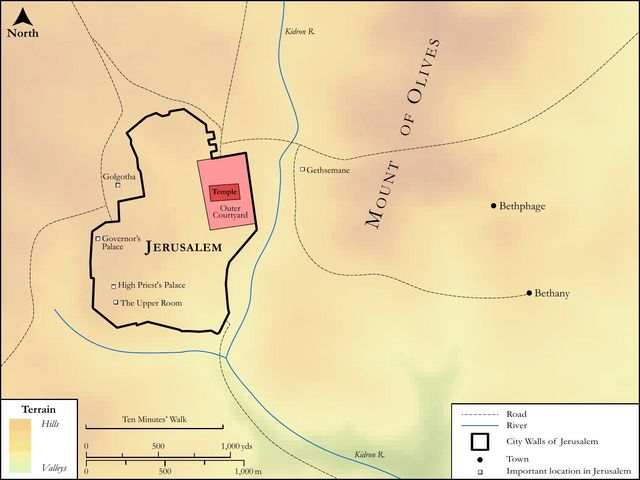
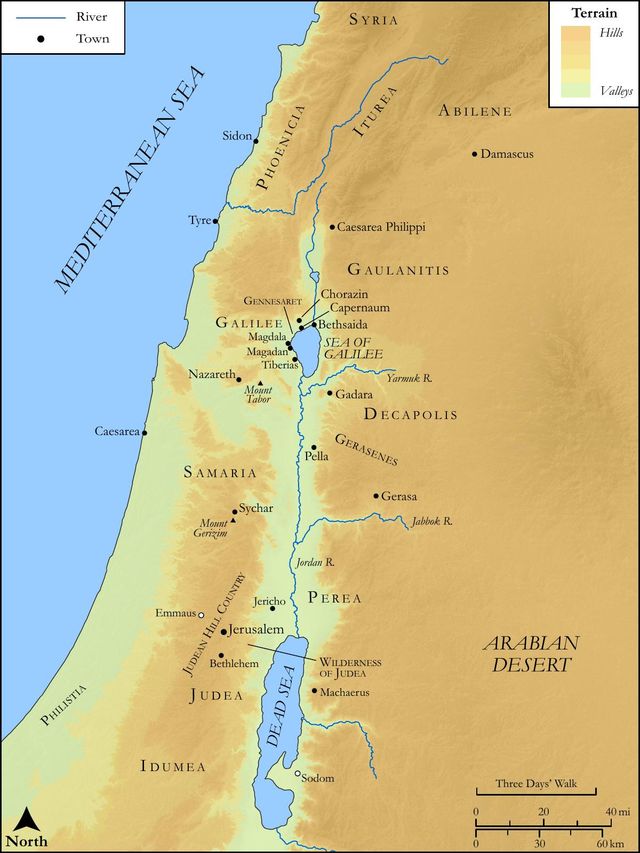
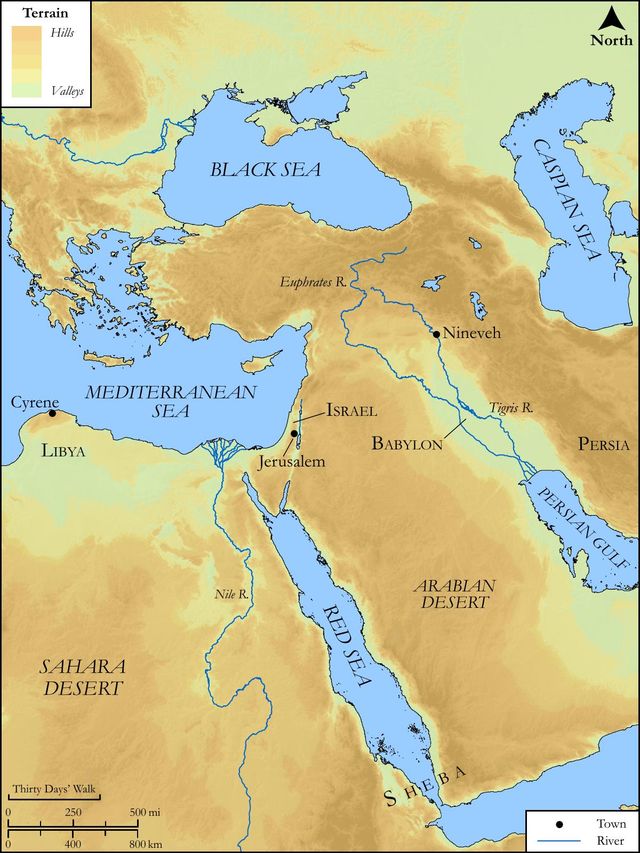
See on the biblical-era maps
Study this verse
Public-domain commentary
Matthew Henry
From his Commentary on the Whole Bible. Henry comments on passages, not single verses — this entry covers Matthew 9:18–26. His four-level outline is real structure in the source text, so it is rendered as structure.
We have here two passages of history put together; that of the raising of Jairus's daughter to life, and that of the curing of the woman that had the bloody issue, as he was going to Jairus's house, which is introduced in a parenthesis, in the midst of the other; for Christ's miracles were thick sown, and interwoven; the work of him that sent him was his daily work. He was called to do these good works from speaking the things foregoing, in answer to the cavils of the Pharisees, Mat 9:18 : While he spake these things; and we may suppose it is a pleasing interruption given to that unpleasant work of disputation, which, though sometimes needful, a good man will gladly leave, to go about a work of devotion or charity. Here is,
I.The ruler's address to Christ, Mat 9:18.
A certain ruler, a ruler of the synagogue, came and worshipped him. Have any of the rulers believed on him? Yes, here was one, a church ruler, whose faith condemned the unbelief of the rest of the rulers. This ruler had a little daughter, of twelve years old, just dead, and this breach made upon his family comforts was the occasion of his coming to Christ. Note, In trouble we should visit God: the death of our relations should drive us to Christ, who is our life; it is well if any thing will do it. When affliction is in our families, we must not sit down astonished, but, as Job, fall down and worship. Now observe,
1.His humility in this address to Christ. He came with his errand to Christ himself, and did not send his servant. Note, It is no disparagement to the greatest rulers, personally to attend on the Lord Jesus. He worshipped him, bowed the knee to him, and gave him all imaginable respect. Note, They that would receive mercy from Christ must give honour to Christ.
2.His faith in this address; "My daughter is even now dead," and though any other physician would now come too late (nothing more absurd than post mortem medicina - medicine after death), yet Christ comes not too late; he is a Physician after death, for he is the resurrection and the life; "O come then, and lay thy hand upon her, and she shall live." This was quite above the power of nature (a privatione ad habitum non datur regressus - life once lost cannot be restored), yet within the power of Christ, who has life in himself, and quickeneth whom he will. Now Christ works in an ordinary, by nature and not against it, and, therefore, we cannot in faith bring him such a request as this; while there is life, there is hope, and room for prayer; but when our friends are dead, the case is determined; we shall go to them, but they shall not return to us. But while Christ was here upon earth working miracles, such a confidence as this was not only allowable but very commendable.
II.The readiness of Christ to comply with his address, Mat 9:19.
Jesus immediately arose, left his company, and followed him; he was not only willing to grant him what he desired, in raising his daughter to life, but to gratify him so far as to come to his house to do it. Surely he never said to the seed of Jacob, Seek ye me in vain. He denied to go along with the nobleman, who said, Sir, come down, ere my child die (Joh 4:48-50), yet he went along with the ruler of the synagogue, who said, Sir, come down, and my child shall live. The variety of methods which Christ took in working his miracles is perhaps to be attributed to the different frame and temper of mind which they were in who applied to him, which he who searcheth the heart perfectly knew, and accommodated himself to. He knows what is in man, and what course to take with him. And observe, when Jesus followed him, so did his disciples, whom he had chosen for his constant companions; it was not for state, or that he might come with observation, that he took his attendants with him, but that they might be the witnesses of his miracles, who were hereafter to be the preachers of his doctrine.
III.The healing of the poor woman's bloody issue.
I call her a poor woman, not only because her case was piteous, but because, she had spent it all upon physicians, for the cure of her distemper, and was never the better; which was a double aggravation of the misery of her condition, that she had been full, but was now empty; and that she had impoverished herself for the recovery of her health, and yet had not her health neither. This woman was diseased with a constant issue of blood twelve years (Mat 9:20); a disease, which was not only weakening and wasting, and under which the body must needs languish; but which also rendered her ceremonially unclean, and shut her out from the courts of the Lord's house; but it did not cut her off from approaching to Christ. She applied herself to Christ, and received mercy from him, by the way, as he followed the ruler, whose daughter was dead, to whom it would be a great encouragement, and a help to keep up his faith in the power of Christ. So graciously does Christ consider the frame, and consult the case, of weak believers. Observe,
1.The woman's great faith in Christ, and in his power. Her disease was of such a nature, that her modesty would not suffer her to speak openly to Christ for a cure, as others did, but by a peculiar impulse of the Spirit of faith, she believed him to have such an overflowing fulness of healing virtue, that the very touch of his garment would be her cure. This, perhaps, had something of fancy mixed with faith; for she had no precedent for this way of application to Christ, unless, as some think, she had an eye to the raising of the dead man by the touch of Elisha's bones, Kg2 13:21. But what weakness of understanding there was in it, Christ was pleased to overlook, and to accept the sincerity and strength of her faith; for he eateth the honey-comb with the honey, Sol 4:11. She believed she should be healed if she did but touch the very hem of his garment, the very extremity of it. Note, There is virtue in every thing that belongs to Christ. The holy oil with which the high priest was anointed, ran down to the skirts of his garments, Psa 133:2. Such a fulness of grace is there in Christ, that from it we may all receive, Joh 1:16.
2.Christ's great favour to this woman. He did not suspend (as he might have done) his healing influences, but suffered this bashful patient to steal a cure unknown to any one else, though she could not think to do it unknown to him. And now she was well content to be gone, for she had what she came for, but Christ was not willing to let he to so; he will not only have his power magnified in her cure, but his grace magnified in her comfort and commendation: the triumphs of her faith must be to her praise and honour. He turned about to see for her (Mat 9:22), and soon discovered her. Note, It is great encouragement to humble Christians, that they who hide themselves from men are known to Christ, who sees in secret their applications to heaven when most private. Now here,
(1.)He puts gladness into her heart, by that word, Daughter, be of good comfort. She feared being chidden for coming clandestinely, but she is encouraged.
[1.]He calls her daughter, for he spoke to her with the tenderness of a father, as he did to the man sick of the palsy (Mat 9:2), whom he called son. Note, Christ has comforts ready for the daughters of Zion, that are of a sorrowful spirit, as Hannah was, Sa1 1:15. Believing women are Christ's daughters, and he will own them as such.
[2.]He bids her be of good comfort: she has reason to be so, if Christ own her for a daughter. Note, The saints' consolation is founded in their adoption. His bidding her be comforted, brought comfort with it, as his saying, Be ye whole, brought health with it. Note, It is the will of Christ that his people should be comforted, and it is his prerogative to command comfort to troubled spirits. He creates the fruit of the lips, peace, Isa 57:19.
(2.)He puts honour upon her faith. That grace of all others gives most honour to Christ, and therefore he puts most honour upon it; Thy faith has made thee whole. Thus by faith she obtained a good report. And as of all graces Christ puts the greatest honour upon faith, so of all believers he puts the greatest honour upon those that are most humble; as here on this woman, who had more faith than she thought she had. She had reason to be of good comfort, not only because she was made whole, but because her faith had made her whole; that is,
[1.]She was spiritually healed; that cure was wrought in her which is the proper fruit and effect of faith, the pardon of sin and the work of grace. Note, We may then be abundantly comforted in our temporal mercies when they are accompanied with those spiritual blessings that resemble them; our food and raiment will be comfortable, when by faith we are fed with the bread of life, and clothed with the righteousness of Jesus Christ; our rest and sleep will be comfortable, when by faith we repose in God, and dwell at ease in him; our health and prosperity will be comfortable, when by faith our souls prosper, and are in health. See Isa 38:16, Isa 38:17.
[2.]Her bodily cure was the fruit of faith, of her faith, and that made it a happy, comfortable cure indeed. They out of whom the devils were cast, were helped by Christ's sovereign power; some by the faith of others (as Mat 9:2); but it is thy faith that has made thee whole. Note, Temporal mercies are then comforts indeed to us, when they are received by faith. If, when in pursuit of mercy, we prayed for it in faith, with an eye to the promise, and in dependence upon that, if we desired it for the sake of God's glory, and with a resignation to God's will, and have our hearts enlarged by it in faith, love, and obedience, we may then say, it was received by faith.
IV.The posture in which he found the ruler's house, Mat 9:23.
- He saw the people and the minstrels, or musicians, making a noise. The house was in a hurry: such work does death make, when it comes into a family; and, perhaps, the necessary cares that arise at such a time, when our dead is to be decently buried out of our sight, give some useful diversion to that grief which is apt to prevail and play the tyrant. The people in the neighbourhood came together to condole on account of the loss, to comfort the parents, to prepare for, and attend on, the funeral, which the Jews were not wont to defer long. The musicians were among them, according to the custom of the Gentiles, with their doleful, melancholy tunes, to increase the grief, and stir up the lamentations of those that attended on this occasion; as (they say) is usual among the Irish, with their Ahone, Ahone. Thus they indulged a passion that is apt enough of itself to grow intemperate, and affected to sorrow as those that had no hope. See how religion provides cordials, where irreligion administers corrosives. Heathenism aggravates that grief which Christianity studies to assuage. Or perhaps these musicians endeavoured on the other hand to divert the grief and exhilarate the family; but, as vinegar upon nitre, so is he that sings songs to a heavy heart. Observe, The parents, who were immediately touched with the affliction, were silent, while the people and minstrels, whose lamentations were forced, made such a noise. Note, The loudest grief is not always the greatest; rivers are most noisy where they run shallow. Ille dolet vere, qui sine teste dolet - That grief is most sincere, which shuns observation. But notice is taken of this, to show that the girl was really dead, in the undoubted apprehension of all about her.
V.The rebuke that Christ gave to this hurry and noise, Mat 9:24.
He said, Give place. Note, Sometimes, when the sorrow of the world prevails, it is difficult for Christ and his comforts to enter. They that harden themselves in sorrow, and, like Rachel, refuse to be comforted, should think they hear Christ saying to their disquieting thoughts, Give place: "Make room for him who is the Consolation of Israel, and brings with him strong consolations, strong enough to overcome the confusion and tyranny of these worldly griefs, if he may but be admitted into the soul." He gives a good reason why they should not thus disquiet themselves and one another; The maid is not dead but sleepeth.
1.This was eminently true of this maid, that was immediately to be raised to life; she was really dead, but not so to Christ, who knew within himself what he would do, and could do, and who had determined to make her death but as a sleep. There is little more difference between sleep and death, but in continuance; whatever other difference there is, it is but a dream. This death must be but of short continuance, and therefore is but a sleep, like one night's rest. He that quickens the dead, may well call the things which be not as though they were, Rom 4:17.
2.It is in a sense true of all that die, chiefly of them that die in the Lord. Note,
(1.)Death is a sleep. All nations and languages, for the softening of that which is so dreadful, and withal so unavoidable, and the reconciling of themselves to it, have agreed to call it so. It is said, even of the wicked kings, that they slept with their fathers; and of those that shall arise to everlasting contempt, that they sleep in the dust, Dan 12:2. It is not the sleep of the soul; its activity ceases not; but the sleep of the body, which lies down in the grave, still and silent, regardless and disregarded, wrapt up in darkness and obscurity. Sleep is a short death, and death a long sleep. But the death of the righteous is in a special manner to be looked upon as a sleep, Isa 57:2. They sleep in Jesus (Th1 4:14); they not only rest from the toils and labours of the day, but rest in hope of a joyful waking again in the morning of the resurrection, when they shall wake refreshed, wake to a new life, wake to be richly dressed and crowned, and wake to sleep no more.
(2.)The consideration of this should moderate our grief at the death of our dear relations: "say not, They are lost; no, they are but gone before: say not, They are slain; no, they are but fallen asleep; and the apostle speaks of it as an absurd thing to imagine that they that are fallen asleep in Christ are perished (Co1 15:18); give place, therefore, to those comforts which the covenant of grace ministers, fetched from the future state, and the glory to be revealed."
Now could it be thought that such a comfortable word as this, from the mouth of our Lord Jesus, should be ridiculed as it was? They laughed him to scorn. These people lived in Capernaum, knew Christ's character, that he never spake a rash or foolish word; they knew how many mighty works he had done; so that if they did not understand what he meant by this, they might at least have been silent in expectation of the issue. Note, The words and works of Christ which cannot be understood, yet are not therefore to be despised. We must adore the mystery of divine sayings, even when they seem to contradict what we think ourselves most confident of. Yet even this tended to the confirmation of the miracle: for it seems she was so apparently dead, that it was thought a very ridiculous thing to say otherwise.
VI.The raising of the damsel to life by the power of Christ, Mat 9:25.
The people were put forth. Note, Scorners that laugh at what they see and hear that is above their capacity, are not proper witnesses of the wonderful works of Christ, the glory of which lies not in pomp, but in power. The widow's son at Nain, and Lazarus, were raised from the dead openly, but this damsel privately; for Capernaum, that had slighted the lesser miracles of restoring health, was unworthy to see the greater, of restoring life; these pearls were not to be cast before those that would trample them under their feet.
Christ went in and took her by the hand, as it were to awake her, and to help her up, prosecuting his own metaphor of her being asleep. The high priest, that typified Christ, was not to come near the dead (Lev 21:10, Lev 21:11), but Christ touched the dead. The Levitical priesthood leaves the dead in their uncleanness, and therefore keeps at a distance from them, because it cannot remedy them; but Christ, having power to raise the dead, is above the infection, and therefore is not shy of touching them. He took her by the hand, and the maid arose. So easily, so effectually was the miracle wrought; not by prayer, as Elijah did (Kg1 17:21), and Elisha (Kg2 4:33), but by a touch. They did it as servants, he as a Son, as a God, to whom belong the issues from death. Note, Jesus Christ is the Lord of souls, he commands them forth, and commands them back, when and as he pleases. Dead souls are not raised to spiritual life, unless Christ take them by the hand: it is done in the day of his power. He helps us up, or we lie still.
VII.The general notice that was taken of this miracle, though it was wrought privately; Mat 9:26.
The fame thereof went abroad into all that land: it was the common subject of discourse. Note, Christ's works are more talked of than considered and improved. And doubtless, they that heard only the report of Christ's miracles, were accountable for that as well as they that were eye-witnesses of them. Though we at this distance have not seen Christ's miracles, yet having an authentic history of them, we are bound, upon the credit of that, to receive his doctrine; and blessed are they that have not seen, and yet have believed, Joh 20:29.
Historical interpretation
Nine Centuries of Reception
13 surviving comments on this verse. Each one is dated, so this reads as a timeline rather than a list.
Select a marker to jump to its quote. Markers stagger vertically where authors wrote within a few decades of each other.
Mystically; The Lord enters the ruler's house, that is, the synagogue, throughout which there resounded in the songs of the Law a strain of wailing.
But that the number of the elect might be known to be but few out of the whole body of believers, the multitude is put forth; the Lord indeed would that they should be saved, but they mocked at His sayings and actions, and so were not worthy to be made partakers of His resurrection.
His fame went about into all that country; that is, the salvation of the elect, the gift and works of Christ are preached.
(in Luc. 8. 52.) For by the ancient custom minstrels were engaged to make lamentation for the dead.
In the flute players and bustling onlookers who laughed to scorn the Lord who said, “The girl is asleep, not dead,” we see an example of the synagogue rulers and the onlookers of Jewish people who, when they heard that the hope of eternal life had been promised by the Son of God to the Gentiles, held up to ridicule and contempt this great grace of the Lord. Not unjustly did the Lord order them to be sent outside. He showed that incredulous and unbelieving people of this kind are to be excluded from the promise of eternal life or from God’s kingdom by him who is the Author of life and the Lord of the heavenly kingdom.
In the synagogue ruler we perceive a figure of the prophets or apostles, especially Peter, by whom the calling of the Gentiles was first heard; that is, the girl represented all those holy people who pleased God, not through the works of the law but through the righteousness of faith.…Moreover, for us to understand that the entire mystery of our salvation is prefigured in this girl; after she was raised from the dead, as Luke reports, the Lord directs her to eat something. Evidently the order of our faith and salvation is here shown. For when each believer among us is freed in baptism from perpetual death and comes back to life upon acceptance of the gift of the Holy Spirit, it is necessary that the person also be directed to eat that heavenly bread about which the Lord says, “Unless you eat the flesh of the Son of Man and drink his blood, you have no life in you.”
Noble tokens, surely, these, of the rulers of synagogues; in the moment of her death pipes and cymbals raising a dirge! What then doth Christ? All the rest He cast out, but the parents He brought in; to leave no room for saying that He healed her in any other way. And before her resurrection too, He raises her in His word; saying, "The maid is not dead, but sleepeth." And in many instances besides He doeth this. As then on the sea He expels tumult from the mind of the by-standers, at the same time both signifying that it is easy for Him to raise the dead (which same thing He did with respect to Lazarus also, saying, "Our friend Lazarus sleepeth;" and also teaching us not to fear death; for that it is not death, but is henceforth become a sleep. Thus, since He Himself was to die, He doth in the persons of others prepare His disciples beforehand to be of good courage, and to bear the end meekly. Since in truth, when He had come, death was from that time forward a sleep.
But yet they laughed Him to scorn: He however was not indignant at being disbelieved by those for whom He was a little afterwards to work miracles; neither did He rebuke their laughter, in order that both it and the pipes, and the cymbals, and all the other things, might be a sure proof of her death. For since for the most part, after the miracles are done, men disbelieve, He takes them beforehand by their own answers; which was done in the case both of Lazarus and of Moses. For to Moses first He saith, "What is that in thine hand?" in order that when he saw it become a serpent, He should not forget that it was a rod before, but being reminded of his own saying, might be amazed at what was done. And with regard to Lazarus He saith, "Where have ye laid him?" that they who had said, "Come and see," and "he stinketh, for he hath been dead four days," might no longer be able to disbelieve His having raised a dead man.
Seeing then the cymbals and the multitude, He put them all out, and in the presence of the parents works the miracle; not introducing another soul, but recalling the same that had gone out, and awakening her as it were out of a sleep.
And He holds her by the hand, assuring the beholders; so as by that sight to make a way for the belief of her resurrection. For whereas the father said, "Lay thy hand upon her;" He on His part doth somewhat more, for He lays no hand on her, but rather takes hold of her, and raises her, implying that to Him all things are ready. And He not only raises her up, but also commands to give her meat, that the event might not seem to be an illusion. And He doth not give it Himself, but commands them; as also with regard to Lazarus He said, "Loose him, and let him go," and afterwards makes him partaker of His table. For so is He wont always to establish both points, making out with all completeness the demonstration alike of the death and of the resurrection.
But do thou mark, I pray thee, not her resurrection only, but also His commanding "to tell no man;" and by all learn thou this especially, His freedom from haughtiness and vainglory. And withal learn this other thing also, that He cast them that were beating themselves out of the house, and declared them unworthy of such a sight; and do not thou go out with the minstrels, but remain with Peter, and John, and James.
For if He cast them out then, much more now. For then it was not yet manifest that death was become a sleep, but now this is clearer than the very sun itself. But is it that He hath not raised thy daughter now? But surely He will raise her, and with more abundant glory. For that damsel, when she had risen, died again; but thy child, if she rise again, abides thenceforth in immortal being.
We may suppose that He proceeded slowly, and spake longer to the woman whom He had healed, that He might suffer the maid to die, and thus an evident miracle of restoring to life might be wrought. In the case of Lazarus also He waited till the third day. And when he saw the minstrels and the people making a noise; this was a proof of her death.
But Christ put forth all the pipers, but took in the parents, that it might not be said that He had healed her by any other means; and before the restoring to life He excites their expectations by His words, And he said, Give place: for the maid is not dead, but sleepeth.
By this saying, He soothes the minds of those that were present, and shows that it is easy to Him to raise the dead; the like He did in the case of Lazarus, Our friend Lazarus sleepeth. (John 11:11.) This was also a lesson to them not to be afraid of death; forasmuch as He Himself also should die, He made His disciples learn in the persons of others confidence and patient endurance of death. For when He was near, death was but as sleep. When He had said this, They mocked him. And He did not rebuke their mocking; that this mocking, and the pipes and all other things, might be a proof of her death. For ofttimes at His miracles when men would not believe, He convicted them by their own answers; as in the case of Lazarus, when He said, Where have ye laid him? so that they that answered, Come and see, and, He stinketh, for he hath now been dead four days, could no longer disbelieve that He had raised a dead man.
He restored her to life not by bringing in another soul, but by recalling that which had departed, and as it were raising it from sleep, and through this sight preparing the way for belief of the resurrection. And He not only restores her to life, but commands food to be given her, as the other Evangelists relate, that that which was done might be seen to be no delusion. And the fame of him went abroad into all that country.
They that had mocked the Reviver were not worthy to behold the mystery of the revival; and therefore it follows, And when the multitude was put forth, he entered, and took her by the hand, and the maid arose.
To this day the damsel lays dead in the ruler's house; and they that seem to be teachers are but minstrels singing funeral dirges. The Jews also are not the crowd of believers, but of people making a noise. But when the fulness of the Gentiles shall come in, then all Israel shall be saved.
He took her by the hand, and the maid arose; because if the hands of the Jews which are defiled with blood be not first cleansed, their synagogue which is dead shall not revive.
(Verse 26) And he took her by the hand. And the girl arose: And this report went forth into all that land. Unless the hands of the Jews, which are full of blood, are first cleansed, their synagogue will not rise again.
(Mor. xviii. 43.) The multitude are put forth that the damsel may be raised; for unless the multitude of worldly cares is first banished from the secrets of the heart, the soul which is laid dead within, cannot rise again.
(in Luc.) As though He had said, To you she is dead, but to God who has power to give life, she sleeps only both in soul and body.
(part. e Beda.) Or; The ruler of the synagogue signifies Moses; he is named Jairus, 'illuminating,' or, 'that shall illuminate,' because he received the words of life to give to us, and by them enlightens all, being himself enlightened by the Holy Spirit. The daughter of the ruler, that is, the synagogue itself, being as it were in the twelfth year of its age, that is, in the season of puberty, when it should have borne spiritual progeny to God, fell into the sickness of error. While then the Word of God is hastening to this ruler's daughter to make whole the sons of Israel, a holy Church is gathered from among the Gentiles, which while it was perishing by inward corruption, received by faith that healing that was prepared for others. It should be noted, that the ruler's daughter was twelve years old, and this woman had been twelve years afflicted; thus she had begun to be diseased at the very time the other was born; so in one and the same age the synagogue had its birth among the Patriarchs, and the nations without began to be polluted with the pest of idolatry. For the issue of blood may be taken in two ways, either for the pollution of idolatry, or for obedience to the pleasures of flesh and blood. Thus as long as the synagogue flourished, the Church languished; the falling away of the first was made the salvation of the Gentiles. Also the Church draws nigh and touches the Lord, when it approaches Him in faith. She believed, spake her belief, and touched, for by these three things, faith, word, and deed, all salvation is gained. She came behind Him, as He spake, If any one serve me, let him follow me; (John 12:26.) or because, not having seen the Lord present in the flesh, when the sacraments of His incarnation were fulfilled, she came at length to the grace of the knowledge of Him. Thus also she touched the hem of His garment, because the Gentiles, though they had not seen Christ in the flesh, received the tidings of His incarnation. The garment of Christ is put for the mystery of His incarnation, wherewith His Deity is clothed; the hem of His garment are the words that hang upon His incarnation. She touches not the garment, but the hem thereof; because she saw not the Lord in the flesh, but received the word of the incarnation through the Apostles. Blessed is he that touches but the uttermost part of the word by faith. She is healed while the Lord is not in the city, but while He is yet on the way; as the Apostles cried, Because ye judge yourselves unworthy of eternal life, lo, we turn to the Gentiles. (Acts 13:46.) And from the time of the Lord's coming the Gentiles began to be healed.
Morally; The damsel dead in the house is the soul dead in thought. He says that she is asleep, because they that are now asleep in sin may yet be roused by penitence. The minstrels are flatterers who cherish the dead.
The maiden is raised in the house with few to witness, the young man without the gate, and Lazarus in the presence of many; for a public scandal requires a public expiation; a less notorious, a lesser remedy; and secret sins may be done away by penitence.
. Where there are crowds and distractions, Christ does not perform miracles. He takes her by the hand, thus imparting strength. And you, O reader, who are dead in sins, He will also resurrect when He puts outside the crowd and its tumult and takes you by the hand so that you might act.
(non occ.) After the healing of the woman with the issue of blood, follows the raising of the dead; And when Jesus was come into the ruler's house.
(non occ.) The fame, namely, of the greatness and novelty of the miracle, and its established truth; so that it could not be supposed to be a forgery.
Continue studying Matthew 9:26 across the web’s major study libraries — every link below opens this exact verse, chapter, or book on the destination site.
Read & Compare
 BibleGatewayThis verse in more than 200 translations and 70 languages.
 Bible.comThe YouVersion reader — hundreds of translations, reading plans, and highlights.
 ESV.orgCrossway's official English Standard Version reader.
 NET BibleThe NET translation with 60,000+ translators' notes on every rendering decision.
 STEP BibleTyndale House's free study tool — original text, vocabulary, and scholarly resources.
 BibliaLogos Bible Software's free web reader.
 USCCBThe New American Bible (Revised Edition) with the U.S. bishops' study notes.
Commentaries
 BibleHub CommentariesDozens of classic commentaries on this verse, gathered on one page.
 StudyLightMore than 100 commentary sets — the largest collection on the web.
 BibleRefPlain-English commentary on what this verse means, verse by verse.
 Enduring WordDavid Guzik's free commentary on this chapter, widely used by Bible teachers.
 Bible Study ToolsVerse commentary alongside Greek and Hebrew study aids.
Original Language & Research
- BibleHub InterlinearThe verse word by word — original language, transliteration, and English.
- BibleHub LexiconEvery word's original-language definition and Strong's entry.
 Blue Letter BibleDeep-study tools — Strong's numbers, concordance, and word studies.
 CNTR CollationThe earliest Greek manuscripts of this verse, collated letter by letter.
Sermons, Hymns & Audio


TrulyRandomVerse is not affiliated with these sites and doesn’t control their content. They’re linked because they’re genuinely useful.
Summary
Following Jesus' compassionate and authoritative act of raising Jairus' daughter from the dead, a miracle immediately preceded by the healing of the woman with a chronic hemorrhage, the news of this extraordinary event rapidly and extensively permeated the entire region. This verse serves as a concise yet powerful declaration of the widespread impact and undeniable public acknowledgment of Jesus' divine power and miraculous works in Galilee.
Context
ShowHideLiterary Context
Matthew 9:26 functions as the concluding statement to a profound narrative sequence that begins with Jairus, a synagogue ruler, pleading with Jesus to heal his dying daughter (Matthew 9:18). On the way to Jairus' house, Jesus is interrupted by a woman who, having suffered from a hemorrhage for twelve years, secretly touches His garment and is instantly healed by faith (Matthew 9:20-22). Despite the news arriving that Jairus' daughter had died, Jesus reassures Jairus, enters the house, and, after dismissing the mourners, takes the girl by the hand and raises her to life with a simple command (Matthew 9:23-25). Verse 26, therefore, summarizes the immediate and far-reaching consequence of this dual display of power over sickness and death, emphasizing that such a profound miracle could not be kept secret.
Historical & Cultural Context
The events described in Matthew 9 likely occurred in or around Capernaum, Jesus' adopted hometown and the center of much of His Galilean ministry. Galilee, at this time, was a vibrant, populous region with a mix of Jewish and Gentile inhabitants, though Capernaum itself was predominantly Jewish. Synagogues, like the one Jairus led, were central to Jewish community life, serving as places of worship, teaching, and judicial proceedings. The public nature of Jesus' miracles, often performed in crowded settings or in homes where many gathered, naturally led to rapid dissemination of news through word-of-mouth. In a society without mass media, personal testimony and communal sharing of extraordinary events were the primary means by which "fame" or "reports" spread, solidifying Jesus' reputation as a powerful healer and prophet.
Key Themes
ShowHideThis verse powerfully contributes to several overarching themes in Matthew's Gospel. Firstly, it underscores Jesus' Unquestionable Authority and Power over all aspects of life and death, confirming His divine identity. The raising of the dead is the ultimate demonstration of power, surpassing even the healing of chronic illness, and this miracle's widespread report validates Jesus' unique status as the Messiah. Secondly, it highlights the Spread of the Gospel Message through the undeniable evidence of God's work. Just as Jesus' fame had spread earlier in Galilee following His initial teachings and healings (Matthew 4:23-25), this particular miracle further cemented His renown, drawing more people to hear His teachings and witness His signs. Thirdly, it reinforces the theme of Divine Revelation Through Miracles, where Jesus' acts are not merely compassionate deeds but powerful signs pointing to the inbreaking of God's kingdom and the presence of the King Himself among His people.
Exposition and Analysis
ShowHideKey Word Analysis
ShowHideThis word denotes a saying, report, or rumor, specifically a widespread public report or renown. In this context, it signifies the reputation or public knowledge of Jesus' miraculous deed, indicating that the news was not confined to a small group but became common knowledge throughout the region.
Literally meaning "to issue," "come forth," or "go out," this verb emphasizes the active and expansive dissemination of the news. It conveys the idea that the report of the miracle spread rapidly and widely, unable to be contained, much like water overflowing its banks or light shining into darkness.
While it can refer to the whole earth, in this context, it signifies a specific region or country. Given the preceding narrative, "that land" most likely refers to the region of Galilee, particularly the area surrounding Capernaum, where Jesus performed this miracle. It implies a significant geographical reach for the news of His power.
Verse Breakdown
ShowHide"And the fame hereof"
This phrase introduces the subject of the verse – the widespread report or reputation concerning the miracle Jesus had just performed. The "hereof" (Greek, hoûtos' G3778) specifically points back to the raising of Jairus' daughter and the healing of the woman, indicating that the news was directly tied to these astonishing acts.
"went abroad"
This clause describes the action of the "fame." The Greek verb exérchomai (G1831) vividly portrays the news not merely being heard but actively spreading out, disseminating, and radiating from the place of the miracle. It suggests an unstoppable and expansive movement of information.
"into all that land"
This final clause specifies the extent of the spread. "All" (Greek, hólos' G3650) emphasizes the totality and comprehensiveness of the reach, while "that land" (Greek, ekeînos gē' G1565 G1093) refers to the entire geographical region where these events occurred, primarily Galilee. It signifies that no part of the immediate territory was untouched by the news of Jesus' power.
Literary Devices
ShowHideMatthew employs several literary devices in this concise verse. The primary device is Hyperbole, as "all that land" might not mean every single square inch, but rather emphasizes the widespread and undeniable nature of the news. It conveys the idea of maximum possible dissemination, creating a sense of awe and wonder at the impact of Jesus' miracle. There is also an element of Synecdoche, where "fame" (the part) stands for the entire miraculous event (the whole) and its profound implications. The phrase "went abroad" also carries a sense of Personification, subtly imbuing the abstract concept of "fame" with active movement, as if it were an entity purposefully traveling and spreading. This choice of language underscores the unstoppable and self-propagating nature of the report about Jesus' divine power.
Theological and Thematic Connections
ShowHideMatthew 9:26 serves as a powerful theological statement, not merely a historical report. It confirms that Jesus' miracles were not isolated incidents but public demonstrations of God's active presence and power, intended to be widely known and to bear witness to His identity as the Messiah. The rapid spread of His "fame" signifies the inbreaking of the Kingdom of God, which, like leaven, permeates and transforms its surroundings. This verse underscores the divine purpose behind Jesus' miracles: they were signs designed to reveal His glory, authenticate His message, and draw people to faith. The undeniable nature of these events meant that God was making Himself known in an unprecedented way through His Son.
Reflection and Application
ShowHideMatthew 9:26 invites us to consider the profound impact of God's work in the world and in our individual lives. Just as the fame of Jesus' miracle could not be contained, so too should the transformative power of the Gospel not be confined to our private experience. This verse challenges us to recognize that God is still at work, performing spiritual miracles of transformation and redemption today. When we witness or experience God's power, whether in personal healing, deliverance, or the conversion of a heart, we are called to be conduits for that news, allowing His "fame" to spread through our testimonies and lives. Our transformed lives become living proof of His authority and grace, compelling others to inquire about the source of such power. We are to live in such a way that the "fame" of Christ's work in us naturally "goes abroad" into "all that land" – our spheres of influence, our communities, and ultimately, the world.
Questions for Reflection
ShowHideFAQ
ShowHideWhat is the significance of the "fame" spreading so widely?
ShowHideThe widespread "fame" (Greek, phḗmē) signifies the undeniable and public nature of Jesus' miracles. It indicates that these were not secret acts, but powerful demonstrations of divine authority witnessed by many, leading to a rapid and extensive dissemination of the news. This widespread report served to authenticate Jesus' claims and identity as the Messiah, drawing greater attention to His teachings and the inbreaking of God's kingdom. It highlights that God's work is often public and impactful, designed to be known and to elicit a response.
Why does Matthew specifically mention "all that land" rather than a smaller area?
ShowHideMatthew's use of "all that land" (Greek, hólos gē) emphasizes the comprehensive reach of the news. While it primarily refers to the region of Galilee, particularly around Capernaum where these events occurred, it underscores that the impact of Jesus' miracle was not localized but permeated the entire territory. This hyperbole stresses the magnitude of the event and its profound effect on public perception, indicating that the news was so significant it could not be contained within a small vicinity but radiated outwards, touching every part of the region. This widespread recognition was crucial for establishing Jesus' reputation as a powerful prophet and healer, preparing the way for His further ministry and the broader acceptance of His message.
Christ-Centered Fulfillment
ShowHideMatthew 9:26, describing the widespread fame of Jesus' miracle, points forward to the ultimate and universal fame that would be ascribed to Him as the Christ. The raising of Jairus' daughter foreshadows Jesus' own triumph over death, not just for one individual, but for all who believe. His "fame" in Galilee, born of miraculous power, is but a prelude to the global renown He would achieve through His crucifixion and resurrection, becoming the Lamb of God who takes away the sin of the world. The news of His resurrection, far more impactful than any single healing, would "go abroad" into "all the world," as commanded in the Great Commission (Matthew 28:18-20). The power displayed in Matthew 9:26 is the same divine power that raised Jesus from the dead (Romans 8:11) and empowers believers for new life (Ephesians 1:19-20). Thus, the local "fame" of a miracle worker in Galilee ultimately culminates in the universal worship of Christ as Lord, whose name is above every name (Philippians 2:9-11).