


John 20:29
- λέγειlegeiSaysG3004V-PAI-3SVerb Present Active Indicative 3rd Singular
- αὐτῷautōto himG846P-DSMPersonal pronoun Dative Singular Masculine
- ὁho<the>G3588T-NSMDefinite article Nominative Singular Masculine
- Ἰησοῦς·IēsousJesusG2424N-NSM-PNoun Nominative Singular Masculine Individual
- ὅτιhotiBecauseG3754CONJConjunction
- ἑώρακάςhe'ōrakasyou have seenG3708V-RAI-2SVerb Perfect Active Indicative 2nd Singular
- μεmeMeG3165P-1ASPersonal pronoun Accusative 1st Singular
- ΘωμᾷThōmaThomasG2381N-VSM-PNoun Vocative Singular Masculine Person Gentilic
- πεπίστευκας·pepisteukasyou have believedG4100V-RAI-2SVerb Perfect Active Indicative 2nd Singular
- μακάριοιmakarioiblessed [are]G3107A-NPMAdjective Nominative Plural Masculine
- οἱhoithoseG3588T-NPMDefinite article Nominative Plural Masculine
- μὴmēnotG3361PRT-NNegative Particle Negative
- ἰδόντεςidonteshaving seenG1492V-2AAP-NPMVerb 2nd Aorist Active Participle Nominative Plural Masculine
- καὶkaiyetG2532CONJConjunction
- πιστεύσαντεςpisteusanteshaving believedG4100V-AAP-NPMVerb Aorist Active Participle Nominative Plural Masculine
English is a literal word-by-word gloss of the Greek, not the KJV's wording. Why?
This is the original text the KJV's translators worked from — each Greek word with its own literal English meaning in this verse, prepared by scholars at Tyndale House, Cambridge. The KJV translates whole sentences, not word by word, so its wording differs: one Greek word can become several English words, and the KJV may choose “charity” where the gloss reads “love”. Both are faithful — they answer different questions. For the KJV's own rendering, switch to the KJV text.
Details
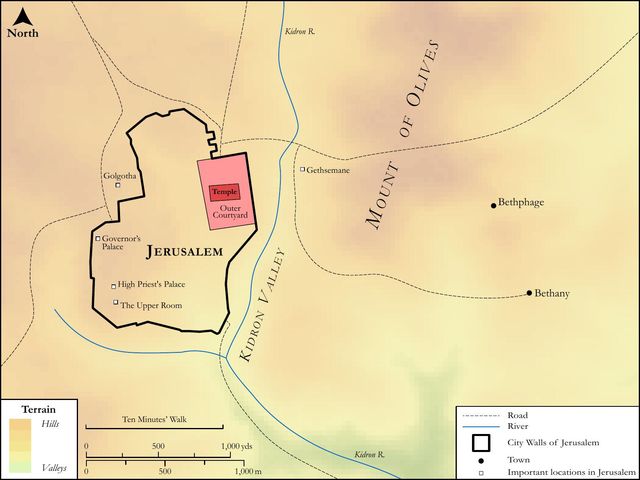
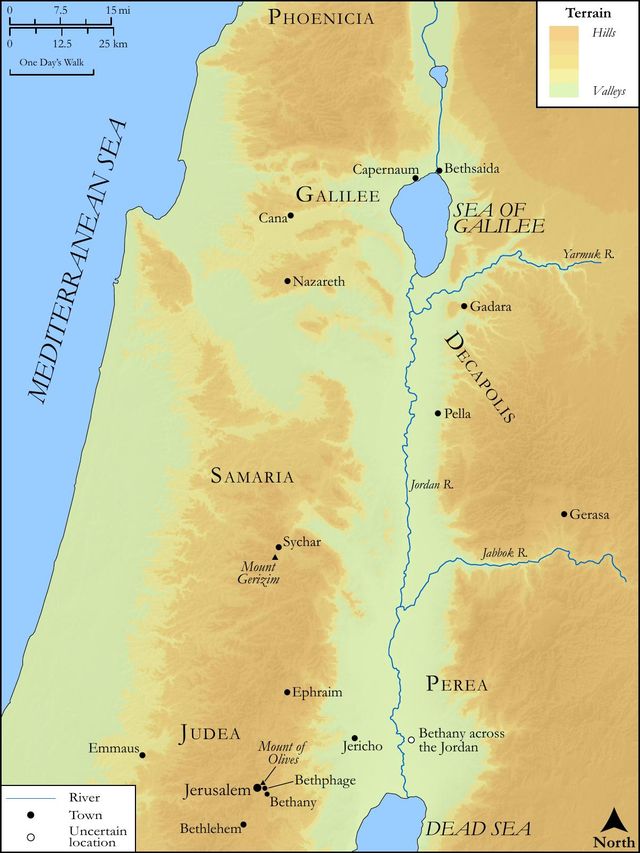
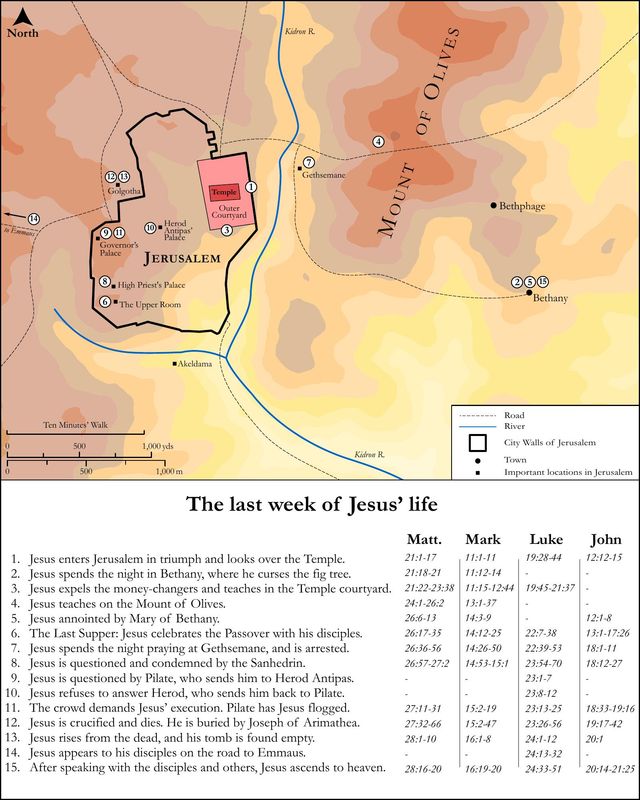
See on the biblical-era map
Study this verse
Public-domain commentary
Matthew Henry
From his Commentary on the Whole Bible. Henry comments on passages, not single verses — this entry covers John 20:26–31. His four-level outline is real structure in the source text, so it is rendered as structure.
We have here an account of another appearance of Christ to his disciples, after his resurrection, when Thomas was now with them. And concerning this we may observe,
I.When it was that Christ repeated his visit to his disciples:
After eight days, that day seven-night after he rose, which must therefore be, as that was, the first day of the week.
1.He deferred his next appearance for some time, to show his disciples that he was not risen to such a life as he had formerly lived, to converse constantly with them but was as one that belonged to another world, and visited this only as angels do, now and then, when there was occasion. Where Christ was during these eight days, and the rest of the time of his abode on earth, it is folly to enquire, and presumption to determine. Wherever he was, no doubt angels ministered unto him. In the beginning of his ministry he had been forty days unseen, tempted by the evil spirit, Mat 4:1, Mat 4:2. And now in the beginning of his glory he was forty days, for the most part unseen, attended by good spirits.
2.He deferred it so long as seven days. And why so?
(1.)That he might put a rebuke upon Thomas for his incredulity. He had neglected the former meeting of the disciples; and, to teach him to prize those seasons of grace better for the future, he cannot have such another opportunity for several days. He that slips one tide must stay a good while for another. A very melancholy week, we have reason to think Thomas had of it, drooping, and in suspense, while the other disciples were full of joy; and it was owing to himself and his own folly.
(2.)That he might try the faith and patience of the rest of the disciples. They had gained a great point when they were satisfied that they had seen the Lord. Then were the disciples glad; but he would try whether they could keep the ground they had got, when they saw no more of him for some days. And thus he would gradually wean them from his bodily presence, which they had doted and depended too much upon.
(3.)That he might put an honour upon the first day of the week, and give a plain intimation of his will, that it should be observed in his church as the Christian sabbath, the weekly day of holy rest and holy convocations. That one day in seven should be religiously observed was an appointment from the beginning, as old as innocency; and that in the kingdom of the Messiah the first day of the week should be that solemn day this was indication enough, that Christ on that day once and again met his disciples in a religious assembly. It is highly probable that in his former appearance to them he appointed them that day seven-night to be together again, and promised to meet them; and also that he appeared to them every first day of the week, besides other times, during the forty days. The religious observance of that day has been thence transmitted down to us through every age of the church. This therefore is the day which the Lord has made.
II.Where, and how, Christ made them this visit.
It was at Jerusalem, for the doors were shut now, as before, for fear of the Jews. There they staid, to keep the feast of unleavened bread seven days, which expired the day before this; yet they would not set out on their journey to Galilee on the first day of the week, because it was the Christian sabbath, but staid till the day after. Now observe,
1.That Thomas was with them; though he had withdrawn himself once, yet not a second time. When we have lost one opportunity, we should give the more earnest heed to lay hold on the next, that we may recover our losses. It is a good sign if such a loss whet our desires, and a bad sign if it cool them. The disciples admitted him among them, and did not insist upon his believing the resurrection of Christ, as they did, because as yet it was but darkly revealed; they did not receive him to doubtful disputation, but bade him welcome to come and see. But observe, Christ did not appear to Thomas, for his satisfaction, till he found him in society with the rest of his disciples, because he would countenance the meetings of Christians and ministers, for there will he be in the midst of them. And, besides, he would have all the disciples witnesses of the rebuke he gave to Thomas, and yet withal of the tender care he had of him.
2.That Christ came in among them, and stood in the midst, and they all knew him, for he showed himself now, just as he had shown himself before (Joh 20:19), still the same, and no changeling. See the condescension of our Lord Jesus. The gates of heaven were ready to be opened to him, and there he might have been in the midst of the adorations of a world of angels; yet, for the benefit of his church, he lingered on earth, and visited the little private meetings of his poor disciples, and is in the midst of them.
3.He saluted them all in a friendly manner, as he had done before; he said, Peace be unto you. This was no vain repetition, but significant of the abundant and assured peace which Christ gives, and of the continuance of his blessings upon his people, for they fail not, but are new every morning, new every meeting.
III.What passed between Christ and Thomas at this meeting; and that only is recorded, though we may suppose he said a great deal to the rest of them. Here is,
1.Christ's gracious condescension to Thomas, Joh 20:27. He singled him out from the rest, and applied himself particularly to him: "Reach hither thy finger, and, since thou wilt have it so, behold my hands, and satisfy thy curiosity to the utmost about the print of the nails; reach hither thy hand, and, if nothing less will convince thee, thrust it into my side." Here we have,
(1.)An implicit rebuke of Thomas's incredulity, in the plain reference which is here had to what Thomas had said, answering it word for word, for he had heard it, though unseen; and one would think that his telling him of it should put him to the blush. Note, There is not an unbelieving word on our tongues, no, nor thought in our minds, at any time, but it is known to the Lord Jesus. Psa 78:21.
(2.)An express condescension to this weakness, which appears in two things: - [1.] That he suffers his wisdom to be prescribed to. Great spirits will not be dictated to by their inferiors, especially in their acts of grace; yet Christ is pleased here to accommodate himself even to Thomas's fancy in a needless thing, rather than break with him, and leave him in his unbelief. He will not break the bruised reed, but, as a good shepherd, gathers that which was driven away, Eze 34:16. We ought thus to bear the infirmities of the weak, Rom 15:1, Rom 15:2. [2.] He suffers his wounds to be raked into, allows Thomas even to thrust his hand into his side, if then at last he would believe. Thus, for the confirmation of our faith, he has instituted an ordinance on purpose to keep his death in remembrance, though it was an ignominious, shameful death, and one would think should rather have been forgotten, and no more said of it; yet, because it was such an evidence of his love as would be an encouragement to our faith, he appoints the memorial of it to be celebrated. And in that ordinance where in we show the Lord's death we are called, as it were, to put our finger into the print of the nails. Reach hither thy hand to him, who reacheth forth his helping, inviting, giving hand to thee.
It is an affecting word with which Christ closes up what he had to say to Thomas: Be not faithless but believing; mē ginou apistos - do not thou become an unbeliever; as if he would have been sealed up under unbelief, had he not yielded now. This warning is given to us all: Be not faithless; for, if we are faithless, we are Christless and graceless, hopeless and joyless; let us therefore say, Lord, I believe, help thou my unbelief.
2.Thomas's believing consent to Jesus Christ. He is now ashamed of his incredulity, and cries out, My Lord and my God, Joh 20:28. We are not told whether he did put his finger into the print of the nails; it should seem, he did not, for Christ says (Joh 20:29), Thou hast seem, and believed; seeing sufficed. And now faith comes off a conqueror, after a struggle with unbelief.
(1.)Thomas is now fully satisfied of the truth of Christ's resurrection - that the same Jesus that was crucified is now alive, and this is he. His slowness and backwardness to believe may help to strengthen our faith; for hereby it appears that the witnesses of Christ's resurrection, who attested it to the world, and pawned their lives upon it, were not easy credulous men, but cautious enough, and suspended their belief of it till they saw the utmost evidence of it they could desire. Thus out of the eater came forth meat.
(2.)He therefore believed him to be Lord and God, and we are to believe him so.
[1.]We must believe his deity - that he is God; not a man made God, but God made man, as this evangelist had laid down his thesis at first, Joh 1:1. The author and head of our holy religion has the wisdom, power, sovereignty, and unchangeableness of God, which was necessary, because he was to be not only the founder of it, but the foundation of it for its constant support, and the fountain of life for its supply.
[2.]His mediation - that he is Lord, the one Lord, Co1 8:6; Ti1 2:5. He is sufficiently authorized, as pleni-potentiary, to settle the great concerns that lie between God and man, to take up the controversy which would inevitably have been our ruin, and to establish the correspondence that was necessary to our happiness; see Act 2:36; Rom 14:9.
(3.)He consented to him as his Lord and his God. In faith there must be the consent of the will to gospel terms, as well as the assent of the understanding to gospel truths. We must accept of Christ to be that to us which the Father hath appointed him. My Lord refers to Adonai - my foundation and stay; my God to Elohim - my prince and judge. God having constituted him the umpire and referee, we must approve the choice, and entirely refer ourselves to him. This is the vital act of faith, He is mine, Sol 2:16.
(4.)He made an open profession of this, before those that had been the witnesses of his unbelieving doubts. He says it to Christ, and, to complete the sense, we must read it, Thou art my Lord and my God; or, speaking to his brethren, This is my Lord and my God. Do we accept of Christ as our Lord God? We must go to him, and tell him so, as David (Psa 16:2), deliver the surrender to him as our act and deed, tell others so, as those that triumph in our relation to Christ: This is my beloved. Thomas speaks with an ardency of affection, as one that took hold of Christ with all his might, My Lord and my God.
3.The judgment of Christ upon the whole (Joh 20:29): "Thomas because thou hast seen me, thou hast believed, and it is well thou art brought to it at last upon any terms; but blessed are those that have not seen, and yet have believed." Here,
(1.)Christ owns Thomas a believer. Sound and sincere believers, though they be slow and weak, shall be graciously accepted of the Lord Jesus. Those who have long stood it out, if at last they yield, shall find him ready to forgive. No sooner did Thomas consent to Christ than Christ gives him the comfort of it, and lets him know that he believes.
(2.)He upbraids him with his former incredulity. He might well be ashamed to think,
[1.]That he had been so backward to believe, and came so slowly to his own comforts. Those that in sincerity have closed with Christ see a great deal of reason to lament that they did not do it sooner.
[2.]That it was not without much ado that he was brought to believe at last: "If thou hadst not seen me alive, thou wouldst not have believed;" but if no evidence must be admitted but that of our own senses, and we must believe nothing but what we ourselves are eye-witnesses of, farewell all commerce and conversation. If this must be the only method of proof, how must the world be converted to the faith of Christ? He is therefore justly blamed for laying so much stress upon this.
(3.)He commends the faith of those who believe upon easier terms. Thomas, as a believer, was truly blessed; but rather blessed are those that have not seen. It is not meant of not seeing the objects of faith (for these are invisible, Heb 11:1; Co2 4:18), but the motives of faith - Christ's miracles, and especially his resurrection; blessed are those that see not these, and yet believe in Christ. This may look, either backward, upon the Old Testament saints, who had not seen the things which they saw, and yet believed the promise made unto the father, and lived by that faith; or forward, upon those who should afterwards believe, the Gentiles, who had never seen Christ in the flesh, as the Jews had. This faith is more laudable and praise-worthy than theirs who saw and believed; for,
[1.]It evidences a better temper of mind in those that do believe. Not to see and yet to believe argues greater industry in searching after truth, and greater ingenuousness of mind in embracing it. He that believes upon that sight has his resistance conquered by a sort of violence; but he that believes without it, like the Bereans, is more noble.
[2.]It is a greater instance of the power of divine grace. The less sensible the evidence is the more does the work of faith appear to be the Lord's doing. Peter is blessed in his faith, because flesh and blood have not revealed it to him, Mat 16:17. Flesh and blood contribute more to their faith that see and believe, than to theirs who see not and yet believe. Dr. Lightfoot quotes a saying of one of the rabbin, "That one proselyte is more acceptable to God than all the thousands of Israel that stood before mount Sinai; for they saw and received the law, but a proselyte sees not, and yet receives it."
IV.The remark which the evangelist makes upon his narrative, like an historian drawing towards a conclusion, Joh 20:30, Joh 20:31. And here,
1.He assures us that many other things occurred, which were all worthy to be recorded, but are not written in the book: many signs. Some refer this to all the signs that Jesus did during his whole life, all the wondrous words he spoke, and all the wondrous works he did. But it seems rather to be confined to the signs he did after his resurrection, for these were in the presence of the disciples only, who are here spoken of, Act 10:41. Divers of his appearances are not recorded, as appears, Co1 15:5-7. See Act 1:3. Now,
(1.)We may here improve this general attestation, that there were other signs, many others, for the confirmation of our faith; and, being added to the particular narratives, they very much strengthen the evidence. Those that recorded the resurrection of Christ were not put to fish for evidence, to take up such short and scanty proofs as they could find, and make up the rest with conjecture. No, they had evidence enough and to spare, and more witnesses to produce than they had occasion for. The disciples, in whose presence these other signs were done, were to be preachers of Christ's resurrection to others, and therefore it was requisite they should have proofs of it ex abundanti - in abundance, that they might have a strong consolation, who ventured life and all upon it.
(2.)We need not ask why they were not all written, or why not more than these, or others than these; for it is enough for us that so it seemed good to the Holy Spirit, by whose inspiration this was given. Had this history been a mere human composition, it had been swelled with a multitude of depositions and affidavits, to prove the contested truth of Christ's resurrection and long argument drawn up for the demonstration of it; but, being a divine history, the penmen write with a noble security, relating what amounted to a competent proof, sufficient to convince those that were willing to be taught and to condemn those that were obstinate in their unbelief; and, if this satisfy not, more would not. Men produce all they have to say, that they may gain credit; but God does not, for he can give faith. Had this history been written for the entertainment of the curious, it would have been more copious, or every circumstance would have brightened and embellished the story; but it was written to bring men to believe, and enough is said to answer that intention, whether men will hear or whether they will forbear.
2.He instructs us in the design of recording what we do find here (Joh 20:31): "These accounts are given in this and the following chapter, that you might believe upon these evidences; that you might believe that Jesus is the Christ, the Son of God, declared with power to be so by his resurrection."
(1.)Here is the design of those that wrote the gospel. Some write books for their diversion, and publish them for their profit or applause, others to oblige the Athenian humour, others to instruct the world in arts and sciences for their secular advantage; but the evangelists wrote without any view of temporal benefit to themselves or others, but to bring men to Christ and heaven, and, in order to this, to persuade men to believe; and for this they took the most fitting methods, they brought to the world a divine revelation, supported with its due evidences.
(2.)The duty of those that read and hear the gospel. It is their duty to believe, to embrace, the doctrine of Christ, and that record given concerning him Jo1 5:11.
[1.]We are here told what the great gospel truth is which we are to believe - that Jesus is that Christ, that Son of God. First, That he is the Christ, the person who, under the title of the Messiah, was promised to, and expected by, the Old Testament saints, and who, according to the signification of the name, is anointed of God to be a prince and a Saviour. Secondly, That he is the Son of God; not only as Mediator (for then he had not been greater than Moses, who was a prophet, intercessor, and lawgiver), but antecedent to his being the Mediator; for if he had not been a divine person, endued with the power of God and entitled to the glory of God, he had not been qualified for the undertaking - not fit either to do the Redeemer's work or to wear the Redeemer's crown.
[2.]What the great gospel blessedness is which we are to hope for - That believing we shall have life through his name. This is, First, To direct our faith; it must have an eye to the life, the crown of life, the tree of life set before us. Life through Christ's name, the life proposed in the covenant which is made with us in Christ, is what we must propose to ourselves as the fulness of our joy and the abundant recompence of all our services and sufferings. Secondly, To encourage our faith, and invite us to believe. Upon the prospect of some great advantage, men will venture far; and greater advantage there cannot be than that which is offered by the words of this life, as the gospel is called, Act 5:20. It includes both spiritual life, in conformity to God and communion with him, and eternal life, in the vision and fruition of him. Both are through Christ's name, by his merit and power, and both indefeasibly sure to all true believers.
Historical interpretation
Nine Centuries of Reception
17 surviving comments on this verse. Each one is dated, so this reads as a timeline rather than a list.
Select a marker to jump to its quote. Markers stagger vertically where authors wrote within a few decades of each other.
Faith, then, is not established by demonstration. "Blessed therefore those who, not having seen, yet have believed.".
Now the followers of Basil ides regard faith as natural, as they also refer it to choice,
Well, be it so; only let the same hope flow on from them to us! For if to them who saw, and therefore believed, such fruit then accrued to the operations of the flesh and the soul, how much more to us! For more "blessed," says Christ, "are they who have not seen, and yet have believed; " since, even if the resurrection of the flesh must be denied to them, it must at any rate be a fitting boon to us, who are the more blessed.
There are some … who think a blessed life is impossible in this body, weak and fragile as it is. For we have to suffer pain and grief, weeping, illness—all in this body.… It is not a blessing to be in the midst of suffering. But it is a blessing to be victorious over it and not to be bullied by the power of temporal pain. Suppose that things come that are considered terrible because of the grief they cause, such as blindness, exile, hunger, violation of a daughter, loss of children. Who will deny that Isaac was blessed, who did not see in his old age, and yet gave blessings with his benediction? Was not Jacob blessed who, leaving his father’s house, endured exile as a shepherd for pay, and mourned for the violated chastity of his daughter and suffered hunger? Were they not blessed on whose good faith God received witness, as it is written: “The God of Abraham, the God of Isaac and the God of Jacob”? A wretched thing is slavery, but Joseph was not wretched. In fact, clearly he was blessed when, while a slave, he checked the lusts of his mistress. What shall I say of holy David, who bewailed the death of three sons, and, what was even worse than this, his daughter’s incestuous connection? How could he be unblessed from whom the author of blessedness himself sprung who has made many blessed? For “blessed are they who have not seen yet have believed.” All these felt their own weakness, but they bravely prevailed over it. What can we think of as more wretched than holy Job, either in the burning of his house, or the instantaneous death of his ten sons or his bodily pains? Was he less blessed than if he had not endured those things whereby he really showed himself approved?It is true that in these sufferings there is something bitter and that we cannot use mind over matter to hide this pain. I should not deny that the sea is deep because in shore it is shallow, or that the sky is clear because sometimes it is covered with clouds, or that the earth is fruitful because in some places there is only barren ground or that the crops are rich and full because they sometimes have wild oats mingled with them. So, too, count it as true that the harvest of a happy conscience may be mingled with some bitter feelings of grief. In the sheaves of the whole of a blessed life, if by chance any misfortune or bitterness has crept in, is it not as though the wild oats were hidden or as though the bitterness of the tares was concealed by the sweet scent of the corn?
And not in this way only did Jesus rebuke him, but also by what follows; for when he, being fully satisfied, breathed again, and cried aloud, "My Lord, and my God," He saith, "Because thou hast seen Me, thou hast believed; blessed are they who have not seen, and yet have believed."
For this is of faith, to receive things not seen; since, "Faith is the substance of things hoped for, the evidence of things not seen." And here He pronounceth blessed not the disciples only, but those also who after them should believe. "Yet," saith some one, "the disciples saw and believed." Yes, but they sought nothing of the kind, but from the proof of the napkins, they straightway received the word concerning the Resurrection, and before they saw the body, exhibited all faith. When therefore any one in the present day say, "I would that I had lived in those times, and had seen Christ working miracles," let them reflect, that, "Blessed are they who have not seen, and yet have believed."
(Hom. lxxxvii) Consider the mercy of the Lord, how for the sake of one soul, He exhibits His wounds. And yet the disciples deserved credit, and He had Himself foretold the event. Notwithstanding, because one person, Thomas, would examine Him, Christ allowed him. But He did not appear to him immediately, but waited till the eighth day, in order that the admonition being given in the presence of the disciples, might kindle in him greater desire, and strengthen his faith for the future. And after eight days again His disciples were within, and Thomas with them: then came Jesus, the doors being shut, and stood in the midst, and said, Peace be unto you.
(Hom. lxxxvii. 1) Jesus then comes Himself, and does not wait till Thomas interrogates Him. But to show that He heard what Thomas said to the disciples, He uses the same words. And first He rebukes him; Then saith He to Thomas, Reach hither thy finger, and behold My hands; and reach hither thy hand, and thrust it into My side: secondly, He admonishes him; And be not faithless, but believing. Note how that before they receive the Holy Ghost faith wavers, but afterward is firm. We may wonder how an incorruptible body could retain the marks of the nails. But it was done in condescension; in order that they might be sure that it was the very person Who was crucified.
(Hom. lxxxvii) If any one then says, Would that I had lived in those times, and seen Christ doing miracles! let him reflect, Blessed are they that have not seen, and yet have believed.
And why doth He not appear to him straightway, instead of "after eight days"? In order that being in the mean time continually instructed by the disciples, and hearing the same thing, he might be inflamed to more eager desire, and be more ready to believe for the future. But whence knew he that His side had been opened? From having heard it from the disciples. How then did he believe partly, and partly not believe? Because this thing was very strange and wonderful. But observe, I pray you, the truthfulness of the disciples, how they hide no faults, either their own or others', but record them with great veracity.
Jesus again presenteth himself to them, and waiteth not to be requested by Thomas, nor to hear any such thing, but before he had spoken, Himself prevented him, and fulfilled his desire; showing that even when he spake those words to the disciples, He was present. For He used the same words, and in a manner conveying a sharp rebuke, and instruction for the future. For having said, "Reach hither thy finger, and behold My hands; and reach hither thy hand, and thrust it into My side"; He added, "And be not faithless, but believing."
Seest thou that his doubt proceeded from unbelief? But it was before he had received the Spirit; after that, it was no longer so, but, for the future, they were perfected.
It is worth enquiring, how an incorruptible body showed the prints of the nails, and was tangible by a mortal hand. But be not thou disturbed; what took place was a matter of condescension. For that which was so subtle and light as to enter in when the doors were shut, was free from all density; but this marvel was shown, that the Resurrection might be believed, and that men might know that it was the Crucified One Himself, and that another rose not in His stead. On this account He arose bearing the signs of the Cross, and on this account He eateth. At least the Apostles everywhere made this a sign of the Resurrection, saying, "We, who did eat and drink with Him." As therefore when we see Him walking on the waves before the Crucifixion, we do not say, that that body is of a different nature, but of our own; so after the Resurrection, when we see Him with the prints of the nails, we will no more say, that he is therefore corruptible. For He exhibited these appearances on account of the disciple.
"But Thomas, one of the twelve, who is called Didymus, was not with them when Jesus came. The other disciples therefore said unto him, We have seen the Lord. But he said unto them, Except I shall see in His hands the print of the nails, and put my finger into the place of the nails, and put my hand into His side, I will not believe. And after eight days, again His disciples were within, and Thomas with them. Then came Jesus, the doors being shut, and stood in the midst, and said, Peace be unto you. Then saith He to Thomas, Reach hither thy finger, and behold my hands; and reach hither thy hand, and put it into my side: and be not faithless, but believing. Thomas answered and said unto Him, My Lord and my God." He saw and touched the man, and acknowledged the God whom he neither saw nor touched; but by the means of what he saw and touched, he now put far away from him every doubt, and believed the other. "Jesus saith unto him, Because thou hast seen me, thou hast believed." He saith not, Thou hast touched me, but, "Thou hast seen me," because sight is a kind of general sense. For sight is also habitually named in connection with the other four senses: as when we say, Listen, and see how well it sounds; smell it, and see how well it smells; taste it, and see how well it savors; touch it, and see how hot it is. Everywhere has the word, See, made itself heard, although sight, properly speaking, is allowed to belong only to the eyes. Hence here also the Lord Himself says, "Reach hither thy finger, and behold my hands:" and what else does He mean but, Touch and see? And yet he had no eyes in his finger. Whether therefore it was by looking, or also by touching, "Because thou hast seen me," He says, "thou hast believed." Although it may be affirmed that the disciple dared not so to touch, when He offered Himself for the purpose; for it is not written, And Thomas touched Him. But whether it was by gazing only, or also by touching that he saw and believed, what follows rather proclaims and commends the faith of the Gentiles: "Blessed are they that have not seen, and yet have believed." He made use of words in the past tense, as One who, in His predestinating purpose, knew what was future, as if it had already taken place.
(Tr. cxxi) He saith not, Hast touched me, but, hast seen me; the sight being a kind of general sense, and put in the place often of the other four senses; as when we say, Hear, and see how well it sounds; smell, and see how sweet it smells; taste, and see how well it tastes; touch, and see how warm it is. Wherefore also our Lord says, Reach hither thy finger, and behold My hands. What is this but, Touch and see? And yet he had not eyes in his finger. He refers them both to seeing and to touching, when He says, Because thou hast seen, thou hast believed. Although it might be said, that the disciple did not dare to touch, what was offered to be touched.
He uses the past tense, the future to His knowledge having already taken place by His own predestination.
For, though one of the chosen and holy twelve, yet he was an Israelite, of the Lord's nation, that Thomas who desired to put his fingers into the places of the wounds. The Lord censured him just as He did this ruler. To the ruler He said, "Except ye see signs and wonders, ye believe not;" and to Thomas He said, "Because thou hast seen, thou hast believed." He had come to the Galileans after the Samaritans, who had believed His word, before whom He wrought no miracles, whom He without anxiety quickly left, strong in faith, because by the presence of His divinity He had not left them.
Now, then, when the Lord said to Thomas, "Come, reach hither thy hand, and be not faithless, but believing;" and he, having touched the places of the wounds, exclaimed, and said, "My Lord, and my God;" he is chided, and has it said to him, "Because thou hast seen, thou hast believed." Why, but "because a prophet has no honor in his own country?" But since this Prophet has honor among strangers, what follows? "Blessed are they that have not seen, and yet have believed."
We are the persons here foretold; and that which the Lord by anticipation praised, He has deigned to fulfill even in us. They saw Him, who crucified Him, and touched Him with their hands, and thus a few believed; we have not seen nor handled Him, we have heard and believed. May it be our lot, that the blessedness which He has promised may be made good in us: both here, because we have been preferred to His own country; and in the world to come, because we have been grafted in instead of the branches that were broken off!
Jesus said to him, “Because you have seen me, Thomas, you have believed. Blessed are those who have not seen and yet believe.” These words were wonderfully pertinent, and they can be of very great help to us. They demonstrate once again how much he cares for our souls, for he is good, and as Scripture says, “He wants everyone to be saved and to come to a knowledge of the truth.” Even so, this saying of his may surprise us. As always, Christ had to be patient with Thomas when he said he would not believe and with the other disciples too when they thought they were seeing a ghost. Because of his desire to convince the whole world, he most willingly showed them the marks of the nails and the wound in his side. Because he wanted those who needed such signs as a support for their faith to have no possible reason for doubt, he even took food, although he had no need for it.… But when anyone accepts what he has not seen, believing on the word of his teacher, the faith by which he honors the one his teacher proclaims to him is worthy of great praise. Blessed, therefore, is everyone who believes the message of the holy apostles who, as Luke says, were eyewitnesses of Christ’s actions and ministers of the word. If we desire eternal life and long for a dwelling place in heaven, we must listen to them.
This saying of the Saviour is very pertinent and we may derive the greatest profit therefrom. For hereby He showed His great care for our souls; for He is good, and willeth that all men should be saved and come to the knowledge of the truth, according to the Scripture. What is here said may not unlikely excite surprise. It was, indeed, necessary for Him to be long-suffering, as was His wont, with Thomas, who uttered that saying, and also with the other disciples with him, who thought that He was a spirit or apparition; and also to exhibit, as He very readily did for universal satisfaction, the print of the nails and His pierced Side; and also, contrary to use and need, to partake of food, that no plea for their unbelief might be left to those who sought to gain the benefits of His death. But it was also essential to have regard to the security of our faith. It was necessary also to have another end in view, namely, that those who should come at the last times should not easily be drawn into unbelief. For it was likely that some should err from the straight path, and from ignorance, practising a spurious kind of caution, refuse to accept the resurrection of the dead, and put themselves forward, and say unto us, like that unbelieving disciple: Except I shall see in His Hands the print of the nails, and put my hand into His Side, I will not believe. What sufficient means of satisfying them would there have been, Christ being no longer on earth but having ascended into heaven? And would they not have been, at times, thought to be justified in thus speaking, when they appeared to be imitating therein the disciple of the Saviour, and, considering it a noble thing not to believe off-hand, but rather to require more for their complete assurance, claimed for themselves the sight that was shown to the holy disciples? Christ, therefore, restrains men from such an inclination, and keeps them from falling. For being truly God, He knew well the malicious designs of the devil and his practice to deceive. And, therefore, He declares that blessed are they who believe without seeing, for they are surely worthy of admiration. And why? Because unquestioning belief is due to what lies before our eyes, for there is nothing at all to raise doubt in us. But if a man accept what he has not seen, and believe that to be true which the words of his instructor in mysteries have brought to his ears, then he honours with praiseworthy faith Him that is preached. Blessed, therefore, shall be the lot of every man that believeth through the voice of the holy Apostles, which were eye-witnesses of Christ's actions, and ministers of the Word, as Luke says. To them must we hearken if we are enamoured of life eternal, and cherish in our hearts the desire to abide in the mansions above.
It is the strength of great minds and the light of firmly faithful souls unhesitatingly to believe what is not seen with the bodily sight and to focus your affections where you cannot direct your gaze. And from where should this godliness spring up in our hearts or how should someone be justified by faith, if our salvation rested on those things only that lie beneath our eyes? And so, our Lord said to Thomas, who seemed to doubt Christ’s resurrection until he had tested by sight and touched the traces of his passion in his very flesh, “because you have seen me, you have believed; blessed are those who have not seen and yet have believed.”
(Hom. xxvi.) But when the Apostle says, Faith is the substance of things hoped for, the evidence of things not seen, (Heb. 11:1) it is plain that things which are seen, are objects not of faith, but of knowledge. Why then is it said to Thomas who saw and touched, Because thou hast seen Me, thou hast believed? Because he saw one thing, believed another; saw the man, confessed the God. But what follows is very gladdening; Blessed are they that have not seen, and yet have believed. In which sentence we are specially included, who have not seen Him with the eye, but retain Him in the mind, provided we only develope our faith in good works. For he only really believes, who practises what he believes.
What greatly gladdens is what follows: "Blessed are they who have not seen and have believed." In this saying, we are indeed specially marked out, we who retain in our minds Him whom we have not seen in the flesh. We are marked out—but only if we follow our faith with works. For he truly believes who practices by his deeds what he believes. In contrast to these, concerning those who hold faith in name only, Paul says: "They profess that they know God, but in their deeds they deny Him." Hence James says: "Faith without works is dead." Hence the Lord says to blessed Job concerning the ancient enemy of the human race: "He will swallow up a river and not wonder, and he has confidence that the Jordan will flow into his mouth." For who is signified by the river except the flow of the human race? For this race flows from origin to end, and, as if in the manner of water, runs its course from the flux of the flesh until its appointed end. What is signified by the Jordan except the pattern of the baptized? For since the very Author of our redemption deigned to be baptized in the river Jordan, the multitude of those who are held within the sacrament of baptism is rightly expressed by the name Jordan. Therefore the ancient enemy of the human race swallowed up the river, because from the beginning of the world until the coming of the Redeemer, with scarcely a few elect escaping, he drew the human race into the belly of his malice. Of him it is rightly said: "He will swallow up a river and not wonder," because he does not consider it a great thing when he seizes unbelievers. But what is added is very grave: "And he has confidence that the Jordan will flow into his mouth," because after he seized all the unbelievers from the beginning of the world, he still presumes that he can receive even the faithful. For by the mouth of pestilent persuasion he daily devours those in whose case a wicked life is at variance with the confession of faith.
Blessed are those who, when grace is withdrawn, find no consolation in themselves but only continuing tribulation and thick darkness, and yet they do not despair. Rather, strengthened by faith, they endure courageously, convinced that they do indeed see him who is invisible.
He who had been before unbelieving, after touching the body showed himself the best divine; for he asserted the twofold nature and one Person of Christ; by saying, My Lord, the human nature, by saying, My God, the divine, and by joining them both, confessed that one and the same Person was Lord and God.
Jesus saith unto him, Because thou hast seen Me, thou hast believed.
Here He means the disciples who had believed without seeing the print of the nails, and His side.
Continue studying John 20:29 across the web’s major study libraries — every link below opens this exact verse, chapter, or book on the destination site.
Read & Compare
 BibleGatewayThis verse in more than 200 translations and 70 languages.
 Bible.comThe YouVersion reader — hundreds of translations, reading plans, and highlights.
 ESV.orgCrossway's official English Standard Version reader.
 NET BibleThe NET translation with 60,000+ translators' notes on every rendering decision.
 STEP BibleTyndale House's free study tool — original text, vocabulary, and scholarly resources.
 BibliaLogos Bible Software's free web reader.
 USCCBThe New American Bible (Revised Edition) with the U.S. bishops' study notes.
Commentaries
 BibleHub CommentariesDozens of classic commentaries on this verse, gathered on one page.
 StudyLightMore than 100 commentary sets — the largest collection on the web.
 BibleRefPlain-English commentary on what this verse means, verse by verse.
 Enduring WordDavid Guzik's free commentary on this chapter, widely used by Bible teachers.
 Bible Study ToolsVerse commentary alongside Greek and Hebrew study aids.
Original Language & Research
- BibleHub InterlinearThe verse word by word — original language, transliteration, and English.
- BibleHub LexiconEvery word's original-language definition and Strong's entry.
 Blue Letter BibleDeep-study tools — Strong's numbers, concordance, and word studies.
 CNTR CollationThe earliest Greek manuscripts of this verse, collated letter by letter.
Sermons, Hymns & Audio


TrulyRandomVerse is not affiliated with these sites and doesn’t control their content. They’re linked because they’re genuinely useful.
Summary
John 20:29 captures Jesus' profound declaration to Thomas, shifting the focus from belief contingent on physical sight to the greater spiritual blessing bestowed upon those who embrace faith without empirical evidence. This pivotal statement, delivered immediately after Thomas's confession of Jesus' deity, establishes a foundational principle for all future generations of believers, affirming that true blessedness is found in trusting the unseen Christ.
Context
ShowHideLiterary Context
This verse is the culmination of a crucial post-resurrection narrative in John 20. Jesus had previously appeared to His disciples on the evening of His resurrection, but Thomas was absent (John 20:19-23). Upon hearing the disciples' testimony, Thomas famously declared his refusal to believe unless he could physically examine Jesus' wounds (John 20:25). Eight days later, Jesus reappears specifically for Thomas's benefit, inviting him to touch His hands and side (John 20:26-27). Thomas's subsequent confession, "My Lord and my God!" (John 20:28), prompts Jesus' response in John 20:29, which then serves as a bridge to the Gospel's stated purpose in John 20:30-31.
Historical & Cultural Context
The immediate historical context is the nascent period following Jesus' resurrection, where His disciples were struggling to fully grasp and believe the reality of His return from the dead. Despite multiple eyewitness accounts, the concept of a bodily resurrection was difficult for many to accept, even among those who had followed Jesus closely. In Jewish thought, signs and wonders were often sought as validation of divine authority or prophetic claims. Thomas's demand for physical proof reflects this inclination, though his specific requirement for touching the wounds is unique. Jesus' response, however, transcends this cultural expectation, laying the groundwork for a faith that would spread globally, reaching those who would never have the opportunity for physical encounter.
Key Themes
ShowHideJohn 20:29 powerfully contributes to several key themes within the Gospel of John and broader New Testament theology. The most prominent theme is the nature of faith, distinguishing between belief based on empirical evidence and a deeper trust in the unseen. It emphasizes that genuine faith is not merely intellectual assent but a profound conviction that transcends physical sight. Closely related is the theme of blessing, as Jesus pronounces a special favor upon those who believe without seeing, extending this divine commendation to all subsequent generations of believers. This verse also reinforces the reality of the resurrection, as Jesus' physical wounds and His willingness to display them underscore the tangible truth of His victory over death, which is the cornerstone of Christian belief as articulated throughout the New Testament, for instance, in 1 Corinthians 15.
Exposition and Analysis
ShowHideKey Word Analysis
ShowHideFrom Chaldee origin, meaning "the twin." This name is significant as it identifies the specific disciple who famously doubted the resurrection accounts. Jesus' direct address to Thomas personalizes the interaction, making the ensuing teaching particularly poignant. Thomas's journey from doubt to profound confession ("My Lord and my God!") serves as a powerful example of how faith can be nurtured, even for the initially skeptical.
A primary verb meaning "to see" (literally or figuratively), and by implication, "to know." In this context, it refers to physical sight—Thomas's demand to visually and tangibly perceive Jesus' resurrected body and wounds. Jesus acknowledges that Thomas's belief was predicated on this sensory experience, setting up a contrast with the subsequent group.
From pístis (faith), meaning "to have faith (in, upon, or with respect to, a person or thing)," or "to credit," and by implication, "to entrust (especially one's spiritual well-being to Christ)." This word is central to the verse, appearing twice. It signifies active trust, conviction, and reliance on Jesus. Jesus' statement highlights that while Thomas believed, the greater blessing is for those whose belief is not contingent on direct physical observation.
A prolonged form of a poetical word, meaning "supremely blest," "fortunate," or "well off." This term is used in the Beatitudes (Matthew 5:3-12) and signifies a state of deep spiritual well-being and divine favor that comes from God, independent of external circumstances. It denotes a profound, divinely-imparted happiness and spiritual prosperity, not merely a fleeting emotion.
Verse Breakdown
ShowHide"Jesus saith unto him, Thomas, because thou hast seen me, thou hast believed:"
Jesus directly addresses Thomas, acknowledging the basis of his newfound faith. Thomas's belief was a direct result of his physical encounter with the resurrected Christ and the invitation to touch His wounds. This clause confirms that sight led to belief for Thomas, but it also subtly implies a limitation or a lesser form of blessing compared to what follows.
"blessed [are] they that have not seen, and [yet] have believed."
This is the core of Jesus' teaching. He pronounces a special beatitude, a divine favor, upon those who come to faith without the benefit of direct physical sight. This statement looks beyond Thomas and the immediate disciples to all future generations, including contemporary believers, who would come to believe in Jesus through the testimony of others (the apostles) and the work of the Holy Spirit. The "yet" (implied by "and" in the Greek, kai, often with a cumulative or even adversative force here) emphasizes that despite the lack of physical evidence, their belief is genuine and commendable.
Literary Devices
ShowHideThe verse employs several significant literary devices. Contrast is central, setting up a clear distinction between Thomas's sight-based belief and the unseen faith of future believers. This contrast highlights a progression in the nature of faith, from the tangible to the spiritual. The structure "blessed are they..." is a direct Beatitude, echoing the form and spiritual weight of Jesus' teachings in the Sermon on the Mount (Matthew 5). This elevates the unseen faith to a divinely favored status. There is also an element of Paradox, as the "blessed" are those who believe in something they haven't seen, challenging conventional human understanding that relies on empirical evidence. Finally, the direct address to Thomas followed by a universal declaration creates a sense of Personal and Prophetic Significance, making the teaching immediately relevant to one individual while simultaneously extending its reach to all of humanity across time.
Theological and Thematic Connections
ShowHideJohn 20:29 stands as a pivotal theological statement, defining the nature of Christian faith for all subsequent generations. It teaches that while God may graciously provide evidence, the highest form of faith does not demand it, but rather trusts in God's revealed truth and the testimony of His witnesses. This verse underscores the sovereignty of God, who blesses those who respond to His call with a trusting heart, even in the absence of physical proof. It challenges the human tendency to rely solely on sensory experience and elevates spiritual conviction as the pathway to true blessedness and intimacy with God.
Reflection and Application
ShowHideFor contemporary believers, John 20:29 offers immense encouragement and a profound challenge. We are precisely those whom Jesus declares "blessed"—those who live centuries after His physical appearance, yet believe in His resurrection, His Lordship, and His saving work through the testimony of Scripture and the indwelling of the Holy Spirit. This verse calls us to cultivate a robust faith that is not contingent on extraordinary experiences or empirical proofs, but rather on the unwavering truth of God's Word. It encourages us to trust God's character and promises even when circumstances are unclear, when prayers seem unanswered, or when the path ahead is shrouded in uncertainty. True spiritual sight, Jesus implies, often comes through belief, not before it, enabling us to perceive God's hand and purpose even in the unseen. This principle applies to every facet of our lives, urging us to walk confidently by faith, knowing that God honors those who trust Him without reservation.
Questions for Reflection
ShowHideFAQ
ShowHideDoes Jesus condemn Thomas for his doubt?
ShowHideNo, Jesus does not condemn Thomas. Instead, He graciously meets Thomas's demand for physical proof, demonstrating His compassion and understanding of human weakness. Jesus' statement in John 20:29 is not a rebuke but a profound teaching that points to a higher form of blessedness for those who believe without the benefit of physical sight. It's an invitation to a more mature faith, acknowledging that while Thomas's belief was valid, there's a greater spiritual reward for those who trust solely on the testimony of others and the conviction of the Holy Spirit.
Christ-Centered Fulfillment
ShowHideJohn 20:29 finds its ultimate Christ-centered fulfillment in the person and ongoing work of Jesus Himself. He is the object of this unseen faith, the resurrected Lord whose physical absence from the earth necessitates a different kind of belief for subsequent generations. The blessing pronounced by Jesus is a direct result of His redemptive work; it is because He accomplished salvation through His death and resurrection that faith in Him, even unseen, is both possible and salvific. As the ascended Christ, seated at the right hand of God (Hebrews 1:3), Jesus continues to mediate this blessing to all who come to Him. Our belief in Him, though we have not seen Him physically, connects us to His finished work on the cross (Colossians 2:13-14) and His ongoing intercession for us (Romans 8:34). Thus, the "blessed" are those who, by faith, are united with Christ, living by the power of His resurrection and anticipating His glorious return (Philippians 3:20-21).