


Matthew 9:33
- καὶkaiAndG2532CONJConjunction
- ἐκβληθέντοςekblēthentoswhen had been cast outG1544V-APP-GSNVerb Aorist Passive Participle Genitive Singular Neuter
- τοῦtoutheG3588T-GSNDefinite article Genitive Singular Neuter
- δαιμονίουdaimonioudemonG1140N-GSNNoun Genitive Singular Neuter
- ἐλάλησενelalēsenspokeG2980V-AAI-3SVerb Aorist Active Indicative 3rd Singular
- ὁhotheG3588T-NSMDefinite article Nominative Singular Masculine
- κωφόςkōphosmute [man]G2974A-NSMAdjective Nominative Singular Masculine
- καὶkaiAndG2532CONJConjunction
- ἐθαύμασανethaumasanmarveledG2296V-AAI-3PVerb Aorist Active Indicative 3rd Plural
- οἱhoitheG3588T-NPMDefinite article Nominative Plural Masculine
- ὄχλοιochloicrowdsG3793N-NPMNoun Nominative Plural Masculine
- λέγοντεςlegontessayingG3004V-PAP-NPMVerb Present Active Participle Nominative Plural Masculine
- ὅτι·hotithatG3754CONJConjunction
- οὐδέποτεoudepoteNeverG3763ADV-NAdverb or adverb and particle combined Negative
- ἐφάνηephanēwas it seenG5316V-2API-3SVerb 2nd Aorist Passive Indicative 3rd Singular
- οὕτωςhoutōsthusG3779ADVAdverb
- ἐνeninG1722PREPPreposition
- τῷtō<the>G3588T-DSMDefinite article Dative Singular Masculine
- ἸσραήλIsraēlIsraelG2474N-DSM-LNoun Dative Singular Masculine Location
English is a literal word-by-word gloss of the Greek, not the KJV's wording. Why?
This is the original text the KJV's translators worked from — each Greek word with its own literal English meaning in this verse, prepared by scholars at Tyndale House, Cambridge. The KJV translates whole sentences, not word by word, so its wording differs: one Greek word can become several English words, and the KJV may choose “charity” where the gloss reads “love”. Both are faithful — they answer different questions. For the KJV's own rendering, switch to the KJV text.
Details
See on the biblical-era map
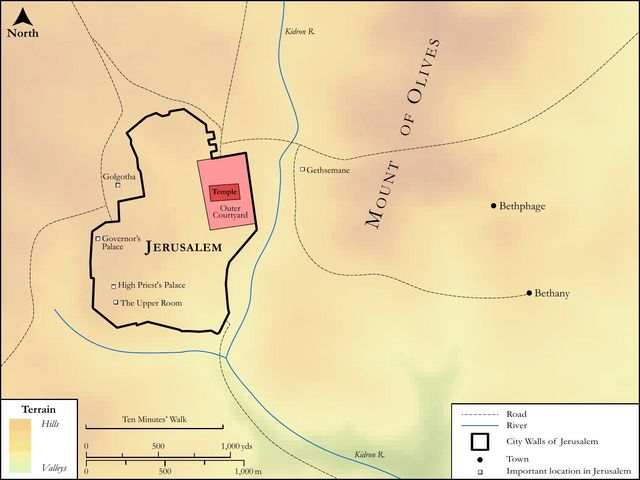
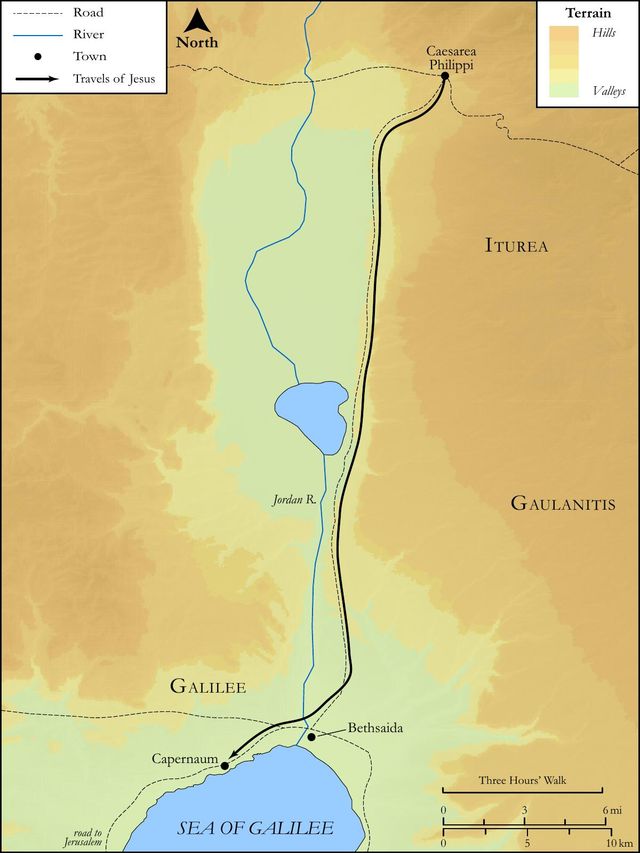
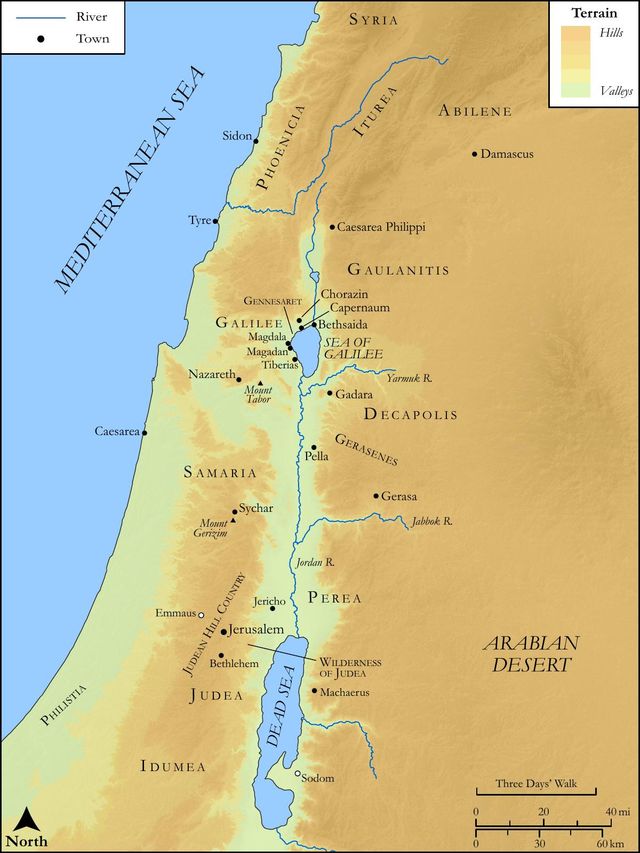
Study this verse
Public-domain commentary
Matthew Henry
From his Commentary on the Whole Bible. Henry comments on passages, not single verses — this entry covers Matthew 9:27–34. His three-level outline is real structure in the source text, so it is rendered as structure.
In these verses we have an account of two more miracles wrought together by our Saviour.
I.The giving of sight to two blind men, Mat 9:27-31.
Christ is the Fountain of light as well as life; and as, by raising the dead, he showed himself to be the same that at first breathed into man the breath of life, so, by giving sight to the blind, he showed himself to be the same that at first commanded the light to shine out of darkness. Observe,
1.The importunate address of the blind men to Christ. He was returning from the ruler's house to his own lodgings, and these blind men followed him, as beggars do, with their incessant cries, Mat 9:27. He that cured diseases so easily, so effectually, and, withal, at so cheap a rate, shall have patients enough. As for other things, so he is famed for an Oculist. Observe,
(1.)The title which these blind men gave to Christ; Thou Son of David, have mercy on us. The promise made to David, that of his loins the Messiah should come, was well known, and the Messiah was therefore commonly called the Son of David. At this time there was a general expectation of his appearing; these blind men know, and own, and proclaim it in the streets of Capernaum, that he is come, and that this is he; which aggravates the folly and sin of the chief priests and Pharisees who denied and opposed him. They could not see him and his miracles, but faith comes by hearing. Note, They who, by the providence of God, are deprived of bodily sight, may yet, by the grace of God, have the eyes of their understanding so enlightened, as to discern those great things of God, which are hid from the wise and prudent.
(2.)Their petition, Have mercy on us. It was foretold that the Son of David should be merciful (Psa 72:12, Psa 72:13), and in him shines the tender mercy of our God, Luk 1:78. Note, Whatever our necessities and burthens are, we need no more for supply and support, than a share in the mercy of our Lord Jesus. Whether he heal us or no, if he have mercy on us, we have enough; as to the particular instances and methods of mercy, we may safely and wisely refer ourselves to the wisdom of Christ. They did not each of them say for himself, Have mercy on me, but both for one another, Have mercy on us. Note, It becomes those that are under the same affliction, to concur in the same prayers for relief. Fellow-sufferers should be joint-petitioners. In Christ there is enough for all.
(3.)Their importunity in this request; they followed him, crying. It seems, he did not take notice of them at first, for he would try their faith, which he knew to be strong; would quicken their prayers, and make his cures the more valued, when they did not always come at the first word; and would teach us to continue instant in prayer, always to pray, and not to faint: and, though the answer do not come presently, yet to wait for it, and to follow providence, even in those steps and outgoings of it which seem to neglect or contradict our prayers. Christ would not heal them publicly in the streets, for this was a cure he would have kept private (Mat 9:30), but when he came into the house, they followed him thither, and came to him. Note, Christ's doors are always open to believing and importunate petitioners; it seemed rude in them to rush into the house after him, when he desired to retire; but, such is the tenderness of our Lord Jesus, that they were not more bold than welcome.
2.The confession of faith, which Christ drew from them upon this occasion. When they came to him for mercy, he asked them, Believe ye that I am able to do this? Note, Faith is the great condition of Christ's favours. They who would receive the mercy of Christ, must firmly believe the power of Christ. What we would have him do for us, we must be fully assured that he is able to do. They followed Christ, and followed him crying, but the great question is, Do ye believe? Nature may work fervency, but it is only grace that can work faith; spiritual blessings are obtained only by faith. They had intimated their faith in the office of Christ as Son of David, and in his mercy; but Christ demands likewise a profession of faith in his power. Believe ye that I am able to do this; to bestow this favour; to give sight to the blind, as well as to cure the palsy and raise the dead? Note, It is good to be particular in the exercise of faith, to apply the general assurances of God's power and good will, and the general promises, to our particular exigencies. All shall work for good, and if all, then this. "Believe ye that I am able, not only to prevail with God for it, as a prophet, but that I am able to do it by my own power?" This will amount to their belief of his being not only the Son of David, but the Son of God; for it is God's prerogative to open the eyes of the blind (Psa 146:8); he makes the seeing eye, Exo 4:11. Job was eyes to the blind (Job 29:15); was to them instead of eyes, but he could not give eyes to the blind. Still it is put to us, Believe we that Christ is able to do for us, by the power of his merit and intercession in heaven, of his Spirit and grace in the heart, and of his providence and dominion in the world? To believe the power of Christ is not only to assure ourselves of it, but to commit ourselves to it, and encourage ourselves in it.
To this question they give an immediate answer, without hesitation: they said, Yea, Lord. Though he had kept them in suspense awhile, and had not helped them at first, they honestly imputed that to his wisdom, not to his weakness, and were still confident of his ability. Note, The treasures of mercy that are laid up in the power of Christ, are laid out and wrought for those that trust in him, Psa 31:19.
3.The cure that Christ wrought on them; he touched their eyes, Mat 9:29. This he did to encourage their faith, which, by his delay, he had tried, and to show that he gives sight to blind souls by the operations of his grace accompanying the word, anointing the eyes with eye-salve: and he put the cure upon their faith, According to your faith be it unto you. When they begged for a cure, he enquired into their faith (Mat 9:28), Believe ye that I am able? He did not enquire into their wealth, whether they were able to pay him for a cure; nor into their reputation, should he get credit by curing them; but into their faith; and now they had professed their faith he referred the matter to that: "I know you do believe, and the power you believe in shall be exerted for you; According to your faith be it unto you." This speaks,
(1.)His knowledge of the sincerity of their faith, and his acceptance and approbation of it. Note, It is a great comfort to true believers, that Jesus Christ knows their faith, and is well pleased with it. Though it be weak, though others do not discern it, though they themselves are ready to question it, it is known to him.
(2.)His insisting upon their faith as necessary; "If you believe, take what you come for." Note, They who apply themselves to Jesus Christ, shall be dealt with according to their faith; not according to their fancies, nor according to their profession, but according to their faith; that is, unbelievers cannot expect to find any favour with God, but true believers may be sure to find all that favour which is offered in the gospel; and our comforts ebb or flow, according as our faith is stronger or weaker; we are not straitened in Christ, let us not then be straitened in ourselves.
4.The charge he gave them to keep it private (Mat 9:30), See that no man know it. He gave them this charge,
(1.)To set us an example of that humility and lowliness of mind, which he would have us to learn of him. Note, In the good we do, we must not seek our own praise, but only the glory of God. It must be more our care and endeavour to be useful, than to be known and observed to be so, Pro 20:6; Pro 25:27. Thus Christ seconded the rule he had given, Let not thy left hand know what thy right hand doeth.
(2.)Some think that Christ, in keeping it private, showed his displeasure against the people of Capernaum, who had seen so many miracles, and yet believed not. Note, The silencing of those who should proclaim the works of Christ is a judgment to any place or people: and it is just in Christ to deny the means of conviction to those that are obstinate in their infidelity; and to shroud the light from those that shut their eyes against it.
(3.)He did it in discretion, for his own preservation; because the more he was proclaimed, the more jealous would the rulers of the Jews be of his growing interest among the people.
(4.)Dr. Whitby gives another reason, which is very considerable, why Christ sometimes concealed his miracles, and afterwards forbid the publishing of his transfiguration; because he would not indulge that pernicious conceit which obtained among the Jews, that their Messiah should be a temporal prince, and so give occasion to the people to attempt the setting up of his kingdom, by tumults and seditions, as they offered to do, Joh 6:15. But when, after his resurrection (which was the full proof of his mission), his spiritual kingdom was set up, then that danger was over, and they must be published to all nations. And he observes, that the miracles which Christ wrought among the Gentiles and the Gadarenes, were ordered to be published, because with them there was not that danger.
But honour is like the shadow, which, as it flees from those that follow it, so it follows those that flee from it (Mat 9:31); They spread abroad his fame. This was more an act of zeal, than of prudence; and though it may be excused as honestly meant for the honour of Christ, yet it cannot be justified, being done against a particular charge. Whenever we profess to direct our intention to the glory of God, we must see to it that the action be according to the will of God.
II.The healing of a dumb man, that was possessed with a devil. And here observe,
1.His case, which was very sad. He was under the power of the devil in this particular instance, that he was disabled from speaking, Mat 9:32. See the calamitous state of this world, and how various the afflictions of the afflicted are! We have no sooner dismissed two blind men, but we meet with a dumb man. How thankful should we be to God for our sight and speech! See the malice of Satan against mankind, and in how many ways he shows it. This man's dumbness was the effect of his being possessed with a devil; but it was better he should be unable to say any thing, than be forced to say, as those demoniacs did (Mat 8:29), What have we to do with thee? Of the two, better a dumb devil than a blaspheming one. When the devil gets possession of a soul, it is made silent as to any thing that is good; dumb in prayers and praises, which the devil is a sworn enemy to. This poor creature they brought to Christ, who entertained not only those that came of themselves in their own faith, but those that were brought to him by their friends in the faith of others. Though the just shall live eternally by his faith, yet temporal mercies may be bestowed on us with an eye to their faith who are intercessors on our behalf. They brought him in just as the blind man went out. See how unwearied Christ was in doing good; how closely one good work followed another! Treasures of mercy, wondrous mercy, are hid in him; which may be continually communicated, but can never be exhausted.
2.His cure, which was very sudden (Mat 9:33), When the devil was cast out, the dumb spake. Note, Christ's cures strike at the root, and remove the effect by taking away the cause; they open the lips, by breaking Satan's power in the soul. In sanctification he heals the waters by casting salt into the spring. When Christ, by his grace, casts the devil out of a soul, presently the dumb speaks. When Paul was converted, behold, he prays; then the dumb spake.
3.The consequences of this cure.
(1.)The multitudes marvelled; and well they might; though few believed, many wondered. The admiration of the common people is sooner raised than any other affection. It was foretold, that the new song, the New Testament song, should be sung for marvellous works, Psa 98:1. They said, It was never so seen in Israel, and therefore never so seen any where; for no people experienced such wonders of mercy as Israel did. There had been those in Israel that were famous for working miracles, but Christ excelled them all. The miracles Moses wrought had reference to Israel as a people, but Christ's were brought home to particular persons.
(2.)The Pharisees blasphemed, Mat 9:34. When they could not gainsay the convincing evidence of these miracles, they fathered them upon the devil, as if they had been wrought by compact and collusion: he casteth out devils (say they) by the prince of the devils - a suggestion horrid beyond expression; we shall hear more of it afterwards, and Christ's answer to it (Mat 12:25); only observe here, how evil men and seducers wax worse and worse (Ti2 3:13), and it is both their sin and their punishment. Their quarrels with Christ for taking upon him to forgive sin (Mat 9:3), for conversing with publicans and sinners, (Mat 9:11), for not fasting (Mat 9:14), though spiteful enough, yet had some colour of piety, purity, and devotion in them; but this (which they are left to, to punish them for those) breathes nothing but malice and falsehood, and hellish enmity in the highest degree; it is diabolism all over, and was therefore justly pronounced unpardonable. Because the people marvelled, they must say something to diminish the miracle, and this was all they could say.
Historical interpretation
Seven Centuries of Reception
11 surviving comments on this verse. Each one is dated, so this reads as a timeline rather than a list.
Select a marker to jump to its quote. Markers stagger vertically where authors wrote within a few decades of each other.
The natural order of things is here preserved; the dæmon is first cast out, and there the functions of the members proceed. And the multitude marvelled, saying, It was never so seen in Israel.
Or; By the dumb and deaf, and dæmoniae, is signified the Gentile world, needing health in every part; for sunk in evil of every kind, they are afflicted with disease of every part of the body.
But by the knowledge of God the frenzy of superstition being chased away, the sight, the hearing, and the word of salvation is brought in to them.
The wonder of the multitude is followed up by the confession, It was never so seen in Israel; because he, for whom there was no help under the Law, is saved by the power of the Word.
In the deaf and dumb and demoniac appear the need of the Gentiles for a complete healing. Beleaguered on all sides by misfortune, they were associated with all types of the body’s infirmities. And in this regard a proper order of things is observed. For the devil is first cast out; then the other bodily benefits follow suit. With the folly of all superstitions put to flight by the knowledge of God, sight and hearing and words of healing are introduced. The declaration of the onlookers followed their admiration over what took place: “Never has the like been seen in Israel.” Indeed, he whom the law could not help was made well by the power of the Word, and the deaf and dumb man spoke the praises of God. Deliverance has been given to the Gentiles. All the towns and all the villages are enlightened by the power and presence of Christ, and the people are freed from every impairment of the timeless malady.
This was not a mere natural defect; but was from the malignity of the dæmon; and therefore he needed to be brought of others, for he could not ask any thing of others as living without voice, and the dæmon chaining his spirit together with his tongue. Therefore Christ does not require faith of him, but immediately healed his disorder; as it follows, And when the dæmon was cast out, the dumb spake.
They set Him thus above others, because He not only healed, but with such ease, and quickness; and cured diseases both infinite in number, and in quality incurable. This most grieved the Pharisees, that they set Him before all others, not only those that then lived, but all who had lived before, on which account it follows, But the Pharisees said, He casteth out dæmons through the Prince of dæmons.
What can be more foolish than this speech of theirs? For it cannot be pretended that one dæmon would cast out another; for they are wont to consent to one another's deeds, and not to be at variance among themselves. But Christ not only cast out dæmons, but healed the lepers, raised the dead, forgave sins, preached the kingdom of God, and brought men to the Father, which a dæmon neither could nor would do.
"For when the devil was cast out," it saith, "the dumb spake: and the multitudes marvelled, saying, It was never so seen in Israel."
Now this especially vexed the Pharisees, that they preferred Him to all, not only that then were, but that had ever been. And they preferred Him, not for His healing, but for His doing it easily and quickly, and to diseases innumerable and incurable.
And thus the multitude; but the Pharisees quite contrariwise; not only disparaging the works, but saying things contradictory to themselves, and not ashamed. Such a thing is wickedness.
The Greek word here (κωφὸς) is more frequent in common speech in the sense of 'deaf,' but it is the manner of Scripture to use it indifferently as either.
As the blind receive light, so the tongue of the dumb is loosed, that he may confess Him whom before he denied. The wonder of the multitude is the confession of the nations. The scoff of the Pharisees is the unbelief of the Jews, which is to this day.
(Verse 33, 34.) And the crowds marveled, saying: Never has it appeared like this in Israel. But the Pharisees said: By the prince of demons he casts out demons. The crowd confesses the works of God, and says: Never has it appeared like this in Israel. In the crowd, there is a confession of the nations. But because the Pharisees could not deny the power of God, they slandered his works and said: By the prince of demons he casts out demons, thus demonstrating the unbelief of the Jews through their slander even today.
(De Cons. Ev. ii. 29.) This account of the two blind men and the dumb dæmon is read in Matthew only. The two blind men of whom the others speak are not the same as these, though something similar was done with them. So that even if Matthew had not also recorded their cure, we might have seen that this present narrative was of a different transaction. And this we ought diligently to remember, that many actions of our Lord are very much like one another, but are proved not to be the same action, by being both related at different times by the same Evangelist. So that when we find cases in which one is recorded by one Evangelist, and another by another, and some difference which we cannot reconcile between their accounts, we should suppose that they are like, but not the same, events.
Observe the beautiful order of His miracles; how after He had given sight to the blind, He restored speech to the dumb, and healed the possessed of the dæmon; by which He shows Himself the Lord of power, and the author of the heavenly medicine. For it was said by Isaiah, Then shall the eyes of the blind be opened, the ears of the deaf shall be unstopped, and the tongue of the dumb loosed. (Is. 35:6.) Whence it is said, When they were gone forth, they brought unto him a man dumb, and possessed with a dæmon.
Thus the Scribes and Pharisees denied such of the Lord's miracles as they could deny; and such as they could not they explained by an evil interpretation, according to that, In the multitude of thy excellency thy enemies shall lie unto thee. (Ps. 66:3.)
For the Gentiles were dumb; not being able to open their mouth in the confession of the true faith, and the praises of the Creator, or because in paying worship to dumb idols they were made like unto them. They were afflicted with a dæmon, because by dying in unbelief they were made subject to the power of the Devil.
They who brought the dumb to be healed by the Lord, signify the Apostles and preachers, who brought the Gentile people to be saved before the face of divine mercy.
The house of the ruler is the Synagogue which was ruled by Moses; the house of Jesus is the heavenly Jerusalem. As the Lord passed through this world and was returning to His own house, two blind men followed Him; that is, when the Gospel was preached by the Apostles, many of the Jews and Gentiles began to follow Him. But when He ascended into Heaven, then He entered His house, that is, into the confession of one faith which is in the Catholic Church, and in that they were enlightened.
Figuratively; As in the two blind men were denoted both nations, Jews and Gentiles, so in the man dumb and afflicted with the dæmon is denoted the whole human race.
. The disease was not a natural one, but from the demon. This is why others brought him forward. He himself was not able to call upon Jesus, as the demon had bound his tongue. Therefore Jesus does not require faith of him, but immediately heals him by casting out the demon which had prevented his speech. And the multitudes marvelled, saying, It was never so seen in Israel. The multitude marvelled, placing Christ even above the prophets and the patriarchs. For He healed with authority, unlike those who first had to pray. But let us see what the Pharisees said.
The multitude marvelled, placing Christ even above the prophets and the patriarchs. For He healed with authority, unlike those who first had to pray. But let us see what the Pharisees said.
Continue studying Matthew 9:33 across the web’s major study libraries — every link below opens this exact verse, chapter, or book on the destination site.
Read & Compare
 BibleGatewayThis verse in more than 200 translations and 70 languages.
 Bible.comThe YouVersion reader — hundreds of translations, reading plans, and highlights.
 ESV.orgCrossway's official English Standard Version reader.
 NET BibleThe NET translation with 60,000+ translators' notes on every rendering decision.
 STEP BibleTyndale House's free study tool — original text, vocabulary, and scholarly resources.
 BibliaLogos Bible Software's free web reader.
 USCCBThe New American Bible (Revised Edition) with the U.S. bishops' study notes.
Commentaries
 BibleHub CommentariesDozens of classic commentaries on this verse, gathered on one page.
 StudyLightMore than 100 commentary sets — the largest collection on the web.
 BibleRefPlain-English commentary on what this verse means, verse by verse.
 Enduring WordDavid Guzik's free commentary on this chapter, widely used by Bible teachers.
 Bible Study ToolsVerse commentary alongside Greek and Hebrew study aids.
Original Language & Research
- BibleHub InterlinearThe verse word by word — original language, transliteration, and English.
- BibleHub LexiconEvery word's original-language definition and Strong's entry.
 Blue Letter BibleDeep-study tools — Strong's numbers, concordance, and word studies.
 CNTR CollationThe earliest Greek manuscripts of this verse, collated letter by letter.
Sermons, Hymns & Audio


TrulyRandomVerse is not affiliated with these sites and doesn’t control their content. They’re linked because they’re genuinely useful.
Summary
Matthew 9:33 vividly portrays the profound public reaction to Jesus' miraculous healing of a demon-possessed man who was rendered mute. Upon the immediate expulsion of the demon by Jesus' divine authority, the man instantly regained his ability to speak. This astonishing display of power captivated the observing multitudes, prompting them to declare that such an extraordinary work had never before been witnessed in the history of Israel, underscoring the unparalleled nature of Jesus' ministry.
Context
ShowHideLiterary Context
Matthew 9:33 concludes a brief but powerful narrative beginning in Matthew 9:32, where a demon-possessed man, who was also mute, is brought to Jesus. This miracle is strategically placed within a larger section of Matthew's Gospel (chapters 8-9) that systematically presents a series of ten miracles, demonstrating Jesus' comprehensive authority over disease, nature, demons, and even death. These miracles serve as irrefutable evidence of His messianic identity, following His authoritative teaching in the Sermon on the Mount. The crowd's awe-filled reaction in Matthew 9:33 immediately precedes the escalating opposition from the Pharisees in Matthew 9:34, setting up a stark contrast between popular acclamation and religious leaders' rejection.
Historical & Cultural Context
In first-century Israel, the concept of demonic possession was widely accepted, and such afflictions were often associated with physical ailments like muteness or blindness. People eagerly awaited the Messiah, who was prophesied to perform great signs and wonders, including healing the sick and casting out evil spirits (Isaiah 35:5-6). Exorcism was practiced by some Jewish healers, but Jesus' method was unique: He cast out demons with a simple command, demonstrating inherent authority rather than relying on rituals or incantations. The declaration "It was never so seen in Israel" reflects a deep awareness of their own history, including the powerful works of prophets like Elijah and Elisha, yet acknowledging that Jesus' miracles surpassed even those, signaling a new, unprecedented era of divine activity.
Key Themes
ShowHideThis verse powerfully contributes to several overarching themes in Matthew's Gospel. Firstly, it highlights Jesus' Unquestionable Authority over Evil, demonstrating His supreme power to confront and defeat demonic forces, thereby freeing humanity from their oppressive grip. Secondly, it underscores Divine Healing and Restoration, as Jesus not only casts out the demon but also completely restores the man's speech, showcasing His holistic power to heal both spiritual and physical afflictions. Thirdly, the Astonishment of the Multitudes reveals the genuine awe and recognition among the common people that Jesus' works were truly divine and beyond human capability. Finally, the crowd's declaration, "It was never so seen in Israel," emphasizes the Unprecedented Nature of Jesus' Ministry, affirming that His miracles and teachings marked a unique and unparalleled moment in salvation history, fulfilling ancient prophecies and ushering in the Kingdom of God. This unparalleled nature is further emphasized as Jesus continues His ministry, as seen in Matthew 9:35.
Exposition and Analysis
ShowHideKey Word Analysis
ShowHideThis term refers to a demonic being, an evil spirit, or by extension, a deity. In this context, it specifically denotes an unclean spirit or demon that possesses individuals, causing affliction. Jesus' interaction here demonstrates His direct confrontation and absolute power over such malevolent spiritual entities.
Meaning "to eject" or "to drive out," this verb emphasizes the forceful and decisive nature of Jesus' action. It is not a gentle persuasion but an authoritative expulsion, highlighting His complete dominion over the demon and its inability to resist His command.
This word signifies a profound sense of wonder, astonishment, or admiration. The multitudes were not merely surprised but deeply impressed and overwhelmed by the display of divine power, recognizing the extraordinary nature of what they had witnessed.
Verse Breakdown
ShowHide"And when the devil was cast out"
This clause directly follows the preceding verse, establishing the cause of the subsequent miracle. It emphasizes Jesus' immediate and effective action in expelling the demonic entity that had afflicted the man. The passive voice ("was cast out") subtly highlights Jesus' inherent authority as the active agent, requiring no struggle or elaborate ritual.
"the dumb spake"
This is the immediate and miraculous effect of the exorcism. The man, previously unable to speak due to demonic influence, instantly regained his speech. This demonstrates the complete and instantaneous nature of Jesus' healing power, directly reversing the physical manifestation of the demonic oppression.
"and the multitudes marvelled, saying,"
This describes the overwhelming public reaction. The word "multitudes" (Greek óchlos) suggests a large crowd, indicating widespread observation of the miracle. Their "marvelling" signifies profound astonishment and awe, a recognition that something extraordinary, beyond human capability, had occurred. Their subsequent declaration underscores their deep impression.
"It was never so seen in Israel."
This powerful statement from the crowd serves as a climactic affirmation of Jesus' unique messianic identity and unparalleled authority. It suggests that even compared to the mighty works of prophets in Israel's history, Jesus' ministry stood out as unprecedented in its scope, power, and frequency, signaling the arrival of a new, divine era.
Literary Devices
ShowHideMatthew 9:33 employs several literary devices to enhance its impact. The most prominent is Miracle/Divine Intervention, as the instantaneous restoration of speech following the exorcism is clearly a supernatural act, demonstrating Jesus' divine power and authority over spiritual forces and physical ailments. There is also a strong element of Contrast evident between the man's prior state of being "dumb" (mute) and his immediate ability to "spake," highlighting the complete and transformative nature of Jesus' healing. The crowd's exclamation, "It was never so seen in Israel," functions as a form of Hyperbole, emphasizing the extraordinary and unparalleled nature of Jesus' ministry in their collective memory. While perhaps not strictly literal in every historical sense, it conveys the profound impact and unique impression Jesus' works had on the common people, setting Him apart from all previous prophets and figures in Israel's history. This collective declaration also serves as a form of Testimony, validating Jesus' claims and actions from an impartial, popular perspective, which will soon be contrasted with the skepticism of the religious elite.
Theological and Thematic Connections
ShowHideMatthew 9:33 profoundly illustrates the direct confrontation between the Kingdom of God, embodied in Jesus Christ, and the kingdom of darkness. Jesus' effortless expulsion of the demon and the immediate restoration of speech signify His absolute sovereignty over evil and its oppressive effects on humanity. This miracle is not merely a display of power but a tangible demonstration of God's redemptive purpose—to liberate humanity from all forms of bondage, whether spiritual, physical, or emotional. It points to the reality that in Jesus, God is actively invading the realm of Satan, dismantling his works, and ushering in an era of unprecedented divine activity and restoration. The crowd's recognition of this unparalleled work underscores the unique identity of Jesus as the promised Messiah, whose ministry far surpasses that of any prophet or leader before Him, fulfilling ancient prophecies of a new covenant where God's power would be fully manifested among His people.
Reflection and Application
ShowHideMatthew 9:33 offers a powerful reminder of Jesus' ultimate authority over all forms of darkness and human limitation. For believers today, this passage serves as a profound source of hope and encouragement. Just as Jesus liberated the mute man from demonic oppression and restored his voice, He continues to possess the power to set us free from any spiritual or emotional bondage that silences our ability to express our true selves or to declare God's praises. This verse calls us to cultivate a posture of wonder and awe, to "marvel" at the ongoing work of God in our lives and in the world, recognizing that His power is not confined to ancient texts but is actively at work today, bringing about transformation and restoration. It challenges us to trust implicitly in Jesus' unmatched authority, knowing that no obstacle, spiritual or physical, is too great for Him to overcome. Our response should be one of profound gratitude and confident reliance on the One whose works were, and still are, "never so seen."
Questions for Reflection
ShowHideFAQ
ShowHideWhat does "the dumb spake" mean in this verse?
ShowHideThe phrase "the dumb spake" means that the man, who was previously unable to speak (mute) due to demonic possession, immediately regained his ability to talk after Jesus cast out the demon. The KJV word "dumb" (from Greek kōphós) refers to someone who is speechless or mute. This instantaneous restoration of speech highlights the complete and miraculous nature of Jesus' healing, directly reversing the physical affliction caused by the demonic influence. It demonstrates Jesus' power to heal both spiritual and physical ailments simultaneously, as seen in Matthew 9:32.
Why was the crowd's reaction, "It was never so seen in Israel," so significant?
ShowHideThis statement from the multitudes is highly significant because it signifies their recognition of Jesus' unparalleled power and authority. In a nation steeped in the history of prophets who performed mighty miracles (like Elijah and Elisha), the crowd's declaration that Jesus' works surpassed all previous divine interventions underscored His unique identity. It was an acknowledgment that something truly new and extraordinary was happening, pointing to Jesus as the long-awaited Messiah whose ministry was distinct and more powerful than anything seen before in Israel's history. This popular acclamation stands in stark contrast to the skepticism of the religious leaders, as shown in Matthew 9:34.
How does this miracle relate to Jesus' overall ministry and claims?
ShowHideThis miracle is a powerful demonstration of Jesus' core claims and the nature of His ministry. By casting out a demon and restoring speech, Jesus proves His divine authority over the forces of evil and His power to bring holistic healing and restoration. This aligns with His declaration that He has come to destroy the works of the devil and to usher in the Kingdom of God (1 John 3:8). His ability to command demons and heal physical ailments served as tangible evidence that He was indeed the Son of God, the promised Messiah, validating His teachings and setting the stage for His ultimate victory over sin and death.
Christ-Centered Fulfillment
ShowHideMatthew 9:33, with its dramatic depiction of Jesus' authority over demonic forces and His power to bring immediate restoration, powerfully foreshadows and embodies His Christ-centered fulfillment. The casting out of the demon and the subsequent liberation of the mute man is a microcosm of Jesus' ultimate mission: to dismantle the works of the devil and to set humanity free from the bondage of sin and death. This miracle demonstrates that the Kingdom of God has arrived in the person of Jesus, who, unlike any prophet before Him, possesses inherent authority to confront and conquer the powers of darkness (Luke 11:20). The man's restored speech symbolizes the new voice given to those redeemed by Christ, enabling them to declare God's praises and proclaim His truth, a stark contrast to the spiritual muteness imposed by sin. Ultimately, this event points to the cross, where Jesus decisively triumphed over all principalities and powers, disarming them and making a public spectacle of them (Colossians 2:15). His victory over this demon is a tangible sign of His comprehensive victory over Satan and all his dominion, offering the promise of complete spiritual and physical liberation to all who believe in Him (Hebrews 2:14-15).