


Matthew 11:18
- ἦλθενēlthenCameG2064V-2AAI-3SVerb 2nd Aorist Active Indicative 3rd Singular
- γὰρgarforG1063CONJConjunction
- ἸωάννηςIōannēsJohnG2491N-NSM-PNoun Nominative Singular Masculine Individual
- μήτεmēteneitherG3383CONJ-NConjunction Negative
- ἐσθίωνesthiōneatingG2068V-PAP-NSMVerb Present Active Participle Nominative Singular Masculine
- μήτεmētenorG3383CONJ-NConjunction Negative
- πίνωνpinōndrinkingG4095V-PAP-NSMVerb Present Active Participle Nominative Singular Masculine
- καὶkaiandG2532CONJConjunction
- λέγουσιν·legousinthey sayG3004V-PAI-3PVerb Present Active Indicative 3rd Plural
- δαιμόνιονdaimonionA demonG1140N-ASNNoun Accusative Singular Neuter
- ἔχειecheihe has!G2192V-PAI-3SVerb Present Active Indicative 3rd Singular
English is a literal word-by-word gloss of the Greek, not the KJV's wording. Why?
This is the original text the KJV's translators worked from — each Greek word with its own literal English meaning in this verse, prepared by scholars at Tyndale House, Cambridge. The KJV translates whole sentences, not word by word, so its wording differs: one Greek word can become several English words, and the KJV may choose “charity” where the gloss reads “love”. Both are faithful — they answer different questions. For the KJV's own rendering, switch to the KJV text.
Details
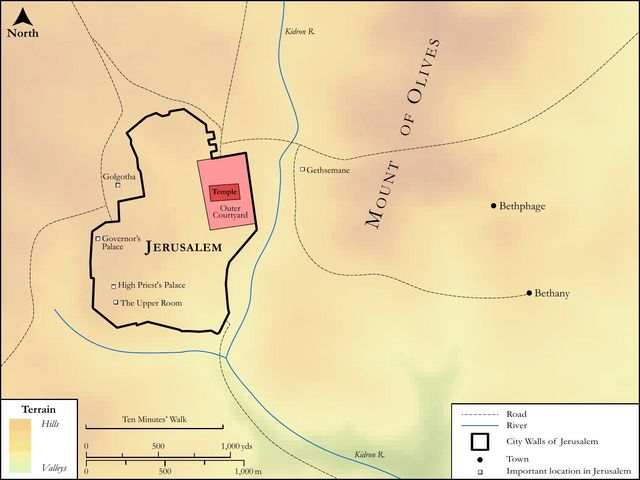
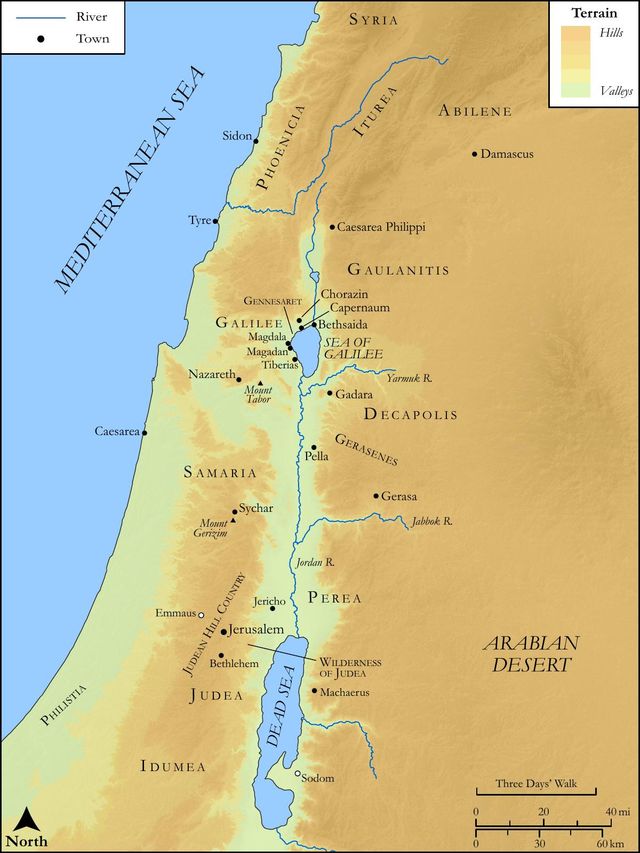
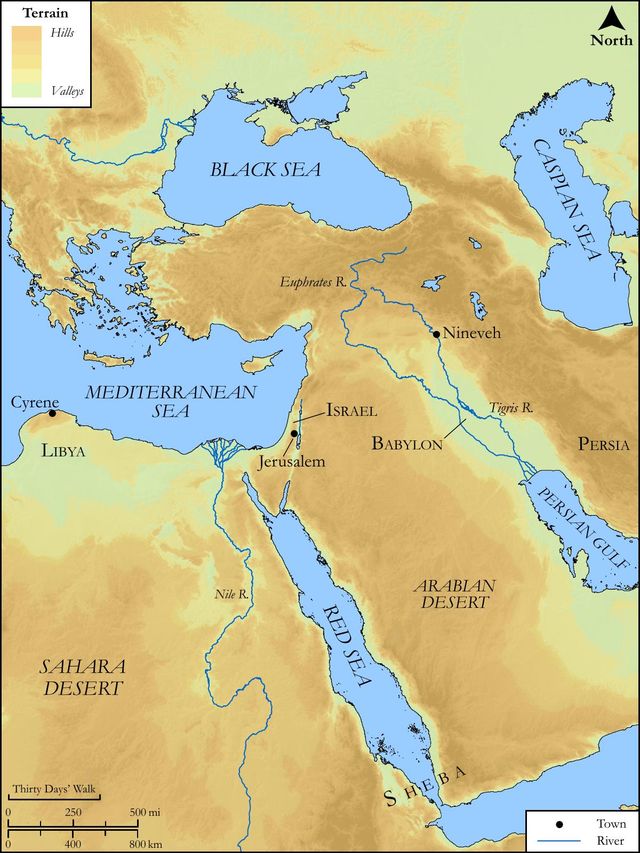
See on the biblical-era map
Study this verse
Public-domain commentary
Matthew Henry
From his Commentary on the Whole Bible. Henry comments on passages, not single verses — this entry covers Matthew 11:16–24. His four-level outline is real structure in the source text, so it is rendered as structure.
Christ was going on in the praise of John the Baptist and his ministry, but here stops on a sudden, and turns that to the reproach of those who enjoyed both that, and the ministry of Christ and his apostles too, in vain. As to that generation, we may observe to whom he compares them (Mat 11:16-19), and as to the particular places he instances in, we may observe with whom he compares them, Mat 11:20-24.
I.As to that generation, the body of the Jewish people at that time.
There were many indeed that pressed into the kingdom of heaven; but the generality continued in unbelief and obstinacy. John was a great and good man, but the generation in which his lot was cast was as barren and unprofitable as could be, and unworthy of him. Note, The badness of the places where good ministers live serves for a foil to their beauty. It was Noah's praise that he was righteous in his generation. Having commended John, he condemns those who had him among them, and did not profit by his ministry. Note, The more praise-worthy the people are, if they slight him, and so it will be found in the day of account.
This our Lord Jesus here sets forth in a parable, yet speaks as if he were at a loss to find out a similitude proper to represent this, Whereunto shall I liken this generation? Note, There is not a greater absurdity than that which they are guilty of who have good preaching among them, and are never the better for it. It is hard to say what they are like. The similitude is taken from some common custom among the Jewish children at their play, who, as is usual with children, imitated the fashions of grown people at their marriages and funerals, rejoicing and lamenting; but being all a jest, it made no impression; no more did the ministry either of John the Baptist or of Christ upon that generation. He especially reflects on the scribes and Pharisees, who had a proud conceit of themselves; therefore to humble them he compares them to children, and their behaviour to children's play.
The parable will be best explained by opening it and the illustration of it together in these five observations.
Note, 1. The God of heaven uses a variety of proper means and methods for the conversion and salvation of poor souls; he would have all men to be saved, and therefore leaves no stone unturned in order to it. The great thing he aims at, is the melting of our wills into a compliance with the will of God, and in order to this the affecting of us with the discoveries he has made of himself. Having various affections to be wrought upon, he uses various ways of working upon them, which though differing one from another, all tend to the same thing, and God is in them all carrying on the same design. In the parable, this is called his piping to us, and his mourning to us; he hath piped to us in the precious promises of the gospel, proper to work upon hope, and mourned to us in the dreadful threatenings of the law, proper to work upon fear, that he might frighten us out of our sins and allure us to himself. He had piped to us in gracious and merciful providences, mourned to us in calamitous, afflicting providences, and has set the one over against the other. He has taught his ministers to change their voice (Gal 4:20); sometimes to speak in thunder from mount Sinai, sometimes in a still small voice from mount Sion.
In the explanation of the parable is set forth the different temper of John's ministry and of Christ's, who were the two great lights of that generation.
(1.)On the one hand, John came mourning to them, neither eating nor drinking; not conversing familiarly with people, nor ordinarily eating in company, but alone, in his cell in the wilderness, where his meat was locusts and wild honey. Now this, one would think, should work upon them; for such an austere, mortified life as this, was very agreeable to the doctrine he preached: and that minister is most likely to do good, whose conversation is according to his doctrine; and yet the preaching even of such a minister is not always effectual.
(2.)On the other hand, the Son of man came eating and drinking, and so he piped unto them. Christ conversed familiarly with all sorts of people, not affecting any peculiar strictness or austerity; he was affable and easy of access, not shy of any company, was often at feasts, both with Pharisees and publicans, to try if this would win upon those who were not wrought upon by John's reservedness: those who were not awed by John's frowns, would be allured by Christ's smiles; from whom St. Paul learned to be come all things to all men, Co1 9:22. Now our Lord Jesus, by his freedom, did not at all condemn John, any more than John did condemn him, though their deportment was so very different. Note, Though we are never so clear in the goodness of our own practice, yet we must not judge of others by it. There may be a great diversity of operations, where it is the same God that worketh all in all (Co1 12:6), and this various manifestation of the Spirit is given to every man to profit withal, Mat 11:7. Observe especially, that God's ministers are variously gifted: the ability and genius of some lie one way, of others, another way: some are Boanerges - sons of thunder; others, Barnabeses - sons of consolation; yet all these worketh that one and the self-same Spirit (Co1 12:11), and therefore we ought not to condemn either, but to praise both, and praise God for both, who thus tries various ways of dealing with persons of various tempers, that sinners may be either made pliable or left inexcusable, so that, whatever the issue is, God will be glorified.
Note, 2. The various methods which God takes for the conversion of sinners, are with many fruitless and ineffectual: "Ye have not danced, ye have not lamented; you have not been suitably affected either with the one or with the other." Particular means have, as in medicine, their particular intentions, which must be answered, particular impressions, which must be submitted to, in order to the success of the great and general design; now if people will be neither bound by laws, nor invited by promises, nor frightened by threatenings, will neither be awakened by the greatest things, nor allured by the sweetest things, nor startled by the most terrible things, nor be made sensible by the plainest things; if they will hearken to the voice neither of scripture, nor reason, nor experience, nor providence, nor conscience, nor interest, what more can be done? The bellows are burned, the lead is consumed, the founder melteth in vain; reprobate silver shall men call them, Jer 6:29. Ministers' labour is bestowed in vain (Isa 49:4), and, which is a much greater loss, the grace of God received in vain, Co2 6:1. Note, It is some comfort to faithful ministers, when they see little success of their labours, that it is no new thing for the best preachers and the best preaching in the world to come short of the desired end. Who has believed our report? If from the blood of the slain, from the fat of the mighty, the bow of those great commanders, Christ and john, returned so often empty (Sa2 1:22), no marvel if ours do so, and we prophecy to so little purpose upon dry bones.
Note, 3. That commonly those persons who do not profit by the means of grace, are perverse, and reflect upon the ministers by whom they enjoy those means; and because they do not get good themselves, they do all the hurt they can to others, by raising and propagating prejudices against the word, and the faithful preachers of it. Those who will not comply with God, and walk after him, confront him, and walk contrary to him. So this generation did; because they were resolved not to believe Christ and john, and to own them, as they ought to have done, for the best of men, they set themselves to abuse them, and to represent them as the worst. (1.) As for John the Baptist, they say, He has a devil. They imputed his strictness and reservedness to melancholy, and some kind or degree of a possession of Satan. "Why should we heed him? he is a poor hypochondriacal man, full of fancies, and under the power of a crazed imagination." (2.) As for Jesus Christ, they imputed his free and obliging conversation to the more vicious habit of luxury and flesh-pleasing: Behold a gluttonous man and a wine-bibber. No reflection could be more foul and invidious; it is the charge against the rebellious son (Deu 21:20), He is a glutton and a drunkard; yet none could be more false and unjust; for Christ pleased not himself (Rom 15:3), nor did ever any man live such a life of self-denial, mortification, and contempt of the world, as Christ lived: he that was undefiled, and separate from sinners, is here represented as in league with them, and polluted by them. Note, The most unspotted innocency, and the most unparalleled excellency, will not always be a fence against the reproach of tongues: nay, a man's best gifts and best actions, which are both well intended and well calculated for edification, may be made the matter of his reproach. The best of our actions may become the worst of our accusations, as David's fasting, Psa 69:10. It was true in some sense, that Christ was a Friend to publicans and sinners, the best Friend they ever had, for he came into the world to save sinners, great sinners, even the chief; so he said very feelingly, who had been himself not a publican and sinner, but a Pharisee and sinner; but this is, and will be to eternity, Christ's praise, and they forfeited the benefit of it who thus turned it to his reproach.
Note, 4. That the cause of this great unfruitfulness and perverseness of people under the means of grace, is that they are like children sitting in the markets; they are foolish as children, froward as children, mindless and playful as children; would they but show themselves men in understanding, there would be some hopes of them. The market-place they sit in is to some a place of idleness (Mat 20:3); to others a place of worldly business (Jam 4:13); to all a place of noise or diversion; so that if you ask the reason why people get so little good by the means of grace, you will find it is because they are slothful and trifling, and do not love to take pains; or because their heads, and hands, and hearts are full of the world, the cares of which choke the word, and choke their souls at last (Eze 33:31; Amo 8:5); and they study to divert their own thoughts from every thing that is serious. Thus in the markets they are, and there they sit; in these things their hearts rest, and by them they resolve to abide.
Note, 5. Though the means of grace be thus slighted and abused by many, by the most, yet there is a remnant that through grace do improve them, and answer the designs of them, to the glory of God, and the good of their own souls. But wisdom is justified of her children. Christ is Wisdom; in him are hid treasures of wisdom; the saints are the children God has given him, Heb 2:13. The gospel is wisdom, it is the wisdom from above: true believers are begotten again by it, and born from above too; they are wise children, wise for themselves, and their true interests; not like the foolish children that sat in the markets. These children of wisdom justify wisdom; they comply with the designs of Christ's grace, answer the intentions of it, and are suitably affected with, and impressed by, the various methods it takes, and so evidence the wisdom of Christ in taking these methods. This is explained, Luk 7:29. The publicans justified God, being baptized with the baptism of John, and afterwards embracing the gospel of Christ. Note, The success of the means of grace justifies the wisdom of God in the choice of these means, against those who charge him with folly therein. The cure of every patient, that observes the physician's orders, justifies the wisdom of the physician: and therefore Paul is not ashamed of the gospel of Christ, because, whatever it is to others, to them that believe it is the power of God unto salvation, Rom 1:16. When the cross of Christ, which to others is foolishness and a stumbling-block, is to them that are called the wisdom of God and the power of God (Co1 1:23, Co1 1:24), so that they make the knowledge of that the summit of their ambition (Co1 2:2), and the efficacy of that the crown of their glorying (Gal 6:14), here is wisdom justified of her children. Wisdom's children are wisdom's witnesses in the world (Isa 43:10), and shall be produced as witnesses in that day, when wisdom, that is now justified by the saints, shall be glorified in the saints, and admired in all them that believe, Th2 1:10. If the unbelief of some reproach Christ by giving him the lie, the faith of others shall honour him by setting to its seal that he is true, and that he also is wise, Co1 1:25. Whether we do it or not, it will be done; not only God's equity, but his wisdom, will be justified when he speaks, when he judges.
Well, this is the account Christ gives of that generation, and that generation is not passed away, but remains in a succession of the like; for as it was then, it has been since and is still; some believe the things which are spoken, and some believe not, Act 28:24.
II.As to the particular places in which Christ was most conversant.
What he said in general of that generation, he applied in particular to those places, to affect them. Then began he to upbraid them, Mat 11:20. He began to preach to them long before (Mat 4:17), but he did not begin to upbraid till now. Note, Rough and unpleasing methods must not be taken, till gentler means have first been used. Christ is not apt to upbraid; he gives liberally, and upbraideth not, till sinners by their obstinacy extort it from him. Wisdom first invites, but when her invitations are slighted, then she upbraids, Pro 1:20, Pro 1:24. Those do not go in Christ's method, who begin with upbraidings. Now observe,
1.The sin charged upon them; not any against the moral law, then an appeal would have lain to the gospel, which would have relieved, but a sin against the gospel, the remedial law, and that is impenitency: this was it he upbraided them with, or reproached them for, as the most shameful, ungrateful thing that could be, that they repented not. Note, Wilful impenitency is the great damning sin of multitudes that enjoy the gospel, and which (more than any other) sinners will be upbraided with to eternity. The great doctrine that both John the Baptist, and Christ, and the apostles preached, was repentance; the great thing designed, both in the piping and in the mourning, was to prevail with people to change their minds and ways, to leave their sins and turn to God; and this they would not be brought to. He does not say, because they believed not (for some king of faith many of them had) that Christ was a Teacher come from God; but because they repented not: their faith did not prevail to the transforming of their hearts, and the reforming of their lives. Christ reproved them for their other sins, that he might lead them to repentance; but when they repented not, He upbraided them with that, as their refusal to be healed: He upbraided them with it, that they might upbraid themselves, and might at length see the folly of it, as that which alone makes the sad case a desperate one, and the wound incurable.
2.The aggravation of the sin; they were the cities in which most of his mighty works were done; for thereabouts his principal residence had been for some time. Note, Some places enjoy the means of grace in greater plenty, power, and purity, than other places. God is a free agent, and acts so in all his disposals, both as the God of nature and as the God of grace, common and distinguishing grace. By Christ's mighty works they should have been prevailed with, not only to receive his doctrine, but to obey his law; the curing of bodily diseases should have been the healing of their souls, but it had not that effect. Note, The stronger inducements we have to repent, the more heinous is the impenitency and the severer will the reckoning be, for Christ keeps account of the mighty works done among us, and of the gracious works done for us too, by which also we should be led to repentance, Rom 2:4.
(1.)Chorazin and Bethsaida are here instanced (Mat 11:21, Mat 11:22), they have each of them their woe: Woe unto thee, Chorazin, woe unto thee, Bethsaida. Christ came into the world to bless us; but if that blessing be slighted, he has woes in reserve, and his woes are of all others the most terrible. These two cities were situate upon the sea of Galilee, the former on the east side, and the latter on the west, rich and populous places; Bethsaida was lately advanced to a city by Philip the tetrarch; out of it Christ took at least three of his apostles: thus highly were these places favoured! Yet because they knew not the day of their visitation, they fell under these woes, which stuck so close to them, that soon after this they decayed, and dwindled into mean, obscure villages. So fatally does sin ruin cities, and so certainly does the word of Christ take place!
Now Chorazin and Bethsaida are here compared with Tyre and Sidon, two maritime cities we read much of in the Old Testament, that had been brought to ruin, but began to flourish again; these cities bordered upon Galilee, but were in a very ill name among the Jews for idolatry and other wickedness. Christ sometimes went into the coasts of Tyre and Sidon (Mat 15:21), but never thither; the Jews would have taken it very heinously if he had; therefore Christ, to convince and humble them, here shows,
[1.]That Tyre and Sidon would not have been so bad as Chorazin and Bethsaida. If they had had the same word preached, and the same miracles wrought among them, they would have repented, and that long ago, as Nineveh did, in sackcloth and ashes. Christ, who knows the hearts of all, knew that if he had gone and lived among them, and preached among them, he should have done more good there than where he was; yet he continued where he was for some time, to encourage his ministers to do so, though they see not the success they desire. Note, Among the children of disobedience, some are more easily wrought upon than others; and it is a great aggravation of the impenitency of those who plentifully enjoy the means of grace, not only that there are many who sit under the same means that are wrought upon, but that there are many more that would have been wrought upon, if they had enjoyed the same means. See Eze 3:6, Eze 3:7. Our repentance is slow and delayed, but theirs would have been speedy; they would have repented long ago. Ours has been slight and superficial; theirs would have been deep and serious, in sackcloth and ashes. Yet we must observe, with an awful adoration of the divine sovereignty, that the Tyrians and Sidonians will justly perish in their sin, though, if they had had the means of grace, they would have repented; for God is a debtor to no man.
[2.]That therefore Tyre and Sidon shall not be so miserable as Chorazin and Bethsaida, but it shall be more tolerable for them in the day of judgment, Mat 11:22. Note, First, At the day of judgment the everlasting state of the children of men will, by an unerring and unalterable doom, be determined; happiness or misery, and the several degrees of each. Therefore it is called the eternal judgment (Heb 6:2), because decisive of the eternal state. Secondly, In that judgment, all the means of grace that were enjoyed in the state of probation will certainly come into the account, and it will be enquired, not only how bad we were, but how much better we might have been, had it not been our own fault, Isa 5:3, Isa 5:4. Thirdly, Though the damnation of all that perish will be intolerable, yet the damnation of those who had the fullest and clearest discoveries made them of the power and grace of Christ, and yet repented not, will be of all others the most intolerable. The gospel light and sound open the faculties, and enlarge the capacities of all that see and hear it, either to receive the riches of divine grace, or (if that grace be slighted) to take in the more plentiful effusions of divine wrath. If self-reproach be the torture of hell, it must needs be hell indeed to those who had such a fair opportunity of getting to heaven. Son, remember that.
(2.)Capernaum is here condemned with an emphasis (Mat 11:23), "And thou, Capernaum, hold up thy hand, and hear they doom," Capernaum, above all the cities of Israel, was dignified with Christ's most usual residence; it was like Shiloh of old, the place which he chose, to put his name there, and it fared with it as with Shiloh, Jer 7:12, Jer 7:14. Christ's miracles here were daily bread, and therefore, as the manna of old, were despised and called light bread. Many a sweet and comfortable lecture of grace Christ had read them to little purpose, and therefore he reads them a dreadful lecture of wrath: those who will not hear the former shall be made to feel the latter.
We have here Capernaum's doom,
[1.]Put absolutely; Thou which art exalted to heaven shalt be brought down to hell Note, First, Those who enjoy the gospel in power and purity, are thereby exalted to heaven; they have therein a great honour for the present, and a great advantage for eternity; they are lifted up toward heaven; but if, notwithstanding, they still cleave to the earth, they may thank themselves that they are not lifted up into heaven. Secondly, Gospel advantages and advancements abused will sink sinners so much lower into hell. Our external privileges will be so far from saving us, that if our hearts and lives be not agreeable to them, they will but inflame the reckoning: the higher the precipice is, the more fatal is the fall from it: Let us not therefore be high-minded, but fear; not slothful, but diligent. See Job 20:6, Job 20:7.
[2.]We have it here put in comparison with the doom of Sodom - a place more remarkable, both for sin and ruin, than perhaps any other; and yet Christ here tells us,
First, That Capernaum's means would have saved Sodom. If these miracles had been done among the Sodomites, as bad as they were, they would have repented, and their city would have remained unto this day a monument of sparing mercy, as now it is of destroying justice, Jde 1:7. Note, Upon true repentance through Christ, even the greatest sin shall be pardoned and the greatest ruin prevented, that of Sodom not excepted. Angels were sent to Sodom, and yet it remained not; but if Christ had been sent thither, it would have remained; how well is it for us, then, that the world to come is put in subjection to Christ, and not to angels! Heb 2:5. Lot would not have seemed as one that mocked, if he had wrought miracles.
Secondly, That Sodom's ruin will therefore be less at the great day than Capernaum's. Sodom will have many things to answer for, but not the sin of neglecting Christ, as Capernaum will. If the gospel prove a savour of death, a killing savour, it is doubly so; it is of death unto death, so great a death (Co2 2:16); Christ had said the same of all other places that receive not his ministers nor bid his gospel welcome (Mat 10:15); It shall be more tolerable for the land of Sodom than for that city. We that have now the written word in our hands, the gospel preached, and the gospel ordinances administered to us, and live under the dispensation of the Spirit, have advantages not inferior to those of Chorazin, and Bethsaida, and Capernaum, and the account in the great day will be accordingly. It has therefore been justly said, that the professors of this age, whether they go to heaven or hell, will be the greatest debtors in either of these places; if to heaven, the greatest debtors to divine mercy for those rich means that brought them thither; if to hell, the greatest debtors to divine justice, for those rich means that would have kept them from thence.
Historical interpretation
Ten Centuries of Reception
11 surviving comments on this verse. Each one is dated, so this reads as a timeline rather than a list.
Select a marker to jump to its quote. Markers stagger vertically where authors wrote within a few decades of each other.
Christ himself was judged by those who believed in him to be the living, foundational wisdom, who managed everything justly. Although he was treated spitefully by the unbelieving Jews, he did not stop speaking kindly to the Jews and calling them to be his children.
The whole of this speech is a reproach of unbelief, and arises out of the foregoing complaint; that the stiff-necked people had not learned by two different modes of teaching.
By the children are meant the Prophets, who preached as children in singleness of meaning, and in the midst of the synagogue, that is in the market-place, reprove them, that when they played to those to whom they had devoted the service of their body, they had not obeyed their words, as the movement of the dancers are regulated by the measures of the music. For the Prophets invited them to make confession by song to God, as it is contained in the song of Moses, of Isaiah, or of David.
He is wisdom itself not by His acts, but by His nature. Many indeed evade that saying of the Apostle's, Christ is the wisdom and power of God, (1 Cor. 1:24) by saying, that truly in creating Him of a Virgin the Wisdom and Power of God were shown mightily. (e.g. Paul of Samosata, &c.) Therefore that this might not be so explained, He calls Himself the Wisdom of God, showing that it was verily He, and not the deeds relating to Him, of whom this was meant. For the power itself, and the effect of that power, are not the same thing; the efficient is known from the act.
Mystically; Neither did the preaching of John bend the Jews, to whom the law seemed burdensome in prescribing meats and drinks, difficult and grievous, having in it sin which He calls having a dæmon—for from the difficulty of keeping it they must sin under the Law. Nor again did the preaching of the Gospel with freedom of life in Christ please them—by which the hardships and burdens of the Law were remitted, and publicans and sinners only believed in it. Thus, then, so many and so great warnings of all kinds having been offered them in vain, they are neither justified by the Law, and they are cast off from grace; Wisdom, therefore, is justified of her children, by those, that is, who seize the kingdom of heaven by the justification of faith, confessing the work of wisdom to be just, that it has transferred its gift from the rebellious to the faithful.
“Wisdom has been vindicated by her children.” Those who resist the kingdom of heaven tear apart heaven itself in attempting to justify themselves. The action of Wisdom is just, because she has transferred her gift from the obstinate and faithless to the faithful and obedient covenant people. However, it is useful in this place to consider carefully the virtue of the remark “Wisdom has been proved right by her actions,” which Jesus certainly said about himself. For Jesus is Wisdom itself not because of his acts of power but by his very nature. Everything has capability, but capability is demonstrated in actions. Thus an act of goodness is not the same as goodness itself, just as an effect is distinguishable from its cause.
"But whereunto shall I liken this generation?" saith He, "It is like unto children sitting in the market place, and saying, We have piped unto you, and ye have not danced; we have mourned unto you, and ye have not lamented." This again seems to be unconnected with what came before, but it is the most natural consequence thereof. Yea, He still keeps to the same point, the showing that John is acting in harmony with Himself, although the results were opposite; as indeed with respect to his inquiry also. And He implies that there was nothing that ought to have been done for their salvation, and was omitted; which thing the prophet saith of the vineyard; "What ought I to have done to this vineyard, and have not done it? For whereunto," saith He, "shall I liken this generation? It is like unto children sitting in the market, and saying, We have piped unto you, and ye have not danced, we have mourned unto you, and ye have not lamented. For John came neither eating nor drinking, and they say, He hath a devil. The Son of Man came eating and drinking, and they say, Behold a man gluttonous, and a winebibber, a friend of publicans and sinners."
Now what He saith is like this: We have come each of us an opposite way, I and John; and we have done just as if it were some hunters with a wild beast that was hard to catch, and which might by two ways fall into the toils; as if each of the two were to cut it off his several way, and drive it, taking his stand opposite to the other; so that it must needs fall into one of the two snares. Mark, for instance, the whole race of man, how it is astonished at the wonder of men's fasting, and at this hard and self-denying life. For this reason it had been so ordered, that John should be thus brought up from his earliest youth, so that hereby (among other things) his sayings might obtain credit.
But wherefore, it may be asked, did not He Himself choose that way? In the first place He did also Himself proceed by it, when He fasted the forty days, and went about teaching, and not having where to lay His head. Nevertheless He did also in another mode accomplish this same object, and provide for the advantage thence accruing. For to be testified of by him that came this way was the same thing, or even a much greater thing than to have come this way Himself.
And besides, John indeed exhibited no more than his life and conversation; for "John," it is said, "did no sign," but He Himself had the testimony also from signs and from miracles. Leaving therefore John to be illustrious by his fasting, He Himself came the opposite way, both coming unto publicans' tables, and eating and drinking.
Let us ask the Jews then, "Is fasting a good thing, and to be admired? you should then have obeyed John, and received him, and believed his sayings. For so would those sayings have led you towards Jesus. Is fasting, on the other hand, a thing grievous, and burdensome? then should you have obeyed Jesus, and have believed in Him that came the opposite way. Thus, either way, ye would have found yourselves in the kingdom." But, like an intractable wild beast, they were speaking evil of both. The fault is not then theirs who were not believed, but they are to be blamed who did not believe. For no man would ever choose to speak evil of opposite things, any more than he would on the other hand commend them. I mean thus: he that approves the cheerful and free character, will not approve him that is sad and grave; he that commends the man of a sad countenance will not commend the cheerful man. For it is a thing impossible to give your vote both ways at once. Therefore also He saith, "We have piped unto you, and ye have not danced;" that is, "I have exhibited the freer kind of life, and ye obeyed not:" and, "We have mourned, and ye have not lamented;" that is, "John followed the rugged and grave life, and ye took no heed." And He saith not, "he this, I that," but the purpose of both being one, although their modes of life were opposite, for this cause He speaks of their doings as common. Yea, for even their coming by opposite ways arose out of a most exact accordance, such as continued looking to one and the same end. What sort of excuse then can ye have after all this?
Wherefore He subjoined, "And wisdom is justified of her children;" that is, though ye be not persuaded, yet with me after this ye cannot find fault. As the prophet saith touching the Father, "That Thou mightest be justified in Thy sayings." For God, though He should effect nothing more by His care over us, fulfills all His part, so as to leave to them that will be shameless not so much as a shadow of excuse for uncandid doubt.
And if the similitudes be mean, and of an ill sound, marvel not, for He was discoursing with a view to the weakness of His hearers. Since Ezekiel too mentions many similitudes like them, and unworthy of God's majesty. But this too especially becomes His tender care.
And mark them, how in another respect also they are carried about into contradictory opinions. For whereas they had said of John, "he hath a devil," they stopped not at this, but said the very same again concerning Him, taking as He did the opposite course; thus were they forever carried about into conflicting opinions.
But Luke herewith sets down also another and a heavier charge against them, saying, "For the publicans justified God, having received the baptism of John."
Whence He puts this question, showing that nothing had been omitted that ought to be done for their salvation, saying, To whom shall I liken this generation?
We have played music to you, and ye have not danced; that is, I have showed you an unrestricted life, and ye are not convinced; We have mourned unto you, and ye have not lamented; that is, John lived a hard life, and ye heeded him not. Yet does not he speak one thing, and I another, but both speak the same thing, because both have one and the same object. For John came neither eating nor drinking, and they say, He hath a dæmon. The Son of man came &c.
He says therefore, Jesus came, as much as to say, I and John came opposite ways, to do the same thing; as two hunters chasing the same animal from opposite sides, so that it might fall into the hands of one of them. But all mankind admire fasting and severity of life; and for this reason it was ordained from his infancy that John should be so brought up, that the things that he should say should receive credit. The Lord also walked in this way when He fasted forty days; but He had other means of teaching men to have confidence in Him; for it was a much greater thing that John who had walked in this way should bear witness to Him, than that He Himself should walk in that way. Again, John had nothing to show besides his life, and his righteousness; whereas Christ had also the witness of His miracles. Leaving therefore to John the representation of fasting, He Himself walked in a contrary way, entering to the table of the publicans, and eating and drinking with them.
What excuse then shall be given for them? Therefore He adds, And wisdom is justified of her children; that is, though ye were not convinced, yet have ye nothing whereof to accuse me, as also of the Father the Prophet speaks, That thou mightest be justified in thy sayings. (Ps. 51:4.) For though nought be effected in you by that goodness which is extended to you, yet He fulfils all His part that you may not have the shadow of excuse for your ungrateful doubt.
You should not be surprised at His using trite instances, such as that respecting the children; for He spoke to the weakness of His hearers; as Ezekiel spoke many things adapted to the Jews, but unworthy of the greatness of God.
(Verse 16 onwards) But to whom shall I compare this generation? It is like children sitting in the marketplace and calling to their playmates, 'We played the flute for you, and you did not dance; we sang a dirge, and you did not mourn.' For John came neither eating nor drinking, and they say, 'He has a demon.' The Son of Man came eating and drinking, and they say, 'Look, a glutton and a drunkard, a friend of tax collectors and sinners.' And wisdom is justified by her children. To the boys sitting in the marketplace and shouting and saying to their companions: We sang to you, and you did not dance; we mourned, and you did not weep. The generation of the Jews is compared, the Scripture saying: To what shall I compare this generation? It is like the boys sitting in the marketplace, and so on. Therefore, not to us is attributed free intelligence, and the passive interpretation of allegories: but whatever we are going to say about the boys, it must be referred to the likeness of the generation. You are the children who sit in the forum, of whom Isaiah speaks: Behold, I and the children whom God has given me (Isa. VIII, 18). And in the 18th psalm (Verse 8): The testimony of the Lord is faithful, providing wisdom to the little ones. And elsewhere: Out of the mouths of infants and nursing babies you have prepared praise (Ps. VIII, 3). Therefore, these children sat in the forum, or ἐν ἀγορᾷ as it is more significantly expressed in Greek, where many things are for sale. And because the people of the Jews did not want to listen, they not only spoke to them, but shouted with full mouths: We have sung to you, and you did not dance; we have provoked you to do good works to our song, and to dance to our pipe, just as David danced before the ark of the Lord (2 Samuel 6), and you did not want to. We have lamented, and we have provoked you to repentance, and you did not want to do this either, rejecting both preaching, both exhortation to virtues and penance after sins. It is not surprising if you have despised the double way of salvation, both the fasting of God and also abundance. If fasting pleases you, why was John displeasing? If feasting, why was the Son of Man displeased? One of them you call possessed by a demon, the other a glutton and a drunkard. But because you did not want to accept both disciplines, wisdom has been justified by her children: that is, by the dispensation and teaching of God. And I, who am the power and wisdom of God (1 Corinthians 1), have been proved right by my apostles and sons, to whom the Father has revealed what he had hidden from the wise and prudent among themselves (John 17). In certain Gospels it is read: Wisdom is justified by her works (Luke 7:35). For wisdom does not seek testimony from words, but from actions.
They say therefore, We have flayed music to you, and ye have not danced; i. e. We have called on you to work good works to our songs, and ye would not. We have lamented and called you to repentance, and this ye would not, rejecting both preaching, as well of exhortation to virtue, as of repentance for sin.
The children are they of whom Isaiah speaks, Behold I, and the children whom the Lord has given me. (Is. 8:18) These children then sit in the market-place, where are many things for sale, and say,
If fasting then pleases you, why were you not satisfied with John? If fulness, why not with the Son of man? Yet one of these ye said had a dæmon, the other ye called a gluttonous man, and drunkard.
Wisdom is justified of her children, i. e. The dispensation or doctrine of God, or Christ Himself who is the power and wisdom of God, is proved by the Apostles, who are His children, to have done righteously.
Some copies read, Wisdom is justified of her works, for wisdom does not seek the witness of words, but of works.
Those who were looking for the truth, he says, accepted the leadership of John and of Christ. It changed their lives. They managed this wisdom for the benefit of those who were searching. He calls the things that have happened wisely, wisdom. The Jews did not believe in Christ, either through the fasting and ascetic life of John or through the submissive mode of life and providential citizenship of Christ the Lord himself. Still, he who fulfilled everything wisely by neglecting none of those things that contributed to their profit and salvation was judged harshly by them. And no longer hereafter could they accuse him, because Jesus fulfilled all his promises and did not leave behind for them a shadow either of unkindness or of ingratitude.
(Cont. Faust. xvi. 31.) I would that the Manichæans would tell me what Christ ate and drank, who here speaks of Himself as eating and drinking in comparison of John, who did neither. Not indeed that John drank nothing at all, but that he drank neither wine nor strong drink—but water only. Not that he dispensed altogether with food, but that he ate only locusts and wild honey. Whence then is it said of him that he came neither eating nor drinking, except that he used not that food which the Jews used? Unless therefore the Lord had used this food, He would not have been said to have been, in comparison of John, eating and drinking. It would be strange that he who ate locusts and honey, should be said to come neither eating nor drinking, and that he who ate only bread and herbs, should be said to come eating and drinking.
As much as to say, Whoso has ears of the heart to hear, that is, to understand, let him understand; for He did not say that John was Elias in person, but in the Spirit.
And straightway He answers Himself, saying, It is like unto children sitting in the market-place, crying unto their fellows, and saying, We have played music to you, and ye have not danced; we have mourned, and ye have not lamented.
What is that He says, To their fellows? Were the unbelieving Jews then fellows of the Prophets? He speaks thus only because they were sprung of one stock.
(ap. Anselm.) By this generation He means the Jews together with Himself and John. As though He had said; John is thus great; but ye would believe neither him nor Me, and therefore to whom shall I liken you?
Continue studying Matthew 11:18 across the web’s major study libraries — every link below opens this exact verse, chapter, or book on the destination site.
Read & Compare
 BibleGatewayThis verse in more than 200 translations and 70 languages.
 Bible.comThe YouVersion reader — hundreds of translations, reading plans, and highlights.
 ESV.orgCrossway's official English Standard Version reader.
 NET BibleThe NET translation with 60,000+ translators' notes on every rendering decision.
 STEP BibleTyndale House's free study tool — original text, vocabulary, and scholarly resources.
 BibliaLogos Bible Software's free web reader.
 USCCBThe New American Bible (Revised Edition) with the U.S. bishops' study notes.
Commentaries
 BibleHub CommentariesDozens of classic commentaries on this verse, gathered on one page.
 StudyLightMore than 100 commentary sets — the largest collection on the web.
 BibleRefPlain-English commentary on what this verse means, verse by verse.
 Enduring WordDavid Guzik's free commentary on this chapter, widely used by Bible teachers.
 Bible Study ToolsVerse commentary alongside Greek and Hebrew study aids.
Original Language & Research
- BibleHub InterlinearThe verse word by word — original language, transliteration, and English.
- BibleHub LexiconEvery word's original-language definition and Strong's entry.
 Blue Letter BibleDeep-study tools — Strong's numbers, concordance, and word studies.
 CNTR CollationThe earliest Greek manuscripts of this verse, collated letter by letter.
Sermons, Hymns & Audio


TrulyRandomVerse is not affiliated with these sites and doesn’t control their content. They’re linked because they’re genuinely useful.
Summary
Matthew 11:18 reveals the paradoxical and unjust criticism leveled against John the Baptist by the people of his generation. Despite John's austere, ascetic lifestyle, which was a clear sign of his prophetic calling and a stark summons to repentance, his detractors dismissed him by baselessly accusing him of being demon-possessed. This verse highlights the deep spiritual resistance to God's messengers, regardless of their method or message, setting the stage for the equally unfounded accusations against Jesus in the following verse.
Context
ShowHideLiterary Context
This verse is embedded within a pivotal discourse by Jesus concerning John the Baptist, immediately following Jesus' profound affirmation of John's unique role as the prophesied forerunner of the Messiah, as detailed in Matthew 11:7-15. Jesus' words elevate John above all prophets, acknowledging his fulfillment of the prophecy in Malachi 3:1. However, the immediate verses leading into Matthew 11:18, particularly Matthew 11:16-17, introduce a lament over the stubborn, inconsistent, and spiritually unresponsive nature of "this generation." They are likened to petulant children who refuse to play any game, whether mournful or joyful, symbolizing their rejection of both John's severe call to repentance and Jesus' more accessible message of grace. Matthew 11:18 then provides the specific accusation against John, directly illustrating this generation's unresponsiveness.
Historical & Cultural Context
John the Baptist's ascetic lifestyle, characterized by living in the wilderness, wearing camel's hair, eating locusts and wild honey (Matthew 3:4), and abstaining from wine, was reminiscent of Old Testament prophets like Elijah (2 Kings 1:8) and was a visible sign of his dedication to God and a radical call to repentance. Such a lifestyle often set prophets apart from societal norms, signifying their divine commission and detachment from worldly comforts. However, in Jewish culture, certain behaviors or perceived eccentricities could be misconstrued as signs of madness or demonic influence, especially if the message delivered was unwelcome or challenged the status quo. Accusations of demon possession were a common way to discredit individuals whose teachings or actions threatened established religious authorities or popular opinions, effectively dismissing their message without engaging its substance. This was a grave slander, implying spiritual corruption or insanity.
Key Themes
ShowHideThis verse powerfully contributes to the overarching theme of rejection of God's messengers that permeates the Gospels. It highlights the profound spiritual blindness and inconsistency of a generation that could not discern the divine origin of John's ministry, despite its clear prophetic fulfillment and powerful call to repentance. The accusation against John, when contrasted with the subsequent accusation against Jesus in Matthew 11:19, underscores the theme of unjustified criticism and hypocrisy. The critics were not genuinely concerned with the messengers' methods (whether ascetic or communal) but rather with their unwillingness to accept God's challenging message itself. This illustrates a deeper spiritual malaise where the "wisdom" of God, embodied in both John and Jesus, is rejected by those who claim to be wise, leading to their ultimate condemnation.
Exposition and Analysis
ShowHideKey Word Analysis
ShowHideThis verb signifies "to come or go" in a variety of applications, often implying a purposeful arrival. In the context of John, it emphasizes his divinely appointed appearance and mission. He "came" not by his own will, but as one sent by God, fulfilling a specific prophetic role. The manner of his coming (neither eating nor drinking) was integral to his prophetic identity and message, yet it became the very pretext for his rejection.
This word, along with "drinking," refers to the act of consuming food. For John, "neither eating nor drinking" specifically points to his ascetic lifestyle, likely involving fasting or adherence to Nazirite vows (though not explicitly stated as such, it shares similarities) or a general abstention from the usual social feasting and wine-drinking. This austere practice was a visible sign of his prophetic seriousness and a call to a radical, repentant separation from worldly indulgence.
This term refers to a "demonic being" or, by extension, a "deity." In the New Testament, it most commonly denotes an evil spirit or demon. The accusation "He hath a devil" was a severe charge, implying that John was demon-possessed, insane, or acting under satanic influence. This was a common tactic used by opponents to discredit divine messengers, including Jesus Himself, by attributing their power or unusual behavior to evil forces rather than God.
Verse Breakdown
ShowHide"For John came neither eating nor drinking"
This clause establishes the premise for the subsequent accusation. It describes John the Baptist's distinct, ascetic lifestyle. "Neither eating nor drinking" refers to his severe abstinence from typical social customs of feasting and wine, contrasting sharply with the more communal and accessible lifestyle of Jesus. This austere mode of living was a hallmark of John's prophetic ministry, signifying his separation unto God and his urgent call for repentance and preparation for the Messiah.
"and they say"
This phrase introduces the collective voice of John's detractors, indicating a widespread or commonly held opinion among "this generation" (as described in Matthew 11:16). It highlights the judgmental and critical stance of those who refused to accept John's message, choosing instead to condemn the messenger. The "they" likely refers to the religious leaders and the unresponsive crowds whom Jesus laments.
"He hath a devil"
This is the damning accusation leveled against John. To "have a devil" (Greek: daimonion echei) meant to be possessed by an evil spirit, implying madness, spiritual corruption, or even being an agent of Satan. This accusation was a complete rejection of John's divine authority and prophetic message, designed to invalidate his ministry and dismiss his call to repentance without intellectual or spiritual engagement. It was a severe form of slander, aimed at discrediting him entirely.
Literary Devices
ShowHideMatthew 11:18 employs several powerful literary devices. Juxtaposition is central, contrasting John's ascetic, divinely appointed "coming" with the baseless, malicious accusation hurled against him. This sets up a stark comparison between the messenger's holy intent and the critics' unholy judgment. Irony is also prominently displayed: John's self-denying, wilderness lifestyle, which should have been recognized as a sign of prophetic devotion and separation unto God, is twisted into evidence of demonic possession. This highlights the perverse logic of those who reject God's truth. Furthermore, the accusation "He hath a devil" functions as slander and hyperbole, an extreme and unfounded charge designed to utterly discredit John and avoid the challenging implications of his message. This rhetorical strategy reveals the spiritual bankruptcy of the accusers, who resort to character assassination rather than genuine discernment.
Theological and Thematic Connections
ShowHideMatthew 11:18 powerfully illustrates the consistent pattern of humanity's resistance to God's messengers throughout salvation history. John the Baptist's rejection, despite his clear prophetic anointing and austere lifestyle, mirrors the rejection faced by Old Testament prophets who called Israel to repentance. This verse underscores the deep-seated spiritual blindness that often prefers to discredit the messenger rather than confront the uncomfortable truth of the message. The ultimate irony is that those who claimed spiritual insight were the very ones unable to discern God's work in their midst, whether through John's severe call or Jesus' more gracious invitation. This rejection is not merely a historical anecdote but a recurring theological theme, highlighting the human heart's propensity to resist divine authority and wisdom, often by resorting to baseless accusations and character assassination.
Reflection and Application
ShowHideMatthew 11:18 serves as a profound reminder that faithfulness to God's calling, even when it involves a counter-cultural or challenging lifestyle, often invites misunderstanding, criticism, and even slander from those unwilling to accept divine truth. John's experience teaches us that the world's approval is not the measure of spiritual authenticity or effectiveness. Instead, we are called to discern and embrace God's wisdom, which is "justified by her children" (Matthew 11:19), meaning that the true nature and validity of God's ways are ultimately revealed through the lives and fruit of those who respond to them. This verse challenges us to examine our own hearts: are we quick to judge others based on superficial appearances or preconceived notions, or are we open to discerning God's work, even when it comes in unexpected forms or challenges our comfort zones? It encourages resilience in the face of unfair criticism, knowing that our ultimate vindication comes from God, not from human opinion.
Questions for Reflection
ShowHideFAQ
ShowHideWhy was John the Baptist accused of having a devil?
ShowHideJohn the Baptist was accused of having a devil primarily because his ascetic and unconventional lifestyle, coupled with his uncompromising message of repentance, made him an uncomfortable figure for many, especially the religious establishment. He came "neither eating nor drinking," which implied a severe, fasting-oriented existence, possibly reminiscent of an Old Testament prophet or a Nazirite vow. Instead of recognizing this as a sign of his prophetic devotion and separation unto God, his critics chose to interpret it negatively. In Jewish culture of the time, unusual or extreme behavior, especially if it challenged the status quo, was sometimes attributed to madness or demonic influence. By accusing John of being demon-possessed, his opponents could dismiss his message and invalidate his authority without having to genuinely engage with the challenging call to repentance he proclaimed. This was a convenient way to discredit a messenger whose words they did not want to hear.
What does "neither eating nor drinking" mean in the context of John's ministry?
ShowHideThe phrase "neither eating nor drinking" refers to John the Baptist's austere, ascetic lifestyle. It indicates his abstention from the normal social customs of feasting and wine consumption. Unlike Jesus, who came "eating and drinking" (Matthew 11:19), John lived a life of severe self-denial, likely involving regular fasting and a detachment from worldly comforts. This was not merely a personal preference but a deliberate prophetic act. It symbolized his urgent call to repentance, his separation unto God, and his role as a wilderness prophet preparing the way for the Messiah. His lifestyle was a visual sermon, emphasizing seriousness, spiritual urgency, and a break from the indulgent ways of the world, serving as a stark contrast to the religious hypocrisy of his day.
How does this verse relate to Jesus' own ministry and the reception He received?
ShowHideMatthew 11:18 is crucial because it sets up a direct contrast with Jesus' own experience, which is detailed immediately in Matthew 11:19. John came with an ascetic, severe lifestyle and was accused of having a devil. Jesus, on the other hand, came "eating and drinking," participating in social life, and was accused of being "a glutton and a winebibber, a friend of tax collectors and sinners." This highlights the profound inconsistency and spiritual blindness of "this generation." No matter the approach—whether austere or accessible—the critics found a reason to reject God's messenger. The common thread was not the messengers' methods, but the critics' unwillingness to accept God's challenging message itself. Both John and Jesus faced similar accusations of being demon-possessed (John 7:20; John 8:48; John 10:20). This demonstrates that the problem lay with the resistant hearts of the people, not with the divine wisdom embodied by John or Jesus.
Christ-Centered Fulfillment
ShowHideMatthew 11:18, while specifically addressing John the Baptist's rejection, powerfully foreshadows and illuminates the ultimate rejection of Jesus Christ. John, as the forerunner, experienced the initial wave of hostility and misunderstanding that would fully crest upon the Messiah Himself. Just as John's austere lifestyle was twisted into an accusation of demonic possession, Jesus, despite His compassionate and accessible ministry, was similarly slandered with charges of being demon-possessed (John 8:48), mad (Mark 3:21), and even in league with Satan (Matthew 12:24). This verse underscores the prophetic pattern of the world's hostility towards divine truth and those who embody it. Ultimately, Jesus, the perfect embodiment of God's wisdom, came to a world that "did not know Him" (John 1:10) and "His own people did not receive Him" (John 1:11). His suffering and rejection, culminating in the cross, were the ultimate fulfillment of this pattern of hostility, demonstrating that the "wisdom of God" (1 Corinthians 1:24) would be "justified by her children" (Matthew 11:19), not by the world's approval, but by the transformative power of the Gospel in the lives of those who believe.