


Matthew 11:20
- ΤότεToteThenG5119ADVAdverb
- ἤρξατοērxatoHe beganG757V-ADI-3SVerb Aorist Middle Deponent Indicative 3rd Singular
- ὀνειδίζεινoneidizeinto denounceG3679V-PANVerb Present Active Infinitive
- τὰςtastheG3588T-APFDefinite article Accusative Plural Feminine
- πόλειςpoleiscitiesG4172N-APFNoun Accusative Plural Feminine
- ἐνeninG1722PREPPreposition
- αἷςhaiswhichG3739R-DPFRelative pronoun Dative Plural Feminine
- ἐγένοντοegenontohad taken placeG1096V-2ADI-3PVerb 2nd Aorist Middle Deponent Indicative 3rd Plural
- αἱhaitheG3588T-NPFDefinite article Nominative Plural Feminine
- πλεῖσταιpleistaimostG4118A-NPF-SAdjective Nominative Plural Feminine Superlative
- δυνάμειςdunameismiraclesG1411N-NPFNoun Nominative Plural Feminine
- αὐτοῦautouof HimG846P-GSMPersonal pronoun Genitive Singular Masculine
- ὅτιhotibecauseG3754CONJConjunction
- οὐounotG3756PRT-NNegative Particle Negative
- μετενόησαν·metenoēsanthey repentedG3340V-AAI-3PVerb Aorist Active Indicative 3rd Plural
English is a literal word-by-word gloss of the Greek, not the KJV's wording. Why?
This is the original text the KJV's translators worked from — each Greek word with its own literal English meaning in this verse, prepared by scholars at Tyndale House, Cambridge. The KJV translates whole sentences, not word by word, so its wording differs: one Greek word can become several English words, and the KJV may choose “charity” where the gloss reads “love”. Both are faithful — they answer different questions. For the KJV's own rendering, switch to the KJV text.
Details
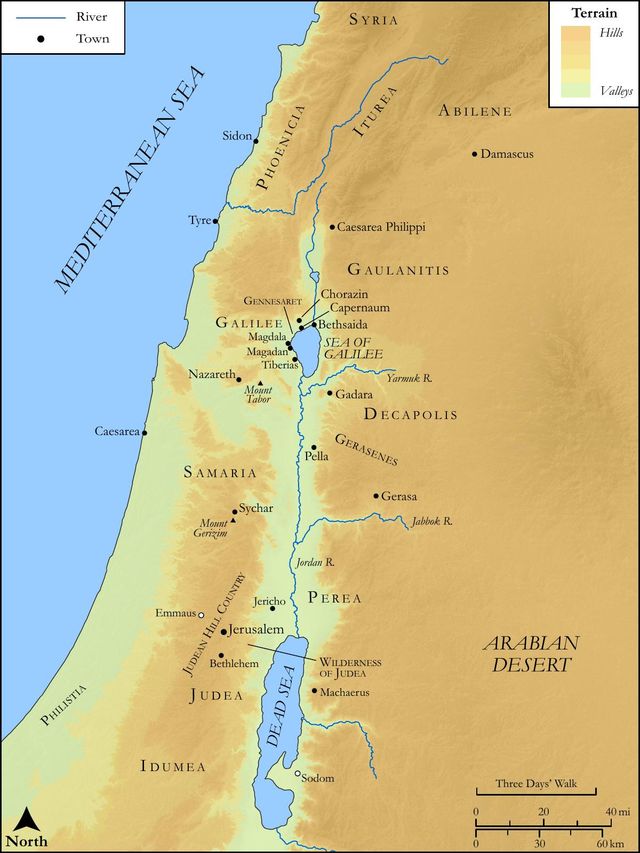
See on the biblical-era map
Study this verse
Public-domain commentary
Matthew Henry
From his Commentary on the Whole Bible. Henry comments on passages, not single verses — this entry covers Matthew 11:16–24. His four-level outline is real structure in the source text, so it is rendered as structure.
Christ was going on in the praise of John the Baptist and his ministry, but here stops on a sudden, and turns that to the reproach of those who enjoyed both that, and the ministry of Christ and his apostles too, in vain. As to that generation, we may observe to whom he compares them (Mat 11:16-19), and as to the particular places he instances in, we may observe with whom he compares them, Mat 11:20-24.
I.As to that generation, the body of the Jewish people at that time.
There were many indeed that pressed into the kingdom of heaven; but the generality continued in unbelief and obstinacy. John was a great and good man, but the generation in which his lot was cast was as barren and unprofitable as could be, and unworthy of him. Note, The badness of the places where good ministers live serves for a foil to their beauty. It was Noah's praise that he was righteous in his generation. Having commended John, he condemns those who had him among them, and did not profit by his ministry. Note, The more praise-worthy the people are, if they slight him, and so it will be found in the day of account.
This our Lord Jesus here sets forth in a parable, yet speaks as if he were at a loss to find out a similitude proper to represent this, Whereunto shall I liken this generation? Note, There is not a greater absurdity than that which they are guilty of who have good preaching among them, and are never the better for it. It is hard to say what they are like. The similitude is taken from some common custom among the Jewish children at their play, who, as is usual with children, imitated the fashions of grown people at their marriages and funerals, rejoicing and lamenting; but being all a jest, it made no impression; no more did the ministry either of John the Baptist or of Christ upon that generation. He especially reflects on the scribes and Pharisees, who had a proud conceit of themselves; therefore to humble them he compares them to children, and their behaviour to children's play.
The parable will be best explained by opening it and the illustration of it together in these five observations.
Note, 1. The God of heaven uses a variety of proper means and methods for the conversion and salvation of poor souls; he would have all men to be saved, and therefore leaves no stone unturned in order to it. The great thing he aims at, is the melting of our wills into a compliance with the will of God, and in order to this the affecting of us with the discoveries he has made of himself. Having various affections to be wrought upon, he uses various ways of working upon them, which though differing one from another, all tend to the same thing, and God is in them all carrying on the same design. In the parable, this is called his piping to us, and his mourning to us; he hath piped to us in the precious promises of the gospel, proper to work upon hope, and mourned to us in the dreadful threatenings of the law, proper to work upon fear, that he might frighten us out of our sins and allure us to himself. He had piped to us in gracious and merciful providences, mourned to us in calamitous, afflicting providences, and has set the one over against the other. He has taught his ministers to change their voice (Gal 4:20); sometimes to speak in thunder from mount Sinai, sometimes in a still small voice from mount Sion.
In the explanation of the parable is set forth the different temper of John's ministry and of Christ's, who were the two great lights of that generation.
(1.)On the one hand, John came mourning to them, neither eating nor drinking; not conversing familiarly with people, nor ordinarily eating in company, but alone, in his cell in the wilderness, where his meat was locusts and wild honey. Now this, one would think, should work upon them; for such an austere, mortified life as this, was very agreeable to the doctrine he preached: and that minister is most likely to do good, whose conversation is according to his doctrine; and yet the preaching even of such a minister is not always effectual.
(2.)On the other hand, the Son of man came eating and drinking, and so he piped unto them. Christ conversed familiarly with all sorts of people, not affecting any peculiar strictness or austerity; he was affable and easy of access, not shy of any company, was often at feasts, both with Pharisees and publicans, to try if this would win upon those who were not wrought upon by John's reservedness: those who were not awed by John's frowns, would be allured by Christ's smiles; from whom St. Paul learned to be come all things to all men, Co1 9:22. Now our Lord Jesus, by his freedom, did not at all condemn John, any more than John did condemn him, though their deportment was so very different. Note, Though we are never so clear in the goodness of our own practice, yet we must not judge of others by it. There may be a great diversity of operations, where it is the same God that worketh all in all (Co1 12:6), and this various manifestation of the Spirit is given to every man to profit withal, Mat 11:7. Observe especially, that God's ministers are variously gifted: the ability and genius of some lie one way, of others, another way: some are Boanerges - sons of thunder; others, Barnabeses - sons of consolation; yet all these worketh that one and the self-same Spirit (Co1 12:11), and therefore we ought not to condemn either, but to praise both, and praise God for both, who thus tries various ways of dealing with persons of various tempers, that sinners may be either made pliable or left inexcusable, so that, whatever the issue is, God will be glorified.
Note, 2. The various methods which God takes for the conversion of sinners, are with many fruitless and ineffectual: "Ye have not danced, ye have not lamented; you have not been suitably affected either with the one or with the other." Particular means have, as in medicine, their particular intentions, which must be answered, particular impressions, which must be submitted to, in order to the success of the great and general design; now if people will be neither bound by laws, nor invited by promises, nor frightened by threatenings, will neither be awakened by the greatest things, nor allured by the sweetest things, nor startled by the most terrible things, nor be made sensible by the plainest things; if they will hearken to the voice neither of scripture, nor reason, nor experience, nor providence, nor conscience, nor interest, what more can be done? The bellows are burned, the lead is consumed, the founder melteth in vain; reprobate silver shall men call them, Jer 6:29. Ministers' labour is bestowed in vain (Isa 49:4), and, which is a much greater loss, the grace of God received in vain, Co2 6:1. Note, It is some comfort to faithful ministers, when they see little success of their labours, that it is no new thing for the best preachers and the best preaching in the world to come short of the desired end. Who has believed our report? If from the blood of the slain, from the fat of the mighty, the bow of those great commanders, Christ and john, returned so often empty (Sa2 1:22), no marvel if ours do so, and we prophecy to so little purpose upon dry bones.
Note, 3. That commonly those persons who do not profit by the means of grace, are perverse, and reflect upon the ministers by whom they enjoy those means; and because they do not get good themselves, they do all the hurt they can to others, by raising and propagating prejudices against the word, and the faithful preachers of it. Those who will not comply with God, and walk after him, confront him, and walk contrary to him. So this generation did; because they were resolved not to believe Christ and john, and to own them, as they ought to have done, for the best of men, they set themselves to abuse them, and to represent them as the worst. (1.) As for John the Baptist, they say, He has a devil. They imputed his strictness and reservedness to melancholy, and some kind or degree of a possession of Satan. "Why should we heed him? he is a poor hypochondriacal man, full of fancies, and under the power of a crazed imagination." (2.) As for Jesus Christ, they imputed his free and obliging conversation to the more vicious habit of luxury and flesh-pleasing: Behold a gluttonous man and a wine-bibber. No reflection could be more foul and invidious; it is the charge against the rebellious son (Deu 21:20), He is a glutton and a drunkard; yet none could be more false and unjust; for Christ pleased not himself (Rom 15:3), nor did ever any man live such a life of self-denial, mortification, and contempt of the world, as Christ lived: he that was undefiled, and separate from sinners, is here represented as in league with them, and polluted by them. Note, The most unspotted innocency, and the most unparalleled excellency, will not always be a fence against the reproach of tongues: nay, a man's best gifts and best actions, which are both well intended and well calculated for edification, may be made the matter of his reproach. The best of our actions may become the worst of our accusations, as David's fasting, Psa 69:10. It was true in some sense, that Christ was a Friend to publicans and sinners, the best Friend they ever had, for he came into the world to save sinners, great sinners, even the chief; so he said very feelingly, who had been himself not a publican and sinner, but a Pharisee and sinner; but this is, and will be to eternity, Christ's praise, and they forfeited the benefit of it who thus turned it to his reproach.
Note, 4. That the cause of this great unfruitfulness and perverseness of people under the means of grace, is that they are like children sitting in the markets; they are foolish as children, froward as children, mindless and playful as children; would they but show themselves men in understanding, there would be some hopes of them. The market-place they sit in is to some a place of idleness (Mat 20:3); to others a place of worldly business (Jam 4:13); to all a place of noise or diversion; so that if you ask the reason why people get so little good by the means of grace, you will find it is because they are slothful and trifling, and do not love to take pains; or because their heads, and hands, and hearts are full of the world, the cares of which choke the word, and choke their souls at last (Eze 33:31; Amo 8:5); and they study to divert their own thoughts from every thing that is serious. Thus in the markets they are, and there they sit; in these things their hearts rest, and by them they resolve to abide.
Note, 5. Though the means of grace be thus slighted and abused by many, by the most, yet there is a remnant that through grace do improve them, and answer the designs of them, to the glory of God, and the good of their own souls. But wisdom is justified of her children. Christ is Wisdom; in him are hid treasures of wisdom; the saints are the children God has given him, Heb 2:13. The gospel is wisdom, it is the wisdom from above: true believers are begotten again by it, and born from above too; they are wise children, wise for themselves, and their true interests; not like the foolish children that sat in the markets. These children of wisdom justify wisdom; they comply with the designs of Christ's grace, answer the intentions of it, and are suitably affected with, and impressed by, the various methods it takes, and so evidence the wisdom of Christ in taking these methods. This is explained, Luk 7:29. The publicans justified God, being baptized with the baptism of John, and afterwards embracing the gospel of Christ. Note, The success of the means of grace justifies the wisdom of God in the choice of these means, against those who charge him with folly therein. The cure of every patient, that observes the physician's orders, justifies the wisdom of the physician: and therefore Paul is not ashamed of the gospel of Christ, because, whatever it is to others, to them that believe it is the power of God unto salvation, Rom 1:16. When the cross of Christ, which to others is foolishness and a stumbling-block, is to them that are called the wisdom of God and the power of God (Co1 1:23, Co1 1:24), so that they make the knowledge of that the summit of their ambition (Co1 2:2), and the efficacy of that the crown of their glorying (Gal 6:14), here is wisdom justified of her children. Wisdom's children are wisdom's witnesses in the world (Isa 43:10), and shall be produced as witnesses in that day, when wisdom, that is now justified by the saints, shall be glorified in the saints, and admired in all them that believe, Th2 1:10. If the unbelief of some reproach Christ by giving him the lie, the faith of others shall honour him by setting to its seal that he is true, and that he also is wise, Co1 1:25. Whether we do it or not, it will be done; not only God's equity, but his wisdom, will be justified when he speaks, when he judges.
Well, this is the account Christ gives of that generation, and that generation is not passed away, but remains in a succession of the like; for as it was then, it has been since and is still; some believe the things which are spoken, and some believe not, Act 28:24.
II.As to the particular places in which Christ was most conversant.
What he said in general of that generation, he applied in particular to those places, to affect them. Then began he to upbraid them, Mat 11:20. He began to preach to them long before (Mat 4:17), but he did not begin to upbraid till now. Note, Rough and unpleasing methods must not be taken, till gentler means have first been used. Christ is not apt to upbraid; he gives liberally, and upbraideth not, till sinners by their obstinacy extort it from him. Wisdom first invites, but when her invitations are slighted, then she upbraids, Pro 1:20, Pro 1:24. Those do not go in Christ's method, who begin with upbraidings. Now observe,
1.The sin charged upon them; not any against the moral law, then an appeal would have lain to the gospel, which would have relieved, but a sin against the gospel, the remedial law, and that is impenitency: this was it he upbraided them with, or reproached them for, as the most shameful, ungrateful thing that could be, that they repented not. Note, Wilful impenitency is the great damning sin of multitudes that enjoy the gospel, and which (more than any other) sinners will be upbraided with to eternity. The great doctrine that both John the Baptist, and Christ, and the apostles preached, was repentance; the great thing designed, both in the piping and in the mourning, was to prevail with people to change their minds and ways, to leave their sins and turn to God; and this they would not be brought to. He does not say, because they believed not (for some king of faith many of them had) that Christ was a Teacher come from God; but because they repented not: their faith did not prevail to the transforming of their hearts, and the reforming of their lives. Christ reproved them for their other sins, that he might lead them to repentance; but when they repented not, He upbraided them with that, as their refusal to be healed: He upbraided them with it, that they might upbraid themselves, and might at length see the folly of it, as that which alone makes the sad case a desperate one, and the wound incurable.
2.The aggravation of the sin; they were the cities in which most of his mighty works were done; for thereabouts his principal residence had been for some time. Note, Some places enjoy the means of grace in greater plenty, power, and purity, than other places. God is a free agent, and acts so in all his disposals, both as the God of nature and as the God of grace, common and distinguishing grace. By Christ's mighty works they should have been prevailed with, not only to receive his doctrine, but to obey his law; the curing of bodily diseases should have been the healing of their souls, but it had not that effect. Note, The stronger inducements we have to repent, the more heinous is the impenitency and the severer will the reckoning be, for Christ keeps account of the mighty works done among us, and of the gracious works done for us too, by which also we should be led to repentance, Rom 2:4.
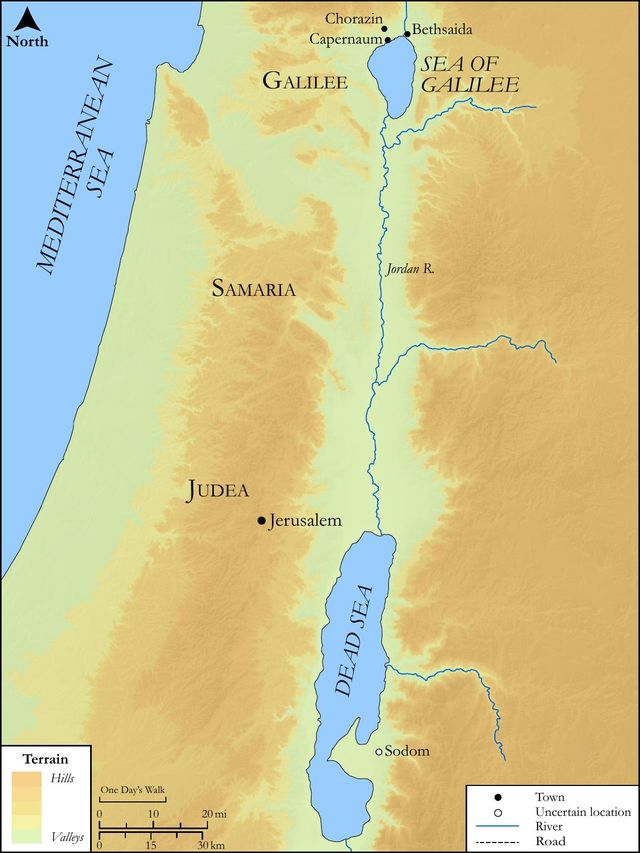
(1.)Chorazin and Bethsaida are here instanced (Mat 11:21, Mat 11:22), they have each of them their woe: Woe unto thee, Chorazin, woe unto thee, Bethsaida. Christ came into the world to bless us; but if that blessing be slighted, he has woes in reserve, and his woes are of all others the most terrible. These two cities were situate upon the sea of Galilee, the former on the east side, and the latter on the west, rich and populous places; Bethsaida was lately advanced to a city by Philip the tetrarch; out of it Christ took at least three of his apostles: thus highly were these places favoured! Yet because they knew not the day of their visitation, they fell under these woes, which stuck so close to them, that soon after this they decayed, and dwindled into mean, obscure villages. So fatally does sin ruin cities, and so certainly does the word of Christ take place!
Now Chorazin and Bethsaida are here compared with Tyre and Sidon, two maritime cities we read much of in the Old Testament, that had been brought to ruin, but began to flourish again; these cities bordered upon Galilee, but were in a very ill name among the Jews for idolatry and other wickedness. Christ sometimes went into the coasts of Tyre and Sidon (Mat 15:21), but never thither; the Jews would have taken it very heinously if he had; therefore Christ, to convince and humble them, here shows,
[1.]That Tyre and Sidon would not have been so bad as Chorazin and Bethsaida. If they had had the same word preached, and the same miracles wrought among them, they would have repented, and that long ago, as Nineveh did, in sackcloth and ashes. Christ, who knows the hearts of all, knew that if he had gone and lived among them, and preached among them, he should have done more good there than where he was; yet he continued where he was for some time, to encourage his ministers to do so, though they see not the success they desire. Note, Among the children of disobedience, some are more easily wrought upon than others; and it is a great aggravation of the impenitency of those who plentifully enjoy the means of grace, not only that there are many who sit under the same means that are wrought upon, but that there are many more that would have been wrought upon, if they had enjoyed the same means. See Eze 3:6, Eze 3:7. Our repentance is slow and delayed, but theirs would have been speedy; they would have repented long ago. Ours has been slight and superficial; theirs would have been deep and serious, in sackcloth and ashes. Yet we must observe, with an awful adoration of the divine sovereignty, that the Tyrians and Sidonians will justly perish in their sin, though, if they had had the means of grace, they would have repented; for God is a debtor to no man.
[2.]That therefore Tyre and Sidon shall not be so miserable as Chorazin and Bethsaida, but it shall be more tolerable for them in the day of judgment, Mat 11:22. Note, First, At the day of judgment the everlasting state of the children of men will, by an unerring and unalterable doom, be determined; happiness or misery, and the several degrees of each. Therefore it is called the eternal judgment (Heb 6:2), because decisive of the eternal state. Secondly, In that judgment, all the means of grace that were enjoyed in the state of probation will certainly come into the account, and it will be enquired, not only how bad we were, but how much better we might have been, had it not been our own fault, Isa 5:3, Isa 5:4. Thirdly, Though the damnation of all that perish will be intolerable, yet the damnation of those who had the fullest and clearest discoveries made them of the power and grace of Christ, and yet repented not, will be of all others the most intolerable. The gospel light and sound open the faculties, and enlarge the capacities of all that see and hear it, either to receive the riches of divine grace, or (if that grace be slighted) to take in the more plentiful effusions of divine wrath. If self-reproach be the torture of hell, it must needs be hell indeed to those who had such a fair opportunity of getting to heaven. Son, remember that.
(2.)Capernaum is here condemned with an emphasis (Mat 11:23), "And thou, Capernaum, hold up thy hand, and hear they doom," Capernaum, above all the cities of Israel, was dignified with Christ's most usual residence; it was like Shiloh of old, the place which he chose, to put his name there, and it fared with it as with Shiloh, Jer 7:12, Jer 7:14. Christ's miracles here were daily bread, and therefore, as the manna of old, were despised and called light bread. Many a sweet and comfortable lecture of grace Christ had read them to little purpose, and therefore he reads them a dreadful lecture of wrath: those who will not hear the former shall be made to feel the latter.
We have here Capernaum's doom,
[1.]Put absolutely; Thou which art exalted to heaven shalt be brought down to hell Note, First, Those who enjoy the gospel in power and purity, are thereby exalted to heaven; they have therein a great honour for the present, and a great advantage for eternity; they are lifted up toward heaven; but if, notwithstanding, they still cleave to the earth, they may thank themselves that they are not lifted up into heaven. Secondly, Gospel advantages and advancements abused will sink sinners so much lower into hell. Our external privileges will be so far from saving us, that if our hearts and lives be not agreeable to them, they will but inflame the reckoning: the higher the precipice is, the more fatal is the fall from it: Let us not therefore be high-minded, but fear; not slothful, but diligent. See Job 20:6, Job 20:7.
[2.]We have it here put in comparison with the doom of Sodom - a place more remarkable, both for sin and ruin, than perhaps any other; and yet Christ here tells us,
First, That Capernaum's means would have saved Sodom. If these miracles had been done among the Sodomites, as bad as they were, they would have repented, and their city would have remained unto this day a monument of sparing mercy, as now it is of destroying justice, Jde 1:7. Note, Upon true repentance through Christ, even the greatest sin shall be pardoned and the greatest ruin prevented, that of Sodom not excepted. Angels were sent to Sodom, and yet it remained not; but if Christ had been sent thither, it would have remained; how well is it for us, then, that the world to come is put in subjection to Christ, and not to angels! Heb 2:5. Lot would not have seemed as one that mocked, if he had wrought miracles.
Secondly, That Sodom's ruin will therefore be less at the great day than Capernaum's. Sodom will have many things to answer for, but not the sin of neglecting Christ, as Capernaum will. If the gospel prove a savour of death, a killing savour, it is doubly so; it is of death unto death, so great a death (Co2 2:16); Christ had said the same of all other places that receive not his ministers nor bid his gospel welcome (Mat 10:15); It shall be more tolerable for the land of Sodom than for that city. We that have now the written word in our hands, the gospel preached, and the gospel ordinances administered to us, and live under the dispensation of the Spirit, have advantages not inferior to those of Chorazin, and Bethsaida, and Capernaum, and the account in the great day will be accordingly. It has therefore been justly said, that the professors of this age, whether they go to heaven or hell, will be the greatest debtors in either of these places; if to heaven, the greatest debtors to divine mercy for those rich means that brought them thither; if to hell, the greatest debtors to divine justice, for those rich means that would have kept them from thence.
Historical interpretation
Nine Centuries of Reception
12 surviving comments on this verse. Each one is dated, so this reads as a timeline rather than a list.
Select a marker to jump to its quote. Markers stagger vertically where authors wrote within a few decades of each other.
Mystically; Neither did the preaching of John bend the Jews, to whom the law seemed burdensome in prescribing meats and drinks, difficult and grievous, having in it sin which He calls having a dæmon—for from the difficulty of keeping it they must sin under the Law. Nor again did the preaching of the Gospel with freedom of life in Christ please them—by which the hardships and burdens of the Law were remitted, and publicans and sinners only believed in it. Thus, then, so many and so great warnings of all kinds having been offered them in vain, they are neither justified by the Law, and they are cast off from grace; Wisdom, therefore, is justified of her children, by those, that is, who seize the kingdom of heaven by the justification of faith, confessing the work of wisdom to be just, that it has transferred its gift from the rebellious to the faithful.
That you should not say that they were by nature evil, He names Bethsaida, a town from which the Apostles had come, namely, Philip, and two pair of the chief of the Apostles, Peter and Andrew, James and John.
This makes the accusation heavier, for it is a proof of extreme wickedness, that they are worse, not only than any then living, but than the wickedest of all past time.
Then He proceeds to upbraid the cities now that wisdom hath been justified; now that He hath shown all to be fully performed. That is, having failed to persuade them, He now doth but lament over them; which is more than terrifying. For He had exhibited both His teaching by His words, and His wonder-working power by His signs. But forasmuch as they abode in their own unbelief, He now does but upbraid.
For "then," it is said, "began Jesus to upbraid the cities, wherein most of His mighty works were done, because they repented not; saying, Woe unto thee, Chorazin! woe unto thee, Bethsaida!"
Then, to show thee that they are not such by nature, He states also the name of the city out of which proceeded five apostles. For both Philip, and those two pairs of the chief apostles, were from thence.
"For if," saith He, "the mighty works which were done in you had been done in Tyre and Sidon, they would have repented in sackcloth and ashes. But I say unto you, It shall be more tolerable for Tyre and Sidon, at the day of judgment, than for you. And thou, Capernaum, which art exalted unto heaven, shalt be brought down to hell, for if the mighty works which have been done in thee had been done in Sodom, it would have remained until this day. But I say unto you, It shall be more tolerable for the land of Sodom in the day of judgment, than for thee."
And He adds not Sodom with the others for nought, but to aggravate the charge against them. Yea, for it is a very great proof of wickedness, when not only of them that now are, but even of all those that ever were wicked, none are found so bad as they.
Thus elsewhere also He makes a comparison, condemning them by the Ninevites, and by the Queen of the south; there, however, it was by them that did right, here, even by them that sinned; a thing far more grievous. With this law of condemnation, Ezekiel too was acquainted: wherefore also he said to Jerusalem, "Thou hast justified thy sisters in all thy sins." Thus everywhere is He wont to linger in the Old Testament, as in a favored place. And not even at this doth He stay His speech, but makes their fears yet more intense, by saying, that they should suffer things more grievous than Sodomites and Tyrians, so as by every means to gather them in, both by bewailing, and by alarming them.
His upbraiding of the towns of Corozaim, Bethsaida, and Capharnaum, is set forth in this chapter, because He therefore upbraided them, because after He had such mighty works and wonders in them they had not done penitence. Whence He adds, Wo for thee, Corozaim! wo for thee, Bethsaida!
In this word Wo, these towns of Galilee are mourned for by the Saviour, that after so many signs and mighty works, they had not done penitence.
And to these are preferred Tyre and Sidon, cities given up to idolatry and vices; For if the mighty works which have been done in you had been done in Tyre and Sidon, they would have long ago done penitence in sackcloth and ashes.
We ask where it is written that the Lord did wonders in Corozaim and Bethsaida? We read above, And he went about the towns and villages, healing all sicknesses, &c. (ch., 9:35.) among the rest, therefore, we may suppose that He wrought signs in Corozaim and Bethsaida.
This is because Tyre and Sidon had trodden under foot the law of nature only, but these towns after they had transgressed the natural and the written Law, also made light of those wonders which had been wrought among them.
In other copies we find, And thou, Capharnaum, that art exalted to heaven, shalt be brought down to hell; and it may be understood in two different ways. Either, thou shalt go down to hell because thou hast proudly resisted my preaching; or, thou that hast been exalted to heaven by entertaining me, and having my mighty wonders done in thee, shalt be visited with the heavier punishment, because thou wouldest not believe even these.
In Capharnaum, which is interpreted 'the most fair town,' Jerusalem is condemned, to which it is said by Ezekiel, Sodom is justified by thee. (Ezek. 16:52)
The careful reader will hesitate here; If Tyre and Sidon could have done penitence at the preaching of the Saviour, and His miracles, they are not in fault that they believed not; the sin is his who would not preach to bring them to penitence. To this there is a ready answer, that we know not God's judgments, and are ignorant of the sacraments of His peculiar dispensations. It was determined by the Lord not to pass the borders of Judæa, that He might not give the Pharisees and Priests a just occasion of persecuting Him, as also He gave commandment to the Apostles, Go not into the way of the Gentiles. Corozaim and Bethsaida are condemned because they would not believe, though Christ Himself was among them—Tyre and Sidon are justified, because they believed His Apostles. You should not enquire into times when you see the salvation of those that believe.
(Verse 20.) Then he began to reproach the cities in which most of his miracles had been performed, because they did not repent. The reproach of the cities of Chorazin, Bethsaida, and Capernaum is explained by the heading of this chapter. He reproached them because after performing many miracles and signs, they did not repent.
Our Savior laments Chorazin and Bethsaida, cities of Galilee, because after such great miracles and acts of goodness they did not repent. Even Tyre and Sidon, cities that surrendered to idolatry and other vices, are preferred to them. Tyre and Sidon are preferred for the reason that although they trampled down the law, still Chorazin and Bethsaida, after they transgressed natural and written law, cared little for the miracles that were performed among them. If we ask where it is written that our Lord performed miracles in Chorazin and Bethsaida, we read above: “And he went around to all the towns and villages, curing every infirmity” and the rest. Thus among the other towns and villages it must be judged that the Lord performed miracles in Chorazin and Bethsaida as well.
(De Cons. Ev. ii. 32.) Luke also gives this as spoken in continuation of some other of the Lord's discourses; from which it appears that he has rather followed the actual order of events; Matthew to have followed his recollection. Or the words of Matthew, Then began he to upbraid the towns, must be taken, as some think, as expressing some particular time by the word then, but not referring generally to that time in which the many other things here told were done and said. Whoever, therefore, thinks thus must suppose that this was spoken twice. And when we find in the same Evangelist some things spoken by the Lord at two different times—like that in Luke concerning the not taking a scrip for their journey,—what wonder is it if any thing else, which was twice spoken, is found once severally in two several Gospels in the actual connection in which it was spoken, which connection is different, because they are two different occasions on which it is related to have been spoken?
Capharnaum was the metropolis of Galilee, and a noted town of that province, and therefore the Lord mentions it particularly, saying, And thou, Capharnaum, shalt thou indeed be exalted to heaven. Thou shalt go down even to hell.
And they have made the sins not of Sodom only and Gomorrah, but of Tyre and Sidon light in comparison, and therefore it follows, For if the mighty works which have been done in thee had been done in Sodom, it would perhaps have remained unto this day.
The Lord, who knows all things, here uses a word expressing uncertainty—perhaps, to show that freedom of choice is left to men. But I say unto you, it shall be easier for the land of Sodom in the day of judgment than for you. And be it known, that in speaking of the city or country, the Lord does not chide with the buildings and walls, but with the men that inhabit there, by the figure metonymy, putting the thing containing for the thing contained. The words, It shall be easier in the day of judgment, clearly prove that there are divers punishments in hell, as there are divers mansions in the kingdom of heaven.
We may also answer in another way. There were many in Corozaim and Bethsaida who would believe, and many in Tyre and Sidon who would not believe, and therefore were not worthy of the Gospel. The Lord therefore preached to the dwellers in Corozaim and Bethsaida, that they who were to believe, might be able; and preached not in Tyre and Sidon, lest perhaps they who were not to believe, being made worse by contempt of the Gospel, should be punished more heavily.
(Mor. xxxv. 6.) In sackcloth is the roughness which denotes the pricking of the conscience for sin, ashes denote the dust of the dead; and both are wont to be employed in penitence, that the pricking of the sackcloth may remind us of our sins, and the dust of the ash may cause us to reflect what we have become by judgment.
Corozaim, which is interpreted 'my mystery,' and Bethsaida, 'the house of fruits' or, 'the house of hunters,' are towns of Galilee situated on the shore of the sea of Galilee. The Lord therefore mourns for towns which once had the mystery of God, and which ought to have brought forth the fruit of virtues, and into which spiritual hunters had been sent.
Tyre and Sidon axe cities of Phœnicia. Tyre is interpreted 'narrowness,' and Sidon 'hunting;' and denote the Gentiles whom the Devil as a hunter drives into the straits of sin; but Jesus the Saviour sets them free by the Gospel.
We at this day see the words of the Saviour fulfilled; Corozaim and Bethsaida would not believe when the Lord came to them in person; but Tyre and Sidon have afterwards believed on the preaching of the Apostles.
After showing that He had done everything that He ought to have done, and they remained unrepentant, then He upbraids them.
(ap. Anselm.) Thus far He had brought His accusation against the Jews in common; now against certain towns by name, in which he had specially preached, and yet they would not be converted; whence it is said, Then began he to upbraid the cities in which most of his mighty works were done, because they had not repented.
Continue studying Matthew 11:20 across the web’s major study libraries — every link below opens this exact verse, chapter, or book on the destination site.
Read & Compare
 BibleGatewayThis verse in more than 200 translations and 70 languages.
 Bible.comThe YouVersion reader — hundreds of translations, reading plans, and highlights.
 ESV.orgCrossway's official English Standard Version reader.
 NET BibleThe NET translation with 60,000+ translators' notes on every rendering decision.
 STEP BibleTyndale House's free study tool — original text, vocabulary, and scholarly resources.
 BibliaLogos Bible Software's free web reader.
 USCCBThe New American Bible (Revised Edition) with the U.S. bishops' study notes.
Commentaries
 BibleHub CommentariesDozens of classic commentaries on this verse, gathered on one page.
 StudyLightMore than 100 commentary sets — the largest collection on the web.
 BibleRefPlain-English commentary on what this verse means, verse by verse.
 Enduring WordDavid Guzik's free commentary on this chapter, widely used by Bible teachers.
 Bible Study ToolsVerse commentary alongside Greek and Hebrew study aids.
Original Language & Research
- BibleHub InterlinearThe verse word by word — original language, transliteration, and English.
- BibleHub LexiconEvery word's original-language definition and Strong's entry.
 Blue Letter BibleDeep-study tools — Strong's numbers, concordance, and word studies.
 CNTR CollationThe earliest Greek manuscripts of this verse, collated letter by letter.
Sermons, Hymns & Audio


TrulyRandomVerse is not affiliated with these sites and doesn’t control their content. They’re linked because they’re genuinely useful.
Summary
Matthew 11:20 marks a pivotal moment in Jesus' public ministry, revealing His profound disappointment and stern rebuke toward the cities in Galilee where He had performed the majority of His miraculous works. Despite overwhelming evidence of His divine authority and the Kingdom's presence, the inhabitants of these privileged locales failed to respond with genuine repentance, prompting Jesus to declare a severe judgment upon their spiritual indifference and hardened hearts.
Context
ShowHideLiterary Context
This verse immediately follows Jesus' extensive discourse on the identity and significance of John the Baptist, whom Jesus affirms as more than a prophet and the Elijah who was to come (Matthew 11:7-19). Having established His own messianic credentials through His works (as mentioned in Matthew 11:2-6), Jesus now turns His attention to the cities that witnessed these undeniable signs. The "upbraiding" serves as a stark contrast to the earlier invitation to the weary and burdened in Matthew 11:28-30, highlighting the consequence of rejecting divine grace. The specific cities—Chorazin, Bethsaida, and Capernaum—are explicitly named in the subsequent verses (Matthew 11:21-24), emphasizing the direct and personal nature of Jesus' condemnation.
Historical & Cultural Context
Jesus' ministry was primarily centered in the region of Galilee, a Jewish territory under Roman rule, known for its vibrant towns and agricultural communities. Cities like Capernaum served as Jesus' base of operations, making them prime locations for His miraculous deeds and teachings. In Jewish thought, miracles (or "mighty works") were understood as signs of God's presence and activity, often validating the claims of a prophet or the Messiah. The expectation was that such powerful demonstrations would lead to a national turning to God, or repentance (Hebrew: teshuvah). The failure of these Galilean cities to repent, despite witnessing unprecedented divine power, was a profound spiritual failure in a culture that understood the direct correlation between divine revelation and human accountability. Their spiritual apathy, therefore, was not merely a personal slight but a rejection of God's redemptive initiative.
Key Themes
ShowHideMatthew 11:20 contributes significantly to several major themes within the Gospel of Matthew and broader biblical theology. Firstly, it underscores the theme of Divine Judgment and Accountability. Jesus' "upbraiding" highlights that privilege, especially exposure to divine truth and power, brings with it increased responsibility. Those who have seen and heard much will be held to a higher standard, a concept echoed in Luke 12:48. Secondly, the verse emphasizes the Necessity of Repentance. The core issue is the cities' failure to "repent," which is a fundamental turning from sin and toward God, a central message of both John the Baptist (Matthew 3:2) and Jesus Himself (Matthew 4:17). Lastly, it powerfully illustrates the Consequences of Unbelief. The rejection of Jesus' mighty works and His call to repentance leads to a more severe condemnation than that faced by pagan cities like Tyre and Sidon, who had far less exposure to God's saving grace, as Jesus explicitly states in Matthew 11:21-22.
Exposition and Analysis
ShowHideKey Word Analysis
ShowHideFrom oneidos, meaning "reproach" or "disgrace." To "upbraid" means to defame, rail at, or chide. It conveys a strong sense of stern disapproval and public accusation, indicating Jesus' deep sorrow, frustration, and condemnation over the spiritual blindness and impenitence of the cities. It is a severe form of verbal reproach, highlighting a profound sense of offense or disappointment.
From dýnamai, meaning "to be able." This term refers to force, power, or ability, and specifically, miraculous power. In this context, it denotes the supernatural demonstrations of God's authority and presence performed by Jesus—healings, exorcisms, and other signs. These were not mere displays of power but acts intended to validate Jesus' claims as Messiah and to call people to repentance and faith.
From metá (after, with) and noiéō (to think). To "repent" means to think differently or afterwards, to reconsider morally, or to feel compunction. It signifies more than just feeling sorry; it implies a fundamental change of mind and heart, a turning around from one's former way of life, and a decisive commitment to God's will, leading to a transformation of behavior.
Verse Breakdown
ShowHide"Then began he to upbraid the cities"
This phrase marks a shift in Jesus' ministry, moving from teaching and performing miracles to issuing a direct and severe rebuke. The verb "began" suggests a deliberate and solemn initiation of this condemnation. The target, "the cities," indicates a corporate responsibility, implying that the collective spiritual state of the inhabitants was one of hardened unbelief, despite their privileged exposure to Jesus' ministry.
"wherein most of his mighty works were done"
This clause provides the crucial context and justification for Jesus' upbraiding. These were not random cities, but the very places that had received the greatest measure of divine revelation through Jesus' powerful miracles. The phrase "most of his mighty works" underscores the extraordinary privilege these cities enjoyed, having witnessed undeniable evidence of God's presence and the Kingdom's power.
"because they repented not"
This final clause identifies the precise reason for Jesus' condemnation. Despite the overwhelming evidence of His messianic identity and the Kingdom's breaking in, the cities failed to "repent." Their lack of repentance signifies a refusal to change their minds, turn from their sin, and embrace the transforming message of the Gospel. It was this spiritual obstinacy and indifference, in the face of such clear divine invitation, that drew Jesus' severe rebuke.
Literary Devices
ShowHideMatthew 11:20 employs several powerful literary devices. The primary device is Reproach or Upbraiding, which is a direct, severe verbal condemnation. Jesus' act of "upbraiding" is not merely an expression of frustration but a prophetic pronouncement, carrying the weight of divine judgment against spiritual apathy. There is a profound Irony in the verse: the very cities that received the most extraordinary divine favor through Jesus' "mighty works" are the ones most resistant to His message. This highlights the paradox of human free will and the hardening of hearts in the face of grace. Furthermore, the passage contains an element of Foreshadowing, as Jesus' words here anticipate the ultimate judgment that awaits those who reject God's clear revelation and refuse to repent, a theme further developed in eschatological passages. The strong emotional language also conveys Pathos, revealing Jesus' deep sorrow and disappointment over the spiritual state of these unrepentant communities.
Theological and Thematic Connections
ShowHideMatthew 11:20 profoundly underscores the biblical principle of accountability in the face of divine revelation. God's gracious self-disclosure, whether through miraculous signs, prophetic word, or the person of Jesus Christ, always carries an inherent expectation of a human response. The failure of these cities to repent, despite witnessing "most of his mighty works," illustrates the profound tragedy of spiritual indifference and the human capacity to resist even the clearest demonstrations of God's power and love. This verse serves as a stark reminder that divine patience is not infinite, and persistent unbelief in the face of truth will ultimately lead to judgment, a truth that resonates throughout scripture, emphasizing the urgency and necessity of genuine repentance.
Reflection and Application
ShowHideMatthew 11:20 serves as a timeless and sobering warning for all who encounter the truth of God. We, too, live in an age where God's "mighty works" are evident—through the witness of creation, the testimony of Scripture, the transformative power of the Gospel, and the indwelling presence of the Holy Spirit. This verse challenges us to honestly examine our own hearts: Have we truly responded to the light and truth we have received? Are we quick to repent when confronted with our sin and spiritual apathy, or do we, like the cities of Galilee, remain hardened and indifferent to God's gracious call? The greater our exposure to divine truth and grace, the greater our accountability. This passage calls us to a posture of humility, responsiveness, and genuine repentance, ensuring that our lives reflect a heart that has truly turned towards God, embracing His Kingdom and His will.
Questions for Reflection
ShowHideFAQ
ShowHideWhy did Jesus specifically upbraid these cities, and what does it mean for us today?
ShowHideJesus specifically upbraided Chorazin, Bethsaida, and Capernaum (as named in the verses immediately following Matthew 11:20) because these were the very places where He had performed the majority of His "mighty works"—miracles, healings, and powerful teachings. They had been given an unparalleled opportunity to witness the Kingdom of God breaking into their midst through the person of Jesus Christ. Their failure to repent, despite such clear and abundant evidence, constituted a profound rejection of God's gracious invitation. For us today, this implies a principle of increased accountability: the more truth and revelation we receive, the greater our responsibility to respond in faith and repentance. It's a warning against spiritual complacency and a call to actively embrace the truth of the Gospel.
Christ-Centered Fulfillment
ShowHideMatthew 11:20, with Jesus' poignant upbraiding of unrepentant cities, finds its Christ-centered fulfillment not only in His role as the ultimate Judge but also, paradoxically, as the ultimate means of salvation. Jesus' sorrow and condemnation of these cities, which refused to repent in the face of His "mighty works," foreshadow His final judgment upon all who reject Him (John 5:22). Yet, this very act of upbraiding also highlights the profound necessity of the work He came to accomplish. The "repentance" these cities failed to offer is precisely what Jesus makes possible through His atoning sacrifice. He is the Lamb of God who takes away the sin of the world, providing the path for genuine change of heart that humanity, left to its own devices, cannot achieve. His weeping over Jerusalem in Luke 19:41-44 further reveals His compassionate heart, even in the face of impending judgment, demonstrating that His desire is always for humanity to turn to Him and find life (John 3:16). Thus, Jesus' upbraiding of the unrepentant cities underscores the desperate need for the very salvation He offers, making His call to repent and believe the gospel the central and most urgent message of His ministry.