


Deuteronomy 32:5
Bible text: King James Version (1769 Blayney text) · Public domain
Bible text: Berean Standard Bible · Public domain
Bible text: American Standard Version (1901) · Public domain
Bible text: World English Bible, Messianic edition · Public domain
Bible text: Geneva Bible (1599) · Public domain
Bible text: Young's Literal Translation · Public domain
- שִׁחֵתshi·Chetit has acted corruptlyH7843V-Piel-Perf-3msVerb Piel Perfect 3rd Singular Masculine
- לוֹloto <the> himPrep-l ¦ 3msSuffix Personal 3rd Singular Masculineלto <the>וֹhim
- לֹאlo'notH3808NegParticle Negative
- בָּנָיוba·Navhis childrenH1121N-mpc ¦ 3msNoun Plural Masculine Constructבָּנָיchildrenוhis
- מוּמָםmu·Mamtheir blemishH3971N-msc ¦ 3mpNoun Singular Masculine Constructמוּמָblemishםtheir
- דּוֹרDora generationH1755N-msNoun Singular Masculine Absolute
- עִקֵּשׁ'i·KeshperverseH6141Adj-msAdjective Singular Masculine Absolute
- וּפְתַלְתֹּלu·fe·tal·Toland crookedH6618Conj-w ¦ Adj-msAdjective Singular Masculine Absoluteוּandפְתַלְתֹּלcrooked
English is a literal word-by-word gloss of the Hebrew, not the KJV's wording. Why?
This is the original text the KJV's translators worked from — each Hebrew word with its own literal English meaning in this verse, prepared by scholars at Tyndale House, Cambridge. The KJV translates whole sentences, not word by word, so its wording differs: one Hebrew word can become several English words, and the KJV may choose “the LORD” where the gloss reads “Yahweh”. Both are faithful — they answer different questions. For the KJV's own rendering, switch to the KJV text.
Details
See on the biblical-era map
Study this verse
Public-domain commentary
Matthew Henry
From his Commentary on the Whole Bible. Henry comments on passages, not single verses — this entry covers Deuteronomy 32:1–6. His three-level outline is real structure in the source text, so it is rendered as structure.
Here is, I. A commanding preface or introduction to this song of Moses, Deu 32:1, Deu 32:2. He begins, 1. With a solemn appeal to heaven and earth concerning the truth and importance of what he was about to say, and the justice of the divine proceedings against a rebellious and backsliding people, for he had said (Deu 31:28) that he would in this song call heaven and earth to record against them. Heaven and earth would sooner hear than this perverse and unthinking people; for they revolt not from the obedience to their Creator, but continue to this day, according to his ordinances, as his servants (Psa 119:89-91), and therefore will rise up in judgment against rebellious Israel. Heaven and earth will be witnesses against sinners, witnesses of the warning given them and of their refusal to take the warning (see Job 20:27); the heaven shall reveal his iniquity, and the earth shall rise up against him. Or heaven and earth are here put for the inhabitants of both, angels and men; both shall agree to justify God in his proceedings against Israel, and to declare his righteousness, Psa 50:6; see Rev 19:1, Rev 19:2. 2. he begins with a solemn application of what he was about to say to the people (Deu 32:2): My doctrine shall drop as the rain. "It shall be a beating sweeping rain to the rebellious;" so one of the Chaldee paraphrasts expounds the first clause. Rain is sometimes sent for judgment, witness that with which the world was deluged; and so the word of God, while to some it is reviving and refreshing - a savour of life unto life, is to others terrifying and killing - a savour of death unto death. It shall be as a sweet and comfortable dew to those who are rightly prepared to receive it. Observe, (1.) The subject of this song is doctrine; he had given them a song of praise and thanksgiving (Ex. 15), but this is a song of instruction, for in psalms, and hymns, and spiritual songs, we are not only to give glory to god, but to teach and admonish one another, Col 3:16. Hence many of David's psalms are entitled Maschil - to give instruction. (2.) This doctrine is fitly compared to rain and showers which come from above, to make the earth fruitful, and accomplish that for which they are sent. (Isa 55:10, Isa 55:11), and depend not upon the wisdom or will of man, Mic 5:7. It is a mercy to have this rain come often upon us, and our duty to drink it in, Heb 6:7. (3.) He promises that his doctrine shall drop and distil as the dew, and the small rain, which descend silently and without noise. The word preached is likely to profit when it comes gently, and sweetly insinuates itself into the hearts and affections of the hearers. (4.) He bespeaks their acceptance and entertainment of it, and that it might be as sweet, and pleasant, and welcome to them as rain to the thirsty earth, Psa 72:6. And the word of God is likely to do us good when it is thus acceptable. (5.) The learned bishop Patrick understands it as a prayer that his words which were sent from heaven to them might sink into their hearts and soften them, as the rain softens the earth, and so make them fruitful in obedience.
II.An awful declaration of the greatness and righteousness of God, Deu 32:3, Deu 32:4.
1.He begins with this, and lays it down as his first principle,
(1.)To preserve the honour of God, that no reproach might be cast upon him for the sake of the wickedness of his people Israel; how wicked and corrupt soever those are who are called by his name, he is just, and right, and all that is good, and is not to be thought the worse of for their badness.
(2.)To aggravate the wickedness of Israel, who knew and worshipped such a holy god, and yet were themselves so unholy. And,
(3.)To justify God in his dealings with them; we must abide by it, that God is righteous, even when his judgments are a great deep, Jer 12:1; Psa 36:6.
2.Moses here sets himself to publish the name of the Lord (Deu 32:3), that Israel, knowing what a God he is whom they had avouched for theirs, might never be such fools as to exchange him for a false god, a dunghill god. He calls upon them therefore to ascribe greatness to him. It will be of great use to us for the preventing of sin, and the preserving of us in the way of our duty, always to keep up high and honourable thoughts of God, and to take all occasions to express them: Ascribe greatness to our God. We cannot add to his greatness, for it is infinite; but we must acknowledge it, and give him the glory of it. Now, when Moses would set forth the greatness of God, he does it, not by explaining his eternity and immensity, or describing the brightness of his glory in the upper world, but by showing the faithfulness of his word, the perfection of his works, and the wisdom and equity of all the administrations of his government; for in these his glory shines most clearly to us, and these are the things revealed concerning him, which belong to us and our children, Deu 32:4.
(1.)He is the rock. So he is called six times in this chapter, and the Septuagint all along translates it theos, God. The learned Mr. Hugh Broughton reckons that God is called the rock eighteen times (besides in this chapter) in the Old Testament (though in some places we translate it strength), and charges it therefore upon the papists that they make St. Peter a god when they make him the rock on which the church is built. God is the rock, for he is in himself immutable immovable, and he is to all that seek him and fly to him an impenetrable shelter, and to all that trust in him an everlasting foundation.
(2.)His work is perfect. His work of creation was so, all very good; his works of providence are so, or will be so in due time, and when the mystery of God shall be finished the perfection of his works will appear to all the world. Nothing that God does can be mended, Ecc 3:14. God was now perfecting what he had promised and begun for his people Israel, and from the perfection of this work they must take occasion to give him the glory of the perfection of all his works. The best of men's works are imperfect, they have their flaws and defects, and are left unfinished; but, as for God, his work is perfect; if he begin, he will make an end.
(3.)All his ways are judgment. The ends of his ways are all righteous, and he is wise in the choice of the means in order to those ends. Judgment signifies both prudence and justice. The ways of the Lord are right, Hos 14:9.
(4.)He is a God of truth, whose word we may take and rely upon, for he cannot lie who is faithful to all his promises, nor shall his threatenings fall to the ground.
(5.)He is without iniquity, one who never cheated any that trusted in him, never wronged any that appealed to his justice, nor ever was hard upon any that cast themselves upon his mercy.
(6.)Just and right is he. As he will not wrong any by punishing them more than they deserve, so he will not fail to recompense all those that serve him or suffer for him. He is indeed just and right; for he will effectually take care that none shall lose by him. Now what a bright and amiable idea does this one verse give us of the God whom we worship; and what reason have we then to love him and fear him, to live a life of delight in him, dependence on him, and devotedness to him! This is our rock, and there is no unrighteousness in him; nor can there be, Psa 92:15.
III.A high charge exhibited against the Israel of God, whose character was in all respects the reverse of that of the God of Israel, Deu 32:5.
1.They have corrupted themselves. Or, It has corrupted itself; the body of the people has: the whole head sick, and the whole heart faint. God did not corrupt them, for just and right is he; but they are themselves the sole authors of their own sin and ruin; and both are included in this word. They have debauched themselves; for every man is tempted when he is drawn away of his own lust. And they have destroyed themselves, Hos 13:9. If thou scornest, thou alone shalt bear the guilt and grief, Pro 9:12.
2.Their spot is not the spot of his children. Even God's children have their spots, while they are in this imperfect state; for if we say we have no sin, no spot, we deceive ourselves. But the sin of Israel was none of those; it was not an infirmity which they strove against, watched and prayed against, but an evil which their hearts were fully set in them to do. For,
3.They were a perverse and crooked generation, that were actuated by a spirit of contradiction, and therefore would do what was forbidden because it was forbidden, would set up their own humour and fancy in opposition to the will of God, were impatient of reproof, hated to be reformed, and went on frowardly in the way of their heart. The Chaldee paraphrase reads this verse thus: They have scattered or changed themselves, and not him, even the children that served idols, a generation that has depraved its own works, and alienated itself. Idolaters cannot hurt God, nor do any damage to his works, nor make him a stranger to this world. See Job 35:6. No, all the hurt they do is to themselves and their own works. The learned bishop Patrick gives another reading of it: Did he do him any hurt? That is, "Is God the rock to be blamed for the evils that should befal Israel? No, His children are their blot," that is, "All the evil that comes upon them is the fruit of their children's wickedness; for the whole generation of them is crooked and perverse." All that are ruined ruin themselves; they die because they will die.
IV.A pathetic expostulation with this provoking people for their ingratitude (Deu 32:6):
"Do you thus requite the Lord? Surely you will not hereafter be so base and disingenuous in your carriage towards him as you have been." 1. He reminds them of the obligations God had laid upon them to serve him, and to cleave to him. He had been a Father to them, had begotten them, fed them, carried them, nursed them, and borne their manners; and would they spurn at the bowels of a Father? He had bought them, had been at a vast expense of miracles to bring them out of Egypt, had given men for them, and people for their life, Isa 43:4. "Is not he thy Father, thy owner (so some), that has an incontestable propriety in thee?" and the ox knoweth his owner. "he has made thee, and brought thee into being, established thee and kept thee in being; has he not done so? Can you deny the engagements you lie under to him, in consideration of the great things he has done and designed for you?" And are not our obligations, as baptized Christians, equally great and strong to our Creator that made us, our Redeemer that bought us, and our Sanctifier that has established us. 2. Hence he infers the evil of deserting him and rebelling against him. For, (1.) It was base ingratitude: "Do you thus require the Lord? Are these the returns you make him for all his favours to you? The powers you have from him will you employ them against him?" See Mic 6:3, Mic 6:4; Joh 10:32. This is such monstrous villany as all the world will cry shame of: call a man ungrateful, and you can call him no worse. (2.) It was prodigious madness: O foolish people and unwise! Fools, and double fools! who has bewitched you? Gal 3:1. "Fools indeed, to disoblige one on whom you have such a necessary dependence! To forsake your own mercies for lying vanities!" Note, All wilful sinners, especially sinners in Israel, are the most unwise and the most ungrateful people in the world.
Continue studying Deuteronomy 32:5 across the web’s major study libraries — every link below opens this exact verse, chapter, or book on the destination site.
Read & Compare
 BibleGatewayThis verse in more than 200 translations and 70 languages.
 Bible.comThe YouVersion reader — hundreds of translations, reading plans, and highlights.
 ESV.orgCrossway's official English Standard Version reader.
 NET BibleThe NET translation with 60,000+ translators' notes on every rendering decision.
 STEP BibleTyndale House's free study tool — original text, vocabulary, and scholarly resources.
 BibliaLogos Bible Software's free web reader.
 USCCBThe New American Bible (Revised Edition) with the U.S. bishops' study notes.
Commentaries
 BibleHub CommentariesDozens of classic commentaries on this verse, gathered on one page.
 StudyLightMore than 100 commentary sets — the largest collection on the web.
 BibleRefPlain-English commentary on what this verse means, verse by verse.
 Enduring WordDavid Guzik's free commentary on this chapter, widely used by Bible teachers.
 Bible Study ToolsVerse commentary alongside Greek and Hebrew study aids.
Original Language & Research
- BibleHub InterlinearThe verse word by word — original language, transliteration, and English.
- BibleHub LexiconEvery word's original-language definition and Strong's entry.
 Blue Letter BibleDeep-study tools — Strong's numbers, concordance, and word studies.
 SefariaThe Hebrew text with Rashi and centuries of Jewish commentary.
Sermons, Hymns & Audio


TrulyRandomVerse is not affiliated with these sites and doesn’t control their content. They’re linked because they’re genuinely useful.
Summary
Deuteronomy 32:5, a poignant verse from the "Song of Moses," serves as a prophetic and severe indictment of Israel's future spiritual and moral declension. It vividly contrasts God's perfect and righteous character, established in the preceding verse, with the self-inflicted corruption and perversion of His chosen people. This verse foreshadows their unfaithfulness and deviation from the covenant, highlighting a fundamental departure from the purity and integrity expected of those identified as God's children.
Context
ShowHideLiterary Context
This verse is embedded within the monumental "Song of Moses" Deuteronomy 32, a poetic masterpiece delivered by Moses just before his death and Israel's entry into the Promised Land. The song functions as a prophetic witness, recounting God's unwavering faithfulness to Israel while simultaneously foretelling their future rebellion, subsequent judgment, and eventual restoration. It begins by extolling God's perfect work and righteousness in Deuteronomy 32:4, setting a stark contrast for the corruption described in verse 5. The song was intended to be learned by heart and passed down through generations, serving as a perpetual reminder of their covenant obligations and the dire consequences of disobedience. Its placement at the climax of Moses' farewell addresses underscores its critical importance as a final, solemn warning.
Historical & Cultural Context
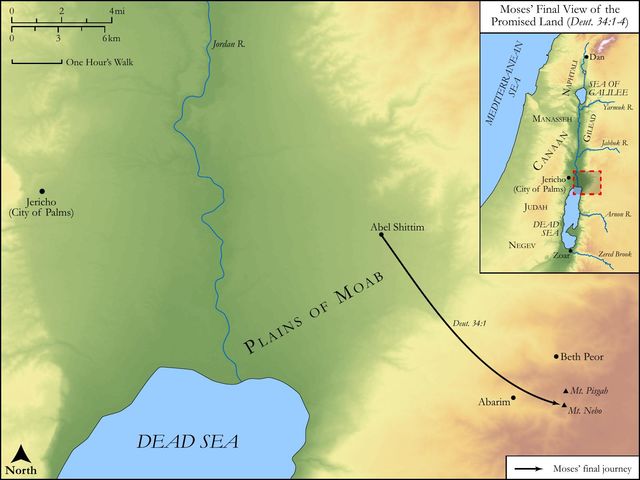
The "Song of Moses" was delivered to the Israelites on the plains of Moab, poised to enter Canaan after forty years of wilderness wandering. They stood at a pivotal moment in their national history, about to transition from a nomadic existence to settled life in the land promised by God. The covenant established at Mount Sinai had defined their identity as God's peculiar people, set apart for holiness. Moses' warning in this verse speaks to the ever-present temptation for Israel to assimilate with the idolatrous and immoral practices of the surrounding Canaanite nations, thereby defiling their unique relationship with Yahweh. The concept of "children of God" carried with it an expectation of reflecting the Father's character, a purity that stood in stark opposition to the "blemishes" of paganism and moral decay prevalent among the nations round about.
Key Themes
ShowHideDeuteronomy 32:5 contributes significantly to several overarching themes within the book of Deuteronomy and the broader Old Testament narrative. It powerfully articulates the theme of Covenant Fidelity and Apostasy, highlighting Israel's inherent propensity to stray from their solemn vows to God despite His unwavering faithfulness. It starkly contrasts Divine Character with Human Corruption, presenting God as perfect and unblemished (Deuteronomy 32:4) against Israel's self-inflicted moral decay. The verse also serves as a Prophetic Warning and Judgment, foretelling the inevitable consequences of their future unfaithfulness, which would culminate in exile and suffering. Furthermore, it touches upon the theme of Identity, questioning what it truly means to be the "children of God" when their actions betray the very nature of their divine Father. This verse underscores that true identity is not merely inherited but must be lived out in moral and spiritual integrity, reflecting the character of the One who called them. The entire Song of Moses serves as a testament to these profound theological truths.
Exposition and Analysis
ShowHideKey Word Analysis
ShowHideFrom a primitive root meaning "to decay" or "to ruin," this verb signifies a process of moral degradation, often self-inflicted. It implies a spoiling or marring of something that was once whole or pure. In this context, it emphasizes that Israel's decline was not an external imposition but an internal choice, a deliberate act of spoiling their own nature and covenant relationship with God, leading to spiritual ruin.
This term literally means a "blemish" or "blot," referring to a physical or moral defect. It is frequently used in the Mosaic Law to describe imperfections that would disqualify an animal from being an acceptable sacrifice. Here, it is used metaphorically to denote a moral or spiritual stain, a defect in character. The phrase "their spot is not the spot of his children" profoundly communicates that their moral blemishes are fundamentally alien to the pure and holy character of God and, therefore, antithetical to the nature expected of His true offspring.
Derived from a root meaning "distorted," this word describes something that is twisted, false, or froward. It suggests a deviation from what is straight, right, or true. In this verse, it condemns Israel's spiritual and moral distortion, indicating a twisted understanding or practice of righteousness and a deliberate turning away from the upright path God had laid out for them.
Verse Breakdown
ShowHide"They have corrupted themselves"
This initial clause immediately places the responsibility for Israel's moral and spiritual decline squarely on their own shoulders. It is an active, reflexive verb, indicating that their corruption is self-inflicted, a result of their own choices and actions. This highlights the internal nature of their failure, a willing departure from the covenant and God's ways, rather than an external force acting upon them.
"their spot [is] not [the spot] of his children"
This is a profound statement of identity and character. The "spot" refers to a moral blemish or defect. The clause asserts that the nature of Israel's corruption is fundamentally alien to the pure and holy character of God, and thus, inconsistent with the expected character of those who are truly His children. It implies a deep betrayal of their unique relationship with God, manifesting a character that does not reflect their divine parentage.
"[they are] a perverse and crooked generation"
This concluding phrase serves as a comprehensive and damning judgment of Israel's spiritual and moral orientation. "Perverse" suggests a turning away from truth and righteousness, a distortion of moral values. "Crooked" implies a deviation from the straight path of God's commandments, a twisted and dishonest way of living. This description encapsulates their complete spiritual degeneration and their tendency to stray from the upright and righteous path God had laid out for them, revealing a generation characterized by moral deviance and spiritual rebellion.
Literary Devices
ShowHideDeuteronomy 32:5 is rich in Metaphor, most notably in the use of "spot" (mʼûwm) to represent a moral blemish or defect. This imagery draws from the sacrificial system, where animals had to be without blemish, powerfully conveying that Israel's moral impurities rendered them unacceptable in God's sight and unworthy of their status as His children. The verse also employs stark Contrast, particularly when read in conjunction with the preceding verse (Deuteronomy 32:4), which extols God's perfect work and righteousness. This juxtaposition highlights the profound disparity between God's unblemished character and Israel's self-inflicted corruption. The entire "Song of Moses" functions as a Prophecy, with this verse specifically foretelling Israel's future apostasy. The language itself is characterized by Strong Language and Figurative Language, such as "perverse and crooked generation," which vividly depicts a people morally twisted and deviating from the straight path. This powerful imagery serves to underscore the severity of their unfaithfulness and its consequences.
Theological and Thematic Connections
ShowHideDeuteronomy 32:5 serves as a foundational text for understanding the persistent theme of human sinfulness and God's unwavering holiness throughout biblical history. It encapsulates the tragic reality of humanity's propensity to corrupt itself, even when chosen and blessed by God. The "spot" that is not of God's children speaks to a deep theological truth: true belonging to God necessitates a reflection of His character. When a people, or an individual, deviates from this standard, their actions betray their professed identity. This verse foreshadows the long history of Israel's apostasy, as documented throughout the books of Judges, Samuel, Kings, and the Prophets, where their "perverse and crooked" ways repeatedly led to divine judgment. It underscores the critical importance of internal moral integrity over mere external religious observance, reminding us that God desires a people whose hearts are truly aligned with His righteousness.
Reflection and Application
ShowHideDeuteronomy 32:5 stands as a timeless and sobering warning for all who claim to be God's people. It challenges us to look beyond outward appearances and examine the true condition of our hearts. The phrase "they have corrupted themselves" is a stark reminder that spiritual decay often begins internally, a slow erosion of integrity and faithfulness through compromise, complacency, or a conscious turning away from God's truth. We are called to be "children of God," which implies bearing His likeness and reflecting His holiness in a world marred by sin. Our "spot" should indeed be the "spot" of His children – the mark of His purity and righteousness. This verse compels us to vigilantly guard our minds and hearts against the "perverse and crooked" influences of the world, which seek to twist our moral compass and distort our understanding of what is right. It is a call to radical self-examination, ensuring that our identity in Christ is not merely a label but a lived reality, characterized by integrity, obedience, and a genuine pursuit of holiness.
Questions for Reflection
ShowHideFAQ
ShowHideWhy does Moses use such harsh language against Israel, especially in a song meant for remembrance?
ShowHideMoses' harsh language in Deuteronomy 32:5, and throughout the "Song of Moses," is not born of malice but of deep prophetic concern and pastoral love. Firstly, it serves as a prophetic warning. Moses, gifted with divine foresight, knew the future trajectory of Israel's unfaithfulness. The severity of the language underscores the gravity of their potential covenant breach. Secondly, it highlights the seriousness of sin and covenant infidelity. God's covenant with Israel was a solemn agreement, and their deviation from it was a profound betrayal. The strong words emphasize the high stakes involved. Thirdly, the song's purpose was pedagogical and mnemonic. By using vivid and memorable language, Moses intended for the song to be a lasting testimony against them, a stark reminder of their obligations and the consequences of disobedience. The harshness makes it unforgettable. Finally, it serves to magnify God's faithfulness by contrast. The more severe Israel's corruption is depicted, the more glorious and unwavering God's character (as described in Deuteronomy 32:4) shines in comparison. It is the loving, yet firm, warning of a father figure who desperately wants his children to remain true to their calling.
Christ-Centered Fulfillment
ShowHideDeuteronomy 32:5, with its indictment of Israel as a "corrupted," "spotted," "perverse and crooked generation," finds its ultimate fulfillment and resolution in the person and work of Jesus Christ. Israel, as God's chosen people, failed to live up to their identity and covenant obligations, repeatedly manifesting the very blemishes and distortions Moses warned against. Yet, Jesus emerges as the perfectly unblemished Son, the true "spotless" child of God, who fully embodies the purity and righteousness that Israel failed to maintain. He is the Lamb of God, without blemish or spot, whose precious blood cleanses us from all sin (1 Peter 1:19; Hebrews 9:14). While Moses condemned a "perverse and crooked generation," Jesus Himself encountered and addressed such a generation during His earthly ministry (Matthew 17:17). However, unlike Israel, Christ did not succumb to corruption but offered Himself as the perfect sacrifice to redeem those who are "crooked and perverse" (Philippians 2:15). Through faith in Him, we are not merely forgiven but are given the power to become true "children of God" (John 1:12), receiving a new nature that reflects His holiness, thereby removing the "spot" of our former corruption and enabling us to walk in the straight paths of righteousness.