


Deuteronomy 32:1
Bible text: King James Version (1769 Blayney text) · Public domain
Bible text: Berean Standard Bible · Public domain
Bible text: American Standard Version (1901) · Public domain
Bible text: World English Bible, Messianic edition · Public domain
Bible text: Geneva Bible (1599) · Public domain
Bible text: Young's Literal Translation · Public domain
- הַאֲזִינוּha·'a·Zi·nugive earH238V-Hiphil-Imp-2mpVerb Hiphil Imperative 2nd Plural Masculine
- הַשָּׁמַיִםha·sha·Ma·yimO heavensH8064Art ¦ N-mpNoun Plural Masculine AbsoluteהַOשָּׁמַיִםheavens
- וַאֲדַבֵּרָהva·'a·da·Be·rahso let me speakH1696Conj-w ¦ V-Piel-Imperf-1csVerb Piel Imperfect 1st Singular common genderוַsoאֲדַבֵּרָהlet me speak
- וְתִשְׁמַעve·tish·Ma'and it may hearH8085Conj-w ¦ V-Qal-ConjImperf-3fsVerb Qal Conjunction+Imperfect 3rd Singular Feminineוְandתִשְׁמַעit may hear
- הָאָרֶץha·'A·retzthe earthH776Art ¦ N-fsNoun Singular Feminine Absoluteהָtheאָרֶץearth
- אִמְרֵי'im·rei[the] words ofH561N-mpcNoun Plural Masculine Construct
- פִיFimy mouthH6310N-msc ¦ 1csNoun Singular Masculine Constructפִmouthיmy
English is a literal word-by-word gloss of the Hebrew, not the KJV's wording. Why?
This is the original text the KJV's translators worked from — each Hebrew word with its own literal English meaning in this verse, prepared by scholars at Tyndale House, Cambridge. The KJV translates whole sentences, not word by word, so its wording differs: one Hebrew word can become several English words, and the KJV may choose “the LORD” where the gloss reads “Yahweh”. Both are faithful — they answer different questions. For the KJV's own rendering, switch to the KJV text.
Details
See on the biblical-era map
Study this verse
Public-domain commentary
Matthew Henry
From his Commentary on the Whole Bible. Henry comments on passages, not single verses — this entry covers Deuteronomy 32:1–6. His three-level outline is real structure in the source text, so it is rendered as structure.
Here is, I. A commanding preface or introduction to this song of Moses, Deu 32:1, Deu 32:2. He begins, 1. With a solemn appeal to heaven and earth concerning the truth and importance of what he was about to say, and the justice of the divine proceedings against a rebellious and backsliding people, for he had said (Deu 31:28) that he would in this song call heaven and earth to record against them. Heaven and earth would sooner hear than this perverse and unthinking people; for they revolt not from the obedience to their Creator, but continue to this day, according to his ordinances, as his servants (Psa 119:89-91), and therefore will rise up in judgment against rebellious Israel. Heaven and earth will be witnesses against sinners, witnesses of the warning given them and of their refusal to take the warning (see Job 20:27); the heaven shall reveal his iniquity, and the earth shall rise up against him. Or heaven and earth are here put for the inhabitants of both, angels and men; both shall agree to justify God in his proceedings against Israel, and to declare his righteousness, Psa 50:6; see Rev 19:1, Rev 19:2. 2. he begins with a solemn application of what he was about to say to the people (Deu 32:2): My doctrine shall drop as the rain. "It shall be a beating sweeping rain to the rebellious;" so one of the Chaldee paraphrasts expounds the first clause. Rain is sometimes sent for judgment, witness that with which the world was deluged; and so the word of God, while to some it is reviving and refreshing - a savour of life unto life, is to others terrifying and killing - a savour of death unto death. It shall be as a sweet and comfortable dew to those who are rightly prepared to receive it. Observe, (1.) The subject of this song is doctrine; he had given them a song of praise and thanksgiving (Ex. 15), but this is a song of instruction, for in psalms, and hymns, and spiritual songs, we are not only to give glory to god, but to teach and admonish one another, Col 3:16. Hence many of David's psalms are entitled Maschil - to give instruction. (2.) This doctrine is fitly compared to rain and showers which come from above, to make the earth fruitful, and accomplish that for which they are sent. (Isa 55:10, Isa 55:11), and depend not upon the wisdom or will of man, Mic 5:7. It is a mercy to have this rain come often upon us, and our duty to drink it in, Heb 6:7. (3.) He promises that his doctrine shall drop and distil as the dew, and the small rain, which descend silently and without noise. The word preached is likely to profit when it comes gently, and sweetly insinuates itself into the hearts and affections of the hearers. (4.) He bespeaks their acceptance and entertainment of it, and that it might be as sweet, and pleasant, and welcome to them as rain to the thirsty earth, Psa 72:6. And the word of God is likely to do us good when it is thus acceptable. (5.) The learned bishop Patrick understands it as a prayer that his words which were sent from heaven to them might sink into their hearts and soften them, as the rain softens the earth, and so make them fruitful in obedience.
II.An awful declaration of the greatness and righteousness of God, Deu 32:3, Deu 32:4.
1.He begins with this, and lays it down as his first principle,
(1.)To preserve the honour of God, that no reproach might be cast upon him for the sake of the wickedness of his people Israel; how wicked and corrupt soever those are who are called by his name, he is just, and right, and all that is good, and is not to be thought the worse of for their badness.
(2.)To aggravate the wickedness of Israel, who knew and worshipped such a holy god, and yet were themselves so unholy. And,
(3.)To justify God in his dealings with them; we must abide by it, that God is righteous, even when his judgments are a great deep, Jer 12:1; Psa 36:6.
2.Moses here sets himself to publish the name of the Lord (Deu 32:3), that Israel, knowing what a God he is whom they had avouched for theirs, might never be such fools as to exchange him for a false god, a dunghill god. He calls upon them therefore to ascribe greatness to him. It will be of great use to us for the preventing of sin, and the preserving of us in the way of our duty, always to keep up high and honourable thoughts of God, and to take all occasions to express them: Ascribe greatness to our God. We cannot add to his greatness, for it is infinite; but we must acknowledge it, and give him the glory of it. Now, when Moses would set forth the greatness of God, he does it, not by explaining his eternity and immensity, or describing the brightness of his glory in the upper world, but by showing the faithfulness of his word, the perfection of his works, and the wisdom and equity of all the administrations of his government; for in these his glory shines most clearly to us, and these are the things revealed concerning him, which belong to us and our children, Deu 32:4.
(1.)He is the rock. So he is called six times in this chapter, and the Septuagint all along translates it theos, God. The learned Mr. Hugh Broughton reckons that God is called the rock eighteen times (besides in this chapter) in the Old Testament (though in some places we translate it strength), and charges it therefore upon the papists that they make St. Peter a god when they make him the rock on which the church is built. God is the rock, for he is in himself immutable immovable, and he is to all that seek him and fly to him an impenetrable shelter, and to all that trust in him an everlasting foundation.
(2.)His work is perfect. His work of creation was so, all very good; his works of providence are so, or will be so in due time, and when the mystery of God shall be finished the perfection of his works will appear to all the world. Nothing that God does can be mended, Ecc 3:14. God was now perfecting what he had promised and begun for his people Israel, and from the perfection of this work they must take occasion to give him the glory of the perfection of all his works. The best of men's works are imperfect, they have their flaws and defects, and are left unfinished; but, as for God, his work is perfect; if he begin, he will make an end.
(3.)All his ways are judgment. The ends of his ways are all righteous, and he is wise in the choice of the means in order to those ends. Judgment signifies both prudence and justice. The ways of the Lord are right, Hos 14:9.
(4.)He is a God of truth, whose word we may take and rely upon, for he cannot lie who is faithful to all his promises, nor shall his threatenings fall to the ground.
(5.)He is without iniquity, one who never cheated any that trusted in him, never wronged any that appealed to his justice, nor ever was hard upon any that cast themselves upon his mercy.
(6.)Just and right is he. As he will not wrong any by punishing them more than they deserve, so he will not fail to recompense all those that serve him or suffer for him. He is indeed just and right; for he will effectually take care that none shall lose by him. Now what a bright and amiable idea does this one verse give us of the God whom we worship; and what reason have we then to love him and fear him, to live a life of delight in him, dependence on him, and devotedness to him! This is our rock, and there is no unrighteousness in him; nor can there be, Psa 92:15.
III.A high charge exhibited against the Israel of God, whose character was in all respects the reverse of that of the God of Israel, Deu 32:5.
1.They have corrupted themselves. Or, It has corrupted itself; the body of the people has: the whole head sick, and the whole heart faint. God did not corrupt them, for just and right is he; but they are themselves the sole authors of their own sin and ruin; and both are included in this word. They have debauched themselves; for every man is tempted when he is drawn away of his own lust. And they have destroyed themselves, Hos 13:9. If thou scornest, thou alone shalt bear the guilt and grief, Pro 9:12.
2.Their spot is not the spot of his children. Even God's children have their spots, while they are in this imperfect state; for if we say we have no sin, no spot, we deceive ourselves. But the sin of Israel was none of those; it was not an infirmity which they strove against, watched and prayed against, but an evil which their hearts were fully set in them to do. For,
3.They were a perverse and crooked generation, that were actuated by a spirit of contradiction, and therefore would do what was forbidden because it was forbidden, would set up their own humour and fancy in opposition to the will of God, were impatient of reproof, hated to be reformed, and went on frowardly in the way of their heart. The Chaldee paraphrase reads this verse thus: They have scattered or changed themselves, and not him, even the children that served idols, a generation that has depraved its own works, and alienated itself. Idolaters cannot hurt God, nor do any damage to his works, nor make him a stranger to this world. See Job 35:6. No, all the hurt they do is to themselves and their own works. The learned bishop Patrick gives another reading of it: Did he do him any hurt? That is, "Is God the rock to be blamed for the evils that should befal Israel? No, His children are their blot," that is, "All the evil that comes upon them is the fruit of their children's wickedness; for the whole generation of them is crooked and perverse." All that are ruined ruin themselves; they die because they will die.
IV.A pathetic expostulation with this provoking people for their ingratitude (Deu 32:6):
"Do you thus requite the Lord? Surely you will not hereafter be so base and disingenuous in your carriage towards him as you have been." 1. He reminds them of the obligations God had laid upon them to serve him, and to cleave to him. He had been a Father to them, had begotten them, fed them, carried them, nursed them, and borne their manners; and would they spurn at the bowels of a Father? He had bought them, had been at a vast expense of miracles to bring them out of Egypt, had given men for them, and people for their life, Isa 43:4. "Is not he thy Father, thy owner (so some), that has an incontestable propriety in thee?" and the ox knoweth his owner. "he has made thee, and brought thee into being, established thee and kept thee in being; has he not done so? Can you deny the engagements you lie under to him, in consideration of the great things he has done and designed for you?" And are not our obligations, as baptized Christians, equally great and strong to our Creator that made us, our Redeemer that bought us, and our Sanctifier that has established us. 2. Hence he infers the evil of deserting him and rebelling against him. For, (1.) It was base ingratitude: "Do you thus require the Lord? Are these the returns you make him for all his favours to you? The powers you have from him will you employ them against him?" See Mic 6:3, Mic 6:4; Joh 10:32. This is such monstrous villany as all the world will cry shame of: call a man ungrateful, and you can call him no worse. (2.) It was prodigious madness: O foolish people and unwise! Fools, and double fools! who has bewitched you? Gal 3:1. "Fools indeed, to disoblige one on whom you have such a necessary dependence! To forsake your own mercies for lying vanities!" Note, All wilful sinners, especially sinners in Israel, are the most unwise and the most ungrateful people in the world.
Historical interpretation
Historical reception
1 surviving comment on this verse from the historical church.
By heavens he means the order of the clergy and by earth the people subject to them. For “Listen, O heavens, and I shall speak” was addressed not to insensible but to rational creation.
Continue studying Deuteronomy 32:1 across the web’s major study libraries — every link below opens this exact verse, chapter, or book on the destination site.
Read & Compare
 BibleGatewayThis verse in more than 200 translations and 70 languages.
 Bible.comThe YouVersion reader — hundreds of translations, reading plans, and highlights.
 ESV.orgCrossway's official English Standard Version reader.
 NET BibleThe NET translation with 60,000+ translators' notes on every rendering decision.
 STEP BibleTyndale House's free study tool — original text, vocabulary, and scholarly resources.
 BibliaLogos Bible Software's free web reader.
 USCCBThe New American Bible (Revised Edition) with the U.S. bishops' study notes.
Commentaries
 BibleHub CommentariesDozens of classic commentaries on this verse, gathered on one page.
 StudyLightMore than 100 commentary sets — the largest collection on the web.
 BibleRefPlain-English commentary on what this verse means, verse by verse.
 Enduring WordDavid Guzik's free commentary on this chapter, widely used by Bible teachers.
 Bible Study ToolsVerse commentary alongside Greek and Hebrew study aids.
Original Language & Research
- BibleHub InterlinearThe verse word by word — original language, transliteration, and English.
- BibleHub LexiconEvery word's original-language definition and Strong's entry.
 Blue Letter BibleDeep-study tools — Strong's numbers, concordance, and word studies.
 SefariaThe Hebrew text with Rashi and centuries of Jewish commentary.
Sermons, Hymns & Audio


TrulyRandomVerse is not affiliated with these sites and doesn’t control their content. They’re linked because they’re genuinely useful.
Summary
This verse dramatically initiates Moses' final, prophetic song, a profound testament delivered to the Israelites just before his death. It sets a solemn stage, summoning the entirety of creation—heaven and earth—to bear solemn witness to the weighty, covenantal words of God. This powerful invocation underscores the universal authority and enduring significance of the divine message, establishing a foundational premise for the song's themes of Israel's future rebellion, God's righteous judgment, and His ultimate, unwavering faithfulness.
Context
ShowHideLiterary Context
Deuteronomy 32:1 marks the beginning of "The Song of Moses" (Deuteronomy 32:1-43), a pivotal prophetic poem. It follows Moses' final instructions and warnings to the new generation of Israelites on the plains of Moab, just before they enter the Promised Land. This song is not merely a historical recounting but a divinely inspired covenantal lawsuit, intended to serve as a perpetual witness against Israel's anticipated future apostasy. It is strategically placed as a capstone to Moses' farewell discourse, encapsulating the essence of the covenant relationship and God's enduring character, even in the face of human unfaithfulness. The song's structure moves from God's goodness to Israel's rebellion, culminating in divine judgment and ultimate restoration.
Historical & Cultural Context
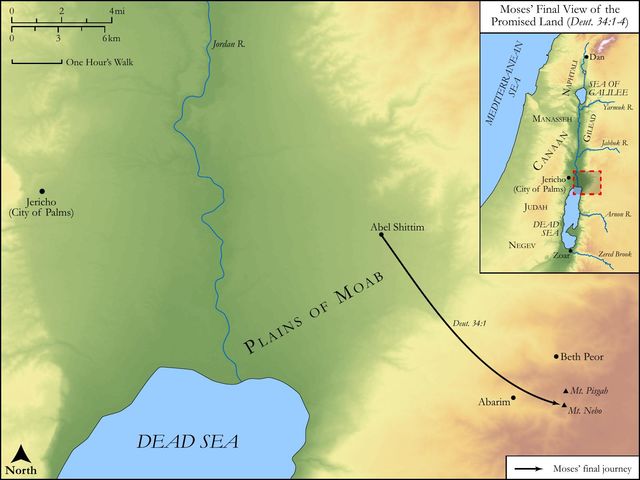
Historically, this song is delivered at a critical juncture: the end of the wilderness wandering and the cusp of entering Canaan. Moses, at 120 years old, is about to die, and this song is his final, authoritative word to the nation. Moses invokes heaven and earth as witnesses, as he had earlier in Deuteronomy, to attest to the solemnity and binding nature of the covenant between Yahweh and Israel. This practice emphasizes the gravity of their obligations and the universal scope of their covenantal relationship. The setting is the plains of Moab, a geographically significant location from which Israel would launch its conquest.
Key Themes
ShowHideThis opening verse immediately introduces several key themes that permeate the Song of Moses and the book of Deuteronomy. First, it establishes the theme of Divine Witness and Authority, where heaven and earth are summoned to validate the divine word, asserting God's absolute sovereignty over creation and His covenant. Second, it underscores the Solemnity and Gravity of God's Word, indicating that the message to follow is of immense, eternal consequence, demanding universal attention. Third, it foreshadows the theme of Israel's Covenantal Responsibility and Future Apostasy, as the song will detail their rebellion and the subsequent divine judgment, yet also God's ultimate faithfulness and restoration. This invocation reinforces the enduring nature of God's truth, much like the stability of His word established in the heavens, as declared in Psalm 119:89. The prophetic nature of the song, foretelling future events, also aligns with the broader Deuteronomic emphasis on obedience leading to blessing and disobedience leading to curses, as seen throughout Deuteronomy 28.
Exposition and Analysis
ShowHideKey Word Analysis
ShowHideThis imperative verb, derived from a root meaning "to broaden out the ear (with the hand)," signifies an active, deliberate act of listening. It is not a passive hearing but a command for intense, focused attention, conveying the utmost importance and urgency of the message to follow. It demands a readiness to perceive, internalize, and respond to the divine words.
From a root meaning "to be lofty," this term refers to the sky and the celestial realm, encompassing both the visible atmosphere and the higher ether where celestial bodies revolve. As a summoned witness, the heavens represent the transcendent, eternal, and unchanging aspect of creation, signifying that God's words are eternally established and witnessed from above.
Derived from a root meaning "to be firm," "earth" denotes the terrestrial realm, the physical world, and its inhabitants. As a co-witness with the heavens, it represents the immanent, tangible, and enduring foundation of creation. Together, "heavens" and "earth" form a merism, encompassing the entirety of the created order, signifying that God's covenantal dealings are openly declared and witnessed by the whole universe He created.
Verse Breakdown
ShowHide"Give ear, O ye heavens"
This opening command is a dramatic invocation, personifying the celestial realm and calling it to listen. It sets a tone of eternal significance, indicating that the message about to be delivered is not merely for human ears but is of such profound importance that even the heavens are summoned as silent, eternal witnesses. This emphasizes the divine origin and universal scope of the words.
"and I will speak"
This declaration establishes the speaker as Moses, acting as God's prophet and mouthpiece. It is Moses who will deliver the words, but the authority behind them is divine. This phrase transitions from the call for attention to the imminent act of proclamation, signaling the commencement of the prophetic song.
"and hear, O earth"
Parallel to the opening clause, this command personifies the terrestrial realm, calling it to listen. The repetition reinforces the universal scope of the message and the solemnity of the occasion. It underscores that God's dealings with His people are openly declared and witnessed by all creation, from the highest heavens to the deepest parts of the earth.
"the words of my mouth"
This concluding phrase emphasizes the direct, authoritative, and personal nature of the message. While delivered by Moses, these are ultimately "the words of my mouth"—God's words, conveyed through His chosen servant. This highlights the divine inspiration and inerrancy of the song, making it a binding and eternal testimony.
Literary Devices
ShowHideThe opening verse of the Song of Moses employs several powerful literary devices to amplify its message. Personification is prominently used as Moses addresses "heavens" and "earth" as if they are sentient beings capable of hearing and bearing witness. This imbues the inanimate creation with agency, underscoring the solemnity and universal significance of the divine pronouncement. The phrase "Give ear, O ye heavens, and hear, O earth" exemplifies parallelism, specifically synonymous parallelism, where the second clause reiterates and reinforces the meaning of the first, intensifying the call for universal attention. This pairing of "heavens" and "earth" also functions as a merism, a rhetorical device where two contrasting parts represent the whole, thereby encompassing the entirety of creation as a witness. Furthermore, the dramatic invocation can be seen as a form of apostrophe, a direct address to an absent or personified entity, which serves to elevate the discourse and create a sense of awe and gravity. The overall effect is to establish heaven and earth as witnesses, with creation summoned to testify to the enduring truth and unwavering justice of God's covenantal dealings with Israel.
Theological and Thematic Connections
ShowHideThe theological weight of Deuteronomy 32:1 lies in its profound declaration of God's universal sovereignty and the enduring nature of His word. By summoning the heavens and the earth as witnesses, Moses sets the covenant before all creation, emphasizing that God's covenant with Israel is not a private affair but a matter of universal significance, observed by all creation. This highlights God's transcendence and immanence—He is above all, yet intimately involved in human history. The invocation serves as a powerful reminder that God's truth is immutable and His justice inescapable, whether in judgment or in faithfulness. It sets the stage for the song's subsequent themes of divine judgment on Israel's apostasy, yet also God's unwavering faithfulness to His covenant promises, ultimately leading to restoration. This witness of heaven and earth underscores the ultimate accountability of humanity before a God whose decrees are witnessed by the very fabric of creation.
Reflection and Application
ShowHideDeuteronomy 32:1 serves as a profound call to reverence and attentiveness for all who encounter God's Word. If the very heavens and earth are commanded to "give ear" and "hear" the words of the Lord, how much more should humanity, created in God's image and the direct recipients of His revelation, approach the Scriptures with profound humility and focused attention? This verse challenges us to move beyond superficial reading to deep, prayerful engagement, recognizing that every word is imbued with divine authority and eternal significance. It reminds us that our lives are lived before heaven and earth, with God as the ultimate witness to our choices and responses to His truth. The enduring nature of God's word, witnessed by creation, offers both a solemn warning against disobedience and a steadfast assurance of His faithfulness, encouraging us to build our lives on His unchanging truth, knowing that it will stand long after the earth itself has passed away.
Questions for Reflection
ShowHideFAQ
ShowHideWhy does Moses call upon "heavens" and "earth" to listen?
ShowHideMoses calls upon "heavens" and "earth" primarily to serve as witnesses to the covenantal agreement between God and Israel. This practice was familiar in Israel's covenants, where inanimate objects, such as the heap of stones between Jacob and Laban, were set up to solemnize an oath or agreement and to bear testimony to its violation. By summoning the entire created order, Moses underscores the universal authority of God's word and the gravity of the message. It signifies that God's dealings with His people are not hidden but are openly declared and observed by the universe He created. This appeal reinforces the enduring nature of God's truth and the ultimate accountability of Israel, as seen in similar prophetic calls for attention in Isaiah 1:2 and Micah 6:1-2.
Is this call to heaven and earth merely a poetic flourish?
ShowHideWhile the language is undeniably poetic, employing devices like personification and parallelism, the invocation of heaven and earth is far more than a mere flourish; it carries profound theological and legal weight. It functions as a covenantal lawsuit framework, with God as the LORD of the covenant, Israel as His people, and creation as the perpetual witness. This ensures that the words spoken—the Song of Moses—will serve as an enduring testimony against Israel should they violate the covenant. It emphasizes the ultimate and unchanging nature of God's decrees, which are established in the heavens and witnessed by the earth, as hinted at in Psalm 119:89.
Christ-Centered Fulfillment
ShowHideDeuteronomy 32:1, with its dramatic invocation of heaven and earth to witness God's words, finds its ultimate and most profound fulfillment in the person and work of Jesus Christ. Moses, as God's chosen prophet, delivered the words of the Old Covenant; yet, Jesus is the very Word (Logos) incarnate, the definitive and final revelation of God to humanity. The heavens and earth that were called to "give ear" to Moses' song now bear witness to the one through whom all things were created and by whom all things hold together. Jesus Himself declares the eternal authority of His words, stating that "Heaven and earth will pass away, but my words will not pass away". He is the mediator of a new and better covenant, established not by written words on stone but by His own blood. The witness of heaven and earth called for in Deuteronomy 32:1 ultimately points to the day when every knee will bow and every tongue confess that Jesus Christ is Lord, a universal acknowledgment that transcends all creation, fulfilling the ancient call for all of existence to hear and respond to God's ultimate Word.