


Deuteronomy 31:28
- הַקְהִילוּhak·Hi·luassembleH6950V-Hiphil-Imp-2mpVerb Hiphil Imperative 2nd Plural Masculine
- אֵלַי'e·Laito meH413Prep ¦ 1csPreposition Definiteאֵלַtoיme
- אֶת'et<obj.>H853DirObjMParticle Object Indicator
- כָּלkolallH3605N-mscNoun Singular Masculine Construct
- זִקְנֵיzik·Nei[the] elders ofH2205Adj-mpcAdjective Plural Masculine Construct
- שִׁבְטֵיכֶםshiv·tei·Khemyour tribesH7626N-mpc ¦ 2mpNoun Plural Masculine Constructשִׁבְטֵיtribesכֶםyour
- וְשֹׁטְרֵיכֶםve·sho·te·rei·Khemand your officialsH7860Conj-w ¦ V-Qal-Prtcpl-mp ¦ 2mpVerb Qal Participle Plural Masculine Constructוְandשֹׁטְרֵיofficialsכֶםyour
- וַאֲדַבְּרָהva·'a·da·be·Rahand let me speakH1696Conj-w ¦ V-Piel-Imperf-1csVerb Piel Imperfect 1st Singular common genderוַandאֲדַבְּרָהlet me speak
- בְאָזְנֵיהֶםve·'a·ze·nei·Hemin their earsH241Prep-b ¦ N-fdc ¦ 3mpNoun Dual Feminine Constructבְinאָזְנֵיearsהֶםtheir
- אֵת'et<obj.>H853DirObjMParticle Object Indicator
- הַדְּבָרִיםha·de·va·Rimthe wordsH1697Art ¦ N-mpNoun Plural Masculine Absoluteהַtheדְּבָרִיםwords
- הָאֵלֶּהha·'E·leh<the> theseH428Art ¦ PrtParticle Demonstrativeהָ<the>אֵלֶּהthese
- וְאָעִידָהve·'a·'I·dahso I may call as witnessesH5749Conj-w ¦ V-Hiphil-Imperf-1csVerb Hiphil Imperfect 1st Singular common genderוְsoאָעִידָהI may call as witnesses
- בָּםBamagainst <the> themPrep-b ¦ 3mpSuffix Personal 3rd Plural Masculineבָּagainst <the>םthem
- אֶת'et<obj.>H853DirObjMParticle Object Indicator
- הַשָּׁמַיִםha·sha·Ma·yimthe heavensH8064Art ¦ N-mpNoun Plural Masculine Absoluteהַtheשָּׁמַיִםheavens
- וְאֶתve·'Etand <obj.>H853Conj-w ¦ DirObjMParticle Object Indicatorוְandאֶת<obj.>
- הָאָרֶץha·'A·retzthe earthH776Art ¦ N-fsNoun Singular Feminine Absoluteהָtheאָרֶץearth
English is a literal word-by-word gloss of the Hebrew, not the KJV's wording. Why?
This is the original text the KJV's translators worked from — each Hebrew word with its own literal English meaning in this verse, prepared by scholars at Tyndale House, Cambridge. The KJV translates whole sentences, not word by word, so its wording differs: one Hebrew word can become several English words, and the KJV may choose “the LORD” where the gloss reads “Yahweh”. Both are faithful — they answer different questions. For the KJV's own rendering, switch to the KJV text.
Details
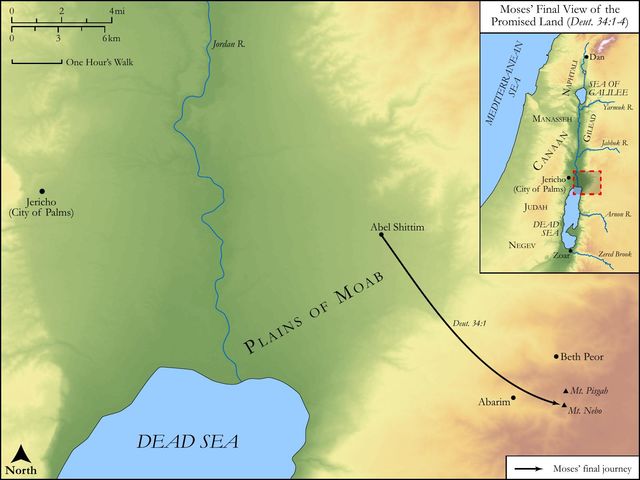
See on the biblical-era map
Study this verse
Public-domain commentary
Matthew Henry
From his Commentary on the Whole Bible. Henry comments on passages, not single verses — this entry covers Deuteronomy 31:22–30.
Here, I. The charge is given to Joshua, which God has said (v. 14) he would give him. The same in effect that Moses had given him. The same in effect that Moses had given him (v. 7): Be strong and of a good courage, v. 23. Joshua had now heard from God so much of the wickedness of the people whom he was to have the conduct of as could not but be a discouragement to him: "Nay," says God, "how bad soever they are, thou shalt go through thy understanding, for I will be with thee. Thou shalt put them into possession of Canaan. If they afterwards by their sin throw themselves out of it again, that will be no fault of thine, nor any dishonour to thee, therefore be of good courage."
II.The solemn delivery of the book of the law to the Levites, to be deposited in the side of the ark, is here again related (v.
24-26), of which before, v. 9. Only they are here directed where to treasure up this precious original, not in the ark (there only the two tables were preserved), but in another box by the side of the ark. It is probable that this was the very book that was found in the house of the Lord (having been somehow or other misplaced) in the days of Josiah (Ch2 34:14), and so perhaps the following words here, that it may be a witness against thee, may particularly point at that event, which happened so long after; for the finding of this very book occasioned the public reading of it by Josiah himself, for a witness against a people who were then almost ripe for their ruin by the Babylonians.
III.The song which follows in the next chapter is here delivered to Moses, and by him to the people.
He wrote it first (v. 22), as the Spirit of God indited it, and then spoke it in the ears of all the congregation (v. 30), and taught it to them (v. 22), that is, gave out copies of it, and ordered the people to learn it by heart. It was delivered by word of mouth first, and afterwards in writing, to the elders and officers, as the representatives of their respective tribes (v. 28), by them to be transmitted to their several families and households. It was delivered to them with a solemn appeal to heaven and earth concerning the fair warning which was given them by it of the fatal consequences of their apostasy from God, and with a declaration of the little joy and little hope Moses had in and concerning them. 1. He declares what little joy he had had of them while he was with them, v. 27. It is not in a passion that he says, I know thy rebellion (as once he said unadvisedly, Hear now, you rebels), but it is the result of a long acquaintance with them: you have been rebellious against the Lord. Their rebellions against himself he makes no mention of: these he had long since forgiven and forgotten; but they must be made to hear of their rebellions against God, that they may be ever repented of and never repeated. 2. What little hopes he had of them now that he was leaving them. From what God had now said to him (v. 16) more than from his own experience of them, though that was discouraging enough, he tells them (v. 29), I know that after my death you will utterly corrupt yourselves. Many a sad thought, no doubt, it occasioned to this good man, to foresee the apostasy and ruin of a people he had taken so much pains with, in order to them good and make them happy; but this was his comfort, that he had done his duty, and that God would be glorified, if not in their settlement, yet in their dispersion. Thus our Lord Jesus, a little before his death, foretold the rise of false Christs and false prophets (Mat 24:24), notwithstanding which, and all the apostasies of the latter times, we may be confident that the gates of hell shall not prevail against the church, for the foundation of God stands sure.
Continue studying Deuteronomy 31:28 across the web’s major study libraries — every link below opens this exact verse, chapter, or book on the destination site.
Read & Compare
 BibleGatewayThis verse in more than 200 translations and 70 languages.
 Bible.comThe YouVersion reader — hundreds of translations, reading plans, and highlights.
 ESV.orgCrossway's official English Standard Version reader.
 NET BibleThe NET translation with 60,000+ translators' notes on every rendering decision.
 STEP BibleTyndale House's free study tool — original text, vocabulary, and scholarly resources.
 BibliaLogos Bible Software's free web reader.
 USCCBThe New American Bible (Revised Edition) with the U.S. bishops' study notes.
Commentaries
 BibleHub CommentariesDozens of classic commentaries on this verse, gathered on one page.
 StudyLightMore than 100 commentary sets — the largest collection on the web.
 BibleRefPlain-English commentary on what this verse means, verse by verse.
 Enduring WordDavid Guzik's free commentary on this chapter, widely used by Bible teachers.
 Bible Study ToolsVerse commentary alongside Greek and Hebrew study aids.
Original Language & Research
- BibleHub InterlinearThe verse word by word — original language, transliteration, and English.
- BibleHub LexiconEvery word's original-language definition and Strong's entry.
 Blue Letter BibleDeep-study tools — Strong's numbers, concordance, and word studies.
 SefariaThe Hebrew text with Rashi and centuries of Jewish commentary.
Sermons, Hymns & Audio


TrulyRandomVerse is not affiliated with these sites and doesn’t control their content. They’re linked because they’re genuinely useful.
Summary
Deuteronomy 31:28 records a profound divine command issued through Moses, directing the convocation of all Israel's tribal elders and officers. This solemn assembly was ordained so that Moses could deliver a final, prophetic warning from God concerning the nation's inevitable future apostasy. The verse powerfully underscores the gravity and permanence of this divine declaration by invoking heaven and earth as immutable, cosmic witnesses, thereby establishing an undeniable and eternal record against the people for their future disobedience.
Context
ShowHideLiterary Context
This verse is strategically positioned within the concluding discourses of Moses, delivered on the cusp of his death and Israel's long-awaited entry into the Promised Land. Chapters Deuteronomy 29 and Deuteronomy 30 meticulously detail the renewal of the Mosaic covenant, presenting a clear dichotomy of blessings for obedience and severe curses for disobedience. Immediately prior to Deuteronomy 31:28, God reveals to Moses His perfect foreknowledge of Israel's future rebellion and idolatry that will occur after Moses' departure (Deuteronomy 31:16-18). In response to this divine foresight, God commands Moses to compose a prophetic song (Deuteronomy 31:19-22) that will serve as an enduring witness against the people when they inevitably stray. Verse 28 specifically directs the assembly of the nation's leaders to hear "these words" – referring to this very song and its accompanying warnings – thereby emphasizing their crucial responsibility as conduits and guardians of the covenant. The subsequent verses (Deuteronomy 31:29-30) describe Moses' actual delivery of this song to the entire congregation of Israel, reinforcing the public, communal, and undeniably binding nature of this divine warning.
Historical & Cultural Context
The divine command to "gather unto me all the elders of your tribes, and your officers" illuminates the well-established socio-political and judicial structure of ancient Israel. The "elders" (זְקֵנִים, zeqenim) were venerable and respected tribal leaders, typically heads of prominent families or clans, who wielded significant authority in judicial, administrative, and spiritual affairs within their communities. The "officers" (שֹׁטְרִים, shoterim) functioned as scribes, administrators, or magistrates, responsible for the practical enforcement of the elders' decisions and the maintenance of civil order. This hierarchical structure ensured that God's commands and Moses' teachings could be disseminated and upheld throughout the tribes. Furthermore, the act of "calling heaven and earth to record against them" is a profound legal and rhetorical device deeply embedded in ancient Near Eastern treaty forms. Covenants or suzerainty treaties between a superior king (suzerain) and a subordinate nation (vassal) frequently included a list of witnesses, often invoking deities, natural phenomena (like mountains, rivers, or stars), or even inanimate objects to ensure the treaty's solemnity, enforceability, and the undeniable justice of any future judgment for breach. By invoking the cosmos, God establishes an ultimate, impartial, and eternal witness to His covenant with Israel, signifying that the entire created order stands as an irrefutable testament to the agreement and Israel's subsequent accountability.
Key Themes
ShowHideDeuteronomy 31:28 contributes significantly to several overarching theological and narrative themes within the book of Deuteronomy and the broader Pentateuch. One prominent theme is Divine Foreknowledge and Warning. God explicitly reveals His perfect understanding of Israel's future inclination towards idolatry and disobedience (Deuteronomy 31:29), even before they enter the land. This pre-emptive warning is not merely a curse but a compassionate measure, designed to underscore the terms and consequences of their covenant relationship, even in anticipation of their transgressions. Another crucial theme is Covenant Accountability and Cosmic Witness, powerfully highlighted by the invocation of heaven and earth. This emphasizes the solemnity and binding nature of the covenant, making Israel's future actions undeniably accountable before the ultimate, immutable cosmic witnesses. Finally, the verse underscores Leadership Responsibility. The specific gathering of the elders and officers highlights their unique and heavy burden. These leaders were not merely passive observers but were directly responsible for comprehending, teaching, and enforcing God's laws among their respective tribes, bearing a significant spiritual and communal burden for the nation's well-being, a responsibility emphasized throughout Deuteronomy.
Exposition and Analysis
ShowHideKey Word Analysis
ShowHideThe Hebrew verb קָהַל (qâhal), used here in the Hiphil stem ("gather unto me"), signifies "to assemble," "to convoke," or "to call together." This is the root of the noun קָהָל (qahal), which refers to a "congregation" or "assembly," notably used for the "assembly of the Lord." The Hiphil stem emphasizes that God is directly causing this assembly to happen through Moses. This was not a casual meeting but a divinely mandated convocation of the nation's most influential figures, underscoring the critical importance and solemnity of the message to be delivered. The act of gathering the leaders highlights their unique position and responsibility in receiving and transmitting God's word.
The Hebrew verb עוּ prostagland (ʻûwd), appearing here in the Hiphil stem as "call...to record," means "to bear witness," "to testify," or "to call to witness." The phrase "call heaven and earth to record against them" is a potent legalistic expression. It signifies that heaven and earth are being formally summoned to act as immutable, impartial witnesses in a cosmic courtroom. Their testimony would stand as an irrefutable, permanent record of the covenant terms and Israel's subsequent breach, ensuring the undeniable justice and righteousness of God's future actions. This concept is deeply rooted in ancient Near Eastern legal traditions where natural elements or deities were invoked as witnesses to binding agreements, making the declaration unchangeable and universally attested.
Verse Breakdown
ShowHide"Gather unto me all the elders of your tribes, and your officers"
This initial command explicitly defines the specific audience for Moses' final, crucial address. "Elders of your tribes" refers to the respected, authoritative leaders representing each of the twelve tribes of Israel, who held significant spiritual, judicial, and administrative authority within their communities. "Your officers" denotes the administrative officials, scribes, or magistrates who assisted the elders in governance and the enforcement of the Mosaic Law. The command "unto me" emphasizes that this assembly is at God's direct behest, not merely Moses' initiative, thereby profoundly underscoring the divine authority and paramount importance behind the impending message.
"that I may speak these words in their ears"
This clause precisely clarifies the immediate purpose of the solemn assembly: for Moses to deliver God's specific words directly to the nation's leadership. The phrase "in their ears" implies a direct, personal, and unambiguous communication, ensuring that the leaders could not later claim ignorance or misunderstanding of the divine warning. This direct address to the leaders reinforces their crucial role as primary recipients, intermediaries, and guardians of the covenant, bearing the weighty responsibility for transmitting and upholding these "words" among the wider populace.
"and call heaven and earth to record against them"
This concluding phrase dramatically elevates the solemnity and cosmic significance of the entire event. "Heaven and earth" are vividly personified as ultimate, unchangeable, and impartial witnesses. This is a powerful legal metaphor, where the entire created order is formally summoned to testify. The phrase "to record against them" indicates that this cosmic testimony will serve as an irrefutable indictment, a permanent and undeniable witness to Israel's covenant obligations and their future failure to uphold them, thereby justifying God's subsequent righteous judgments and ensuring that His actions are seen as just by all creation.
Literary Devices
ShowHideDeuteronomy 31:28 employs several potent literary devices to convey its profound and enduring message. The most prominent is Legal Metaphor, where the divine interaction with Israel is framed in terms of a formal covenant lawsuit. God, acting as the divine suzerain, issues a direct summons for the "elders and officers" to appear, and then calls upon "heaven and earth" to serve as cosmic witnesses. This device powerfully underscores the binding nature of the covenant and the absolute certainty of Israel's accountability. Closely related is Personification, as heaven and earth, typically inanimate elements, are imbued with the capacity to "record" or "bear witness," thereby imbuing the natural world with an active role in God's divine justice. This amplifies the gravity of the warning, suggesting that the very fabric of creation attests to Israel's covenant obligations. Furthermore, the passage functions as a Prophetic Oracle, as God, through Moses, unequivocally foretells Israel's future apostasy and the ensuing consequences. This pre-emptive warning, delivered with such solemnity and witnessed by the cosmos, highlights God's omniscience and His unwavering commitment to His covenant, even in the face of anticipated human failure, demonstrating His justice and His desire for His people's faithfulness.
Theological and Thematic Connections
ShowHideDeuteronomy 31:28 encapsulates profound theological truths regarding divine sovereignty, human accountability, and the immutable nature of God's word. The act of calling heaven and earth to witness underscores that God's covenant with Israel was not a private agreement but a public declaration with cosmic implications. It signifies that the entire created order is subject to God's authority and can be summoned to bear witness to His dealings with humanity. This serves as a powerful reminder that our actions, especially in relation to God's covenant, have eternal consequences and are observed by a universe that testifies to God's justice. It also highlights God's perfect foreknowledge, demonstrating that His warnings are not reactive but are given out of His comprehensive understanding of human nature and future choices, always with a view towards redemption and restoration, even when judgment is necessary.
Reflection and Application
ShowHideDeuteronomy 31:28 stands as a timeless testament to the gravity of God's word and the weighty nature of spiritual responsibility. For us today, it serves as a profound reminder that God's declarations are not fleeting suggestions but eternal truths that demand our utmost attention and obedience. Just as the elders and officers were called to hear and faithfully transmit God's words, so too are believers called to be diligent students and faithful communicators of the Gospel, especially those in positions of leadership within the church or family. The concept of heaven and earth bearing witness should instill in us a deep reverence for God's covenant and a sober awareness that our lives are lived before an omniscient God. It challenges us to consider the profound implications of our choices, knowing that our faithfulness or unfaithfulness has spiritual ramifications that extend far beyond our immediate circumstances. This passage encourages us to heed divine warnings, not as burdens, but as loving guidance from a God who desires our ultimate good, flourishing, and eternal communion with Him.
Questions for Reflection
ShowHideFAQ
ShowHideWhy were heaven and earth called as witnesses?
ShowHideThe invocation of "heaven and earth" as witnesses in Deuteronomy 31:28 is a powerful legal and theological statement rooted deeply in ancient Near Eastern covenant traditions. It signifies the absolute solemnity, permanence, and universal scope of the declaration being made. Unlike human witnesses, heaven and earth are eternal, impartial, and omnipresent; they cannot forget, lie, or be corrupted. By calling upon them, God ensures that the covenant terms, the prophetic warning, and Israel's future actions are recorded in an undeniable, cosmic register. This ensures that when judgment eventually comes due to Israel's disobedience, it will be undeniably righteous and just, with the entire creation testifying to the truth of God's word and Israel's accountability. It underscores that God's covenant is not a private matter but has universal implications, observed by all creation.
What were "these words" Moses was to speak in their ears?
ShowHide"These words" primarily refer to the prophetic song that Moses was commanded by God to write and teach to Israel, as detailed in the immediately following verses (Deuteronomy 31:19-22 and fully recorded in Deuteronomy 32). This song serves as a powerful, enduring witness against Israel, foretelling their future apostasy, the resulting divine judgment, and ultimately, God's faithfulness and future restoration of His people. It is a comprehensive summary of God's character, His covenant with Israel, and the inevitable consequences of their choices. By speaking these words "in their ears," Moses ensured that the leaders, and through them the entire nation, were fully apprised of God's foreknowledge and the unalterable terms of their relationship with Him, leaving no room for future claims of ignorance.
What was the role of the elders and officers in this context?
ShowHideThe elders (זְקֵנִים, zeqenim) and officers (שֹׁטְרִים, shoterim) represented the spiritual, judicial, and administrative leadership of the Israelite tribes. Their role in this context was multifaceted and critically important. Firstly, by being directly summoned by God through Moses, they were made direct recipients and first-hand witnesses to the solemn prophetic warning. This placed a unique burden of responsibility upon them to internalize the message. Secondly, as leaders, they were responsible for transmitting God's commands and warnings to their respective tribes and ensuring adherence to the covenant. Their presence at this assembly underscored their accountability for the spiritual and moral well-being of the nation they led. They were meant to be guardians of the Law and examples of obedience, making their future failure, and that of the people they led, all the more grievous. This highlights the critical importance of faithful, responsible leadership in the life of God's people, a theme consistent throughout the Old Testament.
Christ-Centered Fulfillment
ShowHideDeuteronomy 31:28, with its profound emphasis on divine foreknowledge, covenant accountability, and cosmic witness, finds its ultimate and glorious fulfillment in Jesus Christ. The "words" Moses was commanded to speak, warning of Israel's future apostasy and the dire consequences of breaking the Old Covenant, powerfully point forward to the absolute necessity of a New Covenant, one "established on better promises" (Hebrews 8:6). Just as heaven and earth were called to record against a disobedient Israel under the Law, Christ himself is the ultimate and faithful witness (Revelation 1:5) to God's truth and the true nature of humanity's sin. He is the living Word, through whom all things were created and sustained (John 1:1-3), thereby embodying the very "heaven and earth" that bear witness to God's dealings with humanity. In Christ, the Law's demands are perfectly fulfilled, and the covenant broken by Israel is eternally ratified through His atoning sacrifice on the cross. He stands not only as the one who perfectly fulfills the Law's righteous requirements but also as the one who establishes a new spiritual leadership, commissioning His disciples to "make disciples of all nations" (Matthew 28:19), thereby extending the divine witness and the call to obedience to all humanity, under a covenant of grace secured by His precious blood.