


Matthew 28:19
Bible text: King James Version (1769 Blayney text) · Public domain
Bible text: Berean Standard Bible · Public domain
Bible text: American Standard Version (1901) · Public domain
Bible text: World English Bible, Messianic edition · Public domain
Bible text: Geneva Bible (1599) · Public domain
Bible text: Young's Literal Translation · Public domain
- πορευθέντεςporeuthentesHaving goneG4198V-AOP-NPMVerb Aorist Passive Deponent Participle Nominative Plural Masculine
- οὖνounthereforeG3767CONJConjunction
- μαθητεύσατεmathēteusatedo discipleG3100V-AAM-2PVerb Aorist Active Imperative 2nd Plural
- πάνταpantaallG3956A-APNAdjective Accusative Plural Neuter
- τὰtatheG3588T-APNDefinite article Accusative Plural Neuter
- ἔθνηethnēnationsG1484N-APNNoun Accusative Plural Neuter
- βαπτίζοντεςbaptizontesbaptizingG907V-PAP-NPMVerb Present Active Participle Nominative Plural Masculine
- αὐτοὺςautousthemG846P-APMPersonal pronoun Accusative Plural Masculine
- εἰςeisinG1519PREPPreposition
- τὸtotheG3588T-ASNDefinite article Accusative Singular Neuter
- ὄνομαonomanameG3686N-ASNNoun Accusative Singular Neuter
- τοῦtouof theG3588T-GSMDefinite article Genitive Singular Masculine
- πατρὸςpatrosFatherG3962N-GSM-TNoun Genitive Singular Masculine Title
- καὶkaiandG2532CONJConjunction
- τοῦtouof theG3588T-GSMDefinite article Genitive Singular Masculine
- υἱοῦhuiouSonG5207N-GSMNoun Genitive Singular Masculine
- καὶkaiandG2532CONJConjunction
- τοῦtouof theG3588T-GSNDefinite article Genitive Singular Neuter
- ἁγίουhagiouHolyG40A-GSNAdjective Genitive Singular Neuter
- πνεύματοςpneumatosSpiritG4151N-GSNNoun Genitive Singular Neuter
English is a literal word-by-word gloss of the Greek, not the KJV's wording. Why?
This is the original text the KJV's translators worked from — each Greek word with its own literal English meaning in this verse, prepared by scholars at Tyndale House, Cambridge. The KJV translates whole sentences, not word by word, so its wording differs: one Greek word can become several English words, and the KJV may choose “charity” where the gloss reads “love”. Both are faithful — they answer different questions. For the KJV's own rendering, switch to the KJV text.
Details
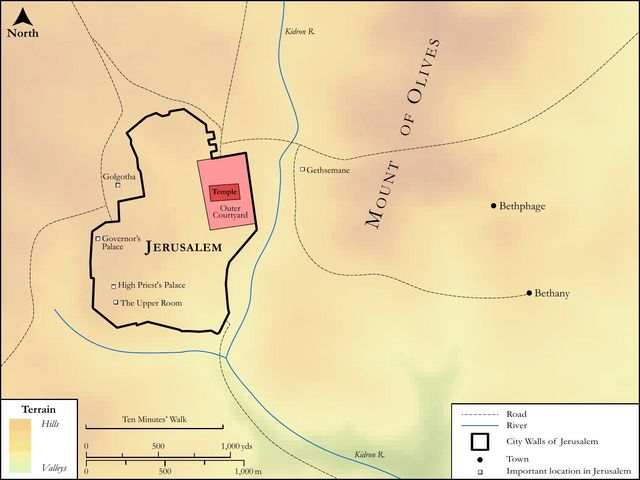
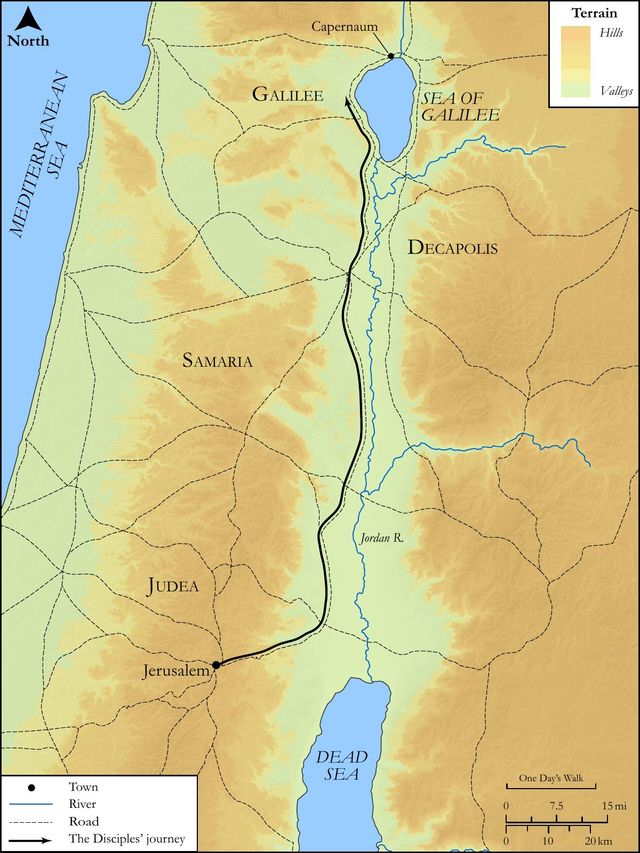
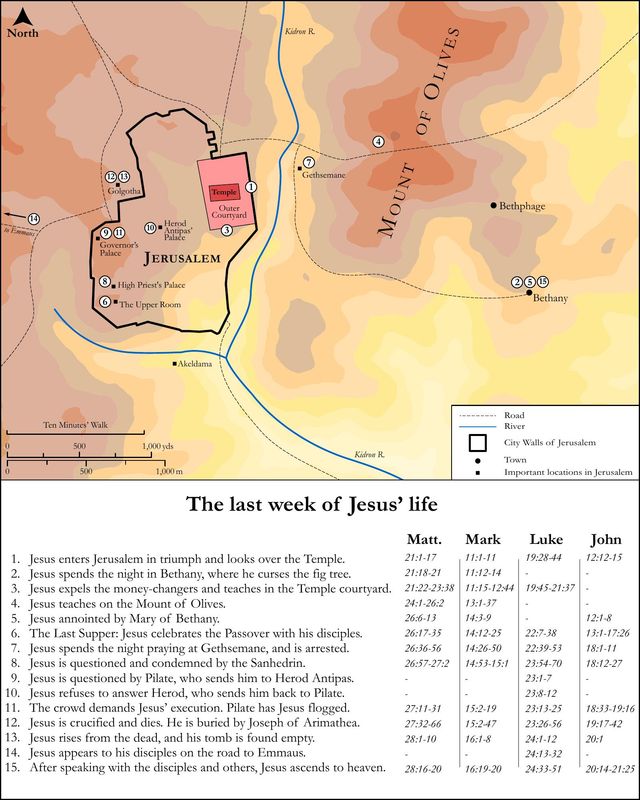
See on the biblical-era maps
Study this verse
Historical interpretation
Eight Centuries of Reception
19 surviving comments on this verse. Each one is dated, so this reads as a timeline rather than a list.
Select a marker to jump to its quote. Markers stagger vertically where authors wrote within a few decades of each other.
And concerning baptism, thus baptize ye: Having first said all these things, baptize into the name of the Father, and of the Son, and of the Holy Spirit, in living water. But if thou have not living water, baptize into other water; and if thou canst not in cold, in warm. But if thou have not either, pour out water thrice upon the head into the name of Father and Son and Holy Spirit. But before the baptism let the baptizer fast, and the baptized, and whatever others can; but thou shalt order the baptized to fast one or two days before.
It is only at the last that He instructs them to "go and teach all nations, and baptize them," when they were so soon to receive "the Holy Ghost, the Comforter, who should guide them into all the truth.
The Passover affords a more than usually solemn day for baptism; when, withal, the Lord's passion, in which we are baptized, was completed. Nor will it be incongruous to interpret figuratively the fact that, when the Lord was about to celebrate the last Passover, He said to the disciples who were sent to make preparation, "You will meet a man bearing water." He points out the place for celebrating the Passover by the sign of water. After that, Pentecost is a most joyous space for conferring baptisms; wherein, too, the resurrection of the Lord was repeatedly proved among the disciples [Acts 1:3], and the hope of the advent of the Lord indirectly pointed to, in that, at that time, when He had been received back into the heavens [Acts 1:9], the angels told the apostles that "He would so come, as He had withal ascended into the heavens;" [Acts 1:11] at Pentecost, of course. But, moreover, when Jeremiah says, "And I will gather them together from the extremities of the land in the feast-day," he signifies the day of the Passover and of Pentecost, which is properly a "feast-day." However, every day is the Lord's; every hour, every time, is apt for baptism: if there is a difference in the solemnity, distinction there is none in the grace.
Accordingly, after one of these had been struck off, He commanded the eleven others, on His departure to the Father, to "go and teach all nations, who were to be baptized into the Father, and into the Son, and into the Holy Ghost." Immediately, therefore, so did the apostles, whom this designation indicates as "the sent.
For the law of baptizing has been imposed, and the formula prescribed: "Go," He saith, "teach the nations, baptizing them into the name of the Father, and of the Son, and of the Holy Spirit." The comparison with this law of that definition, "Unless a man have been reborn of water and Spirit, he shall not enter into the kingdom of the heavens," has tied faith to the necessity of baptism.
Again, in the Pslams, David says: "Bring to God, ye countries of the nations"-undoubtedly because "unto every land" the preaching of the apostles had to "go out" -"bring to God fame and honour; bring to God the sacrifices of His name: take up victims and enter into His courts.
Even to the last He taught us (the same truth of His mission), when He sent forth His apostles to preach His gospel "among all nations; " for He thus fulfilled the psalm: "Their sound is gone out through all the earth, and their words to the end of the world.
(de Trin. ii. 1 &c.) For what part of the salvation of men is there that is not contained in this Sacrament? All things are full and perfect, as proceeding from Him who is full and perfect. The nature of His relation is expressed in the title Father; but He is nothing but Father; for not after the manner of men does He derive from somewhat else that He is Father, being Himself Unbegotten, Eternal, and having the source of His being in Himself, known to none, save the Son. The Son is the Offspring of the Unbegotten, One of the One, True of the True, Living of the Living, Perfect of the Perfect, Strength of Strength, Wisdom of Wisdom, Glory of Glory; the Image of the Unseen God, the Form of the Unbegotten Father. Neither can the Holy Spirit be separated from the confession of the Father and the Son. And this consolation of our longing desires is absent from no place. He is the pledge of our hope in the effects of His gifts, He is the light of our minds, He shines in our souls. These things as the heretics cannot change, they introduce into them their human explanations. As Sabellius who identifies the Father with the Son, thinking the distinction to be made rather in name than in person, and setting forth one and the same Person as both Father and Son. As Ebion, who deriving the beginning of His existence from Mary, makes Him not Man of God, but God of man. As the Arians, who derive the form, the power, and the wisdom of God out of nothing, and in time. What wonder then that men should have diverse opinions about the Holy Spirit, who thus rashly after their own pleasure create and change the Son, by whom that Spirit is bestowed?
And because what He had laid upon them was great, therefore to exalt their spirits He adds, And, lo, I am with you alway, even unto the end of the world. As much as to say, Tell Me not of the difficulty of these things, seeing I am with you, Who can make all things easy. A like promise He often made to the Prophets in the Old Testament, to Jeremiah who pleaded his youth, to Moses, and to Ezekiel, when they would have shunned the office imposed upon them. And not with them only does He say that He will be, but with all who shall believe after them. For the Apostles were not to continue till the end of the world, but He says this to the faithful as to one body.
He brings before them the end of the world, that He may the more draw them on, and that they may not look merely to present inconveniences, but to the infinite goods to come. As much as to say, The grievous things which you shall undergo, terminate with this present life, seeing that even this world shall come to an end, but the good things which ye shall enjoy endure for ever.
"Then the eleven disciples went away into Galilee, and some worshipped, and some when they saw Him doubted."
This seems to me to be the last appearance in Galilee, when He sent them forth to baptize. And if "some doubted," herein again admire their truthfulness, how they conceal not even their shortcomings up to the last day. Nevertheless, even these are assured by their sight.
What then saith He unto them, when He seeth them? "All power is given unto me in heaven and on earth." Again He speaketh to them more after the manner of man, for they had not yet received the spirit, which was able to raise them on high. "Go ye, make disciples of all nations, baptizing them in the name of the Father, and of the Son, and of the Holy Ghost: teaching them to observe all things whatsoever I have commanded you;" giving the one charge with a view to doctrine, the other concerning commandments. And of the Jews He makes no mention, neither brings forward what had been done, nor upbraids Peter with his denial, nor any one of the others with their flight, but having put into their hands a summary of the doctrine, that expressed by the form of baptism, commands them to pour forth over the whole world.
After that, because he had enjoined on them great things, to raise their courage, He says, "Lo! I am with you alway, even unto the end of the world." Seest thou His own proper power again? Seest thou how those other things also were spoken for condescension? And not with those men only did He promise to be, but also with all that believe after them. For plainly the apostles were not to remain here unto "the end of the world;" but he speaks to the believers as to one body. For tell me not, saith He, of the difficulty of the things: for "I am with you," who make all things easy. This He said to the prophets also in the Old Testament continually, as well to Jeremiah objecting his youth, as to Moses and Ezekiel shrinking from the office, "I am with you," this here also to these men. And mark, I pray thee, the excellence of these, for the others, when sent to one nation, often excused themselves, but these said nothing of the sort, though sent to the world. And He reminds them also of the consummation, that He may draw them on more, and that they may look not at the present dangers only, but also at the good things to come that are without end.
"For the irksome things, saith He, that ye will undergo are finished together with the present life, since at least even this world itself shall come to an end, but the good things which ye shall enjoy remain immortal, as I have often told you before." Thus having invigorated and roused their minds, by the remembrance of that day, He sent them forth. For that day to them that live in good works is to be desired, even as on the other hand to those in sin, it is terrible as to the condemned.
“Jesus approached them and said, ‘All authority in heaven and earth has been given to me.’ ” This authority was given to one who had just been crucified, buried in a tomb, laid dead and afterwards had arisen. Authority was given to him in both heaven and earth so that he who once reigned in heaven might also reign on earth through the faith of his believers.“ ‘Go therefore and teach all nations, baptizing them in the name of the Father and of the Son and of the Holy Spirit.’ ” First they teach all nations; then they baptize those they have taught with water, for the body is not able to receive the sacrament of baptism before the soul has received the truth of the faith. They were baptized in the name of the Father and of the Son and of the Holy Spirit so that the three who are one in divinity might also be one in giving themselves. The name of the Trinity is the name of the one God.
“ ‘Teach them to observe all that I have commanded you.’ ” What a marvelous sequence this is. He commanded the apostles first to teach all nations and then to baptize them in the sacrament of faith and then, after faith and baptism, to teach them to observe all that he had commanded. Lest we think these commandments of little consequence or few in number, he added “all that I have commanded you,” so that those who were to believe and be baptized in the Trinity would observe everything they had been taught.
All who abuse to other purposes the money of the Temple, and the contributions for the use of the Church, purchasing with them their own pleasure, are like the Scribes and Priests who bought this lie, and the blood of the Saviour.
After His Resurrection, Jesus is seen and worshipped in the mountain in Galilee; though some doubt, their doubting confirms our faith.
Power is given to Him, Who but a little before was crucified, Who was buried, but Who afterwards rose again.
Power is given in heaven and in earth, that He who before reigned in heaven, should now reign on earth by the faith of the believers.
They first then teach all nations, and when taught dip them in water. For it may not be that the body receive the sacrament of Baptism, unless the soul first receive the truth of the Faith. In the name of the Father, the Son, and the Holy Ghost, that they whose Godhead is one should be conferred at once, to name this Trinity, being to name One God.
(Didymi Lib. ii. de Spir. Sanct.) And though some one there may be of so averse a spirit as to undertake to baptize in such sort as to omit one of these names, therein contradicting Christ Who ordained this for a law, his baptism will effect nothing; those who are baptized by him will not be at all delivered from their sins. From these words we gather how undivided is the substance of the Trinity, that the Father is verily the Father of the Son, and the Son verily the Son of the Father, and the Holy Spirit the Spirit of both the Father and the Son, and also the Spirit of wisdom and of truth, that is, of the Son of God. This then is the salvation of them that believe, and in this Trinity is wrought the perfect communication of ecclesiastical discipline.
Observe the order of these injunctions. He bids the Apostles first to teach all nations, then to wash them with the sacrament of faith, and after faith and baptism then to teach them what things they ought to observe; Teaching them to observe all things whatsoever I have commanded you.
He then who promises that He will be with His disciples to the end of the world, shows both that they shall live for ever, and that He will never depart from those that believe.
(de Cons. Ev. iii. 25.) But it is to be considered, how the Lord could be seen bodily in Galilee. For that it was not the day of the Resurrection is manifest; for He was seen that day in Jerusalem in the beginning of the night, as Luke and John evidently agree. Nor was it in the eight following days, after which John says that the Lord appeared to His disciples, and when Thomas first saw Him, who had not seen Him on the day of the Resurrection. For if within these eight days the eleven had seen Him on a mountain in Galilee, Thomas, who was one of the eleven, could not have seen Him first after the eight days. Unless it be said, that the eleven there spoken of were eleven out of the general body of the disciples, and not the eleven Apostles. But there is another difficulty. John having related that the Lord was seen not in the mountain, but at the sea of Tiberias, by seven who were fishing, adds, This is now the third time that Jesus showed himself to his disciples after he was risen from the (John 21:14.) dead. (Mark 16:14.) So that if we understand the Lord to have been seen within those eight days by eleven of the disciples, this manifestation at the sea of Tiberias will be the fourth, and not the third, appearance. Indeed, to understand John's account at all it must be observed, that he computes not each appearance, but each day on which Jesus appeared, though He may have appeared more than once on the same day; as He did three times on the day of His Resurrection. We are then obliged to understand that this appearance to the eleven disciples on the mountain in Galilee took place last of all. In the four Evangelists we find in all ten distinct appearances of Our Lord after His Resurrection. 1. At the sepulchre to the women. 2. To the same women on their way back from the sepulchre. 3. To Peter. 4. To two disciples as they went into the country. 5. To many together in Jerusalem; 6. when Thomas was not with them. 7. At the sea of Tiberias. 8. At the mountain in Galilee, according to Matthew. 9. To the eleven as they sat at meat, because they should not again eat with Him upon earth, related by Mark. 10. On the day of His Ascension, no longer on the earth, but raised aloft in a cloud, as related by both Mark and Luke. But all is not written, as John confesses, for He had much conversation with them during forty days before His ascension, being seen of them, and speaking unto them of the things pertaining to the kingdom of God. (Acts 1:3.)
(Serm. 80.) The Son of God conveyed to the Son of the Virgin, the God to the Man, the Deity to the Flesh, that which He had ever together with the Father.
(Serm. 80.) Thus all nations are created a second time to salvation by that one and the same Power, which created them to being.
(Serm. 72. 3.) For by ascending into heaven He does not desert His adopted; but from above strengthens to endurance, those whom He invites upwards to glory.
Of which glory may Christ make us partakers,
Who is the King of glory,
God blessed for ever,
AMEN.
Palladius said, ‘The soul which is being trained according to the will of Christ should either be earnest in learning what it does not know, or should publicly teach what it does know. If it wants to do neither, though it could, it is mad. The first step on the road away from God is contempt for teaching, that is, not to want to give food to the soul that truly wants it.’
This is more fully told by Luke; how when the Lord after the Resurrection appeared to the disciples, in their terror they thought they saw a spirit.
The disciples then, when they saw Him, knew the Lord; and worshipped Him, bowing their faces to the ground. And He their affectionate and merciful Master, that He might take away all doubtfulness from their hearts, coming to them, strengthened them in their belief; as it follows, And Jesus came and spake to them, saying, All power is given unto me in heaven and in earth.
What the Psalmist says of the Lord at His rising again, Thou madest him to have dominion over the works of thy hands (Ps. 8:6.), this the Lord now says of Himself, All power is given unto me in heaven and in earth. And here it is to be noted, that even before His resurrection the Angels knew that they were subjected to the man Christ. Christ then desiring that it should be also known to men that all power was committed to Him in heaven and in earth, sent preachers to make known the word of life to all nations; whence it follows, Go ye therefore, and teach all nations.
('Beda; in Hom.' non occ.) He who before His Passion had said, Go not into the way of the Gentiles, (Matt. 10:5.) now, when rising from the dead, says, Go and teach all nations. Hereby let the Jews be put to silence, who say that Christ's coming is to be for their salvation only. Let the Donatists also blush, who, desiring to confine Christ to one place, have said that He is in Africa only, and not in other countries.
For as the body without the spirit is dead, so faith without works is dead also. (James 2:26.)
Hence we understand that to the end of the world shall not be wanting those who shall be worthy of the Divine indwelling.
Continue studying Matthew 28:19 across the web’s major study libraries — every link below opens this exact verse, chapter, or book on the destination site.
Read & Compare
 BibleGatewayThis verse in more than 200 translations and 70 languages.
 Bible.comThe YouVersion reader — hundreds of translations, reading plans, and highlights.
 ESV.orgCrossway's official English Standard Version reader.
 NET BibleThe NET translation with 60,000+ translators' notes on every rendering decision.
 STEP BibleTyndale House's free study tool — original text, vocabulary, and scholarly resources.
 BibliaLogos Bible Software's free web reader.
 USCCBThe New American Bible (Revised Edition) with the U.S. bishops' study notes.
Commentaries
 BibleHub CommentariesDozens of classic commentaries on this verse, gathered on one page.
 StudyLightMore than 100 commentary sets — the largest collection on the web.
 BibleRefPlain-English commentary on what this verse means, verse by verse.
 Enduring WordDavid Guzik's free commentary on this chapter, widely used by Bible teachers.
 Bible Study ToolsVerse commentary alongside Greek and Hebrew study aids.
Original Language & Research
- BibleHub InterlinearThe verse word by word — original language, transliteration, and English.
- BibleHub LexiconEvery word's original-language definition and Strong's entry.
 Blue Letter BibleDeep-study tools — Strong's numbers, concordance, and word studies.
 CNTR CollationThe earliest Greek manuscripts of this verse, collated letter by letter.
Sermons, Hymns & Audio


TrulyRandomVerse is not affiliated with these sites and doesn’t control their content. They’re linked because they’re genuinely useful.
Summary
Matthew 28:19, often referred to as a core component of the Great Commission, encapsulates Jesus' post-resurrection mandate to His disciples, instructing them to embark on a global mission. This pivotal verse commands believers to "go" into all the world, actively "making disciples" of every nation, and initiating them into the Christian faith through "baptism in the name of the Father, and of the Son, and of the Holy Ghost." It serves as the foundational charter for the Church's evangelistic and discipleship efforts, emphasizing both the universal scope of the Gospel and the Trinitarian nature of God.
Context
ShowHideLiterary Context
Matthew 28:19 stands as the climax of Matthew's Gospel, forming the core of Jesus' final instructions to His disciples after His resurrection. It immediately follows Jesus' declaration in Matthew 28:18, where He asserts, "All power is given unto me in heaven and in earth." This assertion of absolute authority provides the divine warrant for the sweeping global mandate that follows. The verse is then complemented by Matthew 28:20, which further elaborates on the content of discipleship ("teaching them to observe all things whatsoever I have commanded you") and concludes with Jesus' comforting promise of His perpetual presence: "and, lo, I am with you alway, even unto the end of the world." This sequence establishes the mission's divine origin, its comprehensive scope, and the assurance of Christ's empowering presence.
Historical & Cultural Context
The command to "teach all nations" (make disciples of all nations) was a radical departure from the prevailing Jewish understanding of God's covenant people. Historically, God's special relationship was primarily with Israel, and while there were prophecies of Gentile inclusion (e.g., Isaiah 49:6), the direct and universal mandate to actively seek out and disciple non-Jews was revolutionary. The disciples themselves were Jewish, deeply rooted in a culture that often viewed Gentiles as outside the covenant. This commission therefore marked a profound shift in the early Christian movement, transforming it from a sect within Judaism into a global religion. The practice of baptism, while having Jewish precedents (e.g., proselyte baptism, John's baptism), was here recontextualized as the initiatory rite into the new covenant community, uniquely defined by its Trinitarian formula.
Key Themes
ShowHideThis verse is rich with foundational theological and narrative themes. Central among them is the Global Mandate, signifying that the Gospel is intended for all humanity, transcending ethnic and geographical boundaries, a theme foreshadowed in passages like Isaiah 2:2-4. Another crucial theme is Comprehensive Discipleship, where the primary verb "teach" (make disciples) implies a holistic process of spiritual formation, not merely initial conversion, as further detailed in Matthew 28:20. The Significance of Baptism is also prominent, serving as the symbolic and public act of identification with Christ and entrance into the Christian community. Finally, the explicit mention of "the Father, and of the Son, and of the Holy Ghost" introduces the profound theological theme of the Triune Nature of God, making this verse a cornerstone for Trinitarian doctrine. This divine authority underpins the entire mission, as Jesus Himself declares in Matthew 28:18.
Exposition and Analysis
ShowHideKey Word Analysis
ShowHideFrom the root word for "disciple," this verb means "to make a pupil" or "to enroll as a scholar." It is not merely about imparting information but about guiding individuals into a committed relationship with Jesus Christ, fostering obedience, and training them to follow His ways. The primary command is thus to "disciple all nations," encompassing evangelism, teaching, and spiritual formation.
While it can mean "a race" or "tribe," in this context, especially when paired with "all" (G3956, pâs), it specifically refers to foreign, non-Jewish peoples, often with the implication of pagan or Gentile populations. This word underscores the universal, cross-cultural scope of the Great Commission, breaking down the historical barriers between Jew and Gentile.
This preposition, meaning "to or into," indicates the point reached or entered. When used with "the name of," it signifies more than just an invocation; it implies being baptized into allegiance to, identification with, and possession by the Triune God. It speaks of entering into a new relationship and being dedicated to the Father, Son, and Holy Ghost.
Derived from a word related to knowing, "name" here signifies not just a label but the authority, character, and very essence of the one named. To baptize "in the name of" the Father, Son, and Holy Ghost means to baptize into the very authority, identity, and relational reality of the Triune God.
Verse Breakdown
ShowHide"Go ye therefore,"
This is an imperative command, rooted in the preceding declaration of Jesus' absolute authority. It signifies an active, intentional movement outward from the disciples' current location and cultural sphere. The "therefore" links the mission directly to Jesus' universal authority (Matthew 28:18), indicating that the command is not a suggestion but a divinely authorized mandate.
"and teach all nations,"
This is the primary verb and central command of the Great Commission, meaning "make disciples of all nations." It highlights the comprehensive nature of the mission: it's not just about converting individuals but about guiding them into a lifelong process of learning, growth, and obedience to Christ's teachings. The scope is explicitly global, extending to every ethnic and cultural group.
"baptizing them in the name of the Father, and of the Son, and of the Holy Ghost:"
This clause specifies the initiatory rite for those who become disciples. Baptism serves as a public declaration of faith and identification with Christ, symbolizing repentance, new life, and inclusion into the Christian community. The explicit Trinitarian formula ("in the name of the Father, and of the Son, and of the Holy Ghost") is a profound theological statement, signifying that new believers are brought into a relationship with, and under the authority of, the one God who eternally exists as three distinct persons.
Literary Devices
ShowHideMatthew 28:19 employs several significant literary devices. The most prominent is the Imperative Mood, evident in the commands "Go," "teach," and "baptizing." These verbs convey a sense of divine authority, urgency, and non-negotiable mission, underscoring the weight of Jesus' final instructions. The verse also features a powerful Triadic Structure or Trinitarian Formula with the explicit mention of "the Father, and of the Son, and of the Holy Ghost." This formulation is not merely a list but a theological statement affirming the co-equal and co-eternal nature of the three persons within the Godhead, providing the divine identity into which new believers are initiated. Furthermore, Symbolism is inherent in the act of baptism, which represents purification, death to an old life, resurrection to a new life in Christ, and identification with His death and resurrection. The phrase "in the name of" also carries symbolic weight, representing allegiance to and the authority of the Triune God.
Theological and Thematic Connections
ShowHideMatthew 28:19 is a theological powerhouse, serving as the bedrock for Christian mission and Trinitarian doctrine. It reveals God's universal redemptive plan, demonstrating that His love and salvation are not confined to a single ethnicity or nation but are graciously extended to all humanity. The command to "make disciples" underscores the transformative nature of the Gospel, emphasizing that faith involves a lifelong journey of learning, obedience, and spiritual formation under the authority of Christ. The explicit Trinitarian formula in baptism is arguably the clearest New Testament declaration of God's tri-personal nature, inviting believers into a relational intimacy with the Father, through the Son, and by the power of the Holy Spirit. This verse thus defines the Church's identity as a sent people, empowered by the Triune God to participate in His global redemptive work.
Reflection and Application
ShowHideMatthew 28:19 is not merely a historical command given to the first disciples; it is the enduring mission statement for every believer and for the Church throughout history. It calls us to move beyond passive faith to active participation in God's redemptive work in the world. This means recognizing our personal responsibility to share the Gospel, not just through words, but by living lives that exemplify Christ's teachings, thereby "making disciples" through our actions and witness. It challenges us to embrace the global scope of God's kingdom, praying for and supporting mission efforts in every nation, and perhaps even considering personal involvement in cross-cultural ministry. Furthermore, the emphasis on baptism reminds us of the significance of public declaration of faith and the communal aspect of our Christian journey, as we are initiated into the family of God. Ultimately, this commission is daunting, but it is undertaken with the assurance of Christ's "all authority" (Matthew 28:18) and His promise to be "with you alway, even unto the end of the world" (Matthew 28:20), empowering us for the task.
Questions for Reflection
ShowHideFAQ
ShowHideWhy is baptism "in the name of the Father, and of the Son, and of the Holy Ghost" so important?
ShowHideThis specific Trinitarian formula for baptism is profoundly important for several reasons. Firstly, it is a direct command from Jesus Christ Himself, making it an act of obedience to His final instructions to His Church. Secondly, it serves as the clearest and most explicit declaration of the Triune nature of God found in the New Testament, affirming the distinct yet co-equal persons of the Father, Son, and Holy Spirit within the one Godhead. To be baptized "in the name of" (Greek: eis to onoma) signifies more than a mere verbal invocation; it means being immersed into allegiance to, identification with, and the authority of the Triune God. It marks a believer's entrance into a new covenant relationship with God, a public declaration of faith, and a symbolic participation in the death, burial, and resurrection of Christ (as seen in Romans 6:3-4). It signifies that the new disciple is now under the ownership and protection of the Father, redeemed by the Son, and empowered by the Holy Spirit.
Christ-Centered Fulfillment
ShowHideMatthew 28:19 is profoundly Christ-centered, as it is Jesus Christ Himself who issues this universal mandate, doing so on the basis of His newly declared "all power... in heaven and in earth" (as stated in Matthew 28:18). The entire mission to "make disciples of all nations" is ultimately about bringing humanity into a relationship with Him. He is the "Son" in the Trinitarian formula, the one through whom reconciliation with the Father is made possible (as described in Colossians 1:19-20). His atoning death and glorious resurrection are the very foundation and content of the Gospel that is to be proclaimed to all nations (see 1 Corinthians 15:3-4). Moreover, the mission is not undertaken in human strength but is empowered by the Holy Spirit, whom Christ promised to send (as seen in John 14:26), enabling believers to be His witnesses "unto the uttermost part of the earth" (as prophesied in Acts 1:8). Thus, the Great Commission is a direct outflow of Christ's redemptive work, His supreme authority, and His ongoing presence with His Church until the consummation of His kingdom (as promised in Matthew 28:20).