


Mark 16:15
Bible text: King James Version (1769 Blayney text) · Public domain
Bible text: Berean Standard Bible · Public domain
Bible text: American Standard Version (1901) · Public domain
Bible text: World English Bible, Messianic edition · Public domain
Bible text: Geneva Bible (1599) · Public domain
Bible text: Young's Literal Translation · Public domain
- ΚαὶKaiAndG2532CONJConjunction
- εἶπενeipenHe saidG2036V-2AAI-3SVerb 2nd Aorist Active Indicative 3rd Singular
- αὐτοῖς·autoisto themG846P-DPMPersonal pronoun Dative Plural Masculine
- πορευθέντεςporeuthentesHaving goneG4198V-AOP-NPMVerb Aorist Passive Deponent Participle Nominative Plural Masculine
- εἰςeisintoG1519PREPPreposition
- τὸνtontheG3588T-ASMDefinite article Accusative Singular Masculine
- κόσμονkosmonworldG2889N-ASMNoun Accusative Singular Masculine
- ἅπανταhapantaallG537A-ASMAdjective Accusative Singular Masculine
- κηρύξατεkēruxatedo proclaimG2784V-AAM-2PVerb Aorist Active Imperative 2nd Plural
- τὸtotheG3588T-ASNDefinite article Accusative Singular Neuter
- εὐαγγέλιονeuangeliongospelG2098N-ASNNoun Accusative Singular Neuter
- πάσῃpasēto allG3956A-DSFAdjective Dative Singular Feminine
- τῇtēatheG3588T-DSFDefinite article Dative Singular Feminine
- κτίσειktiseicreationG2937N-DSFNoun Dative Singular Feminine
English is a literal word-by-word gloss of the Greek, not the KJV's wording. Why?
This is the original text the KJV's translators worked from — each Greek word with its own literal English meaning in this verse, prepared by scholars at Tyndale House, Cambridge. The KJV translates whole sentences, not word by word, so its wording differs: one Greek word can become several English words, and the KJV may choose “charity” where the gloss reads “love”. Both are faithful — they answer different questions. For the KJV's own rendering, switch to the KJV text.
Details
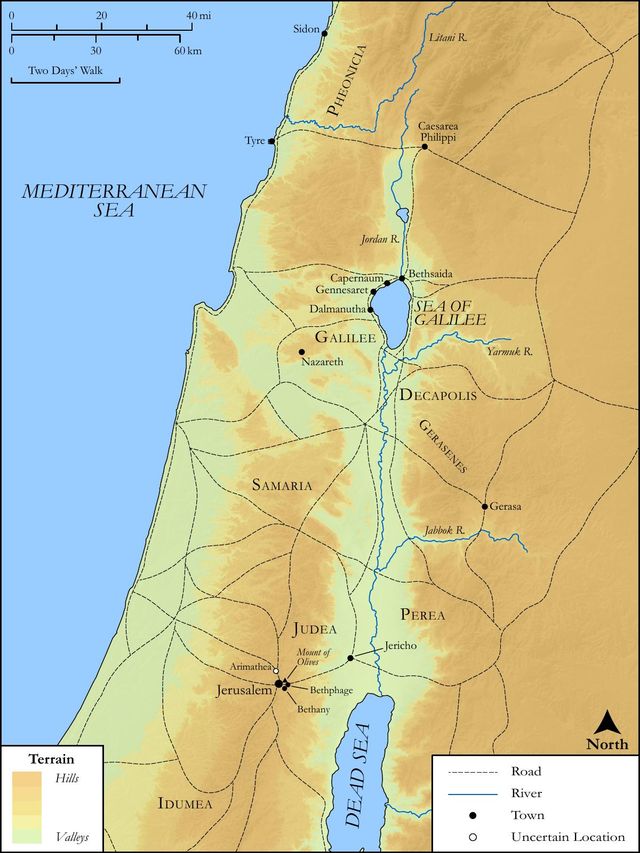
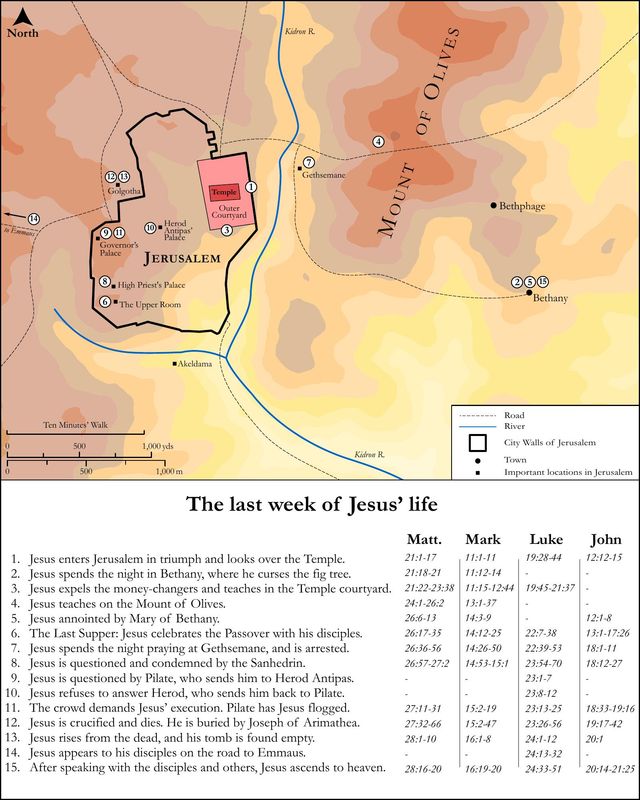
See on the biblical-era maps

Study this verse
Public-domain commentary
Matthew Henry
From his Commentary on the Whole Bible. Henry comments on passages, not single verses — this entry covers Mark 16:14–18. His three-level outline is real structure in the source text, so it is rendered as structure.
Here is, I. The conviction which Christ gave his apostles of the truth of his resurrection (Mar 16:14); He appeared to them himself, when they were all together, as they sat at meat, which gave him an opportunity to eat and drink with them, for their full satisfaction; see Act 10:41. And still, when he appeared to them, he upbraided them with their unbelief and hardness of heart, for even at the general meeting in Galilee, some doubted, as we find Mat 28:17. Note, The evidences of the truth of the gospel are so full, that those who receive it not, may justly be upbraided with their unbelief; and it is owing not to any weakness or deficiency in the proofs, but to the hardness of their heart, its senselessness and stupidity. Though they had not till now seen him themselves, they are justly blamed because they believed not them who had seen him after he was risen; and perhaps it was owing in part to the pride of their hearts, that they did not; for they thought, "If indeed he be risen, to whom should he delight to do the honour of showing himself but to us?" And if he pass them by, and show himself to others first, they cannot believe it is he. Thus many disbelieve the doctrine of Christ, because they think it below them to give credit to such as he had chosen to be the witnesses and publishers of it. Observe, It will not suffice for an excuse of our infidelity in the great day, to say, "We did not see him after he was risen," for we ought to have believed the testimony of those who did see him.
II.The commission which he gave them to set up his kingdom among men by the preaching of his gospel, the glad tidings of reconciliation to God through a Mediator. Now observe,
1.To whom they were to preach the gospel. Hitherto they had been sent only to the lost sheep of the house of Israel, and were forbidden to go into the way of the Gentiles, or into any city of the Samaritans; but now their commission is enlarged, and they are authorized to go into all the world, into all parts of the world, the habitable world, and to preach the gospel of Christ to every creature, to the Gentiles as well as to the Jews; to every human creature that is capable of receiving it. "Inform them concerning Christ, the history of his life, and death, and resurrection; instruct them in the meaning and intention of these, and of the advantages which the children of men have, or may have, hereby; and invite them, without exception, to come and share in them. This is gospel. Let this be preached in all places, to all persons." These eleven men could not themselves preach it to all the world, much less to every creature in it; but they and the other disciples, seventy in number, with those who should afterward to be added to them, must disperse themselves several ways, and, wherever they went, carry the gospel along with them. They must send others to those places whither they could not go themselves, and, in short, make it the business of their lives to send those glad tidings up and down the world with all possible fidelity and care, not as an amusement or entertainment, but as a solemn message from God to men, and an appointed means of making men happy. "Tell as many as you can, and bid them tell others; it is a message of universal concern, and therefore, ought to have a universal welcome, because it gives a universal welcome."
2.What is the summary of the gospel they are to preach (Mar 16:16); "Set before the world life and death, good and evil. Tell the children of men that they are all in a state of misery and danger, condemned by their prince, and conquered and enslaved by their enemies." This is supposed in their being saved, which they would not need to be if they were not lost. "Now go and tell them," (1.) "That if they believe the gospel, and give up themselves to be Christ's disciples; if they renounce the devil, the world, and the flesh, and be devoted to Christ as their prophet, priest, and king, and to God in Christ a their God in covenant, and evidence by their constant adherence to this covenant their sincerity herein, they shall be saved from the guilt and power of sin, it shall not rule them, it shall not ruin them. He that is a true Christian, shall be saved through Christ." Baptism was appointed to be the inaugurating rite, by which those that embraced Christ owned him; but it is here put rather for the thing signified than for the sign, for Simon Magus believed and was baptized, yet was not saved, Act 8:13. Believing with the heart, and confessing with the mouth the Lord Jesus (Rom 10:9), seems to be much the same with this here. Or thus, We must assent to gospel-truths, and consent to gospel-terms. (2.) "If they believe not, if they receive not the record God gives concerning his Son, they cannot expect any other way of salvation, but must inevitably perish; they shall be damned, by the sentence of a despised gospel, added to that of a broken law." And even this is gospel, it is good news, that nothing else but unbelief shall damn men, which is a sin against the remedy. Dr. Whitby here observes, that they who hence infer "that the infant seed of believers are not capable of baptism, because they cannot believe, must hence also infer that they cannot be saved; faith being here more expressly required to salvation than to baptism. And that in the latter clause baptism is omitted, because it is not simply the want of baptism, but the contemptuous neglect of it, which makes men guilty of damnation, otherwise infants might be damned for the mistakes or profaneness of their parents."
3.What power they should be endowed with, for the confirmation of the doctrine they were to preach (Mar 16:17); These signs shall follow them that believe. Not that all who believe, shall be able to produce these signs, but some, even as many as were employed in propagating the faith, and bringing others to it; for signs are intended for them that believe not; see Co1 14:22. It added much to the glory and evidence of the gospel, that the preachers not only wrought miracles themselves, but conferred upon others a power to work miracles, which power followed some of them that believed, wherever they went to preach. They shall do wonders in Christ's name, the same name into which they were baptized, in the virtue of power derived from him, and fetched in by prayer. Some particular signs are mentioned;
(1.)They shall cast out devils; this power was more common among Christians than any other, and lasted longer, as appears by the testimonies of Justin Martyr, Origen, Irenaeus, Tertullian Minutius Felix, and others, cited by Grotius on this place.
(2.)They shall speak with new tongues, which they had never learned, or been acquainted with; and this was both a miracle (a miracle upon the mind), for the confirming of the truth of the gospel, and a means of spreading the gospel among those nations that had not heard it. It saved the preachers a vast labour in learning the languages; and, no doubt, they who by miracle were made masters of languages, were complete masters of them and of all their native elegancies, which were proper both to instruct and affect, which would very much recommend them and their preaching.
(3.)They shall take up serpents. This was fulfilled in Paul, who was not hurt by the viper that fastened on his hand, which was acknowledged a great miracle by the barbarous people, Act 28:5, Act 28:6. They shall be kept unhurt by that generation of vipers among whom they live, and by the malice of the old serpent.
(4.)If they be compelled by their persecutors to drink any deadly poisonous thing, it shall not hurt them: of which very thing some instances are found in ecclesiastical history.
(5.)They shall not only be preserved from hurt themselves, but they shall be enabled to do good to others; They shall lay hands on the sick, and they shall recover, as multitudes had done by their master's healing touch. Many of the elders of the church had this power, as appears by Jam 5:14, where, as an instituted sign of this miraculous healing, they are said to anoint the sick with oil in the name of the Lord. With what assurance of success might they go about executing their commission, when they had such credentials as these to produce!
Historical interpretation
Eleven Centuries of Reception
12 surviving comments on this verse. Each one is dated, so this reads as a timeline rather than a list.
Select a marker to jump to its quote. Markers stagger vertically where authors wrote within a few decades of each other.
But in a mystic sense we may understand that faith here labours, leading the active life, but there it reigns secure in the contemplative vision. Here we see His face through a glass, there we shall see the truth face to face, wherefore He was shown to them as they were walking, that is, labouring, in another form. And when it was told, the disciples did not believe, because they saw, like Moses, that which was not enough for them, for he said, show me thyself; (Exod. 33:18. Sept.) forgetting his flesh, he prays in this life for that which we hope for in the life to come.
But He appeared when all the eleven were together, that all might be witnesses, and relate to all men what they had seen and heard in common. It goes on: And upbraided them with their unbelief and hardness of heart, because they believed not them who had seen him after his resurrection.
But He rebukes their want of faith, that faith might take its place; He rebukes the hardness of their stony heart, that the fleshy heart, full of love, might take its place.
For from Jerusalem there went out into the world, men, twelve in number, and these illiterate, of no ability in speaking: but by the power of God they proclaimed to every race of men that they were sent by Christ to teach to all the word of God.
Again, in the Pslams, David says: "Bring to God, ye countries of the nations"-undoubtedly because "unto every land" the preaching of the apostles had to "go out" -"bring to God fame and honour; bring to God the sacrifices of His name: take up victims and enter into His courts.
Then in this same way the apostles went out to found churches in every city possible. It is from these apostolic churches that all the subsequent churches, one after the other, derived the rule of faith and the seeds of doctrine. Even to today they continue to derive from the apostles that which is necessary in order that they be churches. Indeed, it is for this reason only that they are able to deem themselves as apostolic, as being the offspring of apostolic churches. As in science, every genus reverts to its original for its classification, so with the apostolic church. However many or great these churches may be, they comprise but one primitive church, founded by the apostles, from which they all spring. In this way all are primitive. All are apostolic. They all are one, by means of their unbroken unity, peaceful communion, title of descent, and bond of hospitality. These are privileges that no other rule directs than the one tradition of the same mystery.
He willed that the apostles as spiritual progenitors of the new humanity would be sent by his Son into the entire world, so that all human sufferers might come to the knowledge of their creator. Insofar as any choose to follow him, they have One whom they now address in their prayers as Father, instead of God. His providence has run and at present runs its course not only among individuals but also through whole cities and states, whose overthrow he predicted by the words of the prophets. His providence indeed runs its course through the whole cosmos itself.
The command to the apostles to be witnesses to him in Jerusalem, Judea, Samaria, and even to the uttermost parts of the earth was not addressed exclusively to those to whom it was immediately spoken. They alone would not be the only ones who would carry such an enormous task to completion. Similarly he seems to be speaking to the apostles very personally when he says: “Behold I am with you even to the end of the world,” yet who does not know that he made this promise to the universal church which will last from now even to the consummation of the world by successive births and deaths?
My brothers, was the holy Gospel to be preached to insensible things or to brute animals, that it is said to the disciples concerning it: "Preach to every creature"? But by the name of every creature, man is signified. For there are stones, but they neither live nor feel. There are plants and trees; they live indeed, but they do not feel. They live, I say, not through a soul, but through their verdure, because Paul also says: "Foolish one, what you sow is not brought to life unless it first dies." Therefore that lives which dies, so that it may be brought to life. Stones therefore exist, but they do not live. Trees exist and live, but they do not feel. Brute animals exist, live, and feel, but they do not discern. Angels exist, live, feel, and discern. But man has something of every creature. For he has existence in common with stones, life with trees, sensation with animals, understanding with angels. If therefore man has something in common with every creature, in a certain sense every creature is man. Therefore the Gospel is preached to every creature when it is preached to man alone, because he is taught for whose sake all things were created on earth, and from whom all things are not alien through a certain likeness.
By the name of every creature, every nation of the Gentiles can also be designated. For before it had been said: "Do not go into the way of the Gentiles." But now it is said, "Preach to every creature," so that the preaching of the apostles, first rejected by Judea, might then become a help to us, when that proud people had rejected it as a testimony to their own condemnation.
But when Truth sends the disciples to preach, what else does He do in the world but scatter grains of seed? And He sends a few grains in the sowing, so that He may receive the fruits of many harvests from our faith. For so great a harvest of the faithful would never have arisen in the whole world, if those chosen grains of preachers had not come from the Lord's hand upon the rational earth.
(ubi sup.) We should observe that Luke says in the Acts, As he was eating with them he commanded that they should not depart from Jerusalem, and shortly afterwards, while they beheld he was taken up. For He ate, and then ascended, that by the act of eating, the truth of the flesh might be declared; wherefore it is also here said, that he appeared to them for the last time as they sat at meat.
(ubi sup.) Another reason also why our Lord rebuked His disciples, when He left them as to His bodily presence, was, that the words which He spoke on leaving them might remain more deeply impressed upon the hearts of His hearers.
(ubi sup.) After rebuking the hardness of their hearts, let us hear the words of advice which He speaks. For it goes on: Go ye into all the world, and preach the Gospel to every creature. Every man must be understood by every creature; for man partakes something of every creature; he has existence as have stones, life as trees, feeling as animals, understanding as have Angels. For the Gospel is preached to every creature, because he is taught by it, for whose sake all are created, whom all things are in some way like, and from whom therefore they are not alien. By the name of every creature also every nation of the Gentiles may be meant. For it had been said before, Go not into the way of the Gentiles. (Matt. 10:5) But now it is said, Preach the Gospel to every creature, so that the preaching of the Apostles which was thrust aside by Judæa, might be an assistance to us, since Judæa had haughtily rejected it, thus witnessing to her own damnation.
(ubi sup.) But perhaps some one may say in himself, I have already believed, I shall be saved. He says what is true, if he keeps his faith by works; for that is a true faith, which does not contradict by its deeds what it says in words. There follows: But he that believeth not shall be damned.
(ubi sup.) Are we then without faith because we cannot do these signs? Nay, but these things were necessary in the beginning of the Church, for the faith of believers was to be nourished by miracles, that it might increase. Thus we also, when we plant groves, pour water upon them, until we see that they have grown strong in the earth; but when once they have firmly fixed their roots, we leave off irrigating them. These signs and miracles have other things which we ought to consider more minutely. For Holy Church does every day in spirit what then the Apostles did in body; for when her Priests by the grace of exorcism lay their hands on believers, and forbid the evil spirits to dwell in their minds, what do they, but cast out devils? And the faithful who have left earthly words, and whose tongues sound forth the Holy Mysteries, speak a new language; they who by their good warnings take away evil from the hearts of others, take up serpents; and when they are hearing words of pestilent persuasion, without being at all drawn aside to evil doing, they drink a deadly thing, but it will never hurt them; whenever they see their neighbours growing weak in good works, and by their good example strengthen their life, they lay their hands on the sick, that they may recover. And all these miracles are greater in proportion as they are spiritual, and by them souls and not bodies are raised.
(ubi sup.) What shall we say here about infants, who by reason of their age cannot yet believe; for as to older persons there is no question. In the Church then of our Saviour children believe by others, as also they drew from others the sins which are remitted to them in baptism. It goes on: And these signs shall follow them that believe; In my name shall they cast out devils; they shall speak with new tongues; they shall take up serpents.
And he said to them: Go into the entire world and preach the Gospel to every creature. He who believes and is baptized will be saved; but he who does not believe will be condemned. Therefore, when you preach that whoever does not believe will be condemned, since he certainly does not believe what he has not seen, should not they themselves first be reproved, because they did not believe those to whom the Lord appeared before they had seen the Lord? But when he said to them, Go into the entire world, preach the Gospel to every creature, surely the holy Gospel was not meant to be preached to senseless things or brute animals, so that it would be said to the disciples, Preach to every creature? But under the name of every creature, every nation of the Gentiles can be designated. It had been previously said: Do not go into the way of the Gentiles; but now it is said, Preach to every creature, so that the preaching of the apostles, first repelled by Judea, would then assist us, since Judea had proudly repelled it to its own damnation. He who believes and is baptized will be saved; but he who does not believe will be condemned. Perhaps each one says to himself: I have already believed, I will be saved. He says the truth if he holds faith by works. For true faith is that which does not contradict in behavior what it says in words. From this comes what Paul says about certain false believers: They confess to know God, but in works they deny him (Titus 1). Here John says: He who says he knows God and does not keep his commandments is a liar (1 John 2). But when it is said, He who does not believe will be condemned, what do we say about infants who cannot yet believe because of their age? For with regard to adults, there is no question. Therefore, in the Church, infants believe through others on behalf of the Savior, just as they have derived the sins from others, which are remitted to them in baptism.
Or else; to every creature, that is, whether believing or unbelieving. It goes on: He that believeth and is baptized shall be saved. For it is not enough to believe, for he who believeth and is not baptized, but is a catechumen, has not yet attained to perfect salvation.
That is, they shall scatter before them serpents, whether intellectual or sensible, as it is said, Ye shall tread upon serpents and scorpions, which is understood spiritually. But it may also mean sensible serpents, as when Paul received no hurt from the viper. There follows: And if they drink any deadly thing, it shall not hurt them. (Luke 10:19) We read of many such cases in history, for many persons have drank poison unhurt, by guarding themselves with the sign of Christ. It goes on: They shall lay hands on the sick, and they shall recorer.
(non occ.) Mark, when about to finish his Gospel, relates the last appearance of our Lord to His disciples after His resurrection, saying,1 For the last time he appeared unto the eleven as they sat at meat. (Acts 1:4, 9)
Continue studying Mark 16:15 across the web’s major study libraries — every link below opens this exact verse, chapter, or book on the destination site.
Read & Compare
 BibleGatewayThis verse in more than 200 translations and 70 languages.
 Bible.comThe YouVersion reader — hundreds of translations, reading plans, and highlights.
 ESV.orgCrossway's official English Standard Version reader.
 NET BibleThe NET translation with 60,000+ translators' notes on every rendering decision.
 STEP BibleTyndale House's free study tool — original text, vocabulary, and scholarly resources.
 BibliaLogos Bible Software's free web reader.
 USCCBThe New American Bible (Revised Edition) with the U.S. bishops' study notes.
Commentaries
 BibleHub CommentariesDozens of classic commentaries on this verse, gathered on one page.
 StudyLightMore than 100 commentary sets — the largest collection on the web.
 BibleRefPlain-English commentary on what this verse means, verse by verse.
 Enduring WordDavid Guzik's free commentary on this chapter, widely used by Bible teachers.
 Bible Study ToolsVerse commentary alongside Greek and Hebrew study aids.
Original Language & Research
- BibleHub InterlinearThe verse word by word — original language, transliteration, and English.
- BibleHub LexiconEvery word's original-language definition and Strong's entry.
 Blue Letter BibleDeep-study tools — Strong's numbers, concordance, and word studies.
 CNTR CollationThe earliest Greek manuscripts of this verse, collated letter by letter.
Sermons, Hymns & Audio


TrulyRandomVerse is not affiliated with these sites and doesn’t control their content. They’re linked because they’re genuinely useful.
Summary
Mark 16:15 presents a profound and pivotal post-resurrection command from Jesus Christ to His disciples, often recognized as a foundational expression of the Great Commission. This verse encapsulates the Church's enduring mandate: to actively and universally proclaim the good news of salvation, extending the invitation of God's redemptive grace to every person across the globe.
Context
ShowHideLiterary Context
This verse appears within the disputed "longer ending" of Mark's Gospel (Mark 16:9-20), which, despite textual debates, has been widely accepted and influential in Christian tradition for centuries. It immediately follows Jesus' appearance to the eleven disciples, where He rebuked their unbelief and hardness of heart for not believing those who had seen Him after He had risen (Mark 16:14). This rebuke sets the stage for a powerful commissioning: having seen their skepticism, Jesus does not abandon them but rather empowers them with an urgent, global mission. The command to "go" and "preach" serves as the definitive instruction for the nascent Church to transition from passive observation to active proclamation, establishing the trajectory for the apostolic age and beyond. It is the final, authoritative word from the resurrected Lord, setting the agenda for His followers before His ascension.
Historical & Cultural Context
At the time of this command, the disciples were still largely operating within a Jewish framework, having primarily ministered within the confines of Israel. The concept of a universal mission, extending beyond the chosen people to "all the world" and "every creature," represented a radical paradigm shift from the prevailing Jewish understanding of God's covenant people. This mandate challenged their ethnocentric perspectives and called them to embrace a global vision, anticipating the multi-ethnic composition of the early Church as recorded in the book of Acts. The Roman Empire, with its vast network of roads and established communication routes, provided an unprecedented infrastructure for the rapid spread of this message, though it also presented significant cultural and religious barriers that the early evangelists would have to navigate. The command was given to a small, initially fearful group, yet it carried the weight of divine authority, empowering them to confront a world steeped in paganism and diverse belief systems.
Key Themes
ShowHideMark 16:15 powerfully articulates several core themes central to the Christian faith. Foremost is the Great Commission, a divine mandate for the Church to actively engage in global evangelism and discipleship, underscoring the active role believers are to play in proclaiming God's truth, as also seen in Matthew 28:19-20. The phrase "into all the world" highlights the Global Scope of this mission, emphasizing that the Gospel message is not confined to any single ethnicity, nation, or geographical boundary, but is intended for every person, tribe, and tongue (Revelation 7:9). The instruction to "preach the gospel" identifies the Content of the Message as the "good news"—the transformative message of God's redemptive work through Jesus Christ's life, death, resurrection, and ascension, offering salvation to all who believe. This universal invitation to "every creature" underscores the boundless nature of God's love and the comprehensive reach of His salvific plan, ensuring that no one is outside the potential reach or invitation of the Gospel.
Exposition and Analysis
ShowHideKey Word Analysis
ShowHideThis word signifies an active, intentional movement, a journey, or a departure. It implies not a passive waiting but a deliberate undertaking of a task that requires physical and spiritual relocation. It conveys a sense of purpose-driven travel, emphasizing that the disciples are to actively initiate the spread of the message, rather than merely respond to requests.
This term means "to herald" or "to proclaim as a public crier." It denotes an open, authoritative, and public declaration of a message, much like a royal decree. It implies boldness, clarity, and an undeniable public announcement, rather than a private or secretive sharing. The message is to be declared with authority and conviction.
Literally meaning "good message" or "good news," this word refers specifically to the message of salvation through Jesus Christ. It encompasses His life, atoning death, victorious resurrection, and the offer of eternal life and reconciliation with God for all who believe. It is the core content of the proclamation.
This word refers to "original formation," "creation," or "created thing." While it can broadly refer to all of creation, in the context of preaching the gospel, it primarily signifies "every human being" or "all humanity." It emphasizes the universal reach of the Gospel's invitation to all people, regardless of background, status, or location.
Verse Breakdown
ShowHide"And he said unto them"
This phrase establishes the divine authority behind the command. It is the resurrected Christ, the one who has conquered death and holds "all authority in heaven and on earth" (Matthew 28:18), who issues this mandate. The "them" refers to the eleven disciples, the core group of apostles who would become the foundational leaders of the early Church.
"Go ye into all the world"
This is an imperative command for active movement and global scope. "Go ye" demands initiative, not passivity. "All the world" (Greek: eis hápas ton kósmos) signifies a mission without geographical or ethnic boundaries. It is a call to transcend local confines and carry the message universally, reaching every corner of the inhabited earth.
"and preach the gospel"
This clause specifies the action and the content of the mission. "Preach" (Greek: kērýssō) implies a public, authoritative proclamation, not a quiet suggestion. The "gospel" (Greek: euangélion) is the good news of God's saving work through Christ, the message of repentance and faith in Him. This is the core truth to be proclaimed.
"to every creature"
This phrase defines the recipient and the universality of the message. "Every creature" (Greek: pas tēn ktisin) emphasizes the comprehensive reach of the Gospel. While some interpretations might extend this to all living things, the primary theological and contextual understanding is "every human being," highlighting that the message of salvation is intended for all humanity, without exception or discrimination.
Literary Devices
ShowHideMark 16:15 employs several powerful literary devices. The most prominent is the Imperative Mood ("Go ye," "preach"), which conveys a direct, authoritative command from Jesus, demanding immediate and decisive action from His disciples. This is not a suggestion but a divine mandate. Hyperbole is evident in the phrases "all the world" and "every creature," which, while literally expansive, are used to emphasize the universal and unrestricted nature of the mission, ensuring no person or place is excluded from the Gospel's reach. The verse also functions as a Commissioning Statement, formally authorizing and sending out the disciples with a specific purpose, echoing similar commissioning narratives throughout biblical literature. Furthermore, the use of "gospel" (good news) serves as a Euphemism for the message of Christ's redemptive work, encapsulating profound theological truth in a simple, accessible term.
Theological and Thematic Connections
ShowHideMark 16:15 stands as a cornerstone of Christian theology, firmly establishing the missional identity of the Church. It underscores God's universal love and His desire for all humanity to come to repentance and knowledge of the truth. The command to "go" and "preach" implies that salvation is not a passive reception but requires active proclamation, making the Church God's primary instrument for extending His kingdom. This verse highlights the urgency of the Gospel message, recognizing the spiritual lostness of humanity and the transformative power of Christ's good news. It also reinforces the idea that the Gospel transcends cultural, ethnic, and geographical barriers, affirming its relevance and necessity for every individual. The call to evangelism is thus not merely an optional activity but an intrinsic aspect of Christian discipleship, flowing directly from the resurrected Lord's final instructions.
Reflection and Application
ShowHideMark 16:15 is a timeless and personal call to action for every follower of Christ, not just for those explicitly called to full-time ministry or foreign missions. It reminds us that our faith is inherently outward-focused, compelling us to share the transformative hope we have found in Jesus. This command challenges us to move beyond comfortable confines and actively engage with the world around us, recognizing that every person, regardless of their background or beliefs, is a "creature" for whom Christ died and to whom the Gospel must be proclaimed. It fosters a global vision, encouraging us to pray for, support, and participate in efforts to reach the unreached, whether across the street or across continents. Living out this verse means embodying the good news through our words, our actions, and our very lives, demonstrating the love and power of Christ to a world desperately in need of His salvation. It calls us to be intentional witnesses, always ready to articulate the reason for our hope with gentleness and respect (1 Peter 3:15).
Questions for Reflection
ShowHideFAQ
ShowHideDoes "every creature" literally mean animals, or just humans?
ShowHideWhile the Greek word ktísis (G2937) can broadly refer to "creation" or "created things," in the context of preaching the gospel, it is overwhelmingly understood to mean "every human being" or "all humanity." The message of salvation through faith in Jesus is specifically directed towards rational, moral agents capable of understanding and responding to the Gospel. The parallel passages in Matthew 28:19 and Luke 24:47 clarify that the mission is to "all nations" or "all the Gentiles," unequivocally pointing to people groups. Therefore, "every creature" in Mark 16:15 emphasizes the universal scope of the Gospel's invitation to all people, without exception.
Is Mark 16:9-20, which contains this verse, considered authentic scripture?
ShowHideThe authenticity of Mark 16:9-20, often referred to as the "longer ending" of Mark, has been a subject of scholarly debate due to its absence in some of the earliest and most reliable Greek manuscripts (like Codex Vaticanus and Codex Sinaiticus). However, it is present in many other ancient manuscripts and has been widely accepted and used by the Church throughout history, including its inclusion in the King James Version. While textual critics acknowledge the strong manuscript evidence against its original inclusion, the passage's theological content is consistent with other New Testament teachings, particularly the Great Commission found in Matthew 28:19-20 and Acts 1:8. Therefore, while its textual origin is debated, its theological message is broadly affirmed within Christian tradition.
Christ-Centered Fulfillment
ShowHideMark 16:15 finds its ultimate fulfillment and ongoing power in the person and work of Jesus Christ. The command to "go" and "preach the gospel" is not merely a human endeavor but a divine mandate empowered by the resurrected Lord Himself. It is Christ who is the "gospel" — the good news of God's redemptive plan embodied in His life, sacrificial death, and victorious resurrection (1 Corinthians 15:3-4). The disciples are commissioned to proclaim Him, the Lamb of God who takes away the sin of the world (John 1:29). Furthermore, the universal scope of the mission—"to all the world" and "to every creature"—reflects Christ's cosmic Lordship and His ultimate aim to reconcile all things to Himself (Colossians 1:20). The Holy Spirit, promised by Christ (John 14:26), empowers believers to fulfill this commission, enabling them to be His witnesses "to the ends of the earth" (Acts 1:8). Thus, Mark 16:15 is not just a command from Christ, but a command about Christ, to be fulfilled by Christ through His Church, until His return when every knee will bow and every tongue confess that Jesus Christ is Lord (Philippians 2:10-11).